To incorporate tropical foliage indoors, you should create a warm, humid environment similar to their natural habitat. Use bright, indirect light, keep the soil consistently moist but well-drained, and increase humidity with humidifiers or pebble trays. Regularly check for pests and maintain good air circulation. By balancing lighting, watering, and humidity, you’ll help your tropical plants thrive indoors. Keep exploring, and you’ll uncover even more tips to make your tropical oasis flourish.
Key Takeaways
- Create a humid microenvironment using humidifiers, pebble trays, or plant grouping to mimic tropical conditions.
- Provide bright, indirect light near east or south-facing windows, or supplement with grow lights.
- Maintain consistently moist, well-draining soil and water with room-temperature water to prevent root issues.
- Regularly inspect for pests and diseases, and treat promptly with neem oil or insecticidal soap.
- Use proper care routines, including humidity control, watering, lighting, and pest management, to promote lush tropical foliage indoors.
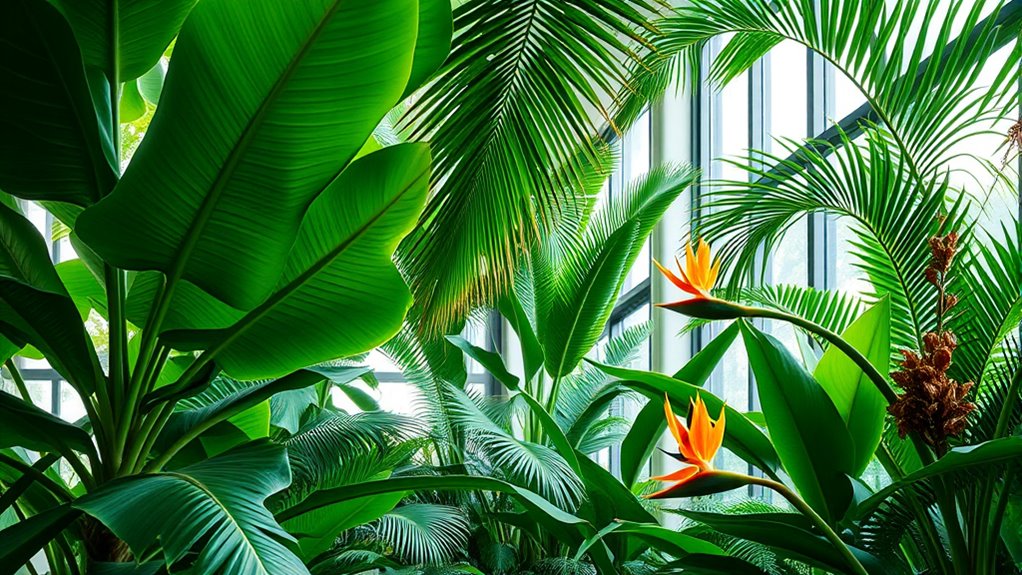
Bringing tropical foliage indoors is a vibrant way to transform your living space into a lush, inviting oasis. To do this successfully, you need to understand tropical plant care thoroughly. These plants thrive in warm, humid environments, so replicating their natural habitat is key. Proper indoor humidity control is essential because many tropical species are sensitive to dry air, which can cause leaf edges to brown or leaves to drop prematurely. To maintain ideal humidity levels, you might consider using humidifiers, placing plants on trays filled with pebbles and water, or grouping your tropical plants together to create a microenvironment with higher moisture levels.
Creating a humid microenvironment is key to thriving indoor tropical plants.
When caring for tropical plants indoors, pay close attention to watering routines. These plants generally prefer consistently moist, but not waterlogged, soil. Overwatering can lead to root rot, while underwatering causes stress and leaf drop. Check the top inch of soil regularly; if it feels dry, it’s time to water. Use room-temperature water to avoid shocking the roots, and ensure your pots have drainage holes to prevent excess water from stagnating. Additionally, fertilize your plants during the growing season with a balanced, water-soluble fertilizer, following the recommended dosage. This provides essential nutrients that support healthy growth and vibrant foliage.
Lighting plays a key role in tropical plant care. Most tropical foliage prefers bright, indirect sunlight. Direct sun can scorch leaves, while too little light stunts growth and dulls leaf color. Position your plants near east or south-facing windows, or use sheer curtains to diffuse sunlight. If natural light is limited, supplement with grow lights to ensure your plants receive enough illumination for photosynthesis. Proper lighting enhances not only growth but also the lushness of your tropical foliage. Additionally, choosing appropriate lighting conditions based on the specific species ensures optimal health and vibrancy.
Another important aspect of tropical plant care is monitoring for pests and diseases. Common issues include spider mites, scale insects, and fungal spots. Regularly inspect your plants, especially the undersides of leaves, and treat problems promptly with neem oil or insecticidal soap. Keeping the leaves clean and providing good air circulation helps prevent many common issues.
indoor humidifier for tropical plants
As an affiliate, we earn on qualifying purchases.
As an affiliate, we earn on qualifying purchases.
Frequently Asked Questions
How Do I Choose the Right Tropical Foliage for Limited Space?
To choose the right tropical foliage for limited space, focus on space-saving varieties like compact ferns or small-leaf philodendrons. Consider foliage texture to add visual interest without overcrowding. Opt for plants with a bushy or trailing growth habit that fit your space, and avoid tall, sprawling varieties. Regular pruning helps keep plants manageable, ensuring you enjoy lush greenery without overwhelming your area.
What Are Common Pests Affecting Indoor Tropical Plants?
You should watch for pests like spider mites, mealybugs, and scale on your tropical plants. To prevent pests, practice pest prevention by inspecting your plants regularly and keeping humidity levels ideal. When pests appear, use organic treatments like neem oil or insecticidal soap to control the infestation safely. Consistent monitoring and organic treatments help keep your indoor tropical foliage healthy and pest-free, ensuring lush, vibrant plants.
How Often Should I Fertilize Indoor Tropical Foliage?
You should fertilize your indoor tropical foliage every 4 to 6 weeks during the growing season, typically spring and summer. Follow a consistent fertilizer schedule that matches their nutrient requirements, using a balanced, water-soluble fertilizer. Reduce feeding in fall and winter when growth slows. Regular fertilization guarantees your plants get the essential nutrients they need to thrive indoors, promoting healthy leaves and vibrant growth.
Can Tropical Plants Thrive in Low Light Conditions Indoors?
Tropical plants can thrive in low light conditions indoors if you understand their lighting preferences and adjust your watering techniques accordingly. While they prefer bright, indirect sunlight, many tolerate shaded spots with proper care. Keep the soil moist but not waterlogged, and rotate your plants regularly to prevent etiolation. With patience and the right environment, your tropical plants will flourish even in less-than-ideal lighting, adding lush greenery to your space.
What Temperature and Humidity Levels Are Ideal for Indoor Tropical Plants?
For healthy tropical plant care indoors, keep temperatures between 65-80°F and humidity levels around 60-80%. You should use indoor climate control to maintain these conditions, especially in dry or cooler spaces. Avoid sudden temperature changes or drafts. Consistent warmth and humidity help your tropical plants thrive, ensuring lush foliage and vibrant growth. Regularly monitor and adjust your indoor environment to provide the ideal tropical habitat.
grow lights for indoor tropical foliage
As an affiliate, we earn on qualifying purchases.
As an affiliate, we earn on qualifying purchases.
Conclusion
By bringing tropical foliage indoors, you’re transforming your space into a lush, jungle paradise so breathtaking that even the wildest explorers would envy it. Every leaf whispers adventure, and your home becomes a vibrant oasis bursting with life and color. With just a few stunning plants, you’ll turn your living room into a tropical sanctuary so magnificent, even the most seasoned travelers would swear they’re on vacation every day. Get ready to release nature’s greatest show right at your doorstep!
As an affiliate, we earn on qualifying purchases.
As an affiliate, we earn on qualifying purchases.