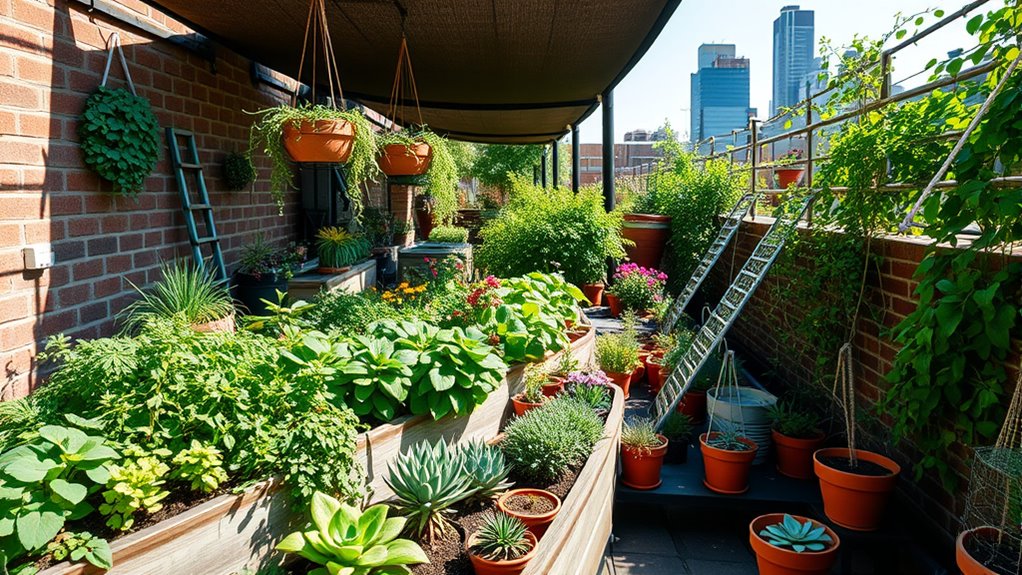

To maximize small urban spaces for gardening, focus on vertical planting techniques like wall-mounted planters and hanging baskets, which free up floor area and add visual appeal. Combine these with container gardening using versatile pots that let you control soil and move plants easily. Strategic placement, supportive structures, and creative repurposing help you turn tiny corners into vibrant green spots. Keep exploring for more ideas to make even the smallest space bloom successfully.
Key Takeaways
- Utilize vertical planting techniques like wall-mounted planters and hanging baskets to maximize limited space.
- Incorporate container gardening with versatile pots for flexible plant placement and better soil control.
- Combine vertical structures and containers to create a dynamic, space-efficient urban garden.
- Select sunlit spots and use supports like trellises to optimize plant growth in small areas.
- Regularly water, fertilize, and prune to maintain healthy plants and enhance garden productivity.
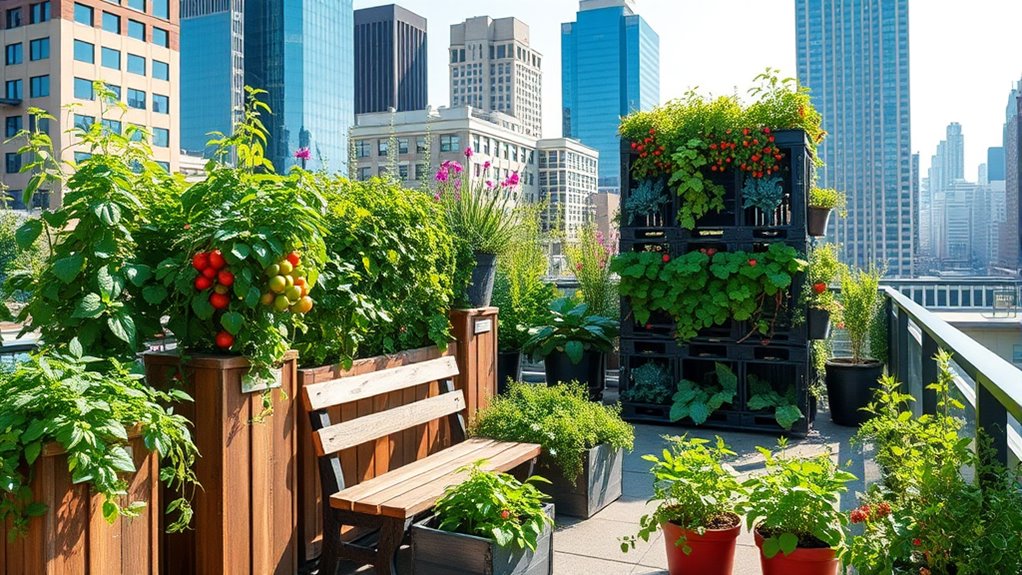
Have you ever wondered how to bring a touch of nature into your busy city life? Even if your living space feels tiny or crowded, you can create a lush, green oasis with smart gardening techniques. The key is to make the most of every inch you have—think vertically and creatively. Vertical planting is an excellent way to maximize limited space by growing plants upward instead of outward. You can install wall-mounted planters, hanging baskets, or even repurpose old pallets into vertical gardens. This not only saves floor space but also adds a striking visual feature to your apartment or balcony. With vertical planting, you can grow a variety of herbs, flowers, or leafy greens, turning your bare wall into a living, breathing artwork. Plus, it’s surprisingly easy to maintain since you can access your plants at eye level, reducing strain and making watering or pruning more manageable. Incorporating urban gardening techniques can further enhance your small-space garden by optimizing light and airflow for healthier plants.
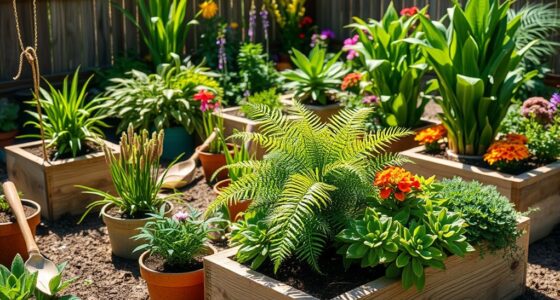
Container gardening is another versatile approach that pairs perfectly with vertical planting. Using containers of different sizes and shapes, you can create a layered, dynamic garden on your balcony, windowsill, or small patio. Containers allow you to control soil quality and moisture levels, which is especially helpful if you’re working with limited or poor soil. You can choose containers that suit your aesthetic—think colorful ceramic pots, rustic wooden boxes, or sleek modern planters. By grouping containers strategically, you can optimize sunlight exposure and create a diverse garden that includes everything from succulents and herbs to small vegetables. Container gardening also offers the flexibility to move plants around depending on sunlight, weather, or your changing preferences. Both vertical planting and container gardening are highly adaptable, making them perfect for urban environments. They allow you to experiment with different plant combinations without the need for large plots of land. To get started, pick a sunny spot, gather your containers and planters, and choose plants suited for your climate and space. Regular watering, occasional fertilizing, and pruning will keep your garden thriving. Incorporate trellises or plant supports to expand your vertical options and add structure to your garden design. Remember, the key to successful urban gardening lies in your creativity and willingness to optimize your space. Using vertical planting and container gardening, you can transform even the tiniest corner of your city dwelling into a vibrant, green retreat—proof that you don’t need a backyard to enjoy the pleasures of gardening.
Frequently Asked Questions
What Are the Best Plants for Small Urban Gardens?
You should choose compact, versatile plants like herbs, lettuce, and cherry tomatoes for small urban gardens. Focus on container design that maximizes space and guarantees proper drainage. Opt for plants with vertical growth habits, like pole beans or climbing roses, to save room. When selecting plants, consider their sunlight needs and growth habits, making sure your choices fit your container size and garden layout for a thriving urban oasis.
How Do I Prevent Pests in Limited Spaces?
In a blink of an eye, pests can invade your tiny garden, but you can beat them. You should practice companion planting to deter pests naturally and use natural repellents like neem oil or garlic spray. Keep your space tidy, remove dead leaves, and encourage beneficial insects like ladybugs. These methods create a barrier, making pests less likely to settle, so your garden stays healthy and productive.
What Soil Types Work Best for Container Gardening?
For container gardening, you should use a well-draining container soil that retains moisture but doesn’t stay soggy. Look for a mix that includes soil amendments like compost or peat moss to improve fertility and structure. This combination guarantees your plants get the nutrients they need while preventing root rot. Regularly refresh your soil with amendments to keep it healthy and productive, especially in small containers where nutrients deplete quickly.
How Can I Maximize Sunlight in Small Areas?
To maximize sunlight in small areas, you should utilize vertical farming to make the most of available space and guarantee plants get ample light. Additionally, consider shade solutions like reflective surfaces or movable shades to control light levels and prevent overheating. Position your containers and plantings strategically, preferably near south-facing windows or open areas, to optimize sun exposure and boost your urban garden’s productivity.
Are There Eco-Friendly Pest Control Options?
Yes, you can use eco-friendly pest control options like companion planting and organic pesticides. Companion planting involves growing specific plants together to naturally repel pests, reducing the need for chemicals. Organic pesticides, such as neem oil or insecticidal soap, are safe for your plants and the environment. These methods help protect your garden while keeping it eco-friendly, ensuring healthy, sustainable growth in your small space.
Conclusion
Now that you know how to maximize your small space, you’re ready to grow, to thrive, and to transform your urban environment. With creative planting, smart organization, and a little patience, you can turn even the tiniest corner into a lush oasis. Embrace your gardening journey, enjoy the process, and watch your space flourish. Because when you nurture your garden, you nurture your soul, your home, and your city—one small step at a time.