
When selecting an air compressor for your pneumatic tools, focus on matching the compressor’s PSI and tank capacity with your tools’ requirements. *Guarantee* the PSI covers the tools’ needs to avoid underperformance or energy waste, and choose a tank size based on how long you’ll run tools continuously. Consider portability for quick jobs or larger tanks for heavy-duty projects. Keep in mind these factors for reliable performance—exploring further will help you choose the best unit for your needs.
Key Takeaways
- Determine the PSI requirements of your pneumatic tools to ensure the compressor provides adequate pressure.
- Choose a compressor with a tank capacity that matches your project duration and number of tools used simultaneously.
- Balance compressor size and portability based on your job site needs and workspace constraints.
- Match the compressor’s maximum PSI to the highest pressure needed by your tools to prevent underperformance.
- Consider energy efficiency and long-term cost savings by avoiding overpowered units and selecting appropriate specifications.

Choosing the right air compressor can considerably improve your work efficiency and save you money in the long run. When selecting a compressor for pneumatic tools, you need to consider how it matches your specific needs. The key factors to focus on are air pressure and compressor size. These elements directly impact your ability to operate tools smoothly and consistently.
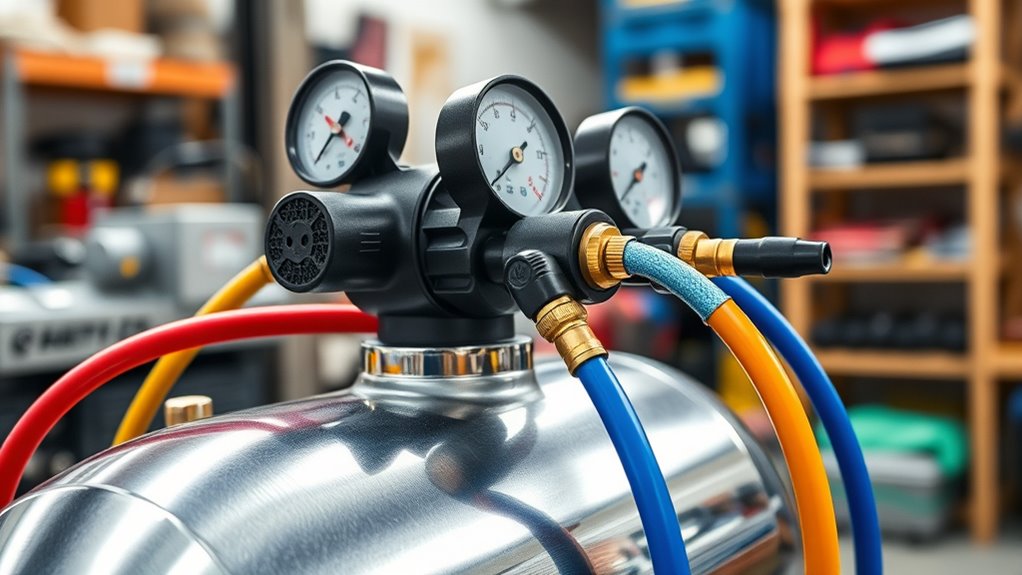
Air pressure, measured in PSI (pounds per square inch), determines how much force your pneumatic tools can deliver. Different tools require different pressure levels, so it’s essential to know the specifications of the equipment you plan to use. For example, framing nailers or impact wrenches typically need higher PSI ratings, often between 90 and 120 PSI, to perform effectively. If your compressor can’t maintain the necessary air pressure, your tools will underperform or stop working altogether. On the other hand, if you choose a compressor with excessively high pressure capacity, you might be wasting energy and paying for more power than you need. Striking a balance that provides enough pressure for your tasks without overdoing it ensures optimal performance and efficiency.
Choose the right PSI for your tools to ensure optimal performance and energy efficiency.
Compressor size is another critical consideration. It’s not just about physical dimensions but also about the tank capacity, measured in gallons. A larger tank allows for more stored compressed air, which means your tools can run longer without interruption. If you’re working on extended projects or using multiple pneumatic tools simultaneously, a bigger tank—say, 20 gallons or more—will help maintain consistent air pressure and reduce the frequency of compressor cycles. Conversely, if you only need a compressor for occasional small jobs or quick fixes, a smaller, portable unit with a tank capacity of around 6 to 10 gallons might suffice. Smaller compressors are more lightweight and easier to move around, but they may require more frequent rest periods to recover pressure, which can slow down your workflow.
Additionally, understanding the effectiveness of air compression can help you choose a model that offers better performance and energy efficiency, ensuring you get the best value for your investment.
Ultimately, selecting the right compressor involves matching its air pressure capabilities with your tools’ requirements and choosing a size that balances portability with enough air storage for your tasks. If you opt for a compressor that’s too small or underpowered, you’ll face frequent downtime and frustration. Too large, and you might spend more money than necessary and end up with a bulky, less convenient unit. By carefully assessing your pneumatic tool needs and understanding how air pressure and compressor size work together, you can make an informed decision that boosts productivity and saves you money over time.
air compressor for pneumatic tools
As an affiliate, we earn on qualifying purchases.
As an affiliate, we earn on qualifying purchases.
Frequently Asked Questions
How Often Should I Perform Maintenance on My Air Compressor?
You should perform maintenance on your air compressor every 1 to 3 months, depending on use. Follow a regular maintenance schedule to keep it running efficiently and extend its lifespan. Check and change the oil, drain moisture from the tank, and inspect belts and filters. Proper maintenance not only improves performance but also guarantees your compressor lasts longer, saving you money and preventing unexpected breakdowns.
Can I Use a Small Compressor for Heavy-Duty Tasks?
Using a small compressor for heavy-duty tasks is like bringing a pocket knife to a sword fight—it’s not ideal. Small compressors lack the capacity and power needed for demanding jobs, so they can’t sustain the airflow required. For heavy-duty tasks, you need a larger, more powerful compressor that can handle prolonged, high-pressure use without overheating or losing efficiency. Don’t cut corners—your tools deserve the right equipment.
What Safety Precautions Are Necessary When Operating an Air Compressor?
You should always wear safety gear like goggles and ear protection when operating an air compressor. Guarantee proper ventilation to prevent buildup of fumes or dust, especially in enclosed spaces. Check for leaks and secure all connections before starting. Never bypass safety valves, and keep bystanders at a safe distance. Regularly inspect the compressor for damage, and follow manufacturer instructions to avoid accidents and ensure safe operation.
How Do I Troubleshoot Common Air Compressor Problems?
Imagine your air compressor as a car engine—when it runs smoothly, everything’s fine; when it stalls, you troubleshoot. If your compressor isn’t working well, check the air filter maintenance first—clogged filters reduce airflow. Then, verify the pressure regulator adjustment is correct, preventing pressure drops or surges. Regularly inspecting these parts helps keep your compressor running efficiently and avoids common problems like inconsistent pressure or overheating.
Are There Environmental Considerations for Using Air Compressors?
Yes, you should consider environmental factors like energy efficiency and noise pollution when using air compressors. Select models with energy-saving features to reduce power consumption and lower your environmental impact. Additionally, choose quieter compressors to minimize noise pollution, especially in shared or residential areas. Proper maintenance also enhances efficiency and reduces emissions, helping you operate responsibly while ensuring your tools perform effectively.
20 gallon air compressor
As an affiliate, we earn on qualifying purchases.
As an affiliate, we earn on qualifying purchases.
Conclusion
Now that you’ve navigated the nuances of choosing an air compressor, you’re ready to make a smart, suited selection. Remember, size, style, and strength are essential to satisfy your specific needs. Don’t forget to double-check your demands before diving in. With a bit of diligence and a dash of detail, you’ll discover the perfect pump to power your projects. Equip yourself with knowledge, and enjoy effortless operation every time you press that trigger!
portable air compressor for small jobs
As an affiliate, we earn on qualifying purchases.
As an affiliate, we earn on qualifying purchases.
high PSI air compressor
As an affiliate, we earn on qualifying purchases.
As an affiliate, we earn on qualifying purchases.