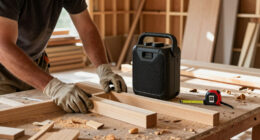
To operate a band saw for curved cuts, first verify the blade tension is properly set for smooth movement. Secure your workpiece firmly with clamps, keeping it aligned with the cut line. Adjust the blade guard just above the material for safety. Guide the workpiece steadily, using gentle pressure and steady control to follow curves smoothly. Regularly check blade sharpness and tension. Mastering these steps will help you achieve clean, precise cuts; keep going to learn more.

Get business pricing on tools and workshop supplies
- Business-only prices and quantity discounts
- Tax-exempt purchasing
- Multiple users, one account, clear invoices
Key Takeaways
- Adjust the blade guard height just above the workpiece for safety and better control during curved cuts.
- Properly tension the blade according to the manufacturer’s instructions to ensure smooth, accurate curves.
- Firmly clamp and align the workpiece to prevent shifting and ensure precise curved cuts.
- Guide the workpiece slowly and steadily, steering along the curve with consistent pressure and hand control.
- Regularly inspect and maintain the blade for wear, ensuring it’s sharp and properly tensioned for optimal performance.
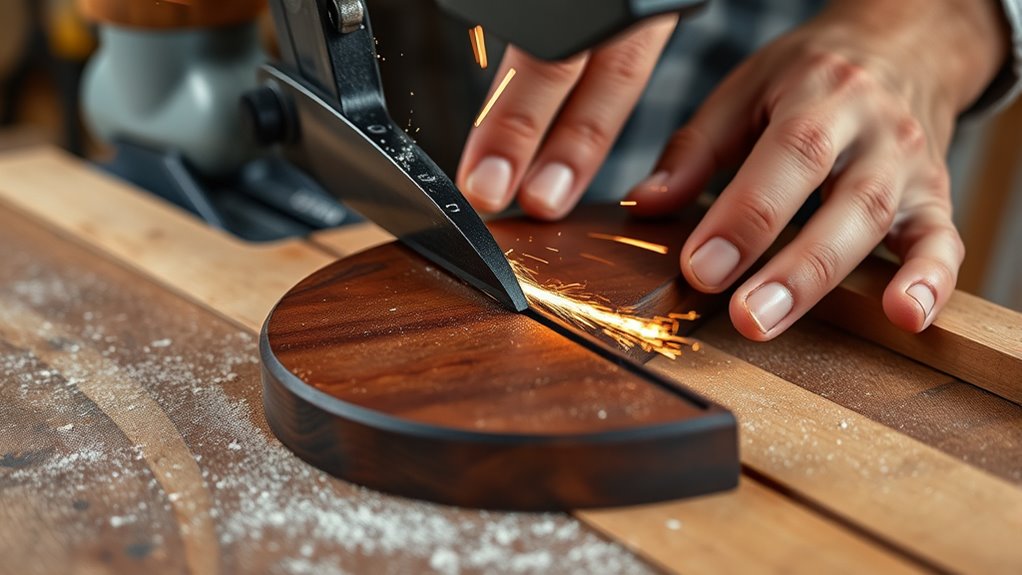
Using a band saw to make curved cuts requires careful setup and technique to guarantee accuracy and safety. The first step is making sure the blade tension is properly adjusted. Too loose, and the blade may wobble or wander off the cut line, risking both the workpiece and operator safety. Too tight, and the blade can become brittle and prone to breaking. Consult your band saw’s manual to find the correct tension setting, typically measured by the distance between the blade and the machine’s body when the blade is pressed halfway. Proper blade tension ensures smooth, precise cuts and extends the blade’s lifespan.
Proper blade tension is essential for accurate, safe curved cuts on a band saw.
Next, focus on workpiece clamping. Securing your material firmly prevents shifting during cutting, which is vital when maneuvering around curves. Use clamps or a hold-down fixture to keep the workpiece steady on the table. Loose workpieces can lead to inaccurate cuts and pose safety hazards if they are jerked or thrown by the blade. When clamping, make sure the workpiece is aligned properly with your intended cut line and that clamps do not interfere with the blade’s path. Proper workpiece positioning not only improves accuracy but also minimizes vibrations, allowing the blade to cut smoothly through the material.
Once your blade tension and workpiece are secured, set the blade’s guard height just above the workpiece. This reduces the exposed blade length, decreasing the risk of accidental contact and assures better control during curved cuts. When making the cut, guide the workpiece slowly and steadily, using your hands to steer the material along the curve. Keep a firm grip and maintain consistent pressure, avoiding sudden movements that could cause the blade to bind or wander. For tighter curves, consider using a narrower blade to increase maneuverability, but always make certain it’s appropriate for the material and saw specifications.
Throughout the process, regularly check the blade tension, especially if you’re making multiple cuts or working on different materials. After each cut, inspect the blade for signs of wear or dullness, and replace it if necessary to maintain clean, precise cuts. Remember to turn off the saw and unplug it before making adjustments or changing blades. Proper blade tension and workpiece clamping are fundamental to safe, accurate curved cuts. Additionally, understanding the different glycolic acid concentrations and their effects can help in choosing the right tools and techniques for various materials and applications. When these are set correctly, you’ll find that your cuts are cleaner, more precise, and completed with confidence. Mastering these setup techniques ensures you get the best results from your band saw while keeping safety at the forefront of your work.
As an affiliate, we earn on qualifying purchases.
Frequently Asked Questions
What Safety Gear Should I Wear When Using a Band Saw?
When using a band saw, you should wear protective eyewear to shield your eyes from flying debris and hearing protection to guard against noise. Always keep your hands away from the blade and wear fitted clothing to prevent entanglement. Using gloves is optional but not recommended near moving blades. Stay alert, focus on your work, and guarantee all safety gear is properly worn before starting any curved cuts.
How Do I Choose the Right Blade for Curved Cuts?
Think of your blade as a brushstroke on a canvas. To achieve smooth curves, choose a blade with a flexible blade material like carbon steel or bi-metal, which bends easily. Opt for a fine tooth configuration for intricate details and smooth cuts, while a coarser tooth works for rougher, faster cuts. Your choice guarantees precision, allowing your creativity to flow freely along each gentle, flowing line.
Can I Cut Metal With a Band Saw for Curves?
Yes, you can cut metal with a band saw for curves. Just make sure to use the right blade selection designed for metal cutting, such as a bi-metal or carbide-tipped blade. These blades handle the toughness of metal and provide smooth, precise curves. Keep the blade sharp, feed the material steadily, and use proper safety gear. With these steps, you’ll achieve clean, accurate curved cuts in metal.
How Do I Maintain Consistent Cutting Speed on a Band Saw?
To maintain a consistent cutting speed on your band saw, focus on adjusting the feed rate smoothly and steadily. Keep an eye on blade tension; it should be tight enough to prevent wobbling but not so tight that it strains the motor. By controlling your feed rate and regularly checking blade tension, you guarantee a steady, efficient cut, reducing wear and preventing blade damage.
What Are Common Mistakes to Avoid During Curved Cuts?
Imagine your cut as a delicate dance—mistakes can trip you up. Avoid common errors like neglecting proper blade tension, which causes wandering cuts, or failing to support the workpiece, leading to binding or twisting. Keep your blade tension just right and make certain your workpiece is well-supported. These steps help you glide smoothly through curved cuts, preventing mishaps and producing clean, accurate results every time.
adjustable band saw blade tension
As an affiliate, we earn on qualifying purchases.
As an affiliate, we earn on qualifying purchases.
Conclusion
So, now that you know how to tame that wild band saw for perfect curves, remember—practice makes perfect, or at least less disastrous. Don’t rush, don’t force, and definitely don’t forget your safety gear. After all, the only thing more terrifying than a jagged cut is realizing you’ve turned your workshop into a modern art sculpture. Stay patient, stay safe, and eventually, those curved cuts will look so good, even your neighbor’s impressed—maybe.
As an affiliate, we earn on qualifying purchases.
As an affiliate, we earn on qualifying purchases.
Halloween Picks
halloween
As an affiliate, we earn on qualifying purchases.