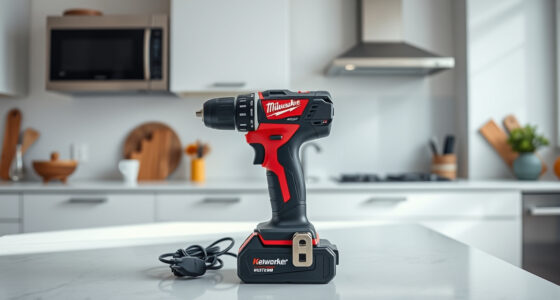

To simplify busy DIY days, follow a safe charging sequence: connect the positive terminal first, then the negative, and set your charger to the right voltage and current. Monitor temperature and voltage during charging, and use chargers with automatic shutoff to prevent overcharging. Once full, disconnect negative first, then positive. This routine prevents damage, saves time, and keeps your batteries reliable. Keep going to discover more tips for smooth and safe charging!

Get business pricing on tools and workshop supplies
- Business-only prices and quantity discounts
- Tax-exempt purchasing
- Multiple users, one account, clear invoices
Key Takeaways
- Connect the positive terminal first, then the negative, to ensure safety and reduce sparks during charging.
- Set the charger to appropriate voltage and current before connecting to avoid overloading.
- Monitor temperature and voltage levels regularly to prevent overheating and ensure safe charging.
- Disconnect the negative terminal first, then the positive, to safely complete the process.
- Use chargers with automatic shutoff features to prevent overcharging and save time.

Have you ever wondered if there’s a proper way to charge your battery to guarantee maximum lifespan and safety? When you follow a specific charging sequence, you can greatly improve both battery safety and charging efficiency, making your busy DIY days less stressful. The key lies in understanding the right steps to take, especially if you’re managing multiple devices or large batteries. Starting with a clear sequence helps prevent overcharging, overheating, and potential damage, which ultimately extends your battery’s life.
First, ensure your battery is in good condition and that you’re using the correct charger rated for your specific battery type. Properly connecting the charger is crucial; always connect the positive terminal first, then the negative. This order reduces the risk of sparks or short circuits, maintaining battery safety. Once connected, set the charger to the appropriate voltage and current level. If your device supports a trickle or slow charge, use it for initial charging phases, as it promotes better charging efficiency and minimizes heat buildup. During the charging process, keep an eye on the temperature and voltage levels, as overheating can compromise safety and shorten battery lifespan. Additionally, understanding the importance of proper battery maintenance can significantly extend your battery’s usable life.
To further optimize your charging routine, select a charger that incorporates automatic shutoff features, which help prevent overcharging and reduce user error. Using proper charging procedures consistently ensures safer and more reliable battery performance. Moreover, staying informed about battery safety protocols can help you respond effectively to any unexpected issues during charging. Once the battery reaches full charge, disconnect the charger promptly. Always remove the negative terminal first, then the positive, to prevent any accidental sparks or shorts. Incorporating a proper charging sequence into your routine simplifies your DIY projects by ensuring your batteries are safe and ready to perform at their best. It also reduces the need for frequent replacements, saving you both time and money. Remember, patience during the charging process is essential—rushing through can compromise battery safety and reduce charging efficiency. By following these steps, you turn a potentially complicated task into a straightforward, safe, and effective routine, helping you keep your tools and devices powered reliably through even your busiest days.
Products Worth Considering

Philips Hue Festavia 130-Foot Indoor/Outdoor Smart String Lights, 500 Color-Changing LEDs

Philips Hue White and Color Ambiance A19 Smart Bulb Starter Kit, 2-Pack

Bose Smart Ultra Dolby Atmos Soundbar
As an affiliate, we earn on qualifying purchases.
Frequently Asked Questions
Can I Use Any Charger for All Battery Types?
You shouldn’t use any charger for all battery types, as charger compatibility varies. Different batteries, like lithium-ion or NiMH, need specific chargers to guarantee proper charging and safety. Using an incompatible charger can reduce battery lifespan, cause overheating, or even damage the battery permanently. Always check the manufacturer’s recommendations to select the right charger, which helps maintain your battery’s health and extends its lifespan over time.
How Long Should I Wait Between Charging Cycles?
Did you know proper battery maintenance can extend your battery’s lifespan by up to 50%? You should wait at least 12 hours between charging cycles to allow the battery to stabilize. This pause supports charging safety and prevents overcharging. Always monitor your battery’s condition during each cycle, and avoid rushing the process. Taking these steps guarantees your battery stays reliable and safe for your DIY projects.
Is It Safe to Leave Batteries Charging Overnight?
It’s generally safe to leave batteries charging overnight if you follow proper battery safety guidelines and use a charger with automatic shut-off features. Modern chargers prevent overcharging, reducing risks associated with overnight charging. However, always monitor for signs of overheating or damage, especially with older batteries. If in doubt, consult the manufacturer’s instructions. Prioritizing battery safety guarantees your DIY projects stay safe and efficient, even during extended charging periods.
What Signs Indicate a Battery Needs Replacement?
You’ll know your battery needs replacing when its lifespan is nearing its end, typically after several years of use. Pay attention to charging indicators; if your device takes longer to charge or doesn’t hold a charge, it’s a sign. Additionally, if the battery drains quickly or causes device performance issues, it’s time for a replacement. Regularly check these signs to guarantee your device runs smoothly and avoid unexpected shutdowns.
How Do Temperature Changes Affect Charging Efficiency?
Temperature impact on charging efficiency is like trying to run a marathon in the heat or cold—you won’t perform at your best. When temperatures drop, your battery’s chemical reactions slow down, reducing charging efficiency. Conversely, high temperatures can cause overheating, damaging the battery and decreasing its lifespan. To keep your battery performing best , charge it in moderate temperatures, avoiding extreme cold or heat, and always follow manufacturer guidelines.
Conclusion
By mastering this battery charging sequence, you’re like a skilled conductor guiding a symphony, turning chaos into harmony. Your busy DIY days become a well-choreographed dance, with each step flowing smoothly like a gentle river. As you navigate the process, you’ll feel the power energize your projects, brightening your workspace like a sunrise after a long night. Embrace this sequence, and watch your efforts come alive with renewed strength and confidence.