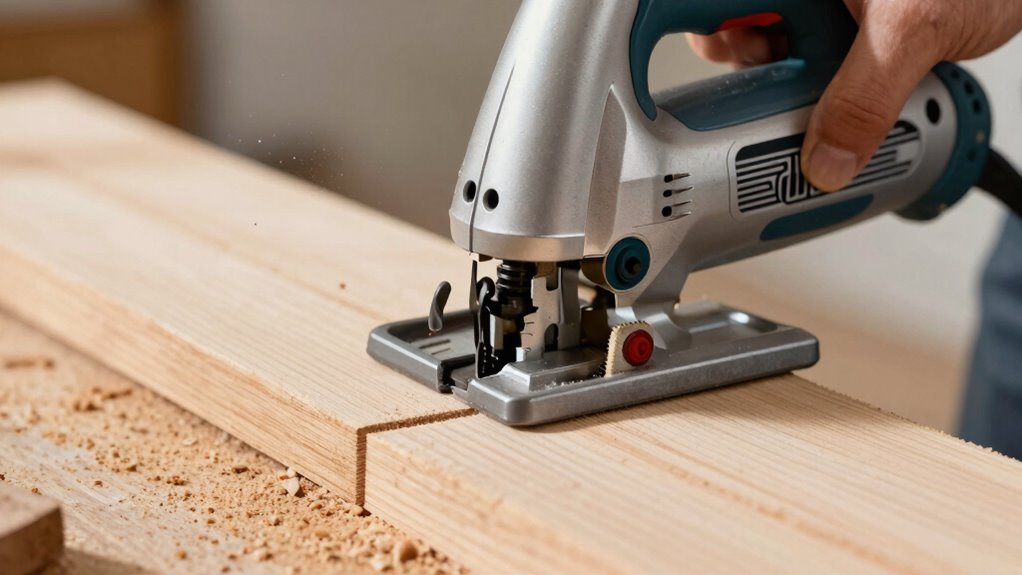

To get better cuts with a reciprocating saw without damaging your material, choose the right blade—larger, aggressive teeth for wood or finer teeth for drywall—and guarantee it’s securely installed. Maintain the blade’s sharpness and inspect it regularly. Use proper techniques, like marking your cut line, applying steady pressure, and guiding the saw smoothly without forcing it. Always prioritize safety. Keep these tips in mind, and you’ll soon see cleaner, more accurate cuts that preserve your material.

Get business pricing on tools and workshop supplies
- Business-only prices and quantity discounts
- Tax-exempt purchasing
- Multiple users, one account, clear invoices
Key Takeaways
- Use the correct blade type and size for the material to ensure cleaner, more precise cuts.
- Secure the material firmly with clamps or a stable surface to prevent movement and splintering.
- Start the saw slowly, then apply steady pressure, allowing the blade to cut without forcing.
- Keep the blade sharp and replace dull or damaged blades promptly for better accuracy.
- Follow proper cutting techniques, such as marking the line and guiding the saw smoothly along it.
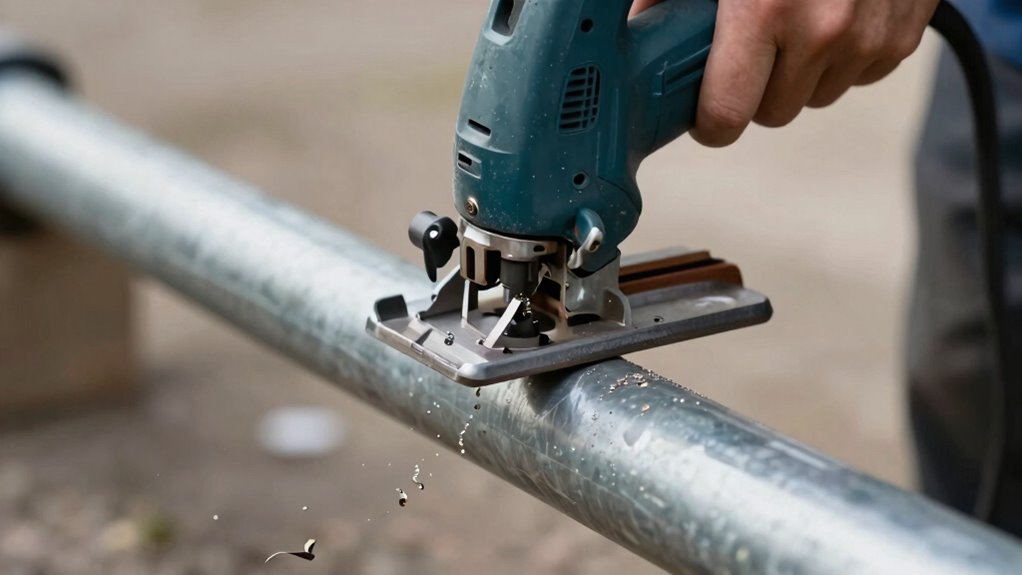
A reciprocating saw is a versatile tool, but getting clean, precise cuts often requires more than just turning it on. The key lies in choosing the right blade and following proper safety precautions. Blade selection plays a vital role in how smoothly and accurately you can cut through different materials. For wood, opt for blades with larger, more aggressive teeth that cut quickly without snagging. When working with metal, use blades specifically designed for metal cutting, which have finer teeth and are made from tougher materials. If you’re cutting through drywall or softer materials, blades with a fine tooth count and a more delicate edge will help prevent splintering and rough edges. Always match your blade to the material to avoid unnecessary wear and guarantee a cleaner cut. Ensuring your blade compatibility is essential for achieving optimal results and extending the life of your tools. Proper blade maintenance also helps maintain cutting performance and prolongs blade life, especially when switching between different materials. Regularly inspecting your blades for signs of wear can prevent unexpected breakage and ensure consistent results. Keeping your blades sharp and well-maintained is also a crucial step in cutting efficiency, reducing effort and improving the quality of your cuts. Using high-quality blades designed for specific materials can greatly influence the cutting accuracy you achieve. Safety precautions aren’t just about protecting yourself from injury—they also help you achieve better results. Before you start, double-check that your blade is securely installed and compatible with your saw. Tighten the blade firmly to prevent wobbling or slipping during operation, which can cause jagged cuts or accidents. Wear eye protection and gloves, especially when working with materials that produce debris or sparks. Keep your work area clear of clutter and ensure proper lighting so you can see your cut line clearly. Use a stable surface or clamps to hold the material steady; moving or shifting pieces can lead to uneven cuts or accidents. Maintain a comfortable stance, and don’t force the saw—let the blade do the work at a steady, controlled pace. Proper cutting technique is crucial for achieving precise results and avoiding damage to your material. Mark your cut line precisely and use a guide if needed to keep the saw aligned. Start the saw before it contacts the material, then gently ease into the cut, applying steady, even pressure. Avoid forcing the saw, as this can cause blade binding or splintering. Keep the saw’s teeth perpendicular to the surface and move smoothly along your marked line. If you’re working on a curved or complex cut, take your time to follow the line carefully, adjusting your angle as needed. Regularly inspect your blade for dullness or damage, and replace it when necessary. A sharp, appropriate blade combined with correct safety practices ensures cleaner cuts without damaging your material or risking injury.
reciprocating saw blades for wood
As an affiliate, we earn on qualifying purchases.
As an affiliate, we earn on qualifying purchases.
Frequently Asked Questions
What Safety Gear Should I Wear When Using a Reciprocating Saw?
When using a reciprocating saw, you should wear protective eyewear to shield your eyes from debris and dust. Hearing protection is also essential to prevent hearing damage from the loud noise. Additionally, consider wearing gloves for a better grip and long sleeves to protect your skin from sparks or splinters. Always guarantee your safety gear fits well and is in good condition before starting your project.
How Do I Select the Right Blade for Different Materials?
To select the right blade, consider the blade types designed for specific tasks and material compatibility. For wood, use blades with large, sharp teeth; for metal, opt for fine-toothed blades. For tougher materials like masonry, choose diamond-tipped blades. Always match the blade to the material you’re cutting, ensuring efficiency and cleaner cuts. Keep in mind that using the correct blade minimizes wear on your saw and improves safety.
Can I Use a Reciprocating Saw for Precise or Detailed Cuts?
Think of your reciprocating saw as a brush—it’s great for broad strokes, but not fine detail. For precise cuts, use sharp blades suited for delicate work, and follow precision tips like slow, steady motions. Blade selection is essential; opt for fine-toothed blades designed for detailed cuts. Keep your saw steady, and you’ll carve out neat, accurate lines without rough edges or mishaps.
What Maintenance Does a Reciprocating Saw Require?
You should regularly inspect your reciprocating saw for blade maintenance, guaranteeing the blade is sharp and properly secured. Lubricate the saw as needed to keep it running smoothly, reducing wear and tear. Clean dust and debris from vents and moving parts, and replace worn-out blades promptly. Proper maintenance prolongs your saw’s life and ensures precise cuts, so make it a routine to check and care for your tool after each use.
How Do I Troubleshoot Common Issues With Reciprocating Saws?
When your reciprocating saw isn’t performing at its best, start by checking blade alignment—misalignment causes rough cuts and extra strain. Next, assess motor performance; if it stalls or struggles, it might need cleaning or a quick inspection for wear. Tighten loose parts and make sure the blade is securely installed. These simple steps can restore smooth operation, giving you cleaner cuts and a more satisfying work experience.
metal cutting reciprocating saw blades
As an affiliate, we earn on qualifying purchases.
As an affiliate, we earn on qualifying purchases.
Conclusion
With a steady hand and a keen eye, you turn your reciprocating saw into a maestro’s brush, carving precision into every cut. Think of your tool as an extension of your own skill, dancing smoothly through the material like a whisper in the wind. When you respect the craft and follow these tips, each cut becomes a stroke of mastery—sharp, clean, and effortless—transforming your work into a symphony of craftsmanship where the material sings in harmony with your intent.
drywall cutting blades for reciprocating saw
As an affiliate, we earn on qualifying purchases.
As an affiliate, we earn on qualifying purchases.
As an affiliate, we earn on qualifying purchases.
Halloween Picks
halloween
As an affiliate, we earn on qualifying purchases.