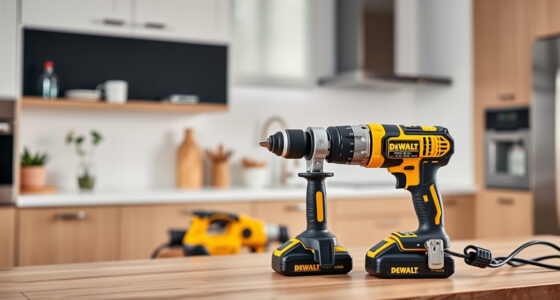
Choosing between corded and cordless tools primarily depends on your workflow needs rather than raw power. If you require consistent, extended use without interruptions, corded tools are ideal due to their reliable power supply and ability to handle demanding tasks. However, if mobility, ease of movement, and convenience are your priorities, cordless tools offer flexibility, especially when you plan work across multiple locations without constant access to outlets. Keep exploring to find out how to optimize your tool choices for smooth workflow and efficiency.

Get business pricing on tools and workshop supplies
- Business-only prices and quantity discounts
- Tax-exempt purchasing
- Multiple users, one account, clear invoices
Key Takeaways
- Cordless tools offer mobility benefits that are crucial for tasks requiring movement across the job site.
- For prolonged, demanding tasks, corded tools ensure consistent power without battery limitations.
- Ergonomic design enhances comfort and control, making cordless tools preferable for extended or detailed work.
- Workflow complexity and site conditions influence whether cordless or corded tools better suit project needs.
- Power management and task duration are more significant factors than raw power when choosing between corded and cordless tools.
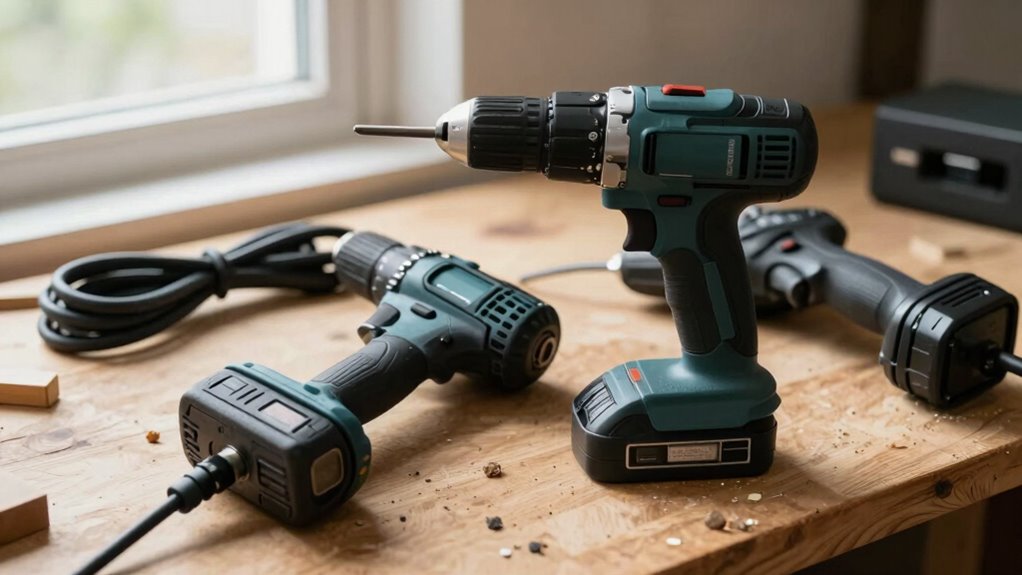
When choosing between corded and cordless tools, your workflow often takes precedence over raw power. It’s about understanding how each type fits into your daily tasks and what minimizes downtime. Cordless tools offer the convenience of mobility, allowing you to move freely around a job site without being tethered to an outlet. However, their effectiveness depends heavily on battery longevity. You need to consider whether the battery can last through your entire project without frequent recharges, which can slow you down or interrupt your rhythm. Modern lithium-ion batteries have improved noticeably, but they still vary in lifespan. If your work involves extended periods of use, investing in tools with longer-lasting batteries or keeping spare batteries on hand becomes essential. Battery technology continues to evolve, influencing how reliable cordless tools can be for demanding jobs. Additionally, considering workflow efficiency can help you determine the best balance between power and convenience for your specific tasks. Recognizing the importance of power management can further optimize your tool selection and usage.
On the other hand, corded tools provide a consistent power supply, which can be crucial for demanding tasks that require sustained performance. When power isn’t an issue, your focus shifts to efficiency and comfort. An ergonomic design becomes a key factor here, especially if your work involves prolonged use. Tools that are lightweight, balanced, and easy to handle reduce fatigue and increase precision. When ergonomic design is prioritized, you’ll notice less strain on your hands, wrists, and arms, allowing you to work longer with less discomfort. This is particularly important if you’re doing detailed, repetitive tasks that demand steady control. Additionally, understanding the role of tool ergonomics can help you select equipment that reduces fatigue and enhances productivity over time. Considering workflow optimization can also help you choose the right tools that fit seamlessly into your routine, avoiding unnecessary disruptions.
Products Worth Considering

Dyson Cyclone V10 Origin Cordless Vacuum

Shark Pet Cordless Stick Vacuum, Up to 40-Minute Runtime, Lightweight, Ocean Blue, IX141

Shark PowerPro Reveal Plus Cordless Stick Vacuum, Charcoal, IZ376H
As an affiliate, we earn on qualifying purchases.
Frequently Asked Questions
How Do Corded and Cordless Tools Compare in Terms of Maintenance?
Corded tools require less maintenance since they don’t rely on batteries, but you need to manage cables to prevent damage and guarantee safety. Cordless tools demand regular battery maintenance for maximum battery longevity, like proper charging and storage. While cordless models might need occasional battery replacements, corded tools generally need less upkeep, but you should check cords for wear. Overall, your workflow influences which type needs more attention.
What Safety Considerations Are Unique to Each Tool Type?
You need to take into account safety aspects unique to each tool type. For cordless tools, monitor your battery lifespan to prevent overheating or leaks, which could cause hazards. Always practice proper cord management with corded tools to avoid trips or accidental disconnection during use. Keep batteries and cords away from water, and regularly inspect for damage. Following these precautions helps guarantee safe operation, whether you’re working with corded or cordless equipment.
Are There Specific Industries That Prefer One Over the Other?
You’ll find that industry preferences lean towards corded tools for heavy-duty, continuous tasks like construction or manufacturing, where consistent power is essential. Conversely, cordless tools appeal to service industries, maintenance, or DIY projects because of their portability and ease of use in varied usage scenarios. Your choice depends on how you need to move around, the duration of tasks, and the working environment, rather than just power requirements.
How Does Tool Weight Impact User Fatigue?
Tool weight markedly impacts your fatigue levels during work. Lighter tools with ergonomic design reduce strain on your muscles and joints, allowing you to work longer without discomfort. Heavier tools tend to cause quicker fatigue, especially during prolonged use. Choosing tools that prioritize ergonomic design helps you stay comfortable and focused, minimizing fatigue and improving overall efficiency. Always consider weight and ergonomic features to enhance your workflow and reduce physical stress.
What Are the Environmental Impacts of Each Option?
You should consider the environmental impacts of each tool type. Corded tools often have a longer lifespan due to eco-friendly manufacturing practices and fewer battery disposal concerns. Cordless tools, however, rely on batteries that need proper recycling and disposal to prevent environmental harm. By choosing tools with sustainable manufacturing and recycling options, you can reduce your ecological footprint, regardless of whether you prefer corded or cordless equipment.
Conclusion
Choosing between corded and cordless tools isn’t just about raw power; it’s about understanding your workflow’s rhythm. Think of the cord as a steady heartbeat, reliable but sometimes limiting, while the cordless is a free spirit, agile and ready to soar. Your decision hinges on whether you need the unwavering pulse of power or the freedom to move. Embrace what aligns with your flow, and your work will sing in harmony, no matter which path you take.