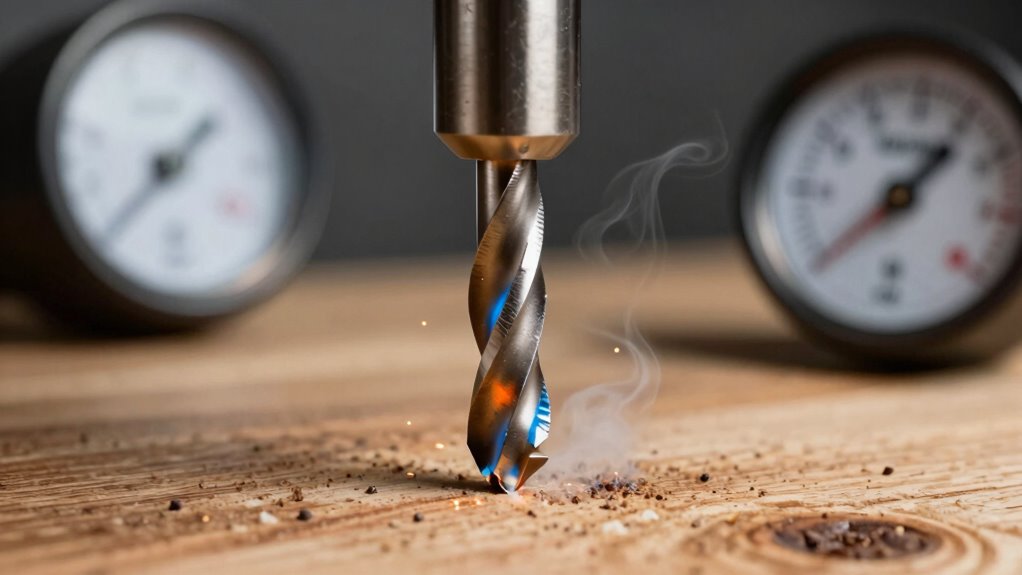

To make your drill bits last longer with smarter heat control, choose high-quality, heat-resistant materials like cobalt or carbide, and use appropriate lubricants such as cutting oil or water to reduce friction. Practice steady drilling speed, avoid excessive pressure, and periodically withdraw the bit to cool and clear debris. Keep your bits clean, sharpen them promptly, and store them properly for peak performance. Continue exploring these tips to maximize your drill’s longevity even further.

Get business pricing on tools and workshop supplies
- Business-only prices and quantity discounts
- Tax-exempt purchasing
- Multiple users, one account, clear invoices
Key Takeaways
- Select high-quality, heat-resistant materials like cobalt or carbide for longer-lasting drill bits.
- Use proper lubrication, such as cutting oils or water, to reduce friction and heat buildup during drilling.
- Practice steady, moderate drilling speed and periodically withdraw the bit to prevent overheating.
- Keep drill bits clean, sharp, and well-maintained to minimize heat generated from friction.
- Understand material properties to choose appropriate drill bits and optimize heat management techniques.
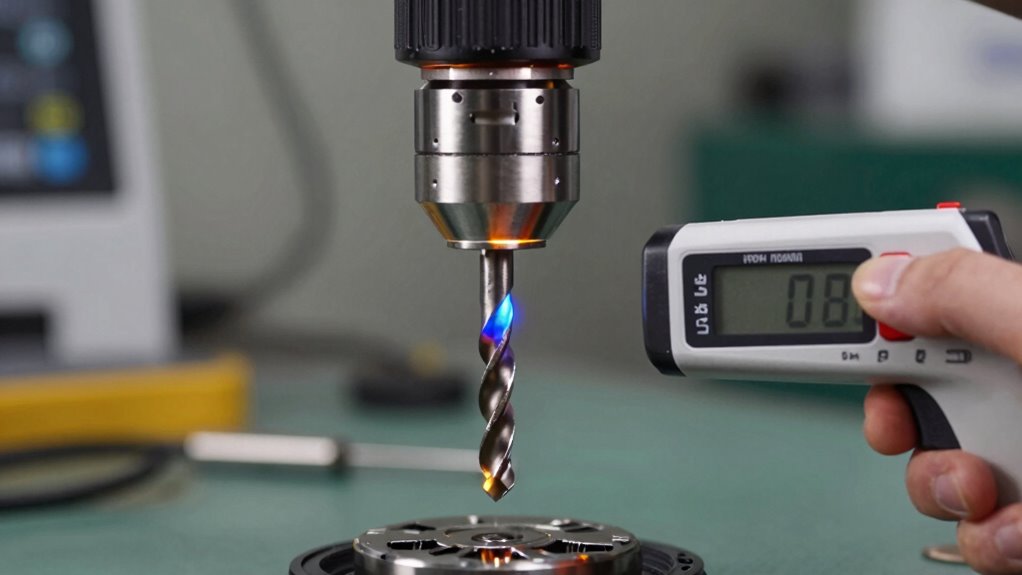
If you want your drill bits to last longer, taking proper care of them is vital. One of the most effective ways to extend their lifespan involves managing heat buildup during use. When drill bits overheat, the metal weakens, and the cutting edges dull faster. To prevent this, you need to focus on smarter heat control, which starts with understanding the importance of material selection. Choosing drill bits made from high-quality materials, such as cobalt or carbide, guarantees they can withstand higher temperatures without losing their hardness. These materials are designed to endure prolonged use and resist the heat that leads to wear and tear, giving you a longer-lasting tool. When selecting bits, consider the type of material you’re drilling into—harder materials like metal or masonry require more durable bits capable of handling increased heat.
In addition to material choice, applying proper lubrication techniques plays a vital role in heat management. Lubricants reduce friction between the drill bit and the material, which directly decreases heat generation. Using cutting oils, lubricating sprays, or even water when working on tougher surfaces helps keep the temperature down. For metal drilling, especially, a good lubricant not only reduces heat but also prevents chips from sticking to the bit, which can cause additional friction. When drilling into softer materials, like wood, lubrication might seem unnecessary, but a light application can still help keep the bit cooler and improve its efficiency. Implementing proper heat control methods can significantly extend the life of your drill bits and improve overall drilling performance. Developing an understanding of thermal properties of different materials can further optimize your heat management techniques. Additionally, understanding the heat tolerance of your tools can help prevent overheating and extend their lifespan.
You should also develop a habit of periodically withdrawing the drill bit from the hole to clear debris and allow it to cool slightly. This simple step prevents excessive heat buildup and reduces stress on the bit. Moreover, avoid applying excessive pressure while drilling. Pushing too hard generates unnecessary heat and can damage both the bit and the material. Instead, let the drill do the work at a steady, moderate pace, which minimizes heat and prolongs the life of your tool. Additionally, understanding the material properties of your drill bits can help you choose the right type for each task, further enhancing heat control and longevity.
Regular maintenance is equally important. Keep your drill bits clean and free of debris that can trap heat or cause uneven wear. Sharpen dull bits promptly—dull edges generate more friction and heat, accelerating wear. When combined, smart material selection, effective lubrication techniques, and proper use and maintenance greatly improve heat control. This combined approach ensures your drill bits remain sharp, efficient, and longer-lasting, saving you time and money in the long run.
Products Worth Considering

Samsung 85-Inch QN70F Neo QLED 4K Smart TV (2025)

eufy Baby Monitor E21 with 4K UHD Camera and 5-Inch 720p Screen

Blueair Blue Pure 311i Max Smart Air Purifier
As an affiliate, we earn on qualifying purchases.
Frequently Asked Questions
Can Different Materials Affect Drill Bit Heat Tolerance?
Different materials definitely affect your drill bit’s heat tolerance. Material compatibility plays a key role—harder materials generate more heat, risking damage. Using drill bits with heat resistant coatings can help, as these coatings improve heat dissipation and reduce wear. Choosing the right bit for each material guarantees better heat management, prolongs tool life, and maintains cutting efficiency. Always match your drill bits to the material for ideal heat control and performance.
What Signs Indicate Drill Bits Are Overheating?
Overheating drill bits can reduce their lifespan by up to 50%. You’ll notice signs like discoloration—blue or black hues—and a dull sound during drilling. To prevent this, use coolant techniques like water or air cooling, and consider heat-resistant coatings to improve heat tolerance. If you see chips melting or the bit smoking, stop immediately, as these are clear signs your drill bit is overheating.
Does Using Cutting Oil Improve Heat Management?
Yes, using cutting oil improves heat management by enhancing coolant effectiveness and reducing friction. When you apply oil properly, it absorbs heat generated during drilling, preventing your drill bits from overheating. Consistent oil application keeps the bits cool, extends their lifespan, and maintains cutting efficiency. Remember to choose the right type of cutting oil for your material and guarantee thorough coverage for maximum heat control and better drill bit performance.
How Often Should I Replace Worn Drill Bits?
You should replace worn drill bits as soon as you notice signs of dullness, excessive wear, or chipping. Regular tool maintenance helps identify these issues early. Using proper drilling techniques, like applying steady pressure and avoiding overheating, also extends bit life. Don’t wait too long; continuing to use worn bits can damage your material and tool. Replace them promptly to guarantee efficient drilling and maintain your equipment’s longevity.
Are There Specific Drills Better for Heat Control?
Imagine your drill as a tiny superhero battling heat with flashy drill bit coatings and an ergonomic grip that keeps your hand cool. Specialized drills with heat-resistant coatings, like titanium or cobalt, excel at controlling heat. An ergonomic grip reduces user fatigue, helping you maintain better control and reduce overheating. So, yes, choose drills with these features to keep your bits cool, efficient, and lasting longer in your heroic DIY missions.
Conclusion
By mastering smarter heat control, you can considerably extend the life of your drill bits. Think about it—many believe drill bits wear out quickly because of constant use, but it’s actually heat that causes the most damage. When you manage heat effectively, you’re not just saving money; you’re protecting your tools and boosting efficiency. Next time you drill, remember: controlling heat isn’t just smart—it’s the secret to lasting drill bits and better results.