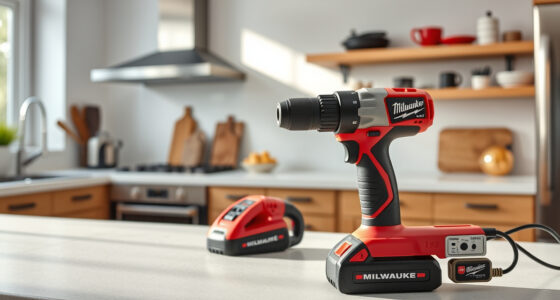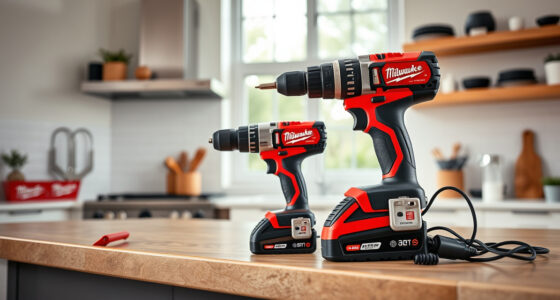
To use an impact driver effectively, select the right bit for your task and guarantee it’s securely seated. Start at low speed on dense materials and gradually increase pressure and speed, letting the tool do the work. Maintain a firm grip and steady stance for safety, and adjust torque settings if available. Keep vents clear and inspect the tool regularly to assure peak performance. For more expert tips and techniques, keep exploring these essential practices.

Get business pricing on tools and workshop supplies
- Business-only prices and quantity discounts
- Tax-exempt purchasing
- Multiple users, one account, clear invoices
Key Takeaways
- Select the appropriate bit for the fastening task and ensure it is securely seated in the chuck.
- Start at low speed on dense materials, gradually increasing pressure and speed for better control.
- Use proper torque settings if available to prevent overdriving or damaging fasteners.
- Let the impact driver’s power do the work, avoiding excessive force or rushing during operation.
- Regularly inspect the tool and battery, keep vents clean, and maintain proper technique for optimal performance.
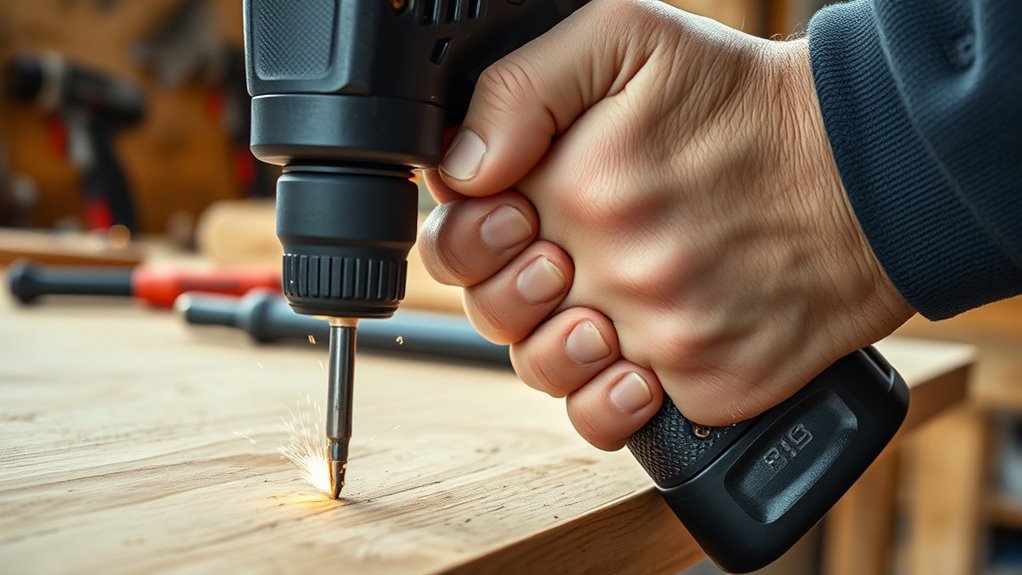
Have you ever struggled with driving screws or bolts into tough materials? If so, an impact driver can make a significant difference. This powerful tool delivers high torque with rapid hammering action, making tasks easier and faster. But to maximize its effectiveness and ensure safety, you need to understand some key techniques and tips. One of the first considerations is battery compatibility. Impact drivers operate on rechargeable batteries, so it’s vital to verify that your tool’s battery matches the voltage and type recommended by the manufacturer. Using incompatible batteries can lead to poor performance, damage to the tool, or even safety hazards. Always double-check the specifications before purchasing or swapping batteries, and consider investing in original or manufacturer-approved batteries for peak performance and longevity.
Ensure battery compatibility to maximize impact driver performance and safety.
As you start working with the impact driver, safety precautions should be your top priority. Always wear safety goggles to protect your eyes from flying debris or accidental slips. Keep your hands clear of the bit’s path, and ensure your workspace is clean and well-lit. Before powering up, inspect the tool for any damages or loose components—worn bits or frayed cords can cause accidents. When handling the impact driver, maintain a firm grip and keep your body balanced to avoid losing control when applying torque. Remember, impact drivers are designed to deliver powerful bursts of force, so never force the tool into a material or rush the process. Let the tool do the work at a steady pace.
Proper technique involves selecting the right bit for the task—use screwdriver bits for screws and hex bits for bolts. Ensure the bit is securely seated in the chuck to prevent slipping. When drilling into tough materials like dense wood or metal, start with a slow speed to establish a good grip, then gradually increase pressure and speed. Apply consistent pressure, but don’t push too hard; let the impact driver’s power do the work. For precision tasks, adjust the torque settings if your model offers this feature, reducing the risk of overdriving or damaging fasteners.
Additionally, understanding the impact of technology on power tools can help you choose the right impact driver for your needs, ensuring optimal performance and safety. Finally, always disconnect the battery when changing bits or when the tool isn’t in use for an extended period. Proper maintenance extends the lifespan of your impact driver. Clean dust and debris from vents and ensure the battery contacts are free of corrosion. Following these guidelines will help you work safely and efficiently, making your projects easier and safer. With the right approach, your impact driver can become an invaluable tool for all your fastening needs.
As an affiliate, we earn on qualifying purchases.
Frequently Asked Questions
Can I Use an Impact Driver for Precision Woodworking Tasks?
Yes, you can use an impact driver for precision woodworking tasks, but with caution. Focus on achieving precision control by adjusting the torque settings and speed to avoid overdriving screws or damaging delicate materials. guarantee material compatibility by choosing the right bits and avoiding overly aggressive impacts. While impact drivers excel at fastening, for detailed work, consider using a drill or a specialized tool for better control and finer results.
What Safety Gear Should I Wear When Operating an Impact Driver?
In the spirit of a fearless pioneer, you should always wear eye protection and hearing protection when operating an impact driver. Safety goggles shield your eyes from flying debris, while earplugs or earmuffs protect your hearing from loud noise. Don’t take chances—gear up properly to avoid injuries. Remember, even in the heat of a project, safety gear is your best ally for a smooth, damage-free experience.
How Do I Choose the Right Bit for My Impact Driver?
You choose the right bit for your impact driver by considering bit types and shank sizes. For various tasks, pick from Phillips, flathead, or Torx bits to match your project. Confirm the shank size fits your impact driver, typically 1/4-inch or 1/2-inch. Match the bit type to the material you’re working on, and always verify compatibility to get the best performance and safety during use.
Is It Safe to Use an Impact Driver for Extended Periods?
Using an impact driver for extended periods can feel like wielding a power tool tornado, but it’s generally safe if you consider your battery lifespan and ergonomic design. Take breaks to prevent overheating and fatigue, and make sure your tool has a comfortable grip. Modern impact drivers are built for prolonged use, so pay attention to your body signals and avoid overexertion. Properly maintaining your tool keeps it safe and effective for long work sessions.
Can I Use an Impact Driver for Driving Screws Into Concrete?
You shouldn’t use an impact driver for driving screws into concrete. Instead, opt for a hammer drill with masonry bits, which are designed for tougher materials like concrete. Impact drivers lack the necessary torque and pounding action, making them ineffective and potentially damaging your screws or the tool. Use the right equipment to make sure safety, efficiency, and a professional finish on your concrete projects.
As an affiliate, we earn on qualifying purchases.
Conclusion
Now that you know the techniques and tips for using an impact driver, you’re ready to tackle your projects with confidence. Remember to start slow, maintain a steady grip, and choose the right bit for the job. With practice, you’ll be as skilled as a master craftsman, even if you feel like you’re living in a time before the wheel. Keep at it, and soon, using your impact driver will become second nature—like riding a bicycle, but with more power.
As an affiliate, we earn on qualifying purchases.
As an affiliate, we earn on qualifying purchases.
Halloween Picks
halloween
As an affiliate, we earn on qualifying purchases.