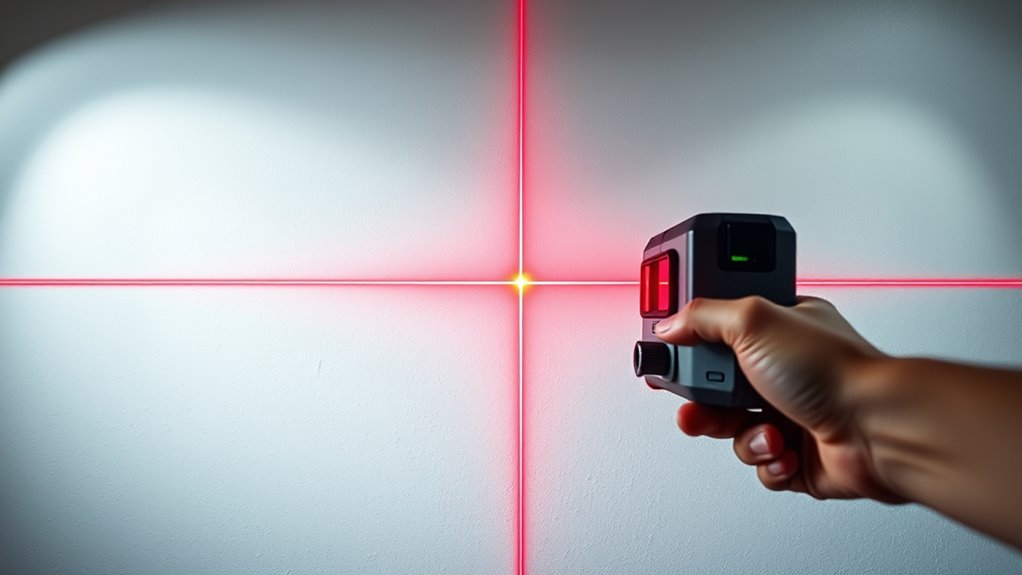

To use a laser level for accurate alignment, start by mounting it securely on a tripod, magnetic mount, or wall bracket to guarantee stability. Make sure it’s level, either automatically through self-leveling features or manually calibrated if needed. Adjust the laser for your desired height and position, then turn it on and wait for the indicator that confirms it’s ready. For more tips on achieving perfect precision, keep exploring the key techniques.

Get business pricing on tools and workshop supplies
- Business-only prices and quantity discounts
- Tax-exempt purchasing
- Multiple users, one account, clear invoices
Key Takeaways
- Ensure the laser level is properly calibrated or self-leveled before starting measurements.
- Mount the laser securely on a stable surface, using tripods or magnetic mounts for accuracy.
- Use a spirit level to verify that the laser line is perfectly horizontal or vertical.
- Always turn on the laser and wait for the self-leveling indicator to confirm readiness.
- Regularly check and recalibrate the laser to maintain precise alignment throughout the project.

Achieving precise alignment is essential for many construction and home improvement projects, and a laser level makes this task much easier. To get the most accurate results, you need to understand the various mounting options available and how to properly calibrate your device. Choosing the right mounting method is crucial because it directly impacts the laser’s stability and accuracy. Most laser levels can be mounted on tripods, magnetic mounts, or fixed to walls using brackets. Tripods are versatile and allow you to position the laser at different heights and angles. When using a tripod, ensure it’s set on a stable surface and that the legs are fully extended and locked, preventing any wobble that could skew your measurements. Magnetic mounts are handy for quick setups on metal surfaces, offering a secure hold without needing extra tools. Wall brackets or clamps are useful when working on vertical surfaces or ceilings, giving you a steady platform to attach your laser. Whichever mounting option you choose, verify that the laser level is securely fastened and level before starting your project. Additionally, understanding the self-leveling feature of many laser levels can significantly improve accuracy and ease of use. Calibration techniques are equally important to guarantee your laser level provides accurate readings. Many laser levels come with built-in self-leveling features, which automatically adjust the laser to ensure it’s perfectly horizontal or vertical. To activate this feature, turn on the device and allow it a few moments to self-level; most models will indicate when they’re ready, often with an indicator light or sound. If your laser level doesn’t have self-leveling capabilities, you’ll need to manually calibrate it. This involves placing the device on a stable, flat surface or mount, then adjusting it until the laser line aligns with a known reference point or level. Using a spirit level is a good way to double-check the laser’s accuracy—place it on top of the laser level or nearby tools to verify the laser’s line is truly straight. Regular calibration is recommended, especially after transportation or rough handling, to maintain precision. Some laser levels also have calibration screws that allow for fine adjustments; consult your user manual to learn how to access and use these features properly.
As an affiliate, we earn on qualifying purchases.
Frequently Asked Questions
Can Laser Levels Be Used Outdoors in Bright Sunlight?
Yes, you can utilize laser levels outdoors in bright sunlight, but solar glare can make the laser difficult to perceive. To combat this, choose a laser level with a high-visibility green or red beam and use a laser detector or receiver for better accuracy. Keep an eye on your battery life, as outdoor use often drains batteries faster, especially in colder weather. Proper accessories help guarantee precise alignment even in bright conditions.
What Safety Precautions Should I Take When Using a Laser Level?
When using a laser level, you should always wear eye protection to prevent potential eye damage from laser exposure. Additionally, handle batteries carefully—avoid short circuits and keep them away from heat or water to prevent leaks or fires. Always follow the manufacturer’s safety instructions, make sure the laser is properly calibrated, and keep the device out of children’s reach. Staying vigilant helps ensure safe and effective use of your laser level.
How Do I Maintain and Calibrate My Laser Level?
Did you know that regular calibration extends your laser level’s lifespan by up to 30%? To maintain and calibrate your device, follow the manufacturer’s calibration procedures, usually involving checking its accuracy against a known reference point. Keep it clean and store it in a protective case. Maintenance tips include replacing batteries promptly and avoiding drops. Regular calibration and proper care guarantee your laser level stays precise and reliable over time.
Are Laser Levels Suitable for Heavy-Duty Construction Projects?
Laser levels are suitable for heavy-duty applications because they provide industrial accuracy needed on tough construction sites. You can rely on them for precise alignment tasks under demanding conditions, ensuring your project stays on track. Just make sure to choose a laser level designed for rugged environments, with features like durability and high visibility. This way, you’ll get consistent, reliable results even in challenging, heavy-duty construction projects.
What Is the Average Lifespan of a Laser Level Battery?
The battery life of a laser level typically ranges from 4 to 12 hours, depending on the power source and usage. If you use rechargeable batteries, you can prolong the lifespan through regular charging, but disposable batteries may need frequent replacement. Always keep spare batteries handy, especially for heavy-duty projects, to avoid delays. Properly maintaining the power source ensures your laser level stays accurate and reliable during critical tasks.
As an affiliate, we earn on qualifying purchases.
Conclusion
Using a laser level makes alignment tasks 50% faster and more precise, saving you time and effort. With its accuracy within millimeters, you can trust your measurements every time. Whether hanging pictures or installing shelves, this tool guarantees perfect placement. Embrace the technology, and you’ll reduce errors and rework substantially. Next time you tackle a project, remember that laser levels have revolutionized DIY and professional work alike—bringing precision and efficiency right to your fingertips.
As an affiliate, we earn on qualifying purchases.
As an affiliate, we earn on qualifying purchases.
Columbus Day / Indigenous Peoples' Day Picks
long weekend sales
As an affiliate, we earn on qualifying purchases.