Choosing between Milwaukee and DeWalt power tools can be challenging, as both brands are renowned for durability and performance. This comparison focuses on Milwaukee’s compact brushless hammer drill and general insights into DeWalt’s offerings to help you decide which brand aligns best with your needs.

Get business pricing on tools and workshop supplies
- Business-only prices and quantity discounts
- Tax-exempt purchasing
- Multiple users, one account, clear invoices
Both brands offer reliable tools for contractors and DIY enthusiasts, but differences in design, power, and features might influence your decision. Let’s explore the specifics to make an informed choice.
At a Glance

Milwaukee Electric – M18COMPACT BRUSHLESS 1/2 INCH Hamme
- ✔ RPM Range: 0-1700
- ✔ Motor Type: Brushless
- ✔ Chuck Size: 1/2 inch
Milwaukee vs DeWalt: Full Breakdown
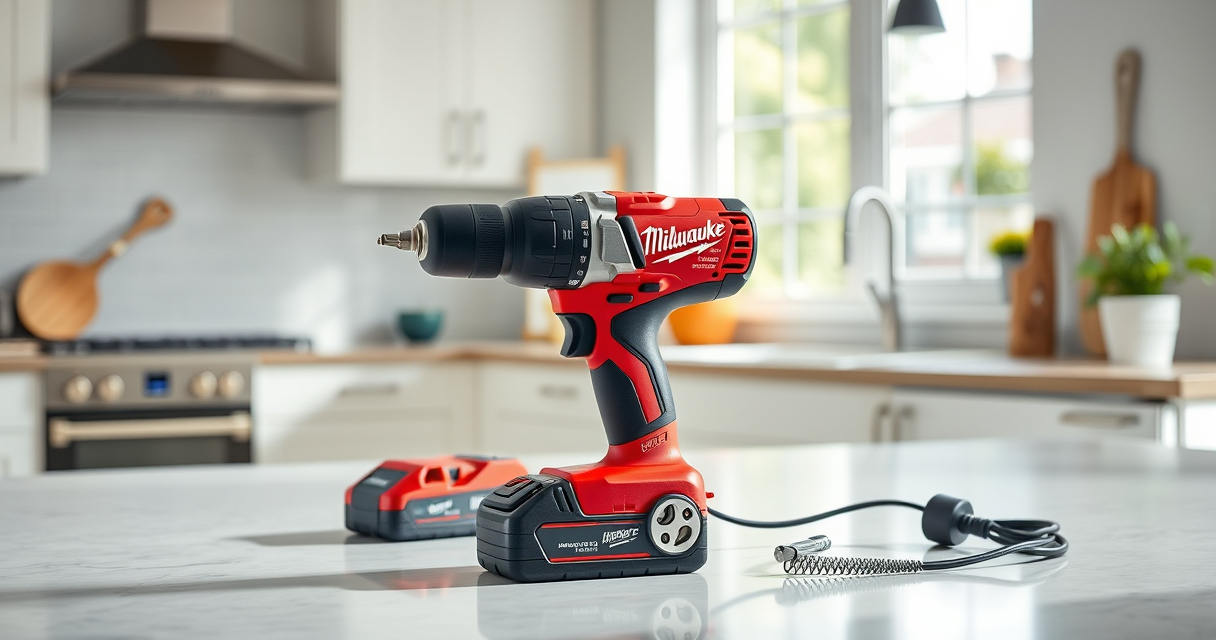
Milwaukee Electric – M18COMPACT BRUSHLESS 1/2 INCH Hamme
The Milwaukee M18COMPACT Brushless Hammer Drill provides excellent control, power, and durability in a compact form factor. Its all-metal gear case and high torque make it a reliable choice for demanding applications. DeWalt’s line offers similar power and durability but may vary in weight and size depending on the model.
Pros:
- Compact design for tight spaces
- Brushless motor for efficiency
- All-metal gear case for durability
- High torque (550 inch-lbs)
Cons:
- Battery and charger sold separately
- Limited included accessories
- Higher price point may be a consideration
Best for: Ideal for professionals needing a powerful, compact drill for overhead or tight-space work.
Not ideal for: Not the best choice for those seeking an all-in-one kit or budget-friendly options.
Bottom line: Milwaukee’s compact brushless drill excels in power, durability, and control for demanding tasks.
| Feature | Milwaukee | DeWalt |
|---|---|---|
| Design | Compact and balanced for overhead use | Varies by model, generally larger but ergonomic |
| Power | 550 inch-lbs torque, brushless motor | Typically similar torque with high-quality brushless motors |
| Durability | All-metal gear case for impact resistance | Heavy-duty construction with metal components |
| Price | Premium pricing, battery and charger sold separately | Varies but often similar or slightly lower in entry-level kits |
| Battery Compatibility | Uses M18 batteries, compatible with other M18 tools | Part of DeWalt’s 20V MAX system, compatible with other DeWalt tools |
| Weight | Lightweight for ease of use in tight spaces | Generally slightly heavier but well-balanced |
The Verdict
Professionals needing a compact, durable, and powerful drill should lean toward Milwaukee, while DIYers might find DeWalt’s range suitable.
Design and Build Quality
Milwaukee’s compact hammer drill is designed for precision and ease of use in tight spaces, featuring a balanced form factor and all-metal gear case for durability. DeWalt offers a range of models with varying sizes and ergonomic features, often emphasizing comfort for prolonged use.
Performance and Power
With 550 inch-lbs of torque, Milwaukee’s brushless motor delivers substantial power suitable for most professional applications. DeWalt’s offerings are comparable, typically equipped with high-quality brushless motors that provide consistent performance across different models.
Frequently Asked Questions
Which tool is better for overhead work?
Milwaukee’s compact design makes it ideal for overhead applications and tight spaces, offering better control and balance.
Are Milwaukee tools compatible with DeWalt batteries?
No, Milwaukee uses the M18 battery system, while DeWalt uses the 20V MAX system, so batteries are not interchangeable.
Is the Milwaukee drill suitable for heavy-duty tasks?
Yes, with 550 inch-lbs of torque and a robust all-metal gear case, it’s well-suited for demanding applications.
What should I consider when choosing between Milwaukee and DeWalt?
Consider your specific needs, such as size, power, battery system, and whether you prioritize compactness or versatility across tool collections.
Affiliate disclosure: As an Amazon Associate we earn from qualifying purchases. Prices and availability are accurate as of the time of publishing.
Fall yard work Picks
leaf blowers
As an affiliate, we earn on qualifying purchases.