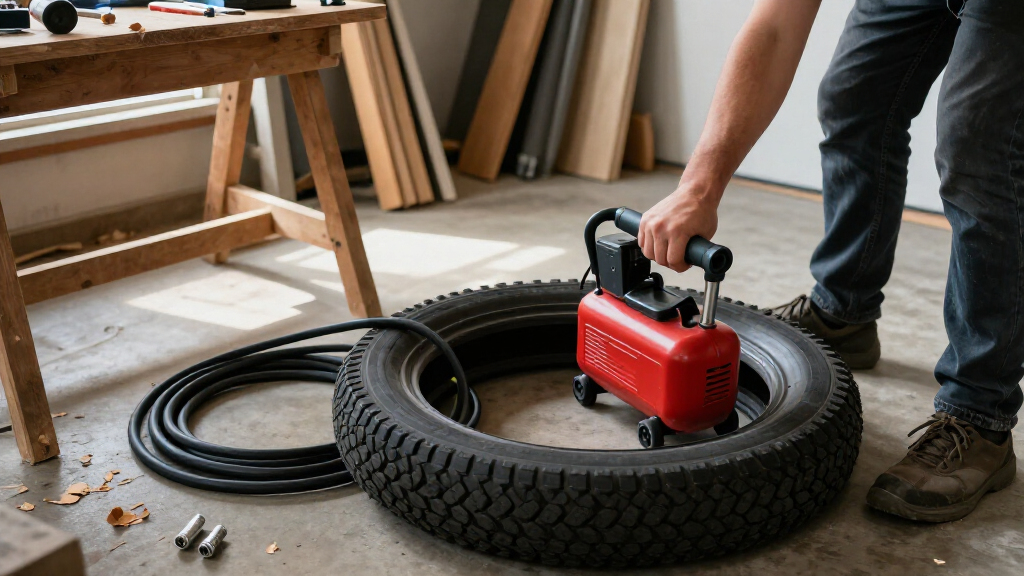

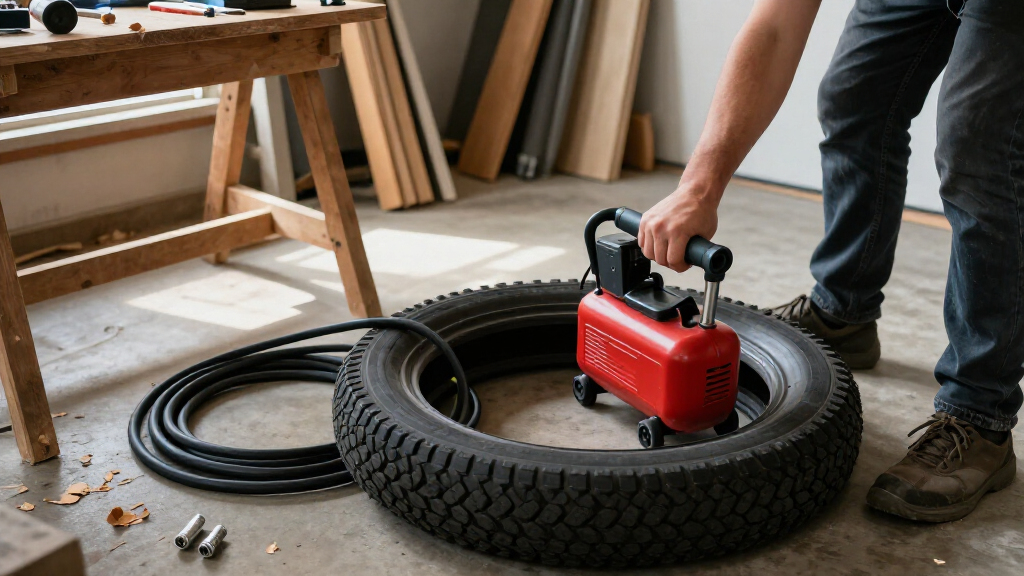
The best home air compressors balance enough airflow for your tools with a size and noise level that suit your workspace. I rank the Limodot 6-Gallon, 150-PSI compressor as the best overall choice for general home use, while the Limodot Quiet 5-Gallon stands out for quieter operation and the Klutch 20-Gallon for longer-running jobs. The main tradeoffs are tank capacity, delivered airflow, portability, and noise—not just maximum PSI. A larger tank can support longer bursts, but it takes more room and is harder to move. Read on for the full comparison and advice on matching a compressor to your tools.

Get business pricing on tools and workshop supplies
- Business-only prices and quantity discounts
- Tax-exempt purchasing
- Multiple users, one account, clear invoices
Complete the kit



Key Takeaways
- The Limodot 6-Gallon, 150-PSI model leads as the general-purpose pick because its familiar pancake-size format and high stated pressure suit a broad mix of home inflation and intermittent tool tasks.
- The Limodot Quiet 5-Gallon is the more compelling choice when noise matters, and its stated 2.8 CFM at 90 PSI gives buyers a more useful airflow reference than PSI alone.
- The Klutch 20-Gallon and RyanTek 15-Gallon serve a different job pattern: their larger tanks are better suited to extended work than the compact 1- to 3-gallon options, but they take up more space.
- Small tanks divide by portability and task scope: the JIR JINGREN 1-gallon model prioritizes a compact setup, while the Ironton 3-gallon pancake unit offers a little more stored air without moving into a large format.
- Accessory bundles and high PSI do not settle the choice: the Craftsman 2-gallon kit adds starter gear, while the DEWALT‘s 200-PSI rating is a distinct spec advantage; buyers still need to check tool airflow demands and duty cycle.
| Limodot 6-Gallon Oil-Free Air Compressor, 150 PSI |  | Best Overall for a Quiet, Ready-to-Use Home Workshop | Tank capacity: 6 gallons | Maximum pressure: 150 PSI | Airflow: 4 CFM at 40 PSI; 2.9 CFM at 90 PSI | VIEW LATEST PRICE | See Our Full Breakdown |
| Limodot Quiet Oil-Free Air Compressor, 5-Gallon Tank, 2.8 CFM at 90 PSI |  | Best Value for Quiet, General-Purpose Home Tasks | Tank capacity: 5 gallons | Maximum pressure: 120 PSI | Airflow: 2.8 CFM at 90 PSI; 4 CFM at 40 PSI | VIEW LATEST PRICE | See Our Full Breakdown |
| Ironton Oil-Free Pancake Air Compressor, 0.3 HP, 3 Gallon, 110 PSI |  | Best Compact Pick for Light-Duty Jobs | Tank capacity: 3 gallons | Maximum pressure: 110 PSI | Airflow: 0.6 CFM at 90 PSI; 0.9 CFM at 40 PSI | VIEW LATEST PRICE | See Our Full Breakdown |
| JIR JINGREN Oil-Free Quiet Air Compressor, 1 Gallon, 120 PSI, with 25-Foot Hose |  | Best for Small Jobs in Tight Storage Spaces | Tank capacity: 1 gallon | Maximum pressure: 120 PSI | Airflow: 2.6 CFM at 40 PSI; 1.65 CFM at 90 PSI | VIEW LATEST PRICE | See Our Full Breakdown |
| Klutch 20-Gallon Air Compressor, 2 HP, 120V |  | Best for Longer Home-Workshop Tool Sessions | Tank capacity: 20 gallons | Maximum pressure: 175 PSI | Airflow: 4.2 SCFM at 90 PSI; maximum 5.2 CFM | VIEW LATEST PRICE | See Our Full Breakdown |
| Craftsman 2-Gallon Oil-Free Twin-Tank Air Compressor, 1/3 HP, 125 PSI |  | Best Compact Twin-Tank Pick | Tank capacity: 2 gallons | Tank style: Twin tank | Pump: Oil-free | VIEW LATEST PRICE | See Our Full Breakdown |
| RyanTek 15-Gallon Oil-Free Air Compressor, 2 HP, 4.5 CFM at 90 PSI |  | Best for Higher-Airflow Home Workshops | Tank capacity: 15 gallons | Motor power: 2 HP | Airflow at 90 PSI: 4.5 CFM | VIEW LATEST PRICE | See Our Full Breakdown |
| 6-Gallon Oil-Free Pancake Air Compressor, 150 PSI |  | Best Quiet Pancake Compressor | Tank capacity: 6 gallons | Maximum pressure: 150 PSI | Air delivery at 90 PSI: 2.7 CFM | VIEW LATEST PRICE | See Our Full Breakdown |
| DEWALT DWFP55130 2.5-Gallon Portable Air Compressor, 200 PSI |  | Best Compact Compressor for Nailers | Tank capacity: 2.5 gallons | Maximum pressure: 200 PSI | Airflow at 90 PSI: 3.0 SCFM | VIEW LATEST PRICE | See Our Full Breakdown |
| CRAFTSMAN 2-Gallon Portable Oil-Free Air Compressor, 1/3 HP, 125 PSI, with 10-Piece Accessory Kit |  | Best Starter Kit for Inflation | Tank capacity: 2 gallons | Motor power: 1/3 HP | Maximum pressure: 125 PSI | VIEW LATEST PRICE | See Our Full Breakdown |
| home air compressor | Tank capacity | Maximum pressure | Noise level | Pump |
|---|---|---|---|---|
| Limodot 6-Gallon Oil-Free Air | 6 gallons | 150 PSI | 68 dB | — |
| Limodot Quiet Oil-Free Air Com | 5 gallons | 120 PSI | 68 dB in title; 70 dB in product information | — |
| Ironton Oil-Free Pancake Air C | 3 gallons | 110 PSI | — | — |
| JIR JINGREN Oil-Free Quiet Air | 1 gallon | 120 PSI | 70 dB | — |
| Klutch 20-Gallon Air Compresso | 20 gallons | 175 PSI | 80 dB | Oil-free |
| Craftsman 2-Gallon Oil-Free Tw | 2 gallons | 125 PSI | 78 dB | Oil-free |
| RyanTek 15-Gallon Oil-Free Air | 15 gallons | 125 PSI | 66 dB at 4 m | Oil-free, twin-cylinder |
| 6-Gallon Oil-Free Pancake Air | 6 gallons | 150 PSI | 60 dB | Oil-free, dual-cylinder |
| DEWALT DWFP55130 2.5-Gallon Po | 2.5 gallons | 200 PSI | 71.5 dBA | Oil-free |
| CRAFTSMAN 2-Gallon Portable Oi | 2 gallons | 125 PSI | 78 dB | Oil-free |
More Details on Our Top Picks
Limodot 6-Gallon Oil-Free Air Compressor, 150 PSI
The Limodot 6-Gallon is my most balanced pick for home projects that mix inflation with intermittent pneumatic-tool use. Its 4 CFM at 40 PSI and 2.9 CFM at 90 PSI give it more practical breathing room than the compact Ironton pancake compressor, whose lower airflow suits lighter tasks. The 6-gallon tank and 150 PSI maximum also provide a useful reserve, while the 68 dB operation is more neighbor-friendly than the Klutch 20-Gallon’s 80 dB. Wheels, a 25-foot hose, and an accessory kit make it easier to move and put to work without assembling a separate starter setup. The tradeoff is that this tank still cannot keep demanding air tools running continuously, and it needs a 110 V outlet. I’d choose a larger compressor for sustained spraying or other high-air-demand work.
Pros:- 6-gallon tank and 2.9 CFM at 90 PSI suit a broader range of intermittent home tasks than small pancake models.
- 68 dB operation is quieter than the Klutch 20-Gallon listed at 80 dB.
- Oil-free pump avoids routine oil checks and changes.
- Wheels, 25-foot hose, and 13-piece accessory kit support easier setup and movement.
Cons:- The 6-gallon tank can run short during extended use of demanding air tools.
- Corded 110 V operation limits where it can be used.
- The included accessory kit may not replace task-specific fittings or tools.
Best for: Homeowners who want one relatively quiet, wheeled compressor for tire inflation, household repairs, and intermittent pneumatic-tool use.
Not ideal for: Buyers running air-hungry tools for long stretches, or anyone who needs a compressor that works without a corded 110 V outlet.
- Tank capacity:6 gallons
- Maximum pressure:150 PSI
- Airflow:4 CFM at 40 PSI; 2.9 CFM at 90 PSI
- Motor:1.2 HP
- Power:Corded electric, 110 V
- Noise level:68 dB
- Hose:25 feet
- Design:Oil-free, portable, wheeled
Our verdict“Choose this Limodot for a quieter, versatile home-workshop compressor, but step up to a larger-capacity model for sustained air-tool use.”
Limodot Quiet Oil-Free Air Compressor, 5-Gallon Tank, 2.8 CFM at 90 PSI
This 5-gallon Limodot makes sense for buyers who want a capable, portable compressor with a hose and accessories included, without needing the extra tank volume of the 6-gallon Limodot. Its 2.8 CFM at 90 PSI is close to that larger model’s 2.9 CFM figure, so the airflow difference is modest; the more noticeable compromise is a gallon less stored air and a lower 120 PSI maximum. That is still a practical match for inflation and intermittent tool use, but it gives less headroom than the 150 PSI model. The oil-free pump and wheels keep ownership simple, and the stated recovery figures point to less waiting between cycles. Noise information conflicts: the title says 68 dB while product information lists 70 dB. I’d treat it as a quiet-style option, not a guaranteed exact noise level.
Pros:- 2.8 CFM at 90 PSI is close to the 6-gallon Limodot’s listed 2.9 CFM at the same pressure.
- Oil-free pump avoids routine lubrication maintenance.
- Includes a 25-foot hose, 13-piece accessory kit, and wheels.
- Product information states 80-second refill from empty and 25-second recovery.
Cons:- 5-gallon tank provides less reserve than the 6-gallon Limodot.
- 120 PSI maximum is below the 150 PSI listed for the 6-gallon model.
- Noise level is inconsistent across the supplied product information, listed as 68 dB and 70 dB.
Best for: DIY homeowners who want a wheeled, oil-free compressor with a starter hose and accessory kit for inflation and occasional pneumatic-tool jobs.
Not ideal for: Buyers who need the higher pressure and extra tank reserve of the 6-gallon Limodot, or who require a clearly verified noise specification.
- Tank capacity:5 gallons
- Maximum pressure:120 PSI
- Airflow:2.8 CFM at 90 PSI; 4 CFM at 40 PSI
- Motor:1.2 HP
- Power:Corded electric, 110 V
- Noise level:68 dB in title; 70 dB in product information
- Hose:25-foot PVC hose
- Lubrication:Oil-free
Our verdict“Pick this model for a well-equipped, lower-capacity alternative to the 6-gallon Limodot when your home jobs are mostly intermittent.”
Ironton Oil-Free Pancake Air Compressor, 0.3 HP, 3 Gallon, 110 PSI
For a small home repair kit, I’d favor the Ironton 3-Gallon Pancake over the larger Limodot compressors when easy carrying and storage matter more than speed or sustained airflow. At 20.6 pounds, with a fold-down handle and built-in cord and hose storage, it is made to be put away between jobs rather than occupy a workshop corner. Its 0.6 CFM at 90 PSI supports light-duty nailing, stapling, inflation, and cleaning, but that output is far below the 2.8–2.9 CFM listed for the Limodot models. The 110 PSI ceiling and small tank reinforce its role as a compact helper, not a general-purpose air supply for extended tool work. The oil-free pump keeps upkeep simple; the manual drain is a small but recurring chore after use.
Pros:- 20.6-pound weight and fold-down handle make it easier to carry and store than the wheeled Limodot models.
- Built-in cord wrap, hose retainer, and quick coupler help keep a small work area organized.
- Oil-free direct-drive pump requires no oil checks or changes.
- Low-profile pancake tank provides a stable footprint.
Cons:- 0.6 CFM at 90 PSI is substantially below the Limodot models’ listed airflow.
- 3-gallon capacity and 110 PSI maximum limit its suitability for sustained or demanding air-tool work.
- Manual drain requires the user to release tank moisture by hand.
Best for: Apartment dwellers, casual DIYers, and homeowners who need a light compressor for occasional inflation, brad nailing, stapling, or short cleanup jobs.
Not ideal for: People using air tools for extended sessions or needing faster recovery and higher airflow than this 0.3 HP, 3-gallon unit provides.
- Tank capacity:3 gallons
- Maximum pressure:110 PSI
- Airflow:0.6 CFM at 90 PSI; 0.9 CFM at 40 PSI
- Motor:0.3 HP
- Power:Corded electric, 120 V
- Weight:20.6 pounds
- Auto-on / auto-off pressure:85 PSI / 110 PSI
- Pump and drain:Oil-free, direct-drive pump; manual drain
Our verdict“Choose the Ironton when compact storage and carrying ease matter more than the airflow and tank reserve of the Limodot compressors.”
JIR JINGREN Oil-Free Quiet Air Compressor, 1 Gallon, 120 PSI, with 25-Foot Hose
The JIR JINGREN 1-Gallon is the most compact-tank option here, suited to buyers who need a compressor for short bursts of inflation, air brushing, or light fastening rather than long tool sessions. Its listed 1.65 CFM at 90 PSI is higher than the Ironton pancake’s 0.6 CFM at that pressure, so it offers more airflow on paper despite having a much smaller tank. That distinction may help with brief tasks, but the one-gallon reserve means it will need to cycle more often than either Limodot. A muffler and stated 70 dB noise level make it a quieter-style choice, though the supplied weight of 27.5 pounds is not especially light for its capacity. The included 25-foot hose adds reach, while corded 110 V power and limited stored air constrain where and how long it can work.
Pros:- Listed 1.65 CFM at 90 PSI exceeds the Ironton pancake’s 0.6 CFM at 90 PSI.
- One-gallon tank and compact dimensions take less storage space than the 5- and 6-gallon Limodot units.
- Muffler and listed 70 dB noise level suit buyers seeking a quieter-style compressor.
- Includes a 25-foot hose and automatic shut-off.
Cons:- One-gallon tank offers little reserve for extended tool use and can lead to frequent cycling.
- At 27.5 pounds, it is heavier than the 20.6-pound Ironton despite its smaller tank.
- Corded 110 V operation limits use away from an outlet.
Best for: DIYers with limited storage who need a compact compressor for tire inflation, air brushing, or short bursts of light fastening.
Not ideal for: Buyers who want long operating intervals, a lightweight carry-in unit, or a larger air reserve for extended pneumatic-tool work.
- Tank capacity:1 gallon
- Maximum pressure:120 PSI
- Airflow:2.6 CFM at 40 PSI; 1.65 CFM at 90 PSI
- Motor:1 HP
- Power:Corded electric, 110 V
- Noise level:70 dB
- Weight and dimensions:27.5 pounds; 17.3 × 14.6 × 15 inches
- Hose:25 feet
Our verdict“Choose the JIR JINGREN for compact storage and short jobs where its airflow matters more than tank capacity or easy carrying.”
Klutch 20-Gallon Air Compressor, 2 HP, 120V
When tank reserve matters more than low noise or easy lifting, the Klutch 20-Gallon is the strongest fit in this group. Its 20-gallon tank and 4.2 SCFM at 90 PSI give it a clear capacity advantage over the 5- and 6-gallon Limodot compressors, making it better suited to longer stretches of nailing or spraying. The 175 PSI maximum adds pressure headroom, while the oil-free pump avoids routine oil maintenance. This is still a portable design only in the limited sense that it has large wheels and a handle: at 90 pounds, moving it between floors or lifting it into a vehicle is a substantial task. Its 80 dB operation is also much louder than the Limodot options listed at 68 dB, so it fits a detached or well-separated workshop better than noise-sensitive indoor use.
Pros:- 20-gallon tank provides far more stored air than the 5- and 6-gallon Limodot models.
- 4.2 SCFM at 90 PSI suits longer home-workshop tool sessions better than the smaller compressors here.
- Oil-free pump reduces routine maintenance.
- Large rubber wheels, ergonomic handle, foot stabilizers, and thermal overload protection support workshop use.
Cons:- 90-pound weight makes frequent lifting or movement between floors impractical.
- 80 dB noise level is considerably louder than the Limodot models’ listed 68 dB.
- Its 19.1 × 17.5 × 41.5-inch dimensions require dedicated storage space.
Best for: Home workshop owners who use pneumatic nailers or spray equipment for longer sessions and can keep a heavy compressor on one level.
Not ideal for: Buyers who need a quiet indoor unit, frequently carry a compressor between locations, or have limited room for a 20-gallon tank.
- Tank capacity:20 gallons
- Maximum pressure:175 PSI
- Airflow:4.2 SCFM at 90 PSI; maximum 5.2 CFM
- Motor:2 HP
- Power:Corded electric, 120 V; maximum 14 A
- Noise level:80 dB
- Weight and dimensions:90 pounds; 19.1 × 17.5 × 41.5 inches
- Pump:Oil-free
Our verdict“Pick the Klutch for greater air reserve and longer tool sessions if you have room for a heavy, louder workshop compressor.”
Craftsman 2-Gallon Oil-Free Twin-Tank Air Compressor, 1/3 HP, 125 PSI
The Craftsman CMXECXA0220242 is a sensible choice when storage space and easy carrying matter more than sustained tool runtime. Its 22.8-pound steel twin-tank design is more portable than the 15-gallon RyanTek, while its oil-free pump keeps upkeep simple for occasional household jobs. It can handle inflation, stapling, and intermittent nailing, but the modest 0.5 CFM at 90 PSI means it will refill slowly during repeated tool use. That makes it a better fit for short bursts than the 6-gallon pancake compressor, which offers greater airflow for longer work. The 78 dB operating level is also noticeable indoors. I’d choose this Craftsman for compact storage and light jobs, not for a workshop built around air-hungry tools.
Pros:- Compact 22.8-pound build is easier to carry and store than larger tank models.
- Oil-free pump avoids routine oil changes.
- Twin steel tanks provide 125 PSI maximum pressure in a small footprint.
- Suitable for common intermittent tasks such as inflation, nailing, and stapling.
Cons:- Only 0.5 CFM at 90 PSI limits sustained use with pneumatic tools.
- The 2-gallon capacity requires frequent recovery during longer jobs.
- Operating noise is rated at 78 dB.
Best for: Homeowners who need a lightweight, easy-to-store compressor for tires, occasional nailing, stapling, and small repair projects.
Not ideal for: DIYers running pneumatic tools for extended stretches or anyone who needs strong airflow at 90 PSI; its 2-gallon tank and 0.5 CFM delivery limit runtime.
- Tank capacity:2 gallons
- Tank style:Twin tank
- Pump:Oil-free
- Maximum pressure:125 PSI
- Airflow at 90 PSI:0.5 CFM
- Motor power:0.34 HP
- Noise level:78 dB
- Weight:22.8 pounds
Our verdict“Choose this Craftsman for compact storage and occasional household air-tool work, but pick a higher-flow compressor for longer sessions.”
RyanTek 15-Gallon Oil-Free Air Compressor, 2 HP, 4.5 CFM at 90 PSI
The RyanTek DOF1500-50V is the lineup’s workshop-oriented choice for buyers whose tools need more than a small portable tank can supply. Its 4.5 CFM at 90 PSI and 15-gallon reserve give it a clear capacity advantage over the Craftsman 2-gallon models and the DEWALT DWFP55130, making it better suited to repeated nailing, drilling, spraying, and repair tasks. The vertical tank helps conserve floor space, while wheels and a handle make repositioning possible. Its 66 dB rating is quieter than the Craftsman units listed here, though the compressor still weighs 68.3 pounds, so “portable” does not mean easy to lift. It also needs a corded 110 V outlet. I’d favor it for a fixed home workshop, not for carrying between rooms or job sites.
Pros:- Delivers 4.5 CFM at 90 PSI for stronger support of compatible air tools.
- 15-gallon vertical tank provides more reserve than the small Craftsman and DEWALT models.
- Oil-free twin-cylinder pump is rated at 66 dB at 4 meters.
- Wheels, handle, dual outlets, and upward-facing gauge suit workshop positioning.
Cons:- At 68.3 pounds, it is difficult to lift despite its wheels and handle.
- Requires a corded 110 V electrical connection.
- Its larger tank takes up more room than compact compressors.
Best for: Home workshop owners who use several compatible air tools and want a larger reserve, useful airflow, and quieter operation.
Not ideal for: People who need a compressor they can lift into a vehicle, work away from an outlet, or store in a very small space.
- Tank capacity:15 gallons
- Motor power:2 HP
- Airflow at 90 PSI:4.5 CFM
- Maximum pressure:125 PSI
- Pump:Oil-free, twin-cylinder
- Noise level:66 dB at 4 m
- Voltage:110 V
- Weight:68.3 pounds
Our verdict“Pick the RyanTek for a home workshop that needs more airflow and tank reserve than compact compressors can provide.”
6-Gallon Oil-Free Pancake Air Compressor, 150 PSI
This 6-gallon pancake compressor balances useful capacity with a quieter stated operating level than the other compact options here. Its 2.7 CFM at 90 PSI and 150 PSI maximum give it more breathing room for finish nailing and inflation than either 2-gallon Craftsman, while its 60 dB rating may suit a home garage where noise matters. The oil-free dual-cylinder pump and automatic pressure controls also reduce routine upkeep. Compared with the higher-flow 15-gallon RyanTek, this model takes up less space and should be easier to move by its handle, but it cannot match that compressor’s 4.5 CFM delivery or tank reserve. One practical catch: the hose and accessories are sold separately, and the product information conflicts on whether the operating voltage is 110V or 120V.
Pros:- Rated at 60 dB, quieter than the 78 dB Craftsman 2-gallon models.
- 2.7 CFM at 90 PSI and a 6-gallon tank suit many intermittent home tasks.
- Oil-free pump avoids routine oil changes.
- Automatic shut-off, overload protection, regulator, and gauge are included.
Cons:- Air hose and accessories are sold separately.
- Product information lists both 110V and 120V, creating uncertainty about voltage.
- Lower airflow and tank capacity than the 15-gallon RyanTek limit extended use of demanding tools.
Best for: Garage DIYers who want a quieter compressor for finish nailing, inflation, and other compatible intermittent tools without a large tank.
Not ideal for: Buyers who need a ready-to-use accessory bundle, sustained high-airflow performance, or unambiguous electrical specifications before purchase.
- Tank capacity:6 gallons
- Maximum pressure:150 PSI
- Air delivery at 90 PSI:2.7 CFM
- Motor power:1 HP
- Pump:Oil-free, dual-cylinder
- Noise level:60 dB
- Voltage listed:110V in specifications; 120V in description
- Pressure switch:Restarts at 115 PSI; stops at 150 PSI
Our verdict“Choose this pancake model for quieter home-garage use and moderate airflow, provided you are comfortable sourcing the hose and confirming voltage.”
DEWALT DWFP55130 2.5-Gallon Portable Air Compressor, 200 PSI
The DEWALT DWFP55130 stands apart from the small Craftsman compressors with 3.0 SCFM at 90 PSI and a 200 PSI maximum, giving compatible tools stronger airflow and a higher pressure ceiling in a compact package. Its 2.5-gallon tank still limits how long it can sustain demanding work, so this is a better match for nailers and short tool cycles than extended spraying or other high-demand jobs. The dual quick couplers can support two nailers, a useful advantage for trim work that the single-outlet details on the Craftsman units do not match. At 71.5 dBA, it is quieter by specification than those 78 dB Craftsman models, but louder than the 60 dB pancake compressor. Its ability to stand or lie horizontally also gives it flexible storage options.
Pros:- 3.0 SCFM at 90 PSI provides more airflow than the 2-gallon Craftsman compressors.
- 200 PSI maximum pressure exceeds the other listed models in this batch.
- Dual quick couplers can serve two nailers.
- Can be stored horizontally or vertically and uses an oil-free pump.
Cons:- The 2.5-gallon tank limits runtime with tools that draw air continuously.
- Requires a corded 120 V outlet.
- At 36 pounds, it is less convenient to carry than the 19-pound Craftsman accessory-kit model.
Best for: Trim carpenters and home DIYers who want a compact compressor for one or two nailers, with flexible storage and stronger airflow than tiny-tank models.
Not ideal for: Users running air-hungry tools for long stretches or anyone seeking a large tank reserve for workshop production tasks.
- Tank capacity:2.5 gallons
- Maximum pressure:200 PSI
- Airflow at 90 PSI:3.0 SCFM
- Pump:Oil-free
- Voltage:120 volts
- Current:12 A
- Noise level:71.5 dBA
- Weight:36 pounds
Our verdict“Choose the DEWALT for compact nailer-focused work that benefits from higher pressure and dual couplers, not for sustained high-demand tool use.”
CRAFTSMAN 2-Gallon Portable Oil-Free Air Compressor, 1/3 HP, 125 PSI, with 10-Piece Accessory Kit
For buyers starting with tire inflation and basic garage chores, this 19-pound Craftsman is the most ready-to-go pick in this group: its included 10-piece accessory kit supplies common inflation fittings and a blow gun, unlike the 6-gallon pancake compressor, which comes without a hose or accessories. The oil-free pump and reinforced handle make it straightforward to store and carry, and the 125 PSI ceiling suits routine inflation tasks. Its 2-gallon tank, however, is not a substitute for the higher-output DEWALT DWFP55130 or the larger RyanTek. Air-tool sessions will be brief, and its 78 dB noise rating is noticeable. I’d pick it when included accessories and low carrying weight matter more than airflow or longer runtime.
Pros:- At 19 pounds, it is the lightest listed option in this batch.
- Includes a 10-piece kit with hose, tire gauge, blow gun, and inflation fittings.
- Oil-free pump requires no lubrication maintenance.
- 125 PSI maximum pressure supports common inflation tasks.
Cons:- The 2-gallon tank limits runtime with air tools.
- The 78 dB noise rating is noticeable during indoor use.
- Its small tank and 1/3 HP motor are less suited to extended tool work than the DEWALT or RyanTek.
Best for: First-time compressor owners who mainly inflate tires and sports equipment and want common fittings included in the box.
Not ideal for: DIYers who need sustained airflow for pneumatic tools, quieter operation, or a larger tank for repeated workshop tasks.
- Tank capacity:2 gallons
- Motor power:1/3 HP
- Maximum pressure:125 PSI
- Pump:Oil-free
- Voltage:120 V
- Weight:19 pounds
- Noise level:78 dB
- Included accessories:10-piece kit including hose, tire gauge, blow gun, and fittings
Our verdict“Choose this Craftsman as a lightweight starter set for inflation and occasional small jobs, not as a workshop compressor for sustained tool use.”
How We Picked
I compared the ten compressors around the jobs homeowners are most likely to do: tire and sports-equipment inflation, occasional finish-tool use, workshop cleanup, and more sustained tool operation. The ranking weighs stated airflow at working pressure where provided, tank capacity, pressure rating, portability, noise positioning, and practical setup details such as included hose or accessories. I gave greater weight to useful operating information and a format that can serve several common household tasks than to a high PSI figure on its own.
The order reflects fit, not a claim that one compressor is best for every garage. The Limodot 6-gallon model takes the general-use lead; the quieter Limodot earns a close alternative for noise-sensitive spaces, and larger-tank models rank for buyers who can trade portability for more stored air. Compact units and accessory-focused options sit lower because their strengths are narrower. Where the supplied product details do not state airflow, noise, or duty-cycle figures, I avoid treating those capabilities as established.
| home air compressor | Power | Pump |
|---|---|---|
| Limodot 6-Gallon Oil-Free Air | Corded electric, 110 V | — |
| Limodot Quiet Oil-Free Air Com | Corded electric, 110 V | — |
| Ironton Oil-Free Pancake Air C | Corded electric, 120 V | — |
| JIR JINGREN Oil-Free Quiet Air | Corded electric, 110 V | — |
| Klutch 20-Gallon Air Compresso | Corded electric, 120 V; maximum 14 A | Oil-free |
| Craftsman 2-Gallon Oil-Free Tw | — | Oil-free |
| RyanTek 15-Gallon Oil-Free Air | — | Oil-free, twin-cylinder |
| 6-Gallon Oil-Free Pancake Air | — | Oil-free, dual-cylinder |
| DEWALT DWFP55130 2.5-Gallon Po | — | Oil-free |
| CRAFTSMAN 2-Gallon Portable Oi | — | Oil-free |
Factors to Consider When Choosing Best Home Air Compressors
Before choosing a compressor, start with the tools and work pattern you actually have, not the biggest number on a product label. These factors can help you decide whether a compact unit, a quieter model, or a larger tank makes sense for your home.
Match Airflow to the Tool, Not Just PSI
CFM at a stated PSI is usually more helpful than maximum PSI when you are checking whether a compressor can run a pneumatic tool. PSI describes pressure, while CFM describes how much air the tool can receive over time. Look up the tool maker’s required airflow and compare it with the compressor’s delivered airflow at a similar pressure. If the compressor falls short, a larger tank may postpone pressure loss but cannot make up for low output during sustained use. For intermittent tasks such as inflation or brief fastening, that shortfall may matter less. A common buying mistake is treating a high PSI rating as proof that a model can run any air tool.
Choose Tank Size for Work Rhythm and Storage
Tank capacity affects how often the motor cycles, but it does not tell the whole story about how long a tool can run. A larger tank stores more air for short bursts and can reduce frequent starts during intermittent work; continuous-use tools depend heavily on the pump’s airflow. Measure the floor or shelf space before moving up to a 15- or 20-gallon format, and account for access to the drain valve and outlet. Smaller tanks are easier to store and carry, though they may cycle more often during demanding jobs. Match the tank to the length of your typical sessions rather than assuming the biggest tank is always the safest choice.
Treat Noise as a Workspace Constraint
Noise can shape where and when you can work, especially in attached garages, shared homes, or small workshops. Oil-free compressors can be convenient to maintain, but oil-free construction does not automatically mean quiet operation. If sound is a concern, look for a published decibel figure and check whether it was measured under comparable conditions; a label that says quiet is useful direction, not a precise measurement. Consider where the compressor will sit and whether a longer hose lets you place it farther from the work area. Avoid choosing on noise claims alone if the listing does not provide a measurable specification.
Check Portability Beyond the Tank Label
Portable does not mean effortless to move: the tank, motor, handle, wheels, and cord arrangement all affect day-to-day handling. A small compressor may be easy to carry but offer limited stored air, while a larger wheeled model may be manageable across a garage and awkward on stairs. Think about whether you will move the unit between a garage, driveway, and storage area or leave it in one place. Check dimensions and weight before buying, and leave room for ventilation and maintenance access. A hose included with a compact compressor can extend its reach, but it does not reduce the weight of the compressor itself.
Account for Duty Cycle and Motor Recovery
Recovery time and duty cycle determine how well a compressor fits repeated work. A tool that draws air continuously can make a small compressor run nearly nonstop, which may lead to pauses or added wear if the unit is not rated for that pattern. Review the manufacturer’s guidance on continuous operation, cooling breaks, and restart behavior before planning a long project. For occasional inflation or short fastening bursts, frequent recovery may be acceptable; for painting or extended sanding, it can interrupt the job. Do not infer a compressor’s duty cycle from its tank size, horsepower, or pressure rating when the product information does not state it.
Compare Maintenance, Accessories, and Power Needs
Convenience features are useful only when they fit your setup. Oil-free models avoid routine oil changes, but buyers should still check filter, drain, and storage instructions. An accessory kit can help a beginner inflate items right away, though it should not outweigh the compressor’s operating limits or the quality of the included fittings. Confirm that the unit’s electrical requirements suit the outlet and circuit where you plan to use it, particularly for a higher-output model. Also check connector types and hose compatibility before assuming existing tools will attach. A small amount of setup research can prevent buying a compressor that fits the project on paper but not the workshop.
Frequently Asked Questions
Can a 6-gallon home compressor run an impact wrench?
Tank size alone cannot answer that; check the impact wrench’s airflow requirement and the compressor’s CFM at the required pressure. Many impact tools draw air in short bursts, so a modest compressor may handle occasional loosening while struggling with repeated or extended use. A larger tank can provide a longer burst before pressure drops, but it cannot sustain a tool that needs more airflow than the pump delivers. Compare the specifications at similar PSI, and plan for pauses if the compressor must recover. If frequent impact work is the goal, prioritize delivered CFM and duty-cycle guidance over a high maximum-PSI number.
Is a quiet compressor worth choosing for a home garage?
It can be a worthwhile tradeoff if the garage is attached to living space, the compressor will run near neighbors, or you work during noise-sensitive hours. A quieter design can make repeated starts less disruptive, but confirm the decibel rating rather than relying only on a quiet label. Also compare airflow and tank capacity, since a low-noise model may not suit a tool that needs sustained air. For occasional inflation in a detached garage, portability or output may matter more than sound. The right choice depends on where the compressor runs and how often it cycles.
Should I buy a larger tank or a compressor with higher CFM?
Choose based on how the tool consumes air. A larger tank helps with short bursts and can reduce how often the motor starts, while higher CFM supports tools that draw air continuously or in rapid succession. If a tool’s demand exceeds the pump’s output, a bigger tank only delays the pressure drop; it does not solve the mismatch. For inflation and intermittent fastening, tank capacity may be a practical comfort factor. For sanding, spraying, or repeated impact work, airflow and the manufacturer’s duty-cycle guidance deserve more attention.
Are oil-free compressors a good choice for home use?
Oil-free models make sense for buyers who want simpler routine maintenance and a compressor that can be stored without managing pump oil. That convenience does not mean the unit needs no care: draining moisture, keeping air intakes clear, and following storage instructions still matter. Oil-free construction also does not guarantee low noise or long continuous run capability. Check the operating guidance and available replacement parts for the specific model. For typical household inflation and intermittent work, oil-free designs can be a practical fit; demanding shop use calls for closer attention to output and service requirements.
Which compressor is the better starter choice if I do not own air tools yet?
Start by listing the jobs you expect to do, such as tire inflation, brad nailing, or occasional cleanup, and avoid buying capacity for tools you may never use. A compact, oil-free model can be easier to store and simpler to maintain, while an accessory bundle may provide basic fittings for inflation tasks. Check whether the included accessories match your needs and whether the compressor supplies enough airflow for any tool you plan to add. The Craftsman 2-gallon kit is a clear bundle-oriented option in this group, while the Limodot 6-gallon model offers a broader general-use format. If your plans include sustained air-tool work, wait to choose until you know the tools’ CFM requirements.
Conclusion
For a flexible home setup, I would start with the Limodot 6-Gallon, 150-PSI compressor as the best overall pick. The best value for general intermittent use is the 6-gallon pancake format, while buyers who want more stored air for longer sessions should compare the Klutch 20-Gallon and RyanTek 15-Gallon against their space and airflow needs. For a quieter workspace, the Limodot Quiet 5-Gallon is the standout; for beginners who want a compact starter setup with accessories, consider the CRAFTSMAN 2-Gallon kit. Choose the JIR JINGREN 1-Gallon for a small-footprint, hose-included setup, or the DEWALT DWFP55130 if its 200-PSI rating matches a specific requirement. I would skip any model whose stated airflow or duty-cycle guidance does not match the tools you plan to run.
Black Friday Picks

Sonos One SL (3-Pack) – Microphone-Free Speaker, Black
As an affiliate, we earn on qualifying purchases.