If you’re searching for the best bench grinder replacement wheels, the choice comes down to matching the abrasive to your specific work. For most general-purpose grinding on mild steel, the DeWalt 429633-00 6-Inch 60 Grit wheel stands out as the best overall pick because it balances material removal with a clean edge finish. The Norton Premium Blue Ceramic Alumina wheel is the premium choice if you want longer wheel life and cooler cutting on hardened steels, while the POWERTEC 8-Inch 80 Grit wheel offers the best value for everyday shop use. The main tradeoffs you’ll face are wheel material (aluminum oxide vs. silicon carbide vs. ceramic), grit size, and whether you need a 6-inch or 8-inch diameter to match your grinder. Continue reading for the full breakdown of all 13 options, including who each wheel suits best and where they fall short.

Get business pricing on tools and workshop supplies
- Business-only prices and quantity discounts
- Tax-exempt purchasing
- Multiple users, one account, clear invoices
Complete the kit



Key Takeaways
- The DeWalt 6-inch 60-grit wheel wins best overall because its medium bond hardness and consistent grit distribution handle both sharpening and light stock removal without loading up on mild steel.
- Ceramic alumina wheels like the Norton Blue outlast standard aluminum oxide by a wide margin, but they cost more and only pay off if you grind hardened tool steels regularly.
- Silicon carbide wheels are non-negotiable for carbide tooling and non-ferrous metals like aluminum and brass; using aluminum oxide on these materials causes rapid glazing and poor cutting.
- Wheel diameter is a bigger factor than most buyers expect: 8-inch wheels remove material roughly 30% faster than 6-inch wheels, but they require a grinder with a larger guard and higher RPM rating.
- Multi-packs and combination sets, such as the POWERTEC 60/150 2-pack or the wheel-and-wire-brush kit, deliver better value for beginners who need both coarse and fine grinding without buying separate wheels.




| bench grinder replacement wheel | Abrasive material | Grit | Compatible materials | Arbor hole |
|---|---|---|---|---|
| DeWalt 429633-00 6-Inch Bench | — | 60 (medium), A60 | — | — |
| POWERTEC 8-Inch Aluminum Oxide | Aluminum oxide | 80 (fine) | Carbon steel and tool steel | 5/8 inch |
| 6-Inch 150-Grit Silicon Carbid | Silicon carbide | 150 | Aluminum, copper, titanium, carbide, and stainless steel | 1/2 inch |
| POWERTEC 8-Inch Aluminum Oxide | Aluminum oxide | — | Carbon steel and tool steel | 5/8 inch |
| 6-Inch Bench Grinder Wheel and | — | — | Aluminum, metal, and titanium | 1/2 inch |
| Forney 72397 8-Inch Aluminum O | Aluminum oxide | 60 | — | — |
| POWERTEC 6-Inch Aluminum Oxide | Aluminum oxide | 60, medium | Carbon steel and tool steel | 1/2 inch |
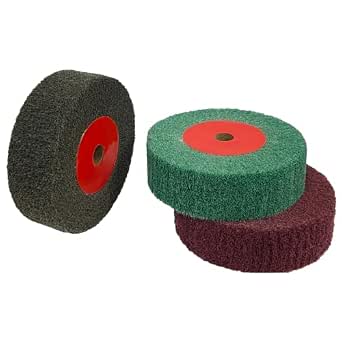
| 3PCS 4 Inch Bench Grinder Poli | Nonwoven nylon | — | Stainless steel, aluminum, copper, iron, wood, and other metals | 1/2 inch |
| Norton Premium Blue Ceramic Al | Ceramic alumina | 80, coarse | Stainless steel, hard carbon steels, iron, titanium, and super alloys | — |
| SANJIAN 6-Inch Silicon Carbide | Silicon carbide | 60, medium | Metallic and non-metallic materials | 1/2 inch |
| AmaCupid 6-Inch Bench Grinder | White aluminum oxide | 80 | — | — |
| POWERTEC 8-Inch Aluminum Oxide | Aluminum oxide | 60, medium | Carbon steel and tool steel | 5/8 inch |
| Truper Silicon Carbide Grindin | Silicon carbide | 60, coarse | — | — |
More Details on Our Top Picks
DeWalt 429633-00 6-Inch Bench Grinder Wheel, 60 Grit
For owners of a DeWalt DW756 or DW756-CA, this wheel is the most direct replacement in the group: its listed fit covers multiple grinder types, and its 60-grit A60 surface suits routine sharpening, shaping, and material removal. Compared with the POWERTEC 6-Inch Aluminum Oxide 60 Grit wheel, its clearest advantage is model-specific compatibility rather than broader stated fit; that can make the choice simpler if you want the specified DeWalt part. The tradeoff is equally clear: it is not presented as a universal wheel, so buyers with another grinder should check dimensions and arbor fit rather than assume compatibility. Its 5.85-inch stated diameter also differs slightly from the nominal six-inch size, making grinder clearance and fit worth confirming.
Pros:- Specified for DeWalt DW756 and DW756-CA grinders across Types 1, 2, and 3.
- 60-grit surface handles general sharpening, shaping, and stock removal.
- Designed for routine workshop and maintenance use.
Cons:- Compatibility is limited to the listed DeWalt models.
- The supplied data does not state an arbor-hole size, so buyers should verify fit before ordering.
Best for: DW756 and DW756-CA owners replacing a worn wheel with the specified DeWalt part for everyday sharpening and grinding.
Not ideal for: Owners of other grinder models who need broadly stated compatibility or a finer finishing grit.
- Brand:DeWalt
- Part number:429633-00
- Grit:60 (medium), A60
- Wheel diameter:5.85 inches
- Wheel dimensions:6 x 1 inches
- Maximum rotational speed:3450 rpm
- Compatible models:DeWalt DW756 and DW756-CA, Types 1, 2, and 3
- Included:1 grinding wheel
Our verdict“Choose this wheel for a listed DW756-series grinder when model-specific fit matters more than broad compatibility.”
POWERTEC 8-Inch Aluminum Oxide Bench Grinder Wheel, 80 Grit
This POWERTEC wheel is a practical choice when an 8-inch grinder needs a finer general-purpose replacement for steel work. Its 80-grit aluminum oxide surface sits between the coarser 60-grit wheels in this roundup and the 150-grit wheel included in POWERTEC’s 8-inch two-pack, giving buyers a middle ground for sharpening, smoothing, and rust cleanup. The stated 5/8-inch arbor and compatibility with most 8-inch bench grinders make it less model-specific than the DeWalt 429633-00. Its limits matter: it is intended for carbon and tool steel, not tungsten carbide, cemented carbide, or ceramic. Buyers wanting both a rougher and finer wheel may prefer the POWERTEC 60/150-grit set, while this single wheel is the simpler fit for replacing one station.
Pros:- 80-grit aluminum oxide supports sharpening, smoothing, and rust removal.
- 5/8-inch arbor and 8-inch diameter suit most grinders of that size.
- Can handle carbon steel and tool steel.
Cons:- Not intended for tungsten carbide, cemented carbide, or ceramic.
- A single grit offers less task flexibility than the POWERTEC 60/150-grit two-wheel set.
Best for: Owners of compatible 8-inch bench grinders who mainly sharpen or smooth carbon-steel and tool-steel tools with one medium-fine wheel.
Not ideal for: Users grinding carbide or ceramic, or buyers who want two grit options in one purchase.
- Diameter:8 inches
- Thickness:1 inch
- Arbor hole:5/8 inch
- Grit:80 (fine)
- Abrasive material:Aluminum oxide
- Maximum rotational speed:3600 rpm
- Compatible machines:Most 8-inch bench grinders
- Compatible materials:Carbon steel and tool steel
Our verdict“Pick this as a single finer wheel for an 8-inch grinder used on carbon or tool steel, not carbide or ceramic.”
6-Inch 150-Grit Silicon Carbide Bench Grinder Wheel, 1/2-Inch Arbor
Among these replacement options, the POLIWELL wheel is the specialist pick for buyers who want a fine 150-grit finish and work with materials beyond ordinary steel. Its silicon carbide abrasive is listed for aluminum, copper, titanium, carbide, and stainless steel, giving it a wider stated material range than the POWERTEC 8-Inch 80 Grit wheel, which is specified for carbon and tool steel. The finer grit is better suited to controlled sharpening and lighter cleanup than the 60-grit DeWalt wheel, but it is not the choice for fast, aggressive stock removal. Fit is another constraint: this is a 6-inch wheel with a 1/2-inch arbor, so check the grinder shaft and wheel dimensions before purchase. It is sold as one wheel, not a multi-grit set.
Pros:- 150 grit supports finer sharpening and lighter shaping than 60-grit options.
- Silicon carbide is listed for aluminum, copper, titanium, carbide, and stainless steel.
- Vitrified construction and a 1/2-inch arbor are specified.
Cons:- The 1/2-inch arbor limits fit to compatible grinders.
- Fine grit is less suited to aggressive material removal than the 60-grit DeWalt wheel.
- The package contains one wheel, with no second grit for switching tasks.
Best for: Bench-grinder owners with a 1/2-inch arbor who need a fine wheel for sharpening or light work on stainless steel and non-ferrous metals.
Not ideal for: Users prioritizing fast stock removal, or owners of grinders with a different arbor size.
- Brand:POLIWELL
- Abrasive material:Silicon carbide
- Grit:150
- Diameter:6 inches
- Thickness:0.75 inches
- Arbor hole:1/2 inch
- Construction:Vitrified
- Compatible materials:Aluminum, copper, titanium, carbide, and stainless steel
- Package quantity:1 grinding wheel
Our verdict“Choose this for finer work on varied metals when your grinder has a 1/2-inch arbor and rapid stock removal is not the priority.”
POWERTEC 8-Inch Aluminum Oxide Bench Grinder Wheels, 60 and 150 Grit, 2-Pack
This set earns its place for buyers who want to replace both wheels on an 8-inch bench grinder with contrasting grits. The 60-grit wheel handles heavier sharpening and stock removal, while the 150-grit wheel offers a finer option for follow-up work; that range is more versatile than the single 80-grit POWERTEC wheel. Both are aluminum oxide with 5/8-inch arbors, and the set is specified for carbon steel and tool steel. That shared material limit is the main tradeoff: these wheels are not intended for carbide or ceramic, and the product data also excludes non-metallic materials such as wood and plastic. Buyers who only need one replacement wheel may find the second grit unnecessary, while mixed-metal users should compare the POLIWELL silicon carbide wheel’s stated material range.
Pros:- Includes 60- and 150-grit wheels for coarse and finer tasks.
- Both wheels have a 5/8-inch arbor and are designed for most 8-inch grinders.
- Aluminum oxide wheels are specified for carbon and tool steel.
- Provides two dedicated grit choices without needing to swap the abrasive type.
Cons:- Not suitable for tungsten carbide, cemented carbide, or ceramic tools.
- Not recommended for wood, plastic, or other non-metallic materials.
- The two-wheel set may be unnecessary if only one wheel needs replacement.
Best for: Owners of compatible 8-inch grinders who want separate coarse and fine wheels for sharpening and grinding carbon or tool steel.
Not ideal for: Users who need a single wheel, work with carbide or ceramic, or grind non-metallic materials.
- Quantity:2 wheels
- Wheel diameter:8 inches
- Wheel thickness:1 inch
- Arbor hole:5/8 inch
- Grits:60 and 150
- Abrasive material:Aluminum oxide
- Bond:Vitrified
- Maximum speed:3600 rpm
- Compatible materials:Carbon steel and tool steel
Our verdict“Choose this set if you want coarse and fine grinding stations on an 8-inch grinder for carbon or tool steel.”
6-Inch Bench Grinder Wheel and Wire Brush Set, 120 Grit, 1/2-Inch Arbor
This combo is the most task-diverse 6-inch option here: it pairs a 120-grit silicon carbide wheel with a fine crimped carbon-steel wire brush, so one grinder can handle sharpening or grinding and then rust or surface cleanup. Compared with the POLIWELL 150-grit wheel, this set adds a brush but gives up that product’s stated compatibility with titanium and stainless steel; the supplied data for this set lists aluminum, metal, and titanium. The 1/2-inch arbor is a fit constraint, and buyers should verify their grinder’s shaft and wheel size before ordering. It also does not provide the coarse 60-grit bite of the DeWalt wheel, so heavy stock removal is not its strongest role. Choose it for varied maintenance tasks rather than a dedicated coarse grinding station.
Pros:- Combines a 120-grit silicon carbide wheel with a fine crimped carbon-steel wire brush.
- Supports grinding, polishing, sharpening, and rust removal.
- The stated 1/2-inch arbor suits compatible 6-inch bench grinders.
Cons:- The 120-grit wheel is less suited to heavy stock removal than the DeWalt 60-grit wheel.
- Fit is limited to grinders with a 1/2-inch arbor and 6-inch wheels.
- The supplied compatible-material list does not specify stainless steel or carbide.
Best for: Home workshop owners with a compatible 6-inch, 1/2-inch-arbor grinder who want one wheel for sharpening and a brush for rust or surface cleanup.
Not ideal for: Users needing aggressive stock removal, a coarse wheel, or compatibility beyond a 1/2-inch arbor and 6-inch grinder.
- Wheel diameter:6 inches
- Arbor hole:1/2 inch
- Wheel grit:120
- Wheel material:Silicon carbide
- Wire brush material:Carbon steel
- Wire brush dimensions:6 x 0.008 inches
- Maximum rotational speed:3450 rpm
- Recommended uses:Grinding, polishing, rust removal, and sharpening
- Compatible materials:Aluminum, metal, and titanium
Our verdict“Choose this combo for a compatible 6-inch grinder when cleanup and rust removal matter as much as sharpening.”
Forney 72397 8-Inch Aluminum Oxide Bench Grinding Wheel, 60 Grit
I’d choose the Forney 72397 when the replacement target is an 8-inch grinder and the routine is sharpening or general grinding on mild steel. Its 60-grit aluminum oxide surface favors material removal over a polished finish, while the vitrified bond suits standard stationary-grinder work. Compared with the POWERTEC 6-Inch Aluminum Oxide Wheel, this wheel serves a larger machine and has a 1-inch arbor rather than a 1/2-inch one, so matching the grinder matters more than choosing by grit alone. The tradeoff is limited material scope: Forney specifically excludes carbide use, and its stated 3600-rpm limit rules out faster setups. I’d skip it for fine finishing or mixed-material work, but it is a straightforward fit for mild-steel tasks on a compatible 8-inch grinder.
Pros:- 60 grit supports general grinding and sharpening rather than only light polishing.
- Vitrified aluminum oxide construction is suited to stationary bench-grinder use.
- 8.25-inch diameter and 1-inch arbor fit compatible larger grinders.
- Designed for mild-steel work.
Cons:- Not suitable for carbide applications.
- Its 1-inch arbor and 8.25-inch diameter limit compatibility with smaller grinders.
- Maximum rated speed is 3600 rpm.
Best for: Owners of compatible 8-inch bench grinders who regularly sharpen or grind mild-steel tools and parts.
Not ideal for: People grinding carbide, working with a 6-inch grinder, or seeking a fine finishing surface.
- Wheel diameter:8.25 inches
- Wheel thickness:1 inch
- Arbor size:1 inch
- Grit:60
- Abrasive material:Aluminum oxide
- Bond type:Vitrified
- Maximum speed:3600 rpm
- Compatible material:Mild steel
Our verdict“Choose the Forney if your compatible 8-inch grinder handles mostly mild steel; choose a smaller wheel or different abrasive for other setups and materials.”
POWERTEC 6-Inch Aluminum Oxide Bench Grinder Wheel, 60 Grit
This POWERTEC 6-inch, 60-grit wheel is a practical choice for sharpening blades, drill bits, and chisels when the work is mainly carbon or tool steel. The medium grit can remove material faster than a fine finishing wheel, making it more useful for reshaping a dull edge than the Norton Premium Blue Ceramic Alumina Wheel, which uses a coarser 80-grit specification but is aimed at higher-performance cutting and a broader range of hard alloys. POWERTEC’s aluminum oxide construction is listed as resistant to water, oils, and acids, but the product data also warns of low impact resistance and high wear. That makes it less compelling for frequent heavy-duty use. Its 1/2-inch arbor and 4140-rpm maximum suit many standard 6-inch grinders, provided the machine’s speed and wheel fit are confirmed.
Pros:- 60 grit supports sharpening and relatively quick stock removal.
- Specified for carbon steel and tool steel, including blades, drill bits, and chisels.
- 1/2-inch arbor fits many standard 6-inch bench grinders.
- Abrasive is described as resistant to water, oils, and acids.
Cons:- Not suitable for tungsten carbide, cemented carbide, or ceramic tools.
- Product data describes low impact resistance and a high wear rate.
- A 60-grit surface is not intended for fine finishing.
Best for: Home-shop users with a compatible 6-inch grinder who sharpen carbon-steel or tool-steel blades and bits.
Not ideal for: Users who grind carbide or ceramic tools, or who need a wheel built for heavy, sustained impact and long wear.
- Diameter:6 inches
- Thickness:3/4 inch
- Arbor hole:1/2 inch
- Grit:60, medium
- Abrasive material:Aluminum oxide
- Maximum speed:4140 rpm
- Compatible materials:Carbon steel and tool steel
- Compatible device:Bench grinder
Our verdict“Pick this POWERTEC wheel for routine steel sharpening on a compatible 6-inch grinder, but look elsewhere for carbide work or demanding long-duration grinding.”
3PCS 4 Inch Bench Grinder Polishing Wheels, 320/600/800 Grit Tight Weave Tough Polishing Burnishing Wheel, Nylon Abrasive Flap Wheel for Refurbishing Golf Clubs Metal Copper, 1.2″ Thickness 1/2″ Arbor
This three-wheel set has a different job from the conventional grinding wheels in this roundup: it is for surface cleanup and polishing, not sharpening or substantial stock removal. The 320-, 600-, and 800-grit nonwoven nylon wheels offer a progression from coarser abrasion to finer burnishing, with a flap construction intended to follow irregular surfaces and reduce scratching. That makes the set a better match for refurbishing metal items than the Forney 72397, whose 60-grit aluminum oxide is aimed at grinding and sharpening mild steel. The tradeoff is its 4-inch diameter and polishing-focused design; it cannot replace a standard 6- or 8-inch grinding wheel for shaping tools. Check spindle speed and fit before buying, since the supplied details provide no maximum speed rating.
Pros:- Three grit grades provide options for staged polishing and burnishing.
- Nonwoven abrasive construction is intended to reduce scratching and over-cutting.
- Flap-wheel form suits irregular surfaces and detail cleanup.
- Listed for stainless steel, aluminum, copper, iron, wood, and other metals.
Cons:- 4-inch diameter is not a direct replacement for common 6- or 8-inch grinder wheels.
- Polishing-focused abrasives are not suited to routine tool sharpening or heavy stock removal.
- No maximum rotational speed is provided in the product data.
Best for: Metal restorers polishing stainless steel, aluminum, copper, iron, or irregular surfaces on a compatible small bench grinder.
Not ideal for: Tool sharpeners and users who need aggressive stock removal or a standard 6- or 8-inch replacement grinding wheel.
- Wheel diameter:4 inches
- Wheel thickness:1.2 inches
- Arbor hole:1/2 inch
- Grits:320, 600, and 800
- Abrasive material:Nonwoven nylon
- Construction:Coated flap wheel
- Compatible materials:Stainless steel, aluminum, copper, iron, wood, and other metals
- Quantity:3 wheels
Our verdict“Choose this set to polish and refine surfaces on a compatible 4-inch setup, not as a substitute for a conventional bench-grinder grinding wheel.”
Norton Premium Blue Ceramic Alumina Bench and Pedestal Grinding Wheel, 6 Inch, 80 Grit
I’d put the Norton Premium Blue ahead of basic aluminum oxide options when the work includes hard steels or alloys and cutting performance matters. Its ceramic alumina grain and high-performance vitrified bond are designed to cut quickly, limit heat-related burn, and hold form over longer use. Compared with the POWERTEC 6-Inch 60-Grit Wheel, Norton has a coarser 80-grit rating and a wider stated material range—including stainless steel, titanium, and super alloys—rather than focusing on carbon and tool steel. That breadth comes with a narrower finishing role: 80 grit is not the choice for a smooth final surface. The 6-inch size and telescoping bushings help with grinder compatibility, but the machine must remain within the wheel’s 5410-rpm maximum. I’d favor it for serious deburring and sharpening, not fine polishing.
Pros:- Ceramic alumina grain is designed for fast cutting with reduced workpiece burn.
- Vitrified bond is intended to support wheel life and form holding.
- Listed for stainless steel, hard carbon steels, iron, titanium, and super alloys.
- Telescoping bushings accommodate multiple arbor-hole sizes.
Cons:- 80 grit is too coarse for fine finishing work.
- Maximum operating speed is 5410 rpm, which must be checked against the grinder.
- Single-wheel quantity offers no alternate grit for a finishing stage.
Best for: Frequent bench- or pedestal-grinder users sharpening and deburring hard carbon steels, stainless steel, titanium, or other listed alloys.
Not ideal for: People seeking fine finishing, polishing, or a wheel for grinders that exceed the 5410-rpm limit.
- Wheel dimensions:6 x 3/4 x 1 inches
- Grit:80, coarse
- Abrasive material:Ceramic alumina
- Bond type:Vitrified
- Maximum speed:5410 rpm
- Compatible materials:Stainless steel, hard carbon steels, iron, titanium, and super alloys
- Recommended uses:Deburring and sharpening
- Quantity:1 wheel
Our verdict“Choose Norton for demanding sharpening and deburring across hard alloys; use a finer wheel when the final surface matters more than cutting speed.”
SANJIAN 6-Inch Silicon Carbide Bench Grinder Wheel, 60 Grit
The SANJIAN stands apart from the aluminum oxide wheels here because its silicon carbide abrasive is specified for both metallic and non-metallic materials. That makes it a more flexible pick for a shop handling shaping, deburring, and sharpening across varied workpieces, while the POWERTEC 6-Inch 60-Grit Wheel is expressly aimed at carbon and tool steel. SANJIAN’s 60 grit favors material removal rather than fine finishing, and its 1/2-inch arbor fits many standard 6-inch grinders. The main limitation is speed: its 3340-rpm maximum is lower than POWERTEC’s 4140-rpm rating, so check the grinder’s operating speed before installation. The listing also calls out non-ferrous and non-metallic use but does not name specific materials, so buyers with specialized work should verify suitability rather than assume every material is covered.
Pros:- Silicon carbide is listed for metallic and non-metallic materials.
- 60 grit supports grinding, shaping, sharpening, and deburring.
- 1/2-inch arbor fits many standard 6-inch bench grinders.
- Abrasive is described as resistant to oils, water, and acids.
Cons:- Maximum speed of 3340 rpm is lower than the POWERTEC 6-inch wheel’s stated limit.
- 60 grit may be too coarse for hard materials that need a finer finish.
- Specific compatible materials are not named beyond broad metallic and non-metallic categories.
Best for: Workshop owners with a compatible 6-inch, 1/2-inch-arbor grinder who need one wheel for varied metallic and non-metallic shaping tasks.
Not ideal for: Users with grinders running above 3340 rpm or anyone who needs a fine finish on hard materials.
- Diameter:6 inches
- Thickness:3/4 inch
- Arbor hole:1/2 inch
- Grit:60, medium
- Abrasive material:Silicon carbide
- Maximum speed:3340 rpm
- Compatible materials:Metallic and non-metallic materials
- Recommended uses:Grinding, sharpening, shaping, and deburring
Our verdict“Choose SANJIAN for mixed-material work on a speed-compatible 6-inch grinder, but select another wheel for finer finishing or faster machines.”
AmaCupid 6-Inch Bench Grinder Wheel, 80 Grit
The 80-grit white aluminum oxide makes this AmaCupid wheel a better match for sharpening and measured material removal than a coarse wheel meant to cut quickly. Its 6-inch size and 1/2-inch bore suit grinders with that spindle, while the listed 4,459 RPM maximum gives buyers a clear speed limit to check against their machine. Compared with the Truper 60-grit silicon carbide wheel, this is the more relevant choice for steel; Truper is specified for tungsten carbide and non-ferrous metals. The finer grit and stated low-heat design can support a smoother result, but it will not remove stock as aggressively as a 60-grit option. Fit is also restrictive: a different arbor size rules it out, and the grinder must be securely anchored before use.
Pros:- 80-grit white aluminum oxide is suited to steel sharpening and controlled grinding.
- Stated low-heat design can help limit heat buildup during sharpening.
- Self-sharpening, wear-resistant construction is intended to maintain abrasive action.
- Listed maximum speed makes it possible to check compatibility with the grinder.
Cons:- The 1/2-inch bore limits fit to grinders with a matching spindle.
- Its 80 grit removes material more slowly than 60-grit choices such as the POWERTEC 8-inch wheel.
- The grinder base needs secure anchoring before use.
Best for: Owners of 6-inch bench grinders with a 1/2-inch spindle who sharpen steel tools and prefer a finer cut over rapid stock removal.
Not ideal for: Grinder owners with another spindle size, or buyers seeking a coarse wheel for fast stock removal or a wheel intended for tungsten carbide.
- Abrasive material:White aluminum oxide
- Grit:80
- Diameter:6 inches
- Bore:1/2 inch
- Thickness:3/4 inch
- Maximum rotational speed:4,459 RPM
- Compatible material:Steel
Our verdict“Choose the AmaCupid for steel sharpening on a compatible 6-inch, 1/2-inch-spindle grinder when control matters more than fast stock removal.”
POWERTEC 8-Inch Aluminum Oxide Bench Grinder Wheel, 60 Grit
For an 8-inch grinder doing heavier steel work, the POWERTEC’s 60-grit aluminum oxide favors rapid stock removal over a fine finish. The product is specified for carbon steel and tool steel, making it a more suitable general steel-work choice than the Truper silicon carbide wheel, which is aimed at tungsten carbide and non-ferrous metals. Its 1-inch thickness and 5/8-inch arbor hole are the fit details to verify before buying; “most 8-inch grinders” does not mean every spindle arrangement is covered. The tradeoff is durability: the listed low impact resistance and high wear rate may make this a less appealing choice for frequent, demanding use. It is also expressly unsuitable for tungsten carbide, cemented carbide, and ceramic tools, so it is not a one-wheel solution for mixed materials.
Pros:- 60 grit supports heavier cuts and quicker stock removal than the AmaCupid 80-grit wheel.
- Specified for both carbon steel and tool steel.
- Can be used for grinding, sharpening, smoothing, and rust removal.
- Fits many 8-inch bench grinders when the arbor and speed ratings match.
Cons:- Not suitable for tungsten carbide, cemented carbide, or ceramic tools.
- The product data describes low impact resistance and a high wear rate.
- The 5/8-inch arbor and 3,600 RPM maximum require a compatibility check.
Best for: Owners of compatible 8-inch bench grinders who routinely grind, sharpen, or remove rust from carbon-steel and tool-steel parts.
Not ideal for: People grinding tungsten carbide, cemented carbide, or ceramic tools, or those prioritizing a finer finish and longer wheel life.
- Abrasive material:Aluminum oxide
- Grit:60, medium
- Diameter:8 inches
- Thickness:1 inch
- Arbor hole:5/8 inch
- Maximum speed:3,600 RPM
- Compatible materials:Carbon steel and tool steel
Our verdict“Pick this POWERTEC wheel for brisk steel stock removal on a compatible 8-inch grinder, but skip it for carbide work or a fine finish.”
Truper Silicon Carbide Grinding Wheel, 6-Inch, 60 Grit
The Truper earns a distinct place in a replacement-wheel roundup because its silicon carbide abrasive is specified for tungsten carbide tools, alongside bronze, brass, and copper. That makes it a more targeted pick for those materials than the AmaCupid 80-grit aluminum oxide wheel, which is described for steel. The 6-inch, 60-grit format is coarse, so it suits grinding or rectifying work better than fine finishing. Its 1-inch inner diameter is larger than the arbor on many small grinders, but the included adapters cover several sizes from 1/2 to 1 inch. Buyers still need to match the installed adapter, wheel dimensions, and grinder speed; the listed ceiling is 4,500 RPM. The broad material fit comes with less finesse for delicate sharpening than a finer-grit wheel.
Pros:- Silicon carbide is specified for tungsten carbide tools.
- Suitable for non-ferrous metals including bronze, brass, and copper.
- Included adapters cover arbor sizes from 1/2 to 1 inch.
- 60 grit supports coarse grinding and rectifying tasks.
Cons:- Coarse 60 grit is less suited to fine finishing than the AmaCupid 80-grit wheel.
- The 1-inch inner diameter requires the correct included adapter for smaller arbors.
- The maximum rated speed is 4,500 RPM and must not be exceeded.
Best for: Metalworkers with a compatible 6-inch bench grinder who need to grind tungsten carbide tools or work on bronze, brass, or copper.
Not ideal for: Buyers focused on fine finishing or routine steel sharpening, or anyone whose grinder exceeds 4,500 RPM or cannot use the included adapters.
- Abrasive material:Silicon carbide
- Grit:60, coarse
- Outer diameter:6 inches (150 mm)
- Thickness:3/4 inch (19 mm)
- Inner diameter:1 inch
- Maximum speed:4,500 RPM
- Adapters:1/2–5/8 inch, 5/8–3/4 inch, and 3/4–1 inch
Our verdict“Choose the Truper when carbide or non-ferrous metal work is the priority and your grinder matches its size and speed limits.”

How We Picked
I evaluated these 13 replacement wheels based on five criteria that matter most when you’re swapping a worn wheel on a bench grinder: abrasive material, grit size, bond hardness, arbor compatibility, and maximum RPM rating. I also considered wheel diameter and thickness because they determine whether a wheel fits your grinder and how much material it can remove per pass. Each wheel was judged for its intended use case—whether that’s general shop grinding, sharpening high-speed steel lathe tools, deburring aluminum, or polishing—rather than a one-size-fits-all score.
The ranking logic prioritizes versatility first, then performance for a specific niche. A wheel that works well across multiple materials and grinders ranks higher than one that excels only in a narrow application, unless that application is common enough to justify a dedicated pick. Value is weighed as cost-per-wheel-life, not just upfront price, which is why the Norton ceramic wheel ranks high despite its premium cost. I also factored in brand consistency and how well each wheel holds its shape under heavy side pressure, since warped or out-of-round wheels are a safety hazard.
| bench grinder replacement wheel | Abrasive material | Compatible materials |
|---|---|---|
| DeWalt 429633-00 6-Inch Bench | — | — |
| POWERTEC 8-Inch Aluminum Oxide | Aluminum oxide | Carbon steel and tool steel |
| 6-Inch 150-Grit Silicon Carbid | Silicon carbide | Aluminum, copper, titanium, carbide, and stainless steel |
| POWERTEC 8-Inch Aluminum Oxide | Aluminum oxide | Carbon steel and tool steel |
| 6-Inch Bench Grinder Wheel and | — | Aluminum, metal, and titanium |
| Forney 72397 8-Inch Aluminum O | Aluminum oxide | — |
| POWERTEC 6-Inch Aluminum Oxide | Aluminum oxide | Carbon steel and tool steel |
| 3PCS 4 Inch Bench Grinder Poli | Nonwoven nylon | Stainless steel, aluminum, copper, iron, wood, and other metals |
| Norton Premium Blue Ceramic Al | Ceramic alumina | Stainless steel, hard carbon steels, iron, titanium, and super alloys |
| SANJIAN 6-Inch Silicon Carbide | Silicon carbide | Metallic and non-metallic materials |
| AmaCupid 6-Inch Bench Grinder | White aluminum oxide | — |
| POWERTEC 8-Inch Aluminum Oxide | Aluminum oxide | Carbon steel and tool steel |
| Truper Silicon Carbide Grindin | Silicon carbide | — |
Factors to Consider When Choosing Best Bench Grinder Replacement Wheels
Choosing a replacement wheel for your bench grinder isn’t just about grabbing the same size you had before. The abrasive material, grit, and bond all change how the wheel cuts, how long it lasts, and what materials it can safely handle. Here are the key factors to weigh before you buy.
Abrasive Material: Aluminum Oxide vs. Silicon Carbide vs. Ceramic
The most common abrasive for bench grinder wheels is aluminum oxide, which is tough and cheap, making it ideal for carbon steel and high-speed steel. Silicon carbide is harder and sharper, so it cuts non-ferrous metals like aluminum, brass, and copper without loading, and it’s the only choice for carbide tooling. Ceramic alumina is the newest option; it fractures at a microscopic level to constantly expose fresh cutting edges, so it runs cooler and lasts much longer than aluminum oxide on hardened steels. The tradeoff is price—ceramic wheels often cost three to four times more than aluminum oxide. If you only grind mild steel occasionally, aluminum oxide is fine. If you sharpen drill bits or lathe tools made of HSS or carbide, silicon carbide or ceramic will save you time and frustration.
Grit Size: Coarse, Medium, or Fine
Grit number refers to the size of the abrasive particles; lower numbers (36, 46, 60) are coarse and remove material fast, while higher numbers (120, 150, 220) produce a smoother finish. For most bench grinder work, a 60-grit wheel is the sweet spot—it sharpens tools without leaving a rough edge and still grinds down welds or burrs reasonably quickly. An 80-grit wheel is a step finer, giving you a better finish on chisels and plane irons, but it cuts slower and can glaze over if you push too hard. A 36-grit wheel is for aggressive stock removal on soft steel, but it will leave deep scratches that need a finer wheel to clean up. If you only have one grinder, a 60-grit wheel is the most versatile. If you have two grinders, set one up with a coarse wheel and the other with a fine wheel to avoid swapping constantly.
Wheel Diameter and Thickness: Fit and Clearance
Bench grinders come in two standard sizes: 6-inch and 8-inch. The wheel diameter must match the grinder’s guard and arbor, but you also need to check the maximum RPM rating on the wheel against your grinder’s no-load speed. An 8-inch wheel spins slower than a 6-inch wheel at the same RPM, so the surface speed is actually similar, but the larger wheel gives you more room to work and a longer contact area. Thickness matters too—a 1-inch thick wheel is more stable for heavy side grinding, while a 1/2-inch wheel is lighter and easier to true. Always check the arbor hole size; most 6-inch wheels use a 1/2-inch arbor, but some 8-inch wheels use 5/8-inch or 7/8-inch. If you’re upgrading from a smaller grinder, you can’t just buy a larger wheel—you need a grinder that accepts it.
Bond Hardness and Structure
The bond is the material that holds the abrasive grains together, and its hardness determines how quickly the wheel wears. A hard bond (like an ‘N’ or ‘P’ grade) holds grains longer, so the wheel lasts longer but cuts slower because the grains dull before they’re released. A soft bond (like ‘H’ or ‘I’) sheds grains faster, exposing fresh sharp edges, which is better for hard materials like carbide but means the wheel wears out quicker. For general shop use, a medium bond (around ‘K’ or ‘L’) is a good compromise. The structure—how much space is between grains—affects chip clearance. An open structure works better on soft, gummy metals like aluminum because it doesn’t clog, while a dense structure gives a smoother finish on steel. If you’re buying a wheel for one specific job, match the bond to that material; if you’re buying a do-everything wheel, stick with a medium bond and open structure.
Maximum RPM Rating and Safety
Every grinding wheel has a maximum safe operating speed printed on the label. If your grinder spins faster than that rating, the wheel can shatter, sending fragments at high velocity. Most 6-inch wheels are rated for 3,450 RPM, which matches standard bench grinders, but some low-speed grinders run at 1,750 RPM, and some high-speed models reach 4,000 RPM. Always check your grinder’s no-load speed before buying a replacement wheel. Also, inspect the wheel for cracks or chips on arrival—a damaged wheel is a hazard even if it’s new. When you mount a new wheel, run it at full speed for at least a minute with the guard in place to make sure it doesn’t vibrate excessively. If you feel any wobble, the wheel may be out of balance, and you should return it rather than risk using it.
Intended Application: Sharpening vs. Grinding vs. Polishing
The final factor is what you’ll actually do with the wheel. If you’re sharpening chisels, plane irons, or drill bits, you need a wheel that produces a clean, flat edge without overheating the steel—a medium or fine grit aluminum oxide or ceramic wheel works best. If you’re removing rust or weld seams, a coarse aluminum oxide wheel with a hard bond will last longer. For non-ferrous metals like aluminum or brass, you need a silicon carbide wheel with an open structure to prevent loading. And if you’re polishing or burnishing, a nylon flap wheel or a fine grit silicon carbide wheel on a low-speed grinder is the right tool. Trying to use one wheel for all these tasks will either wear it out too fast, ruin the finish, or damage your workpieces. Match the wheel to your most frequent job, and consider a second wheel or a multi-pack if you switch tasks often.
Frequently Asked Questions
How do I know which grit size to choose for sharpening tools?
For sharpening high-speed steel tools like chisels and plane irons, a 60-grit wheel is the standard starting point because it removes enough metal to reshape a dull edge without leaving deep gouges that need excessive honing. If your tools are already fairly sharp and you’re just touching up the edge, an 80-grit wheel gives a slightly finer finish and reduces the amount of time you spend on a sharpening stone. For carbide-tipped tools, you need a 150-grit or finer silicon carbide wheel, because carbide is so hard that coarser aluminum oxide wheels will glaze over and burn the tool. A good rule of thumb: use 60-grit for reshaping, 80-grit for sharpening, and 120-grit or finer for final edge finishing.
Can I use a silicon carbide wheel on steel?
Yes, you can physically mount a silicon carbide wheel on a steel bench grinder, but it’s not a good idea for most steel work. Silicon carbide is harder than aluminum oxide, so it cuts steel quickly, but it also fractures more easily and wears down faster on steel because the steel is tough and causes the abrasive grains to break off prematurely. The result is a wheel that loses its shape quickly and produces a rougher finish than an aluminum oxide wheel at the same grit. The exception is if you’re sharpening high-speed steel tools that contain vanadium or other hard alloys—silicon carbide can handle those better than aluminum oxide. For general steel grinding, stick with aluminum oxide or ceramic; save silicon carbide for non-ferrous metals, carbide tools, and masonry.
What does the arbor size mean, and how do I match it to my grinder?
The arbor size is the diameter of the hole in the center of the wheel that fits over the grinder’s spindle. Most 6-inch bench grinder wheels use a 1/2-inch arbor, while many 8-inch wheels use a 5/8-inch or 7/8-inch arbor, though there are exceptions. To match the arbor, you need to measure the spindle on your grinder or check the owner’s manual. If the wheel’s arbor hole is too small, you can’t enlarge it safely—that would weaken the wheel. If it’s too large, you can use a bushing reducer, but these are only safe if they fit snugly and are designed for that purpose. Never force a wheel onto a spindle that doesn’t fit, and never use a wheel with an oversized arbor without a proper reducer. A loose fit can cause the wheel to wobble and shatter.
How often should I replace my bench grinder wheel?
There’s no set time interval—it depends on how much you grind and what materials. The key signs that a wheel needs replacement are: visible cracks or chips, a glazed surface that won’t cut even after dressing, a significant reduction in diameter (wheels are rated for a minimum diameter, usually marked on the label), or excessive vibration when running. If the wheel has become out of round or loaded with metal particles, you can often dress it with a wheel dresser to restore the surface, but once it’s worn down to the minimum diameter or shows any structural damage, replace it immediately. As a rough guide, a 60-grit aluminum oxide wheel used for general shop grinding on mild steel might last several months of regular use, while a ceramic wheel can last several times longer. Check your wheel before each use and replace it at the first sign of trouble.
Is a ceramic wheel worth the extra cost?
Ceramic alumina wheels cost roughly three to four times more than standard aluminum oxide wheels, but they can last five to ten times longer when grinding hardened steels and high-speed tool steels. The ceramic grains are engineered to fracture at a microscopic level, constantly exposing fresh cutting edges, which means the wheel cuts cooler and faster for much longer. If you sharpen tools daily or grind hardened steel parts, the ceramic wheel pays for itself in reduced wheel changes and less time spent dressing. However, if you only grind mild steel or soft metals occasionally, the extra cost isn’t justified—an aluminum oxide wheel will do the job just fine and you won’t see the longevity benefit. For most home shop users, a ceramic wheel is a luxury; for professional tool grinders, it’s a worthwhile investment.
Conclusion
After comparing all 13 wheels, the DeWalt 429633-00 6-inch 60-grit remains the best overall pick for most home and professional shops because it handles everything from sharpening to light grinding without a fuss. If you want the absolute longest wheel life and work with hardened steels, the Norton Premium Blue Ceramic Alumina is the best premium option, and its cool-cutting behavior protects tool edges. For budget-conscious buyers who still need a reliable daily driver, the POWERTEC 8-inch 80-grit offers the best value, giving you smooth cutting on mild steel at a fraction of the premium cost. Beginners should consider the 6-inch wheel and wire brush set, which includes both a grinding wheel and a wire brush for cleaning and deburring, making it a low-risk way to learn what you need. If you have specific needs, the POWERTEC 60/150 2-pack covers coarse and fine grinding in one purchase, while the 150-grit silicon carbide wheel is the go-to for carbide tooling. Match the wheel to your most frequent task, and you’ll get the best performance and safety from your bench grinder.