Benchtop drill presses vary most in speed control, drilling capacity, and how well their tables support precise work. I name the WEN DP1062V my best overall pick for its variable-speed approach, while the JET JWDP-12 stands out for its digital RPM readout and the DEWALT 10-inch for buyers seeking a stronger motor. The main tradeoff is whether to prioritize a compact footprint and simpler controls or more capacity and adjustment options. Laser guides and work lights can help with setup, but they do not replace a stable table or careful layout. Read on for my comparison of all 15 models, plus advice on matching a press to your materials and workspace.

Get business pricing on tools and workshop supplies
- Business-only prices and quantity discounts
- Tax-exempt purchasing
- Multiple users, one account, clear invoices
Complete the kit

Key Takeaways
- Variable speed is the clearest dividing line: the WEN DP1062V, JET JWDP-12, QD-KYOHO, and several VEVOR models let buyers adjust speed without relying only on fixed belt-step choices.
- The JET JWDP-12 is the most information-rich pick: its digital RPM readout helps users confirm speed settings, while simpler presses may require more guesswork.
- More throat capacity changes what fits under the chuck: the 12-inch models suit larger workpieces better than the 8-inch options, but their larger footprint can be a poor fit for small benches.
- Guides and lights are common, not decisive: several 8- and 10-inch models include a laser, LED, or both, so table stability, usable speed range, and setup matter more when comparing them.
- Motor and speed claims need context: the lineup ranges from a 340W mini press to models with higher stated amperage or horsepower, but the best match depends on material, bit size, and duty cycle—not a headline number alone.


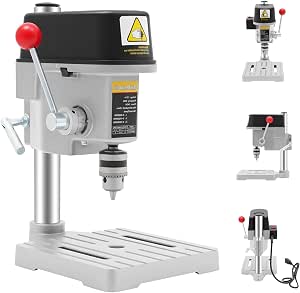


| benchtop drill presse | Motor | Speed range | Swing | Weight |
|---|---|---|---|---|
| WEN DP1062V 10-Inch Variable-S | 6.2-amp induction motor | 530–3,100 RPM | 10 in | 57 lb |
| SKIL 6.2-Amp 10-Inch 5-Speed B | 6.2-amp induction motor | 610–2,800 RPM | — | — |
| SHOPMAX 10-Inch Benchtop Drill | 0.8 hp, 5 A | 500–3,200 RPM | 10 in | 43.2 lb |
| VEVOR 10-Inch Benchtop Drill P | 6.2A induction motor | 610–2,800 RPM | — | — |
| 8-Inch Benchtop Drill Press wi | 2.5 A | 620–3,100 RPM | 8 in | 27 lb |
| ExploreHorizon 8-Inch Benchtop | 2.5 A | 620–3,100 RPM | 8 inches | 25.9 lb |
| JET JWDP-12 12-Inch Variable-S | 1/2 HP induction motor | 530–3,100 RPM, variable | 12 inches | 85 lb |
| 8-Inch Benchtop Drill Press | 2.5 A induction motor | 650–3,100 RPM | 8 inches | 34.2 lb |
| QD-KYOHO 10-Inch Variable-Spee | 6.2 A induction motor | 50–3,000 RPM, stepless | 10 inches | — |
| 340W Mini Benchtop Drill Press | — | — | — | 5.32 kg (11.73 lb) |
| DEWALT 10-Inch Drill Press wit | 7 A | — | — | — |
| VEVOR 12-Inch Variable-Speed B | 5 A induction motor | 580–3,200 RPM | 12 in | — |
| Jet JWDP-10 10" Drill Press | — | 630–3,300 RPM | 10 in | 48 lb |
| VEVOR 10-Inch Benchtop Drill P | 3.2 A induction motor | — | 10 in | — |
| VEVOR 12-Inch Benchtop Drill P | — | — | 12 in | 84.3 lb |
More Details on Our Top Picks
WEN DP1062V 10-Inch Variable-Speed Benchtop Drill Press with Laser
The WEN DP1062V is the clearest choice here for buyers who want to set speed to the task rather than choose from a few fixed steps. Its 530–3,100 RPM mechanical adjustment and digital readout make speed changes easier to monitor than on the five-speed SKIL DP9505-00 or VEVOR DP103L. That range suits a mixed-material home shop, while the beveling cast-iron table and laser help with angled work and initial alignment. The tradeoff is that adjustable speed does not expand its 1/2-inch chuck capacity, and its 57-pound weight makes it less convenient to move than the 43.2-pound SHOPMAX SD1013. I’d choose it for a bench where it can stay mounted, not for a frequently rearranged workspace.
Pros:- Variable speed from 530 to 3,100 RPM with a digital readout
- Cast-iron table bevels 45° in either direction
- X-pattern laser helps locate the drilling point
- Two-year warranty
Cons:- The 1/2-inch chuck limits bit capacity
- At 57 pounds, it is less portable than the SHOPMAX SD1013
- Mechanical speed adjustment is less convenient than changing between fixed settings
Best for: Home-shop users drilling different materials who want a visible RPM readout and adjustable speed without moving up to a larger floor machine
Not ideal for: Users who need to move their drill press often or regularly use bits larger than 1/2 inch
- Motor:6.2-amp induction motor
- Power:120 V corded electric
- Speed range:530–3,100 RPM
- Swing:10 in
- Spindle travel:2 in
- Chuck capacity:1/2 in
- Worktable:8 × 7.5 in cast iron; bevels 45° left and right
- Weight:57 lb
- Warranty:2 years
Our verdict“Choose the WEN DP1062V if adjustable speed and a clear RPM readout matter more than portability or larger bit capacity.”
SKIL 6.2-Amp 10-Inch 5-Speed Benchtop Drill Press with Laser Alignment and Work Light (DP9505-00)
The SKIL DP9505-00 keeps setup approachable with five defined speeds, an adjustable depth stop, and both a laser and LED work light. Those controls make it a practical first benchtop press for repeat holes: the depth stop helps keep drilling consistent, while the light makes the work area easier to see. Its table adjusts in height and tilts 45° both ways, matching the VEVOR DP103L for angled-table range but adding an LED light and depth-stop features described in the product data. Unlike the WEN DP1062V, it has no digital readout or continuously adjustable speed, so buyers get simpler speed selection rather than finer control. The five-speed range also tops out at 2,800 RPM, and the stated capacity is 1/2 inch.
Pros:- Five speeds cover a range of common drilling tasks
- Adjustable depth stop supports repeatable holes
- Worktable adjusts in height and tilts 45° left or right
- Laser alignment and LED work light aid setup and visibility
Cons:- Speed range is limited to five settings from 610 to 2,800 RPM
- Stated drilling capacity is 1/2 inch in wood and metal
- Corded power requires a suitable outlet at the workbench
Best for: New DIYers and small-shop woodworkers who want straightforward speed choices, repeatable depth, and built-in task lighting
Not ideal for: Experienced users who want continuous speed adjustment, a digital RPM display, or drilling capacity beyond 1/2 inch
- Motor:6.2-amp induction motor
- Power:120 V corded electric
- Speeds:5
- Speed range:610–2,800 RPM
- Maximum chuck size:1/2 in
- Work surface tilt:0–45° left and right
- Features:Laser alignment, LED work light, adjustable depth stop, adjustable-height table
- Warranty:3-year limited warranty
Our verdict“Pick the SKIL DP9505-00 for beginner-friendly depth control and lighting, but choose the WEN DP1062V for more precise speed adjustment.”
SHOPMAX 10-Inch Benchtop Drill Press, 5-Amp, 9 Speeds
The SHOPMAX SD1013 earns its place through a useful mix of table movement and speed choices, rather than add-on alignment features. Its nine settings from 500 to 3,200 RPM give more steps to choose from than the five-speed SKIL DP9505-00 and VEVOR DP103L, though it lacks the WEN DP1062V’s digital readout and variable-speed adjustment. The table rotates a full 360° and tilts up to 45° either way, which helps when a workpiece needs repositioning or angled drilling. Its 43.2-pound weight is also easier to manage than the 57-pound WEN. The compromises are a keyed 1/2-inch chuck and a stated 1/2-inch metal capacity; despite a 3/4-inch wood capacity, this is not the pick for larger-bit work or frequent metal drilling above that limit.
Pros:- Nine speed settings from 500 to 3,200 RPM
- Table rotates 360° and tilts up to 45° in either direction
- Cast-iron base has mounting holes and helps reduce vibration
- At 43.2 pounds, it is lighter than the WEN DP1062V
Cons:- Keyed chuck capacity is limited to 1/2 inch
- Stated metal drilling capacity is 1/2 inch
- No laser guide or digital RPM readout is listed
Best for: DIY woodworkers who need a repositionable table, several fixed speed choices, and a press that is easier to move than heavier 10-inch models
Not ideal for: Metalworkers needing capacity above 1/2 inch or buyers who want a digital speed display and laser alignment
- Motor:0.8 hp, 5 A
- Power:120 V corded electric
- Speed settings:9
- Speed range:500–3,200 RPM
- Swing:10 in
- Chuck capacity:1/2 in, keyed
- Chuck travel:2.36 in
- Table:Rotates 360°; tilts up to 45° left or right
- Weight:43.2 lb
Our verdict“Choose the SHOPMAX SD1013 if table positioning and multiple fixed speeds matter more than digital speed control or built-in alignment aids.”
VEVOR 10-Inch Benchtop Drill Press with 6.2A Motor, 5 Speeds, Tilting Worktable, and LED Light
The VEVOR DP103L is a straightforward option for repeat drilling where a set depth matters more than fine speed selection. Its 2-inch spindle travel and adjustable depth stop give the operator a way to limit plunge depth, while the LED light and X-ray positioning system help with visibility and initial alignment. The five belt-adjusted speeds cover 610–2,800 RPM, the same stated range as the SKIL DP9505-00; unlike the SKIL, the VEVOR product data does not list an adjustable-height table, though both tables tilt up to 45°. The belt-based changes require a manual adjustment, so it is less convenient than the WEN DP1062V’s variable-speed control. Its 1/2-inch maximum drilling diameter also keeps it in routine small-work territory.
Pros:- Adjustable depth stop and 2-inch spindle travel support controlled plunge depth
- Worktable tilts from 0° to 45°
- LED work light and positioning system aid visibility and alignment
- 6.2A induction motor with five selectable belt speeds
Cons:- Changing speed requires adjusting the belt
- Maximum stated drilling diameter is 1/2 inch
- Offers fewer speed choices than the nine-speed SHOPMAX SD1013
Best for: DIYers making repeated holes at controlled depths who want a tilting table, task light, and basic alignment aid
Not ideal for: Users who frequently change speed, need a digital RPM readout, or expect to drill beyond 1/2 inch
- Motor:6.2A induction motor
- Power:110 V corded electric
- Speeds:5 belt-adjusted speeds
- Speed range:610–2,800 RPM
- Spindle travel:2 in
- Maximum chuck size:1/2 in
- Drilling capacity:1/2 in in wood and metal
- Worktable tilt:0–45°
- Dimensions:19.5 × 9.8 × 29.1 in
Our verdict“Choose the VEVOR DP103L for depth-controlled routine work, but favor the WEN DP1062V if frequent speed changes are part of the job.”
8-Inch Benchtop Drill Press with Laser Guide and LED Light
This SierraSquad 8-inch press suits a small bench where footprint and easy repositioning count more than motor strength. At 27 pounds, it is much lighter than the 10-inch WEN DP1062V and SHOPMAX SD1013, while still offering five speeds, a tilting table, a laser guide, and an LED work light. Its speed range reaches 3,100 RPM, close to the WEN’s 3,100-RPM maximum, but the listed 2.5A motor and 8-inch swing make this a smaller-workpiece choice rather than a direct substitute for the 10-inch models. The stated 1/2-inch capacity in wood and metal is useful for ordinary home projects, yet the compact format offers less room around larger stock. I’d favor it for occasional, light-duty bench work.
Pros:- Light 27-pound build is easier to reposition than the 10-inch options
- Five speed settings span 620–3,100 RPM
- Tilting worktable adjusts up to 45°
- Laser guide and 1 W LED work light support alignment and visibility
Cons:- 8-inch swing offers less workpiece clearance than the WEN DP1062V
- 2.5A motor is lower-amperage than the 6.2A WEN and SKIL models
- Maximum stated drilling capacity is 1/2 inch
Best for: Hobbyists with limited bench space who need a lightweight press for small parts and common 1/2-inch drilling tasks
Not ideal for: Users regularly drilling large workpieces, seeking a 10-inch swing, or needing a stronger motor for demanding work
- Motor:2.5 A
- Power:120 V corded electric
- Speed settings:5
- Speed range:620–3,100 RPM
- Swing:8 in
- Maximum chuck size:1/2 in
- Drilling capacity:1/2 in in wood and metal
- Worktable tilt:0–45°
- Weight:27 lb
Our verdict“Pick the SierraSquad if a light, space-conscious press matters more than the larger swing and higher-amperage motors of the 10-inch models.”
ExploreHorizon 8-Inch Benchtop Drill Press with Laser and LED Work Light
The ExploreHorizon makes the most sense for a small shop that needs a straightforward 8-inch press with alignment aids rather than a larger work envelope. Its five settings span 620–3,100 RPM, and the tilting table reaches 45°, giving it more flexibility for angled holes than a fixed-table entry-level machine. A laser and LED light can help position stock and see the drilling area, though they do not make up for its modest 1/2-inch stated capacity in either wood or metal. Compared with the similarly compact 8-Inch Benchtop Drill Press, 5-Speed, this model’s listed details emphasize its laser and light; the other press specifies cast-iron construction and a depth stop. The ExploreHorizon is a reasonable fit for occasional shop tasks, but buyers seeking greater capacity or heavier-duty work should move to a larger press.
Pros:- Five speed settings cover a useful range from 620 to 3,100 RPM.
- Worktable tilts up to 45° for angled drilling.
- Class II laser and 1 W LED work light assist with positioning and visibility.
- Designed for drilling both wood and metal.
Cons:- Stated drilling capacity is limited to 1/2 inch in both wood and metal.
- Product information gives both 110 V and 120 V, leaving the voltage specification unclear.
Best for: DIYers who need an occasional-use 8-inch press for small wood or metal pieces and value a laser, work light, and tilting table.
Not ideal for: Woodworkers who routinely drill larger holes or need a press for demanding metal work; the stated capacity is 1/2 inch.
- Swing:8 inches
- Motor:2.5 A
- Speed settings:5
- Speed range:620–3,100 RPM
- Maximum chuck size:1/2 inch
- Stated drilling capacity:1/2 inch in wood and metal
- Worktable tilt:0–45°
- Weight:25.9 lb
Our verdict“Choose the ExploreHorizon for modest, occasional drilling where an angled table and alignment aids matter more than capacity.”
JET JWDP-12 12-Inch Variable-Speed Benchtop Drill Press with Digital RPM Readout
The JET JWDP-12 earns its place for buyers who value speed control and repeatability over a light, portable setup. Its variable speed can be changed while running, and the digital readout shows actual spindle RPM, so adjustments are visible rather than a guess. The 12-inch swing, 5/8-inch chuck, depth stop, and 3-1/8-inch spindle travel give it a more substantial working range than the ExploreHorizon 8-inch press. A tilting cast-iron table, laser crosshair, LED light, and retractable roller extension further suit varied woodworking tasks. That capability comes with real setup demands: at 85 pounds, it must be bolted to a bench or stand, and mounting bolts are not included. Compared with the QD-KYOHO 10-inch press, the JET offers a larger swing and longer spindle travel, but lacks that model’s stated 50 RPM low end.
Pros:- Variable speed adjusts while the motor runs, with actual spindle RPM shown digitally.
- 12-inch swing and 3-1/8-inch spindle travel support larger workpieces and deeper drilling.
- Cast-iron table tilts 45° left or right; laser, light, and depth stop aid controlled work.
- Retractable roller extension helps support longer workpieces.
Cons:- Must be bolted to a bench or stand; mounting bolts are not included.
- At 85 pounds, setup and positioning may require help.
- The stated 5 A motor and dedicated 15 A circuit recommendation call for suitable electrical planning.
Best for: Woodworkers doing repeatable jobs who have a sturdy bench or stand, can secure an 85-pound machine, and want visible RPM control.
Not ideal for: Buyers with limited bench space, no suitable mounting surface, or a need for a compact press that is easy to move.
- Swing:12 inches
- Motor:1/2 HP induction motor
- Speed range:530–3,100 RPM, variable
- Digital readout:Displays actual spindle RPM
- Chuck capacity:5/8 inch
- Spindle travel:3-1/8 inches
- Table tilt:45° left and right
- Weight:85 lb
- Mounting:Must be bolted to a bench or stand
Our verdict“Pick the JET if you want a securely mounted woodworking press with precise speed feedback and a larger working range.”
8-Inch Benchtop Drill Press, 5-Speed
This 8-inch press stands out for a compact footprint paired with cast-iron construction, an adjustable depth stop, and 50 mm of spindle travel. Those details make it a more controlled choice for repeat drilling than the ExploreHorizon, whose listed features focus on a laser and work light but do not specify a depth stop. Five speed settings cover 650–3,100 RPM, while the table tilts to 45° for angled holes. The tradeoff is scale: its 8-inch swing limits workpiece reach, and the 2.5 A motor is not aimed at demanding jobs. At 34.2 pounds, it is also heavier than the ExploreHorizon’s 25.9 pounds, so it is less convenient to shift around a crowded bench. I’d favor it for controlled small-project work, not as a substitute for a 10- or 12-inch shop press.
Pros:- Cast-iron base, column, and worktable are designed to reduce vibration.
- Adjustable depth stop and 50 mm spindle travel help control drilling depth.
- Five speed settings range from 650 to 3,100 RPM.
- Worktable tilts from 0° to 45°.
Cons:- The 8-inch swing limits the size and reach of workpieces.
- The 2.5 A motor may be restrictive for demanding drilling.
- At 34.2 pounds, it is less convenient to reposition than the lighter ExploreHorizon.
Best for: DIYers and hobby woodworkers who want a compact cast-iron press with a depth stop for repeated small-piece drilling.
Not ideal for: Shops that need to reach far across larger stock or regularly bore demanding holes; its 8-inch swing and 2.5 A motor set a modest scope.
- Swing:8 inches
- Motor:2.5 A induction motor
- Speed settings:5
- Speed range:650–3,100 RPM
- Spindle travel:50 mm
- Worktable size:170 × 165 mm
- Worktable tilt:0–45°
- Construction:Cast iron
- Weight:34.2 lb
Our verdict“Choose this press for stable, repeatable small-shop drilling when a depth stop matters more than a larger swing.”
QD-KYOHO 10-Inch Variable-Speed Benchtop Drill Press with Laser and LED Light
The QD-KYOHO’s defining advantage is its stepless 50–3,000 RPM range, which gives buyers more adjustment than the five fixed settings on either 8-inch press here. Its 10-inch swing and 5/8-inch chuck also move it beyond the smaller-capacity ExploreHorizon, while the rotating, tilting cast-iron table offers options for positioning awkward stock. A laser guide, LED work light, and power-off safety shield add practical shop features, and the three-year warranty is stated in the product data. There are limits: the listed 2-3/8-inch spindle travel may constrain deeper holes, and the stated drilling capacity of 2.38 inches for both wood and metal is unusual enough that buyers should verify what it means before relying on it. Compared with the JET JWDP-12, this press has a wider stated low-speed range and a smaller footprint, but less swing and spindle travel.
Pros:- Stepless speed adjustment spans 50–3,000 RPM.
- Cast-iron table rotates 360° and tilts up to 45°.
- Laser guide, LED work light, and power-off safety shield are included.
- 5/8-inch chuck and 10-inch swing offer more reach than the 8-inch options.
Cons:- The listed 2-3/8-inch drilling capacity for wood and metal may be unclear; confirm the intended capacity before purchase.
- Spindle travel is 2-3/8 inches, shorter than the JET JWDP-12’s 3-1/8 inches.
- Its 31-inch height calls for dedicated benchtop clearance.
Best for: DIYers and small-shop users who want a 10-inch press with continuously adjustable speed, a rotating table, and built-in alignment aids.
Not ideal for: Buyers who need a verified, clearly specified drilling capacity or the longer travel and larger work envelope of a 12-inch press.
- Swing:10 inches
- Motor:6.2 A induction motor
- Maximum power:400 W
- Speed range:50–3,000 RPM, stepless
- Chuck size:5/8 inch
- Spindle travel:2-3/8 inches
- Table adjustment:360° rotation; up to 45° tilt
- Stated drilling capacity:2.38 inches for wood and metal
- Warranty:3 years
Our verdict“Choose the QD-KYOHO for broad speed adjustment and a flexible table, provided its stated drilling-capacity figure fits your needs.”
340W Mini Benchtop Drill Press with 3-Speed Adjustment
This mini press is a specialist option for small-scale drilling, not a downsized replacement for the 8- or 10-inch machines. Its three no-load speed settings reach as high as 16,000 RPM, and the 1–10 mm collet is suited to small bits used in craft, model-making, and light DIY work. The 25 mm maximum depth and stated capacities—up to 0.63 inch in wood and 0.24 inch in metal—spell out its limits more clearly than the broader claims attached to the QD-KYOHO. At just 11.73 pounds with a 6.69-inch-square base, it is the easiest press here to fit into a compact work area. That small scale also means less reach and capacity than any conventional press in this group; it requires assembly, and bits are not included.
Pros:- Three speed settings reach up to 16,000 RPM for small-bit work.
- Compact 6.69 × 6.69-inch base and 11.73-pound weight suit tight workspaces.
- Adjustable depth supports drilling up to 25 mm.
- 1–10 mm collet accommodates small shank sizes.
Cons:- Stated capacity is limited to 0.63 inch in wood and 0.24 inch in metal.
- The 25 mm maximum drilling depth and small work area restrict larger projects.
- Assembly is required, and drill bits are not included.
Best for: Model makers, craft workers, and DIYers drilling small holes in wood, plastic, or thin metal with small-diameter bits.
Not ideal for: Woodworkers or metalworkers who need a standard chuck, larger holes, deeper drilling, or the reach of an 8-inch-or-larger press.
- Power:340 W
- Speed settings:3
- No-load speeds:0–8,000; 0–11,000; 0–16,000 RPM
- Maximum drilling depth:25 mm (0.98 inch)
- Collet range:1–10 mm
- Stated drilling capacity:Wood: up to 0.63 inch; metal: up to 0.24 inch
- Base size:17 × 17 cm (6.69 × 6.69 inches)
- Column height:30 cm (11.81 inches)
- Weight:5.32 kg (11.73 lb)
Our verdict“Pick this mini press for compact, small-bit craft and model work, not for general-purpose bench drilling.”
DEWALT 10-Inch Drill Press with 7-Amp Motor and LED Worklight
I’d choose the DEWALT DXDP2 when motor capacity matters more than extra swing or elaborate setup aids. Its 7-amp motor is the strongest stated motor in this group, while the cast-iron head, table, and base provide a steady platform for routine work in wood, metal, and plastic. The 3.5-inch spindle travel also offers more depth per plunge than the listed capacities suggest, though it does not change the stated 0.5-inch wood capacity. Compared with the VEVOR 12-Inch Variable-Speed 1 HP, this DEWALT has less swing and fewer electronic aids, but its five fixed speeds keep adjustments straightforward. One specification caveat: the supplied data gives conflicting maximum speeds of 2,800 and 3,100 RPM, so I would confirm the speed range before purchase.
Pros:- 7-amp motor is the highest stated amperage among these five models.
- Cast-iron head, table, and base help steady the work during drilling.
- 3.5-inch spindle travel accommodates deeper plunge movement.
- Five speeds and an integrated LED support straightforward setup and visibility.
Cons:- Listed wood drilling capacity is only 0.5 inch.
- Maximum-speed information conflicts between the supplied description and specifications.
- A 10-inch swing offers less workpiece clearance than the 12-inch VEVOR models.
Best for: Home workshop users who want a sturdier-feeling 10-inch press and a higher-amp motor for varied routine drilling.
Not ideal for: Buyers drilling larger workpieces or seeking continuous speed adjustment, digital RPM feedback, or a clearly verified maximum speed.
- Model:DXDP2
- Motor:7 A
- Voltage:120 V
- Speed settings:5
- Listed speed range:610–2,800 RPM
- Spindle travel:3.5 in
- Maximum chuck size:0.5 in
- Drilling capacity in wood:0.5 in
- Table and base material:Cast iron
Our verdict“Choose the DEWALT for a sturdy 10-inch press with a higher-amp motor, but skip it if you need a wider swing or unambiguous speed specifications.”
VEVOR 12-Inch Variable-Speed Benchtop Drill Press, 5 Amp, 120V, Cast Iron
The VEVOR DP12VL is the more flexible choice for a workshop that frequently changes materials or drilling angles. Its continuously adjustable 580–3,200 RPM range and digital display make it easier to set a speed than the fixed-speed DEWALT DXDP2 or VEVOR 10-inch model. The 12-inch swing and table that tilts up to 45 degrees add useful room for larger or angled workpieces, while the laser and safety guard provide practical setup support. Those conveniences do not make it a heavy-duty press: the listed wood and metal capacities are both 0.6 inch, and its 5-amp motor is below the DEWALT’s 7 amps. I’d favor it for flexibility and guidance, not for the largest holes or toughest sustained work.
Pros:- Continuous speed adjustment from 580 to 3,200 RPM with a digital display.
- 12-inch swing provides more workpiece clearance than the 10-inch models here.
- Table tilts from 0 to 45 degrees for angled drilling.
- Laser guide and safety guard support alignment and setup.
Cons:- Listed drilling capacity is limited to 0.6 inch in both wood and metal.
- Its 5-amp motor has less stated amperage than the DEWALT DXDP2.
- The laser is specified as Class IIIA at 2.5 mW, so buyers should follow its safety instructions.
Best for: DIY woodworkers and light-metal hobbyists who want a 12-inch swing, variable-speed control, and a tilting table.
Not ideal for: Buyers who need high-capacity drilling or prefer to avoid a Class IIIA laser and its handling considerations.
- Model:DP12VL
- Swing:12 in
- Motor:5 A induction motor
- Voltage:120 V
- Speed range:580–3,200 RPM
- Maximum chuck size:0.63 in
- Maximum torque:14.4 N·m
- Worktable tilt:0–45 degrees
- Laser:Class IIIA, 2.5 mW
Our verdict“Pick this VEVOR if adjustable speed, a tilting table, and 12-inch clearance matter more than greater stated motor amperage or drilling capacity.”
Jet JWDP-10 10″ Drill Press (JT1-3162)
The Jet JWDP-10 earns its place for buyers who need a drill press that can move around a compact shop. At 48 pounds, it is easier to relocate than the 84.3-pound VEVOR 12-Inch Variable-Speed 1 HP, while still offering a 10-inch swing and a table that tilts 45 degrees in either direction. Its five speeds cover a broad stated range, from 630 to 3,300 RPM, giving it useful flexibility for common jobs without the digital controls found on the VEVOR DP12VL. The tradeoff is limited workpiece clearance: the 10-inch swing is smaller than either 12-inch VEVOR, and the supplied product data does not specify motor amperage, chuck size, or drilling capacity. I’d select it for portability, not on the assumption that it matches larger presses in capacity.
Pros:- 48-pound weight makes relocation easier than the heavier 12-inch VEVOR 1 HP.
- 10-inch swing suits many compact-shop tasks.
- Five speed settings cover a stated range of 630–3,300 RPM.
- Table tilts up to 45 degrees in either direction for angled holes.
Cons:- The 10-inch swing limits workpiece clearance compared with the 12-inch models.
- The supplied product data does not state motor amperage or power.
- Chuck size and drilling capacity are not provided in the supplied specifications.
Best for: Makers with a shared or space-constrained workshop who need to move a drill press between benches or storage.
Not ideal for: Buyers who regularly drill wide workpieces or need confirmed motor, chuck, and drilling-capacity specifications before choosing.
- Swing:10 in
- Speed range:630–3,300 RPM
- Speed settings:5
- Table tilt:±45 degrees
- Voltage:120 V
- Weight:48 lb
Our verdict“Choose the Jet if portability and a tilting table lead your priorities, but look to a 12-inch model for more workpiece clearance.”
VEVOR 10-Inch Benchtop Drill Press, 3.2 Amp, 5-Speed
I’d put the VEVOR DP1006L on the shortlist for straightforward shop tasks where a tilting table matters more than a powerful motor or variable-speed controls. Its five fixed settings span 650 to 3,100 RPM, and the table tilts up to 45 degrees, matching the Jet JWDP-10 on angled-work flexibility while offering a smaller, more clearly specified 10-inch package. The 3.2-amp motor is a clear step down from the DEWALT DXDP2’s 7 amps, so I would reserve this VEVOR for lighter drilling rather than demanding work. The listed wood and metal capacities are both 0.5 inch. There is also a speed-data mismatch: the description gives a 3,100 RPM top setting, while another spec lists 2,800 RPM maximum. Confirm the actual range before relying on the fastest setting.
Pros:- Five fixed speeds provide simple choices for different drilling tasks.
- Worktable tilts from 0 to 45 degrees for angled holes.
- Cast-iron frame supports a stable benchtop setup.
- Listed dimensions and weight give buyers a defined footprint for planning bench space.
Cons:- The 3.2-amp motor has less stated amperage than the DEWALT DXDP2.
- Listed drilling capacity is 0.5 inch in both wood and metal.
- Maximum-speed data conflicts between the 3,100 RPM setting and 2,800 RPM specification.
Best for: DIYers doing occasional wood and light-metal work who want a tilting table and simple selectable speeds.
Not ideal for: Frequent users who need stronger stated motor output, larger drilling capacity, or a verified top speed.
- Model:DP1006L
- Swing:10 in
- Motor:3.2 A induction motor
- Voltage:120 V
- Speed settings:650, 1,050, 1,800, 2,350, and 3,100 RPM
- Maximum chuck size:0.5 in
- Drilling capacity in wood and metal:0.5 in
- Worktable tilt:0–45 degrees
- Dimensions:17.5 × 9.3 × 28.7 in
Our verdict“Choose the DP1006L for occasional drilling and angled work on a modest benchtop setup, but not for demanding jobs or speed certainty.”
VEVOR 12-Inch Benchtop Drill Press, 1 HP, Variable Speed, with Laser and LED Work Light
Among these five, the VEVOR 1216BVS has the most substantial stated motor rating: 1 hp, paired with a 6.2-amp draw and variable speed from 530 to 3,140 RPM. That makes it the more compelling 12-inch option for buyers who value stated motor power alongside the larger swing. Its digital speed readout, X-laser, and LED work light also provide more setup guidance than the Jet JWDP-10’s listed specifications. The tradeoff is a much heavier machine at 84.3 pounds, so it suits a dedicated bench better than a shop where tools need to move. Despite the 1 hp rating, its stated drilling capacity is still 0.6 inch in wood and metal; it is not a promise of larger holes than the lighter VEVOR DP12VL.
Pros:- 1 hp motor is the highest stated power rating among these five products.
- Variable speed from 530 to 3,140 RPM allows adjustment without relying on fixed steps.
- X-laser and LED work light assist alignment and visibility.
- 12-inch swing and a table that tilts 45 degrees left or right support varied setups.
Cons:- At 84.3 pounds, it is much less convenient to move than the 48-pound Jet JWDP-10.
- Listed drilling capacity is 0.6 inch in both wood and metal.
- Its size and weight call for a dedicated, sturdy bench.
Best for: Woodworkers and home-shop users with a fixed, sturdy bench who want a 12-inch press with variable speed and alignment aids.
Not ideal for: People who need a portable press or expect the 1 hp rating to mean a larger stated drilling capacity.
- Model:1216BVS
- Swing:12 in
- Motor power:1 hp
- Amperage:6.2 A
- Voltage:110 V
- Variable speed range:530–3,140 RPM
- Maximum chuck size:0.6 in
- Drilling capacity in wood and metal:0.6 in
- Weight:84.3 lb
Our verdict“Choose this VEVOR for a fixed shop setup where stated motor power, variable speed, and a 12-inch swing matter more than portability.”
How We Picked
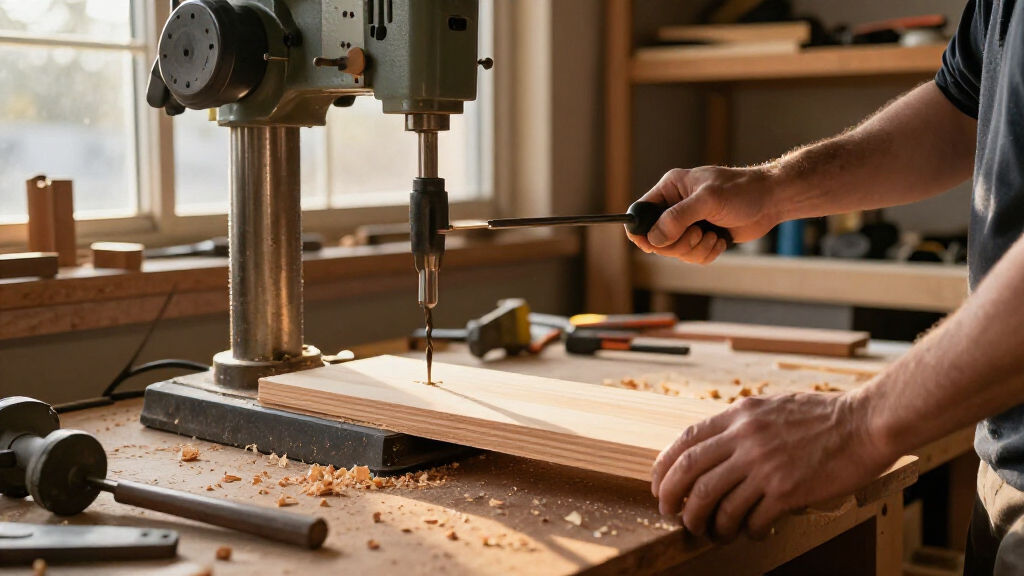
I compared these 15 benchtop drill presses around the questions that affect daily shop work: what size stock can fit, how easily speed can be matched to the bit and material, and whether the table and controls support repeatable positioning. I also considered motor ratings alongside speed options, rather than treating amperage or horsepower as a stand-alone performance verdict. Features such as lasers, LED lights, and digital RPM displays counted as usability aids, not substitutes for sound alignment and a stable setup.
The ranking gives priority to versatility and useful control for the broadest range of buyers, then recognizes models that better serve specific needs such as larger workpieces, a compact bench, or simpler operation. A feature-rich or larger machine does not automatically rank higher: footprint, complexity, and the risk of paying for capacity a buyer will not use all affect fit. Product details supplied for this lineup do not establish every specification, so I avoid making unsupported claims about runout, warranty, or construction quality.
Factors to Consider When Choosing Benchtop Drill Presses
Before choosing among these presses, I would work backward from the holes you need to drill and the space available. A machine that appears more capable on paper can be awkward if it crowds the bench or cannot hold your work securely. These factors help separate genuinely useful capacity from features that may go unused.
Match Throat Capacity to Your Workpieces
The stated 8-, 10-, and 12-inch sizes describe swing, a measure of how far the press can reach across a workpiece; they do not mean the machine can drill a hole of that diameter. A larger swing gives more room to position broad panels or parts away from their edges. For small components and routine holes near an edge, an 8-inch model may take up less bench space without limiting the work. Buyers often focus on swing and forget to check table dimensions, column height, and clearance beneath the chuck. Measure the widest workpiece you expect to drill and confirm it can sit flat and be clamped safely. Paying for a 12-inch press makes sense when that reach solves a recurring problem, not just as a hedge against an unlikely job.
Choose Speed Control for Your Materials and Bits
Speed needs change with bit diameter and material: large bits and harder materials generally call for slower drilling than small bits in softer stock. Fixed-speed models are straightforward, but their available steps may leave you choosing between settings that are both imperfect for a particular job. Variable-speed control can make adjustment quicker, especially when jobs change often, though the useful range and adjustment method matter more than the label alone. A digital RPM display, as on the JET JWDP-12, provides a clearer readout than relying on a dial position by itself. Avoid choosing solely by the number of speeds; check whether the range includes settings suitable for the largest bits you plan to use. If your work is consistent and simple, multiple fixed steps may be enough.
Treat Motor Ratings as One Part of Performance
A larger stated motor rating may suggest more capacity, but it does not tell the whole story about drilling performance. Speed range, transmission design, bit sharpness, feed pressure, and how securely the work is held all affect the result. A 340W mini press may fit light, small-scale tasks while being a poor choice for frequent large-bit work. Higher stated amperage or horsepower can be useful for demanding jobs, yet buyers should check the machine’s operating limits and intended duty rather than assuming it can run hard continuously. Match the motor to the largest bit and toughest material you expect to use regularly. If those jobs are rare, a smaller or simpler machine may be the more sensible fit.
Plan for Bench Space, Weight, and Workpiece Support
Capacity brings a footprint cost: larger presses need more room for the base, column, table movement, and workpieces that extend beyond the table. A crowded bench can make setup less safe and reduce the practical benefit of extra reach. Check the base dimensions and the space needed to raise or tilt the table, not just the product’s overall height. Heavy machines may feel steadier once mounted, but they are harder to move and require a bench that can support them securely. Small presses are easier to place, though their tables may limit support for broad or awkward stock. Plan where the workpiece will rest and how clamps will fit before buying.
Prioritize Table Adjustment and Secure Clamping
A table that tilts or adjusts in height can help with angled holes and varied stock thicknesses, but adjustment is only useful when the table can be locked firmly. A tilted table also makes workholding less straightforward, so plan on clamping the piece rather than relying on hand pressure. Buyers sometimes treat a laser as a substitute for layout; it only indicates an approximate drilling location and cannot correct a crooked setup or a shifting workpiece. Check that the table gives enough room for the clamps and supports you use. For repeat work, reliable positioning and a consistent setup can save more time than extra guidance lights. Consider how often you truly need angled drilling before making a tilting table a deciding feature.
Pay for Features That Solve a Real Workflow Problem
Lasers, LED work lights, and digital readouts each address a different task: locating a drilling point, illuminating the work, or checking spindle speed. They can make setup more convenient, but none improves accuracy if the stock moves or the bit is not aligned with the mark. Since several models in this lineup include lights or lasers, those features alone do little to distinguish a machine. Put greater weight on the controls and capacity you will use repeatedly, then treat convenience features as a tie-breaker. A premium model is easier to justify when its control or reach changes the work you can complete. If your projects are occasional and straightforward, a simpler press may leave more of your budget for quality bits and clamps.
Frequently Asked Questions
Should I choose an 8-inch, 10-inch, or 12-inch benchtop drill press?
I would choose by the size and shape of the workpieces, not by assuming a larger number means deeper drilling. An 8-inch press can suit compact work and a crowded bench, while 10-inch models offer a middle ground for general workshop tasks. A 12-inch model gives more room to position wide stock, but it needs more bench space and a secure mounting surface. Measure the distance from the hole location to the workpiece edge and compare it with the press’s usable reach. Also check table size and clearance, since swing alone does not tell you whether a part will sit securely.
Is variable speed worth choosing over a press with fixed speed steps?
Variable speed is most useful when you frequently switch between materials, bit sizes, or drilling tasks that call for different spindle speeds. Fixed-step presses can be a good fit for repeat work when their available settings match the bits and materials you use. Do not assume that a variable-speed label guarantees a broad or useful range; check the listed range and how adjustments are made. A digital readout can make settings easier to confirm, but it is an aid rather than a requirement for accurate holes. If you are unsure, prioritize a practical speed range over the number of settings advertised.
Can a benchtop drill press handle metal as well as wood?
Many benchtop presses can drill both, but success depends on suitable speed, a sharp bit, secure clamping, and steady feed. Metal work generally calls for slower speeds than small-bit drilling in soft wood, so a press with useful low-speed options can be a better match. The listed motor rating alone does not establish how well a machine will perform on a particular metal or bit size. Clamp the workpiece to the table; small pieces can catch and spin if held by hand. Check the manufacturer’s guidance for the materials and bit capacities the model supports.
Do I need a laser guide or LED work light?
A laser can help indicate where the bit is expected to meet the work, and an LED can make the drilling area easier to see. Neither replaces marking the hole, aligning the workpiece, or clamping it securely. In this roundup, both features appear across several compact and mid-size options, so they are not enough on their own to identify the best fit. If your bench is dim, a light may improve day-to-day convenience; if you need repeatable placement, focus on a stable setup and clear alignment. Treat these additions as helpful extras rather than proof of greater accuracy.
When does a premium 12-inch press make more sense than a smaller model?
A 12-inch press makes sense when you often drill away from the edges of broad stock or need more room to position larger parts. The JET JWDP-12 adds a digital RPM readout, while the 12-inch VEVOR models offer alternatives with different speed and feature configurations. Before stepping up, confirm that your bench has room for the base, table movement, and clamping setup. If most of your work involves small parts, the extra reach may add bulk without changing what you can accomplish. Spend more for capacity or control that solves a repeated task, not simply for the largest listed size.
Conclusion
For the broadest mix of workshop jobs, I would start with the WEN DP1062V as best overall, especially if variable-speed adjustment matters more than a digital readout. The SHOPMAX 10-inch is a practical value-oriented option for buyers who prefer several fixed speed settings, while the JET JWDP-12 is my premium pick for larger work and RPM visibility. Beginners may prefer a straightforward 10-inch press with a laser or work light, such as the SKIL DP9505-00, rather than paying for capacity or controls they may not use. For a compact bench, compare the 8-inch models; for larger stock, look first at the 12-inch presses. I would make the final choice by matching swing, speed range, and bench space to the jobs you do most often.