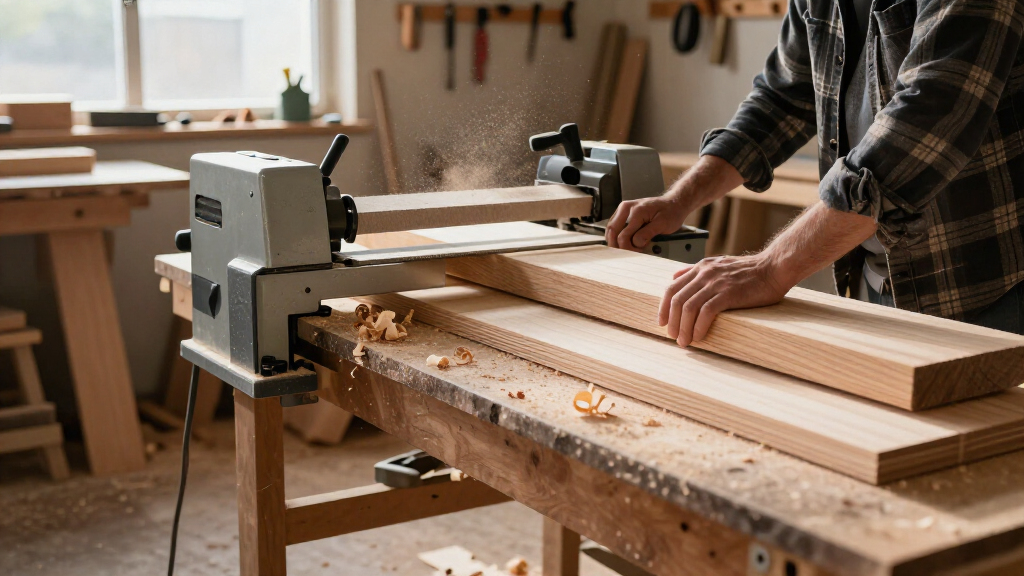

Benchtop thickness planers range from budget two-blade models under the price of a good saw blade to spiral-cutterhead machines that leave a finish ready for finish-sanding. After comparing 15 current models, the DEWALT DW735X stands out as the best overall pick thanks to its three-knife cutterhead, two-speed gearbox, and best-in-class finish quality. The WEN PL1337 spiral makes the most sense for buyers who want helical cut quality at a mid-range price, while the VEVOR 13-inch models dominate the value end for occasional hobby use. The core tradeoff in this category is cutterhead type versus cost: spiral heads cost more upfront but last longer and handle figured wood cleanly, whereas straight knives cut faster in one pass but need more frequent changes. Read on for the full breakdown of all 15 planers.

Get business pricing on tools and workshop supplies
- Business-only prices and quantity discounts
- Tax-exempt purchasing
- Multiple users, one account, clear invoices
Key Takeaways
- Spiral cutterheads separated the top performers from the pack — the WEN PL1337, WEN PL1326, WOODERS spiral, and VEVOR spiral all produced smoother finishes with less tear-out than straight-knife models on figured hardwood.
- The DEWALT DW735X was the only straight-knife planer that matched spiral-head finish quality, thanks to its three-knife cutterhead running at 10,000 RPM plus a two-speed gearbox for dimensioning versus finishing passes.
- The four VEVOR models overlapped heavily in features; differences came down to blade count and speed options, making model selection within the brand more confusing than between brands.
- Budget two-blade planers like the WEN PL1252 and Triton TPT125 are best treated as dimensioning machines — expect to sand or scrape after planing, especially on hardwoods.
- Cutting width barely varied across the lineup (12.5 to 13 inches), so cutterhead design and motor quality — not capacity — were the real differentiators in this comparison.
| WEN 13-Inch Two-Speed Benchtop Thickness Planer with Spiral Cutterhead (PL1337) | 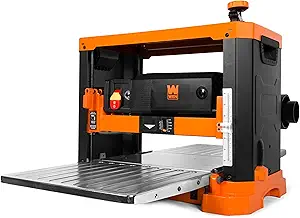 | Best Overall | Model: PL1337 | Planing capacity: 13 in wide × 6 in thick | Motor: 15 amp | VIEW LATEST PRICE | See Our Full Breakdown |
| CRAFTSMAN 15-Amp Benchtop Planer with Two-Knife Solid Steel Cutter Head (CMEW320) |  | Best Value Straight-Knife Pick | Motor: 15 amp | Type: Benchtop planer | Cutter head: Two-knife, quick-change solid steel | VIEW LATEST PRICE | See Our Full Breakdown |
| WOODERS 13-Inch Benchtop Thickness Planer, 15-Amp, 2000W (PL13-15AB) |  | Best Starter Package | Model: PL13-15AB | Planing width: 13 in (330 mm) | Thickness range: 1/4–6.3 in (6–160 mm) | VIEW LATEST PRICE | See Our Full Breakdown |
| VEVOR 13-Inch Benchtop Thickness Planer |  | Best Compact Workshop Setup | Planing width: 13 in (330 mm) | Cutting thickness: 0.2–6.3 in (6–160 mm) | Motor: 15 A, 1800 W | VIEW LATEST PRICE | See Our Full Breakdown |
| DEWALT 12-1/2-Inch Benchtop Planer with 3-Knife Cutter (DW734) |  | Best Finish Quality Under Premium Pricing | Model: DW734 | Planing width: 12-1/2 inches | Motor: 15 amp | VIEW LATEST PRICE | See Our Full Breakdown |
| WEN PL1326 13-Inch Spiral Benchtop Thickness Planer |  | Best for Smoother Finishes | Motor: 15 amps | Cutterhead: Spiral, with 26 staggered rotatable HSS blades | Cutterhead speed: 10,000 RPM | VIEW LATEST PRICE | See Our Full Breakdown |
| VEVOR 13-Inch Benchtop Thickness Planer with Two Blades |  | Best for Long-Board Support | Planing width: 13 inches | Maximum planing height: 6 inches | Worktable length: 28.2 inches | VIEW LATEST PRICE | See Our Full Breakdown |
| VEVOR 13-Inch Two-Blade Benchtop Thickness Planer |  | Best for a Rigid Work Surface | Planing width: 13 inches | Maximum board thickness: 6 inches | Motor: 15 amp, 2000 watts | VIEW LATEST PRICE | See Our Full Breakdown |
| WOODERS 13-Inch Thickness Planer with Spiral Helical Cutterhead |  | Best for Taller Stock | Planing width: 13 inches | Material height range: 1/4 to 6-1/4 inches | Maximum cutting depth: 1/8 inch per pass | VIEW LATEST PRICE | See Our Full Breakdown |
| WEN PL1252 15-Amp 12.5-Inch Two-Blade Benchtop Thickness Planer |  | Best for Straightforward Stock Preparation | Motor: 15 A | Maximum board width: 12.5 inches | Maximum board thickness: 6 inches | VIEW LATEST PRICE | See Our Full Breakdown |
| Triton TPT125 High-Performance Benchtop Planer, 12.5-Inch Cutting Width | 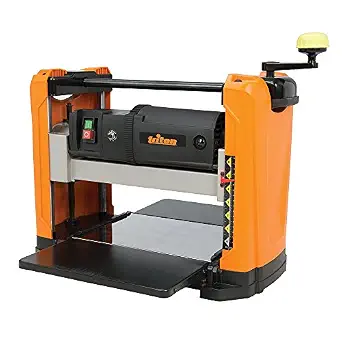 | Best for Fine Depth Control | Cutting width: 12.5 inches (317 mm) | Cutter height range: 1/8 to 5.9 inches | Depth adjustment increments: 1/16 inch (1.6 mm) | VIEW LATEST PRICE | See Our Full Breakdown |
| VEVOR 13-Inch Spiral Benchtop Thickness Planer |  | Best Spiral Cutterhead Value | Planing width: 13 inches | Motor power: 2000W | Motor speed: 23,500 RPM | VIEW LATEST PRICE | See Our Full Breakdown |
| VEVOR 13-Inch Two-Speed Benchtop Thickness Planer |  | Best for Steady Feeding | Worktable: 13 in wide x 6 in high x 28.2 in long | Motor power: 2000W | Motor speed: Up to 24,000 CPM | VIEW LATEST PRICE | See Our Full Breakdown |
| DEWALT 13-Inch Two-Speed Thickness Planer, 15-Amp Motor (DW735X) |  | Best Overall | Planing width: 13 inches | Motor: 15 amps | Motor speed: 20,000 RPM | VIEW LATEST PRICE | See Our Full Breakdown |
| VEVOR 13-Inch Two-Speed Three-Blade Benchtop Thickness Planer |  | Best Long-Stock Support | Planing width: 13 inches | Maximum board thickness: 6 inches | Table support with extensions: 35 inches | VIEW LATEST PRICE | See Our Full Breakdown |
| benchtop thickness planer | Motor | Planing width |
|---|---|---|
| WEN 13-Inch Two-Speed Benchtop | 15 amp | — |
| CRAFTSMAN 15-Amp Benchtop Plan | 15 amp | — |
| WOODERS 13-Inch Benchtop Thick | 15 A, 2000 W | 13 in (330 mm) |
| VEVOR 13-Inch Benchtop Thickne | 15 A, 1800 W | 13 in (330 mm) |
| DEWALT 12-1/2-Inch Benchtop Pl | 15 amp | 12-1/2 inches |
| WEN PL1326 13-Inch Spiral Benc | 15 amps | — |
| VEVOR 13-Inch Benchtop Thickne | — | 13 inches |
| VEVOR 13-Inch Two-Blade Bencht | 15 amp, 2000 watts | 13 inches |
| WOODERS 13-Inch Thickness Plan | 15 A, 2000 W | 13 inches |
| WEN PL1252 15-Amp 12.5-Inch Tw | 15 A | — |
| Triton TPT125 High-Performance | — | — |
| VEVOR 13-Inch Spiral Benchtop | — | 13 inches |
| VEVOR 13-Inch Two-Speed Bencht | — | — |
| DEWALT 13-Inch Two-Speed Thick | 15 amps | 13 inches |
| VEVOR 13-Inch Two-Speed Three- | — | 13 inches |
More Details on Our Top Picks
WEN 13-Inch Two-Speed Benchtop Thickness Planer with Spiral Cutterhead (PL1337)
This option stands out for combining a spiral cutterhead with 26 staggered, rotatable HSS blades at a price point where most rivals — including the CRAFTSMAN CMEW320 and the WOODERS PL13-15AB — still rely on straight two-blade heads. That design difference translates directly into outcomes: fewer visible knife marks, quieter cuts, and the ability to rotate a nicked blade in minutes instead of replacing an entire knife set. The two feed speeds let you dimension rough stock quickly at 26 FPM or slow down to 16 FPM for a finer final pass. Compared with the DEWALT DW734, you give up a little brand pedigree and cutterhead speed refinement, but gain a wider 13-inch capacity. The tradeoff is weight and bulk — this is not a machine you’ll want to shuffle around the shop weekly.
Pros:- Spiral cutterhead with 26 rotatable blades delivers a smoother finish than straight-knife rivals
- Two feed speeds let you switch between fast dimensioning and fine finishing
- Full 13-inch width and 6-inch thickness capacity handles wide stock
- Combination 2-1/2-inch and 4-inch dust port fits most shop vacuums and collectors
Cons:- Heavy and bulky for a benchtop machine, making it awkward to move or store
- Maximum 1/8-inch material removal per pass is conservative compared to some competitors
Best for: Serious hobbyists and small professional shops that plane rough lumber regularly and want spiral-head finish quality without a stationary machine
Not ideal for: Occasional DIYers who only flatten a few boards a year — the spiral head’s advantages will go underused while the size takes up bench space
- Model:PL1337
- Planing capacity:13 in wide × 6 in thick
- Motor:15 amp
- Cutterhead speed:Up to 10,000 RPM
- Cutterhead blades:26 staggered, rotatable HSS blades
- Feed rates:16 or 26 FPM
- Dust port:2-1/2-inch and 4-inch combination
- Warranty:Two years
Our verdict“If you want the best balance of finish quality, capacity, and flexibility in one benchtop package, this is the pick that justifies its spot at the top.”
CRAFTSMAN 15-Amp Benchtop Planer with Two-Knife Solid Steel Cutter Head (CMEW320)
This model is better suited to buyers who want a straightforward, no-frills planer that simply removes material reliably. The quick-change two-knife solid steel cutter head mounted on ball bearings keeps things simple: when a knife dulls, the reversible double-edged design doubles its working life, and swapping it out takes far less fuss than aligning knives on older designs. Compared with the WEN PL1337, you lose the spiral head and the second feed speed, which means more sanding after final passes — but you also avoid paying for features a casual woodworker may never need. Unlike the VEVOR 13-inch planer, it skips the stand and extension tables, so budget for stable infeed/outfeed support if you plane long boards.
Pros:- Quick-change, reversible double-edged knives extend cutting life and simplify maintenance
- 15-amp motor handles both hardwoods and softwoods without bogging down
- Ball-bearing-mounted cutter head runs smoothly for a budget-class machine
- Vacuum port makes dust collection straightforward with a shop vacuum
Cons:- No extension tables included, so long boards need improvised outfeed support
- Two-knife head leaves more knife marks than spiral or three-knife alternatives
Best for: Weekend woodworkers and garage-shop hobbyists who want dependable rough-stock dimensioning at a low entry cost
Not ideal for: Fine-furniture makers who need glass-smooth surfaces straight off the machine — a two-knife head will require noticeably more sanding
- Motor:15 amp
- Type:Benchtop planer
- Cutter head:Two-knife, quick-change solid steel
- Knives:High-carbon steel, double-edged, reversible
- Cutter head mounting:Ball bearings
- Dust collection:Vacuum port
Our verdict“A sensible, low-drama choice for hobbyists who value simple maintenance and honest performance over finish refinement.”
WOODERS 13-Inch Benchtop Thickness Planer, 15-Amp, 2000W (PL13-15AB)
This pick makes the most sense for first-time buyers because it arrives as a complete starter kit: two spare HSS blades, a dust port, a lifting handle, and a height indicator are all in the box, so there’s no accessory shopping before your first board. The 2000W motor running at 10,000 RPM gives it honest power for a value-tier machine, and overload protection is a welcome safeguard for beginners who are still learning how heavy a pass is too heavy. Compared with the CRAFTSMAN CMEW320, you get a wider 13-inch capacity and more in-box extras, though both share the same dual-blade limitation. Against the WEN PL1337, the gap is finish quality — a straight two-blade head simply can’t match 26 staggered spiral blades. Plan on more frequent blade changes and more sanding.
Pros:- Complete package includes two replacement blades, dust port, and lifting handle out of the box
- 13-inch width matches the capacity of pricier models like the WEN PL1337
- Overload protection helps prevent motor damage from overly aggressive passes
- Height indicator and depth crank make repeatable thickness settings approachable for beginners
Cons:- Two-blade straight cutterhead requires more frequent blade changes than multi-blade or spiral designs
- Smaller brand service and parts network compared with WEN, DEWALT, or CRAFTSMAN
Best for: New woodworkers setting up a first shop who want everything included in one purchase and motor protection while they learn
Not ideal for: Users planning heavy daily dimensioning of hardwoods — the two-blade head will dull faster and demand more blade swaps than spiral designs
- Model:PL13-15AB
- Planing width:13 in (330 mm)
- Thickness range:1/4–6.3 in (6–160 mm)
- Motor:15 A, 2000 W
- Cutterhead speed:10,000 RPM
- Blades:Dual-edge HSS; two extras included
- Safety:Overload protection
Our verdict“The most sensible entry point for a first planer purchase — just understand you’re buying convenience and completeness, not premium finish quality.”
VEVOR 13-Inch Benchtop Thickness Planer
What sets this model apart from every other planer in this lineup is the included stand and foldable extension tables. Most rivals — the DEWALT DW734, the WOODERS PL13-15AB, and the CRAFTSMAN CMEW320 — assume you already have a bench or will buy support separately. Here you get a detachable stand, return rollers for handling stock solo, and tables that fold flat when the workday ends, which matters enormously in a garage or shared space. The tradeoffs are real, though: the 8000 RPM blade speed is the slowest in this batch, the single fixed feed rate offers no finishing flexibility, and no dust collection hardware is included, so factor in a hose and adapter. Power-off and overload protection round out a machine aimed at practicality over polish.
Pros:- Detachable stand and foldable extension tables create a complete, space-saving workstation
- Return rollers make it practical to run boards through solo without a helper
- Power-off and overload protection safeguard the motor during demanding cuts
- 13-inch capacity and 6.3-inch thickness range match larger-name rivals
Cons:- Dust collection equipment is not included, requiring a separate purchase and adapter fitting
- 8000 RPM blade speed trails the 10,000 RPM class, resulting in a rougher cut
- Single fixed feed speed limits finish quality compared to two-speed models
Best for: Woodworkers in small garages or shared spaces who need a self-contained planing station that stores compactly
Not ideal for: Anyone chasing fine finishes — the lower blade speed, fixed feed rate, and two-blade head all point toward dimensioning duty rather than final passes
- Planing width:13 in (330 mm)
- Cutting thickness:0.2–6.3 in (6–160 mm)
- Motor:15 A, 1800 W
- Blade speed:8000 RPM
- Feed speed:6 m/min (236 in/min)
- Blades:2 double-edge HSS cutter blades
- Included:Planer, stand, accessory set, return rollers
Our verdict“The smart choice when floor space and stand-alone operation matter more than achieving the finest surface finish.”
DEWALT 12-1/2-Inch Benchtop Planer with 3-Knife Cutter (DW734)
Among straight-knife machines, this is the one that closes the gap with spiral-head rivals. The three-knife cutter head producing 96 cuts per inch yields a finish that needs minimal sanding — a step above the two-knife CRAFTSMAN CMEW320 and VEVOR models, though still short of the WEN PL1337‘s 833-plus cuts per inch from its spiral head. Where this model earns its reputation is consistency: the four-column carriage lock visibly reduces snipe, the turret depth stop makes repeatable passes easy, and 33-1/2 inches of material support means long boards stay stable without add-on tables. The half-inch width sacrifice versus 13-inch competitors is the honest tradeoff — wide glue-ups will need an extra rip and glue step. Disposable reversible knives simplify maintenance, but ongoing knife costs add up over years of use.
Pros:- Three-knife head at 96 cuts per inch produces one of the finest straight-knife finishes available
- Four-column carriage lock meaningfully reduces snipe compared to two-post designs
- Extended tables provide 33-1/2 inches of material support without extra purchases
- Turret depth-stop system and material removal gauge make repeat passes accurate
Cons:- 12-1/2-inch width is narrower than the 13-inch class standard found in WEN, VEVOR, and WOODERS models
- Disposable knife system means ongoing consumable costs rather than rotating individual blades
Best for: Woodworkers prioritizing a clean, low-snipe finish on furniture-grade stock who don’t need full 13-inch width
Not ideal for: Users who regularly plane 13-inch-wide boards or glued panels — the 12-1/2-inch capacity will force extra workflow steps
- Model:DW734
- Planing width:12-1/2 inches
- Motor:15 amp
- Cutter head:Three knives, 10,000 RPM
- Cuts per inch:96
- Material support length:33-1/2 inches
- Knives:Reversible disposable
- Power source:Corded
Our verdict“The finish-focused choice for furniture work — pick it when surface quality and snipe control matter more than maximum width.”
WEN PL1326 13-Inch Spiral Benchtop Thickness Planer
The WEN PL1326 is a strong fit for woodworkers who want a spiral cutterhead without giving up a full 13-inch width. Its 26 rotatable HSS blades are staggered across the head, a setup designed to leave a smoother surface on both hardwood and softwood than the two-blade WEN PL1252. That finish-oriented approach is useful when boards need less cleanup after planing. A material removal gauge, depth stop, and adjustable tables also help manage repeat cuts and board support. The tradeoff is a maximum cut of just 1/8 inch per pass, so removing substantial stock takes multiple passes. Compared with the wider-capacity WOODERS spiral model, this WEN accepts stock up to 6 inches thick rather than 6-1/4 inches.
Pros:- Spiral head with 26 rotatable HSS blades is designed for smooth results on hard and soft woods.
- Accepts boards up to 13 inches wide and 6 inches thick.
- Material removal gauge and depth stop support controlled repeat cuts.
- Height-adjustable infeed and outfeed tables help support boards and limit snipe.
Cons:- Maximum material removal is limited to 1/8 inch per pass.
- Its 6-inch thickness capacity is lower than the WOODERS spiral model’s 6-1/4-inch range.
Best for: Woodworkers planing figured or mixed hardwoods who value a smoother finish and need 13-inch capacity.
Not ideal for: Buyers who need to remove a lot of material quickly or plane stock thicker than 6 inches.
- Motor:15 amps
- Cutterhead:Spiral, with 26 staggered rotatable HSS blades
- Cutterhead speed:10,000 RPM
- Feed rate:26 feet per minute
- Maximum board width:13 inches
- Maximum board thickness:6 inches
- Maximum removal per pass:1/8 inch
- Included components:Depth stop and adjustable dust port
Our verdict“Choose the PL1326 if surface finish and 13-inch width matter more than fast, deep stock removal.”
VEVOR 13-Inch Benchtop Thickness Planer with Two Blades
The VEVOR 13-Inch Two-Blade Planer puts its emphasis on feeding and supporting boards: the 28.2-inch worktable and dual-roller feed are useful for keeping longer stock moving steadily through the cut. Its 13-inch width and 6-inch height match the VEVOR two-blade model with the cast iron bed, while this version specifies a substantial 1800W motor and compatibility with both 2-inch and 4-inch dust hoses. That hose flexibility can make it easier to connect to an existing extraction setup. The cutter uses two HSS blades, unlike the spiral-head WEN PL1326, which is designed to leave a smoother finish with many smaller cutters. This VEVOR runs at one speed, and its 6-inch height limit rules out thicker stock.
Pros:- Dual rollers help guide boards steadily through the planer.
- 28.2-inch worktable gives long stock more support.
- Accepts boards up to 13 inches wide and 6 inches high.
- Dust port fits 2-inch and 4-inch hoses.
Cons:- Single-speed operation offers no feed-rate choice for different finishes or materials.
- Two-blade cutterhead lacks the many small cutting edges of the WEN PL1326 spiral head.
- Maximum planing height is 6 inches.
Best for: Small-shop woodworkers who regularly feed long boards and already use a 2-inch or 4-inch dust hose.
Not ideal for: Buyers seeking variable feed speed, a spiral cutterhead, or capacity above 6 inches.
- Planing width:13 inches
- Maximum planing height:6 inches
- Worktable length:28.2 inches
- Motor power:1800W
- Cutting speed:Up to 16,000 CPM
- Blades:Two HSS blades
- Depth adjustment:1/8-inch increments
- Dust hose compatibility:2-inch and 4-inch
Our verdict“Pick this VEVOR when board support and flexible dust-hose connections matter more than cutterhead refinement.”
VEVOR 13-Inch Two-Blade Benchtop Thickness Planer
This VEVOR makes the most sense for buyers who want a cast iron bed and extended board support in a conventional two-knife planer. Its table extensions bring total support length to 35 inches, giving long boards a steadier path than the WOODERS WDS-PL13-15S, whose listed data does not specify an extended table. The hardened two-knife cutterhead and 13-inch capacity suit general stock preparation, while over-current protection adds a defined electrical safeguard. Compared with the spiral-head WEN PL1326, this model uses two knives and operates at a single speed, so it is less tailored to finish-sensitive work. The dust port also depends on a separate vacuum, and the one-speed setup gives less control over feed behavior.
Pros:- Cast iron bed and extensions provide 35 inches of table support.
- Handles boards up to 13 inches wide and 6 inches thick.
- Hardened two-knife head is specified at HRC 55–60.
- Includes a vacuum port and 20-amp over-current protection.
Cons:- Single-speed operation limits adjustment for different materials and finish needs.
- Dust collection requires a separate vacuum cleaner.
- Two-knife design is less finish-focused than the WEN PL1326 spiral head.
Best for: Woodworkers with a vacuum extractor who want a rigid bed and extra support for long boards.
Not ideal for: Those prioritizing spiral-cutter finish quality, variable speed, or dust collection without a separate vacuum.
- Planing width:13 inches
- Maximum board thickness:6 inches
- Motor:15 amp, 2000 watts
- Motor speed:23,500 rpm
- Cutterhead:Two knives, hardened to HRC 55–60
- Table support length:35 inches with extensions
- Over-current protection:20 amps
- Dust collection:Vacuum port
Our verdict“Choose this VEVOR for a rigid, extended support surface if you already have dust extraction and accept single-speed cutting.”
WOODERS 13-Inch Thickness Planer with Spiral Helical Cutterhead
The WOODERS WDS-PL13-15S earns a distinct place for its 6-1/4-inch material height range, giving it more headroom than the 6-inch WEN PL1326 and both VEVOR alternatives here. Its spiral helical head uses tungsten carbide inserts, a finish-oriented setup suited to reducing tear-out compared with the conventional two-blade WEN PL1252. Micro-adjustable depth controls help users make finer changes, while the included dust collector and four spare inserts add useful workshop provisions. The stated maximum cut remains 1/8 inch per pass, so this isn’t a shortcut for heavy stock removal. At 62 pounds, it is also less convenient to move than a lighter benchtop tool; plan on giving it a settled place in the shop.
Pros:- 6-1/4-inch material height exceeds the 6-inch limit of the WEN PL1326.
- Tungsten carbide spiral inserts are designed for smooth finishing and reduced tear-out.
- Micro-adjustable depth controls support repeatable cuts.
- Includes a dust collector and four extra cutter inserts.
Cons:- Maximum cutting depth is 1/8 inch per pass.
- At 62 pounds, it can be cumbersome to move.
- Its 13-inch width is narrower than the stock handled by larger industrial planers.
Best for: Furniture makers who need to plane stock up to 6-1/4 inches tall and value carbide spiral inserts.
Not ideal for: Woodworkers who need frequent portability or want to remove more than 1/8 inch in a pass.
- Planing width:13 inches
- Material height range:1/4 to 6-1/4 inches
- Maximum cutting depth:1/8 inch per pass
- Motor:15 A, 2000 W
- Cutterhead speed:10,000 RPM
- Cutterhead:Spiral helical with tungsten carbide inserts
- Dimensions:22.4 x 14.2 x 17.9 inches
- Weight:62 pounds
- Included components:Dust collector, four extra cutter inserts, lifting handle
Our verdict“Pick the WOODERS if your projects need extra height capacity and you can keep this 62-pound planer set up in one place.”
WEN PL1252 15-Amp 12.5-Inch Two-Blade Benchtop Thickness Planer
The WEN PL1252 is a straightforward two-blade choice for woodworkers who need repeatable stock sizing and can work within a 12.5-inch width. Its 15-amp motor and 26-feet-per-minute feed rate suit routine planing, while the two reversible SK5 blades give owners a reversible cutting edge before replacement. Compared with the 13-inch WEN PL1326, it gives up half an inch of width and a spiral cutterhead, so it is less compelling for wider boards or finish-sensitive woods. In return, this simpler cutter arrangement fits buyers who want conventional blades and don’t need the spiral model’s 26 small inserts. The listed maximum cut is 1/8 inch per pass, so both WEN models call for multiple passes when stock needs substantial reduction.
Pros:- 15-amp motor with a 26-feet-per-minute feed rate supports routine stock preparation.
- Two reversible SK5 blades provide a reversible cutting edge.
- Accepts stock up to 6 inches thick.
- Adjustable cutting depth supports up to 1/8 inch of removal per pass.
Cons:- 12.5-inch width is narrower than the 13-inch WEN PL1326 and VEVOR models.
- Two-blade cutterhead is less suited to finish-sensitive work than the PL1326 spiral head.
- Maximum depth per pass is 1/8 inch.
Best for: DIY woodworkers sizing boards up to 12.5 inches wide for shop projects and general construction.
Not ideal for: Those who routinely plane boards wider than 12.5 inches or prioritize a spiral cutterhead for smoother finishing.
- Motor:15 A
- Maximum board width:12.5 inches
- Maximum board thickness:6 inches
- Cutting speed:20,000 cuts per minute
- Feed rate:26 feet per minute
- Maximum depth per pass:1/8 inch
- Blades:Two reversible 12.5-inch SK5 blades
- Blade model:BP122K
Our verdict“Choose the PL1252 for conventional, routine planing if your boards fit its 12.5-inch width and you don’t need a spiral head.”
Triton TPT125 High-Performance Benchtop Planer, 12.5-Inch Cutting Width
The Triton TPT125 stands out for its 1/16-inch depth adjustment increments — twice as fine as the 1/8-inch steps on the VEVOR models in this lineup. For woodworkers thicknessing thin stock or sneaking up on a final dimension, that precision matters more than raw width. The four-post column design keeps the cutter head stable across the cut, which translates to fewer depth inconsistencies from one end of a board to the other.
Compared with the DEWALT DW735X, you give up a full cutting speed gearbox and settle for a slightly narrower 12.5-inch capacity. The 5.9-inch maximum workpiece height also trails the 6-inch ceiling on the VEVOR planers — a real, if small, limitation for thick stock. The reversible dust chute is a thoughtful touch for shops where machine placement is fixed.
Pros:- Fine 1/16-inch depth increments for precision work
- Four-post column design keeps cuts consistent
- Large infeed and outfeed tables support long boards
- Dust chute mounts on either side for flexible shop layout
Cons:- 5.9-inch maximum workpiece height limits thick-stock capacity
- Dust extraction only performs well with a properly matched collection setup
Best for: Woodworkers doing precision thicknessing on thin or narrow stock who need fine, repeatable depth adjustments
Not ideal for: Users who regularly mill wide, thick rough-sawn lumber — the narrower width and lower height ceiling will force extra passes and ripping boards first
- Cutting width:12.5 inches (317 mm)
- Cutter height range:1/8 to 5.9 inches
- Depth adjustment increments:1/16 inch (1.6 mm)
- Cut rate:17,500 cuts per minute
- Column design:Four-post
- Dust chute:Mountable on either side
- Safety feature:Circuit breaker
Our verdict“Choose this if precise, incremental depth control matters more to you than maximum width or cutting-speed options.”
VEVOR 13-Inch Spiral Benchtop Thickness Planer
A spiral cutterhead with 24 alloy blade inserts at this price point is the entire story here. Straight-knife machines like the Triton TPT125 or the DEWALT DW735X will leave visible knife marks on figured or reversing grain; a spiral head shears wood at an angle, producing fewer tear-outs and a finish that needs less sanding. When an insert dulls, you rotate it rather than replacing a whole knife.
The 2000W motor handles both hardwoods and softwoods without bogging down on reasonable passes, and the 28.2-inch worktable helps reduce snipe on longer boards. The tradeoff is control: single-speed operation with 1/8-inch depth steps means you can’t slow the feed for a finer finish pass the way you can on the two-speed VEVOR or DEWALT models. Buyers prioritizing finish quality over flexibility will accept that.
Pros:- 24-insert spiral cutterhead produces smooth, splinter-resistant surfaces
- Large 28.2-inch worktable helps stabilize long boards and reduce snipe
- 2000W motor handles hardwood and softwood
- Fits both 2-inch and 4-inch dust hoses
Cons:- Single-speed feed with no speed adjustment
- 1/8-inch depth increments are coarse for precision thicknessing
Best for: Budget-conscious woodworkers who want spiral-cutterhead finish quality on figured or delicate woods without paying premium-brand prices
Not ideal for: Anyone wanting a slow finishing feed speed or finer depth increments — the single-speed, 1/8-inch-step design limits fine-tuning
- Planing width:13 inches
- Motor power:2000W
- Motor speed:23,500 RPM
- Cutting rate:Up to 8,000 CPM
- Cutterhead:Spiral-style, 24 alloy blade inserts
- Depth adjustment:1/8-inch increments
- Worktable:13 in wide x 6 in high x 28.2 in long
- Dust hose compatibility:2-inch and 4-inch
Our verdict“This pick makes the most sense for buyers who value cut quality above all and can live without a finishing feed speed.”
VEVOR 13-Inch Two-Speed Benchtop Thickness Planer
What separates this model from its sibling, the VEVOR 13-Inch Spiral, is the dual-roller feed system. Two rollers grip the board at more points along its length, which steadies feeding, cuts vibration, and reduces the chatter marks that single-point contact can leave behind. Combined with two feed speeds, it gives you a fast setting for rough dimensioning and a slow one for cleaner finish passes — something the spiral VEVOR simply can’t do.
Instead of a spiral head you get three HSS blades, which plane smoothly when sharp but dull faster and cost more effort to replace than rotating individual inserts. The 6-inch workpiece ceiling is standard for this class but still limits genuinely thick stock. Note that dust hoses are compatible rather than included, so budget for that connection on day one.
Pros:- Dual rollers feed boards steadily and reduce vibration
- Two feed speeds let you choose between stock removal and finish quality
- Three HSS blades deliver smooth cuts when sharp
- Works with both 2-inch and 4-inch dust hoses
Cons:- Maximum workpiece height of 6 inches limits thick stock
- Dust hoses are compatible but not included
- HSS blades dull faster and are harder to service than spiral inserts
Best for: Hobbyist woodworkers who plane long or heavy boards and want stable, vibration-free feeding plus a finish-speed option
Not ideal for: Figured or tear-out-prone wood — HSS straight blades can’t match the shear-cut finish of the spiral-head VEVOR
- Worktable:13 in wide x 6 in high x 28.2 in long
- Motor power:2000W
- Motor speed:Up to 24,000 CPM
- Blades:Three HSS blades
- Feed speeds:Two
- Cutting depth adjustment:1/8-inch steps
- Dust hose compatibility:2-inch and 4-inch
Our verdict“A sensible middle ground for buyers who want feeding stability and speed options without paying for a spiral cutterhead.”
DEWALT 13-Inch Two-Speed Thickness Planer, 15-Amp Motor (DW735X)
The DW735X earns the top spot because it solves the problems the other machines here only partially address. Its 15-amp motor and three-knife cutter head running at 10,000 RPM remove material quickly without straining, and the two-speed gearbox at 96 or 179 cuts per inch is more expressive than simple fast/slow feed settings — the higher CPI produces a finish that often skips a sanding step. Unlike the VEVOR models, fan-assisted chip ejection actively blasts chips out of the cutter head, which prevents the chip packing that ruins finishes and burns knives.
Against the Triton TPT125, you gain half an inch of width plus a far more refined drivetrain; against the VEVOR spiral, you trade shear-cut smoothness for power, chip evacuation, and a three-year limited warranty. It’s also the heaviest commitment here in price and weight, and the extra knife set and included tables only partly offset that. This is the machine for someone buying once.
Pros:- Two-speed gearbox (96 or 179 cuts per inch) tunes finish quality precisely
- Fan-assisted chip ejection prevents chip buildup and knife damage
- Three-knife head extends knife life and speeds changes
- Includes infeed/outfeed tables plus an extra knife set and 3-year warranty
Cons:- Premium price point well above VEVOR and Triton alternatives
- Heavier and less portable than smaller benchtop units
- Straight knives still tear out on figured grain versus a spiral head
Best for: Serious hobbyists or small professional shops that plane regularly, value finish flexibility, and want long-term support and warranty coverage
Not ideal for: Casual or occasional users and tight budgets — the premium buys capability that light-duty planing rarely demands
- Planing width:13 inches
- Motor:15 amps
- Motor speed:20,000 RPM
- Cutterhead speed:10,000 RPM
- Cutterhead:Three knives
- Feed settings:96 or 179 cuts per inch
- Base:19-3/4-inch cast aluminum
- Warranty:3-year limited
Our verdict“If you plan to keep this machine for years and plane weekly, the DW735X justifies its cost; occasional users should look cheaper.”
VEVOR 13-Inch Two-Speed Three-Blade Benchtop Thickness Planer
Where this VEVOR distinguishes itself is table support: with extensions deployed you get 35 inches of bed length, longer than the fixed 28.2-inch tables on the other VEVOR planers and a genuine snipe-reducer when planing 6- or 8-foot boards. The 15 and 24 ft/min feed speeds give you a slow finishing pass and a fast dimensioning pass, matching the two-speed flexibility of the dual-roller VEVOR without the extra rollers.
Its three-knife solid steel cutter head and 2000W motor put it in the same performance class as that sibling — the real choice between them is long-board support versus steadier feeding. The 20A over-current protection is reassuring, but this is a heavier, bulkier footprint on the bench, and as a newer listing there’s little accumulated user feedback to confirm long-term durability the way the DEWALT DW735X‘s track record does.
Pros:- 35 inches of table support with extensions reduces snipe on long stock
- Two feed speeds (15 and 24 ft/min) balance speed and finish
- Solid steel three-knife head delivers consistent results
- Vacuum port and 20A over-current protection add convenience and safety
Cons:- Extended footprint demands considerable bench space
- Limited user feedback history compared with established models like the DW735X
Best for: Woodworkers who regularly plane long boards and want extended table support to minimize snipe on full-length stock
Not ideal for: Small benches or mobile setups — the extended table footprint demands space the machine doesn’t fold away
- Planing width:13 inches
- Maximum board thickness:6 inches
- Table support with extensions:35 inches
- Cutter head:Three-knife, solid steel
- Feed speeds:15 and 24 ft/min
- Motor power:2000W
- Motor speed:23,500 rpm
- Over-current protection:20A
- Dust collection:Vacuum port
Our verdict“Pick this over other budget planers specifically for its long-stock support; skip it if bench space is tight.”

How We Picked
I evaluated these benchtop thickness planers against the factors that actually change outcomes in a small shop: cutterhead design (straight knife versus spiral/helical), finish quality per pass, motor power and feed durability, depth-of-cut consistency, snipe behavior, and long-term knife replacement cost. Because most buyers will keep a planer for a decade, I weighted maintenance economics heavily — a spiral head with indexable carbide inserts often costs less to own than a cheap straight-knife machine that eats $40 knife sets twice a year.
The ranking also reflects workflow fit. Machines with two-speed gearboxes earn their spot by letting you switch between fast dimensioning and slow finish passes, which effectively replaces a second tool. Budget models were judged on a different curve: they had to prove they can flatten stock accurately enough for furniture work, not just rough construction lumber. Where two models tied on features, brand support, parts availability, and warranty coverage broke the tie — a factor that favors DEWALT and WEN over import-only brands.
Factors to Consider When Choosing Benchtop Thickness Planers
Choosing between benchtop thickness planers comes down to matching cutterhead type, motor quality, and long-term running costs to how often you actually plane wood. These are the factors that separate a satisfying purchase from a regrettable one.Straight Knives Versus Spiral Cutterheads
This is the single biggest decision, and it affects everything else. Straight knives span the full cutting width, cost less upfront, and remove material quickly, but a single knot or hidden nail can chip the entire edge and force a full knife change. Spiral cutterheads use rows of small carbide inserts; when one dulls, you rotate it 90 degrees in minutes and keep working. The hidden math favors spiral heads for anyone planing more than a few boards a month — insert rotation is essentially free, while replacement knife sets add up fast. Spiral heads also cut with a slicing action that dramatically reduces tear-out on figured maple, cherry, and quartersawn oak. The honest downside: spiral heads add real cost and, on some budget models, are paired with underpowered motors that negate their advantage. A spiral head on a weak planer is a wasted upgrade.
Motor Power and Cutting Load
Most planers in this class advertise 15 amps, but amperage alone doesn’t tell you how a machine behaves under load. What matters is whether the motor bogs down on wide hardwood passes — when the feed rate slows mid-cut, you get burnishing, snipe, and washboarding. Underpowered machines force you into lighter passes, which means more trips through the planer and more stock wasted. A useful rule: if a planer’s maximum depth of cut is under 1/16 inch on full-width hardwood, plan your workflow around multiple light passes. Buyers who mostly plane softwood construction lumber can get away with less motor; anyone dimensioning hardwood for furniture should prioritize feed consistency over headline specs. Also check whether the feed rollers maintain grip on shorter boards — cheap roller assemblies slip and shoot boards backward.
Snipe and Bed Support
Snipe — the deeper cut at the start and end of a board — wastes more stock than almost any other planer flaw, and it’s worse on benchtop machines with short beds. Longer infeed and outfeed tables give the board support as it enters and exits the cutterhead, which is where snipe happens. Some buyers solve this with inline roller stands or sacrificial boards flanking the workpiece, which works but adds setup time. Look for adjustable bed rollers and a rigid carriage; flex in the head assembly under load produces inconsistent thickness across the width of the board. If you plane long stock regularly, budget for support stands regardless of which machine you buy — even the best benchtop planer in this roundup can’t hold an 8-foot board flat on a 20-inch bed.
Two-Speed Gearboxes and Finish Passes
A two-speed gearbox lets you choose between a fast feed rate for rough dimensioning and a slow feed rate for a smoother final pass. This isn’t a gimmick: slow-feed passes at fine depth settings produce a surface that often skips a full grit level of sanding. If you build furniture, this feature saves hours per project. If you mainly flatten construction lumber for workbenches or rough outdoor projects, a single-speed planer is perfectly adequate and costs less. One caution — some budget two-speed models use the feature as a marketing checkbox while the slow speed barely differs from the fast one. Compare the actual feed rates in the spec sheet; a meaningful difference is roughly 20 feet per minute versus 30 or more. The DEWALT DW735X set the benchmark here among the fifteen models compared.
Dust Collection Reality Check
A benchtop planer can eject an astonishing volume of chips, and machines without effective dust ports bury your shop in shavings within minutes. Most models here include a dust port, but port diameter and chip ejection design vary widely. A poorly designed port clogs constantly, which forces you to stop, clear the chute, and restart — while interrupting a pass mid-board can burnish the surface. If you own a shop vac, verify the port accepts standard hose sizes or plan on an adapter. If you own a dust collector, a 4-inch-capable port is a genuine advantage. Buyers without any collection should either budget for a shop vac or accept that they’ll be sweeping after every session. Fan-assisted chip ejection, found on a few premium models, keeps the cutterhead clear and improves finish consistency.
Common Mistakes to Avoid
The most frequent mistake is buying on cutting width alone — nearly every planer here handles 12.5 to 13 inches, so that spec tells you almost nothing. Another is assuming a planer flattens wood; it doesn’t. A thickness planer makes a rough face parallel to the opposite face, so if your stock is bowed, it comes out bowed and thinner. You need a sled, a winding board, or a jointer for the first face. Buyers also routinely underestimate knife costs: budgeting only the purchase price ignores $30–$60 knife sets consumed on a regular schedule. Finally, don’t skip the blade-zeroing step during setup — cutting depth scales drift during shipping, and a machine that’s half a turn out of calibration will drive you crazy with uneven cuts. Thirty minutes of setup and calibration determines whether a new planer performs to its potential.
Frequently Asked Questions
Is a spiral cutterhead worth the extra cost on a benchtop planer?
For anyone planing hardwoods regularly, yes — the payback comes from two directions. Spiral heads with indexable carbide inserts cut cleaner on figured grain, dramatically reducing the sanding needed afterward, and when an insert chips or dulls you rotate it rather than replacing a full knife set. Over two or three years of hobby-shop use, saved knife sets and sandpaper can close most of the price gap. The exception is the occasional user who planes a few softwood boards a year; for that person, a straight-knife machine like the DEWALT DW734 delivers excellent results for less money. Just avoid spiral heads attached to underpowered motors, where the cutterhead outclasses the machine around it.
Why does my planer leave snipe, and can I prevent it?
Snipe happens when the board’s leading or trailing end lifts slightly as it enters or exits the feed rollers, pressing harder against the cutterhead. On benchtop machines, the short beds make this worse because long boards sag without support. The fixes are layered: raise the infeed and outfeed tables if your model has them, use roller stands or a support table for anything over three feet, and lift the trailing end of the board slightly as it feeds through — a learned technique that offsets the drop. Some woodworkers also send a sacrificial board ahead of and behind the good stock so the planer snipes the scrap instead. Machines with a locking cutterhead carriage or four-post construction, like the DEWALT DW735X, hold head height better and snipe less by design.
What’s the difference between the several VEVOR 13-inch planers, and which should I choose?
The VEVOR lineup in this comparison overlaps heavily — the differences come down to blade count, feed speeds, and cutterhead type. The basic two-blade models are the entry point, best for occasional dimensioning where you’ll sand afterward. The two-speed version adds a finishing pass option, which is the upgrade I’d prioritize if you build furniture. Their spiral-head model competes on cut quality with more established brands at a lower cost, though long-term parts support is a weaker point compared with DEWALT or WEN. If you’re choosing within the brand, the two-speed or spiral models are where the money is best spent; the base two-blade variants make sense only if price is the overriding factor. Check each listing carefully, because the naming is confusingly similar.
How much motor do I need if I mostly plane hardwoods?
Hardwood is where underpowered planers reveal themselves — feed rates slow, boards burnish, and the motor labors on wide cuts. A 15-amp motor is the practical standard across this entire roundup, but amperage doesn’t guarantee performance under load; the gearbox, roller pressure, and head design all matter. The practical approach for hardwood is taking lighter passes: around 1/32 inch on full-width maple or oak rather than the maximum listed depth of cut. If a planer’s spec sheet lists a maximum depth of cut below 1/16 inch at full width, treat that as the manufacturer admitting the machine can’t handle aggressive hardwood removal. Anyone dimensioning hardwoods weekly should prioritize the DEWALT or spiral-head WEN models over entry-level two-blade machines.
Can a benchtop thickness planer replace a jointer?
No, and understanding why will save you frustration. A thickness planer presses the workpiece against a flat bed and cuts the top face parallel to whatever the bottom face is — feed it a bowed board and you get a thinner bowed board. A jointer flattens the first face; the planer then makes the second face parallel. You can partially fake flattening with a planer sled, where you shim the board on a flat carrier and plane one face true, then flip and plane the other. This works well and costs almost nothing, which is why many hobbyists buy a planer first and add a jointer later. If your stock arrives rough on both faces, budget for a sled or plan on buying a jointer down the road.
Conclusion
Mapping these fifteen benchtop thickness planers to buyer types: the DEWALT DW735X is the best overall pick — its three-knife cutterhead, two-speed gearbox, and solid construction make it the machine that satisfies both dimensioning and finishing work without compromise. For best value, the WEN PL1337 spiral delivers helical cut quality at a mid-range price, and its smaller sibling the PL1326 is the best compact option for tight shops. The DEWALT DW734 earns the best-for-beginners slot: simple, reliable, well-supported, and forgiving of mistakes without the learning curve of speed changes. On the budget end, the VEVOR two-speed and two-blade models cover occasional hobby use, with the two-speed version being the smarter buy of the pair. The WOODERS spiral model suits buyers who want maximum cutterhead spec per dollar and are comfortable with thinner brand support. If your priority is figured hardwood and minimal sanding, buy a spiral head; if it’s raw dimensioning power and resale value, buy the DW735X. Either way, every pick above will outperform a borrowed planer and a belt sander.
Fall yard work Picks
leaf blowers
As an affiliate, we earn on qualifying purchases.