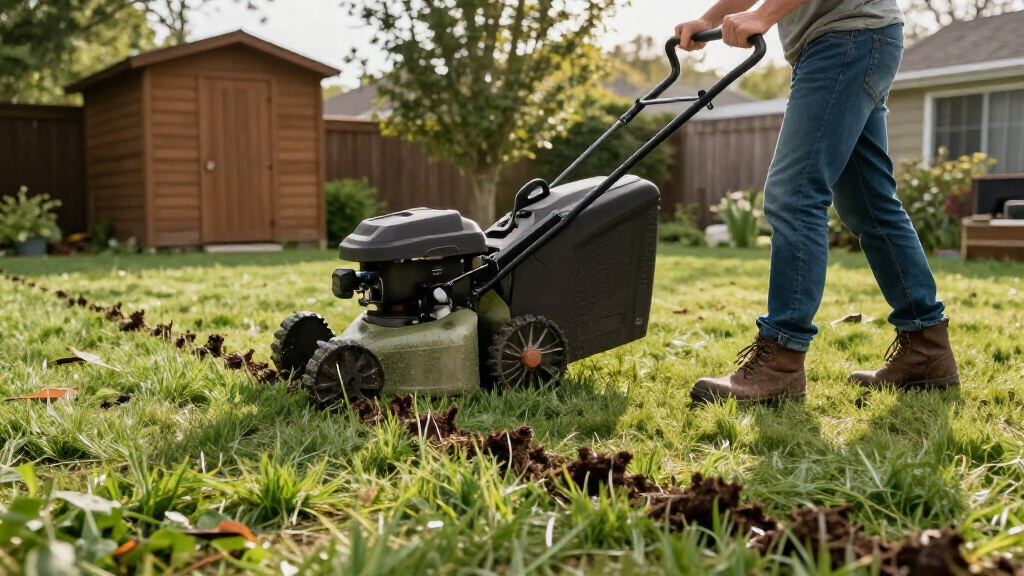

The best lawn aerators match the way you work and the condition of your soil: the Craftsman 40-Inch Tow-Behind Plug Aerator is my best overall pick for tractor owners who need broad coverage, while the Agri-Fab 48-Inch model suits larger lawns and the Walensee 4-Row Manual Aerator offers a simpler option for smaller areas. Plug aerators remove soil cores, while spike models make holes without extracting soil, so the right choice depends on compaction and how much effort you can give the job. Tow-behind models cover more ground but require compatible equipment and storage space; manual tools cost less in complexity but take longer to use. This roundup compares those tradeoffs across 15 options. Read on for the full breakdown and a guide to choosing by lawn size, soil, and workload.

Get business pricing on tools and workshop supplies
- Business-only prices and quantity discounts
- Tax-exempt purchasing
- Multiple users, one account, clear invoices
Complete the kit


Key Takeaways
Tow-behind plug aerators stand apart for coverage: the Craftsman and Agri-Fab models are built for lawns where pushing a manual tool across every section would take too long.
Plug removal and spike penetration solve different problems: hollow-tine tools extract soil, while spike rollers and shoes make holes without removing cores.
The 40- and 48-inch tow-behind options trade maneuverability for width: choose a wider unit for open ground, not a lawn with many tight turns or obstacles.
Manual core aerators favor targeted work: models such as the COCTN, Xuperace, and non-clogging hollow-tine tool are better suited to compacted patches than whole-property passes.
Rolling spike tools vary in working width and format: the 24-inch Hubiiett and 23-inch Seeutek cover ground differently from narrow push tools, but neither replaces core extraction when that is the job required.


| lawn aerator | Model | Material |
|---|---|---|
| Walensee 4-Row Manual Lawn Aer | GTL-B952-WA-JP | Steel |
| Seeutek 23-Inch Rolling Lawn A | BQJ-2000 | High-density alloy |
| Craftsman 40-Inch Tow-Behind L | — | — |
| Agri-Fab 48-Inch Tow-Behind La | 45-0299 | — |
| Heavy-Duty Steel Hollow-Tine L | HC-ALT-Blue-Z0-FX | Steel |
| BlumeTrec 40-Inch Tow-Behind S | — | — |
| Manual Rolling Lawn Aerator wi | — | — |
| Heavy-Duty Push Lawn Aerator R | — | — |
| Briliantwerk Lawn Aerator and | — | — |
| SENVERT Rolling Lawn Aerator | — | — |
| Manual Lawn Core Aerator with | LV-ALT4-ORANGE-Z0 | Metal frame with heat-treated hollow tines |
| COCTN Manual Lawn Aerator with | Lawn-001 | Thickened iron |
| Xuperace Manual Lawn Core Aera | GD0001-02 | Alloy steel |
| Saker Manual Lawn Aerator with | — | Thickened iron with rust-resistant coating |
| Hubiiett 24-Inch Rolling Lawn | AF10393T | Alloy steel with anti-rust coating |
More Details on Our Top Picks
Walensee 4-Row Manual Lawn Aerator with 20 Steel Spikes
The Walensee 4-Row is a practical choice for small lawns and compacted patches where a wide rolling tool or tractor attachment would be excessive. Its 20 steel spikes make holes in one press, so you can focus effort around worn paths, edges, or spots that need better water and nutrient access. At 34.6 inches long, it offers more reach than a short-handled core tool such as the Heavy-Duty Steel Hollow-Tine Lawn Aerator, but it pushes solid spikes into the soil rather than lifting cores. That makes it simpler for routine spot work, not the better pick for serious compaction relief. Soil moisture matters: hard, dry ground can make pressing difficult, while overly loose sandy soil is a poor match. Its manual pace also limits how much lawn most people will want to cover.
Pros:- Creates 20 holes per press for focused spot aeration
- Steel construction is suited to repeated manual use
- 34.6-inch overall length provides reach while working
- Can help water, air, seed, and fertilizer enter the soil
Cons:- Can be difficult to push into extremely hard, dry ground
- Not recommended for overly loose sandy soil
- Manual pressing is slow for whole-lawn aeration
Best for: Homeowners with a small lawn or a few compacted areas who want to aerate around edges and worn patches without a powered or tow-behind machine.
Not ideal for: People treating a large lawn, very hard dry soil, or loose sandy ground; the manual spikes take effort and are not designed to remove soil cores.
- Brand:Walensee
- Model:GTL-B952-WA-JP
- Spike count:20
- Spike length:2.8 inches
- Overall length:34.6 inches
- Foot plate dimensions:9.2 × 5.5 inches
- Material:Steel
- Operation:Hand-powered manual
Our verdict“Choose the Walensee for occasional aeration of small lawns and targeted patches, not broad coverage or deep core removal.”
Seeutek 23-Inch Rolling Lawn Aerator
The Seeutek 23-Inch Rolling Lawn Aerator suits homeowners who want to cover more ground per pass than the Walensee’s press-and-lift approach, while keeping the work fully manual. Its three handle-height settings make it easier to adapt the tool to different users, and the padded T-bar gives a more comfortable pushing position. The roller’s fillable chamber is a useful way to add weight when the two-inch star spikes need more force to enter the soil; it also means you can start lighter and adjust. Unlike the Craftsman tow-behind plug aerator, this model does not remove soil cores or depend on a tractor, so it is a more accessible choice for modest lawns but less suited to deep compaction treatment. Assembly and the physical effort of pushing remain part of the job.
Pros:- Three handle-height settings accommodate different users
- Fillable chamber allows added water or sand weight
- Padded T-bar supports a more comfortable pushing grip
- Rust-resistant finish and reinforced construction
Cons:- Manual rolling takes sustained physical effort
- Requires assembly before use
- Two-inch spikes loosen soil but do not remove cores
Best for: Homeowners with a modest lawn who want a push roller with adjustable handle height and the option to add ballast as soil conditions require.
Not ideal for: Buyers who need deep plug removal, have a large lawn, or want to avoid manual pushing and assembly.
- Dimensions:23 × 15 × 9 inches
- Weight:24 pounds
- Spike length:2 inches
- Handle height settings:3
- Material:High-density alloy
- Manufacturer:Seeutek
- Model:BQJ-2000
- Added weight:Fillable chamber accepts water or sand
Our verdict“Pick the Seeutek for adjustable, manual rolling on a manageable lawn, but choose a plug aerator for deeper compaction relief.”
Craftsman 40-Inch Tow-Behind Lawn Plug Aerator with 24 Galvanized Steel Coring Points and 140 lb Weight Tray
For buyers with a compatible lawn or garden tractor, the Craftsman 40-inch plug aerator offers a broad working path and actual soil-core removal without asking the operator to push a manual tool across the lawn. Its 24 galvanized coring points reach up to three inches, while the tray accepts up to 140 pounds of ballast to help the points work in firmer ground. That makes it a stronger choice for meaningful compaction relief than the Seeutek rolling aerator, whose solid spikes open the surface without extracting plugs. The tradeoff is equipment dependence: this is not a stand-alone option, and tougher soil may call for added weight. Flat-free tires reduce maintenance, and upright storage helps manage its size, though the 40-inch frame still needs room when parked.
Pros:- Removes soil plugs up to three inches deep
- 40-inch width covers more lawn per pass than manual tools
- Weight tray supports up to 140 pounds of ballast
- Flat-free tires and vertical storage design reduce upkeep and storage demands
Cons:- Requires a compatible lawn or garden tractor
- Ballast may be needed for tougher or compacted soil
- Wide tow-behind frame takes more storage space than manual aerators
Best for: Tractor owners who want to aerate a medium or large lawn by removing soil plugs and can accommodate a tow-behind attachment.
Not ideal for: People without a compatible lawn or garden tractor, or buyers seeking a compact hand tool for small areas.
- Brand:CRAFTSMAN
- Model number:CMXGZBF7124213
- Width:40 inches
- Coring points:24 galvanized steel
- Maximum coring depth:3 inches
- Weight tray capacity:140 pounds
- Tires:Flat-free
- Warranty:3-year limited
Our verdict“Choose the Craftsman if you already own a tractor and want deep plug aeration across a sizable lawn.”
Agri-Fab 48-Inch Tow-Behind Lawn Plug Aerator
The Agri-Fab 48-Inch Tow-Behind is the lineup’s broad-coverage choice for tractor owners who want to pull plugs across a large lawn in fewer passes. Its 32 galvanized, self-sharpening knives and aeration depth of up to three inches put it in the same core-removal category as the narrower Craftsman, but the extra eight inches of working width favor faster coverage over tighter maneuvering. A universal hitch suits lawn and garden tractors, and the transport handle can be operated from the tractor seat, reducing the need to stop and adjust the attachment by hand. Flat-free tires also limit routine maintenance. The main drawback is tractor dependence, and the supplied weight-tray information conflicts: one description gives 175 pounds while another gives 140. I would verify capacity before planning ballast.
Pros:- 48-inch working width covers more ground per pass than the Craftsman 40-inch model
- 32 galvanized, self-sharpening knives pull plugs up to three inches deep
- Universal hitch fits lawn and garden tractors
- Seat-operated transport handle and flat-free tires support convenient operation
Cons:- Requires a lawn or garden tractor for towing
- Wide frame may be harder to maneuver around tight spaces
- Provided weight-tray capacity is inconsistent between descriptions
Best for: Owners of larger lawns and compatible lawn or garden tractors who value fewer passes and want deep plug aeration.
Not ideal for: Buyers without a tractor, those with narrow or obstacle-heavy yards, or anyone who needs a confirmed weight-tray capacity before purchasing.
- Model:45-0299
- Working width:48 inches
- Aeration depth:Up to 3 inches
- Knives:32 galvanized, self-sharpening
- Weight tray capacity:Listed as up to 175 pounds; another description states 140 pounds
- Tires:Flat-free
- Hitch:Universal
- Warranty:3-year limited
Our verdict“Choose the Agri-Fab for broad, tractor-powered core aeration, but confirm the weight-tray capacity before relying on a specific ballast limit.”
Heavy-Duty Steel Hollow-Tine Lawn Aerator, Blue
The Heavy-Duty Steel Hollow-Tine Aerator is the manual pick for buyers who want to remove small soil cores rather than simply poke holes. Its three hollow, beveled tines target compacted spots, while replaceable tines offer a practical way to maintain the working parts over time. Compared with the Walensee 4-Row, which makes many holes per press with solid spikes, this tool is better aligned with core aeration but covers ground more slowly. It is also a more focused alternative to the tractor-dependent Craftsman and Agri-Fab models for lawns that do not justify tow-behind equipment. At 3.52 pounds, it is relatively light to carry, though using it still means repeated foot pressure and manual lifting. Assembly is required, and three tines limit its pace on larger areas.
Pros:- Hollow tines remove soil cores to relieve compaction
- Three beveled tines target air, water, and nutrient access
- Replaceable tines support continued use as components wear
- Comfort-grip handle and wide foot plate are designed to reduce strain
Cons:- Manual operation requires repeated physical effort
- Three-tine layout covers ground slowly on larger lawns
- Requires assembly
Best for: Homeowners who need manual core removal on compacted patches or smaller lawns and prefer a tool with replaceable hollow tines.
Not ideal for: People aerating a large lawn, those who cannot repeatedly press and lift a manual tool, or buyers seeking the faster coverage of a tow-behind aerator.
- Type:Manual hollow-tine lawn aerator
- Material:Steel
- Number of tines:3
- Tine design:Replaceable, hollow, beveled
- Color:Blue
- Dimensions:15.68 × 10 × 2.7 inches
- Weight:3.52 pounds
- Model:HC-ALT-Blue-Z0-FX
Our verdict“Choose this tool for manual core aeration on small lawns or problem patches, not for fast coverage of a broad yard.”
BlumeTrec 40-Inch Tow-Behind Spike Lawn Aerator
The BlumeTrec suits lawn owners who want to aerate broad areas from a riding mower, lawn tractor, or ATV rather than push a tool by hand. Its 40-inch working width and 10 independently rotating tines cover ground efficiently, while the rotating design helps keep tine contact through turns. The 110-pound weight tray lets you add load when the ground needs more pressure; unlike the manual SENVERT roller, the BlumeTrec relies on a towing vehicle to do the work. Its tines reach up to 2 inches, though this is a spike aerator, not a plug-pulling corer, so buyers seeking soil cores should compare it with the Manual Rolling Lawn Aerator with Coring Tool. Dry or compacted soil may need watering first, and added weights are not specified as included.
Pros:- 40-inch width helps cover ground faster than a push aerator.
- Independently rotating galvanized tines help maintain coverage during turns.
- Weight tray supports up to 110 pounds to increase tine pressure.
- Transport mode raises the tines for moving between work areas.
Cons:- Requires a compatible towing vehicle and takes more storage space than manual rollers.
- Dry or compacted soil may need watering for better tine penetration.
- Additional weight is needed for loading the tray, and included weights are not specified.
Best for: Owners of larger lawns or farm areas who already have a compatible riding mower, lawn tractor, or ATV and want tow-behind spike aeration.
Not ideal for: People without a towing vehicle, or buyers who need a manual tool or one that extracts soil plugs.
Our verdict“Choose the BlumeTrec if you have a towing vehicle and want wide-area spike aeration with adjustable added weight.”
Manual Rolling Lawn Aerator with Coring Tool
For a buyer who wants to remove soil plugs without adding a motor or tow vehicle, this push-operated model offers a different kind of aeration from the spike rollers in this lineup. Its rotary coring action extracts plugs, opening the soil rather than simply puncturing it; that makes it a better match for core aeration than the SENVERT Rolling Lawn Aerator, which uses a spiral-spiked tread. The tradeoff is effort: at 43.7 pounds, pushing it across a lawn takes work, and the maker positions it for small to medium yards rather than expansive grounds. Its reinforced construction is intended for regular use, but the provided specifications do not list tine count, working width, or penetration depth, making it harder to judge coverage against the 40-inch tow-behind BlumeTrec.
Pros:- Rotary coring design extracts soil plugs to relieve compaction.
- Manual operation avoids the need for a towing vehicle or powered equipment.
- Designed to support air, water, and nutrient movement into the soil.
- Reinforced construction is intended for regular use.
Cons:- Pushing a 43.7-pound tool requires meaningful physical effort.
- Described for small to medium lawns, limiting its fit for larger properties.
- Specifications do not state tine count, working width, or penetration depth.
Best for: Homeowners with small to medium lawns who specifically want a manual tool that removes soil plugs and are comfortable with sustained pushing.
Not ideal for: People with large lawns, limited mobility, or a preference for a lightweight spike roller that does not require extracting cores.
Our verdict“Pick this model for plug-pulling aeration on a manageable lawn if you are prepared for manual effort.”
Heavy-Duty Push Lawn Aerator Roller with Steel Spikes
This Lawnira roller gives manual-aerator buyers more control over how much pressure they apply. The sand-fillable drum can add weight beyond the 30-pound roller, a useful advantage over the SENVERT, which is loaded with sand or stones to reach its stated 55-pound maximum. Its 30 heat-treated steel tines are listed for penetration up to 2.2 inches, and swivel wheels plus a cushioned 59-inch handle help with steering and handling. That extra weight can make the tool more demanding to push, and added sand is needed when the lawn is tough or compacted. Like the SENVERT, it uses spikes rather than extracting plugs, so buyers seeking core aeration should choose a coring tool instead. Watering hard, dry soil beforehand can also help the tines penetrate.
Pros:- Thirty heat-treated steel tines provide broad contact across the roller.
- Sand-fillable drum lets the user add weight for firmer soil.
- Swivel wheels and a cushioned 59-inch handle help with maneuvering.
- Mostly pre-assembled design reduces setup work.
Cons:- Added sand may be needed for tougher compaction and is not stated as included.
- The added weight can make manual pushing more strenuous.
- Hard, dry soil may need watering before use.
Best for: Homeowners with small or medium lawns who want a manual spike roller with adjustable added weight and can manage a heavier tool.
Not ideal for: Buyers who need plug-pulling aeration, want a low-effort option, or do not want to fill a drum with sand.
Our verdict“Choose the Lawnira if you want a manually pushed spike roller whose pressure you can increase with added sand.”
Briliantwerk Lawn Aerator and Screed Shoes
Briliantwerk’s aerator shoes take up far less storage space than the rolling SENVERT or the wide BlumeTrec, and they do not require a handle, towing vehicle, or separate roller. The adjustable straps fit US shoe sizes 5–14, while two spike lengths—1.5 and 2 inches—support different tasks, including lawn aeration and screeding. That versatility makes them an unusual pick for buyers who also work with epoxy flooring, but they are less suited to systematic coverage of a lawn: the wearer must walk carefully, and the product data does not specify a working width or a method for collecting soil plugs. By contrast, the Manual Rolling Lawn Aerator with Coring Tool is the stronger choice when the goal is removing cores. Tighten the metal nuts firmly before use.
Pros:- Compact footwear is easier to store than a roller or tow-behind aerator.
- Two spike lengths offer options for different work.
- Adjustable straps fit a broad range of shoe sizes.
- Can be used for lawn work as well as screeding and epoxy flooring projects.
Cons:- Walking in spike shoes may be less controlled and efficient than rolling a lawn in rows.
- Does not extract soil plugs.
- Metal nuts need to be tightened firmly before use.
Best for: DIY homeowners who need compact footwear for occasional lawn aeration and also want spike shoes for screeding or epoxy-flooring tasks.
Not ideal for: People seeking efficient, even coverage across a large lawn or a tool that pulls soil plugs.
Our verdict“Buy these shoes for occasional, space-saving aeration and multi-use DIY work, not for fast or core-based lawn treatment.”
SENVERT Rolling Lawn Aerator, Heavy-Duty Push Spike Tool
The SENVERT is a practical choice for homeowners who want a rolling spike aerator without the footprint or towing setup of the 40-inch BlumeTrec. Its spiral-spiked tread is designed for smoother rolling and directional control, while auxiliary TPR wheels help move the tool across paved surfaces without scraping. The main body arrives assembled, with handle attachment left for setup. For tougher soil, it can be loaded with sand or stones to reach 55 pounds; this gives it adjustable pressure, but reaching that weight takes extra material, and the drum is not designed for water. Compared with the Lawnira roller, the SENVERT lists a maximum loaded weight and transport wheels, while the Lawnira specifies 30 heat-treated tines and a sand-filling funnel. Both are spike tools, not core aerators.
Pros:- Spiral-spiked tread is designed for smooth rolling and directional control.
- Can be loaded with sand or stones to reach 55 pounds.
- Auxiliary TPR wheels help protect paved surfaces during transport.
- Main body arrives assembled, with only the handle requiring attachment.
Cons:- Extra sand or stones are required to reach the maximum loaded weight.
- Drum cannot be filled with water.
- Manual operation is less suited to large lawns than a tow-behind model.
Best for: Owners of small to medium lawns who want a push roller with transport wheels and the option to add weight for firmer soil.
Not ideal for: People who need a plug-pulling corer, do not want to add sand or stones, or need wide tow-behind coverage.
Our verdict“Choose the SENVERT for manually aerating a small or medium lawn when adjustable ballast and easier paved-surface transport matter.”
Manual Lawn Core Aerator with Non-Clogging Hollow Tines
This is the most compact choice here for buyers who want to remove soil plugs without storing a full-size roller. Its three hollow, replaceable tines target compaction directly, unlike the COCTN and Saker, which use solid spikes to make channels without extracting plugs. The wide foot pedal and non-slip handle give you leverage for individual placements, while the plastic inserts are intended to help release plugs. The tradeoff is pace: treating a lawn this way takes repeated steps, and dry ground should be watered first. Its listed weight is unusually low, so I would not choose it for a tool that needs substantial heft to drive into firm soil. Compared with the longer Xuperace, this model prioritizes compact dimensions over a taller, more substantial frame.
Pros:- Three hollow tines remove soil plugs rather than only puncturing the ground
- Replaceable tines simplify upkeep
- Wide foot pedal and non-slip handle support controlled manual use
- Compact listed dimensions are easy to store
Cons:- Manual placement makes broad lawn coverage slow
- Dry soil should be watered before use
- The listed weight is very low, which may limit leverage in firm ground
Best for: Homeowners with a small lawn or a few compacted patches who want plug-removing aeration and easy storage.
Not ideal for: People aerating a large lawn or firm, dry soil; this compact manual tool takes repeated effort and works best after watering.
- Type:Manual lawn core aerator
- Tines:3 hollow, replaceable tines
- Material:Metal frame with heat-treated hollow tines
- Dimensions:15 x 10 x 2.8 inches
- Listed weight:0.704 ounces
- Model:LV-ALT4-ORANGE-Z0
- Color:Orange
Our verdict“Choose this compact core aerator for targeted plug removal on a small, watered lawn, not for fast coverage or hard soil.”
COCTN Manual Lawn Aerator with Adjustable Handle and Self-Cleaning Design
The COCTN suits buyers who prefer a step-on spike tool and want more than a handful of punctures per placement: its 15 three-inch spikes work together to open channels in compacted soil. The three-position handle is a practical distinction from the fixed-handle manual core aerators in this group, making it easier to set a comfortable working height. Its self-cleaning spring design is intended to clear debris as you work, while the mostly assembled format and detachable construction help with storage. Unlike the Xuperace, it does not remove soil plugs, so it is better for making access channels than for core aeration. Some assembly is still required, and repeated stepping demands physical effort; the Saker offers a similar spike count with shorter spikes and included gloves.
Pros:- Fifteen three-inch spikes create multiple channels with each step
- Three handle-height settings accommodate different users
- Self-cleaning spring is designed to clear debris from the spikes
- Detachable design supports more convenient storage
Cons:- Creates spike holes rather than extracting soil plugs
- Requires minor assembly before use
- Manual stepping can be tiring over a large area
Best for: Gardeners seeking a height-adjustable, multi-spike tool for opening channels in a compacted lawn without removing soil cores.
Not ideal for: Buyers who specifically want plug removal, a ready-to-use tool with no assembly, or powered coverage for a large lawn.
- Brand:COCTN
- Model:Lawn-001
- Spike count:15
- Spike length:3 inches
- Handle settings:3 height settings
- Material:Thickened iron
- Assembly:Minor assembly required; wrench included
- Warranty:1 year
Our verdict“Pick the COCTN for adjustable, multi-spike aeration on a manageable lawn when plug removal is not the priority.”
Xuperace Manual Lawn Core Aerator with 3 Hollow Tines
The Xuperace is the stronger fit than the compact orange core aerator when you want a taller, heavier tool for plug removal on localized problem areas. Its three hollow tines extract cores, and the side-eject design helps reduce clogging rather than relying on spike holes alone, as the COCTN does. A footplate helps transfer body weight into the ground, while the removable middle tine lets you use a narrower setup when harder soil makes all three difficult to press in. That flexibility does not remove the need to work with moist soil, and dry or very firm ground can still make operation strenuous. At 5.91 pounds and 42 inches long, it is a more substantial manual tool than the compact model, but it remains a repeated-step option rather than a fast way to cover a broad lawn.
Pros:- Hollow tines extract soil plugs to address compaction directly
- Side-eject design helps reduce tine clogging
- Footplate provides leverage when pressing into moist soil
- Removable middle tine offers a narrower setup for harder ground
Cons:- Works best when the lawn is moist
- Hard ground may still take substantial pressure even with the middle tine removed
- Repeated manual placements are slow across large lawns
Best for: Homeowners treating compacted lawn patches who want replaceable hollow tines and the option to remove the middle tine for firmer ground.
Not ideal for: People seeking quick whole-lawn coverage or an effortless tool for dry, hard soil; it still relies on manual pressure and moist ground.
- Tines:3 hollow, replaceable tines
- Material:Alloy steel
- Dimensions:42 x 11 x 1.9 inches
- Weight:5.91 pounds
- Model:GD0001-02
- Manufacturer:Xuperace
Our verdict“Choose the Xuperace for targeted core aeration where its footplate and removable middle tine offer more flexibility than a basic compact corer.”
Saker Manual Lawn Aerator with 15 Iron Spikes
The Saker makes sense for buyers who want a straightforward 15-spike step aerator with a handle that can be adjusted to suit different users. Its 2.3-inch spikes are shorter than the COCTN’s three-inch spikes, a useful distinction for shoppers who prefer a less-deep channel rather than the COCTN’s longer reach. A double-layer soil-ejecting spring is designed to clear debris during use, and the included gloves add a small practical convenience. This is still spike aeration: unlike the hollow-tine Xuperace, it does not remove cores, so it will not suit buyers focused on plug extraction. The 6.53-pound frame is substantial for a manual step tool, but you supply the downward force, and the spikes work best in soft, moist ground.
Pros:- Fifteen spikes aerate several points with each step
- Adjustable height accommodates different users
- Double-layer spring is designed to eject soil and debris
- Protective gloves are included
Cons:- Creates holes without removing soil plugs
- Manual operation requires downward stepping force
- Best performance depends on soft, moist soil
Best for: Homeowners who want an adjustable-height spike tool for aerating a small or medium lawn when the soil is soft.
Not ideal for: Buyers who need hollow-tine core removal, deeper three-inch spikes, or an aerator that can penetrate hard soil without repeated stepping effort.
- Spike count:15
- Spike length:2.3 inches
- Height range:32.2–35.4 inches
- Material:Thickened iron with rust-resistant coating
- Spring system:Double-layer soil-ejecting spring
- Dimensions:15.7 x 12.6 x 4.7 inches
- Item weight:6.53 pounds
- Included accessories:Protective gloves
Our verdict“Choose the Saker for adjustable, short-spike aeration on moist ground, but choose the Xuperace if extracting soil plugs matters more.”
Hubiiett 24-Inch Rolling Lawn Aerator with 42 Spikes
Among these five, the Hubiiett is the clear choice for covering more ground without stopping to press a tool into the lawn one step at a time. Its 24-inch roller and 42 three-inch spikes make it a better match for small to medium lawns than the Xuperace or Saker, which require repeated placements. The built-in chamber can be filled with sand to increase working weight to as much as 70 pounds, giving you more downward force when ordinary rolling is not enough. That added weight is also the main tradeoff: pushing becomes more strenuous, and the instructions recommend pulling. Unlike the hollow-tine models, it makes spike channels rather than extracting plugs. Adjustable handle height and auxiliary wheels help with control and transport, but this is still a substantial tool to store and maneuver.
Pros:- Twenty-four-inch roller covers more ground per pass than step-on tools
- Forty-two three-inch spikes create multiple channels across the roller width
- Sand chamber allows added weight for firmer soil
- Adjustable handle and auxiliary wheels support control and transport
Cons:- Adding sand makes the roller heavier and harder to push
- The product recommends pulling, which may not suit every user
- Spike aeration does not remove soil cores
Best for: Owners of small to medium lawns who want faster rolling coverage and the option to add weight for firmer soil.
Not ideal for: People with large lawns, limited storage, or a need for soil-plug removal; adding sand increases effort and the roller uses spikes.
- Width:24 inches
- Dimensions:16 x 17 x 24 inches
- Weight:31 pounds listed item weight; 32 pounds in description
- Maximum weight with added sand:Up to 70 pounds
- Spikes:42 reinforced, heat-treated spikes, 3 inches long
- Material:Alloy steel with anti-rust coating
- Handle:Three-height adjustable T-grip
- Model:AF10393T
- Manufacturer:Hubiiett
Our verdict“Choose the Hubiiett for rolling coverage on a small to medium lawn if you can handle its bulk and do not need core extraction.”

How We Picked
I compared the 15 options by the job they can realistically handle: whether they remove cores or only create holes, how much ground they can cover, and what effort or equipment they demand. I also weighed practical ownership factors, including construction, tine or spike layout, clogging and cleanup considerations, handle or hitch compatibility, and ease of storage. These differences matter more than a long feature list when choosing an aerator for a particular lawn.
The ranking favors tools that offer a clear, useful fit with fewer compromises for their intended buyer. The Craftsman leads as a balanced tow-behind plug option; the wider Agri-Fab ranks as a stronger fit for larger, open lawns, while manual core and spike tools are placed according to their more targeted roles. I distinguish these tools by aeration method and workload rather than treating every spike count or working width as interchangeable, and I avoid assuming that a manual tool can match tractor-powered coverage.
Factors to Consider When Choosing Best Lawn Aerators
Before choosing a model, match the aerator to the soil problem and the area you need to cover. Working method, lawn layout, and available power shape the decision more than the product label alone.
Choose Core Removal or Spike Aeration
Core aerators use hollow tines to pull plugs of soil from the lawn, creating channels that can relieve compaction without pressing the surrounding ground inward. Spike aerators puncture the surface but leave the soil in place, making them a simpler approach for lighter work or routine surface penetration. A common mistake is buying a spike roller because it looks easier, then expecting it to do the same job as a core tool on heavily compacted ground. For persistent compaction, prioritize a tool designed to remove cores and check whether its tines can reach your soil under suitable conditions. If your goal is limited to small areas or shallow puncturing, a manual spike tool may be easier to store and handle. Let the lawn’s condition, not the number of spikes alone, determine the method.
Match the Tool to Lawn Size and Layout
Working width affects how many passes you need, but a wider aerator is not automatically the easier choice. Tow-behind models such as the 40-inch Craftsman and 48-inch Agri-Fab make more sense on open lawns where a tractor or suitable towing machine can move in long runs. Narrow paths, trees, beds, and sharp turns can make a broad unit awkward and leave areas that need hand work anyway. Manual tools take longer across a large lawn, yet they offer better control around landscaping and are easier to carry between small sections. Measure usable lawn area rather than counting the whole property, since patios and planting beds do not need aeration. Choose for the space you can actually cover efficiently.
Account for Soil Moisture and Compaction
Soil condition changes how well tines enter the ground and how much effort the job takes. Very dry, hard soil can resist penetration, while overly wet soil can smear or compact rather than produce clean openings. A frequent error is judging an aerator only by its listed tine count without thinking about the ground it must enter. For manual models, that difference can decide whether a session is manageable or exhausting. Tow-behind units may let you add weight where their design allows, but added load does not make poor soil conditions disappear. Plan the work when the ground is moist enough to yield while still firm enough to support the tool.
Compare Effort, Coverage, and Equipment Needs
Manual aerators avoid a towing setup, but the time and physical effort increase with lawn size and the number of passes. A rolling tool requires repeated pushing, while step-on shoes or a foot-operated core tool call for a different rhythm and balance. Tow-behind models shift the effort to a compatible machine, but they also need hitch fit, turning room, and somewhere to store a wider attachment. Buyers sometimes focus on the aerator itself and overlook the cost in time, access, or equipment already on hand. If you own a suitable tractor and have a broad lawn, tow-behind coverage may be the more practical route. If not, a manual tool can be the more sensible choice even when the job takes longer.
Look Beyond Spike Count and Working Width
Spike count, tine shape, spacing, and penetration depth all affect how a tool interacts with the lawn, but one headline number does not describe the result by itself. Closely spaced spikes may create many punctures in a pass, yet those openings are not equivalent to removed soil cores. Hollow tines also need room to clear soil, so a design that addresses clogging can matter during repeated passes. For rolling tools, compare the width with your ability to push and steer it, not just the ground covered on paper. For manual core tools, check handle comfort and how the design supports steady pressure, since awkward leverage can limit practical use. Look at the full working pattern and handling demands before treating a high count as a guarantee of better aeration.
Plan for Cleanup, Storage, and Repeat Use
Aeration creates soil plugs, and hollow tines need cleaning when soil builds up; those parts of the job can influence how often you use the tool. Manual units are often easier to store, but long handles and exposed tines still need a safe, dry spot. A tow-behind attachment takes more room and may need basic upkeep after contact with damp soil and debris. Before buying, think through where the equipment will live and how you will clean it after use, rather than focusing only on the first pass across the lawn. If you expect to aerate only small patches, a large attachment may be more burden than benefit. A tool that fits your storage and maintenance habits is more likely to be ready when the lawn needs attention.
Frequently Asked Questions
Should I choose a plug aerator or a spike aerator for compacted soil?
For soil that is noticeably compacted, a plug aerator is generally the more suitable starting point because hollow tines remove small cores instead of simply pushing into the ground. Spike models can suit lighter work, but they leave displaced soil in place and are not a direct substitute for core removal. The roundup’s Craftsman and Agri-Fab tow-behind models focus on plug aeration, while options such as the Seeutek and Hubiiett are rolling spike tools. Soil condition and lawn size still matter: a manual core tool may be sufficient for problem patches, while a large area can call for a tow-behind unit. Avoid working when the ground is too dry or too wet, since either condition can undermine the result.
Can I use a tow-behind aerator without a lawn tractor?
The Craftsman and Agri-Fab tow-behind models are intended to be pulled by compatible equipment, so they are not substitutes for standalone push or manual tools. Before choosing one, check the towing machine’s hitch arrangement, ability to handle the attachment, and room to turn on your lawn. A large lawn alone does not make a tow-behind model practical if access is narrow or the required equipment is unavailable. Manual core tools and push rollers avoid the hitch requirement, though they demand more direct effort. If only some areas are compacted, a manual tool may be a better fit than acquiring a tow-behind setup for occasional use.
Is a 48-inch aerator always better than a 40-inch model?
A wider working path can reduce the number of passes on an open lawn, but it also makes the aerator harder to maneuver around trees, beds, and tight corners. The Agri-Fab 48-inch model is more naturally suited to broad, open spaces, while the Craftsman 40-inch model offers a narrower alternative in the same tow-behind category. The difference matters less if much of the lawn is broken up by obstacles or narrow sections. Consider turning space and storage width alongside coverage. If you need to do detailed work in confined areas, keep a manual tool in mind even if a tow-behind model handles the main lawn.
What should I choose for a small lawn with a few compacted patches?
A manual core aerator is often a better match for isolated problem areas than a broad tow-behind attachment or a roller that only makes spike holes. The COCTN, Xuperace, and non-clogging hollow-tine options in this roundup illustrate the targeted manual-core category, with differences in handle and tine design to compare. If the patches are not heavily compacted and core removal is not the goal, a manual spike tool may take a simpler approach. Think about how often you will repeat the work and whether the tool gives you enough leverage for your soil. A small lawn can still be tiring to aerate by hand, so narrow the task to the affected sections where appropriate.
How do I decide between a rolling spike aerator and aerator shoes?
A rolling spike aerator is pushed across the lawn and can suit users who want a continuous pass with a handle, while Briliantwerk aerator shoes rely on stepping to make punctures. Shoes are compact and avoid pushing a roller, but they require balance and deliberate foot placement; they can feel awkward on uneven ground or for anyone who dislikes working from their feet. Rolling models are easier to guide in lanes, though their weight and width affect how manageable they feel. Both are spike-based options, so neither removes soil cores like a hollow-tine tool. Choose the format you can control comfortably, and match it to the severity of the compaction.
Conclusion
My best overall pick is the Craftsman 40-Inch Tow-Behind Plug Aerator for buyers with compatible towing equipment who want core removal across a substantial lawn. The best value in practical fit depends on your setup: the Walensee 4-Row Manual Aerator is a straightforward manual choice for smaller areas, while the Seeutek rolling model suits buyers who prefer a push-style spike tool. For best premium-scale coverage, I would look to the Agri-Fab 48-Inch tow-behind model when the lawn is broad and open enough to use its width. Beginners should start by matching the aeration method to their soil and choosing a manageable manual tool for limited areas rather than buying the widest attachment. For specific needs, choose a hollow-tine manual model for targeted core removal, a rolling spike tool for push-based surface puncturing, or the Briliantwerk shoes when compact storage and step-on operation suit your mobility and terrain. The right pick is the one whose method, workload, and handling fit the lawn you actually have.
Fall Picks
fall essentials
As an affiliate, we earn on qualifying purchases.