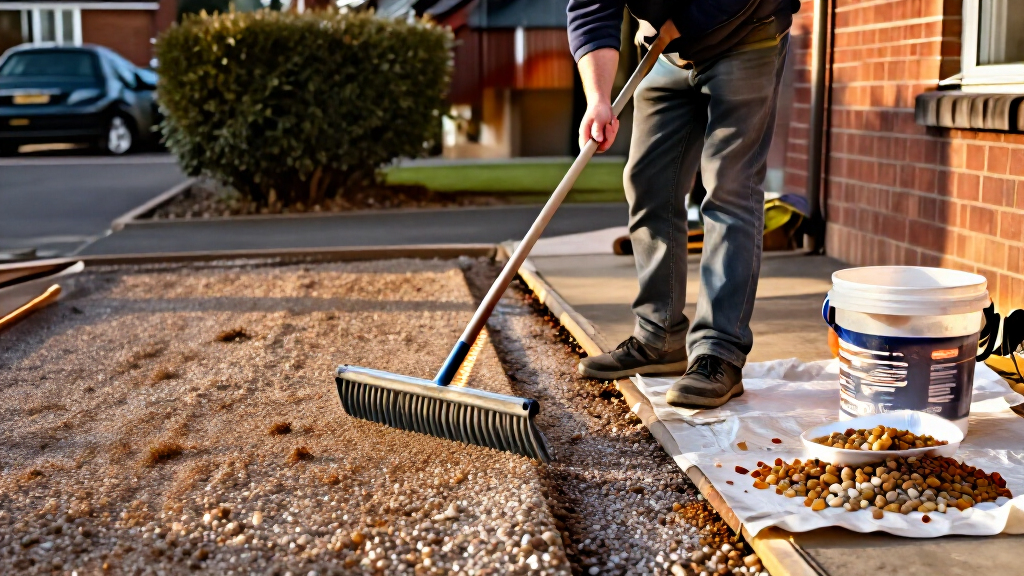

Choosing among the best resin driveway kits depends on whether you need a complete ready-mixed surface or a binder to combine with your own stone. My strongest all-around pick is PermaRoX, which pairs DIY instructions with stated UV resistance and permeability, though its 72-hour cure needs careful scheduling. For a larger stone-binding job, McKinnon’s 4-gallon binder offers a more useful volume, but its listed coverage and cure details are thin. AeroMarine is the more clearly specified option for coating an existing pebble surface, yet it is not UV resistant and can yellow in sunlight.

Get business pricing on tools and workshop supplies
- Business-only prices and quantity discounts
- Tax-exempt purchasing
- Multiple users, one account, clear invoices
The main tradeoff is between application certainty and project scale: some kits give a clear cure time or coverage figure, while others describe broad uses without enough data to calculate material needs. I rank these products by how well their stated features match driveway work, how much practical information they provide, and the compromises a buyer should expect. A resin binder is not automatically a full driveway system; the base, aggregate, mixing, drainage, and installation method still matter.
Complete the kit

Key Takeaways
- PermaRoX is my best overall choice for a DIY-minded buyer seeking a stated permeable, UV-resistant gravel system, but its 72-hour cure creates a longer access restriction.
- McKinnon’s 4-gallon binder suits larger stone-binding projects better than the 1-gallon version, although neither listing supplies coverage or curing figures.
- AeroMarine is the clearest choice for coating or recoating pebble paving, not a UV-stable driveway finish; its stated coverage separates new work from recoating.
- The Sand & Resin kit is the only ready-mixed granular option here, which can simplify spreading, but its instructions require keeping water away while it hardens.
- Before ordering any binder, confirm the required aggregate, base preparation, coverage per unit, mixing ratio, and suitability for vehicle loads with the manufacturer.
| PermaRoX Resin Bound Gravel Kit for Driveways, Patios & Walkways |  | Best Overall for DIY Resin-Bound Surfacing | Form: Liquid | Container: Bottle | Volume: 128 fluid ounces | VIEW LATEST PRICE | See Our Full Breakdown |
| McKinnon Stone Bond Resin Bound Surfacing Epoxy 4 Gallon, Pebble Binder |  | Best for Larger Stone-Binding Projects | Product type: Resin-bound surfacing epoxy and pebble binder | Volume: 4 gallons | Package weight: 40 pounds | VIEW LATEST PRICE | See Our Full Breakdown |
| McKinnon Stone Bond Resin Bound Surfacing Epoxy 1 Gallon, Pebble Binder |  | Best Smaller-Format UV-Stable Binder | Product type: Resin-bound surfacing epoxy and pebble binder | Volume: 1 gallon | Package weight: 10 pounds | VIEW LATEST PRICE | See Our Full Breakdown |
| AeroMarine Rock and Pebble Paving Epoxy Resin Kit 1.5 gallons |  | Best for Coating Existing Pebble Paving | Product type: Rock and pebble paving epoxy kit | Volume: 1.5 gallons | Mix ratio: 2 parts resin to 1 part hardener | VIEW LATEST PRICE | See Our Full Breakdown |
| Sand & Resin Gravel Kit, Pressure Washer Safe, No Weeds, 3 Gallon (Grey) | 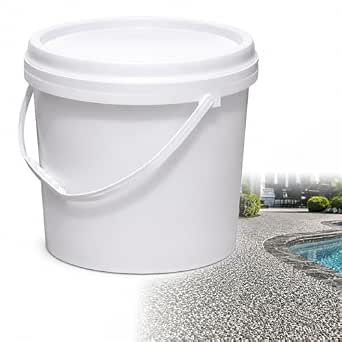 | Best Ready-Mixed Granular Option | Product type: Ready-mixed sand and resin | Form: Granular | Volume: 3 gallons | VIEW LATEST PRICE | See Our Full Breakdown |
| resin driveway kit | Volume | Product type |
|---|---|---|
| PermaRoX Resin Bound Gravel Ki | 128 fluid ounces | — |
| McKinnon Stone Bond Resin Boun | 4 gallons | Resin-bound surfacing epoxy and pebble binder |
| McKinnon Stone Bond Resin Boun | 1 gallon | Resin-bound surfacing epoxy and pebble binder |
| AeroMarine Rock and Pebble Pav | 1.5 gallons | Rock and pebble paving epoxy kit |
| Sand & Resin Gravel Kit | 3 gallons | Ready-mixed sand and resin |
More Details on Our Top Picks
PermaRoX Resin Bound Gravel Kit for Driveways, Patios & Walkways
PermaRoX earns my top position because its stated use lines up directly with driveway surfacing and it provides more installation context than most alternatives here. The kit is described as weatherproof, permeable, and UV resistant, with DIY instructions and a 72-hour full cure. That combination is helpful to a homeowner who wants a defined gravel-binding system rather than a generic epoxy marketed for several kinds of pebble work. Its clear finish also leaves the stone visible instead of adding a colored coating.
Compared with McKinnon’s binders, PermaRoX gives a specific cure time and names a DIY instruction set, making it easier to plan when a driveway can return to use. McKinnon, in turn, has 1- and 4-gallon options and explicit positioning as a permeable binder, but the supplied listing omits coverage and curing information. PermaRoX’s stated tensile strength of 10,000 psi is a useful product specification, though buyers should not read it as a complete vehicle-load rating for the installed surface; the prepared base and aggregate system remain decisive.
The compromise is the three-day full cure, plus a stated need to reseal every two to five years depending on conditions. This is not a “spread it and drive on it tomorrow” choice. Mixing may also be messy for a first-time installer, despite the included DIY instructions. I would ask the seller for area coverage, suitable aggregate size, application temperature range, and vehicle-use guidance before ordering. Among these five, however, it offers the most balanced stated package for someone seeking a permeable, UV-resistant DIY driveway surface.
Pros:- Designed for driveways as well as patios and walkways
- Described as UV resistant, weatherproof, and water permeable
- DIY instructions are included
- Clear finish keeps the gravel appearance visible
Cons:- Full cure takes 72 hours
- Resealing may be needed every two to five years
- Coverage per kit and vehicle-load guidance are not stated in the supplied details
Best for: DIY homeowners who want a driveway-specific, permeable gravel system with stated UV resistance and installation instructions.
Not ideal for: Anyone who needs the driveway back in service quickly, wants a no-maintenance finish, or cannot confirm coverage and vehicle-load suitability before buying.
- Form:Liquid
- Container:Bottle
- Volume:128 fluid ounces
- Compatible material:Stone and gravel
- Full cure:72 hours
- Water performance:Waterproof product description; surface described as water permeable
- Tensile strength:10,000 psi
- Finish and origin:Clear; made in the USA
Our verdict“I recommend PermaRoX first for a DIY driveway project when its 72-hour cure and maintenance needs fit the schedule.”
McKinnon Stone Bond Resin Bound Surfacing Epoxy 4 Gallon, Pebble Binder
For a project that calls for more binder on hand, McKinnon’s 4-gallon Stone Bond is the practical volume pick. It is designed to bind pebble and gravel into permeable surfaces for driveways, patios, pool decks, and walkways, and the listing says the finish resists yellowing from sun exposure. That UV-stability claim gives it a meaningful advantage over AeroMarine, which explicitly lacks UV resistance, especially where the finished stone will receive regular sunlight.
The larger container makes this version a more plausible choice than McKinnon’s 1-gallon option for a broader installation or a contractor who already knows the required quantity. But four gallons alone does not tell me what area it will cover: coverage depends on aggregate, depth, and application method, and the product details do not supply a coverage figure or cure time. A 40-pound package also calls for some practical handling planning. I would verify the application procedure and whether the whole quantity must be mixed at once before choosing it for a solo DIY job.
Compared with PermaRoX, this binder may appeal to buyers who prefer a larger-format stone binder and a stated UV-stability benefit, while PermaRoX is easier to schedule around because its cure time and included DIY instructions are listed. McKinnon describes the binder as easy to mix and suitable for homeowners or professionals, but that claim cannot replace a written mix ratio, coverage chart, or cure window. Its ranking reflects promising driveway fit and larger volume, offset by these planning gaps.
I would choose it only after confirming aggregate compatibility, coverage, curing conditions, and traffic readiness with the supplier. Its permeable finish may suit a drainage-conscious project, but the surface build and base must support the intended use. If the job is small, the one-gallon version avoids storing and handling a larger quantity; if the job is extensive, this is the stronger McKinnon candidate once required quantities are clear.
Pros:- Intended for permeable driveway, patio, pool-deck, and walkway surfaces
- Described as resistant to sun-related yellowing
- Four-gallon format is more suitable than the smaller McKinnon pack for larger work
- Positioned for both DIY users and professionals
Cons:- The 40-pound package may be awkward to handle
- The supplied details do not state coverage or cure time
- No mix ratio or vehicle-load specification is provided in the supplied information
Best for: Buyers planning a larger pebble or gravel project who want a UV-stable binder and can confirm coverage and cure details before purchase.
Not ideal for: Small jobs, solo installers who have difficulty handling a 40-pound package, or buyers who need a published coverage rate and cure schedule to plan.
- Product type:Resin-bound surfacing epoxy and pebble binder
- Volume:4 gallons
- Package weight:40 pounds
- Stated uses:Driveways, patios, pool decks, and walkways
- Surface type:Permeable stone and gravel surface
- UV performance:Described as resistant to yellowing from sun exposure
- Manufacturer:McKinnon Materials
- Product dimensions:15 x 15 x 16 inches
Our verdict“I would pick the 4-gallon McKinnon binder for a larger stone-bound project only after getting written coverage and curing guidance.”
McKinnon Stone Bond Resin Bound Surfacing Epoxy 1 Gallon, Pebble Binder
The one-gallon McKinnon Stone Bond is the smaller-format route into the same general binder approach as the 4-gallon option. It is intended to secure pebble and gravel in durable, permeable surfaces and is described as UV stable, so it has a stronger stated fit for exposed outdoor stone than AeroMarine’s non-UV-resistant epoxy. A smaller container may also be easier to handle when a buyer is binding a limited area or wants to avoid committing to the larger McKinnon package before calculating the job.
It shares the larger version’s central weakness: the listing leaves out coverage and cure time. That makes the one-gallon size difficult to translate into a reliable square-foot estimate. I would not assume it is enough for a small driveway section without checking the manufacturer’s recommended resin amount per aggregate volume and application depth. The 10-pound package is easier to manage than its 40-pound sibling, but a manageable container does not solve uncertainty about mixing or how much finished area the product can treat.
Compared with PermaRoX, McKinnon gives buyers a compact binder option and a stated UV-stability claim, while PermaRoX supplies a cure time, tensile strength, clear finish, and DIY instructions. Compared with its own four-gallon counterpart, this pack makes more sense for a smaller project or trial section, not a broad driveway installation. The product is described as made in the USA and suitable for DIY users and professionals, but proper mixing and application remain part of the job.
This is a reasonable choice when a buyer already understands resin-bound surfacing and can obtain project-specific instructions. I would skip it if I needed a ready-to-spread system with clearly published area coverage or if I could not verify its suitability for vehicle traffic. The smaller pack reduces handling burden; it does not make the technical work or missing specifications disappear.
Pros:- Smaller package is easier to handle than the 4-gallon McKinnon version
- Designed for permeable gravel and pebble surfaces
- Described as UV stable and resistant to yellowing
- Suitable for outdoor paths, patios, and driveway applications
Cons:- Coverage and cure time are not stated in the supplied details
- Proper mixing and application skills are required
- Vehicle-load guidance and long-term durability data are not provided
Best for: DIYers or installers binding a limited area of outdoor gravel who want a smaller package with a stated UV-stability benefit.
Not ideal for: Anyone estimating a full driveway from the product page alone, or buyers who need a published cure schedule, coverage rate, or complete installation specification.
- Product type:Resin-bound surfacing epoxy and pebble binder
- Volume:1 gallon
- Package weight:10 pounds
- Stated uses:Driveways, patios, and walkways
- Surface type:Permeable pebble and gravel surface
- UV performance:Described as UV stable and resistant to yellowing
- Manufacturer:McKinnon
- Product dimensions:12 x 6 x 12 inches
Our verdict“I see the one-gallon McKinnon as a manageable small-project binder, provided the supplier confirms coverage and installation requirements.”
AeroMarine Rock and Pebble Paving Epoxy Resin Kit 1.5 gallons
AeroMarine stands out for its unusually useful coverage figures, making it easier to estimate material than with either McKinnon listing. The kit states coverage of about 75 square feet on new pebble installations and 300 square feet for recoating. It also gives a 2:1 resin-to-hardener mix ratio and a 24-hour cure at 70°F. Those details help with planning and make this the clearest choice here for a buyer refreshing or coating an existing pebble surface.
Its role differs from McKinnon Stone Bond and PermaRoX: AeroMarine is described as penetrating and coating pebbles for a high-gloss finish, rather than primarily as a permeable resin-bound gravel system. That can suit someone who wants a glossy, water-resistant surface over compatible pebble paving, but buyers should not infer that it is interchangeable with a full driveway surfacing kit. Confirm that the existing substrate and intended vehicle use match the manufacturer’s instructions.
The chief drawback is the lack of UV resistance. The supplied description warns that sunlight may cause yellowing, so I would not rank it ahead of McKinnon or PermaRoX for a fully exposed driveway. Its 24-hour cure is shorter than PermaRoX’s 72 hours, but the stated cure applies at 70°F; cooler conditions or other site factors may affect timing. The mix ratio also demands accurate measuring and thorough blending, since poor mixing can lead to curing problems.
Compared with the ready-mixed Sand & Resin kit, AeroMarine requires a more deliberate resin-and-hardener process but provides a defined ratio and separate new-work and recoat coverage. I would choose it for a carefully planned pebble coating job where the glossy look is wanted and sun exposure is limited or acceptable. For a new, exposed driveway requiring UV stability, the alternatives are better aligned.
Pros:- Coverage is stated separately for new installation and recoating
- Low-viscosity epoxy is described as penetrating between pebbles
- High-gloss, water-resistant finish
- Mix ratio and a 24-hour cure at 70°F are specified
Cons:- Not UV resistant and may yellow in sunlight
- Careful measuring and mixing are needed to avoid curing problems
- The stated cure time depends on a 70°F condition
Best for: Owners coating or recoating compatible pebble paving who value stated coverage, a glossy finish, and a specified mix ratio.
Not ideal for: Exposed driveways where yellowing is unacceptable, users who want a ready-mixed granular product, or projects needing a specifically documented permeable system.
- Product type:Rock and pebble paving epoxy kit
- Volume:1.5 gallons
- Mix ratio:2 parts resin to 1 part hardener
- Coverage, new installation:Approximately 75 square feet
- Coverage, recoating:Approximately 300 square feet
- Full cure:24 hours at 70°F
- Finish:High gloss
- Water and UV behavior:Water resistant; not UV resistant
Our verdict“I recommend AeroMarine for a defined pebble-coating or recoating job, but not as my first choice for an exposed UV-sensitive driveway.”
Sand & Resin Gravel Kit, Pressure Washer Safe, No Weeds, 3 Gallon (Grey)
This Sand & Resin kit takes a different route from the liquid binders above: it is supplied as a ready-mixed granular material intended to be mixed and spread over hard ground. That format may appeal to a DIYer who does not want to calculate a separate resin-and-hardener ratio, and the listed uses include paths, driveways, and pool bottoms. The gray finish provides a more defined color choice than the clear binders, which preserve the underlying stone’s appearance.
The product is described as permeable, frost resistant, pressure-washer safe, and weed preventing. These claims could fit a garden path or other prepared outdoor area, but I would ask the manufacturer what traffic loads and base conditions it supports before using it for a vehicle driveway. The listing supplies no square-foot coverage, gravel size, or load rating, leaving important planning questions open. Its 24-hour hardening period is shorter than PermaRoX’s stated 72-hour cure, though that does not by itself establish when it is safe for cars.
Compared with AeroMarine, this kit avoids a listed 2:1 resin-and-hardener measuring step and comes as a granular blend, but AeroMarine gives more precise coverage and cure conditions. Compared with McKinnon’s binders, it may be simpler to spread as supplied, while McKinnon more clearly emphasizes a resin-bound permeable stone surface and UV stability. The Sand & Resin description does not state UV performance, so I would not assume it will retain its color or properties in strong sun.
The key installation caution is explicit: the water-based product must stay dry before it hardens. Rain, washing, or runoff during that window could compromise the work. This is my last-ranked option because the ready-mix format is appealing, but the missing coverage and driveway-load details weaken its case for a substantial vehicle surface. It may make more sense for a modest prepared path or a project where the seller confirms the exact driveway specification.
Pros:- Ready-mixed granular form avoids a separately listed resin-to-hardener ratio
- Described for driveways, paths, and pool-bottom applications
- Claims frost resistance, weed prevention, and pressure-washer tolerance
- Stated to harden in 24 hours
Cons:- Must not contact water before it has solidified
- Coverage, UV performance, and vehicle-load rating are not stated
- The supplied details do not specify the required base preparation or aggregate size
Best for: DIY users who prefer a ready-mixed granular product for a small prepared path or driveway area and can protect it from water while hardening.
Not ideal for: Buyers needing a clearly specified vehicle-load rating, published square-foot coverage, or documented UV performance for a large exposed driveway.
- Product type:Ready-mixed sand and resin
- Form:Granular
- Volume:3 gallons
- Color:Gray
- Stated applications:Garden paths, driveways, and pool bottoms
- Hardening time:24 hours
- Stated performance:Pressure-washer safe, weed preventing, and frost resistant
- Water caution:Keep away from water before solidification
Our verdict“I would reserve this ready-mixed kit for a prepared, modest area unless the manufacturer confirms its coverage and car-traffic suitability.”

How We Picked
I compared these five products as driveway-oriented resin and gravel systems, rather than treating every stone coating as interchangeable. The listings describe different kinds of work: AeroMarine is a liquid epoxy for penetrating and coating pebble paving; the two McKinnon products bind gravel and stone into permeable surfaces; PermaRoX is presented as a driveway, patio, and walkway kit; and the Sand & Resin product arrives as a ready-mixed granular material. That distinction matters because the right product for stabilizing loose aggregate may not be the right product for sealing an already laid pebble surface.
My ranking weighs the clarity of usable project information, stated outdoor performance, installation demands, and fit for a driveway. Cure time, UV behavior, water permeability, coverage, mix ratio, and supplied form all affect planning and long-term suitability. PermaRoX places first because its listing combines driveway-specific positioning, UV resistance, permeability, instructions, and a stated cure time. McKinnon’s larger binder ranks next for its scale and outdoor-use claims, but missing coverage and cure data limit confidence in project planning. The one-gallon McKinnon version follows as a smaller-project alternative with similar information gaps.
AeroMarine ranks fourth because its coverage and mix ratio are unusually specific, which helps a buyer estimate application, but its lack of UV resistance weakens its case for exposed driveways. I place the Sand & Resin kit fifth not because a granular ready-mix has no appeal, but because its listing gives less detail about driveway load suitability, area coverage, and installation conditions than the higher-ranked options. It could still suit a suitable prepared surface when its instructions match the job.
I did not treat broad claims such as “permanent,” “industrial-grade,” or “easy to apply” as proof of service life. Buyers should confirm vehicle-load ratings, aggregate compatibility, coverage, base requirements, and weather limits directly before committing. These are product-format comparisons, not a substitute for a site specification; a poorly prepared base or incorrect resin-to-stone method can undermine even a well-matched kit.
| resin driveway kit | Product type |
|---|---|
| PermaRoX Resin Bound Gravel Ki | — |
| McKinnon Stone Bond Resin Boun | Resin-bound surfacing epoxy and pebble binder |
| McKinnon Stone Bond Resin Boun | Resin-bound surfacing epoxy and pebble binder |
| AeroMarine Rock and Pebble Pav | Rock and pebble paving epoxy kit |
| Sand & Resin Gravel Kit | Ready-mixed sand and resin |
Factors to Consider When Choosing Best Resin Driveway Kits
I would choose a resin driveway kit by matching the product format to the surface and by checking the installation data before looking at container size. A driveway is a traffic-bearing assembly, not just stone held together with resin.Binder, coating, or ready-mixed aggregate?
First decide what the product is meant to do. AeroMarine coats and penetrates pebble paving, offering a glossy finish and separate coverage estimates for new work and recoating. The McKinnon products and PermaRoX are presented as binders for stone or gravel surfaces. Sand & Resin is supplied as a granular ready-mix. These approaches are not interchangeable: a coating applied over existing pebble paving may not create the same structure as a resin-bound aggregate installation.
Check whether the kit includes stone or only resin, and whether the instructions call for mixing resin through aggregate before laying it. If the listing does not clearly identify the method, ask before purchase. Product category matters more than the word “kit”: the name alone does not confirm that the base, aggregate, edging, or tools are included.
Confirm driveway suitability and base requirements
Driveways need more than a hard surface. Ask for the product’s intended vehicle-load use, recommended aggregate size and quantity, required installation depth, and approved base. The supplied details for these options do not provide a complete vehicle-load specification. PermaRoX is explicitly aimed at driveways, as are the McKinnon binders, but that positioning does not replace a full system specification. Sand & Resin also lists driveways without giving a load rating or coverage figure.
A sound, stable base and suitable drainage are central to the finished result. Resin will not correct a failing base, and a poorly prepared surface can crack, rut, or shed stones regardless of the binder’s claims. Confirm whether the existing surface can be used, whether it needs repairs, and how edges and drainage should be handled.
Compare coverage, not just container size
A gallon count is not a square-foot estimate. Aggregate shape, stone size, surface depth, porosity, and application method all affect the amount of resin required. AeroMarine is the only listing here that gives distinct coverage figures: about 75 square feet for new installation and 300 square feet for recoating. Those figures describe different applications and should not be compared as though they were the same job.
The McKinnon products and Sand & Resin listing do not supply coverage in the information provided, while PermaRoX lists a volume but no area yield. Request a written coverage rate for your aggregate and layer depth before calculating how many packs to buy. A seller’s estimate based on your actual dimensions is more useful than guessing from package size.
Plan around cure time and weather
Cure time determines how long the area needs to stay closed, but listed times only apply under stated conditions. AeroMarine gives a 24-hour cure at 70°F. PermaRoX states 72 hours. Sand & Resin says it hardens in 24 hours and warns against water contact before solidification. The McKinnon listings do not provide cure times in the supplied details, so I would request a written schedule before starting.
Ask about temperature, humidity, rain exposure, and the point at which foot and vehicle traffic are permitted. “Dry” and “safe for cars” may not mean the same thing. Arrange an appropriate weather window and keep vehicles, washing, and runoff away for the full period the manufacturer specifies.
Check UV stability and desired appearance
Outdoor resin can face direct sunlight, so ask whether the formulation is UV resistant and what that means for appearance and service conditions. McKinnon and PermaRoX are described as UV stable or UV resistant. AeroMarine is explicitly not UV resistant and may yellow in sunlight. The Sand & Resin details do not state UV performance, so I would not assume it shares the other products’ claims.
Finish also changes the look of the aggregate. AeroMarine creates a high-gloss coating; PermaRoX is clear, and the McKinnon binders are described as preserving a natural-looking stone surface. Sand & Resin is gray. If the color and texture matter, ask for installed examples using similar stone and check whether the binder darkens or glosses the aggregate.
Understand mixing, handling, and maintenance
Some products require precise mixing. AeroMarine specifies a 2:1 resin-to-hardener ratio, and its listing warns that careless mixing can cause curing issues. PermaRoX also notes that mixing can be messy for beginners. McKinnon describes its binder as easy to mix, but the supplied details do not state a ratio. Sand & Resin arrives ready-mixed, which may reduce measuring steps, though its water restriction still calls for careful site protection.
Compare the work with the people and tools available on installation day. A 40-pound McKinnon container may be less convenient for one person than the 10-pound version. Also ask about cleaning tools, working time after mixing, resealing, and repair. PermaRoX lists resealing every two to five years depending on conditions; do not assume all the other products need the same maintenance schedule.
Ask for missing specifications before ordering
For the products whose listings leave gaps, ask for the technical sheet and written installation instructions. At minimum, confirm coverage, aggregate compatibility, mix ratio, application depth, working time, temperature limits, full cure, vehicle traffic timing, UV performance, and expected maintenance. McKinnon’s two sizes share notable gaps on coverage and cure time; Sand & Resin lacks area yield and traffic guidance; PermaRoX lacks coverage in the supplied details.
Do not substitute broad performance language for a project specification. “Durable,” “permanent,” or “easy to install” does not answer whether a kit works with your stone, base, climate, and vehicle use. If the supplier cannot confirm those points, choose a product with a suitable published system specification or ask a qualified installer to review the plan.
Frequently Asked Questions
Which resin driveway kit is the best overall?
I rank PermaRoX first overall because it is specifically positioned for driveway surfacing and its description combines UV resistance, permeability, DIY instructions, and a stated cure time. Its 72-hour cure and possible resealing every two to five years are real tradeoffs, and the supplied details do not include coverage or a vehicle-load rating. I would confirm both with the seller before buying.
Can I use AeroMarine epoxy on a new driveway?
AeroMarine is described for pebble paving, with about 75 square feet of coverage for a new installation and 300 square feet for recoating. It may fit a compatible pebble application, but it is not UV resistant and may yellow in sunlight. I would confirm that the intended driveway system and vehicle use are approved, particularly for a surface exposed to direct sun, rather than assuming a pebble coating is equivalent to a resin-bound driveway kit.
What is the difference between the one- and four-gallon McKinnon kits?
The supplied details describe both as UV-stable binders for permeable pebble and gravel surfaces, but the four-gallon version is aimed at a larger quantity of work and weighs 40 pounds; the one-gallon version weighs 10 pounds and is easier to handle for a smaller job. Neither listing gives coverage or cure time in the provided information. I would not select a size until the manufacturer confirms the amount needed for your aggregate and installation depth.
How long should I keep cars off a resin driveway?
Follow the cure and traffic instructions for the exact product and site conditions. AeroMarine lists a 24-hour cure at 70°F, PermaRoX lists 72 hours, and Sand & Resin says it hardens in 24 hours while warning that it must stay dry before solidifying. A cure-time claim does not automatically specify when vehicle traffic is safe; ask the supplier about temperature, weather, and traffic loading before reopening the driveway.
Are these kits complete driveway systems?
Not necessarily. The products vary between a pebble coating, a liquid binder, and a ready-mixed granular material, and their listings do not all state whether aggregate, base materials, edging, or tools are included. Before ordering, confirm what is in the package, the required base and stone, coverage, installation depth, and vehicle-load suitability. Resin alone cannot correct an unstable base or replace a site-specific drainage plan.
Conclusion
For most DIY buyers pursuing a permeable driveway surface, I would start with PermaRoX, then verify area coverage and vehicle suitability; its UV resistance and driveway focus give it the clearest overall fit, while its 72-hour cure and resealing needs require planning. If your project is larger and you want a UV-stable stone binder, McKinnon’s 4-gallon option is the size-oriented pick, provided the supplier supplies the missing coverage and cure information. Choose the one-gallon McKinnon pack for a more limited job where a smaller container is easier to manage.
For an existing pebble surface or a specified recoating job, AeroMarine is the practical coverage-led choice, but its sunlight-related yellowing risk makes it a weaker match for exposed driveways. Choose the Sand & Resin granular kit if a ready-mixed format suits a modest prepared area and you can keep it dry as it hardens; first confirm that it supports the traffic your driveway will carry. My final rule is straightforward: match the product format to the surface, get the application details in writing, and do not order until the supplier confirms coverage, base requirements, and vehicle-use guidance.
Halloween Picks
halloween
As an affiliate, we earn on qualifying purchases.