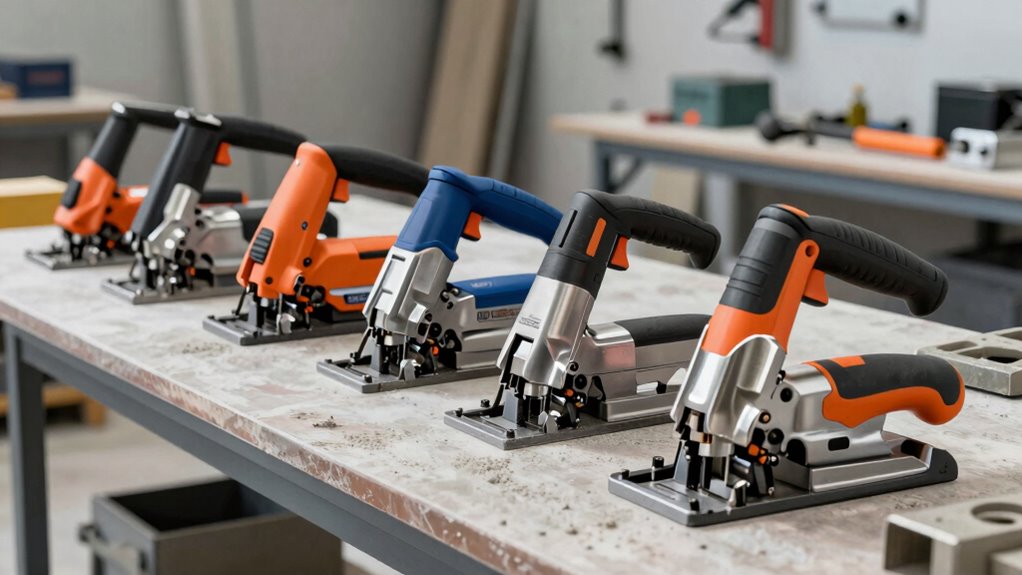
A concrete saw can mean a compact handheld cutter for tile and small masonry jobs or a powerful saw for deeper cuts in slabs and pavement. My best overall pick is the Evolution R12DCT, which pairs a 12-inch blade with water-fed dust suppression in a corded design. For deeper cutting, the Husqvarna K 770 offers a 14-inch gas-powered format, while the SKIL SPT79A-10 suits straighter, ground-level work with its walk-behind design. The main tradeoffs are cutting depth, portability, dust control, and power source. Read on for how the 15 options compare and which concrete saw fits your work.

Get business pricing on tools and workshop supplies
- Business-only prices and quantity discounts
- Tax-exempt purchasing
- Multiple users, one account, clear invoices
Complete the kit


Key Takeaways
- The Evolution R12DCT stands out as the most balanced pick: its 12-inch electric format and water-fed dust suppression suit many controlled cutting jobs without requiring a gas engine.
- Blade diameter changes the work a saw can tackle: 14- and 16-inch cutters are better suited to deeper cuts than compact 4.5-, 7-, 9-, and 10-inch options, though larger saws call for more planning and control.
- Power source shapes where and how you can work: gas models such as the Husqvarna K 770 and XtremepowerUS 16-inch saws avoid dependence on an outlet, while electric models trade that freedom for corded operation.
- Dust and slurry management separate practical choices: water-fed options can help control airborne dust, but wet cutting brings water supply, runoff, and cleanup needs.
- Small handheld saws and walk-behind designs solve different problems: compact cutters suit lighter, more controlled work, while the SKIL walk-behind format favors guided cuts at ground level.
| DEWALT DWC860W 4-3/8-Inch Wet/Dry Handheld Tile Saw |  | Best for Tile and Shallow Masonry Cuts | Power source: Corded electric | Motor power: 1,300 watts | Voltage: 120 volts | VIEW ON AMAZON | See Our Full Breakdown |
| VEVOR 14-Inch Electric Concrete Saw |  | Best Value for Wet Concrete Cutting | Power source: Corded electric | Voltage: 120 V | Motor power: 2,600 W | VIEW ON AMAZON | See Our Full Breakdown |
| POWERTEC 4.5-Inch Handheld Wet/Dry Tile Saw | 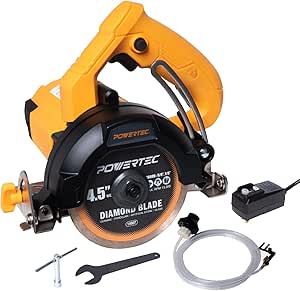 | Best Compact Pick for Beveled Masonry Cuts | Model: HTS1045 | Motor: 12 A / 1,400 W | No-load speed: 12,000 RPM | VIEW ON AMAZON | See Our Full Breakdown |
| VEVOR 16-Inch Electric Concrete Saw, 3200 W |  | Best for Maximum Electric Cutting Depth | Power source: Corded electric | Motor power: 3,200 W | Voltage: 120 V | VIEW ON AMAZON | See Our Full Breakdown |
| Evolution R12DCT 12-Inch Electric Disc Cutter with Water-Fed Dust Suppression |  | Best for Dust-Controlled Mid-Depth Cuts | Power source: Corded electric | Motor: 15 A / 1,800 W | Blade diameter: 12 inches | VIEW ON AMAZON | See Our Full Breakdown |
| XtremepowerUS 16-Inch Gas-Powered Concrete Cut-Off Saw |  | Best for Deeper, Walk-Behind Cuts | Engine: 52cc two-stroke | Blade size: 16 inches | Maximum cutting depth: 5 inches | VIEW ON AMAZON | See Our Full Breakdown |
| Husqvarna K 770 14-Inch Gas Power Cutter |  | Best for Demanding Job-Site Use | Engine power: 5 HP | Blade diameter: 14 inches | Maximum cutting depth: 5 inches | VIEW ON AMAZON | See Our Full Breakdown |
| SKIL SPT79A-10 7-Inch Walk-Behind Worm Drive Concrete Saw |  | Best Compact Corded Walk-Behind Saw | Blade diameter: 7 inches | Power source: Corded electric | Voltage: 120 volts | VIEW ON AMAZON | See Our Full Breakdown |
| Husqvarna K 770 Gasoline Power Cutter, 14-Inch |  | Best Lightweight Gas Cutter | Power source: Gasoline | Output power: 5 HP | Maximum speed: 4700 rpm | VIEW ON AMAZON | See Our Full Breakdown |
| Evolution R14DCT 14-Inch Electric Concrete Saw |  | Best for Dust-Controlled Electric Cutting | Motor: 20A | Voltage: 120V | Wattage: 2400W | VIEW ON AMAZON | See Our Full Breakdown |
| Yoputetool 14-Inch Electric Concrete Saw with Wet-Cut Pump |  | Best for Dust-Conscious Mid-Depth Cuts | Motor power: 3500 W | Voltage: 110 V | Blade diameter: 14 inches | VIEW ON AMAZON | See Our Full Breakdown |
| XtremepowerUS 16-Inch Electric Concrete Saw, 3200W |  | Best for Wet-or-Dry Job Flexibility | Power: 3200 W | Voltage: 115 V | Current: 20 A | VIEW ON AMAZON | See Our Full Breakdown |
| VEVOR 1800W Electric Concrete Cutter, 9-Inch Saw with 3.5-Inch Cutting Depth |  | Best Lightweight Pick for Controlled Shallow Cuts | Power: 1800 W | Voltage: 120 V | Speed: 5800 rpm | VIEW ON AMAZON | See Our Full Breakdown |
| QYMOPAY 16-Inch Toroidal Electric Concrete Ring Saw |  | Best for Deep Cuts | Motor power: 5500 W | Voltage: 110 V | Blade diameter: 16 inches | VIEW ON AMAZON | See Our Full Breakdown |
| Evolution R255DCT 10-Inch Electric Concrete Saw with Diamond Blade |  | Best Lightweight Choice | Power: 1800 W | Voltage: 120 V | Current: 15 A | VIEW ON AMAZON | See Our Full Breakdown |
| concrete saw | Power source | Weight | Voltage | Blade diameter |
|---|---|---|---|---|
| DEWALT DWC860W 4-3/8-Inch Wet/ | Corded electric | — | 120 volts | — |
| VEVOR 14-Inch Electric Concret | Corded electric | 34.8 pounds | 120 V | 14 inches |
| POWERTEC 4.5-Inch Handheld Wet | — | 9.5 lbs | — | — |
| VEVOR 16-Inch Electric Concret | Corded electric | 39 pounds | 120 V | 16 inches |
| Evolution R12DCT 12-Inch Elect | Corded electric | — | — | 12 inches |
| XtremepowerUS 16-Inch Gas-Powe | Gas | 45.5 pounds | — | — |
| Husqvarna K 770 14-Inch Gas Po | Gas | 10 kg | — | 14 inches |
| SKIL SPT79A-10 7-Inch Walk-Beh | Corded electric | 31.7 pounds | 120 volts | 7 inches |
| Husqvarna K 770 Gasoline Power | Gasoline | 22.4 pounds | — | — |
| Evolution R14DCT 14-Inch Elect | — | 30.6 pounds | 120V | 14 inches |
| Yoputetool 14-Inch Electric Co | Corded electric | 29.3 pounds | 110 V | 14 inches |
| XtremepowerUS 16-Inch Electric | Corded electric | 40 pounds | 115 V | 16 inches |
| VEVOR 1800W Electric Concrete | Corded electric | 20.7 pounds | 120 V | — |
| QYMOPAY 16-Inch Toroidal Elect | Corded electric | — | 110 V | 16 inches |
| Evolution R255DCT 10-Inch Elec | — | 16 pounds | 120 V | 10 inches |
More Details on Our Top Picks
DEWALT DWC860W 4-3/8-Inch Wet/Dry Handheld Tile Saw
The DEWALT DWC860W is better suited to tile work and shallow cuts in stone or concrete than to the deep slab cutting most buyers mean by a concrete saw. Its 1-3/8-inch maximum depth, adjustable depth, and bevel capability give a renovator control over trim cuts and angled edges, while the water feed helps limit airborne dust during wet cutting. Compared with the POWERTEC HTS1045, it has a slightly smaller blade and lower stated maximum depth, so I’d favor the POWERTEC for a little more reach. The DEWALT’s wet-or-dry flexibility is useful when a hose is impractical, though dry cutting creates more dust. Supplied product details also conflict on some motor, blade, and weight information, so I would verify those specifications before buying.
Pros:- Handles tile and several stone materials, including concrete
- Wet-or-dry cutting gives flexibility across job conditions
- Adjustable depth and bevel cuts up to 45 degrees
- Water line can reduce dust and help preserve blade life
Cons:- Maximum depth is limited to 1-3/8 inches
- Supplied details contain conflicting motor, blade, and weight specifications
Best for: Tile installers and home renovators making shallow cuts in ceramic, porcelain, granite, or masonry who want bevel control and wet-or-dry operation.
Not ideal for: Contractors cutting deep concrete slabs or long floor joints; its handheld format and 1-3/8-inch depth are not substitutes for a large-blade concrete cutter.
- Power source:Corded electric
- Motor power:1,300 watts
- Voltage:120 volts
- Blade size:4-3/8 inches
- Maximum cutting depth:1-3/8 inches
- Maximum bevel angle:45 degrees
- Listed weight:6.6 lbs
- Included accessories:Water line and regulator, diamond blade, two blade-change wrenches, instruction manual
Our verdict“Choose the DEWALT for controlled tile and shallow masonry work, not for deep concrete cutting.”
VEVOR 14-Inch Electric Concrete Saw
For buyers who need more reach than a handheld tile saw can provide, the VEVOR 14-inch electric saw offers a practical step up: its listed 5-inch cutting depth and wheeled base suit concrete and masonry jobs that call for deeper, guided cuts. The included pump and water line support wet cutting, while slow start, overload protection, and a built-in GFCI add useful safeguards. Compared with the larger VEVOR 16-inch model, this saw is lighter and has a smaller blade, but gives up an inch of stated cutting depth. The main planning issue is electrical demand: the supplied information recommends a 30 A circuit breaker, so it may not fit a typical household circuit. At 34.8 pounds, it is also more manageable than the 16-inch model, though still substantial for extended handheld work.
Pros:- Listed cutting depth reaches 5 inches
- Wheeled base helps guide and position the saw
- Included pump and water line support wet cutting
- Slow start, overload protection, double switch, and GFCI are specified
Cons:- Product information recommends a 30 A circuit breaker
- At 34.8 pounds, it can be tiring to handle for extended periods
Best for: Home renovators and small crews who need a wheeled, wet-cut electric saw for concrete cuts up to five inches deep and have suitable electrical service.
Not ideal for: Buyers limited to ordinary household circuits or anyone seeking a light handheld saw for overhead or prolonged freehand work.
- Power source:Corded electric
- Voltage:120 V
- Motor power:2,600 W
- Speed:4,600 rpm
- Blade diameter:14 inches
- Cutting depth:5 inches
- Weight:34.8 pounds
- Electrical recommendation:30 A circuit breaker
- Included components:14-inch blade, spanner, water pump, water line
Our verdict“Pick this VEVOR for deeper wet cuts at a lighter weight than the 16-inch model, provided your circuit can support it.”
POWERTEC 4.5-Inch Handheld Wet/Dry Tile Saw
The POWERTEC HTS1045 is the more capable of the two compact handheld options here for buyers who need bevels and slightly greater cutting reach. Its 4.5-inch continuous-rim blade cuts to 1-7/16 inches straight, and the depth drops to 7/8 inch at 45 degrees—useful for tile edges and shallow masonry details, but far short of the VEVOR 14-inch saw’s 5-inch capacity. A 12,000 RPM no-load speed and water feed support clean, controlled work across tile, stone, and masonry; the in-line GFCI adds a safety feature around wet cutting. At 9.5 pounds, it is not featherweight despite its compact format. Wet operation also requires a connected hose, so this is less convenient when water access is limited.
Pros:- Bevel adjustment from 0 to 45 degrees
- Straight cutting depth reaches 1-7/16 inches
- Water feed supports wet cutting and can limit dust and chipping
- In-line GFCI plug is specified for electrical safety
Cons:- Maximum depth is far below larger concrete saws such as the VEVOR 14-inch model
- Wet cutting requires a connected water hose
- At 9.5 pounds, it may feel heavy during extended handheld use
Best for: Tile setters and remodelers who need a compact corded saw for bevel cuts and shallow work in tile, stone, or masonry.
Not ideal for: Concrete crews cutting thick slabs, or users who need wet cutting without a nearby hose connection.
- Model:HTS1045
- Motor:12 A / 1,400 W
- No-load speed:12,000 RPM
- Blade:4.5-inch continuous diamond rim
- Straight cutting depth:Up to 1-7/16 inches
- Cutting depth at 45 degrees:7/8 inch
- Bevel angle:0 to 45 degrees
- Weight:9.5 lbs
- Water connection:3/4-inch brass garden hose fitting
Our verdict“Choose the POWERTEC for compact bevel and tile work, but step up to a larger concrete saw for deep cuts.”
VEVOR 16-Inch Electric Concrete Saw, 3200 W
Among the electric saws in this group, the VEVOR 16-inch is the choice when the job demands the greatest stated depth: it cuts up to 6 inches and includes a wheeled base, water pump, and five-meter water line for wet work. That extra reach separates it from the 14-inch VEVOR, which is listed at 5 inches deep, and from the Evolution R12DCT at 4.5 inches. The tradeoff is a heavier, larger tool: at 39 pounds, it takes more effort to move and position. The supplied specifications also say cuts are limited to 2 inches per pass at 15 A, while the saw is listed at 3,200 W and recommends 32 A; buyers should resolve that electrical and pass-depth detail before planning a job. It is not recommended for asphalt.
Pros:- Highest stated cutting depth in this batch at 6 inches
- Wheeled base supports positioning and grooving
- Includes a water pump and 5 m water line for wet cutting
- Specified safety features include GFCI, overload protection, and slow start
Cons:- Not recommended for asphalt or other sticky materials
- At 39 pounds, it is heavier than the 14-inch VEVOR and Evolution R12DCT
- Supplied details cite a 32 A current recommendation and a 2-inch-per-pass limit at 15 A, which warrant verification
Best for: Concrete and paving crews who need up to six inches of cutting depth, wet-cut accessories, and a wheeled setup for positioning.
Not ideal for: Users who need to cut asphalt, work with limited electrical capacity, or move the saw frequently without assistance.
- Power source:Corded electric
- Motor power:3,200 W
- Voltage:120 V
- Speed:3,600 rpm
- Blade diameter:16 inches
- Maximum cutting depth:6 inches
- Weight:39 pounds
- Recommended current:32 A
- Included components:16-inch blade, two carbon brushes, spanner, water pump, 5 m water line
Our verdict“Choose this model for the deepest listed electric cuts in concrete or paving, after confirming the job’s electrical requirements.”
Evolution R12DCT 12-Inch Electric Disc Cutter with Water-Fed Dust Suppression
The Evolution R12DCT suits buyers who want a substantial concrete cutter without moving up to the heavier 14- or 16-inch VEVOR saws. Its 12-inch diamond blade cuts up to 4.5 inches deep, enough for many masonry, brick, paver, and concrete tasks, while dual-sided water delivery helps control dust at the cut. A safety brake is listed to stop the blade in 2–10 seconds, and the adjustable guard helps adapt the tool to different cut positions. Compared with the VEVOR 14-inch, the Evolution gives up half an inch of stated depth but weighs 9.7 kg rather than 34.8 pounds. It remains a corded cutter, so it needs power access, and its weight still makes prolonged handheld cutting a demanding job.
Pros:- Dual-sided water delivery suppresses dust at the blade
- Cuts up to 4.5 inches deep
- Premium diamond blade is included
- Listed brake stops the blade in 2–10 seconds
Cons:- Corded power limits use where electrical access is unavailable
- At 9.7 kg, it is not a lightweight handheld cutter
- Offers less cutting depth than the 14- and 16-inch VEVOR saws
Best for: Masonry contractors and serious renovators who need a water-fed electric cutter for concrete, reinforced concrete, brick, tile, or pavers at depths up to 4.5 inches.
Not ideal for: Buyers needing cuts deeper than 4.5 inches, cordless operation, or a lightweight tool for long periods of handheld use.
- Power source:Corded electric
- Motor:15 A / 1,800 W
- Blade diameter:12 inches
- Cut depth:4.5 inches
- Dust suppression:Dual-sided water delivery
- Blade:Premium diamond blade included
- Brake stopping time:2–10 seconds
- Item weight:9.7 kg
- Warranty:3 years
Our verdict“Choose the R12DCT for dust-controlled electric cutting up to 4.5 inches deep without the larger VEVOR saws’ listed weight.”
XtremepowerUS 16-Inch Gas-Powered Concrete Cut-Off Saw
The 16-inch blade and included guide roller make this XtremepowerUS a fit for longer ground-level cuts in concrete, asphalt, brick, stone, or metal. Its stated 5-inch maximum depth matches the Husqvarna K 770, while the larger blade and walk-behind guidance favor straight runs over hand-held maneuvering. The 52cc two-stroke engine frees the saw from an outlet, but that also means fuel and engine upkeep—unlike the corded SKIL SPT79A-10 or Evolution R14DCT. At 45.5 pounds, it is the heaviest option in this group, so moving it between cuts can be a chore. I’d choose it for outdoor work where the roller and larger blade help; I’d skip it for frequent overhead, tight-space, or portability-focused cutting.
Pros:- 16-inch blade supports longer cuts than the 14-inch Husqvarna K 770
- Guide roller helps keep walk-behind cuts straighter
- Gas power works away from electrical outlets
- Rated for concrete, asphalt, brick, stone, and metal
Cons:- At 45.5 pounds, it is heavy to carry and reposition
- Two-stroke gas engine requires fuel and routine maintenance
- Maximum cutting depth is limited to 5 inches despite the larger blade
Best for: Outdoor contractors and property owners making longer, ground-level cuts across several masonry or paving materials without nearby power.
Not ideal for: Buyers who need a lighter saw for repeated lifting, overhead work, or precise cuts in confined spaces.
- Engine:52cc two-stroke
- Blade size:16 inches
- Maximum cutting depth:5 inches
- Power source:Gas
- Power:2000 watts
- Speed:5000 rpm
- Weight:45.5 pounds
- Dimensions:32 x 13 x 23 inches
Our verdict“Choose this model for guided outdoor cutting with a larger blade, but not if carrying weight or low-maintenance operation is your priority.”
Husqvarna K 770 14-Inch Gas Power Cutter
For construction, demolition, masonry, and road work, the Husqvarna K 770 pairs a 5 HP engine with a 5-inch cutting depth and features aimed at sustained use. SmartTension is designed to reduce belt wear and maintenance, while LowVib technology targets operator fatigue—useful distinctions from the simpler XtremepowerUS 16-Inch saw, which offers a larger blade but weighs substantially more. At 10 kg, this Husqvarna is still a substantial handheld tool, and gas power brings fuel handling and engine upkeep that the corded Evolution R14DCT avoids. Its 14-inch blade also gives up diameter to the XtremepowerUS option without gaining a deeper cut. I’d put it ahead for buyers who value job-site-oriented vibration and belt features over maximum blade size.
Pros:- 5 HP engine and 5-inch maximum cutting depth suit demanding masonry cuts
- SmartTension system is designed to reduce belt wear and maintenance
- LowVib technology is intended to reduce operator fatigue
- Air filtration system supports operation in dusty work settings
Cons:- Gas operation requires fuel and engine maintenance
- At 10 kg, it remains a heavy tool for extended hand-held work
- 14-inch blade is smaller than the XtremepowerUS 16-inch option
Best for: Masonry and demolition crews seeking a gas cutter with vibration-reduction features and belt-management design for regular site work.
Not ideal for: Occasional DIY users who want a low-maintenance electric saw or need a larger blade for longer ground-level cuts.
- Engine power:5 HP
- Blade diameter:14 inches
- Maximum cutting depth:5 inches
- Power source:Gas
- Weight:10 kg
- Belt system:SmartTension
- Vibration feature:LowVib technology
- Air filtration:Air filtration system
Our verdict“Pick the K 770 for demanding gas-powered site work where vibration and belt-management features matter more than blade size.”
SKIL SPT79A-10 7-Inch Walk-Behind Worm Drive Concrete Saw
The SKIL takes a different route from the gas cutters here: its 7-inch blade and corded motor suit controlled, smaller-scale concrete work rather than the deeper reach of the 14-inch Husqvarna K 770 or the 16-inch XtremepowerUS. The worm drive and Dual-Field motor are designed for demanding cuts within that compact format, while the folding, height-adjustable handle makes storage and transport easier. Wet/dry dust management gives buyers options for managing cutting debris, and the package includes a water-feed attachment and vacuum adapter. The tradeoff is clear: it needs a power outlet, and its 31.7-pound weight is still noticeable when carrying it. I’d favor it for accessible slab work and users who want a guided walk-behind setup without maintaining a gas engine.
Pros:- Worm drive and Dual-Field motor are designed for demanding cuts
- Folding, adjustable handle eases storage and positioning
- Wet/dry dust management supports different cleanup approaches
- Includes both a vacuum adapter and water-feed attachment
Cons:- Corded operation requires access to a suitable power source
- 7-inch blade offers less reach than the 14-inch and 16-inch cutters
- 31.7-pound weight can be cumbersome to carry
Best for: Home renovators and small contractors making controlled cuts in accessible concrete areas where a 7-inch blade is sufficient and power is available.
Not ideal for: Crews cutting thick slabs or working far from outlets, since the blade is smaller and the saw is corded.
- Blade diameter:7 inches
- Power source:Corded electric
- Voltage:120 volts
- Wattage:1800 watts
- Weight:31.7 pounds
- Handle:Height-adjustable and folding
- Dust management:Wet/dry
- Included attachments:Vacuum adapter with clamp and water-feed attachment
Our verdict“Choose the SKIL for compact, guided electric cutting and dust-control flexibility, not for deep cuts or remote job sites.”
Husqvarna K 770 Gasoline Power Cutter, 14-Inch
This K 770 listing is the more portable-looking gas option in the group: its stated 22.4-pound weight is well below the XtremepowerUS 16-Inch saw’s 45.5 pounds, while retaining a 5-inch maximum cut depth. A 14-inch blade and 5 HP output make it suited to hand-held masonry cuts rather than the larger blade and guide-roller approach of the XtremepowerUS. Semi-automatic smart belt tensioning and active air filtration are intended to support longer service intervals, a useful distinction from the corded SKIL, which avoids gas maintenance altogether. The K 770 still needs gasoline, and its 5-inch depth sets a firm limit for thicker material. I’d choose this version when carrying and handling matter more than eliminating fuel-related upkeep.
Pros:- 22.4-pound listed weight is much lower than the XtremepowerUS 16-Inch saw
- 5 HP output and up to 5 inches of cutting depth
- Semi-automatic smart tension system helps manage belt wear
- Active air filtration is designed to extend service intervals
Cons:- Gasoline power requires fuel and engine maintenance
- Maximum cutting depth remains limited to 5 inches
- 14-inch blade offers less diameter than the 16-inch XtremepowerUS
Best for: Masonry workers who need a portable gas cutter for straight or curved cuts and may use a compatible trolley near sidewalks.
Not ideal for: Buyers who want electric operation, a blade larger than 14 inches, or cuts deeper than 5 inches.
- Power source:Gasoline
- Output power:5 HP
- Maximum speed:4700 rpm
- Maximum blade diameter:14 inches
- Maximum cutting depth:5 inches
- Weight:22.4 pounds
- Belt tensioning:Semi-automatic smart tension system
- Air filtration:Active air filtration
Our verdict“Select this K 770 when a lighter gas cutter matters more than a larger blade or plug-in convenience.”
Evolution R14DCT 14-Inch Electric Concrete Saw
The Evolution R14DCT is the strongest fit here for buyers who want a large-blade saw without gas-engine upkeep. Its 20A corded motor drives an included 14-inch diamond blade to a stated 5-1/8-inch cut depth, slightly exceeding the 5-inch limits listed for both Husqvarna K 770 models and the XtremepowerUS gas saw. Automatic water-controlled dust suppression helps manage debris while cutting, and overload protection adds a layer of electrical and motor protection for demanding work. Compared with the SKIL SPT79A-10, this model offers a larger blade and deeper listed cut, but needs a 20A outlet rather than simply being a plug-in alternative for any standard circuit. At 30.6 pounds, it is also no lightweight. I’d choose it for powered, wet-cut masonry work where the circuit can support it.
Pros:- Included 14-inch diamond blade is ready for masonry cutting
- Cuts to a listed 5-1/8 inches, deeper than the 5-inch gas models
- Automatic water control helps suppress dust during cutting
- Overload protection and a three-year warranty are specified
Cons:- Requires a 20A outlet and is not compatible with 15A outlets
- At 30.6 pounds, it can be cumbersome to handle
- Corded operation limits use away from suitable power
Best for: Contractors and serious DIYers cutting concrete, brick, or stone who have a 20A outlet and want integrated water-based dust control.
Not ideal for: Users limited to 15A outlets or those who need a lightweight saw for frequent carrying and repositioning.
- Motor:20A
- Voltage:120V
- Wattage:2400W
- Blade diameter:14 inches
- Maximum cut depth:5-1/8 inches
- Speed:3500 rpm
- Dust suppression:Automatic ON/OFF water control
- Weight:30.6 pounds
- Warranty:3 years
Our verdict“Choose the R14DCT for deeper, water-controlled electric cuts if you have a 20A circuit and can manage its weight.”
Yoputetool 14-Inch Electric Concrete Saw with Wet-Cut Pump
The Yoputetool’s strongest case is its combination of a 14-inch blade, wheeled base, and water pump: it offers more listed depth than the VEVOR 9-inch cutter while adding wet cutting to help control airborne dust. Its 4.8-inch maximum depth suits many slab and masonry jobs, and slow start is intended to make startup easier to manage. Compared with the Evolution R255DCT, this saw has a larger blade and a water-fed setup, but it is nearly twice as heavy and less convenient to carry between cuts. I’d also treat the speed figure cautiously: the specifications list 4200 rpm, while another listing gives 3600 RPM. That conflict makes the exact operating speed uncertain, so this is a better fit for buyers who value wet cutting and capacity over verified speed details.
Pros:- 14-inch blade with a listed maximum cutting depth of 4.8 inches
- Water pump and line support wet cutting to help suppress dust
- Wheeled base helps position the saw along a cut
- Slow-start function is designed to improve startup control
Cons:- At 29.3 pounds, it is substantially heavier than the 16-pound Evolution R255DCT
- Listed speeds conflict between 4200 rpm and 3600 RPM
- Corded operation limits reach to areas near a suitable power source
Best for: DIYers and small crews making mid-depth cuts in concrete or masonry who want a wheeled saw and water-fed dust control.
Not ideal for: Buyers who need a light saw to carry often, or who require consistent, clearly verified operating-speed specifications.
- Motor power:3500 W
- Voltage:110 V
- Blade diameter:14 inches
- Maximum cutting depth:4.8 inches
- Listed speed:4200 rpm in specifications; 3600 RPM elsewhere in listing
- Power source:Corded electric
- Weight:29.3 pounds
- Features:Wet cutting, water pump, slow start, bevel capability, wheeled base
Our verdict“Choose the Yoputetool for wet, wheeled cutting with a 14-inch blade, but skip it if low carry weight or unambiguous speed specifications matter most.”
XtremepowerUS 16-Inch Electric Concrete Saw, 3200W
This XtremepowerUS stands out for offering wet or dry cutting on a 16-inch saw, with both an integrated water feed and a dust-extraction port. That gives buyers more ways to manage debris than the Yoputetool, whose listed setup focuses on wet cutting. A GFCI cord and safety switch add electrical protection features, while the 4700 rpm listed speed supports a fast-running blade. The tradeoff is substantial: at 40 pounds, it is the heaviest of these five options, so frequent repositioning or overhead work is a poor match. The listing also gives no maximum cutting depth, making capacity harder to compare directly with the Yoputetool’s 4.8-inch figure or the QYMOPAY’s much deeper stated reach. Choose it for cutting-method flexibility, not for a confirmed depth advantage.
Pros:- Supports wet and dry cutting
- Integrated water feed helps manage dust and blade heat during wet cuts
- Dust-extraction port offers another way to control debris
- GFCI cord and safety switch provide added electrical and operating safeguards
Cons:- 40-pound weight makes transport and frequent repositioning demanding
- Corded design requires access to an appropriate power source
- Product data does not specify maximum cutting depth
Best for: Contractors or property owners who need a 16-inch corded saw that can use water feed or connect to dust extraction depending on the work area.
Not ideal for: Buyers who regularly carry a saw between locations or need a clearly stated maximum cutting depth before choosing equipment.
- Power:3200 W
- Voltage:115 V
- Current:20 A
- Blade diameter:16 inches
- Speed:4700 rpm
- Power source:Corded electric
- Weight:40 pounds
- Dust and safety features:Water feed, dust-extraction port, GFCI cord, safety switch
Our verdict“Pick this model when wet-or-dry flexibility and dust-management options matter more than portability or a documented cut-depth figure.”
VEVOR 1800W Electric Concrete Cutter, 9-Inch Saw with 3.5-Inch Cutting Depth
At 20.7 pounds with a 9-inch blade, this VEVOR is the more manageable choice for buyers who do not need the reach of the 14- and 16-inch saws. Its wheeled base, wet-cutting kit, slow start, overload protection, and built-in GFCI make a useful control-and-safety package for paving, brick, and concrete work. The listed 3.5-inch cutting depth is the limiting factor: deeper cuts may require multiple passes, while the Evolution R255DCT lists a 4-1/16-inch maximum depth and weighs less. VEVOR’s 5800 rpm is a stated operating speed, not a substitute for greater blade depth. The product data also expressly rules out sticky materials such as asphalt, so I’d keep this pick to compatible masonry jobs rather than treating it as a general-purpose cutter.
Pros:- Lighter than the larger 14- and 16-inch saws in this group
- Wet-cutting attachment includes a pump and 5 m water line
- Wheeled base supports controlled positioning
- Slow start, overload protection, and built-in GFCI add protective features
Cons:- Listed 3.5-inch cutting depth may require multiple passes for deeper work
- Not suitable for sticky materials such as asphalt
- Corded 1800 W design needs a nearby power source
Best for: Home renovators and small crews cutting pavers, brick, or concrete in shallow-to-moderate passes who want a wet-cutting kit without a 40-pound saw.
Not ideal for: Buyers cutting asphalt or needing deep single-pass capacity for thick concrete; its listed depth is 3.5 inches and sticky materials are excluded.
- Power:1800 W
- Voltage:120 V
- Speed:5800 rpm
- Blade size:9 inches
- Cutting depth:3.5 inches
- Weight:20.7 pounds
- Power source:Corded electric
- Safety features:Double switch, slow start, overload protection, built-in GFCI
Our verdict“Choose this VEVOR for manageable wet cutting on compatible masonry when portability matters more than deep-cut capacity.”
QYMOPAY 16-Inch Toroidal Electric Concrete Ring Saw
The QYMOPAY is the standout when cut depth is the deciding factor: its stated 11.8-inch maximum is far beyond the 4.8 inches listed for the Yoputetool and the 4-1/16 inches for the Evolution R255DCT. That reach can reduce the need to approach thick material in several stages. Its 5500 W motor and integrated water pump are aimed at demanding concrete, brick, rebar, and marble work, with wet cutting helping control dust and cool the blade. The tradeoff is a less forgiving setup: the listing calls for specific heavy-gauge wiring to prevent overheating, and the 39-inch-tall form may be awkward in tight spaces or during transport. I’d verify power requirements and handling arrangements before choosing this over a lighter conventional cutter.
Pros:- Listed maximum cutting depth of 11.8 inches exceeds the other saws in this batch
- 5500 W motor is specified for demanding masonry and concrete cutting
- Integrated water pump supports wet cutting and dust suppression
- Diamond-reinforced blade is supplied for cutting applications
Cons:- Requires specific heavy-gauge wiring, listed as 3 mm² or 4 mm², to prevent overheating
- Large 39-inch height can complicate transport and use in confined areas
- Product data does not provide a weight, making handling assessment difficult
Best for: Experienced contractors tackling unusually deep cuts in concrete or masonry who can provide the specified heavy-gauge wiring and manage a large saw.
Not ideal for: Occasional DIYers, buyers working in confined spaces, or anyone who cannot confirm suitable wiring and electrical supply for the saw.
- Motor power:5500 W
- Voltage:110 V
- Blade diameter:16 inches
- Maximum cutting depth:11.8 inches
- Speed:3000 rpm
- Blade material:Stainless steel, diamond reinforced
- Dimensions:20 × 12 × 39 inches
- Power source:Corded electric
Our verdict“Consider the QYMOPAY for deep-cut work only if its wiring demands and large form factor suit your site and crew.”
Evolution R255DCT 10-Inch Electric Concrete Saw with Diamond Blade
The Evolution R255DCT makes the strongest case for buyers who want less weight without giving up useful depth. At 16 pounds, it is lighter than the VEVOR 9-inch cutter and far easier to carry than the 40-pound XtremepowerUS, yet its listed maximum cut depth reaches 4-1/16 inches. Built-in wheels support ground-level cuts, and the included 10-inch diamond blade, soft start, and electric blade brake give it a practical ready-to-cut setup. Its corded 15 A design avoids fuel and fumes, but it still ties the operator to a power source; unlike the Yoputetool, it does not list a water pump for wet cutting. This is a more portable option for routine masonry jobs, not the pick for deep cuts or buyers who require water-fed dust control.
Pros:- 16-pound weight is the lightest among the five products in this batch
- Listed maximum cut depth of 4-1/16 inches
- Includes a 10-inch diamond blade and built-in wheels for ground-level cuts
- Soft start and electric blade brake support controlled operation
Cons:- Corded design and 13-foot cable limit working range
- No water pump or wet-cutting system is listed
- Its 10-inch blade and cut depth cannot match the QYMOPAY’s stated deep-cut capacity
Best for: DIY renovators and tradespeople who need a relatively light corded saw for ground-level cuts through concrete, brick, tile, or masonry.
Not ideal for: Crews needing deep single-pass capacity, cordless mobility, or an included water-fed cutting system.
- Power:1800 W
- Voltage:120 V
- Current:15 A
- Blade diameter:10 inches
- Maximum cut depth:4-1/16 inches
- Weight:16 pounds
- Cable length:13 feet
- Included components:10-inch premium diamond blade, instruction manual, multi-tool, disc cutter
- Warranty:3-year manufacturer’s warranty
Our verdict“Choose the Evolution for portable, routine masonry cutting with a useful depth range, but select a larger wet-cut model for deep or dust-sensitive jobs.”

How We Picked
I compared these concrete saws by the jobs their designs appear suited to, focusing on blade size and stated cutting depth, power source, handling format, dust-control provisions, and versatility. A larger blade can open the door to deeper cuts, but it does not automatically make a saw the better choice for a short, precise cut or a confined work area. I also weighed how much setup each format may involve, including access to power or fuel, water management, and the physical demands of handling the tool.
The ranking favors useful balance across common cutting needs over any single headline specification. That puts the Evolution R12DCT first for its combination of a substantial 12-inch blade and water-fed dust suppression, with gas-powered 14-inch cutters and larger 16-inch models better matches for buyers prioritizing depth or jobsite mobility. Compact handheld models rank as targeted choices rather than all-purpose leaders; the SKIL walk-behind earns a distinct place for ground-level guided cutting. Where the lineup includes similar models, I distinguish them by their stated size, power source, and cutting setup rather than treating near-matches as interchangeable.
| concrete saw | Power source |
|---|---|
| DEWALT DWC860W 4-3/8-Inch Wet/ | Corded electric |
| VEVOR 14-Inch Electric Concret | Corded electric |
| POWERTEC 4.5-Inch Handheld Wet | — |
| VEVOR 16-Inch Electric Concret | Corded electric |
| Evolution R12DCT 12-Inch Elect | Corded electric |
| XtremepowerUS 16-Inch Gas-Powe | Gas |
| Husqvarna K 770 14-Inch Gas Po | Gas |
| SKIL SPT79A-10 7-Inch Walk-Beh | Corded electric |
| Husqvarna K 770 Gasoline Power | Gasoline |
| Evolution R14DCT 14-Inch Elect | — |
| Yoputetool 14-Inch Electric Co | Corded electric |
| XtremepowerUS 16-Inch Electric | Corded electric |
| VEVOR 1800W Electric Concrete | Corded electric |
| QYMOPAY 16-Inch Toroidal Elect | Corded electric |
| Evolution R255DCT 10-Inch Elec | — |
Factors to Consider When Choosing Concrete Saw
Before choosing a concrete saw, match the tool to the cut, work area, and cleanup plan—not just the largest blade you can manage. These factors can help narrow the field before you compare individual models.
Match Blade Size to the Cut You Need
Start with the depth and length of your planned cuts, then check the saw’s stated maximum cutting depth rather than relying on blade diameter alone. Blade size gives a useful first clue, but guard design and the saw’s cutting geometry affect how much blade reaches the material. A larger blade may be unnecessary for tile, thin pavers, or shallow control joints, where a smaller tool can be easier to position. For repeated deep cuts, undersizing the saw can mean extra passes or a job the tool cannot complete. Avoid buying solely for a future project unless the added size is worth the harder handling and storage. If the cut must pass through a slab, verify the required depth and account for the material beneath it before starting.
Choose Electric or Gas for Your Worksite
Corded electric saws suit sites with reliable power and buyers who want to avoid fuel and engine servicing. Their reach depends on safe access to an outlet and an appropriate extension-cord setup, which can limit movement on large or remote jobs. Gas models make more sense when mobility and sustained work away from power matter, but they add fuel handling, engine maintenance, exhaust, and noise. Do not assume an electric model is automatically suitable indoors: cutting concrete creates dust, and the work area still needs suitable ventilation and exposure controls. Think through the whole workday, including where the saw will be fueled, plugged in, or moved between cuts. The best power source is the one your site can support safely and consistently.
Plan Dust Control and Water Management Together
Concrete cutting can create hazardous respirable silica dust, so dust control is a work-planning issue, not a convenience feature. Wet cutting can suppress dust at the blade, but it requires a dependable water feed and a plan for slurry, runoff, and nearby surfaces. Dry cutting calls for appropriate dust extraction and respiratory protection based on the task and applicable workplace rules. A water-fed saw is not a complete dust-control plan if the water supply is interrupted or the slurry is allowed to dry. Check whether your intended site permits wet work, especially indoors or near electrical equipment. Choose a method you can maintain through the full cut, not just one that looks easier at setup.
Pick a Handling Format You Can Control
Handheld cutters offer access in tighter spaces and make short cuts easier to position, but the operator must manage the tool’s weight, vibration, and cutting direction. A walk-behind saw can help guide longer ground-level cuts, yet it is less suited to stairs, walls, or cramped work areas. Larger disc cutters can reach deeper than compact saws, though their size may make overhead or highly precise work uncomfortable. Consider your reach, stance, experience, and ability to secure the material before choosing a format. A powerful saw is not a safer shortcut if it is difficult to control along the intended line. For repeated cuts, also think about fatigue and whether the work can be staged to reduce awkward handling.
Compare Complete Cutting Systems, Not Just the Saw
The saw body is only part of the setup: blade compatibility, water connections, dust collection, power access, and protective equipment all affect whether the tool is ready for your work. Confirm that the blade is suited to the material and the saw’s specifications; a blade intended for a different material can cut poorly or wear quickly. Check what is included rather than assuming a blade, water pump, or connector comes in the box. For gas tools, account for routine engine care and fuel; for electric tools, plan cord routing or site power. Also make room in the decision for transport, storage, and cleanup. A lower-complexity setup can be the better buy when it covers the actual job without added gear you will rarely use.
Frequently Asked Questions
Is a 14-inch concrete saw enough for cutting through a slab?
It depends on the saw’s actual cutting depth and the slab thickness, not the blade diameter alone. Blade guards and saw geometry mean the usable depth is less than the blade’s full diameter. Check the manufacturer’s stated maximum depth, then compare it with the slab and any required clearance. If the cut must go all the way through, also identify what lies below the concrete before cutting. For a deep or structural cut, a qualified contractor can help confirm the right equipment and method.
Should I choose a wet-cut saw or a dry-cut saw?
Choose based on how you can control dust and manage water at the site. Wet cutting can reduce airborne dust at the blade, but it creates slurry and requires a reliable water supply and runoff plan. Dry cutting avoids wet cleanup, yet it calls for effective dust extraction and appropriate respiratory protection. Neither method removes the need to follow applicable silica-control requirements. If you are working indoors, near sensitive equipment, or in a shared space, plan containment and ventilation before selecting the saw.
When does a gas concrete saw make more sense than an electric one?
A gas saw is a stronger fit when the worksite lacks dependable electrical power or the operator needs to move freely across a large area. The Husqvarna K 770 and gas-powered XtremepowerUS option in this lineup illustrate that portable, larger-format role. That freedom comes with fuel, engine care, exhaust, and more noise, which can be poor matches for enclosed or noise-sensitive locations. Electric saws avoid those engine demands but rely on suitable site power and cord management. Decide based on the site conditions and the full length of the job rather than portability alone.
Can I use a handheld tile saw for concrete work?
A compact wet/dry tile saw may handle certain light, shallow masonry cuts if its specifications and blade support the material. It is not a substitute for a larger concrete cutter when the job calls for deeper cuts, long slab lines, or sustained heavy work. Check the rated materials, cutting depth, blade compatibility, and water or dust-control setup before using it on concrete. Small saws can offer better access in confined areas, but they may require multiple passes and careful control. If the work exceeds the tool’s stated limits, choose a saw designed for that scale of cutting.
Is a walk-behind concrete saw better for long cuts than a handheld model?
A walk-behind format can make it easier to guide a long, ground-level cut along a marked line, while a handheld saw gives more flexibility for short cuts and access around obstacles. The SKIL SPT79A-10 is the lineup’s walk-behind option, so it serves a different role from the disc cutters and compact handheld saws. It will not suit vertical cuts, stairs, or tight spaces where a handheld design has an advantage. Before choosing, check the cut’s length, surface, access, and required depth. A straight guide and a sound layout still matter; the format alone does not guarantee a straight cut.
Conclusion
For the broadest mix of substantial cutting capacity and dust-control features, I recommend the Evolution R12DCT as best overall. My best value pick is the VEVOR 14-Inch Electric Concrete Saw for buyers seeking a larger electric format without stepping up to gas; check its cutting depth and included setup against the job before buying. For a premium gas-powered role, the Husqvarna K 770 is the standout choice when mobility and a 14-inch cutter matter more than fuel and engine upkeep. Beginners tackling lighter, controlled cuts may find the DEWALT DWC860W or POWERTEC 4.5-inch saw easier to manage than a large disc cutter, provided the work stays within their limits. For long, ground-level cuts, choose the SKIL walk-behind; for deeper cuts or remote sites, compare the 14- and 16-inch cutters and select the power source your worksite can support. In every case, match the saw to the required depth and plan dust control before the first cut.