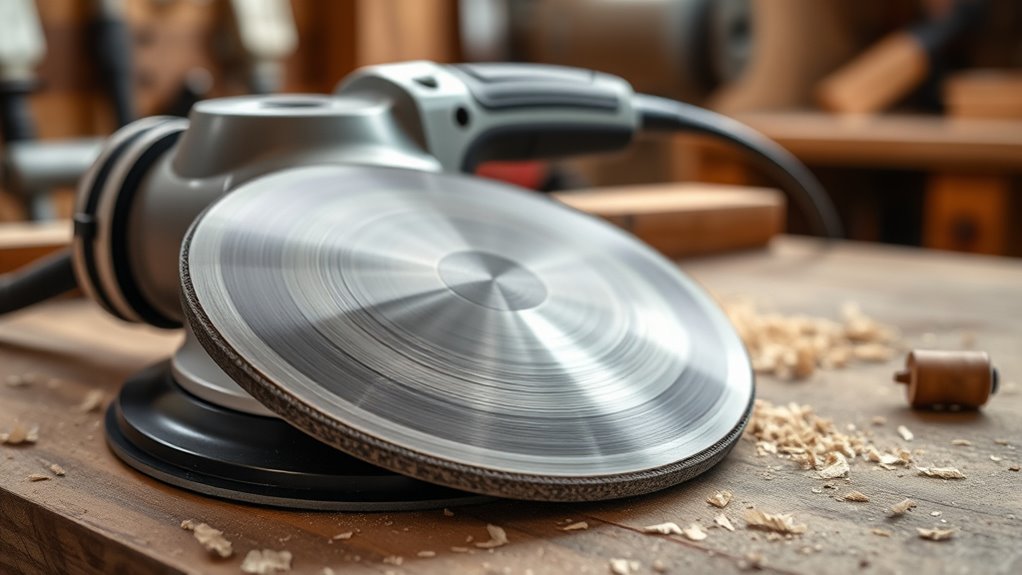
If you’re searching for a disc sander, you’re likely balancing power, precision, and ease of use. The DEWALT DWE6423 stands out as the best overall for its versatility and reliable performance. For those needing a budget-friendly option, the WEN 65812 offers solid dust collection and durability. Meanwhile, the Makita GV7000C provides professional-grade power for heavy-duty sanding. Read on to see how these options compare, along with other top picks, so you can find the best fit for your projects.
Complete the kit


Key Takeaways
- The best disc sanders balance power, smooth operation, and dust management effectively.
- Variable speed controls are a key feature for versatility across different materials.
- Benchtop models excel for stability and precision, while handheld options offer portability.
- Build quality and dust collection systems significantly impact long-term usability.
- Price ranges reflect differences in power, features, and build materials, so choose based on your project scale.
| DEWALT Random Orbit Sander, Variable Speed, 5-Inch (DWE6423) |  | Best Overall for Detail-Oriented Sanding | Motor Power: 3 Amp | Orbital Speed: 8,000 – 12,000 OPM | Size: 5 Inch | VIEW ON AMAZON | See Our Full Breakdown |
| WEN 65812 12-Inch Benchtop Disc Sander with Miter Gauge and Dust Collection System |  | Best for Heavy-Duty and Larger Projects | Motor Power: 8 amps | Disc Size: 12 inches | Max RPM: 1725 | VIEW ON AMAZON | See Our Full Breakdown |
| Makita GV7000C 7” Disc Sander |  | Best for Precision and Maintenance Ease | Disc Size: 7 inches | Speed Range: 2,500-4,700 RPM | Features: Soft start, electronic speed control | VIEW ON AMAZON | See Our Full Breakdown |
| Makita GV5010 5-Inch Disc Sander |  | Best for Comfortable, Fast Material Removal | Motor Power: 3.9 AMP | Disc Size: 5 inches | No Load Speed: 5,000 RPM | VIEW ON AMAZON | See Our Full Breakdown |
| DEWALT Rotary Sander, 5-Inch, Variable Speed with Dust Shroud |  | Best for Heavy-Duty and Cleaner Workspaces | Motor Power: 6 amps | Speed Range: 0 – 3,700 OPM | Paper Size: 5 inches | VIEW ON AMAZON | See Our Full Breakdown |
| WEN Benchtop Belt and Disc Sander with 4 x 36 in. Belt, 6 in. Disc, Cast Iron Base |  | Best Versatile Combo for Hobbyist Woodworkers | Grit Type: Coarse | Voltage: 120 Volts | Power Source: Corded Electric | VIEW ON AMAZON | See Our Full Breakdown |
| disc sander | Motor Power | Disc Size |
|---|---|---|
| DEWALT Random Orbit Sander | 3 Amp | — |
| WEN 65812 12-Inch Benchtop Dis | 8 amps | 12 inches |
| Makita GV7000C 7” Disc Sander | — | 7 inches |
| Makita GV5010 5-Inch Disc Sand | 3.9 AMP | 5 inches |
| DEWALT Rotary Sander | 6 amps | — |
| WEN Benchtop Belt and Disc San | — | — |
More Details on Our Top Picks
DEWALT Random Orbit Sander, Variable Speed, 5-Inch (DWE6423)
This DEWALT model stands out for its versatile variable speed range of 8,000 to 12,000 OPM, making it suitable for a wide array of finishing tasks. Compared with the Makita GV5010, its variable speed offers finer control, especially on delicate surfaces. However, its reliance on external dust collection systems can be a drawback for those wanting a more self-contained unit. The ergonomic rubber grip and reduced vibration contribute to comfort during extended use, making it ideal for detail work or finishing projects. While the corded design limits mobility, this model excels in precision and extended use where power source access isn’t an issue.
Pros:- Variable speed control for precise finishing
- Reduced vibration for increased comfort
- Effective dust collection system
Cons:- Requires connection to dust extraction systems
- Limited mobility due to corded power
Best for: Woodworkers who need a versatile, detailed finishing sander with adjustable speed.
Not ideal for: Workshop owners seeking a heavy-duty sander for large-scale material removal without concern for dust collection.
- Motor Power:3 Amp
- Orbital Speed:8,000 – 12,000 OPM
- Size:5 Inch
- Power Source:Corded Electric
Our verdict“This sander is perfect for detailed, versatile sanding where control and comfort are priorities.”
WEN 65812 12-Inch Benchtop Disc Sander with Miter Gauge and Dust Collection System
This WEN benchtop sander offers a substantial 12-inch disc and an 8-amp motor, making it well-suited for removing material quickly from larger pieces. Its inclusion of a miter gauge and beveled work table enhances versatility, especially for angled sanding. When compared to the Makita GV7000C, its larger disc size and more powerful motor provide an edge for demanding tasks, though it is heavier and bulkier, which could be an issue in smaller workshops. The integrated dust collection system helps maintain a cleaner workspace, but its size and weight mean it’s less ideal for portable or space-constrained setups.
Pros:- Powerful 8-amp motor for heavy-duty work
- Includes miter gauge and beveling table for versatility
- Built-in dust collection system
Cons:- Heavy and bulky for small workshops
- Limited to 12-inch disc size
Best for: Workshop owners handling large, heavy-duty projects needing a stable, powerful disc sander.
Not ideal for: Small hobbyists with limited space who require a lightweight, portable sander for occasional use.
- Motor Power:8 amps
- Disc Size:12 inches
- Max RPM:1725
- Dust Port:2 inches
- Work Table Size:15.5 x 5 inches
- Sanding Disc:60-grit adhesive-backed
Our verdict“This sander is ideal for larger projects demanding power and stability, though it sacrifices portability.”
Makita GV7000C 7” Disc Sander
The Makita GV7000C offers a 7-inch disc with a variable speed range of 2,500 to 4,700 RPM, providing fine control for detailed sanding. Its soft start feature minimizes startup torque, making it suitable for delicate work. Unlike the WEN, it doesn’t explicitly mention a dust collection system, which could be a downside for those prioritizing a cleaner workspace. The externally accessible brushes simplify maintenance, and its balanced motor-over-pad design ensures smooth operation, but the heavier build might cause fatigue during extended use. This model is better suited for fine finishing rather than aggressive material removal.
Pros:- Variable speed control for detailed work
- Soft start minimizes startup torque
- Externally accessible brushes for easy maintenance
Cons:- No integrated dust collection
- Potentially heavier weight for prolonged use
Best for: Precision-focused woodworkers needing a versatile sander with easy maintenance.
Not ideal for: Users requiring high-capacity removal or a built-in dust system for messy projects.
- Disc Size:7 inches
- Speed Range:2,500-4,700 RPM
- Features:Soft start, electronic speed control
Our verdict“This sander excels in precision applications and ease of maintenance, ideal for detailed finishing tasks.”
Makita GV5010 5-Inch Disc Sander
The Makita GV5010 provides a compact 5-inch disc with a high 5,000 RPM no-load speed, making it a strong choice for quick material removal. Its ergonomic soft grip handle and rubberized mold over the motor housing prioritize user comfort during extended use. Compared to the DEWALT DWE6423, which emphasizes detailed, controlled sanding, the GV5010 aims for speed and efficiency on larger, less delicate projects. The lack of an integrated dust collection system means messier work, but its smooth operation thanks to spiral bevel gears is a definite plus for straightforward sanding tasks. It’s best suited for those who need a fast, comfortable sander for general removal rather than fine finishing.
Pros:- Powerful 3.9 AMP motor for fast removal
- Ergonomic soft grip handle for comfort
- Smooth operation with spiral bevel gears
Cons:- No dust collection system included
- Heavier weight for prolonged use
Best for: Home workshop users needing an efficient, fast sander for larger or rougher material removal.
Not ideal for: Detail-oriented finishers or those needing a dust-free environment in tight spaces.
- Motor Power:3.9 AMP
- Disc Size:5 inches
- No Load Speed:5,000 RPM
Our verdict“This sander is a solid choice for quick, comfortable removal work in less detail-sensitive projects.”
DEWALT Rotary Sander, 5-Inch, Variable Speed with Dust Shroud
This DEWALT rotary sander offers a 6-amp motor and variable speed control up to 3,700 OPM, making it suitable for tougher sanding tasks. Its adjustable dust shroud and ergonomic mid-handle design help reduce mess and fatigue, especially compared to the Makita GV5010, which lacks a dust management feature. The quick-change hook-and-loop paper system simplifies swapping abrasives. However, its dependence on a vacuum connection for effective dust extraction might be a limitation for some users. This model is best for demanding projects where power and workspace cleanliness are priorities, but less so for those working in confined or dust-sensitive environments.
Pros:- Powerful 6-amp motor for high torque
- Variable speed control for versatility
- Adjustable dust shroud improves cleanliness
Cons:- Requires vacuum for dust collection
- Limited to 5-inch discs
Best for: Heavy-duty users needing a powerful, dust-managed sander for extensive projects.
Not ideal for: Hobbyists or occasional users who prefer cordless or lightweight options without dust shrouds.
- Motor Power:6 amps
- Speed Range:0 – 3,700 OPM
- Paper Size:5 inches
- Dust Shroud:Yes
- Handle Design:Mid-handle with soft grip
Our verdict“This sander suits demanding, dust-conscious applications where power and cleanup are key priorities.”
WEN Benchtop Belt and Disc Sander with 4 x 36 in. Belt, 6 in. Disc, Cast Iron Base
The WEN Belt Disc Sander offers a flexible solution for woodworking enthusiasts who need both belt and disc sanding in one machine. Compared with the WEN 65812 12-Inch Benchtop Disc Sander, this model provides the added advantage of a belt with adjustable tilt, making it more adaptable for detailed shaping and contouring. Its cast iron base minimizes vibrations, leading to smoother results, and the powerful 4.3 Amp motor can handle larger projects without bogging down. However, the 6-inch disc size limits its capacity for bigger surfaces, and the absence of replacement belts or discs means ongoing costs are unpredictable. Its weight and bulkiness could also challenge small workshops with limited space. This pick makes the most sense for hobbyists or small shop owners who need versatility and precision but can tolerate some bulk.
Pros:- Combines belt and disc sanding in one machine for increased versatility
- Belt tilt adjustable from 0 to 90 degrees for precise angles
- Sturdy cast iron base reduces vibrations for smoother sanding
- Powerful 4.3 Amp motor efficiently handles large or demanding projects
Cons:- Limited to a 6-inch disc size, which restricts larger surface work
- Lacks included replacement belts or discs, increasing long-term costs
- Heavy and bulky design may be difficult to move or fit into small workshops
Best for: Amateur woodworkers and DIYers who want a flexible sanding station that handles a variety of projects.
Not ideal for: Small workshops with limited space or users needing larger disc capacities for heavy-duty tasks.
- Grit Type:Coarse
- Voltage:120 Volts
- Power Source:Corded Electric
- Amperage Capacity:4.3 Amps
- Maximum Rotational Speed:3600 RPM
- Item Dimensions:22″L x 11″W x 12.5″H
- Disc Diameter:6 inches
Our verdict“This sander is ideal for hobbyists seeking a versatile, durable machine that balances functionality and compactness, despite its size limitations.”

How We Picked
This selection process focused on evaluating each disc sander based on performance, build quality, ease of use, dust collection efficiency, and value for money. We prioritized products that offer reliable motor power, adjustable speed settings, and sturdy construction suitable for both hobbyists and professionals. Products were compared directly against each other to highlight strengths and tradeoffs, ensuring that each pick fills a specific role—whether for budget-conscious users, heavy-duty work, or precision finishing. Our rankings reflect a balance of functionality, durability, and user-friendliness, helping you find a tool that meets your needs without unnecessary features or costs.Factors to Consider When Choosing Disc Sander
Choosing the right disc sander involves more than just picking the most powerful model. Understanding key factors like power, size, speed, dust collection, and build quality can help you avoid common pitfalls. A well-chosen sander should match your typical workload, workspace, and comfort preferences. Consider how each feature impacts your workflow and long-term satisfaction to make a smart investment.Power and Motor Performance
The motor size and power output determine how well your disc sander can handle different materials and thicknesses. A more powerful motor allows for faster material removal and reduces the risk of stalling, especially on tough woods. However, more power often comes with increased weight and noise. Assess your typical projects to find a balance between performance and portability, avoiding overkill for light work or underpowered models for heavy-duty tasks.
Size, Portability, and Mounting Options
The size of the sander, whether benchtop or handheld, influences how and where you can work. Benchtop models provide stability and are ideal for detailed or repetitive tasks, but they require dedicated space. Handheld or smaller models offer portability but may sacrifice some stability. Consider your workspace and whether you need to move the tool frequently or secure it for precision work. Mounting options can extend versatility, especially for larger, stationary units.
Speed Control and Adjustability
Variable speed controls enable finer finishing and material compatibility, reducing burn marks and improving surface quality. A wider speed range gives more flexibility for different tasks, such as rapid material removal or delicate polishing. Some models offer simple on/off switches, but investing in adjustable speeds can greatly enhance control and reduce frustration, especially when working with a variety of woods or composites.
Dust Collection and Maintenance
Effective dust collection is vital for safety, cleaner workspaces, and better finish quality. Look for models with built-in dust shrouds or compatible vacuum attachments. A poorly designed dust system can lead to airborne particles and increased cleanup time. Consider how easy it is to access and clean the dust collection components, as regular maintenance prolongs the tool’s lifespan and ensures consistent performance.
Build Quality and Durability
A disc sander should withstand frequent use without loosening or breaking down. Metal components, sturdy bases, and quality bearings contribute to longevity and stability. Cheaper models might feel flimsy or vibrate excessively, which hampers precision and comfort. Investing in a well-built sander pays off over time, especially if you’ll use it regularly or on demanding projects.
Frequently Asked Questions
Is a variable speed disc sander worth the extra cost?
Yes, a variable speed disc sander offers significant advantages, especially when working with different materials. Being able to adjust the speed allows for more control and reduces the risk of burning or damaging delicate surfaces. It also enhances versatility, enabling you to switch seamlessly between coarse and fine sanding tasks. While the initial investment might be higher, the improved results and broader application make it a worthwhile upgrade for most users.
Should I prioritize a benchtop or handheld disc sander?
The choice depends on your workspace and project needs. Benchtop models provide increased stability and precision, making them ideal for detailed or repetitive work. Handheld or smaller models are more portable and better suited for quick touch-ups or tight spaces. If you frequently move between locations or work on small projects, a handheld sander might be more convenient. For dedicated workshop setups, a benchtop model can offer better control and consistency.
How important is dust collection in a disc sander?
Effective dust collection is vital for safety and cleanliness. Poor dust management can lead to airborne particles that are hazardous to inhale and can also clog your workspace, reducing visibility and efficiency. Many modern sanders include dust shrouds or connect easily to shop vacuums, which significantly improve air quality and cleanup. Investing in a model with good dust collection features is advisable if you plan to use the sander frequently or for extended periods.
Can I use a disc sander for polishing or finishing?
Absolutely, many disc sanders excel at finishing tasks, especially when equipped with appropriate abrasive discs. Adjustable speed controls help achieve smoother surfaces without gouging, making them suitable for polishing or applying fine finishes. Keep in mind that using softer or finer grit discs will yield better results for finishing work. Some models also come with features designed specifically for polishing, such as dust shrouds that prevent debris from contaminating the finish.
What should I look for to ensure a disc sander will last long?
Durability depends on build quality, motor robustness, and ease of maintenance. Metal components, sturdy bases, and sealed bearings contribute to longer lifespan. Check reviews for feedback on how well the sander holds up under regular use, and consider models with replaceable parts like belts and discs. Proper maintenance, such as keeping the motor clean and replacing worn abrasives, also extends the tool’s service life, making a higher-quality model a smart investment for long-term use.
Conclusion
For most hobbyists and DIY enthusiasts, the DEWALT DWE6423 offers a reliable, versatile option that balances power and ease of use. If you need a budget-friendly choice without sacrificing durability, the WEN 65812 makes a compelling case. Professionals or serious woodworkers will find the Makita GV7000C provides the power and build quality required for demanding tasks. Beginners should consider models with straightforward controls and good dust management to build confidence. For those with specific needs like portability or heavy-duty use, selecting a model aligned with those priorities will lead to the best results.