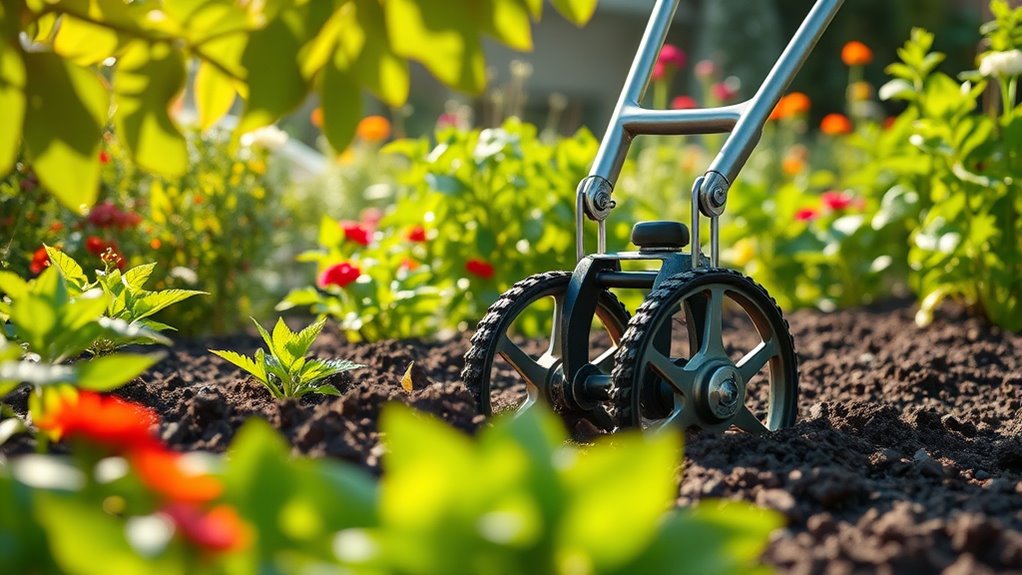
A garden tiller can help prepare planting beds, loosen compacted soil, and mix in amendments, but the right choice depends on your plot and how often you work it. My best overall pick is the Sun Joe TJ604E, a corded model that balances working capacity with steady power. For broader passes, the BILT HARD 18-Inch, 15-Amp and LawnMaster TE1318M stand out for their wider working widths, while cordless models make more sense where a power cord would limit movement. The main tradeoffs are power and coverage versus weight, cord or battery limits, and the effort of manual tools. Read on for the full breakdown, buying guidance, and picks for different garden needs.

Get business pricing on tools and workshop supplies
- Business-only prices and quantity discounts
- Tax-exempt purchasing
- Multiple users, one account, clear invoices
Complete the kit


Key Takeaways
- The lineup favors powered tillers for repeated soil preparation: corded options offer sustained operation, while cordless models trade runtime for freedom from an outlet.
- Working width changes the job more than a small difference in motor rating: the 16- and 18-inch models can cover open beds faster, but narrower tools are easier to guide in tight spaces.
- Battery kits differ in how much flexibility they offer: the Greenworks includes one 4.0Ah battery, while both SOARFLY models list two 4.0Ah batteries; runtime still depends on soil and workload.
- Manual tools have a distinct niche: the Jardineer hand tiller and BARAYSTUS rotary cultivator avoid motors and charging, but are better suited to spot work than preparing a large plot.
- Matching the tool to soil condition matters: hard, compacted ground asks more of a lightweight cordless or manual tiller than previously worked beds do, so capacity and maneuverability should be weighed together.


| garden tiller | Model | Power source | Tines |
|---|---|---|---|
| Jardineer Hand Tiller for Gard | — | — | Razor-sharp |
| 4-Stroke Gas Tiller Cultivator | HYGXTH036X1 | Gas | — |
| Sun Joe TJ604E Corded Electric | TJ604E | Corded electric | 6 rust-proof angled steel tines |
| Sun Joe TJ603E Corded Electric | TJ603E | Electric, corded | 6 steel tines |
| TaskStar TH4000 Cordless Tille | TH4000 | — | 48 heavy-duty steel |
| BILT HARD 14-Inch Electric Til | — | — | 4 rust-resistant steel tines |
| Greenworks 40V 10" Cordless Ti | — | — | — |
| SOARFLY Cordless Tiller Cultiv | TC-01 | Battery powered | 48 steel tines |
| SOARFLY Cordless Tiller Cultiv | TC-01 | Battery powered | 48 steel tines |
| BARAYSTUS Adjustable Rotary Cu | JDUS1146 | Manual | — |
| 20V Cordless Tiller Cultivator | — | Cordless battery | — |
| BILT HARD 18-Inch Corded Elect | — | Corded electric | Six rust-resistant steel blades; 380 RPM |
| LawnMaster TE1216M 12-Amp Elec | TE1216M | — | — |
| LawnMaster 13.5 Amp 18-Inch El | — | — | — |
| MZK 12-Inch Electric Tiller Cu | G-AC2501 | Corded electric | — |
More Details on Our Top Picks
Jardineer Hand Tiller for Gardening, Manual Twist Tiller Cultivator, Heavy Duty Garden Claw, Soil Loosener & Lawn Aerator
The Jardineer manual hand tiller suits targeted work where a powered machine would be awkward: loosening a raised bed, aerating a small patch, or turning soil around established plants. Its anti-slip foot plate lets you add body weight to the sharp steel tines, while the curved handle is designed to reduce the bending and twisting involved in manual cultivation. Compared with the Sun Joe TJ604E, it avoids a power cord and is easier to place precisely in tight beds, but it cannot match the electric model’s coverage or sustained soil-breaking pace. Manual effort is the central tradeoff, especially in compacted or rocky ground. I’d choose it for small, occasional jobs rather than preparing a large plot.
Pros:- Anti-slip foot plate helps transfer body weight into the soil.
- Sharp, powder-coated steel tines target compacted patches and provide aeration.
- Curved long handle is designed to reduce back strain during use.
- Wrenches and spare screws are included for assembly and upkeep.
Cons:- Manual operation demands physical effort, particularly in dense soil.
- Small working area makes it inefficient for large garden plots.
- Rocky ground can hinder tine penetration and make twisting harder.
Best for: Gardeners maintaining raised beds, flower boxes, or small planting areas who want a compact tool without a cord or engine.
Not ideal for: People preparing large lawns or working regularly in very hard, rocky soil, where manual twisting and pushing can become tiring.
- Tool type:Manual twist tiller
- Material:Powder-coated steel
- Tines:Razor-sharp
- Foot plate:Anti-slip
- Handle:Curved long handle
- Assembly:Wrenches and spare screws included
Our verdict“Choose the Jardineer for precise, cord-free cultivation in small beds, but pick a powered tiller for broad areas or stubborn soil.”
4-Stroke Gas Tiller Cultivator, 1.5KW Heavy Duty Garden Tiller for Lawn Yard
This Baococo gas tiller is the power-oriented choice in this group, with a stated 1.5 kW four-stroke engine and a 20-inch working width for covering ground more quickly than the narrow TaskStar TH4000 or the hand-operated Jardineer. Its listed 10-inch maximum depth also gives it a deeper working range than the Sun Joe TJ603E and TJ604E, both rated for up to 8 inches. Six height positions and stepless speed control offer ways to adapt the machine to the task, though the supplied details do not establish how it performs in every soil type. Gas operation brings the opposite of the Sun Joe models’ low-maintenance convenience: fuel, engine care, and exhaust are part of ownership. At 24 pounds, it is also less appealing for buyers who prioritize easy lifting and storage.
Pros:- 1.5 kW four-stroke gas engine is intended for demanding soil preparation.
- 20-inch working width covers more ground per pass than the 9-inch TaskStar.
- Maximum stated tilling depth of 10 inches exceeds the 8-inch Sun Joe models.
- Six height positions and stepless speed control provide adjustment options.
Cons:- Gas engine requires fuel and regular maintenance, unlike the electric Sun Joe tillers.
- At 24 pounds, it is heavier than a manual tool and less convenient to carry.
- A 20-inch working width may be cumbersome in narrow beds or around closely spaced plants.
Best for: Gardeners preparing a larger plot or breaking tougher soil who want a wider pass and deeper stated tilling capacity than the compact cordless options.
Not ideal for: Small-bed gardeners, buyers seeking quiet or low-maintenance operation, and anyone unwilling to handle fuel and routine engine care.
- Brand:Baococo
- Model:HYGXTH036X1
- Power source:Gas
- Engine:1.5 kW, four-stroke
- Rotation speed:7500 rpm
- Working width:20 inches
- Maximum working depth:10 inches
- Height adjustment:6 positions
- Weight:24 pounds
Our verdict“Pick this Baococo model when width and stated depth matter more than simple upkeep, and skip it for small beds or low-maintenance gardening.”
Sun Joe TJ604E Corded Electric Garden Tiller and Cultivator
The Sun Joe TJ604E balances substantial coverage with simpler ownership: its 13.5-amp corded motor works a path up to 16 inches wide and 8 inches deep, while electric operation avoids the fuel and engine care required by the Baococo gas tiller. Its six angled, rust-proof steel tines and three-position wheel adjustment suit planned bed preparation, and the folding handle helps reduce storage bulk. Compared with the lower-powered Sun Joe TJ603E, the TJ604E has a higher stated amperage while retaining the same listed width and depth. That makes it the stronger corded Sun Joe on paper, but not a cordless alternative: the cable limits where it can work, and 16 inches may be too wide for tight planting rows. I’d favor it for accessible garden areas with nearby power.
Pros:- 13.5-amp motor has higher stated amperage than the Sun Joe TJ603E.
- Works up to 16 inches wide and 8 inches deep for broad bed preparation.
- Six rust-proof angled steel tines are suited to repeated soil cultivation.
- Folding handle and three-position wheel adjustment aid storage and maneuvering.
Cons:- Power cord limits range and can complicate work around trees, beds, and obstacles.
- Fixed maximum width of 16 inches may not fit narrow planting spaces.
- Requires access to a suitable power outlet while working.
Best for: Home gardeners preparing medium-sized beds near an outdoor outlet who want more stated motor amperage than the TJ603E without gas maintenance.
Not ideal for: People tilling far from outlets, working around many obstacles, or cultivating very narrow beds where a 16-inch pass is too wide.
- Model:TJ604E
- Power source:Corded electric
- Motor:13.5 amp
- Tilling width:Up to 16 inches
- Tilling depth:Up to 8 inches
- Tines:6 rust-proof angled steel tines
- Wheel adjustment:3 positions
- Handle:Folding
Our verdict“Choose the TJ604E for corded bed preparation with stronger stated amperage than the TJ603E, provided your work area stays within reach of power.”
Sun Joe TJ603E Corded Electric Garden Tiller & Cultivator
The Sun Joe TJ603E is a practical corded choice for routine garden-bed preparation: its 12-amp motor is paired with six steel tines and a 16-inch-wide, 8-inch-deep stated working range. Like the TJ604E, it avoids gas and oil, so upkeep is simpler than with the Baococo gas tiller; unlike that wider 20-inch machine, it stays within a more moderate pass width. The key comparison is its sibling: the TJ604E lists 13.5 amps while matching the TJ603E’s width and depth, so buyers focused on stated motor power may prefer that model. The TJ603E’s folding handle is useful when storage space is limited, but the cord restricts travel and the 16-inch width still leaves little room for very tight rows. This is a sensible fit for accessible, open beds rather than remote or cramped plots.
Pros:- 12-amp electric motor avoids gasoline and oil.
- Tills up to 16 inches wide and 8 inches deep.
- Six steel tines support soil preparation across garden beds.
- Folding handle helps with storage and transport.
Cons:- Corded operation restricts working range and movement around obstacles.
- The TJ604E lists a higher motor amperage with the same stated width and depth.
- A 16-inch pass can be too wide for narrow beds or closely spaced plants.
Best for: Home gardeners with an outdoor outlet who need a folding, low-maintenance tiller for open beds and routine seasonal soil preparation.
Not ideal for: Gardeners working far from power, in tight rows, or seeking the higher stated amperage of the TJ604E.
- Brand:Sun Joe
- Model:TJ603E
- Power source:Electric, corded
- Motor power:12 amp
- Tilling width:16 inches
- Tilling depth:8 inches
- Tines:6 steel tines
- Warranty:2 years
Our verdict“Choose the TJ603E for straightforward, outlet-accessible bed preparation, but compare it with the higher-amperage TJ604E before deciding.”
TaskStar TH4000 Cordless Tiller Cultivator
The TaskStar TH4000 prioritizes maneuverability over acreage. Its 9-inch working width makes it a better match for flower borders and confined beds than the 16-inch Sun Joe TJ603E or TJ604E, while cordless operation removes the cable that limits both Sun Joe models. Two 2.0Ah batteries are included, and 48 steel tines with a listed 360 RPM motor are intended for cultivation and compost mixing. The compact width is useful around established plants, but it also means more passes across larger plots; battery runtime may further limit long sessions. Its 7-inch stated depth is below the Sun Joe models’ 8-inch maximum, and plastic components may not inspire the same confidence as an all-metal heavy-duty machine. I’d pick it for small-area flexibility, not deep or extensive soil preparation.
Pros:- Cordless design avoids the range limits of the Sun Joe TJ603E and TJ604E power cords.
- 9-inch width is suited to narrower beds and work around existing plants.
- Includes two 2.0Ah lithium-ion batteries.
- 48 heavy-duty steel tines and a 360 RPM motor are specified for cultivation and compost mixing.
Cons:- Narrow working width requires more passes across larger areas than the 16-inch Sun Joe models.
- Battery runtime may be limiting during extended or extensive tilling.
- Plastic components may be less durable than heavy-duty metal alternatives.
Best for: Gardeners tending small flower beds, borders, and planting spaces who want cordless maneuverability and a narrower working path.
Not ideal for: People preparing large plots, needing long uninterrupted runtimes, or prioritizing a wide pass and maximum stated depth.
- Brand:TaskStar
- Model:TH4000
- Motor speed:360 RPM
- Tines:48 heavy-duty steel
- Tilling width:9 inches
- Tilling depth:7 inches
- Battery:Two 2.0Ah lithium-ion batteries
- Warranty:3 years
Our verdict“Choose the TaskStar TH4000 for cordless work in small, confined beds, but favor a wider corded or gas model for larger plots.”
BILT HARD 14-Inch Electric Tiller Cultivator, 10 Amp
The 14-inch cultivating width gives this BILT HARD more reach per pass than the Greenworks 40V 10-inch cordless tiller, making it a better fit for opening up small-to-medium plots where an outlet and extension cord are practical. Its four steel tines work to a stated 8.7-inch depth, useful for loosening soil and mixing in compost rather than only touching the surface. At just under 18 pounds, it is also easier to move and store than a larger corded machine such as the BILT HARD 18-Inch model, and the foldable handle helps with that. The tradeoff is power access: a cord can restrict movement and needs care around beds. I would skip it for remote plots or extensive ground-breaking; its stated garden scale is small to medium, not large acreage.
Pros:- 14-inch width covers more ground per pass than the 10-inch Greenworks model.
- Cultivates to a stated depth of 8.7 inches for loosening soil and mixing compost.
- 17.98-pound weight and foldable handle make storage and transport easier.
- Six-inch wheels have two position settings to support maneuvering.
Cons:- The cord limits range and requires access to a suitable power outlet.
- Its small-to-medium garden positioning makes it a poor match for extensive plots.
Best for: Gardeners with a nearby outdoor outlet who want wider passes for small-to-medium beds, lawns, or flowerbeds.
Not ideal for: People cultivating remote beds or large areas where managing a cord would restrict movement or slow the work.
- Motor:10 Amp AC
- Motor speed:Up to 17,000 RPM
- Tines:4 rust-resistant steel tines
- Tine speed:Up to 360 RPM
- Cultivating width:14 inches
- Cultivating depth:8.7 inches
- Weight:17.98 lbs
- Wheels:6-inch wheels with 2-position adjustment
Our verdict“Choose this BILT HARD if you want broader corded coverage for a modest garden and can work comfortably within reach of an outlet.”
Greenworks 40V 10″ Cordless Tiller / Cultivator with 4.0Ah Battery and Charger
The Greenworks is the more practical choice than the corded BILT HARD 14-Inch when a garden has no convenient outlet: its 40V battery power removes cord management, and rear wheels help guide it between planting areas. Its working width adjusts from 8.25 to 10 inches, so it can trade coverage for access in narrower beds. The included 4.0Ah battery and charger mean it is ready as a complete kit, while the no-gas design avoids fuel and oil upkeep. The main compromise is work time: runtime is listed at up to 45 minutes, followed by a two-hour charge. Compared with the SOARFLY cordless models, that is a shorter stated runtime, though Greenworks provides a defined three-year tool and battery warranty. It suits routine garden cultivation better than long sessions on a large plot.
Pros:- Cordless operation avoids managing an extension cord around beds.
- Adjustable 8.25-to-10-inch width can suit different garden spaces.
- Six-inch rear wheels support maneuvering.
- Includes a 4.0Ah battery and charger, with a three-year tool and battery warranty.
Cons:- Runtime is listed at up to 45 minutes per charge.
- The 120-minute charge time can interrupt work between sessions.
- Its maximum 10-inch width covers less ground per pass than the 14-inch BILT HARD.
Best for: Home gardeners who need cordless mobility for modest beds and value rear-wheel maneuverability and an included battery kit.
Not ideal for: People with large plots or long uninterrupted work sessions, since the listed runtime is up to 45 minutes and charging takes 120 minutes.
- Voltage:40V
- Battery capacity:4.0Ah
- Runtime:Up to 45 minutes
- Charge time:120 minutes
- Tilling width:8.25–10 inches
- Wheels:6-inch rear wheels
- Warranty:3-year tool and battery
- Included items:Tiller, tines, battery, charger, and manual
Our verdict“Pick the Greenworks for cordless access and manageable garden tasks, but choose a wider or longer-running tiller for extended cultivation.”
SOARFLY Cordless Tiller Cultivator with Dual 4.0Ah Batteries
For gardeners who want cordless freedom but find the Greenworks 40V model’s listed 45-minute runtime limiting, this SOARFLY pairs two 4.0Ah batteries with a stated runtime of up to 120 minutes. That makes it better suited to working across several small beds before stopping to recharge, though actual runtime depends on soil and use. Its 9-inch width and 6.6-inch depth point to focused bed cultivation, not fast preparation of a broad plot; the BILT HARD 14-Inch covers more ground per pass and reaches deeper. Adjustable handle height and an auxiliary handle help tailor the grip, while the dual safety switch reduces the chance of accidental activation. I would choose it for flower beds, raised beds, and tight spaces, but not for extensive or very compacted ground where its narrow working width and battery-powered format are limiting.
Pros:- Two 4.0Ah batteries support a stated runtime of up to 120 minutes.
- Cordless design reaches beds without nearby outlets.
- Adjustable handle height and auxiliary handle offer grip flexibility.
- Dual safety switch helps prevent accidental activation.
Cons:- The 9-inch width covers less ground per pass than the BILT HARD 14-Inch.
- A 6.6-inch cultivating depth is shallower than the BILT HARD’s stated 8.7 inches.
- The compact-bed focus makes it a limited choice for large or heavily compacted areas.
Best for: Gardeners tending several raised or flower beds who want cordless operation and a longer stated working window than the Greenworks 40V model.
Not ideal for: People preparing large plots or routinely tackling heavily compacted soil, since its working width is 9 inches and its intended fit is small spaces.
- Model:TC-01
- Power source:Battery powered
- Battery capacity:2 × 4.0Ah Li-ion
- Runtime:Up to 120 minutes
- Motor speed:360 RPM
- Tilling width:9 inches
- Tilling depth:6.6 inches
- Tines:48 steel tines
Our verdict“Choose this SOARFLY for extended cordless work across small beds, not for broad, deep cultivation.”
SOARFLY Cordless Tiller Cultivator, 9-Inch Working Width, 6.6-Inch Depth, with Two 4.0Ah Batteries
This SOARFLY shares the TC-01’s 9-inch width, 6.6-inch depth, 360 RPM speed, and two-battery setup, so its role is not broader coverage but controlled work in smaller beds. Against the Greenworks 40V, the supplied pair of 4.0Ah batteries and stated runtime of up to 120 minutes give it a longer listed work window; against the BILT HARD 14-Inch, it gives up both width and depth. The instructions call for moistening firm or dry ground and beginning with shallow passes, which is useful guidance but also signals that this is not the pick for forcing a way through hard soil. Its adjustable height, auxiliary handle, and dual safety system suit careful garden-bed upkeep. I would favor it where restraint and cordless access matter more than rapid progress across a larger plot.
Pros:- Two 4.0Ah lithium-ion batteries provide a stated runtime of up to 120 minutes.
- Cordless operation suits garden areas without nearby outlets.
- Adjustable height and auxiliary handle support a more tailored working posture.
- Dual safety system helps guard against accidental activation.
Cons:- The 9-inch working width is slower across broad plots than the BILT HARD 14-Inch.
- Instructions recommend moistening firm or dry soil and starting with shallow passes.
- The listed runtime may vary with soil conditions and use.
Best for: Gardeners maintaining small beds who can prepare dry or firm soil first and prefer shallow, controlled passes.
Not ideal for: Buyers who need to break hard, dry ground quickly or cover a wide area; the narrow width and recommended shallow starting passes will slow that work.
- Model:TC-01
- Working width:9 inches
- Cultivating depth:6.6 inches
- Motor speed:360 RPM
- Tines:48 steel tines
- Batteries:Two 4.0Ah lithium-ion batteries
- Maximum runtime:Up to 120 minutes
- Power source:Battery powered
Our verdict“Choose this SOARFLY for careful, shallow cultivation in small beds, and skip it if your priority is fast work in hard or expansive ground.”
BARAYSTUS Adjustable Rotary Cultivator, 57-Inch
The BARAYSTUS is the only manual tool in this group, so it suits a different job from the powered Greenworks and SOARFLY tillers: light aerating, weed removal, and soil mixing without batteries, a cord, or motor upkeep. Its 57-inch adjustable handle lets the user work standing, while the tool weighs just 2.6 pounds and includes three interchangeable blade wheels for changing the working head. That simplicity comes with a clear limit: unlike the BILT HARD 14-Inch, it does not offer powered, deeper cultivation, and the product guidance warns against hard or rocky soil. The wheels also depend on screws that may need periodic tightening. I would pick it for routine touch-ups in workable soil or reseeding small patches, not for turning compacted ground or preparing a large garden from scratch.
Pros:- Manual operation avoids batteries, fuel, cords, and motor maintenance.
- Adjustable 57-inch handle supports standing use.
- Three interchangeable blade wheels offer different working heads.
- At 2.6 pounds, it is light to carry and store.
Cons:- Not recommended for hard or rocky soil.
- Manual operation requires the user to provide all working force.
- Screws may need periodic tightening.
Best for: Gardeners seeking a lightweight, no-motor tool for routine aerating, weed removal, and reseeding in soft or workable soil.
Not ideal for: People preparing compacted, hard, or rocky ground, or anyone who wants powered cultivation across a large area.
- Model:JDUS1146
- Total length:57 inches
- Dimensions:8 × 5.3 × 57 inches
- Weight:2.6 pounds
- Materials:Alloy steel, stainless steel, and aluminum
- Power source:Manual
- Interchangeable blade wheels:3
- Assembly:Tool-free connection
Our verdict“Choose the BARAYSTUS for lightweight upkeep in workable soil, but select a powered tiller such as the BILT HARD for deeper or tougher cultivation.”
20V Cordless Tiller Cultivator with 2 x 2.0Ah Batteries and Charger
Cordless freedom and easy handling are the main reasons I’d choose this tiller: it suits small beds and awkward corners where managing a power cord gets in the way. Its two steel tines spin at up to 240 RPM and work to a stated depth of 4 inches, making it better suited to surface loosening, aeration, and seedbed prep than the deeper cultivation offered by the BILT HARD 18-Inch Corded Electric Tiller. Two 2.0Ah batteries let me swap packs rather than stop when one runs down, though the supplied capacity still points to shorter sessions than a corded model can support. The lightweight ergonomic design is another advantage for close-quarters work, but this is not the pick for breaking up a large plot or turning soil deeply. I’d favor it when reach and maneuverability matter more than width or sustained power.
Pros:- Cordless operation makes it easier to move around small beds without managing an extension cord.
- Two 2.0Ah batteries allow a pack swap during a session.
- Lightweight ergonomic design is suited to close-quarters work.
- Two steel tines rotate at up to 240 RPM for shallow soil loosening.
Cons:- Four-inch maximum working depth is less suited to deep bed preparation than the BILT HARD 18-inch model.
- Battery runtime may be limiting for larger or extended projects.
Best for: Gardeners with small beds, narrow paths, or tight spaces who want cordless mobility for shallow soil loosening and aeration.
Not ideal for: People preparing large plots or needing deep cultivation, since the stated working depth is 4 inches and battery runtime may limit longer jobs.
- Voltage:20V
- Battery capacity:2.0Ah x 2
- Speed:Up to 240 RPM
- Tine count:2 steel tines
- Maximum working depth:4 inches
- Power source:Cordless battery
- Included:Two batteries and charger
Our verdict“Choose this for nimble, shallow cultivation in small spaces; choose a corded, wider tiller for larger beds or deeper soil work.”
BILT HARD 18-Inch Corded Electric Tiller Cultivator, 15-Amp
For gardeners who want to cover ground quickly without moving to a gas-powered machine, I’d put the BILT HARD 18-Inch near the top of this group. Its 15-amp motor and 18-inch working width can prepare a broader strip in each pass than the LawnMaster TE1216M, while the stated 8.7-inch depth supports more substantial bed work than the compact cordless 20V tiller. Six rust-resistant steel tines and four-position wheels give the operator some control over how the machine tracks and cuts. That wider reach comes with a real constraint: the power cord limits distance from an outlet and requires attention around plants and obstacles. At 25 pounds, it is also not as easy to reposition as a small cordless option. I’d choose it for a small-to-medium garden with outlet access, not a remote or sprawling plot.
Pros:- 18-inch working width covers more ground per pass than the LawnMaster TE1216M.
- Up to 8.7 inches of tilling depth suits more substantial bed preparation than shallow cordless models.
- Four-position adjustable wheels help control tilling depth.
- Foldable design helps reduce storage space.
Cons:- Corded operation ties the work area to an outlet and requires cord management.
- The 18-inch width can be cumbersome in narrow beds and tight spaces.
- Its intended small-to-medium garden range makes it a poor fit for extensive plots.
Best for: Gardeners preparing medium-sized beds near an outdoor outlet who want a wide working path and adjustable depth control.
Not ideal for: People tilling far from power access or working around many tight obstacles, where the cord and 18-inch width can hinder movement.
- Power source:Corded electric
- Motor:15 amp
- Motor speed:Up to 19,000 RPM
- Tilling width:18 inches
- Tilling depth:Up to 8.7 inches
- Tines:Six rust-resistant steel blades; 380 RPM
- Wheels:6 inches, four adjustable positions
- Weight:25 lbs
- Design:Foldable with H-handle
Our verdict“Pick this for wide, deeper cultivation in an outlet-accessible garden, but skip it if cord-free maneuverability is your priority.”
LawnMaster TE1216M 12-Amp Electric Tiller, 16-Inch
The LawnMaster TE1216M takes a middle-width approach: its 16-inch cut is narrower than the BILT HARD 18-Inch tiller, but wider than the 12-inch MZK. That makes it a practical option for gardeners who want broad coverage without choosing the widest machine in this set. Its stated 9-inch cutting depth is also deeper than the BILT HARD’s 8.7-inch figure, while the two-stage gearbox and anti-clock mechanical clutch add a layer of mechanical protection if the blades meet resistance. An adjustable transit wheel with three positions supports movement and positioning between passes. The supplied information does not specify weight, storage features, or included accessories, so I can’t weigh portability as confidently against the foldable BILT HARD. I’d shortlist this for regular bed preparation where a corded 12-amp machine and a 16-inch path fit the job.
Pros:- 16-inch cutting width offers a middle ground between the 12-inch MZK and 18-inch BILT HARD.
- Nine-inch cutting depth supports substantial soil preparation.
- Two-stage gearbox includes an anti-clock mechanical clutch.
- Three-position adjustable transit wheel aids movement and positioning.
Cons:- Corded operation restricts work to areas within reach of an outlet and extension cord.
- The 16-inch width may still be awkward in narrow beds.
- Product information does not specify weight or a folding design for storage planning.
Best for: Home gardeners who want a 16-inch corded tiller for regular bed preparation and value a mechanical clutch for blade protection.
Not ideal for: Buyers who need cordless use, a narrow tool for very confined beds, or clearly stated portability and storage details.
- Model:TE1216M
- Power:12 amps
- Maximum cutting width:16 inches
- Cutting depth:9 inches
- Blades:Six rust-resistant steel blades
- Gearbox:Two-stage with anti-clock mechanical clutch
- Transit wheel:Adjustable to three positions
Our verdict“Choose this when a 16-inch path and 9-inch depth suit your beds, and you can accept corded operation.”
LawnMaster 13.5 Amp 18-Inch Electric Tiller – TE1318M
Interchangeable tine configurations give this LawnMaster a useful advantage over the BILT HARD 18-Inch model: it can work at an 18-inch width with six tines or narrow to 12.6 inches with four. That flexibility makes it easier to match the tool to open beds or tighter rows without switching to a separate tiller. The 13.5-amp motor, 380 RPM blade speed, and 9-inch depth place it in the stronger corded group here, while automatic overload shutoff stops the machine when it becomes blocked. That protection can prevent continued operation against an obstruction, but it may interrupt work when debris is common. Foldable handles help with storage, and three-position transit wheels aid repositioning. Compared with the 12-amp TE1216M, this model adds width options and a higher stated motor amperage, though both reach a 9-inch depth.
Pros:- Interchangeable tine setups provide 18-inch and 12.6-inch working widths.
- Nine-inch depth and 380 RPM steel blades suit substantial cultivation.
- Automatic overload shutoff stops operation when the tines are blocked.
- Foldable handles and three-position wheels help with storage and repositioning.
Cons:- Corded power limits working distance and requires attention to the extension cord.
- Overload protection may interrupt work when tines encounter debris.
- The wide configuration may be unwieldy in narrow rows.
Best for: Gardeners with mixed-size beds who want one corded tiller that can shift between a wide 18-inch cut and a narrower 12.6-inch setup.
Not ideal for: People working far from outlets or in debris-heavy soil where automatic shutoffs may interrupt progress.
- Power:13.5 amp
- Cutting width:18 inches with six tines; 12.6 inches with four tines
- Depth:Up to 9 inches
- Speed:380 RPM
- Blades:Six rust-resistant steel blades
- Overload protection:Automatic shutoff when blocked
- Adjustable wheels:Three positions
- Tine options:Six tines or four tines
- Handles:Foldable
Our verdict“Choose this for adaptable width and deep cultivation across mixed-size beds, provided outlet access and occasional shutoffs are acceptable.”
MZK 12-Inch Electric Tiller Cultivator, 10.5A
When a full-width tiller feels too large for the job, the MZK’s 12-inch cutting path is easier to match to narrow beds and confined planting areas. Its stated 8-inch digging depth gives it more reach than the 4-inch cordless 20V tiller, although it offers less width and depth than the LawnMaster TE1318M. The 430 RPM figure and four rust-resistant steel blades describe a compact corded tool for bed preparation, lawn cultivation, and orchard work; plug-in power also avoids gas and oil maintenance. The tradeoff is that a cord still limits where I can work, and the narrower path means more passes across broad ground. There is also a specification discrepancy: the product title says 10.5A, while the description lists a 10-amp motor. I’d confirm the rating before buying if amperage is a deciding factor.
Pros:- 12-inch width is better suited to narrow beds than the 18-inch LawnMaster TE1318M.
- Eight-inch digging depth provides more reach than the 4-inch cordless 20V model.
- Corded electric power avoids gas and oil maintenance.
- Four rust-resistant steel blades are specified for beds, lawns, and orchard work.
Cons:- The narrow cutting width requires more passes across larger plots.
- Corded operation restricts reach and requires managing an extension cord.
- Motor rating is inconsistent between the 10-amp description and 10.5A title.
Best for: Gardeners with narrow beds or orchard rows who want a compact corded tiller with more depth than a shallow cordless cultivator.
Not ideal for: People preparing broad plots quickly, working without nearby outlet access, or relying on an unambiguous motor rating.
- Brand:MZK
- Model:G-AC2501
- Speed:430 RPM
- Cutting width:12 inches
- Digging depth:8 inches
- Blades:Four rust-resistant steel blades
- Power source:Corded electric
Our verdict“Pick the MZK for narrow beds and corded, deeper cultivation, but verify its motor rating and skip it for wide plots.”

How We Picked
I compared the 15 options by how well their design fits common garden-tilling jobs: preparing beds, loosening worked soil, reaching narrow areas, and handling larger plots. The main factors were power source, stated working width and depth, mobility, included battery equipment, and the likely upkeep involved. I also separated powered tillers from manual cultivators rather than treating them as interchangeable; a hand tool can be a sensible choice for spot work, but it does not replace a motorized tiller for broad ground preparation.
The order gives the most weight to usefulness across a range of home-garden tasks, then to specialization. Corded models rank well for sustained work near an outlet, while cordless models gain ground where freedom of movement matters. Wider working paths suit open beds but can be cumbersome in confined spaces. Since product names and listed specifications do not establish real-world performance in every soil type, I avoid treating motor ratings or battery counts as guarantees of digging ability or runtime.
| garden tiller | Power source |
|---|---|
| Jardineer Hand Tiller for Gard | — |
| 4-Stroke Gas Tiller Cultivator | Gas |
| Sun Joe TJ604E Corded Electric | Corded electric |
| Sun Joe TJ603E Corded Electric | Electric, corded |
| TaskStar TH4000 Cordless Tille | — |
| BILT HARD 14-Inch Electric Til | — |
| Greenworks 40V 10" Cordless Ti | — |
| SOARFLY Cordless Tiller Cultiv | Battery powered |
| SOARFLY Cordless Tiller Cultiv | Battery powered |
| BARAYSTUS Adjustable Rotary Cu | Manual |
| 20V Cordless Tiller Cultivator | Cordless battery |
| BILT HARD 18-Inch Corded Elect | Corded electric |
| LawnMaster TE1216M 12-Amp Elec | — |
| LawnMaster 13.5 Amp 18-Inch El | — |
| MZK 12-Inch Electric Tiller Cu | Corded electric |
Factors to Consider When Choosing Garden Tiller
Before choosing a garden tiller, start with the job you need it to do, not the largest width or highest power figure in the listing. Soil condition, bed layout, access to electricity, and how often you plan to till all change which tradeoffs matter. These factors can help prevent buying a tool that is either underpowered for the work or awkward for the space.
Match the Tiller to Soil Condition
Previously worked soil is a different task from breaking new ground or loosening a compacted patch. A light cordless or manual cultivator may be practical for maintaining established beds, but tough ground can demand more power, weight, and repeated passes. Avoid assuming a stated maximum depth means the tiller will reach it easily in every soil. If the ground is hard or full of roots, consider whether you can prepare it gradually rather than expecting one pass to do everything. Removing stones and large debris first also reduces strain on the machine. For a new plot, a more capable tiller or staged preparation may be a better fit than choosing solely for a small footprint.
Choose Working Width for Your Bed Layout
A wider tiller can cover an open bed in fewer passes, but the same width can make it harder to work between established plants or along narrow borders. Measure gates, paths, and the narrowest part of the garden before choosing a model. Think about turning room as well as the tilling path: a tool that fits through a gate may still be cumbersome to pivot in a crowded bed. Narrow models provide more control for small plots, while wider models make better use of time on larger, open areas. Buyers sometimes focus on maximum width and overlook whether they can steer the tool comfortably. The best width is the one that suits both the planting area and access route.
Decide Between Corded, Cordless, Gas, and Manual
A corded tiller can run as long as it has power, but the cable restricts reach and requires care around the tines. A cordless model offers easier movement around beds, though battery capacity and recharge time shape how much work fits into a session. Gas power avoids a cord and charging, but it brings fuel, engine upkeep, and more noise into the decision. Manual cultivators sidestep motors and batteries, yet require more physical effort and are suited to smaller areas. Map your work area and nearby power access before choosing a source. The common mistake is to buy for convenience alone without checking whether the power system suits the length and intensity of the job.
Read Battery Details as Part of the Whole Kit
Battery voltage and amp-hour figures describe parts of a power system, not a guaranteed amount of work per charge. Soil resistance, cutting depth, pace, and battery condition all affect runtime. When comparing cordless kits, check whether batteries and a charger are included and how many batteries come with the tool. A second battery can reduce interruptions if it can be charged while the other is in use, but it does not prove the tiller will handle hard ground well. Also check whether the battery platform is useful with other tools you own or may buy. If the garden is large, plan for charging breaks rather than assuming a single session will cover the whole plot.
Balance Tool Weight, Control, and Storage
Working width and power are only helpful if the tiller is manageable for the person using it. A heavier machine may feel more planted in soil, but it can be harder to transport, turn, or store. Lightweight designs are easier to move around small beds, though they may require more guidance or repeated passes in resistant soil. Check handle design, transport features, and the space available in a shed or garage. Buyers who have limited strength or need to move the tool up steps should give handling priority over maximum capacity. A realistic storage and setup check can prevent an otherwise capable tiller from becoming inconvenient to use.
Think About Maintenance and How Often You Till
Frequent use makes service needs more important than they may seem at purchase. Electric tools avoid gas-engine fuel and routine engine care, while gas models call for attention to fuel and engine components. Battery-powered tools add charging and battery storage to the routine, and manual options have fewer mechanical parts but demand more effort from the user. Remove soil and plant matter after work and follow the maker’s instructions for inspection and storage. If you only cultivate a few small beds now and then, a simpler tool may be preferable to a larger machine with more upkeep. For repeated work across a broad plot, paying for added capacity can make sense if it meaningfully reduces the time and effort per session.
Frequently Asked Questions
Is a 10-amp corded tiller enough for a home garden?
It can be a sensible fit for smaller areas and soil that has been worked before, but amperage alone cannot predict how well a tiller will handle compacted ground. Working width, tine design, depth, and soil condition all affect the workload. A wider or more powerful model may cover open beds faster, though it can be harder to maneuver. If you are preparing a new plot, expect that hard ground may need more than one pass or a more capable tool. Check the product’s stated working dimensions and compare them with your plot before deciding.
Should I choose a cordless tiller or a corded one?
Choose cordless when reaching different beds without managing a cable matters more than uninterrupted operation. Battery capacity and included batteries influence how conveniently you can work, but neither guarantees runtime in resistant soil. A corded model is more appealing when your beds are close to an outlet and you want to avoid charging pauses. For a large plot, consider cable reach or battery charging time as part of the work plan. The better option is the one that fits your garden layout and typical session length.
Can a garden tiller prepare new, compacted ground?
Some powered tillers can help, but compacted or untouched ground is much harder than maintaining a prepared bed. Small cordless and manual cultivators may be better suited to loosening surface soil than breaking a large, dense area. Remove rocks and heavy debris first, then work in stages if the soil resists. A tiller’s listed depth should not be read as a promise that it will reach that depth immediately in every condition. For a large area of very hard ground, compare machine capacity carefully and consider whether the job calls for a more substantial tool.
Does a wider tiller always make garden work faster?
Not always. A wider path can reduce passes across an open bed, but it may be awkward between rows, around plants, or in a narrow garden. Turning space and access through gates can matter just as much as the width on the specification sheet. A narrower tiller can offer better control in tight spaces, even if it takes longer to cover open soil. Choose based on the shape of the plot and the work area you can reach comfortably.
When is a manual cultivator a better choice than a powered tiller?
A manual cultivator can suit small patches, raised beds, and spot loosening where setting up a powered machine would be more trouble than the task. It avoids batteries, cords, fuel, and motor maintenance, but shifts the effort to the user. For broad beds or compacted soil, that physical workload can become tiring quickly. A manual tool is best viewed as a focused alternative, not a lower-cost substitute for every tilling job. If you expect to prepare a large area repeatedly, a powered option is likely more practical.
Conclusion
For the strongest all-around fit in this lineup, I recommend the Sun Joe TJ604E as best overall for buyers who want a corded tiller suited to regular home-garden preparation. The Sun Joe TJ603E is my best-value direction for shoppers comparing corded options, while the BILT HARD 18-Inch, 15-Amp is the best premium-style choice for buyers who prioritize wider coverage and greater stated power. Beginners with a small, previously worked garden may prefer a manageable cordless model such as the Greenworks 40V 10-Inch, especially if avoiding a cord is a priority. For very small beds and occasional spot work, choose the Jardineer hand tiller or BARAYSTUS rotary cultivator; for broader areas near an outlet, look to the wider corded LawnMaster or BILT HARD options. My final check would be soil condition and garden access: those two details should decide between convenience, coverage, and capability.