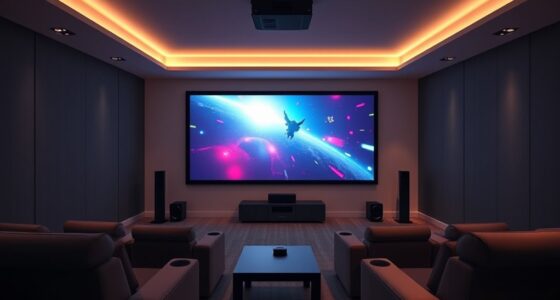
For a versatile home listening setup, I’d choose the Denon D-M41 as the best overall pick: its amplifier and bookshelf speakers suit focused music listening without requiring a full surround system. The Philips Bluetooth & WiFi Stereo System stands out for streaming and internet radio, while the Yamaha YHT-4950U is a stronger match for movie-focused 5.1 sound. The main tradeoff is between a simple stereo system that’s easy to place and a larger surround setup that needs more space and wiring. Compact shelf systems add convenient CD and radio playback, but they offer less room-filling scale than dedicated speaker pairs or theater systems. Read on for the full breakdown of which setup fits your room and how you listen.

Get business pricing on tools and workshop supplies
- Business-only prices and quantity discounts
- Tax-exempt purchasing
- Multiple users, one account, clear invoices
Complete the kit


Key Takeaways
- The Denon D-M41 is the most balanced music-first choice: its separate amplifier and bookshelf speakers offer a more traditional stereo setup than the all-in-one shelf systems.
- Streaming needs change the shortlist: the Philips Bluetooth & WiFi system adds network listening and Spotify support, while many compact rivals rely on Bluetooth, discs, or radio.
- Movie immersion calls for a different kind of system: the Yamaha YHT-4950U and the Dolby Atmos soundbar options prioritize surround effects over a straightforward stereo footprint.
- Compact convenience comes with a scale tradeoff: the Aiwa, Jensen, WISCENT, and small Philips systems bundle familiar playback features, but they suit smaller rooms and casual listening better than a dedicated home theater.
- More channels mean more setup decisions: systems such as the Saiyin 5.0 and HiMuses 5.1.4 need compatible placement and room space, while a two-speaker stereo system is simpler to arrange.
| Floor Standing Tower Speakers Pair (Brown) |  | Best for Full-Scale Stereo | Type: Passive floor-standing speaker pair | Peak power: 180W | Frequency response: 40Hz–20kHz | VIEW ON AMAZON | See Our Full Breakdown |
| Aiwa Exos Home 30W Bluetooth Speaker with CD Player and FM Radio |  | Best for Versatile Everyday Listening | Model: Exos Home | Power output: 30W RMS | Speaker configuration: Two-speaker stereo | VIEW ON AMAZON | See Our Full Breakdown |
| Jensen JBS-300 Bluetooth Stereo Shelf Music System with CD Player, AM/FM Radio, and USB Port |  | Best Compact Shelf System | Model: JBS-300 | Speaker power: 10W | Connectivity: Bluetooth, USB, auxiliary input, headphone jack | VIEW ON AMAZON | See Our Full Breakdown |
| Saiyin 5.0 Home Theater System, HiFi Surround Sound Speakers |  | Best for Passive Surround Setup | Configuration: 5.0-channel passive speaker system | Drivers: Four 3-inch bookshelf speakers and one 3-inch center speaker | Impedance: 6 ohms | VIEW ON AMAZON | See Our Full Breakdown |
| WISCENT Vintage Micro HiFi System with Bluetooth, CD Player, FM Radio, and USB/Aux Inputs (Brown) |  | Best for Compact CD and Bluetooth Playback | Speaker power: 15W RMS per speaker; 30W peak | Speakers: Two 3-inch full-range units | Connectivity: Bluetooth, USB, 3.5mm auxiliary input, headphone jack | VIEW ON AMAZON | See Our Full Breakdown |
| Philips Micro Hi-Fi Stereo System with Bluetooth, CD Player, and FM Radio |  | Best Compact Retro Pick | Audio output: 18W listed; source data also lists 60W | Connectivity: Bluetooth, USB, Audio In | Playback formats: CD, MP3 | VIEW ON AMAZON | See Our Full Breakdown |
| 30W Micro Hi-Fi CD Stereo Shelf System with Bluetooth, FM Radio, and Remote Control |  | Best for Flexible Physical-Media Playback | Connectivity: Bluetooth, USB, 3.5mm AUX, FM radio | Supported media: CD, CD-R, CD-RW, MP3, WMA | Channel configuration: 2.0 stereo | VIEW ON AMAZON | See Our Full Breakdown |
| Philips Bluetooth & WiFi Stereo System with CD Player, Spotify, and Internet Radio |  | Best Overall for Connected Home Listening | Power output: 100W | Connectivity: Wi-Fi, Bluetooth, AUX-in, headphone jack | Audio sources: Spotify Connect, internet radio, FM radio, CD, USB | VIEW ON AMAZON | See Our Full Breakdown |
| Yamaha YHT-4950U 5.1-Channel Home Theater System with 4K Ultra HD and Bluetooth |  | Best for Surround Sound and TV | Channel configuration: 5.1 | Connectivity: HDMI, Ethernet, coaxial, optical, USB, auxiliary, Bluetooth | HDMI ports: 4 | VIEW ON AMAZON | See Our Full Breakdown |
| Home Stereo System with CD Player, FM Radio, Bluetooth, AUX in, USB in, Earphone Jack, Remote Control Included, 30W HiFi Shelf Stereo System |  | Best for CDs and Headphone Listening | Maximum output: 30W (15W + 15W) | Connectivity: Bluetooth, USB, AUX-in, 3.5mm headphone jack | Supported discs and formats: CD, CD-R, CD-RW, MP3, WMA | VIEW ON AMAZON | See Our Full Breakdown |
| Denon D-M41 Home Theater Mini Amplifier and Bookshelf Speaker Pair |  | Best for Traditional Stereo Listening | Model: D-M41 | Included speakers: 2 SC-M41 bookshelf speakers | Speaker power: 2 x 30W | VIEW ON AMAZON | See Our Full Breakdown |
| ULTIMEA Skywave X40 5.1.2ch Wireless Sound Bar with Subwoofer |  | Best for Wireless Height Effects | Channel configuration: 5.1.2 | Peak power: 530W | Frequency response: Down to 35Hz | VIEW ON AMAZON | See Our Full Breakdown |
| Ultimea Aura A40 Pro 7.1ch Surround Sound Bar with Wireless Subwoofer and Surround Speakers |  | Best for Dialogue and Sound Customization | Channel configuration: 7.1 surround sound | Connectivity: Bluetooth 6.0 | Subwoofer driver: 18mm high-excursion driver | VIEW ON AMAZON | See Our Full Breakdown |
| HiMuses M514 5.1.4 Dolby Atmos Surround Sound System with Subwoofer |  | Best for Dedicated Atmos Speaker Layout | Channel configuration: 5.1.4 | Peak power: 900W | Subwoofer frequency: 25Hz | VIEW ON AMAZON | See Our Full Breakdown |
| Philips FX10 Bluetooth Stereo System with CD Player, MP3, USB, FM Radio, Bass Reflex Speakers, 230 W, Remote Control |  | Best for Multi-Source Music Playback | Power output: 230W RMS | Connectivity: Bluetooth, audio-in (aux) | Playback sources: CD, MP3/USB, FM radio | VIEW ON AMAZON | See Our Full Breakdown |
| hifi speaker systems for home | Connectivity |
|---|---|
| Floor Standing Tower Speakers | Binding posts for banana plugs, spade connectors, or bare wire |
| Aiwa Exos Home 30W Bluetooth S | Bluetooth, optical digital, auxiliary |
| Jensen JBS-300 Bluetooth Stere | Bluetooth, USB, auxiliary input, headphone jack |
| Saiyin 5.0 Home Theater System | — |
| WISCENT Vintage Micro HiFi Sys | Bluetooth, USB, 3.5mm auxiliary input, headphone jack |
| Philips Micro Hi-Fi Stereo Sys | Bluetooth, USB, Audio In |
| 30W Micro Hi-Fi CD Stereo Shel | Bluetooth, USB, 3.5mm AUX, FM radio |
| Philips Bluetooth & WiFi Stere | Wi-Fi, Bluetooth, AUX-in, headphone jack |
| Yamaha YHT-4950U 5.1-Channel H | HDMI, Ethernet, coaxial, optical, USB, auxiliary, Bluetooth |
| Home Stereo System with CD Pla | Bluetooth, USB, AUX-in, 3.5mm headphone jack |
| Denon D-M41 Home Theater Mini | Bluetooth, digital inputs, headphone jack |
| ULTIMEA Skywave X40 5.1.2ch Wi | Dual 5GHz wireless transmission |
| Ultimea Aura A40 Pro 7.1ch Sur | Bluetooth 6.0 |
| HiMuses M514 5.1.4 Dolby Atmos | — |
| Philips FX10 Bluetooth Stereo | Bluetooth, audio-in (aux) |
More Details on Our Top Picks
Floor Standing Tower Speakers Pair (Brown)
For a home system built around room-filling stereo, these passive towers have the strongest case in this group: six 6.5-inch woofers and a ported cabinet are designed to deliver bass with more scale than the compact Aiwa Exos Home or WISCENT micro systems. Their 40Hz–20kHz response and 180W peak handling make them a fit for music, films, and games when paired with suitable amplification. That flexibility comes with a setup cost in space and equipment: you need an AV receiver or amplifier, and each speaker weighs nearly 42 pounds. Unlike the Saiyin 5.0 set, this is a two-speaker stereo pair, so it suits listeners prioritizing left-right music presentation over dedicated surround channels. I’d skip it for a small room or a plug-and-play system.
Pros:- Six 6.5-inch woofers and a bass-reflex design aim for substantial low-end output
- 180W peak handling suits a range of home listening and entertainment uses
- Binding posts accept banana plugs, spade connectors, or bare wire
- MDF cabinets provide a sturdy enclosure
Cons:- Passive speakers require a separate amplifier or receiver
- Each speaker weighs 41.89 pounds, making placement and moving difficult
- Tall cabinets need more floor space than the bookshelf and micro systems in this roundup
Best for: Listeners with a living room, a separate amplifier or AV receiver, and space for substantial stereo speakers
Not ideal for: Apartment dwellers seeking a compact all-in-one system or buyers without an amplifier
- Type:Passive floor-standing speaker pair
- Peak power:180W
- Frequency response:40Hz–20kHz
- Drivers:6 × 6.5-inch woofers; 2 × 3-inch tweeters
- Dimensions:7.48 × 7.87 × 34.09 inches
- Weight:41.89 lb (19 kg) each
- Cabinet material:Medium-density fiberboard (MDF)
- Connectivity:Binding posts for banana plugs, spade connectors, or bare wire
Our verdict“Choose these towers for large-scale stereo sound if you already have amplification and room for full-size floor speakers.”
Aiwa Exos Home 30W Bluetooth Speaker with CD Player and FM Radio
The Aiwa Exos Home is a practical middle ground between the passive Saiyin surround set and the more compact Jensen JBS-300: it combines Bluetooth, CD playback, and FM radio in a powered two-speaker system, without requiring a separate receiver. Optical and auxiliary inputs also make it useful beside a television or for connecting another audio source. Its 30W RMS output and included remote suit casual listening in a living room or bedroom, though the product data gives no Wi-Fi or voice-assistant support for buyers building a connected setup. The 17.6-inch width may be awkward on a narrow shelf, and it cannot match the room scale or bass reach suggested by the floor-standing tower pair. I’d choose it for convenience and varied sources, not for an upgrade path centered on separate components.
Pros:- Built-in CD player and FM radio complement Bluetooth streaming
- Optical digital and auxiliary inputs support additional audio sources
- 30W RMS output comes in a self-contained stereo system
- IR remote supports convenient operation from across the room
Cons:- The 17.6-inch width may not fit narrow shelves or small bedside tables
- No Wi-Fi or voice-assistant integration is listed
- It is a fixed all-in-one system rather than separate speakers and components
Best for: Households that want one straightforward system for CDs, radio, Bluetooth streaming, and a TV connection
Not ideal for: Listeners seeking Wi-Fi multiroom audio, voice-assistant features, or the scale of floor-standing speakers
- Model:Exos Home
- Power output:30W RMS
- Speaker configuration:Two-speaker stereo
- Connectivity:Bluetooth, optical digital, auxiliary
- Media support:CD, MP3, FM radio
- Dimensions:17.6 × 6.3 × 11 inches
- Weight:6 lb
- Included accessory:IR remote control
Our verdict“Pick the Exos Home if you want CDs, radio, Bluetooth, and optical input in one powered stereo system.”
Jensen JBS-300 Bluetooth Stereo Shelf Music System with CD Player, AM/FM Radio, and USB Port
The Jensen JBS-300 earns its place as the small-room pick: wall mounting and a compact shelf format make it easier to place in a kitchen, bedroom, or office than the wider Aiwa Exos Home. Its playback options cover CDs, Bluetooth, USB, auxiliary input, and AM/FM radio, while the alarm and sleep timer add day-to-day utility. The tradeoff is modest 10-watt speaker power; this is better suited to near-field or background listening than filling a living room. The WISCENT micro system offers more listed output and several EQ modes, while the Jensen counters with AM radio, 40 presets, and a wall-mount kit. Its included 120V adapter also means a power connection is required at the chosen location. I’d pass if room-filling sound is the priority.
Pros:- Wall-mountable design with kit included
- Plays CDs and USB audio, and supports Bluetooth and auxiliary input
- Digital AM/FM tuner offers 40 presets
- Alarm clock, sleep timer, remote, and four EQ presets add everyday flexibility
Cons:- 10-watt speaker power is limited for larger rooms
- Requires the included 120V AC adapter and a nearby outlet
- Its compact system is less suited to expansive stereo presentation than the tower pair
Best for: Listeners furnishing a kitchen, office, or bedroom who want a mountable system with CDs, radio, and an alarm
Not ideal for: People who need high-volume sound for a large living room or want a system specified for stronger output
- Model:JBS-300
- Speaker power:10W
- Connectivity:Bluetooth, USB, auxiliary input, headphone jack
- Radio:Digital AM/FM PLL receiver with 40 presets
- Mounting:Wall mountable; kit included
- Display:White LCD
- Power source:120V AC adapter, included
- Features:Alarm clock, sleep timer, four EQ presets
Our verdict“Choose the Jensen for a compact, mountable room system where radio, CD playback, and alarm functions matter more than high output.”
Saiyin 5.0 Home Theater System, HiFi Surround Sound Speakers
The Saiyin set is the clear choice here for buyers who want five speaker positions for a TV or home theater: four matching bookshelf speakers pair with a center channel intended to make dialogue easier to follow. Unlike the two-channel tower pair, it gives you a dedicated center speaker and surround placements; unlike the powered Aiwa Exos Home, every speaker is passive and depends on an AV receiver or amplifier. The compact cabinets can go on shelves, stands, or walls, but their 3-inch drivers suggest a different scale from the towers’ larger woofers. The listing identifies a 6-ohm impedance and 40W × 4 bookshelf plus 75W center ratings, yet does not describe a subwoofer, so buyers seeking deep cinematic bass may need additional equipment. This makes most sense for a receiver-based system where dialogue and surround layout come first.
Pros:- Five passive speakers include a dedicated center channel for dialogue
- Four matching bookshelf speakers allow surround placement around the room
- Compact cabinets support shelf, stand, or wall placement
- 6-ohm impedance and stated channel power ratings help receiver owners assess compatibility
Cons:- AV receiver or amplifier and speaker wire are required and not included
- No subwoofer is listed, limiting the supplied system’s low-frequency coverage
- 3-inch speaker drivers offer less scale than the floor-standing tower pair
Best for: TV and movie viewers who already own a compatible AV receiver and want a five-speaker passive layout with a center channel
Not ideal for: Buyers seeking a complete powered system, deep bass from a supplied subwoofer, or a simple two-speaker music setup
- Configuration:5.0-channel passive speaker system
- Drivers:Four 3-inch bookshelf speakers and one 3-inch center speaker
- Impedance:6 ohms
- Enclosure material:ABS, metal, and MDF
- Mounting:Wall mount or shelf placement
- Amplification:AV receiver or amplifier required; not included
Our verdict“Buy the Saiyin set if you have a receiver and want a flexible five-speaker arrangement for TV and movies.”
WISCENT Vintage Micro HiFi System with Bluetooth, CD Player, FM Radio, and USB/Aux Inputs (Brown)
The WISCENT suits buyers who want a compact source-rich stereo with a vintage brown finish, built-in CD player, Bluetooth, FM radio, and USB or auxiliary playback. Compared with the Jensen JBS-300, it lists more peak output and five EQ modes, but gives up AM radio and wall mounting. Its two 3-inch full-range speakers are aimed at smaller rooms; the 30W peak rating should not be mistaken for the room-filling output of the floor-standing towers, and this system is not a surround package like the Saiyin. CD-R/RW and MP3 CD support widen the disc options, while the remote makes routine source changes easier. I’d shortlist it for a bedside area, study, or small den. Skip it if you want powerful bass or need AM stations.
Pros:- Combines Bluetooth, CD, USB, auxiliary input, and FM radio
- Supports CD, CD-R/RW, and MP3 CD formats
- Five EQ modes offer options for different listening preferences
- Includes a remote, AUX cable, and AC power cable
Cons:- Two 3-inch speakers and 30W peak output are modest for large rooms
- FM reception can depend on antenna placement
- No AM radio support is listed
Best for: Listeners setting up a bedroom, study, or small den who want CDs, Bluetooth, FM radio, and a compact system
Not ideal for: Buyers seeking strong output for a large room, AM radio, or a dedicated home theater speaker layout
- Speaker power:15W RMS per speaker; 30W peak
- Speakers:Two 3-inch full-range units
- Connectivity:Bluetooth, USB, 3.5mm auxiliary input, headphone jack
- Radio:FM, 87.5–108 MHz; up to 30 presets
- CD formats:CD, CD-R/RW, MP3 CD
- EQ modes:Five: Flat, Classic, Rock, Pop, Jazz
- Color:Brown
- Included accessories:Remote control, user manual, AC power cable, AUX cable
Our verdict“Choose the WISCENT for varied CD and wireless playback in a small room where compact size matters more than high output.”
Philips Micro Hi-Fi Stereo System with Bluetooth, CD Player, and FM Radio
The Philips Micro Hi-Fi suits listeners who want familiar CD and radio playback in a compact stereo, with Bluetooth for phone streaming. Its 18W output is a better fit for a bedroom, study, or small living area than the room-filling setup offered by the Philips Bluetooth & WiFi Stereo System. The retro styling and included remote give it a straightforward, shelf-friendly feel, while USB adds another way to play stored music. The tradeoff is a simpler feature set: there is no listed Wi-Fi or app control, and its two-speaker stereo layout does not create surround sound. The supplied data also lists conflicting output figures of 18W and 60W, so I would not choose it based on a higher wattage claim.
Pros:- Bluetooth, CD, USB, and FM radio cover several common listening sources.
- Compact micro-system format suits shelves and sideboards.
- Remote control makes basic playback easier from across the room.
- Retro styling offers a distinct look among the more modern shelf systems.
Cons:- No Wi-Fi or app control is listed.
- Two-speaker stereo does not provide surround sound.
- Product data conflicts between 18W and 60W output.
Best for: Listeners furnishing a small room who want CDs, FM radio, Bluetooth, and a remote in a compact retro-style stereo.
Not ideal for: People streaming mainly over Wi-Fi, seeking app control, or wanting surround sound or a clearly documented higher output.
- Audio output:18W listed; source data also lists 60W
- Connectivity:Bluetooth, USB, Audio In
- Playback formats:CD, MP3
- Speaker configuration:Stereo, 2 speakers
- Power source:Corded electric
- Dimensions:20 x 12 x 15 inches
- Weight:9.8 lbs
- Control:Infrared remote
Our verdict“Choose this Philips for compact-room listening and physical media, but pick the Philips Bluetooth & WiFi Stereo System for Wi-Fi streaming and stronger listed output.”
30W Micro Hi-Fi CD Stereo Shelf System with Bluetooth, FM Radio, and Remote Control
This 30W RMS micro system is aimed at listeners who move between CDs, USB files, Bluetooth, and FM radio without needing a networked music setup. It has broader listed disc support than the Philips Micro Hi-Fi, including CD-R and CD-RW, and AUX provides a wired option for compatible sources. Built-in DSP is intended to reduce distortion, while the remote keeps everyday playback simple. The format remains conventional 2.0 stereo; unlike the Yamaha YHT-4950U, it does not add a subwoofer, multiple channels, or home-theater video connections. Its USB support is limited to FAT16/32 drives and original MP3/WMA files, and Bluetooth is for streaming from devices rather than sending audio to wireless headphones.
Pros:- Playback options include CD, CD-R, CD-RW, MP3, WMA, Bluetooth, USB, AUX, and FM.
- 30W RMS output is clearly specified as 2 x 15W.
- DSP is designed to help keep playback clear with less distortion.
- Remote control and compact shelf-system design support straightforward everyday use.
Cons:- USB playback is limited to FAT16/32 formats and MP3/WMA files.
- Bluetooth is described for streaming from phones and tablets, not wireless headphones.
- FM radio is included, but AM support is not listed.
Best for: Listeners with CDs, CD-R/RW discs, and MP3 or WMA files who want several playback choices in a small two-speaker system.
Not ideal for: Buyers who need Wi-Fi services, wireless headphone output, AM radio, or a surround setup for movies.
- Connectivity:Bluetooth, USB, 3.5mm AUX, FM radio
- Supported media:CD, CD-R, CD-RW, MP3, WMA
- Channel configuration:2.0 stereo
- DSP:Built-in
- Dimensions:16.9 x 20.5 x 8.66 inches
- Weight:6 pounds
- Power source:Corded electric
Our verdict“Pick this system if your listening rotates among discs, files, and Bluetooth; choose the Philips Bluetooth & WiFi Stereo System if you want network streaming.”
Philips Bluetooth & WiFi Stereo System with CD Player, Spotify, and Internet Radio
Among the compact stereo systems here, this Philips makes the strongest case as a home listening hub. Its Wi-Fi with Spotify Connect and internet radio gives it network sources that the Philips Micro Hi-Fi and 30W Micro Hi-Fi lack, while Bluetooth, CD, USB, and FM preserve options for local and broadcast listening. The stated 100W output, 5.25-inch woofers, and bass-reflex ports are better suited to filling a larger shared space than the lower-output micro systems. Wooden speaker cabinets and a matte aluminum central unit also give it a more substantial home-stereo presentation. It remains corded and built around two speakers, so it cannot match the Yamaha YHT-4950U’s multi-speaker surround arrangement for movies, and its source range may be excessive for buyers who only need Bluetooth.
Pros:- Wi-Fi supports Spotify Connect and internet radio alongside Bluetooth.
- CD, USB, and FM radio provide alternatives to streaming.
- 100W output and 5.25-inch woofers suit larger rooms better than the micro systems listed.
- Wooden speaker cabinets and matte aluminum central unit offer a more substantial finish.
Cons:- Corded electric power limits placement and portability.
- Two-speaker stereo cannot reproduce the Yamaha YHT-4950U’s 5.1-channel surround layout.
- CD playback may go unused by listeners who rely entirely on digital streaming.
Best for: Households that want one corded stereo for Wi-Fi streaming, internet and FM radio, CDs, and USB playback in a shared living space.
Not ideal for: Listeners who need portability or true multi-channel home theater, or who only want a simple Bluetooth speaker.
- Power output:100W
- Connectivity:Wi-Fi, Bluetooth, AUX-in, headphone jack
- Audio sources:Spotify Connect, internet radio, FM radio, CD, USB
- Speaker components:Dome tweeters, 5.25-inch woofers with bass-reflex ports
- Bluetooth range:30 feet
- Cabinet and unit materials:Wooden speaker cabinets, matte aluminum central unit
- Included accessories:Remote control, power cord, FM antenna, quick start guide
Our verdict“Choose this Philips for a connected all-in-one home stereo with both streaming and disc playback; choose the Yamaha for surround-focused movie watching.”
Yamaha YHT-4950U 5.1-Channel Home Theater System with 4K Ultra HD and Bluetooth
The Yamaha YHT-4950U is the home-theater choice in a roundup otherwise centered on compact two-speaker stereos. Its AV receiver, five speakers, and subwoofer create a 5.1-channel layout for movie and game sound, while four HDMI ports pass through 4K video with listed HDR formats. Bluetooth adds a way to stream music and podcasts, but this system’s main advantage over the Philips Bluetooth & WiFi Stereo System is the surround package and TV connectivity, not a richer selection of music services. YPAO room optimization helps set levels for the room, though speaker placement and wired connections still take more space and setup than a shelf stereo. I would skip it for a small room or a listener who primarily wants easy CD and radio playback.
Pros:- Includes an AV receiver, five speakers, subwoofer, and speaker wire.
- 5.1 channels provide surround playback beyond the stereo systems in this roundup.
- Four HDMI ports support 4K Ultra HD at 60fps and listed HDR formats.
- YPAO room optimization assists with initial setup.
Cons:- Speakers require wired connections and flexible placement takes room.
- The receiver and speaker package is more involved to set up than a micro shelf system.
- The listed feature set centers on TV and theater use rather than Wi-Fi music services.
Best for: TV and gaming households with room for wired speakers that want a bundled 5.1-channel setup and 4K HDR pass-through.
Not ideal for: Listeners seeking a compact stereo for CDs, radio, and everyday music, or anyone who needs wireless speaker connections.
- Channel configuration:5.1
- Connectivity:HDMI, Ethernet, coaxial, optical, USB, auxiliary, Bluetooth
- HDMI ports:4
- Video support:4K Ultra HD at 60fps; HDR including Dolby Vision and Hybrid Log-Gamma
- Frequency response:28Hz–25kHz
- AV receiver dimensions:17 x 6 x 12 inches
- Subwoofer dimensions:11 x 11 x 13 inches
- Included items:AV receiver, 5 speakers, subwoofer, speaker wire
Our verdict“Choose the Yamaha if surround sound and TV connections matter most; choose the Philips Bluetooth & WiFi Stereo System for a simpler music-first setup with network streaming.”
Home Stereo System with CD Player, FM Radio, Bluetooth, AUX in, USB in, Earphone Jack, Remote Control Included, 30W HiFi Shelf Stereo System
This shelf stereo stands out for pairing a CD player with a 3.5mm headphone jack, making it a practical fit for someone who listens to discs privately as well as through its two speakers. Its 30W maximum output and listed sound modes offer basic ways to tailor playback, while Bluetooth, AUX, USB, and FM cover common sources. Compared with the 30W Micro Hi-Fi Shelf System, this model specifies a headphone jack and CD resume playback, but its output is listed as maximum rather than RMS, so the figures do not establish equal sustained power. The system is also wired and lacks the Wi-Fi and Spotify Connect found on the larger Philips Bluetooth & WiFi Stereo System. USB support is limited to MP3/WMA files and drives up to 32GB.
Pros:- CD, CD-R, CD-RW, Bluetooth, AUX, USB, and FM support varied listening sources.
- 3.5mm headphone jack enables wired private listening.
- Resume playback can continue a paused CD from its previous point.
- Sound modes include pop, jazz, rock, classic, flat, and bass.
Cons:- 30W is specified as maximum output, not RMS.
- USB playback is limited to MP3/WMA files and drives up to 32GB.
- No Wi-Fi, app control, or surround configuration is listed.
Best for: CD listeners who want a small wired stereo with a headphone jack, remote, and several sound modes for a bedroom or study.
Not ideal for: Buyers who want Wi-Fi music services, surround sound, wireless speaker placement, or high-capacity USB file support.
- Maximum output:30W (15W + 15W)
- Connectivity:Bluetooth, USB, AUX-in, 3.5mm headphone jack
- Supported discs and formats:CD, CD-R, CD-RW, MP3, WMA
- Radio frequency range:87.5–108 MHz FM
- Speaker configuration:2 speakers, stereo
- Main unit dimensions:6.3 x 8.5 x 7 inches
- Speaker dimensions:5.2 x 7.2 x 6.3 inches each
- Weight:3.9 kg
Our verdict“Pick this system for CD playback with wired headphone listening; choose the Philips Bluetooth & WiFi Stereo System if network streaming matters more.”
Denon D-M41 Home Theater Mini Amplifier and Bookshelf Speaker Pair
The Denon D-M41 suits listeners who want a compact hi-fi setup built around familiar sources: CDs, FM radio, a TV, and Bluetooth. Its SC-M41 bookshelf speakers and silk dome tweeters make it a more conventional stereo choice than the ULTIMEA Skywave X40, which focuses on surround effects and wireless home theater. Digital inputs also let me route TV sound through the system, while the dedicated headphone amplifier gives late-night listening its own path.
The tradeoff is scale. At 2 x 30W, this system is aimed at small to mid-size rooms, not large spaces or enveloping movie sound. It also lacks the Wi-Fi and smart features offered by some connected systems. I’d choose it for straightforward, source-flexible stereo; buyers seeking Atmos or room-filling surround should look elsewhere.
Pros:- Includes a matched pair of SC-M41 bookshelf speakers with 1-inch silk dome tweeters.
- Digital inputs connect a TV or set-top box to the stereo system.
- CD, FM radio, Bluetooth, and headphone listening support varied routines.
- Dedicated headphone amplifier supports private listening.
Cons:- The 2 x 30W output is better suited to small and mid-size rooms than large spaces.
- No Wi-Fi or advanced smart-home integration is listed.
- Stereo playback does not provide the surround and height channels of the ULTIMEA Skywave X40.
Best for: Listeners furnishing a small or mid-size room who want bookshelf stereo speakers, CD and FM playback, and TV connectivity in one system.
Not ideal for: Home theater buyers who want overhead surround effects, or smart-home users who require Wi-Fi streaming and integrated voice control.
- Model:D-M41
- Included speakers:2 SC-M41 bookshelf speakers
- Speaker power:2 x 30W
- Woofer size:4 3/4 inches
- Tweeter size:1 inch
- Connectivity:Bluetooth, digital inputs, headphone jack
- Source types:CD, FM radio, TV, set-top box
Our verdict“Choose the Denon D-M41 for compact, source-flexible stereo listening, and skip it if your priority is immersive surround sound.”
ULTIMEA Skywave X40 5.1.2ch Wireless Sound Bar with Subwoofer
The ULTIMEA Skywave X40 is the home theater pick for buyers who want height effects and substantial bass without running speaker wires across the room. Its 5.1.2 channel layout adds overhead channels, while dual 5GHz wireless transmission links the system components. The listed response down to 35Hz points to deeper bass than the HiMuses M514’s 25Hz figure may suggest only on paper; those systems use different layouts and hardware, so placement and room acoustics still matter.
A 530W peak rating, GaN amplifier, and 4K HDR pass-through round out a feature-rich TV setup. This is less suited to music-first buyers who want a traditional stereo pair like the Denon D-M41. Its multi-channel system also needs careful placement, and the supplied information does not specify the exact speaker arrangement or room calibration options. I’d pick it for wireless movie immersion; shoppers who want a simpler stereo system should look elsewhere.
Pros:- 5.1.2 channel configuration includes overhead height channels.
- Dual 5GHz wireless transmission reduces the need for inter-speaker cables.
- 4K HDR pass-through supports a compatible video setup.
- GaN amplifier and stated bass response down to 35Hz target powerful, low-frequency playback.
Cons:- Multi-channel placement takes more care than setting up the Denon D-M41 stereo pair.
- The product data does not detail the individual speaker arrangement or room calibration features.
- Peak power alone does not describe sustained output in a particular room.
Best for: Movie and gaming fans who want height-channel surround effects and wireless component links in a TV-centered setup.
Not ideal for: Listeners seeking a straightforward stereo system for music, or buyers who prefer a fully specified, traditional speaker arrangement.
- Channel configuration:5.1.2
- Peak power:530W
- Frequency response:Down to 35Hz
- Audio processing:24-bit/192kHz
- Amplifier type:GaN (gallium nitride)
- Video support:4K HDR pass-through
- Connectivity:Dual 5GHz wireless transmission
- Distortion:Less than 0.5%
- Materials:Metal grille, rose-gold accents, wood-crafted subwoofer
Our verdict“Choose the Skywave X40 for a wireless, height-effect home theater setup, and skip it if stereo music is your main goal.”
Ultimea Aura A40 Pro 7.1ch Surround Sound Bar with Wireless Subwoofer and Surround Speakers
The Ultimea Aura A40 Pro makes sense for TV viewers who want dialogue-focused processing and more control over the sound than a basic soundbar provides. Its VocalMatrix and VoiceMX features target speech clarity, while the app’s 10-band EQ and 121 presets let me tailor the presentation for different content. Compared with the Philips FX10 stereo system, the Aura is organized around surround playback and TV audio rather than CD, FM, and USB music sources.
The 7.1 channel configuration includes rear speakers, but the hybrid connection still calls for some wiring, and its subwoofer is wired. That makes placement less carefree than the wireless-linked ULTIMEA Skywave X40. Advanced tuning also depends on the app, which may not suit buyers who prefer physical controls. I’d choose this model for dialogue and customization; music-first listeners should favor a dedicated stereo system.
Pros:- VocalMatrix and VoiceMX are designed to improve dialogue clarity.
- 7.1 channel layout includes discrete rear channels.
- App offers a 10-band EQ and 121 sound presets.
- Bluetooth 6.0 supports wireless audio connections.
Cons:- Hybrid rear-speaker connections require some wiring.
- The wired subwoofer limits placement flexibility compared with the Skywave X40 wireless system.
- Advanced sound adjustments rely on the Ultimea app.
Best for: TV viewers who often watch dialogue-heavy films or shows and want app-based control over surround sound.
Not ideal for: Buyers who want a cable-free surround setup, avoid companion apps, or need a traditional CD and radio stereo system.
- Channel configuration:7.1 surround sound
- Connectivity:Bluetooth 6.0
- Subwoofer driver:18mm high-excursion driver
- Frequency response:Down to 45Hz
- App control:Ultimea app with 10-band EQ and 121 presets
- Mounting:Tabletop or wall mount
- Dimensions:15.75 x 2.76 x 3.54 inches
- Weight:10.1 pounds
- Power source:Corded electric
Our verdict“Pick the Aura A40 Pro for customizable, dialogue-conscious surround sound if you are comfortable with app controls and some wiring.”
HiMuses M514 5.1.4 Dolby Atmos Surround Sound System with Subwoofer
The HiMuses M514 is the choice in this group for buyers who prioritize a specified speaker-based Atmos layout over a compact stereo setup. Its 5.1.4 configuration pairs a dedicated center speaker with four surround speakers, and the product description highlights four height channels. That gives it a more explicit multi-speaker format than the Denon D-M41’s two-channel design, while its wired subwoofer makes it less flexible to place than the wireless-linked ULTIMEA Skywave X40.
The 16 drivers and handcrafted wooden cabinets are aimed at a substantial living-room installation, with a stated 900W peak output and 25Hz subwoofer frequency. Those figures do not guarantee a particular room’s performance, and the setup asks for more space and installation effort than a stereo pair. I’d shortlist it for buyers ready to arrange multiple speakers; those wanting minimal wiring or a compact footprint should pass.
Pros:- 5.1.4 configuration includes a dedicated center speaker and four surround speakers.
- Dolby Atmos format and four height channels target overhead effects.
- Product data specifies 16 drivers and handcrafted wooden cabinets.
- Dedicated subwoofer is rated down to 25Hz.
Cons:- Wired subwoofer connection restricts placement compared with the Skywave X40.
- Multiple speakers require more room and installation effort than the Denon D-M41 pair.
- The 900W figure is peak power and does not by itself establish typical listening output.
Best for: Home theater buyers with room for multiple speakers who want a dedicated center, surrounds, height channels, and a wired subwoofer.
Not ideal for: Apartment listeners seeking a compact, simple installation, or anyone who needs a wireless subwoofer for flexible placement.
- Channel configuration:5.1.4
- Peak power:900W
- Subwoofer frequency:25Hz
- Subwoofer volume:13.5L
- Driver count:16
- Driver material:Rose-gold aluminum-magnesium alloy
- Cabinet material:Handcrafted wood
- Audio format:Dolby Atmos
Our verdict“Choose the HiMuses M514 if you have space for a multi-speaker Atmos setup and accept wired installation work.”
Philips FX10 Bluetooth Stereo System with CD Player, MP3, USB, FM Radio, Bass Reflex Speakers, 230 W, Remote Control
The Philips FX10 favors everyday music playback over theater effects: it combines Bluetooth with CD, MP3/USB, FM radio, and an auxiliary input. That makes it a more source-flexible music system than the Ultimea Aura A40 Pro, which centers its pitch on surround channels and app-based sound tuning. The listed 230W RMS output and bass-reflex speakers suit listeners who want a fuller stereo presentation, while the remote and preset stations keep routine listening simple.
MAX Sound and dual amplifiers are intended to add weight to music, but this is still not a substitute for the Denon D-M41’s dedicated bookshelf speaker setup and headphone amplifier. The FX10 also has no listed Wi-Fi or smart assistant support, and its system may take up more space than a compact micro hi-fi. I’d choose it for varied physical and wireless sources, not for surround sound or smart streaming.
Pros:- Supports Bluetooth, CD, MP3/USB, FM radio, and auxiliary input.
- Bass-reflex speaker design and dual amplifiers target fuller stereo playback.
- Remote control and preset radio stations make everyday operation convenient.
- 230W RMS output is specified for the system.
Cons:- No Wi-Fi or smart assistant integration is listed.
- The system may be bulky for smaller rooms.
- Stereo playback lacks the surround channels of the Ultimea Aura A40 Pro.
Best for: Music listeners who rotate between Bluetooth, CDs, USB files, FM radio, and an auxiliary source in a shared living space.
Not ideal for: Buyers seeking Wi-Fi streaming, smart assistant control, a compact stereo system, or immersive home theater channels.
- Power output:230W RMS
- Connectivity:Bluetooth, audio-in (aux)
- Playback sources:CD, MP3/USB, FM radio
- Speaker design:Bass reflex
- Amplification:Dual amplifiers with dedicated woofer and tweeter drivers
- Sound feature:MAX Sound bass boost
- Radio:Digital tuning with preset stations
- Included control:Remote control
Our verdict“Choose the Philips FX10 for flexible CD, radio, USB, and Bluetooth music playback, and skip it for Wi-Fi or surround features.”

How We Picked
I ranked these systems by how well they serve home listening, weighing sound-system format, playback options, setup demands, and likely room fit. A stereo pair or compact micro system can be the better HiFi choice for music when it is easy to use and gives the listener the inputs they need; a larger channel count alone does not make a system a better match.
The order favors versatility and a clear role for common home setups. The Denon leads for a conventional music-focused stereo arrangement, while streaming, CD playback, compact size, and surround sound each move other picks up for buyers who prioritize those needs. I also weighed practical drawbacks such as limited connectivity, extra speaker placement, and whether a system is geared more toward television audio than music.
Factors to Consider When Choosing Hifi Speaker Systems For Home
Before choosing a system, I’d start with the way sound needs to work in your home. A music setup, a TV surround system, and a compact radio-and-CD stereo solve different problems, even when each is described as HiFi.
Match the system format to what you listen to
For music played from one main listening spot, a stereo pair gives you left-right separation without filling the room with extra speakers. Surround systems make more sense when films and television are a major part of the routine and you can place speakers around the seating area. A soundbar can simplify TV placement, though its channel labels do not tell you how well it will suit music. A compact micro system is convenient for radio, CDs, and everyday background listening. Avoid choosing by channel count alone: a well-placed stereo system may be more satisfying for music than a surround package placed wherever it fits.
Check every source you plan to use
Write down how you listen now: streaming from a phone, playing CDs, tuning radio, connecting a television, or using a USB drive. Bluetooth is handy for quick playback, while WiFi and network features can support more direct access to streaming services and internet radio. A CD player matters only if discs are part of your collection, and a radio tuner is useful only if you expect to use it. Check the specific inputs and supported services before buying, since similar-looking systems can differ sharply here. Leave room for a future source too, such as a turntable or TV, and confirm that the system has the connection it would need.
Size the system for the room and speaker positions
A system that fits the room physically is easier to use and more likely to sound balanced from the main seat. Bookshelf speakers need stable surfaces and some breathing room; towers need floor space and sensible placement away from obstacles. Surround packages add more placement points, so map likely speaker locations before committing. In an open-plan room, small shelf speakers may not provide the scale you want, while a large theater setup can be awkward in a compact space. Think about where people sit and listen, not just the room’s total area.
Plan for setup effort and daily controls
More components can mean more flexibility, but they also add cables, placement choices, and settings to manage. A micro system or compact stereo may be easier when you want one remote and a quick start. A surround system can take longer to arrange, especially when it includes rear speakers or a separate subwoofer. Check whether the inputs, volume controls, and included remote suit the people who will use the system. If the setup is hard to reach or confusing to operate, its extra features may go unused.
Separate useful power and format details from headline specs
Amplifier power figures do not tell the whole story about how a system will sound in your room. Speaker design, listening distance, placement, and the way the system is used all affect the result. Likewise, Dolby Atmos and multi-channel labels indicate a format or speaker arrangement, not a guarantee of convincing effects in every room. Look for clear information about which speakers are included and what connections or source equipment are required. When specifications are incomplete, avoid assuming that an advertised feature means everything needed for it comes in the box.
Pay more only for a need you can name
A higher-end or more elaborate system is easier to justify when it solves a real limitation: you want better separation, network playback, or a more immersive movie setup. If you mainly play radio and occasional CDs in a small room, a compact system may cover the essentials with less clutter. Before moving up, identify what your current setup cannot do and check that the new system addresses that specific gap. Factor in space and setup effort as part of the decision, not just the speaker package itself. This keeps extra channels and features from becoming unused complexity.
Frequently Asked Questions
Should I choose a stereo system or a 5.1 setup for music and movies?
I’d choose stereo if music is the main use and you want a simple left-right setup for a primary listening spot. A 5.1 system makes more sense when movies and TV are frequent and you can position the speakers around the room. If your use is evenly split, compare connection options and placement demands before choosing by format alone. A surround package needs more room and setup work, while stereo leaves fewer pieces to arrange. The right choice depends on which listening experience you want to improve most.
Do I need WiFi if a system already has Bluetooth?
Bluetooth is often enough when you mainly play audio from a nearby phone or tablet. WiFi can be more useful when you want built-in access to supported streaming services or internet radio without routing playback through a phone. The available services vary by system, so check that the ones you use are supported. If your listening mostly comes from CDs, radio, or a wired source, network features may add little value. Choose based on your regular listening habits rather than the connectivity list alone.
Can a compact micro HiFi system fill a living room?
A compact system can work well for everyday listening, especially in a smaller living room or when people sit fairly close to the speakers. It may not deliver the scale or separation you want across a large, open space. Room layout and speaker placement affect the result as much as the system’s size. If you need sound to reach multiple seating areas, compare a dedicated speaker pair or a theater package with the compact options. Also think about whether music clarity or broad room coverage matters more to you.
Will a Dolby Atmos system work well in any room?
No system format can remove the effect of room shape, speaker positions, and ceiling layout. Atmos systems rely on compatible content and a setup that lets their height or surround effects reach the listening area. Check what speakers are included and whether the system uses upward-firing drivers, separate speakers, or another approach. A small or irregular room may limit the sense of height and movement, even when the format is supported. If you cannot place the components as intended, a simpler stereo or soundbar arrangement may be a better fit.
What should I check before buying a system to connect to my TV?
Start by checking the TV’s available audio outputs and whether the speaker system has a matching input. Confirm how the system handles the audio formats and connections you plan to use, including any required cable. For a surround setup, verify that the included speakers and subwoofer can be placed where the layout calls for them. Consider how you’ll control volume day to day and whether the TV remote can work with the system. These checks help avoid buying a package that requires an adapter or setup change you had not planned for.
Conclusion
For a music-first home stereo, I’d start with the Denon D-M41 as the best overall choice, while the Philips Bluetooth & WiFi system suits listeners who want network playback and radio in one setup. The compact CD and radio systems are the best value direction for casual listening and straightforward playback, and the Aiwa Exos Home is a sensible beginner pick for someone who wants familiar sources in a single unit. For movie-focused rooms, the Yamaha YHT-4950U is the clearest conventional surround recommendation; the Atmos soundbar systems suit buyers seeking a more immersive format and willing to plan placement. If space and simplicity matter most, choose a compact stereo; if your main goal is a dedicated listening setup, choose the Denon; if film sound takes priority, choose a surround system that fits your room.
Halloween Picks
halloween
As an affiliate, we earn on qualifying purchases.