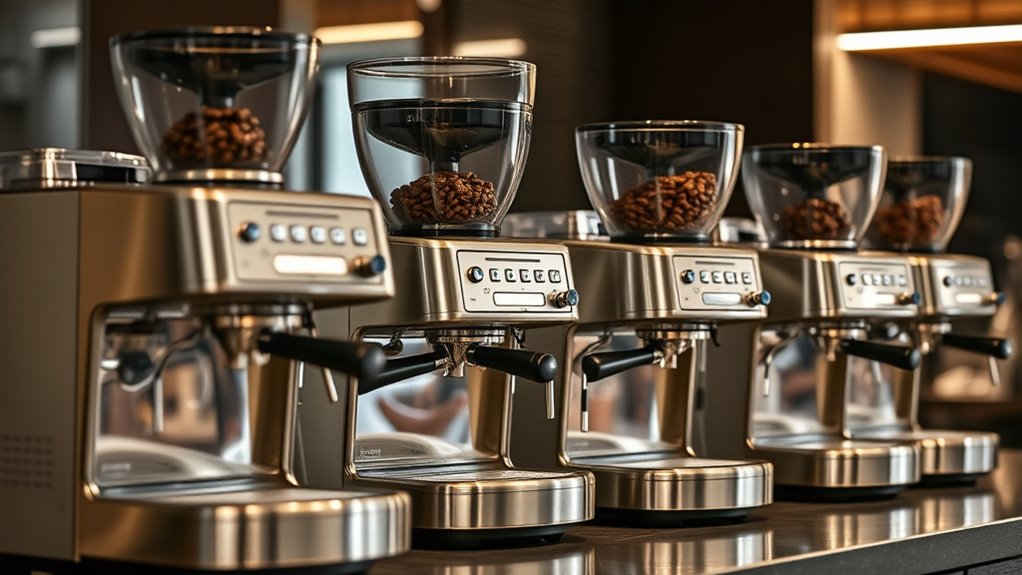
If you want café-quality coffee at home without cluttering your counter with a separate grinder, high-end coffee makers with grinder units combine both steps into one machine — and the differences between them are bigger than most buyers expect. My top pick is the Breville Barista Pro, which hits the sweet spot of fast heat-up, precise grind control, and genuine espresso quality at a fair price for this tier. The Jura E6 stands out if you want true one-touch automation with almost no learning curve, while the De’Longhi La Specialista Opera rewards buyers who want hands-on barista control. The main tradeoff in this category is convenience versus control: fully automatic machines like Jura and Philips brew consistently with zero effort, while semi-automatic Breville and La Specialista models demand skill but give you more influence over the shot. Keep reading for the full breakdown of all 14 machines and which one fits your kitchen, budget, and morning routine.

Get business pricing on tools and workshop supplies
- Business-only prices and quantity discounts
- Tax-exempt purchasing
- Multiple users, one account, clear invoices
Complete the kit


Key Takeaways
- Burr grinder quality separated the winners from the rest more than any other feature — the Jura E6’s AromaG3 grinder and the Breville Pro/Express conical burrs produced visibly more consistent grounds than the entry-level EUHOMY and Philips 2300 setups.
- Semi-automatic Breville machines (Barista Express, Pro, Touch) deliver the best espresso per dollar if you’re willing to learn, while fully automatic machines trade a small amount of shot quality for push-button consistency.
- The Ninja Luxe Café models are the only picks that do drip coffee and cold brew alongside espresso, making them the smart choice for households split between espresso drinkers and pot-of-coffee drinkers.
- Smeg‘s grinder-and-brewer pairs win on design but cost more per unit of coffee quality — you’re paying for aesthetics, which is a legitimate reason to buy but worth naming honestly.
- Milk systems differ sharply: LatteGo and Breville‘s auto-froth suit cappuccino-by-button households, while steam wands on the La Specialista Opera and Smeg red model give better microfoam but require technique.
| Breville BES880BSS Barista Touch Espresso Machine, Brushed Stainless Steel |  | Best Touchscreen Luxury Pick | Grinder: Integrated conical burr | Heating System: ThermoJet, 3-second heat up | Display: Touchscreen with 5 presets and 8 custom slots | VIEW ON AMAZON | See Our Full Breakdown |
| Philips 2300 Series Fully Automatic Espresso Machine with LatteGo |  | Best Low-Maintenance Value | Milk System: LatteGo, dishwasher-safe, 3 parts | Pump Pressure: 15 bar | Presets: 4 (espresso, coffee, latte, hot water) | VIEW ON AMAZON | See Our Full Breakdown |
| Ninja Luxe Café Premier 3-in-1 Espresso Machine, Drip Coffee, & Cold Brew |  | Best for Beginners and Multi-Format Brewers | Brew Formats: Espresso (double/quad shot), drip, cold brew | Grinder: Conical burr, 25 settings | Frothing: Dual Froth System with 4 presets plus manual mode | VIEW ON AMAZON | See Our Full Breakdown |
| De’Longhi Magnifica Duo Automatic Espresso Machine with Milk Frother, Silver |  | Best One-Touch Drink Variety | Drink Options: 20 preset hot and iced recipes | Brewing Technologies: Espresso, drip coffee, cold brew | Milk System: LatteCrema Hot and Cool | VIEW ON AMAZON | See Our Full Breakdown |
| SMEG DCF02 Drip Coffee Maker and CGF11 Burr Coffee Grinder Set, Black |  | Best Design Pick for Drip Coffee Lovers | Coffee Maker: SMEG DCF02, 10-cup programmable | Grinder: SMEG CGF11 conical burr, adjustable settings | Brew Features: Auto-start scheduling, adjustable strength | VIEW ON AMAZON | See Our Full Breakdown |
| Smeg BCC11BLMUS Fully Automatic Espresso Machine (Matte Black) |  | Best Design-Led Pick | Color: Matte Black | Dimensions: 7″ W x 17″ D x 13.25″ H | Weight: 20 lbs | VIEW ON AMAZON | See Our Full Breakdown |
| Breville BES870BTR Barista Express Espresso Machine, Black Truffle |  | Best for Aspiring Home Baristas | Machine Type: Semi-automatic espresso machine | Grinder: Integrated conical burr with grind size dial | Bean Hopper: 1/2 lb | VIEW ON AMAZON | See Our Full Breakdown |
| EUHOMY Automatic Espresso Machine with Built-in Grinder and Milk Frother |  | Best Value Fully Automatic | Type: Fully automatic espresso machine | Pump Pressure: 20 bar | Grinder: Integrated burr grinder | VIEW ON AMAZON | See Our Full Breakdown |
| Smeg Fully Automatic Espresso Machine with Integrated Grinder and Steam Wand, Red |  | Best for Milk Drink Lovers Who Want Style | Model: BCC02RDMUS | Color: Red | Grinder: Integrated stainless steel conical burr | VIEW ON AMAZON | See Our Full Breakdown |
| Ninja Luxe Café Pro Series 4-in-1 Espresso and Coffee System, ES701 |  | Most Versatile All-in-One | Model: ES701 | Functions: Espresso, drip coffee, cold brew, hot water | Grinder: Integrated conical burr, 25 settings | VIEW ON AMAZON | See Our Full Breakdown |
| Breville BDC650BSS Grind Control Thermal Carafe, Brushed Stainless Steel |  | Best for Drip Coffee Lovers | Machine type: Grind-and-brew drip coffee maker | Carafe: 12-cup dual wall stainless steel thermal carafe | Bean hopper capacity: 1/2 lb | VIEW ON AMAZON | See Our Full Breakdown |
| Jura E6 Platinum Automatic Espresso Machine, Model 15465 |  | Best Premium One-Touch Machine | Machine type: Fully automatic espresso machine | Grinder: Professional Aroma Grinder | Brewing technology: Pulse Extraction Process with eighth-generation 3D brew unit | VIEW ON AMAZON | See Our Full Breakdown |
| De’Longhi La Specialista Opera Espresso Machine with Grinder |  | Best for Aspiring Home Baristas | Machine type: Semi-automatic espresso machine | Grinder: Built-in burr grinder with 15 settings | Pump pressure: 19 bar | VIEW ON AMAZON | See Our Full Breakdown |
| Breville BES878BSS Barista Pro Espresso Machine, Brushed Stainless Steel |  | Best Semi-Automatic Value | Machine type: Manual (semi-automatic) espresso machine | Grinder: Integrated precision conical burr grinder with dose control | Heating system: ThermoJet, extraction temperature in 3 seconds | VIEW ON AMAZON | See Our Full Breakdown |
| highend coffee makers with grinder | Grinder | Warranty |
|---|---|---|
| Breville BES880BSS Barista Tou | Integrated conical burr | 2 years limited |
| Philips 2300 Series Fully Auto | — | — |
| Ninja Luxe Café Premier 3-in-1 | Conical burr, 25 settings | — |
| De’Longhi Magnifica Duo Automa | Integrated conical burr | — |
| SMEG DCF02 Drip Coffee Maker a | SMEG CGF11 conical burr, adjustable settings | 1 year |
| Smeg BCC11BLMUS Fully Automati | Stainless steel conical burr | 1 year limited |
| Breville BES870BTR Barista Exp | Integrated conical burr with grind size dial | 1 year limited |
| EUHOMY Automatic Espresso Mach | Integrated burr grinder | — |
| Smeg Fully Automatic Espresso | Integrated stainless steel conical burr | 1 year |
| Ninja Luxe Café Pro Series 4-i | Integrated conical burr, 25 settings | — |
| Breville BDC650BSS Grind Contr | — | 1 year limited |
| Jura E6 Platinum Automatic Esp | Professional Aroma Grinder | — |
| De’Longhi La Specialista Opera | Built-in burr grinder with 15 settings | — |
| Breville BES878BSS Barista Pro | Integrated precision conical burr grinder with dose control | 2 years limited |
More Details on Our Top Picks
Breville BES880BSS Barista Touch Espresso Machine, Brushed Stainless Steel
The Barista Touch earns its place near the top of this lineup by making genuine espresso craft feel nearly effortless. Its ThermoJet heating system reaches extraction temperature in about three seconds, so there’s no waiting between an morning espresso and an afternoon latte — a real advantage over the Breville Barista Express, which takes noticeably longer to warm up. The auto steam wand is the standout differentiator: it textures milk to your programmed temperature and foam level on its own, something the semi-manual Barista Express asks you to do by hand.
The touchscreen simplifies everything into three steps and stores up to eight custom drink profiles, which suits households where two or three people want their own recipes. The tradeoff is price and counter footprint — at over 15 inches wide and 21 pounds, it demands space, and buyers who actually enjoy the hands-on ritual of steaming milk themselves will find the automation removes the craft they’re paying for.
Pros:- ThermoJet heating reaches brewing temperature in roughly 3 seconds
- Automatic microfoam milk texturing with programmable temperature and texture
- Touchscreen saves up to 8 personalized drink settings
- Precise PID temperature control and low-pressure pre-infusion for balanced shots
Cons:- Large footprint at 15.5 inches wide and nearly 22 pounds
- Premium price positions it well above manual alternatives like the Barista Express
- Automation reduces the hands-on craft some espresso enthusiasts want
Best for: Households that want café-quality milk drinks with custom saved profiles and minimal technique required
Not ideal for: Hobbyists who want manual control over every variable — the Breville Barista Pro offers more hands-on dialing-in for less
- Grinder:Integrated conical burr
- Heating System:ThermoJet, 3-second heat up
- Display:Touchscreen with 5 presets and 8 custom slots
- Milk System:Automatic steam wand, programmable temp and texture
- Water Tank:67 oz
- Bean Hopper:0.5 lb
- Power:1680 watts
- Warranty:2 years limited
Our verdict“This is the pick for buyers who want full café capability with the least friction, provided the counter space and budget match its ambition.”
Philips 2300 Series Fully Automatic Espresso Machine with LatteGo
Where the Breville Barista Touch leans into customization, the Philips 2300 bets everything on simplicity and cleanliness. Its LatteGo milk system has no internal tubes — it’s just three parts that rinse clean or go in the dishwasher — which directly solves the milk-residue problem that makes many people abandon their espresso machines. Compared with the De’Longhi Magnifica Duo, the Philips gives up drink variety but wins on day-to-day upkeep.
The AquaClean filter pushes descaling out as far as 5,000 cups when used consistently, and SilentBrew technology cuts grinder and pump noise dramatically — a meaningful difference for early-morning brewing in quiet households. The compromises are real, though: only four drink presets means no flat whites or customized recipes, and you’re effectively locked into proprietary AquaClean filters to keep that descaling interval honest. This is a machine built to be used, not tinkered with.
Pros:- LatteGo milk system has no tubes and cleans in seconds
- AquaClean filter extends descaling intervals up to 5,000 cups
- SilentBrew technology cuts operating noise substantially
- Fully automatic grinding, dosing, and brewing with removable brew group
Cons:- Only four preset drinks with no recipe expansion
- Requires proprietary AquaClean filters to maintain the descaling interval
Best for: Busy coffee drinkers who want push-button espresso and lattes with near-zero cleaning effort
Not ideal for: Drink experimenters and recipe tinkerers — the four presets and limited customization will feel restrictive next to a Breville or Ninja
- Milk System:LatteGo, dishwasher-safe, 3 parts
- Pump Pressure:15 bar
- Presets:4 (espresso, coffee, latte, hot water)
- Filter:AquaClean, up to 5,000 cups between descaling
- Noise:40% quieter than previous models
- Connectivity:HomeID app
- Brew Group:Removable
Our verdict“For buyers who value a machine they never have to fuss with over one they can endlessly customize, this is the low-friction choice.”
Ninja Luxe Café Premier 3-in-1 Espresso Machine, Drip Coffee, & Cold Brew
The Ninja Luxe Café Premier is the most versatile machine in this batch, covering espresso, drip coffee, and cold brew in one unit — something no other pick here attempts. What makes it the beginner’s choice is Barista Assist Technology: weight-based dosing, an assisted tamper, and real-time temperature and pressure adjustments walk new users through shots that would otherwise take months of practice. Compared with the Philips 2300, it demands slightly more participation but rewards you with far more drink variety, including quad-shot espresso and 18 oz drip sizes.
The hands-free Dual Froth System handles milk on its own, so latte quality doesn’t depend on steaming skill. The tradeoff is that its 25-setting burr grinder and assisted workflow serve as training wheels — experienced baristas who already know their dial-in routine may find the guidance unnecessary, and the do-everything design means no single brew method is quite as refined as a dedicated machine like the Breville Barista Pro.
Pros:- Three brewing formats: espresso, drip coffee, and rapid cold brew
- Barista Assist handles grinding, dosing, tamping, and live adjustments automatically
- Hands-free dual froth system produces microfoam without skill
- 25-setting conical burr grinder with weight-based dosing
Cons:- Jack-of-all-trades design means no single method matches a dedicated machine’s refinement
- More moving parts and accessories than simple one-touch machines like the Philips 2300
Best for: Beginner espresso drinkers and households that want espresso, drip, and cold brew without buying three appliances
Not ideal for: Experienced home baristas who want unassisted manual control — the guidance layers add steps they don’t need
- Brew Formats:Espresso (double/quad shot), drip, cold brew
- Grinder:Conical burr, 25 settings
- Frothing:Dual Froth System with 4 presets plus manual mode
- Drip Sizes:6–18 oz
- Water Reservoir:70 oz removable
- Power:1650 watts
Our verdict“If you’re new to espresso or refuse to give up drip and cold brew, this machine covers every format while teaching you along the way.”
De’Longhi Magnifica Duo Automatic Espresso Machine with Milk Frother, Silver
The Magnifica Duo sits in a sweet spot between the simplicity of the Philips 2300 and the guided-hands-on approach of the Ninja Luxe Café Premier. It offers 20 preset hot and iced recipes — five times the Philips’ menu — including espresso, drip coffee, and cold brew ready in under three minutes. Where the Ninja asks you to participate in the process, the De’Longhi delivers each drink at a single button press.
Its LatteCrema Hot and Cool systems are the key differentiator: they texture both dairy and plant-based milks, hot or cold, without user technique — a genuine advantage for oat and almond milk drinkers, whom many frothers shortchange. Removable, dishwasher-safe components keep maintenance reasonable, though this bean-to-cup design still demands more periodic care than the Philips’ tubeless LatteGo setup. Buyers should also accept that 20 presets means less recipe-level customization than a touchscreen Breville; the convenience here comes from fixed, well-tuned drinks rather than open-ended tweaking.
Pros:- 20 preset hot and iced drink recipes at the touch of a button
- Cold brew ready in under 3 minutes
- LatteCrema Hot and Cool handles dairy and plant-based milks well
- Removable, dishwasher-safe parts simplify cleaning
Cons:- Preset-driven design limits custom recipe creation compared to Breville models
- Bean-to-cup internals require more maintenance than the Philips tubeless milk system
Best for: Households that want maximum drink variety — hot, iced, and cold brew — with one-button operation and plant-milk support
Not ideal for: Tinkerers who want to build and save custom recipes — the preset-driven menu leaves little room for personal dial-in
- Drink Options:20 preset hot and iced recipes
- Brewing Technologies:Espresso, drip coffee, cold brew
- Milk System:LatteCrema Hot and Cool
- Grinder:Integrated conical burr
- Cold Brew Time:Under 3 minutes
- Maintenance:Removable, dishwasher-safe components
Our verdict“This model makes the most sense for buyers who want a wide, fixed menu of café drinks delivered with zero technique and no fussing.”
SMEG DCF02 Drip Coffee Maker and CGF11 Burr Coffee Grinder Set, Black
The SMEG DCF02 and CGF11 set takes a fundamentally different position from everything else here: it’s not an espresso machine at all. For buyers whose daily ritual is a great pot of drip coffee, this pairing delivers a programmable 10-cup brewer and a dedicated conical burr grinder — a quality of grind consistency that built-in combination machines like the Breville Grind Control can struggle to match, since the standalone grinder has one job only.
The retro-modern SMEG aesthetic is the other half of the appeal; nothing else in this roundup looks like it, and for design-forward kitchens that matters. The tradeoffs are structural. You’re dedicating countertop space to two separate appliances, there’s no espresso, latte, or milk capability whatsoever, and the warranty runs just one year — shorter than Breville’s two-year coverage. Compared with an all-in-one like the Ninja Luxe Café Premier, you give up enormous drink versatility in exchange for superior drip quality and looks.
Pros:- Dedicated conical burr grinder delivers more consistent grinds than built-in combo units
- Programmable 10-cup brewer with auto-start and adjustable strength
- Distinctive retro-modern design that stands out on any counter
- Separate appliances mean each component can be upgraded or replaced independently
Cons:- Consumes countertop space for two separate appliances
- No espresso or milk-drink capability at all
- One-year warranty is shorter than competitors’ coverage
Best for: Drip coffee drinkers in design-conscious kitchens who value grind quality and scheduled brewing over espresso drinks
Not ideal for: Anyone who wants espresso, lattes, or cappuccinos — this set has no pressure brewing or milk capability at all
- Coffee Maker:SMEG DCF02, 10-cup programmable
- Grinder:SMEG CGF11 conical burr, adjustable settings
- Brew Features:Auto-start scheduling, adjustable strength
- Display:Digital LED
- Finish:Black with brushed stainless steel accents
- Warranty:1 year
Our verdict“Buy this set only if drip is your true daily drink and style matters as much as the coffee — everyone else should look at the espresso machines above.”
Smeg BCC11BLMUS Fully Automatic Espresso Machine (Matte Black)
This model stands out for one thing almost no competitor can match: Smeg’s retro aesthetic in a matte black finish that looks intentional on any counter. Compared with the Philips 2300 Series, the Smeg trades app connectivity and granular settings for a simpler preset-driven experience — ristretto, espresso, coffee, and Americano at the touch of a button. The thermoblock heating system means no waiting between powering on and pulling a shot, a real convenience for rushed mornings. Unlike the manual-leaning Breville Barista Express, everything here is automated, from grinding to brewing. The tradeoff is control: only three main preset buttons limit customization, and a 1-year limited warranty is thin for a machine at this tier.
Pros:- Iconic retro styling with premium brushed aluminum and matte black finish
- Thermoblock heater brews within seconds of startup
- Compact 7-inch footprint fits tight counters
- Removable brewing unit and easy-access tank simplify cleaning
Cons:- Only three main preset buttons despite multiple drink options
- Just a 1-year limited warranty at a premium price point
Best for: Design-conscious buyers who want push-button espresso from a machine that doubles as kitchen decor
Not ideal for: Tinkerers who want to dial in grind size, dose, and temperature — this machine deliberately keeps things simple
- Color:Matte Black
- Dimensions:7″ W x 17″ D x 13.25″ H
- Weight:20 lbs
- Water Tank:47 oz
- Pump Pressure:19 bar
- Grinder:Stainless steel conical burr
- Heating System:Thermoblock
- Wattage:1350 W
- Warranty:1 year limited
Our verdict“This pick makes the most sense for buyers who value effortless, stylish bean-to-cup brewing over hands-on control.”
Breville BES870BTR Barista Express Espresso Machine, Black Truffle
The Barista Express occupies a distinct niche in this lineup: it’s the machine that teaches you the craft. Where fully automatic options like the De’Longhi Magnifica Duo do everything for you, this semi-automatic puts a grind size dial, adjustable dose, and a manual steam wand in your hands — the difference between drinking espresso and learning to make it. The PID temperature control and low-pressure pre-infusion translate to balanced, repeatable shots once you’ve dialed in, and grinding directly into the 54mm portafilter keeps the workflow fast (beans to espresso in under a minute). The catch is a real learning curve: the first week will include some sour and bitter shots, and it demands more daily effort than one-touch machines.
Pros:- Integrated conical burr grinder with intuitive grind size dial and dose control
- PID digital temperature regulation for precise, repeatable extraction
- Powerful steam wand produces hand-textured microfoam for latte art
- Excellent accessory bundle including portafilter, milk jug, tamper, and trimming tool
Cons:- Steeper learning curve than one-touch automatic machines
- Requires manual effort for every drink, including tamping and milk texturing
- Single boiler means a wait between pulling shots and steaming milk
Best for: Hands-on coffee enthusiasts who want to develop barista skills and eventually pour latte art
Not ideal for: Buyers who want zero-effort morning coffee — the manual grinding, tamping, and frothing routine takes several minutes per drink
- Machine Type:Semi-automatic espresso machine
- Grinder:Integrated conical burr with grind size dial
- Bean Hopper:1/2 lb
- Water Tank:67 oz
- Portafilter:54mm stainless steel
- Wattage:1600 W
- Voltage:120 V
- Warranty:1 year limited
Our verdict“This model is better suited to buyers who see the brewing process as part of the pleasure, not a chore.”
EUHOMY Automatic Espresso Machine with Built-in Grinder and Milk Frother
This option stands out as the most affordable path to full automation in this roundup. Unlike the Breville Barista Express, which requires manual work for every cup, the EUHOMY handles grinding, brewing, and milk frothing through a touchscreen with one-touch drink presets. The 15-level adjustable burr grinder gives far more customization than the Smeg BCC11’s fixed presets, letting you tune body and strength to your beans. Compared with the Jura E6, you give up refined brew electronics and brand prestige, but the practical workflow — bean to milk drink in one touch — is remarkably similar. Real tradeoffs exist: the 1.5L tank and 200g hopper need frequent refilling, and the frothing system won’t match a dedicated steam wand for latte-art-quality microfoam.
Pros:- One-touch touchscreen operation for multiple coffee drinks
- 15 adjustable grind levels offer real customization for a value machine
- Built-in milk frothing system handles lattes and cappuccinos automatically
- Automatic self-cleaning program and one-touch bean purge simplify upkeep
Cons:- Small 1.5L water tank and 200g bean hopper require frequent refills
- Integrated frother can’t match manual steam wands for microfoam quality
Best for: Budget-minded buyers who want one-touch bean-to-latte convenience without the premium-brand price
Not ideal for: Milk-drink perfectionists — the integrated frother produces acceptable foam for cappuccinos but not the silky microfoam a manual steam wand delivers
- Type:Fully automatic espresso machine
- Pump Pressure:20 bar
- Grinder:Integrated burr grinder
- Grind Settings:15 adjustable levels
- Water Tank:1.5L
- Bean Hopper:200g
- Controls:Touchscreen
- Features:Built-in milk frother, self-cleaning, adjustable spout height
Our verdict“This pick makes the most sense for buyers prioritizing automated convenience and grind flexibility at the lowest possible investment.”
Smeg Fully Automatic Espresso Machine with Integrated Grinder and Steam Wand, Red
Think of this as the more capable sibling of the Smeg BCC11: same 19-bar system, same conical burr grinder, same head-turning design — but with a manual steam wand that changes what you can make. Where the BCC11 caps out at black coffee presets, this model lets you texture milk properly for cappuccinos and lattes, closing the gap with semi-automatic machines like the Breville Barista Pro while keeping one-touch convenience for the espresso itself. The adjustable coffee outlet handles everything from espresso cups to tall mugs, and the removable brewing unit plus self-cleaning cycle keeps maintenance reasonable. Note the 220V voltage rating, which matters for outlet compatibility in some regions, and like its sibling it carries only a 1-year warranty.
Pros:- Manual steam wand enables real milk-based drinks, unlike preset-only rivals
- Integrated stainless steel conical burr grinder for fresh beans every cup
- Adjustable coffee outlet fits espresso cups through tall mugs
- Removable brewing unit and automatic self-cleaning simplify maintenance
Cons:- 220V voltage rating may not suit all household wiring
- 1-year warranty is short for a premium fully automatic machine
Best for: Latte and cappuccino drinkers who want automated espresso with genuine steam-wand milk texturing in a statement-making red finish
Not ideal for: Buyers with standard 120V-only kitchens — the 220V rating requires checking your electrical setup before purchase
- Model:BCC02RDMUS
- Color:Red
- Grinder:Integrated stainless steel conical burr
- Pump Pressure:19 bar
- Water Tank:47 oz
- Voltage:220 V
- Dimensions:17 x 7 x 14 in (D x W x H)
- Weight:8.4 kg
- Warranty:1 year
Our verdict“This model is better suited to milk-coffee drinkers than the preset-only Smeg BCC11, thanks to its genuine steam wand and retro charm.”
Ninja Luxe Café Pro Series 4-in-1 Espresso and Coffee System, ES701
No other machine in this lineup tries to be as many things at once. The Ninja Luxe Pro covers espresso, drip coffee, cold brew, and hot water — meaning it can replace both a Breville Barista Express and a separate drip machine like the Breville Grind Control. Its Barista Assist Technology actively recommends grind sizes, and the weight-based dosing with a built-in scale removes the guesswork that trips up beginners on manual machines. The hands-free frother with five texture presets (including cold foam) out-conveniences the Smeg’s steam wand for anyone who doesn’t want to learn milk technique. The tradeoff: it’s a jack-of-all-trades, not a dedicated espresso specialist, and ignoring its grind recommendations — as the manufacturer itself warns — produces sour or bitter results.
Pros:- Four functions — espresso, drip, cold brew, and hot water — replace multiple appliances
- Weight-based dosing with built-in scale eliminates measuring guesswork
- 25-setting conical burr grinder with grind recommendations guides beginners
- Hands-free frother offers five presets, including cold foam, and froths for two drinks
Cons:- Espresso quality falls short of dedicated single-purpose machines
- Results depend on following grind recommendations — deviating causes sour or bitter brews
Best for: Households split between espresso drinkers and drip-coffee loyalists who want one machine to serve everyone
Not ideal for: Espresso purists chasing café-grade shot quality — a dedicated espresso machine will outperform a 4-in-1 compromise
- Model:ES701
- Functions:Espresso, drip coffee, cold brew, hot water
- Grinder:Integrated conical burr, 25 settings
- Dosing:Weight-based with built-in scale
- Espresso Styles:Single, double, quad, ristretto, lungo
- Drip/Cold Brew Sizes:6–18 oz
- Froth Presets:Steamed milk, thin, thick, extra-thick froth, cold foam
Our verdict“This pick makes the most sense for multi-drinker households that value variety and guided convenience over single-drink perfection.”
Breville BDC650BSS Grind Control Thermal Carafe, Brushed Stainless Steel
Among all the espresso-heavy machines in this lineup, the Breville Grind Control is the only one built for full-carafe drip brewing, and that alone earns it a spot. Its adjustable burr grinder with eight strength settings means a household can dial in a half-pound of beans and brew directly into a carafe, tall cup, or travel mug using Steep and Release technology. Compared with the SMEG DCF02 drip set, which splits grinding and brewing into two separate appliances, this model consolidates everything into one footprint — though that integration costs you grind flexibility, since drip-only grind range is narrower than a standalone burr grinder’s. The dual-wall stainless thermal carafe keeps coffee hot without a warming plate, preserving flavor rather than cooking it.
Pros:- Grinds and brews in one machine with eight adjustable strength settings
- Thermal carafe keeps coffee hot without a scorching warming plate
- Brews into a carafe, tall cup, or travel mug for flexibility
- Pre-ground bypass option when you don’t want to grind
Cons:- Drip-only design — no espresso, cappuccino, or milk drinks
- Integrated grinder is less consistent than dedicated standalone burr grinders
Best for: Households that drink multiple cups of drip coffee daily and want fresh-ground flavor with push-button simplicity
Not ideal for: Espresso and milk-drink fans — this machine cannot pull a shot or froth milk, unlike the Jura E6 or Barista Pro
- Machine type:Grind-and-brew drip coffee maker
- Carafe:12-cup dual wall stainless steel thermal carafe
- Bean hopper capacity:1/2 lb
- Water tank capacity:60 oz
- Strength settings:8, plus pre-ground option
- Brewing technology:Steep and Release
- Power:1100 watts, 110–120 volts
- Included accessories:Gold Tone filter, cleaning brush
- Warranty:1 year limited
Our verdict“This pick makes the most sense for drip-first households who want bean-to-carafe convenience without touching an espresso machine.”
Jura E6 Platinum Automatic Espresso Machine, Model 15465
The Jura E6 Platinum is the closest thing in this roundup to a café robot: it grinds, tamps, brews, froths milk, and self-cleans in under a minute with almost no user skill required. That puts it in direct contrast with the Breville Barista Pro, which rewards hands-on technique with manual microfoam and dose control — the E6 instead automates everything through its color display and programmable drink settings. The Professional Aroma Grinder and Pulse Extraction Process with 3D brewing technology deliver a balanced shot from whole beans at the touch of a button. The tradeoff beyond its elevated price tier is physical: at 17.6 inches deep and 22 pounds, it demands serious counter space, more than the slimmer Philips 2300 Series.
Pros:- Fully automatic grinding, brewing, milk frothing, and self-cleaning
- Programmable strength, volume, temperature, and milk foam settings
- Professional Aroma Grinder with Pulse Extraction for balanced shots
- Optional pre-ground chute for decaf or flavored beans
Cons:- Large and heavy — one of the biggest countertop footprints in this lineup
- Little room for hands-on technique or latte-art-level milk control
Best for: Buyers who want genuine one-touch espresso drinks with zero barista skill and a premium automated experience
Not ideal for: Hobbyists who enjoy the ritual of tamping and hand-texturing milk — and small kitchens, given its deep footprint
- Machine type:Fully automatic espresso machine
- Grinder:Professional Aroma Grinder
- Brewing technology:Pulse Extraction Process with eighth-generation 3D brew unit
- Programmable settings:Strength, volume, temperature, milk foam, hot water
- Water tank capacity:1.9 liters
- Power:1450 watts, 120 volts
- Dimensions:11 × 17.6 × 13.8 inches, 22 lbs
- Material:Stainless steel
Our verdict“The E6 Platinum suits buyers who want café drinks at a button press and are willing to pay in both dollars and counter space.”
De’Longhi La Specialista Opera Espresso Machine with Grinder
The La Specialista Opera sits in a sweet spot the fully automatic machines in this guide — like the Jura E6 — deliberately skip: it keeps you in the workflow. Its built-in burr grinder with 15 settings plus Smart Tamping technology removes the messiest, least forgiving step (leveling and compressing the puck) while still letting you develop real technique on the commercial-style steam wand. Unlike the Barista Express line, it adds genuine differentiation with cold extraction, producing cold brew and espresso cool drinks in under five minutes — a capability only the Ninja Luxe Café matches here. With 19-bar pressure and three infusion temperatures, this model rewards experimentation. The cost is learning curve and effort: this is a semi-manual machine, not a one-touch solution.
Pros:- 15-setting burr grinder with Smart Tamping for consistent, mess-free puck prep
- Cold brew and espresso cool recipes in under 5 minutes
- Commercial-style steam wand capable of latte-art microfoam
- Three adjustable infusion temperatures for dialing in different roasts
Cons:- Steeper learning curve than automatic machines like the Philips 2300
- Requires hands-on work for every drink, including manual milk frothing
Best for: Coffee enthusiasts who want to build barista skills but appreciate guided tamping and grind control
Not ideal for: Anyone wanting push-button convenience — every drink requires hands-on work and cleanup
- Machine type:Semi-automatic espresso machine
- Grinder:Built-in burr grinder with 15 settings
- Pump pressure:19 bar
- Infusion temperatures:3 settings
- Beverage presets:Espresso, americano, cold brew, espresso cool, hot water
- Cold extraction:Cold drinks in under 5 minutes
- Tamping:Smart Tamping technology
- Steam wand:Commercial-style
Our verdict“The Opera is the pick for buyers who want to learn real espresso craft with guardrails — not outsource it to automation.”
Breville BES878BSS Barista Pro Espresso Machine, Brushed Stainless Steel
The Barista Pro is the machine I’d point most beginners-with-ambition toward, because it teaches while it works. Its ThermoJet heater reaches extraction temperature in 3 seconds — a meaningful daily-life advantage over the standard Barista Express, which takes noticeably longer to warm up and switch between brewing and steaming. The integrated conical burr grinder with dose control delivers the exact amount of coffee per shot, and the LCD interface with grinding and extraction animations gives newcomers real-time feedback. Compared with the De’Longhi La Specialista Opera, you give up cold brew capability, but gain PID temperature regulation within 2°C and a faster path from beans to cup in under a minute. The manual steam wand produces genuine microfoam, though mastering it takes practice.
Pros:- 3-second ThermoJet heat-up with instant switchover to steam
- PID temperature control within 2°C for repeatable extraction
- Dose-controlled conical burr grinder delivers exact coffee per shot
- Guided LCD display helps beginners learn grinding and extraction
Cons:- Manual milk texturing has a real learning curve
- No cold brew or iced drink presets unlike the La Specialista Opera or Ninja Luxe
Best for: Beginners who want café-quality espresso at home and are willing to practice milk texturing
Not ideal for: Hands-off drinkers — unlike the Jura E6 or Philips 2300, every drink requires grinding, dosing, and manual frothing
- Machine type:Manual (semi-automatic) espresso machine
- Grinder:Integrated precision conical burr grinder with dose control
- Heating system:ThermoJet, extraction temperature in 3 seconds
- Temperature control:PID digital regulation, +/- 2°C
- Bean hopper capacity:1/2 lb
- Water tank capacity:67 oz
- Power:1680 watts, 120 volts
- Dimensions:13″D × 14″W × 16″H, 19.5 lbs
- Warranty:2 years limited
Our verdict“The Barista Pro is the smartest buy for someone stepping into hands-on espresso who wants fast heat-up and guided control without a fully manual learning cliff.”

How We Picked
I evaluated each machine on five buyer-relevant criteria. Grinder performance came first, because a built-in grinder is the entire reason this category exists — I looked at burr type, grind adjustment range, and whether the grind actually holds consistency across settings. Brew quality and temperature stability ranked second: a great grinder feeding an unstable boiler wastes its own potential, so machines with PID or thermoblock control scored higher. Ease of use and learning curve mattered third, since the right machine depends on whether you want to practice latte art or just press a button before work. Maintenance and cleaning followed — built-in grinders and milk systems are the two biggest cleaning burdens in this category, so removable brew groups and dishwasher-safe milk carrousels earned real weight.
Finally, I judged versatility versus specialization: machines that do espresso, drip, and cold brew well earned credit for multi-drinker households, while single-purpose machines had to justify their focus with superior shot quality. The ranking order reflects a simple philosophy: machines that make measurably better coffee and fit a clearly defined buyer rank above machines that merely look premium or pack in features nobody asked for.
Factors to Consider When Choosing Highend Coffee Makers With Grinder
Before spending serious money on a grinder-equipped coffee maker, it helps to understand where the real costs and tradeoffs hide. These are the factors that most often decide whether a buyer loves their machine or resells it within a year.Grinder Type Matters More Than Machine Brand
Every machine in this roundup grinds beans, but not equally. Conical burr grinders — found in the Breville lineup and the Jura E6 — produce consistent particle sizes, which translates directly into even extraction and less bitterness. Cheaper blade-style or coarse-adjustment burrs create fines and boulders that over- and under-extract in the same cup. A common mistake is buying a beautiful machine with a mediocre grinder, then wondering why the coffee never improves despite fresh beans. If espresso is your priority, grind adjustment range is the single most honest indicator of quality: you want at least 15 to 30 discrete settings so you can actually dial in a shot. Remember that grinder upgrades are impossible after purchase — the grinder you buy is the grinder you live with.
Semi-Automatic vs. Fully Automatic: The Core Decision
This is the fork in the road for the entire category, and buyers who skip this question often choose wrong. Semi-automatic machines like the Barista Express and La Specialista Opera put you in control of grinding, dosing, tamping, and extraction — better coffee is possible, but only after practice. Fully automatic machines like the Jura E6, Philips 2300, and Magnifica Duo handle everything at the press of a button, with consistency that outperforms a beginner’s manual technique. The honest tradeoff: a skilled home barista on a semi-automatic will beat a super-automatic every time, but most people never reach that skill level. If your morning has no room for a two-minute ritual, automation is not laziness — it’s the correct choice. Also note that super-automatics typically have non-removable brew groups, which affects long-term cleaning.
Milk Systems: Convenience Now, Cleaning Later
Milk frothing is where manufacturers differ the most and where buyers underestimate maintenance. Automatic milk carrousels like Philips’ Latego attach, froth, and detach for fridge storage or dishwasher cleaning — superb for daily cappuccinos. Manual steam wands on the Smeg red model and La Specialista Opera produce silkier microfoam for latte art, but every wand must be purged and wiped immediately or milk residue bakes on. Integrated auto-frothers like Breville’s Touch system sit in between: convenient, but with tubes that need regular flushing. My advice is to match the milk system to your actual habits, not your aspirations. If you drink two milk drinks a day, cleaning burden compounds fast, and the easiest-to-clean system wins regardless of foam quality claims.
Espresso-Only Versus Multi-Function Machines
A growing segment of this category — led by the Ninja Luxe Café line and Breville’s Grind Control — handles drip coffee and even cold brew alongside espresso. This matters most for mixed households where one person wants a double shot and another wants a full carafe. The tradeoff is real: multi-function machines make acceptable espresso but rarely match dedicated espresso machines at the same price, because engineering budget gets spread across brew methods. Conversely, espresso-only machines like the Jura E6 make terrible options for someone who genuinely prefers a 12-ounce mug of drip. Be honest about what your household actually drinks in a week, not what you drink on a Saturday. Buying the wrong format is the most expensive mistake in this category because it can’t be fixed with accessories.
Countertop Footprint and Water Tank Capacity
High-end machines are physically large, and specification sheets understate how much counter space they command once you account for bean hopper clearance and the cup you slide under the spout. Measure your counter height before buying any machine with a top-loading hopper — under-counter cabinets block the lid on several taller models. Water tank capacity follows the same logic: a 60-ounce tank means fewer refills for a family but adds width to machines like the Jura E6. Compact fully automatics such as the Smeg BCC11 sacrifice tank and hopper size to fit tight spaces, which is a fair trade only if you brew one or two cups daily. Also check whether the tank is rear-loading — that determines whether the machine needs pull-out clearance from the wall, which effectively doubles its footprint.
Long-Term Maintenance and Parts Availability
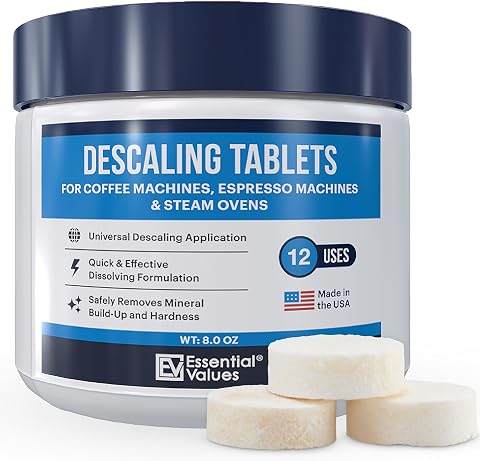
Grinder-equipped machines have more failure points than plain brewers, and brand support differs sharply. De’Longhi machines with removable brew groups can be rinsed under the tap weekly, extending lifespan considerably; Jura machines require cleaning tablets on a schedule but back their products with strong service networks. Descaling requirements vary too — thermoblock machines like the Breville Pro need it less often than single-boiler designs. Before buying, check whether replacement parts like gaskets, hoppers, and water filters are readily available, because a five-year-old machine with no parts pipeline becomes furniture. Budget-conscious buyers should also factor consumables: water filters and cleaning tablets add a quiet ongoing cost that the purchase price hides. A cheaper machine with cheap consumables can cost more over five years than a premium machine with affordable maintenance.
Frequently Asked Questions
Is a built-in grinder really as good as a separate standalone burr grinder?
For most home brewers, the gap is smaller than espresso forums suggest, but it exists. Built-in conical burr grinders like those in the Breville lineup and the Jura E6 come close to entry-level standalone grinders in particle consistency, which is enough for genuinely excellent shots. Standalone grinders win on adjustment precision, retention control, and single-dosing workflow, all of which matter mainly to enthusiasts who weigh their doses. The practical answer is that a built-in grinder beats a cheap blade grinder by an enormous margin, and beating it requires spending several hundred dollars on a standalone burr grinder plus accepting a two-appliance workflow. If counter space and morning speed matter to you, the built-in route is the smarter purchase.
Should I choose a semi-automatic Breville or a fully automatic Jura or Philips?
Match the machine to your personality, not your ambitions. Semi-automatics like the Barista Express and Barista Pro reward attention: you adjust grind, dose, and extraction, and coffee improves as you learn — but the first month involves some genuinely bad shots. Fully automatics like the Jura E6 and Philips 2300 deliver the same drink every single time with one button, which beats most beginners’ manual results from day one. Households with multiple users of varying skill levels almost always prefer fully automatic, since nobody has to become the designated barista. If you enjoy the process itself — the ritual, the tweaking, the latte art — a semi-automatic will keep you happier for years. If you enjoy the coffee but not the work, pay for automation.
Are combo machines that also make drip coffee and cold brew worth it?
They are worth it for one specific buyer: the household where espresso drinkers and drip drinkers coexist. The Ninja Luxe Café models and the Breville Grind Control exist precisely for that situation, and buying one versatile machine beats owning two appliances. The tradeoff is that combo machines make compromise espresso — genuinely good, but not at the level of a dedicated La Specialista Opera at similar cost. They also have more components, which means more cleaning surfaces and more potential failure points. If everyone in your home drinks espresso-based drinks, skip the combo and buy the best dedicated machine your budget allows. If your kitchen hosts both camps, a combo is arguably the most rational purchase in this entire roundup.
How much should I expect to spend for genuinely high-end quality in this category?
The meaningful quality jumps in this category happen at predictable price bands, and knowing where they are prevents overspending. Entry-level grinder machines make drinkable coffee but cut corners on grinder adjustment and temperature stability. The mid-band — where the Breville Barista Express and Philips 2300 sit — is where most buyers get everything they actually need. The premium band, home of the Jura E6 and La Specialista Opera, buys faster heat-up, better grinders, superior milk systems, and stronger build quality, but the coffee improvement per dollar is smaller than the jump from entry to mid. My honest guidance: buy at the mid-band unless a specific premium feature — one-touch milk drinks, faster heat-up, removable brew group — solves a real daily frustration for you. Paying for capability you will not use is the most common waste in this category.
Do grinder-equipped machines require more maintenance than regular coffee makers?
Yes, and this surprises first-time buyers more than any other aspect of ownership. The grinder itself needs occasional cleaning because coffee oils coat the burrs and turn rancid, affecting flavor weeks before anything visibly breaks. Milk systems add a second cleaning burden: automatic carrousels need rinsing after each use and deeper cleaning weekly, while steam wands need immediate wiping to prevent baked-on residue. Fully automatic machines add descaling cycles and, on models like the Jura, cleaning tablet routines that the machine schedules itself. Plan on ten to fifteen minutes of maintenance per week as a realistic baseline for any machine in this roundup. Buyers who accept this rhythm get years of great coffee; buyers who ignore it typically face clogged grinders and off-flavored shots within the first year.
Conclusion
After comparing all 14 machines, the right pick depends less on specs and more on who is standing at the counter each morning. Best overall goes to the Breville Barista Pro — it balances fast heat-up, a capable conical burr grinder, and espresso quality that competes with machines costing far more. Best premium is the Jura E6 Platinum, which offers the most refined one-touch experience in this lineup for buyers who want zero-fuss excellence. Best value belongs to the Philips 2300 with LatteGo, delivering fully automatic brewing and the easiest milk-cleaning system at the most accessible position in this tier. Best for beginners is the Breville Barista Express, because its guided workflow teaches espresso fundamentals while still producing great shots. For hands-on enthusiasts, the De’Longhi La Specialista Opera offers the most control and the best steam wand here. Multi-drinker households should choose the Ninja Luxe Café Pro Series for espresso, drip, and cold brew in one footprint, while design-first buyers will find the Smeg red fully automatic worth its premium. Whatever you choose, buy for your real routine, not your imagined one — that single habit separates satisfied owners from regretful ones.