For most home practice and small-group instruction, I’d start with the Philips HeartStart AED Trainer M5085A, which pairs a recognizable trainer format with a zippered case. The American Red Cross AED Trainer is a strong alternative for buyers who want adult and child training pads, while the MCR Medical CPR Manikin/AED Training Kit makes more sense when manikin practice is part of the plan. The main choice is between a standalone trainer, a multi-unit pack for group practice, and a kit that adds CPR equipment. Included pads, scenario controls, and compatibility with your intended training setup matter more than choosing the most elaborate-looking package. Read on for how all 14 options differ and which buyer each one suits.

Get business pricing on tools and workshop supplies
- Business-only prices and quantity discounts
- Tax-exempt purchasing
- Multiple users, one account, clear invoices
Complete the kit


Key Takeaways
- Standalone trainers suit individual practice: The Philips HeartStart M5085A, XFT-120N, and single-unit PRESTAN AED UltraTrainer avoid paying for several devices when one learner will practice at a time.
- Four-packs are built around shared instruction: WNL’s Practi-Trainer and WL120ES10 four-packs, along with the PRESTAN four-pack, are more appropriate for instructors or households planning repeated group sessions.
- Manikin kits broaden practice beyond AED prompts: The MCR adult-and-infant kit and adult-only kit add CPR practice equipment, but they take more room and are less focused than a trainer-only purchase.
- Pad configuration changes the training use: The American Red Cross model includes adult and child training pads, giving it a clearer fit for practice that covers more than adult placement.
- Scenario depth and simplicity pull in different directions: The portable trainer advertises four training scenarios, while compact Practi-Trainer Mini models place more emphasis on a straightforward, space-conscious setup.
| WNL Products Practi-Trainer Mini AED Trainer, 4-Pack |  | Best Compact Multi-Unit Pick | Pack size: 4 trainers | Dimensions per trainer: 3 × 0.5 × 3.75 inches | Languages: English and Spanish | VIEW ON AMAZON | See Our Full Breakdown |
| MCR Medical CPR Manikin/AED Training Kit, 1 Adult/1 Infant, Dark Tone | 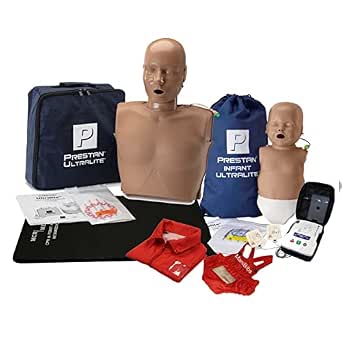 | Best Complete Adult-and-Infant Kit | Manufacturer: MCR Medical | Included manikins: 1 adult Prestan manikin and 1 infant Prestan manikin | AED trainer: AED Ultra-Trainer | VIEW ON AMAZON | See Our Full Breakdown |
| XFT-120NB AED Trainer for First Aid Classes |  | Best for Adjustable Practice | Model: XFT-120NB | Training modes: 5 | Simulated scenarios: 5 | VIEW ON AMAZON | See Our Full Breakdown |
| Philips HeartStart AED Trainer with Zippered Case (Training Only), M5085A |  | Best for HeartStart Familiarity | Model: M5085A | Training scenarios: 8 | Compatibility: Simulates Philips HeartStart Home and OnSite defibrillators | VIEW ON AMAZON | See Our Full Breakdown |
| American Red Cross AED Trainer with Adult and Child Gel Adhesive Pads and Carry Case |  | Best for Two-Mode Household Practice | Language settings: English and Spanish | Training scenarios: 5 | Operating modes: Automatic and semi-automatic | VIEW ON AMAZON | See Our Full Breakdown |
| WNL Products WL120ES10 AED Trainer Kit with Carrying Bag, 4-Pack |  | Best for Group Instruction | Brand: WNL Products | Model: WL120ES10 | Quantity: 4 AED trainers | VIEW ON AMAZON | See Our Full Breakdown |
| Portable AED Trainer with 4 Training Scenarios |  | Best for Bilingual Beginners | Training scenarios: 4 | Languages: English and Chinese | Pads: Reusable adult and child training pads | VIEW ON AMAZON | See Our Full Breakdown |
| WNL Products Practi-Trainer Mini AED Trainer, Single Pack |  | Best Compact Home Trainer | Model: WL320ES | Trainer dimensions: 3 x 0.5 x 3.75 inches | Product listing dimensions: 8.25 x 5.75 x 2 inches | VIEW ON AMAZON | See Our Full Breakdown |
| XFT-120N AED Trainer and Simulator for CPR Practice |  | Best for Scenario Variety | Model: XFT-120N | Training modes: 5 | Simulated scenarios: 5 | VIEW ON AMAZON | See Our Full Breakdown |
| WNL Products Practi-Trainer Essentials AED Trainer, Single Pack | 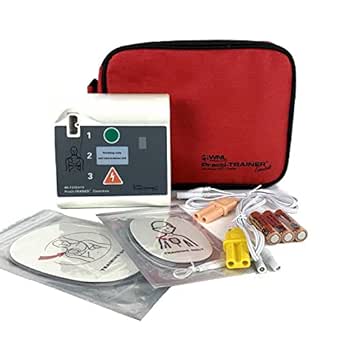 | Best for Straightforward Scenario Practice | Model: WL120ES10 | Product type: AED training simulator | Scenarios: 5 preprogrammed scenarios | VIEW ON AMAZON | See Our Full Breakdown |
| Prestan AED UltraTrainer, 4-Pack |  | Best for Bilingual Group Training | Pack size: 4 trainers | Model: PP-AEDUT-401 | Voice prompts: English and Spanish | VIEW ON AMAZON | See Our Full Breakdown |
| WNL Products Practi-Trainer Essentials AED Trainer, 4-Pack |  | Best Ready-to-Teach Group Kit | Pack size: 4 trainer units | Model: WL120ES10-4 | Training scenarios: 5 preprogrammed scenarios | VIEW ON AMAZON | See Our Full Breakdown |
| MCR Medical CPR Manikin/AED Training Kit (Adult, Medium Tone) |  | Best Complete CPR-and-AED Starter Kit | Manufacturer: MCR Medical | Model: K100M-MS-UT1 | Included training equipment: 1 adult manikin and 1 AED UltraTrainer | VIEW ON AMAZON | See Our Full Breakdown |
| PRESTAN AED UltraTrainer, Single Unit |  | Best Compact Solo Trainer | Manufacturer: Prestan | Model: 7660 | Dimensions: 9 x 6.5 x 3.5 inches | VIEW ON AMAZON | See Our Full Breakdown |
| home aed trainers and kit | Model |
|---|---|
| WNL Products Practi-Trainer Mi | — |
| MCR Medical CPR Manikin/AED Tr | — |
| XFT-120NB AED Trainer for Firs | XFT-120NB |
| Philips HeartStart AED Trainer | M5085A |
| American Red Cross AED Trainer | — |
| WNL Products WL120ES10 AED Tra | WL120ES10 |
| Portable AED Trainer with 4 Tr | — |
| WNL Products Practi-Trainer Mi | WL320ES |
| XFT-120N AED Trainer and Simul | XFT-120N |
| WNL Products Practi-Trainer Es | WL120ES10 |
| Prestan AED UltraTrainer | PP-AEDUT-401 |
| WNL Products Practi-Trainer Es | WL120ES10-4 |
| MCR Medical CPR Manikin/AED Tr | K100M-MS-UT1 |
| PRESTAN AED UltraTrainer | 7660 |
More Details on Our Top Picks
WNL Products Practi-Trainer Mini AED Trainer, 4-Pack
For instructors who need several practice stations without carrying full-size trainers, this four-pack is the most portable choice in this group. Each mini trainer measures 3 × 0.5 × 3.75 inches, and the set includes reusable adult and child pads, batteries, and a carrying case. English and Spanish voice prompts plus LED indicators provide clear cues, while compatibility with AED-training CPR manikins lets trainees rehearse pad placement. Compared with the XFT-120NB, however, the Practi-Trainer Mini offers a pre-programmed scenario rather than five selectable modes and adjustable CPR settings. That makes setup simpler, but gives instructors less control over how sessions progress. It is strictly a training device, not emergency equipment, and its compact format may be less intuitive for learners who want controls resembling a specific full-size AED.
Pros:- Four compact trainers make it easy to run simultaneous practice stations.
- English and Spanish voice prompts support bilingual instruction.
- Reusable adult and child pads are included.
- Works with CPR manikins designed for AED training.
Cons:- Uses a pre-programmed scenario, limiting instructor control over session variety.
- Training only; it cannot defibrillate a patient.
Best for: Instructors setting up multiple lightweight practice stations for English- and Spanish-speaking groups.
Not ideal for: Trainers who need varied, adjustable scenarios or a device intended for real emergency defibrillation.
- Pack size:4 trainers
- Dimensions per trainer:3 × 0.5 × 3.75 inches
- Languages:English and Spanish
- Indicators:Voice prompts and LED indicators
- Included pads:Reusable adult and child training pads
- Power:AAA batteries included
- Compatibility:CPR manikins designed for AED training
- Intended use:Training only; cannot be used for patient defibrillation
Our verdict“Choose this four-pack for portable, bilingual group practice, but pick the XFT-120NB if adjustable scenarios matter more than compact size.”
MCR Medical CPR Manikin/AED Training Kit, 1 Adult/1 Infant, Dark Tone
This kit is the broadest choice here for buyers who need CPR practice alongside AED instruction, rather than an AED trainer alone. It pairs adult and infant Prestan manikins with feedback and an AED Ultra-Trainer, then adds face shields, lung bags, a kneeling mat, and a carry bag. The adult-and-infant combination gives a household or small training group more age-specific practice than the Philips HeartStart AED Trainer M5085A, which supplies an AED trainer and adult pads but no manikins. The tradeoff is a larger, heavier kit with more components to store, and its batteries are not included. Buyers focused only on practicing AED steps may find the extra manikin equipment unnecessary. Its three-year warranty is a useful distinction, but the listing does not specify the Ultra-Trainer’s scenario count or language options.
Pros:- Includes both adult and infant manikins for age-specific CPR practice.
- Manikin feedback supports technique practice.
- AED trainer and accessories are bundled with the manikins.
- Includes a carry bag and a three-year warranty.
Cons:- Batteries are required but not included.
- At 7.88 pounds, it is less convenient to carry than trainer-only options.
- The kit takes more storage space and may be excessive for AED-only practice.
Best for: Households, community groups, or instructors who want adult and infant CPR feedback plus AED practice in one kit.
Not ideal for: Buyers seeking only a compact AED trainer, or those who want a ready-to-run kit without sourcing batteries.
- Manufacturer:MCR Medical
- Included manikins:1 adult Prestan manikin and 1 infant Prestan manikin
- AED trainer:AED Ultra-Trainer
- Additional items:Face shields, lung bags, kneeling mat, UltraVest, ManiBib, and carry bag
- Package dimensions:14.41 × 14.02 × 12.68 inches
- Item weight:7.88 pounds
- Batteries:Required, not included
- Warranty:3 years
Our verdict“Choose this kit when infant and adult CPR feedback matter as much as AED drills; choose the Philips M5085A for a simpler trainer-focused setup.”
XFT-120NB AED Trainer for First Aid Classes
The XFT-120NB is the strongest fit for instructors who want to tailor drills instead of repeating a fixed script. Its five training modes and five simulated scenarios are paired with four language options and adjustable CPR settings: three compression rates and three compression modes. The trainer can also switch between adult and pediatric practice and remember selected settings for later sessions, which reduces repeated setup. Compared with the WNL Practi-Trainer Mini 4-Pack, it offers substantially more control over a session, while the WNL set provides four compact units for simultaneous practice. That difference makes the XFT better suited to one adaptable teaching station than a multi-station class. It includes adult and child pads and a storage bag, but remains training-only and relies on compatibility with a separate CPR manikin for hands-on practice.
Pros:- Five modes and five scenarios provide more drill variation than fixed-scenario trainers.
- Offers English, French, Italian, and Spanish voice prompts.
- Adjustable compression rates and CPR modes support tailored instruction.
- Adult/pediatric switching and saved settings reduce repeated setup.
Cons:- Training only; it cannot deliver real defibrillation.
- The listing describes one trainer, making it less suited to running several stations than a multi-pack.
- Hands-on practice requires a compatible CPR manikin.
Best for: First-aid instructors who want to vary CPR pace, compression mode, language, and adult or pediatric scenarios.
Not ideal for: Buyers who need several trainers for concurrent stations or want a device for real patient defibrillation.
- Model:XFT-120NB
- Training modes:5
- Simulated scenarios:5
- Languages:English, French, Italian, and Spanish
- CPR rates:100, 110, or 120 compressions per minute
- CPR modes:30:2, 15:2, or compression only
- Adult/pediatric mode:Switchable
- Included accessories:Two pairs of adult/child electrode pads, wire connector, storage bag, and quick start guide
- Intended use:Training only; not for real patient defibrillation
Our verdict“Pick the XFT-120NB for configurable, multilingual instruction, while the WNL four-pack is a better match for multiple compact practice stations.”
Philips HeartStart AED Trainer with Zippered Case (Training Only), M5085A
For a household that owns or is learning to use a Philips HeartStart Home or OnSite AED, this trainer’s main advantage is familiarity: it simulates those models and guides practice with voice prompts and eight preconfigured scenarios. The included adult training pads, manikin adapter, and zippered case make it a focused practice set rather than a broader CPR kit. Compared with the American Red Cross AED Trainer, which offers adult and child pads and automatic and semi-automatic modes, the Philips is more directly tied to HeartStart operation but does not include pediatric pads. Those are sold separately, adding a step for families practicing child-pad placement. It is also training-only, so its resemblance to an emergency AED must not blur the distinction. Choose it for model-specific rehearsal, not for maximum adjustability or an all-ages kit out of the box.
Pros:- Simulates Philips HeartStart Home and OnSite AEDs.
- Eight preconfigured scenarios support different guided practice sessions.
- Adult training pads, manikin adapter, and zippered case are included.
- Voice prompts help learners follow the sequence of practice.
Cons:- Training-only and not suitable for real cardiac emergencies.
- Infant and child training pads are sold separately.
- Its model-specific focus is less useful for learners practicing a different AED.
Best for: HeartStart Home or OnSite owners who want practice that follows the prompts and operation of their AED model.
Not ideal for: Families who need infant or child training pads included, or instructors seeking adjustable settings and broad CPR equipment.
- Model:M5085A
- Training scenarios:8
- Compatibility:Simulates Philips HeartStart Home and OnSite defibrillators
- Included pads:Adult training pads
- Other included accessories:Zippered carrying case, external manikin adapter, instructions, and quick reference guide
- Infant/child pads:Sold separately
- Dimensions:20.8 × 15 × 10 inches
- Power:1 CR123A battery included
- Intended use:Training only; not for real cardiac emergencies
Our verdict“Choose the M5085A for HeartStart-specific rehearsal, but select the American Red Cross trainer if included child pads and multiple operating modes matter more.”
American Red Cross AED Trainer with Adult and Child Gel Adhesive Pads and Carry Case
This trainer makes a practical middle ground for households that want adult and child pad practice without buying manikins or a larger multi-component kit. It includes five scenario buttons, English and Spanish settings, and automatic and semi-automatic modes, so learners can rehearse different operating flows. The metronome and volume control add simple pacing and make prompts easier to adjust in a home setting. Compared with the Philips HeartStart M5085A, it includes child pads and offers two operating modes, while the Philips provides eight scenarios and closer familiarity with specific HeartStart models. The Red Cross trainer’s water-resistant nylon case and three C batteries are included, but the product data does not specify compatibility, dimensions, or weight. It is still a training device, not a substitute for an operational AED, and the listed two-year warranty is shorter than the MCR kit’s three-year coverage.
Pros:- Adult and child gel adhesive training pads are included.
- Five scenario buttons support varied practice.
- Automatic and semi-automatic modes let learners rehearse different workflows.
- Includes English and Spanish settings, volume control, a metronome, and a water-resistant case.
Cons:- Training-only; it cannot be used to treat a real emergency.
- Product information does not specify dimensions, weight, or CPR-manikin compatibility.
- The two-year warranty is shorter than the MCR kit’s three-year warranty.
Best for: Households wanting adult and child AED drills with automatic and semi-automatic practice options in a portable case.
Not ideal for: HeartStart owners seeking model-specific prompts, or instructors who need manikins and detailed compatibility information bundled.
- Language settings:English and Spanish
- Training scenarios:5
- Operating modes:Automatic and semi-automatic
- Included pads:Adult and child gel adhesive pads
- Case:Water-resistant nylon carry case
- Power:3 C batteries
- Additional training features:Metronome and volume control
- Warranty:2 years
Our verdict“Choose the Red Cross trainer for included child pads and two operating modes, while the Philips M5085A is the better fit for HeartStart-specific practice.”
WNL Products WL120ES10 AED Trainer Kit with Carrying Bag, 4-Pack
For instructors who need several learners to practice at once, this four-trainer kit is a more practical fit than the single-unit WNL Products Practi-Trainer Essentials AED Trainer. Each trainer includes reusable adult and child pads, voice prompts, and a CPR metronome, so learners can rehearse pad placement and compression timing without sharing one device. The included batteries, carrying case, and manual also make it easier to organize a class kit. Its stated alignment with AHA 2023 guidelines is useful for programs following that guidance. The tradeoff is straightforward: four units take more storage space than a compact single trainer, and this is strictly a teaching device, not emergency equipment. Choose it for parallel practice; skip it if you only need to coach one person at a time.
Pros:- Four trainers support simultaneous practice in group sessions.
- Reusable adult and child pads allow practice across both pad configurations.
- Voice prompts and a CPR metronome guide scenario practice and compression rhythm.
- Carrying case, batteries, and instructional manual are included.
Cons:- Four units require more storage and setup space than a single trainer.
- Training-only equipment cannot deliver a shock or treat a real patient.
Best for: First-aid instructors and workplace trainers who want four learners or small groups practicing AED steps at the same time.
Not ideal for: Households or individual learners who need only one trainer and would rather store a smaller, single-unit device.
- Brand:WNL Products
- Model:WL120ES10
- Quantity:4 AED trainers
- Pads:Reusable adult and child training pads with connectors
- Batteries:3 AA batteries per trainer
- Training features:Voice prompts and CPR metronome
- Guideline compliance:AHA 2023 guidelines
- Use:Training only; cannot deliver a defibrillation shock
Our verdict“Choose this kit for group classes that need four ready-to-practice trainers, rather than a single device for occasional home instruction.”
Portable AED Trainer with 4 Training Scenarios
Beginners who want clear, guided practice may prefer this compact trainer’s four scenarios and English and Chinese language support. That language choice gives it a distinct place beside the WNL Products Practi-Trainer Mini AED Trainer, which offers English and Spanish prompts instead. Reusable adult and child pads let new learners practice more than one placement setup, while the USB Type-C cable and carrying bag suit portable lessons or student use. The included instructor manual is helpful when a teacher is introducing the steps. The supplied details do not specify a metronome, CPR feedback, or a broader scenario library, so it may be less useful for instructors seeking more varied practice than the XFT-120N offers. It remains a training device only, not a substitute for an AED used in an emergency.
Pros:- Four scenarios give beginners several guided practice sequences.
- English and Chinese support serves bilingual learners.
- Reusable adult and child pads support practice with both pad layouts.
- USB Type-C cable, carrying bag, and instructor manual are included.
Cons:- The listed features do not specify a CPR metronome or CPR feedback.
- Four scenarios provide less documented variety than the XFT-120N’s five scenarios.
- For training only and not suitable for treating a real patient.
Best for: English- and Chinese-speaking beginners or student trainees who want a portable trainer for introductory AED practice.
Not ideal for: Instructors who need CPR feedback, multiple metronome settings, or a wider range of scenarios for advanced sessions.
- Training scenarios:4
- Languages:English and Chinese
- Pads:Reusable adult and child training pads
- Connector:Wired connector
- Power accessory:USB Type-C cable
- Included accessories:Carrying bag and instructor manual
- Intended use:AED training
Our verdict“Pick this compact model for introductory bilingual practice, but choose the XFT-120N if varied scenarios and specified CPR feedback matter more.”
WNL Products Practi-Trainer Mini AED Trainer, Single Pack
When storage space and portability matter more than a large scenario menu, the 8-ounce Practi-Trainer Mini is an easy one-unit option to keep with a CPR manikin. Its listed trainer dimensions are just 3 x 0.5 x 3.75 inches, and the nylon case, reusable adult and child pads, and AAA batteries make it a small, self-contained practice kit. English and Spanish voice prompts give it a useful language distinction from the Portable AED Trainer, which supports English and Chinese. LED indicators add visual cues during practice, though the supplied information does not list multiple scenarios or CPR feedback like the XFT-120N. This is a tradeoff in favor of compactness: it suits short, focused home refreshers, but may not satisfy instructors building varied lessons. It is not for use on people.
Pros:- Lightweight 8-ounce design and compact trainer dimensions simplify storage and transport.
- English and Spanish voice prompts serve bilingual practice.
- Reusable adult and child pads are included.
- LED indicators and manikin compatibility support guided CPR training.
Cons:- The listed features do not specify multiple scenarios or CPR feedback.
- A single trainer is less suited to group instruction than the WNL four-pack.
- Training-only device that must not be used on people.
Best for: Home CPR learners who need a lightweight, bilingual AED trainer that fits easily alongside a practice manikin.
Not ideal for: Class instructors seeking several documented scenarios, extensive feedback, or multiple units for simultaneous student practice.
- Model:WL320ES
- Trainer dimensions:3 x 0.5 x 3.75 inches
- Product listing dimensions:8.25 x 5.75 x 2 inches
- Weight:8 ounces
- Languages:English and Spanish voice prompts
- Included:Reusable adult and child training pads, AAA batteries, instructor manual, nylon carrying case
- Compatibility:Compatible with CPR training manikins
- Use:Training only; not for use on humans
Our verdict“Choose this mini trainer for portable, space-conscious home refreshers, not for scenario-heavy group classes.”
XFT-120N AED Trainer and Simulator for CPR Practice
The XFT-120N suits learners and instructors who want practice to cover more than a basic AED sequence: it offers five training modes and five emergency scenarios, plus voice prompts and CPR feedback. Its adult and pediatric modes and selectable 100, 110, or 120-beep-per-minute metronome rates give instructors more control over compression practice than the compact WNL Practi-Trainer Mini’s listed feature set. Four language options also make it adaptable for multilingual sessions. The range of settings comes with a learning curve, and the electronic user manual requires scanning a QR code rather than consulting a supplied printed manual. Its adult/child pads, connector, storage bag, and quick-start guide cover the basic setup, but the device is still a simulator only. Choose it for varied practice, not real emergency response.
Pros:- Five modes and five scenarios support varied practice sessions.
- CPR feedback and three selectable metronome rates guide compression practice.
- Adult and pediatric modes support practice for different patient types.
- Four languages and a storage bag suit varied training settings.
Cons:- Electronic user manual requires scanning a QR code.
- More modes and settings may be unnecessary for basic home refreshers.
- Cannot defibrillate or treat a real patient.
Best for: CPR instructors and committed home learners who want multiple scenarios, adjustable compression pacing, and adult and pediatric practice.
Not ideal for: Buyers who want the simplest possible trainer or prefer a complete printed manual instead of QR-linked instructions.
- Model:XFT-120N
- Training modes:5
- Simulated scenarios:5
- CPR metronome rates:100, 110, or 120 beeps per minute; can be turned off
- Languages:English, Italian, French, and Spanish
- Operating modes:Semi-automatic and fully automatic
- Patient modes:Adult and pediatric
- Included:Trainer, one pair of adult/child electrode pads, wire connector, storage bag, quick-start guide
- Use:AED and CPR training only; cannot defibrillate real patients
Our verdict“Choose the XFT-120N when scenario depth and adjustable CPR practice outweigh a preference for simpler controls and printed instructions.”
WNL Products Practi-Trainer Essentials AED Trainer, Single Pack
This single-unit trainer balances a familiar AED practice setup with five preprogrammed scenarios, making it a sound choice for one learner or a household practicing with a manikin. Reusable adult and child pads, connectors, batteries, a carrying case, and an instructor manual make the kit more complete out of the box than a trainer sold without those accessories. Compared with the XFT-120N, it has fewer documented controls: the XFT offers multiple modes, four languages, and selectable metronome rates, while this WNL model keeps the emphasis on guided scenarios and voice prompts. Its metronome supports CPR practice, but it must be disabled manually when it is not wanted. At 1.37 pounds, it is less compact than the Practi-Trainer Mini. It cannot deliver a shock and is not patient-use equipment.
Pros:- Five preprogrammed scenarios provide variety for repeated practice.
- Reusable adult and child pads and connectors are included.
- Voice prompts and a metronome support guided AED and CPR practice.
- Carrying case, three AA batteries, and instructor manual are supplied.
Cons:- Metronome must be disabled manually when it is not needed.
- At 1.37 pounds, it is less portable than the 8-ounce Practi-Trainer Mini.
- Training simulator cannot deliver a shock or be used on a patient.
Best for: Households or individual CPR learners who want a ready-to-use AED trainer with five guided scenarios and adult and child pads.
Not ideal for: Buyers prioritizing a very small trainer, extensive language options, or adjustable metronome settings.
- Model:WL120ES10
- Product type:AED training simulator
- Scenarios:5 preprogrammed scenarios
- Included pads:One set of reusable adult pads and one set of reusable child pads
- Batteries:3 AA batteries
- Dimensions:10.2 x 3.2 x 7.5 inches
- Weight:1.37 pounds
- Use:Simulation training only; cannot deliver a shock
Our verdict“Pick this WNL model for a complete single-trainer kit with guided scenarios, but choose the Mini for portability or the XFT-120N for more adjustable practice.”
Prestan AED UltraTrainer, 4-Pack
The four-unit format makes this Prestan set a practical choice when several learners need hands-on AED practice at once. Each trainer has English and Spanish voice prompts, five scenarios, and metronome guidance, so instructors can vary drills and pair AED steps with CPR compression practice. Compared with the Prestan AED UltraTrainer single unit, this pack is built for a class or household training group rather than one learner taking turns. The tradeoff is that it does not include the batteries: you’ll need 12 C-cell batteries to run all four units. It also focuses on AED simulation, unlike the MCR Medical CPR Manikin/AED Training Kit, which adds a manikin and CPR feedback. Choose this set for repeated group drills; skip it if you need a full CPR practice kit.
Pros:- Four trainers support practice by multiple learners at once.
- English and Spanish voice prompts accommodate bilingual groups.
- Five scenarios per unit provide variety for repeated drills.
- Metronome guidance can help learners practice CPR compression rate.
Cons:- Requires 12 C-cell batteries in total, and none are included.
- Does not include a CPR manikin or training pads.
- The four-unit pack may be more equipment than a single learner needs.
Best for: Bilingual instructors, community groups, or large families who want four AED trainers for simultaneous practice.
Not ideal for: Buyers seeking an all-in-one CPR course kit with a manikin, or anyone who wants batteries included and ready-to-run units.
- Pack size:4 trainers
- Model:PP-AEDUT-401
- Voice prompts:English and Spanish
- Training scenarios:5 per unit
- Battery requirement:3 C-cell batteries per unit; not included
- Dimensions:12.5 x 8.75 x 7 inches
- Item weight:5.92 pounds
Our verdict“Choose this four-pack for bilingual group AED drills, but pick the MCR kit if you also need a manikin for CPR practice.”
WNL Products Practi-Trainer Essentials AED Trainer, 4-Pack
For instructors who want more than four simulator units, the Practi-Trainer Essentials 4-Pack includes reusable adult and child pads with connectors, batteries, a carrying case, and a manual. That bundled practice equipment gives it a more classroom-ready feel than the Prestan AED UltraTrainer 4-Pack, which supplies four trainers but requires separately sourced batteries and does not list included pads. Its five scenarios and voice prompts support structured drills, while the optional metronome adds CPR rhythm practice. The tradeoff is that this remains an AED training kit, not a complete CPR setup with a manikin like the MCR Medical CPR Manikin/AED Training Kit. It is explicitly for training only and cannot defibrillate a patient. For groups that need reusable pads and basic carrying gear in one package, it covers more essentials; for full CPR skills practice, add a manikin.
Pros:- Four units let several learners practice AED steps at the same time.
- Reusable adult and child pads with connectors are included.
- Batteries, a nylon carrying case, and an instructional manual come in the kit.
- Five scenarios, voice prompts, and an optional metronome support varied instruction.
Cons:- Training-only equipment cannot deliver a shock or be used on a patient.
- Does not include a CPR manikin for compression practice.
- Metronome guidance is optional rather than a stated standard feature.
Best for: CPR instructors and workplace safety coordinators who need four AED trainers with reusable adult and child pads for group lessons.
Not ideal for: Buyers who need a complete CPR manikin kit or a device for treating a real cardiac emergency; this is a simulator only.
- Pack size:4 trainer units
- Model:WL120ES10-4
- Training scenarios:5 preprogrammed scenarios
- Training pads:Reusable adult and child pads with connectors
- Batteries:3 AA batteries per set
- Included accessories:Nylon carrying case and instructional manual
- Dimensions:10.2 x 3.2 x 7.5 inches
- Intended use:Training only; not for patient defibrillation
Our verdict“Pick this kit for group AED classes that need reusable pads and included carrying gear, and choose the MCR kit if manikin practice is also required.”
MCR Medical CPR Manikin/AED Training Kit (Adult, Medium Tone)
This is the most complete practice setup in this group: the kit pairs a Prestan adult manikin with feedback and a pad-sensing AED trainer, then adds lung bags, face shields, a kneeling mat, and carry bags. That combination lets learners work through compressions and AED pad placement in one session, unlike the Prestan AED UltraTrainer 4-Pack, which is better suited to supplying multiple AED stations but has no manikin. The manikin’s clicker feedback and realistic features give instructors a way to coach technique, while the AED trainer supplies voice prompts and detects pad placement. The tradeoff is a single adult training setup rather than four independent stations, and the feedback device needs two AA batteries that are not included. Compared with the single Prestan AED UltraTrainer, this kit costs more in complexity and equipment but covers more of the CPR lesson.
Pros:- Combines an adult CPR manikin with a pad-sensing AED trainer.
- Manikin feedback and realistic features support compression technique practice.
- Includes 10 lung bags, face shields, a kneeling mat, a manivest, and carry bags.
- Listed as compliant with American Heart Association guidelines.
Cons:- Only one adult manikin and AED trainer are included, limiting simultaneous practice.
- Two AA batteries for the manikin feedback device are not included.
- The adult-only setup does not provide infant manikin practice.
Best for: First-aid instructors, schools, or workplace trainers who need one adult manikin-and-AED setup for combined CPR and AED lessons.
Not ideal for: Training groups that need multiple learners practicing at once, or buyers who want child-specific manikin practice in the same kit.
- Manufacturer:MCR Medical
- Model:K100M-MS-UT1
- Included training equipment:1 adult manikin and 1 AED UltraTrainer
- Included accessories:10 lung bags, face shields, kneeling mat, manivest, and carry bags
- Battery requirement:2 AA batteries; not included
- Compliance:American Heart Association guidelines
- Dimensions:14 x 23 x 7 inches
- Weight:7 pounds
- Warranty:3 years
Our verdict“Choose this kit when one learner or small group needs both CPR compression practice and AED simulation in a single package.”
PRESTAN AED UltraTrainer, Single Unit
The single-unit PRESTAN AED UltraTrainer is the straightforward pick for one learner or a household that wants to practice AED steps without buying a classroom pack. At 1.5 pounds, it is much lighter than the four-unit Prestan and WNL packs, while adult and child modes, pad sensing, five scenarios, and adjustable CPR prompts give it useful flexibility for repeat practice. Its English and Spanish voice guidance also overlaps with the larger Prestan AED UltraTrainer 4-Pack, but this version suits a personal training station rather than several learners working in parallel. The key limitation is scope: it simulates AED instruction and does not deliver a shock, and it does not include a manikin or batteries. Compared with the MCR Medical CPR Manikin/AED Training Kit, it is far more compact but leaves CPR compression feedback and related accessories to the buyer.
Pros:- Lightweight single unit is easier to store and carry than the four-packs.
- Adult and child training modes support different AED scenarios.
- Pad sensing detects when training pads are attached to a manikin.
- Five scenarios, adjustable CPR prompts, and English and Spanish guidance offer practice flexibility.
Cons:- Requires 3 C batteries, which are not included.
- Does not deliver a defibrillation shock and is not for patient treatment.
- Does not include a manikin, pads, or a complete CPR practice kit.
Best for: Households, individual learners, or instructors who need one lightweight AED simulator with adult and child practice modes.
Not ideal for: Large classes needing several simultaneous practice stations, or buyers who want a manikin and CPR feedback included.
- Manufacturer:Prestan
- Model:7660
- Dimensions:9 x 6.5 x 3.5 inches
- Item weight:1.5 pounds
- Battery requirement:3 C batteries; not included
- Training scenarios:5
- Languages:English and Spanish
- Training modes:Adult and child
- Use:Training only; does not deliver a defibrillation shock
Our verdict“Choose this compact trainer for solo AED practice; select the MCR kit for a bundled manikin and CPR feedback or a four-pack for group stations.”

How We Picked
I ranked these home AED trainers and kits by how clearly they support a realistic, repeatable practice setup at home or in a small class. I weighed the training purpose, included equipment, learner capacity, portability, and whether the listing points to useful distinctions such as adult-and-child pads, multiple scenarios, or a CPR manikin. A kit earns its place when its added equipment serves a clear training need; extra components alone do not make it a better fit.
The order favors options with a strong balance of usability and versatility for the widest range of buyers, then separates group packs, focused trainers, and manikin bundles by who benefits from them. I also accounted for practical tradeoffs: four units may help a class but can be excessive at home, while a compact single trainer is easier to store but does not equip several learners at once. These are training devices, not emergency-use AEDs; buyers should confirm the product’s intended training function and included accessories before ordering.
Factors to Consider When Choosing Home Aed Trainers And Kits
Choosing a home AED trainer is less about collecting features and more about matching the equipment to the practice you’ll actually do. I’d decide who will train, which skills the session needs to cover, and where the kit will be stored before comparing packages.
Match the Package to the Number of Learners
A single trainer is usually the sensible format when one person or a pair will practice together and take turns. A four-pack can cut waiting time in a class or group session, but it adds equipment to store, organize, and maintain. A common mistake is choosing a multi-unit bundle because it sounds like better value without having enough learners to use it. Think about how many people will practice at the same time, not how many may attend occasionally. If several people need hands-on turns during a short session, additional units can make practice more active. For occasional household refreshers, one unit and a planned rotation may be simpler.
Decide Whether You Need a Manikin
An AED trainer teaches pad placement and the sequence of prompts, while a CPR manikin adds a physical surface for practicing compressions and related steps. Buying a combined kit makes sense when both skills will be practiced in the same sessions. It is less appealing if you already have a manikin or only want to rehearse AED operation. Manikins also need a place to live and may involve separate cleaning or replacement-part needs. Check what the kit actually includes rather than assuming every bundle has the same components. Choose the narrowest package that covers your planned lesson instead of paying for equipment that will stay boxed.
Check Pad Types and the Skills You’ll Teach
Training pads are not interchangeable with pads intended for a real emergency AED. Confirm that the package includes training-only pads and identify whether it covers adult placement, child placement, or both. Adult-and-child pad options can support a broader family or class lesson, but they may require the instructor to explain when each placement is used. Do not infer pediatric training coverage from a product name alone; verify the included pads and instructions. If multiple learners will share pads, consider how the kit supports repeated sessions and what replacement pieces are available. The right configuration is the one that matches the scenarios your instructor plans to teach.
Balance Scenario Variety Against Ease of Use
Multiple scenarios can help learners respond to changing prompts instead of memorizing one sequence. That variety is useful for instructors who want to run repeat lessons, but extra options can make the first session harder to set up. A simpler trainer may be preferable for occasional home practice, especially when the goal is to become familiar with the basic AED sequence. Ask who will operate the controls and whether the device will be used with a class or without an instructor. If you are new to AED training, structured instruction from a qualified provider should guide the session; a trainer is a practice aid, not a replacement for instruction. Choose scenario depth to fit the lesson, not just because a longer feature list sounds better.
Plan for Storage, Transport, and Repeated Sessions
A carrying case or bag can keep a trainer and its accessories together, which helps when the equipment moves between rooms or training locations. At home, a compact unit may be easier to put away, but the smallest setup may not include the extra gear needed for a full CPR session. Before buying a large kit, pick a storage spot and check whether all components can stay together there. For group use, make a simple system for tracking pads, cables, and small parts after each session. Repeated practice is easier to organize when equipment is ready to use, so storage details can affect whether the kit gets used at all. Avoid treating a case as proof that every needed accessory is included.
Separate Training Equipment From Emergency Equipment
Every product in this roundup is an AED training option, not a device intended to treat cardiac arrest. A trainer helps people rehearse prompts and pad placement, but it cannot analyze a patient’s heart rhythm or deliver therapy. If your goal is emergency preparedness, research a real AED separately and check its approved use, maintenance needs, and replacement supplies. Read the product labeling closely so training pads and accessories are not confused with operational components. This distinction matters especially when several people share a storage area for training and emergency supplies. Keep training equipment clearly identified and follow the instructions supplied with each device.
Frequently Asked Questions
Can I use an AED trainer instead of a real AED in an emergency?
No. An AED trainer is designed for practice and does not provide emergency treatment. It cannot analyze a person’s heart rhythm or deliver a shock. Keep it clearly separated from any emergency AED so there is no confusion during a stressful situation. If you need emergency readiness, select a real AED separately and learn its instructions through appropriate training.
Should I buy a single trainer or a four-pack for home practice?
For one household practicing together, a single trainer is generally easier to store and organize. A four-pack is more useful when multiple learners need hands-on turns at once, such as in a class or recurring group session. Consider how many people will practice simultaneously rather than how many might use the equipment over time. If participants can take turns without long waits, one unit may be enough. Compare the pack contents as well, since unit count alone does not tell you whether pads or other accessories are included.
Is a CPR manikin/AED kit worth choosing over an AED trainer alone?
A combined kit is a better fit if you plan to practice compressions as well as AED prompts and pad placement. A trainer-only option is more direct when your main goal is learning the AED sequence or you already own a manikin. Bundles can take up more room and may include components you do not need. Check the listed manikin size and included accessories before choosing, especially if you want to practice with adults and children. Let your training plan, rather than the larger package, decide.
Do I need a trainer with child pads for household practice?
That depends on who you are preparing to help and what your instructor plans to cover. An adult-and-child pad configuration can support lessons on more than adult pad placement, but it does not by itself teach all pediatric emergency skills. Verify that child training pads are included rather than relying on a broad product title. Follow the trainer instructions and seek qualified instruction for age-specific response guidance. If your sessions cover adults only, a simpler adult-focused setup may be sufficient.
What should I check before ordering an AED training kit online?
Confirm that the product is explicitly labeled for training and identify every included component, including pads, case, manikin, and any cables or accessories. Check whether the intended lesson needs adult-only practice, child-pad practice, multiple scenarios, or several units. Make sure the kit suits the number of learners and that you have space to store it. Review the manufacturer’s instructions for use and any requirements for replacement training supplies. If you are buying for a class, confirm that the trainer fits the lesson plan before committing to a larger bundle.
Conclusion
For a flexible single-device choice, I’d make the Philips HeartStart AED Trainer M5085A my best overall pick; the WNL Practi-Trainer Mini Single Pack is a compact option for buyers who want a straightforward home setup. For group instruction, compare the WNL WL120ES10 four-pack, Practi-Trainer four-packs, and PRESTAN AED UltraTrainer four-pack by the equipment and practice format you need. The American Red Cross trainer is my pick for buyers who want adult and child training pads, while the MCR Medical adult-and-infant kit suits learners who also want manikin practice. Beginners should choose a manageable single trainer and pair practice with qualified instruction; buyers wanting broader CPR sessions should favor a manikin bundle. These products are all training aids, so anyone seeking emergency treatment capability needs a real AED as a separate purchase.