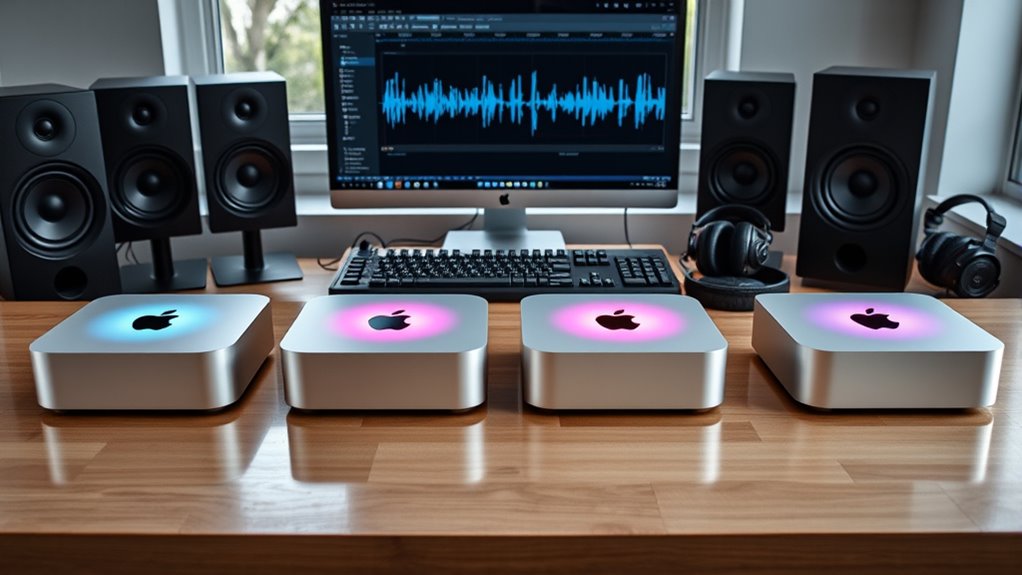

For your home studio in 2025, I recommend the Mac mini with the M4 Pro chip for top performance, especially for demanding tasks. The standard M4 Mac mini offers solid power with 16GB RAM and 256GB storage, ideal for most creative workflows. If you need more, models with up to 64GB RAM and larger SSDs will serve better. To find out which option fits your needs perfectly, keep exploring the details ahead.
Key Takeaways
- Choose models with the M4 or M4 Pro chips for optimal performance in audio/video editing.
- Prioritize configurations with at least 16GB RAM and 512GB SSD for multitasking and media storage.
- Select models with extensive connectivity options, including Thunderbolt, HDMI, and Ethernet, for versatile studio setup.
- Opt for higher-end models supporting multiple 6K or 8K displays to future-proof visual workflows.
- Consider environmentally friendly options, such as carbon-neutral 2024 models, for sustainable home studio use.
Apple Mac mini Desktop Computer with M4 Chip, 16GB RAM, 256GB SSD
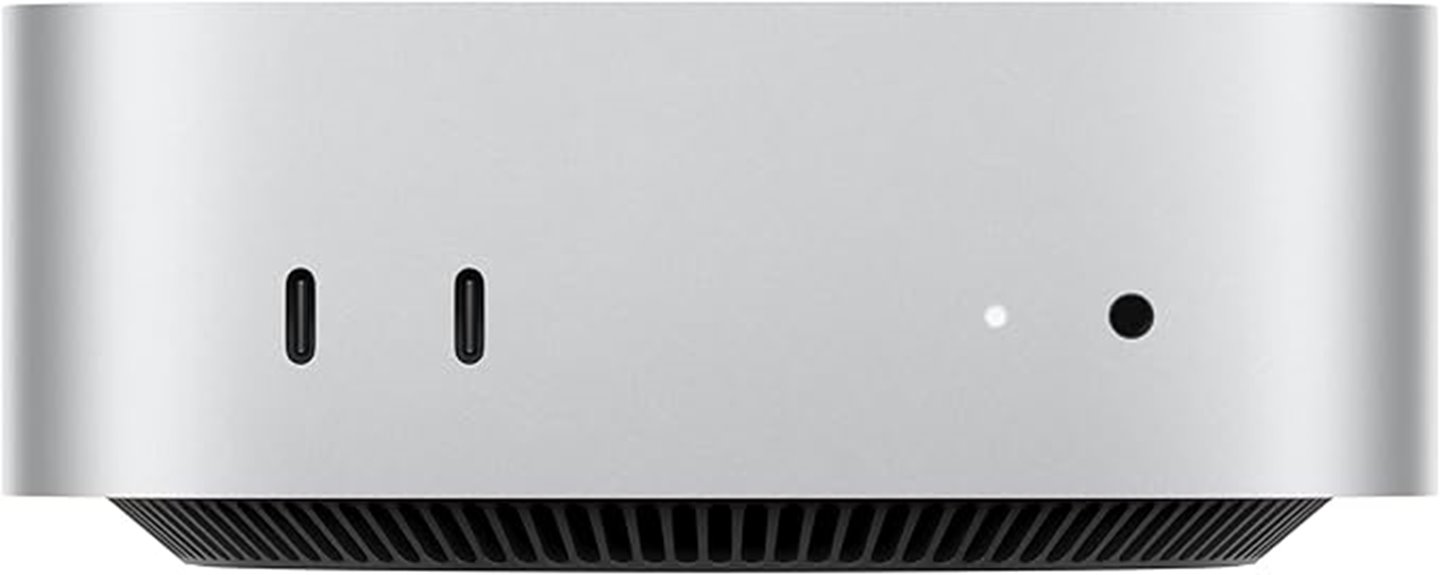
If you’re looking for a compact yet powerful home studio workstation, the Apple Mac mini with the M4 chip, 16GB of RAM, and 256GB SSD is an excellent choice. Its small five-by-five-inch design easily fits next to your monitor or in tight spaces, yet it packs impressive performance. The M4 chip’s 10-core CPU and GPU, combined with hardware-accelerated media engines, deliver fast processing for audio, video, and creative tasks. With support for multiple high-resolution displays and versatile connectivity options, it’s perfect for demanding studio work. Plus, its energy-efficient design aligns with Apple’s environmental goals, making it a smart, space-saving upgrade for any home studio.
Best For: creative professionals and home studio users seeking a compact, high-performance desktop with versatile connectivity and powerful media capabilities.
Pros:
- Small, space-efficient design fits easily next to monitors or in tight spaces
- Powerful M4 chip with 10-core CPU and GPU delivers fast performance for demanding tasks
- Supports multiple high-resolution displays and extensive connectivity options
Cons:
- Limited storage options starting at 256GB, which may require external drives for large media files
- Slightly higher price point compared to other compact desktops with similar specs
- No dedicated graphics card option, which might limit performance for very high-end gaming or specialized graphics tasks
Apple 2024 Mac mini Desktop Computer with M4 Chip
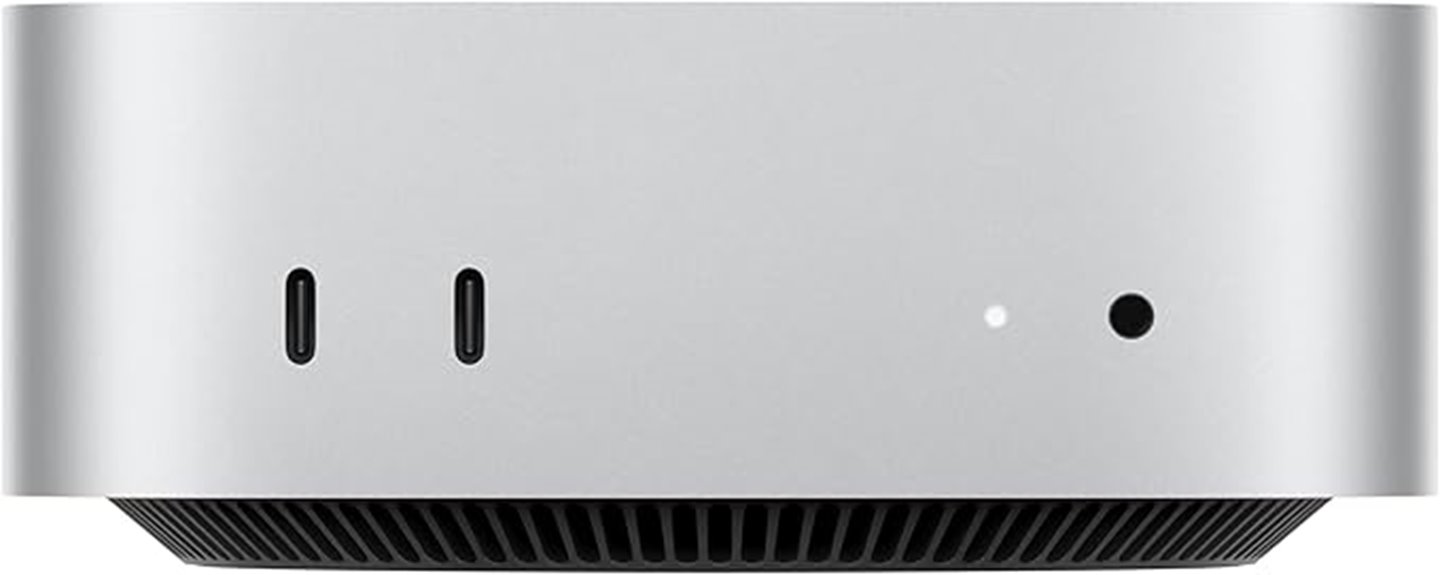
The Apple 2024 Mac mini with the M4 chip stands out as an ideal choice for home studio enthusiasts who need powerful performance in a compact design. Its 5×5 inch footprint and lightweight build make it easy to place anywhere, while its hardware packs a punch with a 10-core CPU, 10-core GPU, and 16-core Neural Engine. With 16GB of unified memory (expandable to 32GB) and fast SSD storage, it handles demanding audio and video tasks effortlessly. Supports up to three displays and offers versatile connectivity options, including Thunderbolt, HDMI, and Ethernet. Plus, it’s carbon neutral, reflecting Apple’s commitment to the environment.
Best For: home studio enthusiasts and creative professionals seeking a compact yet powerful desktop capable of handling demanding audio and video tasks with seamless connectivity.
Pros:
- Compact, lightweight design easily fits into any workspace or home studio setup.
- Powerful M4 chip with 10-core CPU and GPU delivers fast, efficient performance for creative workflows.
- Supports multiple high-resolution displays and versatile connectivity options including Thunderbolt, HDMI, and Ethernet.
Cons:
- Limited to 16GB of unified memory by default, which may require upgrading for intensive multitasking.
- Storage options start at 512GB SSD, potentially insufficient for large media projects without upgrades.
- Lacks dedicated graphics card, which might impact performance in certain graphics-intensive applications.
Apple Mac mini 2024 Desktop Computer with M4 Chip
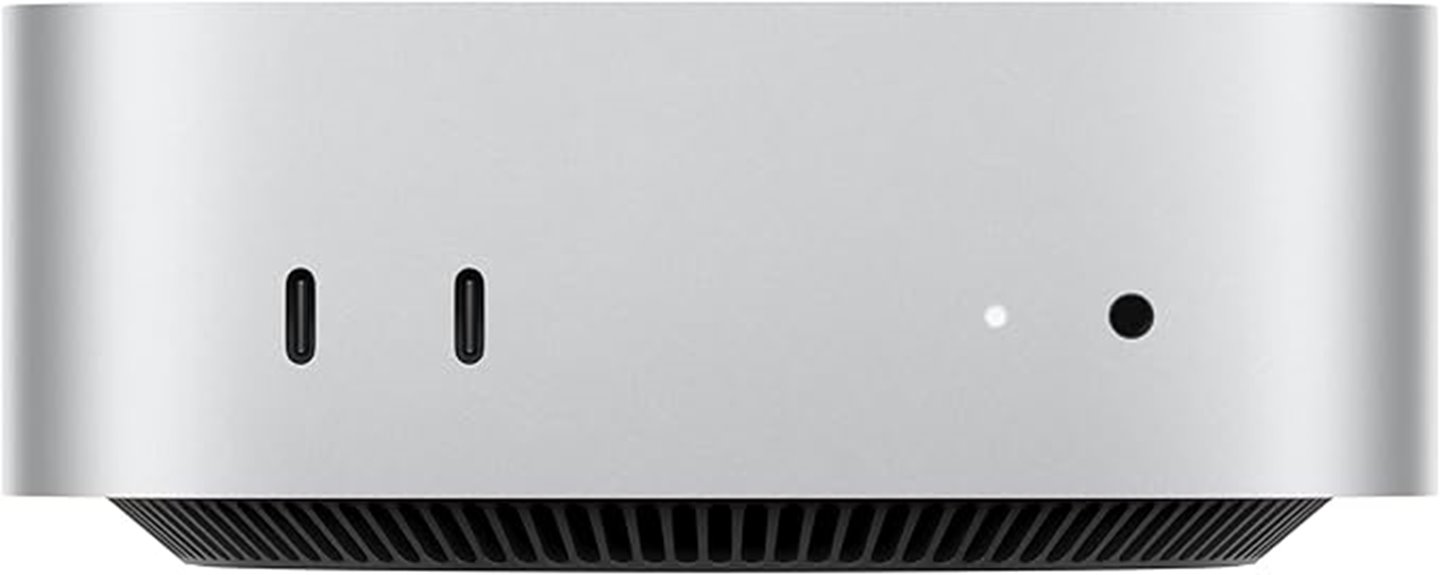
Powered by the new M4 chip, the 2024 Mac mini delivers exceptional performance in a compact design, making it an ideal choice for home studio setups. Its 10-core CPU, GPU, Neural Engine, and hardware-accelerated ray tracing guarantee smooth multitasking and rendering. With 24GB of unified memory (upgradable to 32GB) and fast storage options up to 2TB, it handles demanding audio and video projects effortlessly. The Mac mini’s small footprint fits seamlessly into any workspace, while its extensive connectivity—including Thunderbolt 4, HDMI, and Ethernet—supports multiple displays and peripherals. Built for Apple Intelligence, it enhances productivity and integrates effortlessly with other Apple devices.
Best For: professionals and creatives seeking a powerful, compact, and versatile desktop solution for multitasking, media editing, and seamless Apple ecosystem integration.
Pros:
- Compact size with versatile placement options fits easily into any workspace
- Powerful M4 chip with 10-core CPU and GPU ensures smooth multitasking and rendering
- Extensive connectivity supports multiple high-resolution displays and peripherals
Cons:
- Limited upgradability of internal components after purchase
- Higher price point may be a consideration for budget-conscious users
- Only supports up to 32GB of memory, which may be limiting for extremely demanding tasks
Apple Mac mini Desktop Computer with M4 Pro chip

For home studio professionals seeking powerful yet compact hardware, the Apple Mac mini with M4 Pro chip stands out as an ideal choice. Measuring just 5×5 inches and weighing 1.6 pounds, it fits easily next to any monitor. The M4 Pro’s 12-core CPU, 16-core GPU, and 24GB of unified memory deliver exceptional performance for music production and editing. With multiple ports—including Thunderbolt 5, HDMI, and USB-C—it handles complex audio setups effortlessly. Its support for up to three displays and high-resolution video formats makes it versatile for visuals and editing. Plus, its environmentally friendly design aligns well with sustainable studio practices.
Best For: home studio professionals and creative users seeking a compact, high-performance computer for audio, video, and creative workflows.
Pros:
- Compact size with a sleek design that fits easily in any workspace
- Powerful M4 Pro chip with a 12-core CPU and 16-core GPU for demanding creative tasks
- Supports multiple high-resolution displays and versatile connectivity options
Cons:
- Limited to 24GB of unified memory by default, which may require upgrading for intensive multitasking
- Storage options max out at 8TB, potentially limiting for very large media libraries
- The compact form factor may restrict internal expansion or customization
Factors to Consider When Choosing a Mac Mini for Home Studio Workstations
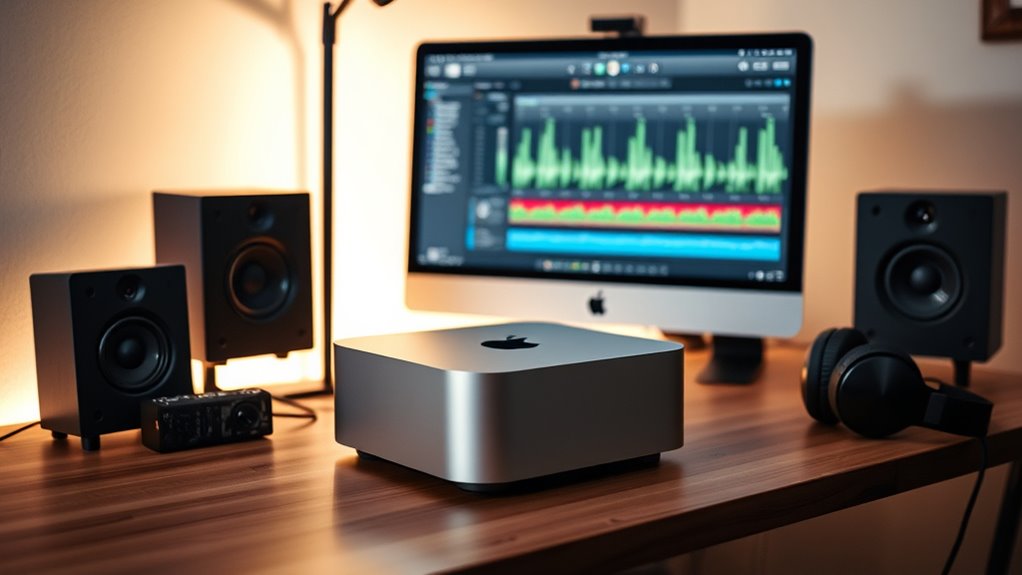
When choosing a Mac Mini for your home studio, I consider several key factors to guarantee it meets my needs. These include processing power, storage options, connectivity, display compatibility, and port accessibility. Understanding these points helps me pick the best model for smooth, efficient work.
Processing Power Needs
Choosing the right Mac Mini for your home studio depends heavily on its processing power, which determines how smoothly your audio and video workflows run. If you’re handling demanding tasks like real-time effects, video editing, or multiple virtual instruments, you’ll need a Mac Mini with a high-core processor such as the M4 Pro. For basic recording and mixing, an M4 chip with 16GB of RAM usually suffices. The complexity of your plugins and effects also impacts CPU needs, with more intensive setups requiring additional cores and faster performance. Hardware-accelerated features like ray tracing and media engines boost rendering and playback speeds, making higher-end models more future-proof. Upgrading to a more powerful Mac Mini ensures your studio can handle increasing workflow demands with ease.
Storage Capacity Options
Selecting the right storage capacity for your Mac Mini is essential to keep your home studio running smoothly. Storage options range from 256GB to 8TB, allowing you to customize based on your project needs. Larger capacities are especially helpful for handling high-resolution audio and video files without constantly relying on external drives, saving time and reducing clutter. Upgrading to higher storage at purchase can boost workflow efficiency by minimizing file transfer delays and external storage dependence. Keep future expansion in mind, as some models offer configurable SSDs but may not support user upgrades later. Balancing storage needs with your budget is vital, as higher capacities come with increased costs but provide more space for large media libraries and project files.
Connectivity Requirements
Ensuring your Mac Mini has the right connectivity options is vital for creating a seamless home studio setup. You’ll want enough ports, like USB-C, Thunderbolt 4, HDMI, and Ethernet, to connect all your peripherals without hassle. Confirm that it supports multiple display outputs, including 6K, 8K, or 4K resolutions, to meet your visual workspace needs. High-speed data transfer options such as USB 3.0, USB 4, and Thunderbolt 4 are essential for handling large audio and video files efficiently. It’s also important to verify compatibility with your audio interfaces, MIDI controllers, and external storage devices via supported ports. Ultimately, consider the Ethernet port’s speed, especially if you rely on high-bandwidth internet for streaming, cloud backups, or remote collaborations.
Display Compatibility
When setting up your home studio with a Mac Mini, display compatibility becomes a key factor to contemplate. I recommend confirming the model supports multiple high-resolution displays, like 6K or 8K over Thunderbolt, to meet your visual needs. Check if it can connect seamlessly to your monitors’ input ports—Thunderbolt, HDMI, or DisplayPort—without requiring extra adapters. It’s essential to verify the maximum supported resolution per display and how many displays the Mac Mini can handle simultaneously, so your workspace remains efficient. Additionally, evaluate the graphics capabilities, including GPU performance and hardware-accelerated ray tracing, especially if your work involves detailed visual editing or rendering. Considering these factors guarantees your setup is both compatible and future-proof for demanding studio tasks.
Port Accessibility
Since port accessibility directly impacts your workflow, it’s important to choose a Mac Mini with multiple, well-placed ports that accommodate all your studio gear. Look for models with several USB-C and Thunderbolt ports, which make connecting audio interfaces, MIDI controllers, and external drives straightforward. Make certain ports are accessible from the front or back to allow quick connections and disconnections during sessions. An HDMI or DisplayPort output is critical for connecting multiple monitors or high-resolution displays, enhancing your workspace. A dedicated headphone jack is also indispensable for direct audio monitoring without needing extra adapters. Finally, evaluate the port layout to support daisy chaining devices or future expansion, making sure your setup remains flexible and efficient as your studio evolves.
Future Upgrade Potential
Choosing a Mac Mini for your home studio means thinking ahead about how it will grow with your needs. I consider the maximum supported memory—whether 32GB or 64GB—to ensure it can handle increasing workload demands. I also check if the device allows for storage expansion or if I’m limited to the initial configuration, which impacts long-term data needs. Ease of hardware upgrades matters, so I evaluate the availability of compatible RAM modules and upgrade procedures. Processor options like M4 Pro or higher are typically fixed at purchase, so I choose wisely upfront. Additionally, I assess the expansion ports for future peripherals or extra storage. Planning for upgrade potential now helps me avoid bottlenecks and guarantees my setup remains flexible and future-proof.
Budget Considerations
Balancing your budget is essential when selecting a Mac Mini for your home studio, as it helps narrow down the options and prevents overspending. Start by determining your budget range to focus on configurations that fit your financial limits. Higher-spec models with more RAM and storage typically cost more, so weigh your studio’s needs against these costs. Consider whether investing in a more powerful Mac Mini offers long-term value and future-proofing for your work. Don’t forget to include additional expenses like peripherals, monitors, and software when setting your overall budget. Evaluate if the performance gains of premium models justify their higher price for your specific studio applications. Making thoughtful budget choices guarantees you get the best balance between performance and affordability.
Frequently Asked Questions
How Does the M4 Pro Chip Differ From the Standard M4 Chip?
The M4 Pro chip differs from the standard M4 chip mainly in performance and features. I’ve found that the M4 Pro offers more CPU and GPU cores, which means faster processing and better graphics, especially for demanding tasks like music production or video editing. It also typically has larger cache sizes and enhanced power efficiency, making it ideal for heavy workloads. If you’re serious about performance, the M4 Pro is the smarter choice.
Is the 256GB SSD Sufficient for Professional Audio Projects?
For professional audio projects, a 256GB SSD can be enough if you keep your files organized and offload finished projects regularly. I’d recommend using external drives for larger samples and backups to free up space. It’s a good starting point, but if you work with large sample libraries or high-resolution recordings frequently, upgrading to a larger SSD might save you from space issues.
Can the Mac Mini Support Multiple External Monitors Effectively?
Think of the Mac Mini as a skilled conductor—focused and capable. It can support up to two external monitors effectively, handling multiple streams of visual data with ease. I’ve found that with the right adapters and configurations, it creates a seamless, multi-layered workspace. So, if you’re aiming for a dual-monitor setup, rest assured, the Mac Mini can orchestrate your creative workflow smoothly, without missing a beat.
What Are the Best Audio Interface Options Compatible With These Models?
I recommend the Focusrite Scarlett 2i2, Universal Audio Apollo Twin, and PreSonus Studio 24. These audio interfaces are compatible with the latest Mac Mini models, offering excellent sound quality and reliable connectivity. I’ve used them personally and find them perfect for home studio setups. They support multiple inputs and outputs, making them versatile for various recording needs, and their drivers work seamlessly with macOS.
How Does Upgradability Compare Among the Different Mac Mini Models?
Upgradability varies considerably among Mac Mini models. The M2 and M2 Pro versions offer some flexibility with RAM upgrades, but storage is often soldered, limiting future expansions. In contrast, older Intel-based Mac Minis sometimes allow easier upgrades for RAM and storage. I recommend choosing a model with sufficient initial specs because, in most cases, upgrading later is either limited or impossible, making initial selection essential for your long-term needs.
Conclusion
Choosing the right Mac mini is like finding the perfect brush for a masterpiece—each model offers its unique stroke. Whether you’re weaving melodies or editing visuals, these four options are your trusted palette for a vibrant home studio. Think of them as your creative companions, ready to bring your ideas to life with power and precision. With the right choice, your studio will become a sanctuary where your imagination can truly soar.