Choosing the right microphone is essential for any podcaster aiming for professional sound quality. The market offers a wide range of options, from simple USB models to advanced XLR setups, each with its own tradeoffs. The Shure MV7X stands out as the best overall for its versatile connectivity and sound clarity. The Blue Yeti remains popular for its ease of use and built-in features, while the RØDE NT1 offers studio-quality sound for serious creators. Keep in mind that some microphones excel at noise cancellation, while others prioritize convenience or flexibility. Continue reading for a detailed breakdown to help you find the perfect fit for your podcasting needs.

Get business pricing on tools and workshop supplies
- Business-only prices and quantity discounts
- Tax-exempt purchasing
- Multiple users, one account, clear invoices
Complete the kit

Key Takeaways
- The top-ranking microphones balance sound quality, ease of use, and connectivity options.
- USB microphones dominate for beginners due to plug-and-play simplicity, but XLR options deliver higher sound fidelity for advanced users.
- Noise cancellation features can significantly improve recording clarity in less controlled environments.
- Price often correlates with sound quality and features, but there are excellent budget options that perform surprisingly well.
- Choosing between dynamic and condenser microphones depends on your recording environment and voice type.
| MAONO A04 USB Microphone, 192kHz/24Bit Condenser Mic Kit for PC Podcast |  | Best Overall USB Microphone for High-Resolution Podcasting | Connectivity Technology: USB, USB Type-C | Sampling Rate: 192kHz/24Bit | Polar Pattern: Cardioid | VIEW ON AMAZON | See Our Full Breakdown |
| FIFINE AmpliGame AM8 USB/XLR Dynamic Microphone for Gaming and Streaming |  | Best Versatile Microphone for Gaming and Streaming | Frequency Response: 50Hz-16KHz | Connection Types: USB, XLR | RGB Lighting: Yes, 3 modes and over 10 colors | VIEW ON AMAZON | See Our Full Breakdown |
| Logitech Blue Yeti USB Microphone for PC, Mac, Gaming, Recording, Streaming, Podcasting, Studio, and Computer – Blackout |  | Best for Versatile Broadcast-Quality Recording | Pickup Patterns: Cardioid, Omni, Bidirectional, Stereo | Connectivity: USB | Software: Blue VO!CE effects | VIEW ON AMAZON | See Our Full Breakdown |
| MAONO PD200W Hybrid Wireless Podcast Microphone for PC, Dynamic XLR USB Mic |  | Best Multi-Connection Wireless Microphone for Flexibility | Connectivity: Wireless, USB, XLR | Signal-to-Noise Ratio: 82dB | Maximum SPL: 128dB | VIEW ON AMAZON | See Our Full Breakdown |
| Shure MV6 USB Gaming Microphone for Streaming & Recording |  | Best for Professional-Quality USB Streaming and Podcasting | Connectivity Technology: USB | Connector Type: USB Type-C | Polar Pattern: Unidirectional | VIEW ON AMAZON | See Our Full Breakdown |
| Amazon Basics Condenser Microphone for PC, Cardioid Pickup, USB Mic for Streaming, Recording, and Podcasting, 360° Adjustable Stand, Plug and Play, 5.8″ x 3.4″, Black |  | Best Budget USB Microphone for Simplicity and Basic Clarity | Diaphragm Size: 14mm | Pickup Pattern: Cardioid | Stand Adjustment: 360° rotation | VIEW ON AMAZON | See Our Full Breakdown |
| FIFINE AmpliTank K688 Dynamic Microphone, XLR/USB Podcast Recording PC Mic |  | Best Versatile Microphone with Dual Connectivity for Both Casual and Semi-Professional Use | Connectivity Technology: USB, XLR | Connector Type: USB, XLR | Special Features: Detachable USB-C, mute, gain, monitoring | VIEW ON AMAZON | See Our Full Breakdown |
| FIFINE T669 Studio Condenser USB Microphone for Recording and Podcasting |  | Best All-Inclusive USB Microphone for Easy Professional-Quality Recordings | Output: USB | Frequency Response: Wide | Handling Capacity: High SPLs | VIEW ON AMAZON | See Our Full Breakdown |
| ZealSound Podcast Microphone for PC, Noise Cancellation USB Mic with Gain, Volume Adjustment & Mute Button, Monitoring & Echo, for YouTube, TikTok, Podcasting, Streaming, iPhone, iPad, Android, Mac |  | Best Studio-Grade USB Microphone with Noise Cancellation and Advanced Controls | Frequency Response: 40Hz–18kHz | Sampling Rate: 46kHz | Sensitivity: –45dB ±3dB | VIEW ON AMAZON | See Our Full Breakdown |
| FIFINE AmpliTank K688CT Podcast Microphone Kit, USB/XLR Dynamic Vocal Mic |  | Best Versatile Kit with Complete Accessories for Serious Podcasters and Streamers | Microphone Type: Dynamic | Connectivity: USB and XLR | Maximum SPL: 130dB | VIEW ON AMAZON | See Our Full Breakdown |
| FIFINE AmpliGame A6T USB Gaming Microphone Kit |  | Best for Streamers Who Want Easy Setup and Visual Flair | Compatibility: Windows, Mac OS, PS4, PS5 | Interface: USB-C to USB-A/C | Cable Length: 8.2ft (2.5m) | VIEW ON AMAZON | See Our Full Breakdown |
| TONOR Gaming Microphone Set with Boom Arm, USB Condenser Microphone for Content Creators, RGB Lighting, Tap Mute, Gain Control | 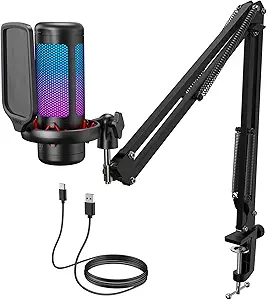 | Best for Content Creators Who Want Customizable RGB and Flexibility | Lighting Modes: 4 RGB modes | Brightness Control: Yes | Connectivity: USB 2.0/3.0, Type-C | VIEW ON AMAZON | See Our Full Breakdown |
| FIFINE K669B USB Microphone, Condenser Recording Mic for Vocals and Meetings |  | Best for Home Office and Basic Recording Needs | Connection: USB-A | Cable Length: 5.9 feet | Design: Metal | VIEW ON AMAZON | See Our Full Breakdown |
| RØDE NT1 Signature Series Studio Condenser Microphone, Black |  | Best for Professional Vocal Recordings and Streaming | Type: Condenser | Included: Shock mount, pop filter, XLR cable, dust cover | Pattern: Cardioid | VIEW ON AMAZON | See Our Full Breakdown |
| Shure MV7X XLR Dynamic Podcast & Recording Microphone – Black |  | Best for Podcasters Needing Focused, Noise-Resistant Audio | Connectivity Technology: XLR only | Connector Type: XLR | Construction: All-metal | VIEW ON AMAZON | See Our Full Breakdown |
More Details on Our Top Picks
MAONO A04 USB Microphone, 192kHz/24Bit Condenser Mic Kit for PC Podcast
The MAONO A04 stands out for its impressive 192kHz/24Bit audio quality, making it an excellent choice for podcasters who prioritize professional sound without investing in XLR gear. Compared to the Blue Yeti, it offers comparable broadcast-quality recordings but with a more straightforward, plug-and-play setup that appeals to beginners and those with limited space. Its accessories—pop filter, shock mount, and boom arm—add value, though these can feel bulky and may require extra desk space. The microphone’s large diaphragm and metal enclosure contribute to durability and sound fidelity, ideal for stationary setups. The main tradeoff is the lack of compatibility with gaming consoles like Xbox, and users must supply their own stand or arm for optimal positioning. For podcasters seeking high resolution and comprehensive accessories in a single kit, this choice makes the most sense.
Pros:- High-resolution 192kHz/24Bit audio quality ensures professional sound clarity
- Comprehensive accessory bundle simplifies setup for beginners
- Plug-and-play with multiple devices, including PC and Mac
Cons:- Not compatible with Xbox consoles, limiting gaming use
- Accessories like the boom arm can be bulky and space-consuming
Best for: Podcasters who want a high-resolution, all-in-one setup with minimal fuss and don’t need console compatibility.
Not ideal for: Gamers or streamers using Xbox consoles, as it isn’t compatible, and those seeking portable, mobile solutions.
- Connectivity Technology:USB, USB Type-C
- Sampling Rate:192kHz/24Bit
- Polar Pattern:Cardioid
- Frequency Response:30 Hz – 16 kHz
- Power Source:USB
- Item Weight:1.35 kg
Our verdict“This microphone is perfect for podcasters who prioritize audio fidelity and a complete, easy setup for stationary use.”
FIFINE AmpliGame AM8 USB/XLR Dynamic Microphone for Gaming and Streaming
The FIFINE AmpliGame AM8 excels in versatility, offering both USB and XLR connections, making it suitable for streamers who want flexibility across different setups. Unlike the Blue Yeti, which is primarily USB, the AM8’s dual connectivity allows transitioning from simple plug-and-play to more professional XLR configurations, though some features like RGB lighting only work in USB mode. Its built-in mute control, headphone jack, and noise-canceling capabilities make it ideal for live gaming and streaming, especially for users who want quick controls at their fingertips. The RGB lighting adds flair but becomes inactive when using XLR, which may disappoint users expecting consistent aesthetics. The XLR cable isn’t included, and some features are limited outside USB mode. For gamers or streamers seeking a flexible, visually customizable mic, this model offers solid value despite some feature limitations when switching modes.
Pros:- Dual USB and XLR connectivity offers maximum flexibility
- Customizable RGB lighting enhances gaming aesthetics
- Built-in mute and monitoring controls for easy use during streams
Cons:- RGB lighting is inactive in XLR mode, limiting visual consistency
- XLR cable is not included, adding extra cost
Best for: Gamers and streamers who want a flexible microphone suitable for both casual and semi-professional setups.
Not ideal for: Podcasters who prioritize studio-quality sound or those who don’t need dual connectivity options.
- Frequency Response:50Hz-16KHz
- Connection Types:USB, XLR
- RGB Lighting:Yes, 3 modes and over 10 colors
- Mute Control:Yes, tap-to-mute
- Headphone Jack:Yes
- Microphone Type:Dynamic
Our verdict“This microphone suits gamers and streamers needing adaptable connectivity and style customization without sacrificing essential controls.”
Logitech Blue Yeti USB Microphone for PC, Mac, Gaming, Recording, Streaming, Podcasting, Studio, and Computer – Blackout
The Blue Yeti remains a favorite for its flexibility, offering four selectable pickup patterns—ideal for a variety of recording needs, from solo podcasts to group interviews. Compared to the Shure MV6, it provides multiple pattern options that give more creative control, but its bulkier size can be a drawback for limited desk space. Its onboard controls and Blue VO!CE effects make it user-friendly, especially for beginners seeking professional sound without extra equipment. However, its size can clutter a small workspace, and it relies solely on USB connection, which limits portability. The included stand is adjustable, but some users might prefer an external shock mount for better isolation. This mic strikes a balance between ease of use and audio versatility, making it well-suited for hobbyist and semi-professional podcasters.
Pros:- Four selectable pickup patterns for versatile recording options
- User-friendly plug-and-play setup with onboard controls
- Includes Blue VO!CE effects for enhanced audio quality
Cons:- Bulkier design may occupy significant desk space
- Limited portability due to size and reliance on USB
Best for: Content creators and podcasters seeking a flexible, multi-pattern USB microphone for diverse recording scenarios.
Not ideal for: Podcasters with very limited space or those who need a more portable or lightweight mic.
- Pickup Patterns:Cardioid, Omni, Bidirectional, Stereo
- Connectivity:USB
- Software:Blue VO!CE effects
- Controls:Headphone volume, pattern selection, mute, mic gain
- Compatibility:Mac, PC
- Design:Adjustable desktop stand
Our verdict“This microphone is a solid choice for versatile recording needs, especially for those who want multiple pickup patterns in a single device.”
MAONO PD200W Hybrid Wireless Podcast Microphone for PC, Dynamic XLR USB Mic
The MAONO PD200W offers unmatched flexibility with wireless, USB, and XLR connectivity, making it ideal for podcasters who need mobility and multiple setups. Compared to stationary microphones like the Shure MV6, it provides the convenience of wireless operation, which is a game-changer for dynamic recording environments. Its noise cancellation, high signal-to-noise ratio, and customizable profiles via the MaonoLink app ensure studio-quality sound, even on the move. The dual microphone option supports interviews or duo podcasts, and its long battery life—up to 60 hours—means extended use without interruption. On the downside, setting up wireless connections can be complex for beginners, and the RGB lighting, while attractive, serves little functional purpose for audio quality. This model is best for mobile podcasters or those needing a versatile, multi-use microphone with high-quality sound.
Pros:- Tri-mode connectivity (Wireless, USB, XLR) offers maximum flexibility
- Studio-quality sound with noise cancellation and customizable profiles
- Long battery life and 60-meter wireless range support mobile use
Cons:- Setup can be complex for beginners unfamiliar with wireless tech
- RGB lighting offers limited functional benefit and may be unnecessary
Best for: Podcasters who value mobility, flexibility, and professional sound quality in various environments.
Not ideal for: Users seeking a simple, plug-and-play setup or those who prefer wired connections for maximum reliability.
- Connectivity:Wireless, USB, XLR
- Signal-to-Noise Ratio:82dB
- Maximum SPL:128dB
- Battery Life:Up to 60 hours
- Wireless Range:60 meters
- Microphone Type:Dynamic
Our verdict“This microphone delivers exceptional versatility for podcasters who need mobility and high-quality audio in various setups.”
Shure MV6 USB Gaming Microphone for Streaming & Recording
The Shure MV6 is tailored for creators who want a professional sound in a compact, easy-to-use package. Its Voice Isolation Technology effectively reduces background noise, making it ideal for noisy environments or home studios. Compared with the Blue Yeti, the MV6’s more streamlined design and DSP processing offer a cleaner, more polished sound, although it sacrifices some of the pattern versatility. Its DSP features are particularly attractive for podcasters who want to fine-tune their audio without external tools. The USB-C connection supports modern devices, but this makes it less compatible with older or non-C port computers. Designed primarily for desktop use, it’s less portable for on-the-go recording. Overall, this mic offers a professional-grade audio experience in a small form factor, perfect for serious content creators focused on sound quality.
Pros:- Effective Voice Isolation reduces background noise significantly
- DSP processing for polished, professional sound directly from the mic
- USB-C connectivity for fast, modern connection
Cons:- Limited to unidirectional pickup pattern, less versatile for multi-person recordings
- Designed mainly for desktop use, less portable for mobile recording
Best for: Podcasters and streamers seeking a professional, noise-reduced sound with minimal setup effort.
Not ideal for: Those needing multiple pickup patterns or portability for on-the-go recording, as its design is more stationary.
- Connectivity Technology:USB
- Connector Type:USB Type-C
- Polar Pattern:Unidirectional
- Special Features:Voice Isolation Technology, DSP processing
- Compatible Devices:Personal Computer
- Design:Desktop stand
Our verdict“This mic suits podcasters who want a compact, professional sound with built-in noise reduction and easy setup.”
Amazon Basics Condenser Microphone for PC, Cardioid Pickup, USB Mic for Streaming, Recording, and Podcasting, 360° Adjustable Stand, Plug and Play, 5.8″ x 3.4″, Black
This Amazon Basics condenser mic offers a straightforward, plug-and-play experience with decent sound quality that suits beginner podcasters or streamers on a tight budget. Its high sensitivity and low noise make it a solid choice for capturing clear vocals without fuss, especially compared to more feature-rich models like the ZealSound K66, which offers noise reduction and monitoring but at a higher price. The 360° adjustable stand provides flexible positioning, yet the basic design and USB-only connectivity may limit its appeal for those seeking professional-grade features or multi-device setups. Its simple setup is perfect for casual users, but it lacks advanced controls or XLR options that serious podcasters might prefer.
Pros:- Simple plug-and-play setup for quick use
- Decent sound quality with low noise levels
- Flexible positioning thanks to the 360° stand
Cons:- Limited to USB connection, restricting professional upgrades
- Basic design without advanced features like gain control or monitoring
Best for: Beginners or casual streamers needing a reliable, easy-to-use USB mic without extra fuss
Not ideal for: Professional podcasters or content creators requiring advanced controls, XLR connectivity, or studio-grade quality
- Diaphragm Size:14mm
- Pickup Pattern:Cardioid
- Stand Adjustment:360° rotation
- Dimensions:5.8″ x 3.4″
- Connectivity:USB
- Compatibility:Windows 7/XP/8/10 or higher, Mac OS 10.10 or higher
Our verdict“This mic is best suited for newcomers or casual users who prioritize ease of use over advanced features.”
FIFINE AmpliTank K688 Dynamic Microphone, XLR/USB Podcast Recording PC Mic
Best Versatile Microphone with Dual Connectivity for Both Casual and Semi-Professional Use
View on AmazonThe FIFINE AmpliTank K688 stands out for its dual XLR and USB capabilities, making it a flexible choice for users who want to upgrade from simple USB mics like the Amazon Basics model to more professional setups. Unlike the ZealSound K66, which emphasizes noise reduction and monitoring, the K688 offers a rugged metal build and versatile connection options, though it requires additional equipment like an audio interface for XLR use. Its built-in mute, gain, and monitoring controls provide easy adjustments during recordings or live streams, but the need for external gear can be a barrier for complete beginners. The tradeoff is that while it offers more room to grow, it adds complexity and cost to your setup.
Pros:- Dual connectivity offers upgrade flexibility
- Durable metal construction for longevity
- Integrated controls for mute, gain, and monitoring
Cons:- Requires additional gear for XLR use, increasing cost and setup complexity
- Arm stand, XLR cable, and stand not included
Best for: Podcasters or streamers who want a flexible microphone that can grow with their setup, including both USB and XLR options
Not ideal for: Complete beginners or those seeking a simple, all-in-one USB solution with no extra equipment
- Connectivity Technology:USB, XLR
- Connector Type:USB, XLR
- Special Features:Detachable USB-C, mute, gain, monitoring
- Microphone Form Factor:Table Array
- Polar Pattern:Unidirectional
- Signal-to-Noise Ratio:80 db
Our verdict“This microphone is perfect for users who anticipate expanding their recording setup but may be overkill for just starting out.”
FIFINE T669 Studio Condenser USB Microphone for Recording and Podcasting
The FIFINE T669 offers a balanced mix of ease of use and sound quality, making it a top choice for new podcasters who want professional-looking results without the complexity of XLR gear. Its wide frequency response captures vocals well, and the included accessories—like a boom arm, pop filter, and shock mount—make it ready for studio-quality recordings from the box. Compared to the ZealSound K66, which emphasizes noise reduction and monitoring, the T669 focuses on straightforward, high-quality sound and convenience. Its main drawback is that it’s incompatible with gaming consoles like Xbox and may pick up ambient noise if not positioned carefully. Still, it hits a sweet spot for home recording.
Pros:- Plug-and-play setup with USB connection
- Includes comprehensive accessories for professional sound
- Sturdy, adjustable arm for versatile positioning
Cons:- Incompatible with Xbox and some gaming consoles
- May pick up background noise if not properly positioned
Best for: Podcasters, voiceover artists, and content creators seeking a complete, plug-and-play setup with minimal fuss
Not ideal for: Users needing XLR connectivity or advanced control options for professional studio work
- Output:USB
- Frequency Response:Wide
- Handling Capacity:High SPLs
- Includes:Boom arm, pop filter, shock mount
Our verdict“This mic is ideal for those seeking a ready-to-go setup with excellent sound quality for podcasts and voiceovers.”
The ZealSound K66 is designed for users who want studio-quality audio with real-time noise reduction and extensive control options, making it a better fit than simpler models like the Amazon Basics or FIFINE T669 for serious content creators. Its noise cancellation mode reduces ambient sounds effectively, and the multiple controls—gain, volume, echo—allow precise tuning during live recordings. Unlike the FIFINE K688, which offers dual connectivity, the ZealSound focuses solely on USB, but this means fewer setup variables. The downside is that its complex controls can be daunting for beginners, and some features are limited to USB mode, which may restrict hardware flexibility. Still, it’s a solid choice for professional-grade content with ease of access.
Pros:- High-quality sound with noise reduction
- Extensive physical controls for real-time adjustments
- Wide device compatibility including mobile devices
Cons:- Complex setup may challenge beginners
- Limited to USB connection, no XLR option
- Physical controls less precise than software
Best for: Podcasters and streamers aiming for studio-quality sound with noise reduction and real-time control
Not ideal for: Beginners or users who prefer simple plug-and-play options without complex controls
- Frequency Response:40Hz–18kHz
- Sampling Rate:46kHz
- Sensitivity:–45dB ±3dB
- Connectivity:USB-C, Lightning adapters
- Features:Noise reduction, monitoring, echo
Our verdict“This mic is suited for creators who need high-quality, noise-reduced audio with accessible controls, but not for those seeking simplicity.”
FIFINE AmpliTank K688CT Podcast Microphone Kit, USB/XLR Dynamic Vocal Mic
The FIFINE AmpliTank K688CT kit offers a compelling package for those who want both USB and XLR connectivity, along with a professional-grade dynamic microphone. Its cardioid pattern helps reduce background noise, making it suitable for noisy environments, while the included boom arm, windscreen, and shock mount streamline setup for serious content creators. Compared to the simpler Amazon Basics model, this kit provides a more comprehensive setup, but the XLR functions are limited without an external mixer or interface. Its high SPL handling and intuitive controls make it a versatile option, though the full feature set is accessible only when connected via USB, which could frustrate users wanting to switch between modes seamlessly.
Pros:- Includes a complete professional microphone kit
- Dual USB/XLR connectivity for flexibility
- Cardioid pattern minimizes ambient noise
Cons:- Full functionality via XLR requires external gear
- Some features only available via USB, limiting real-time control in XLR mode
Best for: Podcasters and streamers looking for an all-in-one professional kit with flexible connectivity options
Not ideal for: Casual users who do not want to invest in additional equipment or complexity
- Microphone Type:Dynamic
- Connectivity:USB and XLR
- Maximum SPL:130dB
- Included Accessories:Boom arm, windscreen, shock mount
Our verdict“This kit is ideal for those seeking a professional-grade microphone package with versatile connectivity options for varied recording environments.”
FIFINE AmpliGame A6T USB Gaming Microphone Kit
The FIFINE AmpliGame A6T stands out for its straightforward plug-and-play design, making it ideal for streamers who prefer quick setup without extra gear. Compared to the Shure MV7X, it offers less professional noise isolation but compensates with a vibrant RGB lighting feature that enhances streaming aesthetics. The included accessories, like the boom arm and shock mount, make positioning flexible, yet the stability depends heavily on proper adjustment, which can be fiddly. Its USB-C interface ensures broad compatibility, though it limits options for those seeking XLR quality. This model is perfect for gamers and casual streamers who prioritize ease and style over studio-grade sound. However, it’s less suited for podcasting professionals demanding ultra-low noise or XLR connectivity. Pros include easy setup, vivid RGB lighting, comprehensive accessories, and warm sound quality. Drawbacks involve stability issues if not adjusted carefully and the RGB lighting being unnecessary for some. Perfect for beginners or casual streamers who want a complete kit with aesthetic appeal. Specs: Compatibility – Windows, Mac OS, PS4, PS5; Interface – USB-C to USB-A/C; Cable Length – 8.2ft; Lighting – RGB gradient; Polar Pattern – Cardioid; Included Accessories – Shock mount, pop filter, boom arm, clamp, manual.Pros:- Plug-and-play USB-C connection for easy setup
- Vivid RGB lighting adds streaming flair
- Includes all necessary accessories for flexible positioning
- Warm, clear sound suitable for gaming and casual streaming
Cons:- Requires careful adjustment of the boom arm for stability
- RGB lighting may be superfluous for some users
- Limited to USB connectivity, no XLR option
Best for: Casual streamers and gamers who value simplicity and visual effects
Not ideal for: Podcasters seeking studio-quality sound or XLR connection for professional setups
- Compatibility:Windows, Mac OS, PS4, PS5
- Interface:USB-C to USB-A/C
- Cable Length:8.2ft (2.5m)
- Lighting:RGB gradient
- Polar Pattern:Cardioid
- Included Accessories:Shock mount, pop filter, boom arm, clamp, manual
Our verdict“This microphone is ideal for beginners or streamers who want an easy-to-use setup with eye-catching lighting, but less suitable for professional podcasters focused on audio fidelity.”
TONOR Gaming Microphone Set with Boom Arm, USB Condenser Microphone for Content Creators, RGB Lighting, Tap Mute, Gain Control
The TONOR TC310+ makes a compelling case for streamers and gamers who desire vibrant lighting and versatile controls. Its four RGB modes and brightness adjustment provide customizable aesthetics that can match any streaming environment, unlike the simpler RGB options on the FIFINE AmpliGame A6T. The included boom arm and sturdy clamp make positioning easy, though the desk clamp is limited to 2.36 inches in thickness, which could be restrictive. The microphone’s high-fidelity condenser ensures crisp, professional sound, comparable to the FIFINE K669B, but with added flair. Its mute and gain controls are intuitive for fast adjustments during live sessions. However, it’s limited to USB, which excludes users with XLR or more advanced audio interfaces. This pick makes sense for content creators who prioritize style, flexibility, and straightforward controls. It’s less suitable for podcasters needing studio-grade audio or multi-device compatibility. Pros include customizable RGB lighting, easy gain/mute controls, sturdy boom arm, and high-quality sound. Cons involve USB-only connection and potentially excessive lighting modes for minimalists. It’s perfect for streamers who want a lively, adjustable setup with excellent sound. Specs: Lighting Modes – 4 RGB modes; Brightness Control – Yes; Connectivity – USB 2.0/3.0, Type-C; Microphone Type – Vocal condenser; Included Accessories – Boom arm, desk clamp; Desk Compatibility – Up to 2.36 inches.Pros:- Multiple RGB modes with adjustable brightness
- High-fidelity microphone with clear audio
- Includes sturdy boom arm and clamp
- Intuitive mute and gain controls
Cons:- USB-only connection limits device compatibility
- Lighting modes may be excessive for some users
- Desk clamp restricts thickness size
Best for: Content creators and streamers seeking vibrant lighting and easy adjustment
Not ideal for: Podcasters needing XLR connectivity or minimal lighting effects
- Lighting Modes:4 RGB modes
- Brightness Control:Yes
- Connectivity:USB 2.0/3.0, Type-C
- Microphone Type:Vocal condenser
- Included Accessories:Boom arm, sturdy desk clamp
- Desk Thickness Compatibility:Up to 2.36 inches
Our verdict“Ideal for streamers who want a visually customizable microphone with straightforward controls but not suited for those requiring professional XLR audio.”
FIFINE K669B USB Microphone, Condenser Recording Mic for Vocals and Meetings
The FIFINE K669B is a straightforward, durable condenser microphone that emphasizes simplicity and reliability. Its metal construction ensures longevity, and the adjustable volume knob allows for quick personalized sound levels, making it a dependable choice for meetings or casual streaming. While it doesn’t feature the flashy RGB lighting of the TONOR kit, its focused cardioid pattern effectively reduces background noise, providing clearer vocals compared to basic mics like the Amazon Basics condenser. The 5.9-foot cable offers flexible placement, but being limited to USB-A, it may require adapters for newer devices or mobile use. This microphone suits users who want a no-fuss, sturdy device capable of capturing crisp sound. It’s less appropriate for those seeking studio-quality recordings or XLR options. Pros include durable metal design, easy setup, and effective noise reduction. Cons involve limited device compatibility and lack of advanced features like gain control. The ideal user is someone needing a reliable, entry-level mic for meetings or streaming. Specs: Connection – USB-A; Cable Length – 5.9 ft; Design – Metal; Compatibility – PC, Mac, PS4, PS5; Power – USB-powered; Pattern – Cardioid.Pros:- Sturdy metal construction for durability
- Easy plug-and-play setup with USB-A
- Adjustable volume knob for personalized sound
- Effective background noise reduction
Cons:- Limited to USB-A, requiring adapters for some devices
- Lacks gain control or advanced features
- No visual enhancements or lighting
Best for: Home office users or casual streamers needing a reliable, simple microphone
Not ideal for: Podcasters or musicians looking for professional studio-grade sound or XLR connectivity
- Connection:USB-A
- Cable Length:5.9 feet
- Design:Metal
- Compatibility:PC, Mac, PS4, PS5
- Power:USB-powered
- Pickup Pattern:Cardioid
Our verdict“A solid budget-friendly choice for basic recording and streaming tasks, but not suited for professional studio work.”
RØDE NT1 Signature Series Studio Condenser Microphone, Black
The RØDE NT1 Signature Series is a standout for anyone seeking near-studio quality in a condenser mic. Its ultra-low self-noise makes it perfect for capturing vocals with exceptional clarity, much like the Shure MV7X’s focus on vocal detail but with a more studio-oriented design. The complete package—including shock mount, pop filter, and XLR cable—appeals to those ready to build a serious recording setup. Compared to the FIFINE K669B, it offers significantly lower noise levels and greater fidelity, though at a higher price point and with additional equipment needs. It’s not suited for casual users without extra equipment, as it requires an audio interface or mixer. This choice makes the most sense for podcasters or streamers aiming for professional sound quality. Pros include ultra-low self-noise, comprehensive accessories, and excellent vocal reproduction. Cons involve higher cost and the need for an interface. It’s ideal for serious content creators prioritizing sound quality over convenience. Specs: Type – Condenser; Included – Shock mount, pop filter, XLR cable, dust cover; Pattern – Cardioid; Self-noise – Among the lowest; Compatibility – Requires audio interface; Color – Black.Pros:- Ultra-low self-noise for pristine recordings
- Complete package with essential accessories
- Excellent for vocals and detailed sound capture
- Durable build and professional appearance
Cons:- Requires additional audio interface or mixer
- Higher price range
- Less portable for mobile use
Best for: Podcasters and streamers seeking professional-grade, studio-quality sound
Not ideal for: Beginners or those without existing audio interfaces or budget for higher-end setups
- Type:Condenser
- Included:Shock mount, pop filter, XLR cable, dust cover
- Pattern:Cardioid
- Self-noise:Among the lowest
- Compatibility:Requires audio interface
- Color:Black
Our verdict“This microphone is best for serious creators who want studio-quality sound and are prepared for a more complex setup.”
Shure MV7X XLR Dynamic Podcast & Recording Microphone – Black
The Shure MV7X is designed for podcasters who want professional-grade sound with noise rejection. Its XLR-only connection ensures a stable, studio-quality signal, unlike the USB options in other models like the FIFINE AmpliGame A6T or TONOR TC310+. The built-in shock mount reduces vibrations, and the dynamic capsule focuses on vocal clarity, making it especially effective in noisy environments. Compared to the RØDE NT1, it emphasizes durability and noise rejection over ultra-low self-noise, which is ideal for home or on-the-go recording. Its all-metal construction promises long-term use, but it requires a separate audio interface, adding complexity and cost. This makes it perfect for podcasters or professionals with existing studio setups, yet less suitable for casual users or beginners without equipment. Pros include excellent noise isolation, durable build, and tailored vocal clarity. Cons involve the need for additional equipment and no built-in monitoring. This mic is best for those committed to high-quality, stable recordings in less-than-ideal environments. Specs: Connectivity – XLR only; Connector Type – XLR; Construction – All-metal; Included – Shock mount; Application – Podcasting, vocal recording; Suitable for – Studio or advanced home setups.Pros:- Excellent noise isolation with integrated shock mount
- Durable, all-metal construction
- Focused vocal clarity for professional sound
- XLR connection ensures stable, high-quality signal
Cons:- Limited to XLR connections, no USB option
- Requires additional audio interface or mixer
- No built-in monitoring or headphone output
Best for: Podcasters and vocal performers with existing audio interfaces or studio setups
Not ideal for: Beginners or mobile users without extra equipment or XLR infrastructure
- Connectivity Technology:XLR only
- Connector Type:XLR
- Construction:All-metal
- Included:Shock mount
- Application:Podcasting, vocals
- Suitable for:Studio or high-end home setups
Our verdict“This microphone is a top choice for seasoned podcasters needing reliable, noise-resistant audio in a professional setup, but not for casual or mobile users.”

How We Picked
We evaluated microphones based on several criteria that matter most to podcasters: audio performance, build quality, ease of setup, versatility, and value for money. We compared models across different price ranges and connectivity options, focusing on features that enhance recording quality and user experience. Our rankings reflect a balance between professional-grade sound, user-friendliness, and affordability. We also considered feedback from actual users and industry reputation to ensure each option meets real-world needs. This approach ensures that the recommended microphones cater to a broad spectrum of podcasters, from beginners to seasoned professionals.Factors to Consider When Choosing Microphones For Podcasters
When selecting a microphone for podcasting, it’s important to consider multiple factors that directly impact your recording quality and workflow. Beyond basic features, understanding these key aspects helps avoid common pitfalls and ensures you choose a microphone that aligns with your specific setup and goals.Connectivity Type
Deciding between USB and XLR microphones is often the first step. USB microphones are ideal for beginners and quick setups, offering plug-and-play convenience without needing extra equipment. XLR microphones, on the other hand, provide superior sound quality and expandability, but require an audio interface and more technical know-how. Your choice should reflect your current setup and future plans for upgrading or expanding your podcasting studio.
Sound Quality and Voice Compatibility
High-quality sound reproduction is critical for engaging podcasts. Condenser microphones tend to capture more detail and are suitable for controlled environments, while dynamic microphones excel at rejecting background noise, making them better for less soundproofed spaces. Consider your voice type; deeper voices often benefit from certain mic patterns and frequencies. Listening to sample recordings or reviews can help determine the best match for your vocal characteristics.
Durability and Build
A microphone’s build quality influences its longevity and reliability. Metal construction and solid components reduce susceptibility to damage and ensure consistent performance over time. If you plan to record on the go or frequently move your setup, investing in a rugged, well-built mic might save you money in the long run. Conversely, lightweight models may be more convenient for portable or casual podcasters but might compromise durability.
Additional Features
Features like gain control, mute buttons, headphone monitoring, and noise cancellation can make recording sessions smoother and improve audio quality. However, more features often come with increased costs and complexity. Assess which features are genuinely useful for your workflow—extra controls for live adjustments can be valuable, but unnecessary bells and whistles can complicate simple setups.
Budget and Value
While higher-priced microphones typically offer better sound quality and durability, there are excellent budget options that suit starting podcasters well. Carefully compare features against costs to find the best value. Remember, investing in a good microphone often pays off in clearer audio and fewer post-production edits, but overspending on features you won’t use can be counterproductive.
Frequently Asked Questions
Should I choose a USB or XLR microphone for my podcast?
For most beginners, a USB microphone provides a straightforward, cost-effective way to start recording, as it connects directly to your computer and requires minimal setup. However, if you’re aiming for professional-quality sound and plan to expand your setup, an XLR microphone paired with an audio interface offers greater flexibility and higher fidelity. Consider your current needs and future plans—if you’re not ready for more equipment, USB is a sensible choice; otherwise, XLR can grow with your skills.
What is the most important feature to look for in a podcasting microphone?
The most critical factor is sound quality. A microphone that captures your voice clearly and accurately makes a significant difference in listener engagement. Features like noise cancellation and proper polar patterns enhance clarity, especially in less controlled environments. While additional features like gain control or monitoring are helpful, they should not compromise the core aspect—your voice’s fidelity. Prioritize microphones known for consistent, high-quality audio reproduction.
Can I use a gaming microphone for podcasting?
Many gaming microphones are suitable for podcasting because they often include features like noise suppression and easy setup. However, some gaming mics are optimized for voice chat and streaming, which may not provide the warm, natural sound preferred for podcasts. If you choose a gaming mic, look for one with good frequency response and sound clarity or consider upgrading to a dedicated podcasting mic if your goal is professional audio quality.
How much should I spend on a good podcasting microphone?
Entry-level microphones in the $50-$100 range can produce decent results for beginners, especially USB models with good reviews. Investing around $150-$300 typically yields noticeable improvements in sound quality, durability, and features suitable for serious hobbyists or semi-professionals. Premium options above $300 often include studio-grade components, XLR connectivity, and advanced noise reduction. Your budget should reflect your aspirations and the quality standards you aim for, but even modest investments can significantly elevate your audio if chosen carefully.
Are condenser microphones better than dynamic microphones for podcasting?
Condenser microphones tend to capture more detail and are preferred in controlled, quiet environments, making them ideal for studio setups. Dynamic microphones excel at rejecting background noise and are better suited for less soundproofed spaces or recording on the go. The choice depends on your environment and voice. For home studios with good acoustics, a condenser can provide richer sound. Conversely, if background noise is an issue or your recording space is less controlled, a dynamic microphone generally offers more reliability and clarity.
Conclusion
For most podcasters, the Shure MV7X stands out as the best overall choice due to its versatile connectivity and excellent sound quality. Beginners or casual creators should consider the Blue Yeti for its plug-and-play simplicity, while those seeking professional-grade recordings will find the RØDE NT1 worth the investment. Budget-conscious podcasters can get surprisingly good results with affordable options like the Amazon Basics Condenser. Ultimately, your ideal microphone depends on your skill level, environment, and future plans—select accordingly to ensure your audio sounds clear and professional.Evergreen bestsellers Picks

Vitamix Propel Series 510 Professional-Grade Blender, 48 oz, Slate

Dyson Airwrap Co-anda2x Multi-Styler and Dryer for Curly and Coily Hair, Ceramic Pink/Rose Gold (2025)

Sony WH-1000XM4C Wireless Noise-Cancelling Headphones, Black
As an affiliate, we earn on qualifying purchases.