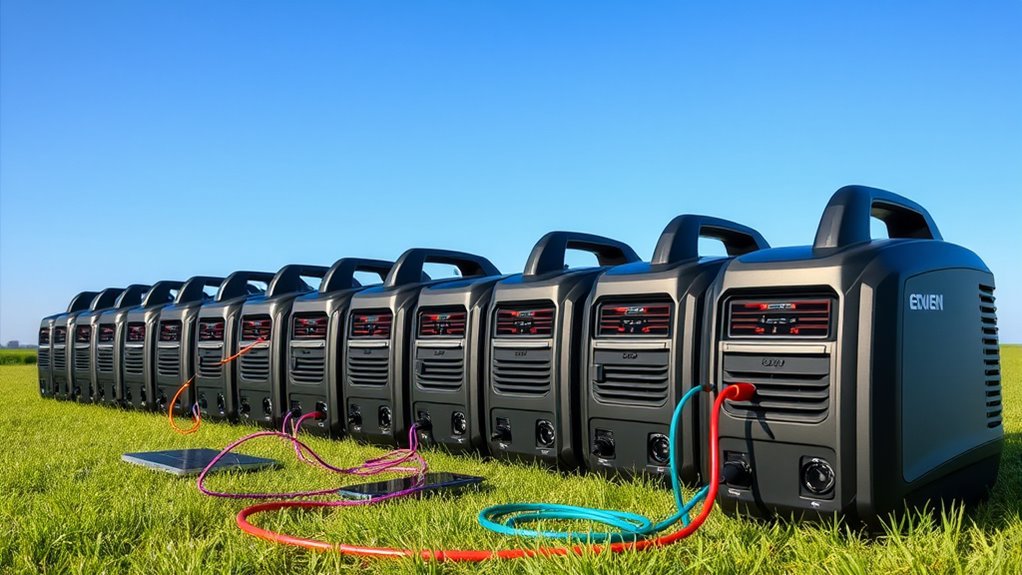

For sensitive electronics, I’d start with the Westinghouse iGen8200TFc: its low-THD positioning, tri-fuel flexibility, and transfer-switch readiness make it the strongest all-around fit in this lineup. The WEN 3600-Watt is a more compact RV-ready choice, while the AIVOLT 1600W suits lighter loads when portability and quiet operation matter more than capacity. The main tradeoff is between clean, stable power and enough output for larger appliances, plus the weight and fuel needs that come with higher wattage. I compare all 15 options by electronics suitability, practical capacity, usability, and tradeoffs so you can find the right match; read on for the full breakdown.

Get business pricing on tools and workshop supplies
- Business-only prices and quantity discounts
- Tax-exempt purchasing
- Multiple users, one account, clear invoices
Complete the kit


Key Takeaways
- The Westinghouse iGen8200TFc stands out as the strongest all-around match because its low-THD positioning is paired with tri-fuel capability and transfer-switch readiness rather than treated as a standalone feature.
- The lineup spans very different load needs: the AIVOLT 1600W favors light electronics and easier carrying, while the Westinghouse iGen12000TFc and other higher-output options target broader backup demands.
- Dual- and tri-fuel models offer choice, not free convenience. WEN’s DF360iX and DF480iX and Westinghouse’s tri-fuel models can adapt to fuel availability, but buyers still need to plan for fuel storage and runtime.
- RV-ready and high-wattage are not proof of electronics suitability. Buyers should check power-quality specifications such as total harmonic distortion and verify the output against their equipment’s requirements.
- Open-frame options trade a different ownership experience for capacity. The Oxseryn 4400-watt models may appeal for backup and RV use, but buyers prioritizing a quieter, more compact setup should compare enclosed alternatives such as the WEN 3600-Watt or Pulsar PGD40ISCO.
| WEN 3600-Watt Portable Inverter Generator, RV-Ready, Quiet and Lightweight with Fuel Shut Off |  | Best Balance of Power and Portability | Engine displacement: 149 cc | Surge power: 3,600 W | Weight: 46 lbs | VIEW ON AMAZON | See Our Full Breakdown |
| Westinghouse iGen12000TFc Tri-Fuel Portable Inverter Generator with Remote Start and CO Sensor |  | Best for Whole-Home Backup | Gasoline peak/running power: 12,000 W / 9,000 W | Propane peak/running power: 11,000 W / 8,100 W | Natural gas peak/running power: 9,800 W / 7,200 W | VIEW ON AMAZON | See Our Full Breakdown |
| Westinghouse 5000 Peak Watt Portable Inverter Generator |  | Best for Quiet, Long-Running RV Use | Peak power: 5,000 W | Total harmonic distortion: Less than 3% | Fuel type: Gasoline | VIEW ON AMAZON | See Our Full Breakdown |
| AIVOLT 1600W Super Quiet Portable Inverter Generator |  | Best Compact Pick | Starting power: 1,600 W | Running power: 1,260 W | Total harmonic distortion: Less than 3% | VIEW ON AMAZON | See Our Full Breakdown |
| Oxseryn 5000-Watt Portable Inverter Generator |  | Best for RV Outlet Capacity | Peak power: 5,000 W | Total harmonic distortion: Less than 5% | Fuel type: Gasoline | VIEW ON AMAZON | See Our Full Breakdown |
| Oxseryn 2800-Watt Portable Inverter Generator |  | Best Compact Pick | Peak wattage: 2,800 W | Running wattage: 2,000 W | Fuel: Gasoline | VIEW ON AMAZON | See Our Full Breakdown |
| Champion 4000-Watt RV-Ready Portable Inverter Generator |  | Best for RV Power and Safety | Starting power: 4,000 W | Running power: 3,000 W | Fuel: Gasoline | VIEW ON AMAZON | See Our Full Breakdown |
| 3000W Inverter Generator – Ultra Quiet Portable Gas Generator for RV |  | Best for Quiet Camping | Starting watts: 3,000 W | Running watts: 2,350 W | Engine: 97.7 cc 4-stroke OHV | VIEW ON AMAZON | See Our Full Breakdown |
| WEN DF360iX 3600-Watt Dual Fuel Portable Inverter Generator |  | Best Dual-Fuel Choice | Model: DF360iX | Fuel type: Gasoline and propane | Gasoline surge watts: 3,600 W | VIEW ON AMAZON | See Our Full Breakdown |
| Oxseryn 4400-Watt Inverter Generator, Gas Powered Open Frame with 30A RV Outlet |  | Best for Longer Runtime and Higher Loads | Peak wattage: 4,400 W | Running wattage: 3,400 W | Fuel: Gasoline | VIEW ON AMAZON | See Our Full Breakdown |
| Westinghouse iGen8200TFc Tri-Fuel Portable Inverter Generator |  | Best for Whole-Home Electronics Backup | Peak output, gasoline: 8,200 W | Running output, gasoline: 6,600 W | Running output, propane: 5,940 W | VIEW ON AMAZON | See Our Full Breakdown |
| Pulsar PGD40ISCO Ultra-Light Quiet 4000W Portable Gas Inverter Generator |  | Best Compact RV Pick | Peak power: 4,000 W | Fuel tank: 1 gallon | Runtime at half load: About 4 hours | VIEW ON AMAZON | See Our Full Breakdown |
| Oxseryn Power Equipment 4400 Watt Inverter Generator |  | Best for Lightweight Capacity | Peak power: 4,400 W | Running power: 3,400 W | Runtime at 25% load: Up to 14 hours | VIEW ON AMAZON | See Our Full Breakdown |
| ERAYAK 4500W Portable Inverter Generator |  | Best Documented Power Quality | Peak wattage: 4,500 W | Running wattage: 3,500 W | THD: 0.2%–1.2% | VIEW ON AMAZON | See Our Full Breakdown |
| WEN DF480iX 4800-Watt Dual-Fuel Portable Inverter Generator |  | Best Dual-Fuel Portable Pick | Engine: 224 cc dual-fuel | Fuel types: Gasoline and propane | Surge watts, gasoline: 4,800 W | VIEW ON AMAZON | See Our Full Breakdown |
| portable inverter generator for sensitive electronic | Noise level | Weight | Outlets |
|---|---|---|---|
| WEN 3600-Watt Portable Inverte | — | 46 lbs | — |
| Westinghouse iGen12000TFc Tri- | — | — | — |
| Westinghouse 5000 Peak Watt Po | As low as 52 dBA | — | 5–20R 120V duplex, TT-30R RV outlet, 2 USB |
| AIVOLT 1600W Super Quiet Porta | 57 dBA | 28 lbs | — |
| Oxseryn 5000-Watt Portable Inv | 70 dB at 23 feet | — | — |
| Oxseryn 2800-Watt Portable Inv | Under 58 dBA at 23 ft | 39 lb | 2 × 120V AC, 12V DC, USB, Type-C |
| Champion 4000-Watt RV-Ready Po | 64 dBA at 23 ft | Less than 49 lb | 120V 25A TT-30R, 120V 20A duplex, 12V automotive-style, parallel outlets |
| 3000W Inverter Generator | 53–56 dB at 23 ft in Eco mode | 41.8 lb | 2 × 120V 20A, USB-A, USB-C (5V/3.6A), 12V DC |
| WEN DF360iX 3600-Watt Dual Fue | — | — | Two 120V 3-prong, one TT-30R RV, one 12V DC, two 5V USB |
| Oxseryn 4400-Watt Inverter Gen | — | 56 lb | 2 × 120V AC, 30A RV, 12V DC |
| Westinghouse iGen8200TFc Tri-F | — | — | — |
| Pulsar PGD40ISCO Ultra-Light Q | 59 dB | — | — |
| Oxseryn Power Equipment 4400 W | Under 72 dBA at 23 feet | 56 lb | — |
| ERAYAK 4500W Portable Inverter | 60.5 dB(A) | 55.12 lb | 30A L5-30R/TT-30R, 2 x 120V AC, 12V DC, USB-A, USB-C |
| WEN DF480iX 4800-Watt Dual-Fue | — | — | 4 x 120V NEMA 5-20R, TT-30R RV, 12V DC, 2 x USB 5V |
More Details on Our Top Picks
WEN 3600-Watt Portable Inverter Generator, RV-Ready, Quiet and Lightweight with Fuel Shut Off
The WEN pairs 2,900 rated watts with a 46-pound frame, making it a useful middle ground for buyers who want more than a compact phone-and-laptop generator without hauling a much larger unit. Its clean inverter output is suited to sensitive electronics, and the TT-30R outlet adds a direct RV connection. Compared with the AIVOLT 1600W, it has considerably more capacity for running several devices, though the AIVOLT is lighter and quieter by specification. The WEN also offers two USB ports and a fuel shut-off that drains the carburetor before shutdown, which can help with storage. The main uncertainty is practical: the supplied product data gives no tank capacity or runtime, so I can’t judge how often it may need refueling during a long outage.
Pros:- Clean inverter output intended for sensitive electronics
- 2,900 rated watts provide useful capacity for multiple devices
- 46-pound weight is portable for its power class
- TT-30R outlet, two USB ports, and fuel shut-off add practical utility
Cons:- Fuel tank capacity and runtime are not specified in the supplied product data
- Heavier than compact options such as the AIVOLT 1600W
Best for: RV owners and campers who need clean power for electronics plus more capacity than a small, lightweight generator provides.
Not ideal for: Buyers planning long backup sessions who need a documented runtime, or anyone who prioritizes the lightest possible carry.
- Engine displacement:149 cc
- Surge power:3,600 W
- Weight:46 lbs
- 120V receptacles:2 three-prong
- RV receptacle:1 TT-30R
- USB ports:2 (5 V)
- Warranty:3 years
Our verdict“Choose the WEN if you want a portable, RV-ready step up in power for electronics and can accept unknown runtime details.”
Westinghouse iGen12000TFc Tri-Fuel Portable Inverter Generator with Remote Start and CO Sensor
For buyers who need to keep electronics running alongside larger household loads, the iGen12000TFc stands apart through 9,000 running watts on gasoline and ≤3% THD. Its tri-fuel setup can also run on propane or natural gas, reducing dependence on gasoline when one fuel source is inconvenient. Compared with the Westinghouse 5000 Peak Watt model, this generator offers far more output and transfer-switch-ready 120/240V connections, but it gives up that model’s lighter, more portable format. A stated 19-hour runtime at 25% load and remote start suit extended backup better than short camping trips. The tradeoff is substantial size and weight, and its 64 dBA eco-mode figure is not as quiet as the smaller Westinghouse’s stated 52 dBA minimum. I’d choose it for home resilience, not casual carrying.
Pros:- ≤3% THD inverter output is specified for sensitive electronics
- Tri-fuel operation offers flexibility across gasoline, propane, and natural gas
- 9,000 rated watts on gasoline support larger backup loads
- Remote start and up to 19 hours at 25% load suit extended operation
Cons:- Heavy and bulky compared with portable options such as the Westinghouse 5000 Peak Watt
- 64 dBA in eco mode is louder by specification than the smaller Westinghouse model
- Higher-capacity equipment may be more than needed for electronics-only use
Best for: Homeowners who need clean power for electronics and several household circuits, with the option to use gasoline, propane, or natural gas.
Not ideal for: Campers, apartment dwellers, or buyers who need a generator they can lift and transport easily.
- Gasoline peak/running power:12,000 W / 9,000 W
- Propane peak/running power:11,000 W / 8,100 W
- Natural gas peak/running power:9,800 W / 7,200 W
- Engine:457 cc 4-stroke OHV
- Total harmonic distortion:≤3%
- Eco-mode noise:64 dBA
- Fuel tank capacity:7.9 gallons
- Runtime at 25% load:Up to 19 hours
- Starting and safety features:Key-fob remote start; CO sensor
Our verdict“Pick the iGen12000TFc when electronics are part of a larger home-backup plan and fuel flexibility matters more than easy portability.”
Westinghouse 5000 Peak Watt Portable Inverter Generator
This Westinghouse is a strong fit when electronics need to share power with RV or household devices: its 3,900 rated watts, TT-30R outlet, and less-than-3% THD output give it a broad range of uses. It also lists three starting methods—remote, electric, and recoil—so buyers have alternatives if one method is inconvenient. Compared with the WEN 3600, it has more rated output and a stated runtime of up to 18 hours, while the WEN is lighter at 46 pounds and includes fuel shut-off. Its 52 dBA minimum noise figure is appealing for quieter settings, although real operating noise varies with load. The 3.4-gallon tank and gasoline-only fuel supply limit flexibility during prolonged outages. I’d favor it over the AIVOLT when RV capacity and runtime matter more than carrying weight.
Pros:- Less than 3% THD is specified for clean power to sensitive electronics
- 3,900 rated watts and a TT-30R outlet suit a wider range of RV loads than compact models
- Remote, electric, and recoil starting provide several starting options
- Up to 18 hours of runtime and a 52 dBA minimum noise figure support extended, quieter use
Cons:- Gasoline-only operation gives less fuel flexibility than the Westinghouse iGen12000TFc
- The 3.4-gallon tank may require refueling during extended use
- More output and RV features mean less emphasis on compact carry than the AIVOLT 1600W
Best for: RV users who want clean power for electronics, an RV outlet, quiet operation, and multiple ways to start the generator.
Not ideal for: Buyers who need dual- or tri-fuel options, or those who want a particularly light unit for frequent lifting.
- Peak power:5,000 W
- Total harmonic distortion:Less than 3%
- Fuel type:Gasoline
- Fuel tank capacity:3.4 gallons
- Maximum runtime:Up to 18 hours
- Noise level:As low as 52 dBA
- Outlets:5–20R 120V duplex, TT-30R RV outlet, 2 USB
- Starting methods:Remote, electric, and recoil
Our verdict“Choose this Westinghouse for quiet, extended RV power that can handle electronics and more substantial loads.”
AIVOLT 1600W Super Quiet Portable Inverter Generator
At 28 pounds, the AIVOLT is the easiest choice here for buyers whose main need is keeping a laptop, phone, or other modest electronics load powered away from an outlet. Its less-than-3% THD specification directly addresses power quality, while 57 dBA operation and a stated eight hours at 25% load suit camping or short backup sessions. Compared with the WEN 3600, the AIVOLT is much lighter and lists a runtime, but its 1,260 running watts leave far less room for several appliances or higher-draw equipment. The CO protection adds a safety feature, but it does not make indoor operation appropriate; generators must be used outdoors according to the manufacturer’s instructions. The supplied data also says the parallel kit is separate and engine oil is not included, so setup needs more planning than the WEN.
Pros:- 28-pound weight is the lightest in this group
- Less than 3% THD is specified for sensitive electronics
- 57 dBA noise figure and eco mode suit quieter, low-load use
- CO protection and up to eight hours at 25% load are useful for portable sessions
Cons:- 1,260 running watts limits the number and type of devices it can support
- Parallel kit is required to increase output and is not included
- Engine oil is not included, and the supplied data notes it is not legal for use in California
Best for: Campers, remote workers, and solo travelers who need a lightweight source of clean power for small electronics.
Not ideal for: RV owners or households expecting to power several appliances, since 1,260 running watts is limited compared with the WEN 3600 or Westinghouse models.
- Starting power:1,600 W
- Running power:1,260 W
- Total harmonic distortion:Less than 3%
- Weight:28 lbs
- Noise level:57 dBA
- Engine displacement:60 cc
- Runtime at 25% load:Up to 8 hours
- Fuel type:Gas
- Warranty:2 years
Our verdict“Pick the AIVOLT when easy carrying and clean power for a small electronics load matter more than running multiple appliances.”
Oxseryn 5000-Watt Portable Inverter Generator
The Oxseryn offers 4,000 rated watts and a 30A outlet in an open-frame package, making it a practical match for RV users who want to run electronics alongside larger loads. Its inverter design is described as producing clean power, but the listed THD is less than 5%, a less stringent specification than the less-than-3% figures on the Westinghouse 5000 Peak Watt and AIVOLT. That makes those alternatives easier to recommend when documented low distortion is the main priority for sensitive equipment. The Oxseryn’s 60-pound weight is manageable for some users, though its 70 dB noise figure at 23 feet and up-to-six-hour runtime at 50% load point to a louder, more frequent-refueling experience than the Westinghouse. I’d choose it for outlet capacity and general mixed-use needs, not for the quietest electronics-focused setup.
Pros:- 4,000 rated watts provide capacity beyond compact electronics-focused generators
- 30A outlet supports an RV connection
- ECO mode adjusts engine speed to demand
- 60-pound weight is portable for some users despite the open-frame design
Cons:- Less than 5% THD is a less stringent specification than the Westinghouse 5000 Peak Watt and AIVOLT
- 70 dB noise at 23 feet is louder than the Westinghouse 5000 Peak Watt’s stated 52 dBA minimum
- Two-gallon tank and up to six hours at 50% load mean more frequent refueling than the Westinghouse
Best for: RV owners who need a 30A connection and substantial rated output, and who can tolerate more noise and shorter refueling intervals.
Not ideal for: Buyers whose priority is the lowest specified distortion for delicate electronics, or campers seeking quiet operation and long runtime.
- Peak power:5,000 W
- Total harmonic distortion:Less than 5%
- Fuel type:Gasoline
- Fuel tank capacity:2 gallons
- Runtime at 50% load:Up to 6 hours
- Noise level:70 dB at 23 feet
- Outlet:30A
- Weight and design:60 lbs; open frame
Our verdict“Choose the Oxseryn for 30A RV connectivity and higher output, but favor a model with a lower stated THD if electronics protection is your main concern.”
Oxseryn 2800-Watt Portable Inverter Generator
The Oxseryn 2800 is a compact choice for powering phones, laptops, and other sensitive devices while camping or handling modest backup needs. Its under-3% THD specification points to clean inverter output, and the 39-pound weight makes it easier to move than the larger Champion 4000. It also supplies USB and Type-C ports, so small devices can connect without taking up an AC outlet.
The tradeoff is limited running output: 2,000 watts leaves less room for appliances or several devices drawing power together. Its nine-hour runtime is stated at just 25% load, and use above 4,000 feet may call for a separate high-altitude kit. Choose it for portability and electronics; skip it if you need the Champion’s higher output or an RV-ready 30A connection.
Pros:- Under-3% THD specification for sensitive electronics
- 39-pound weight with a built-in handle
- USB and Type-C ports alongside AC and DC outlets
- Up to nine hours of runtime at 25% load
Cons:- 2,000 running watts limit simultaneous appliance use
- A separate high-altitude kit may be needed above 4,000 feet
- Runtime figure applies to a light 25% load
Best for: Campers and remote workers who prioritize a lightweight generator for laptops, phones, and a few small appliances.
Not ideal for: RV owners needing a 30A outlet or households planning to run several high-draw appliances at once.
- Peak wattage:2,800 W
- Running wattage:2,000 W
- Fuel:Gasoline
- Engine displacement:79.8 cc
- Runtime:Up to 9 hours at 25% load
- Noise level:Under 58 dBA at 23 ft
- Weight:39 lb
- Outlets:2 × 120V AC, 12V DC, USB, Type-C
- Total harmonic distortion:Under 3%
Our verdict“Choose the Oxseryn 2800 if easy carrying and clean power for small electronics matter more than high running capacity.”
Champion 4000-Watt RV-Ready Portable Inverter Generator
The Champion 4000 suits RV travelers who want a dedicated TT-30R connection and more running capacity for electronics plus other onboard loads. Its under-3% THD specification supports use with sensitive devices, while CO Shield adds automatic shutdown if unsafe carbon monoxide levels are detected. Compared with the lighter Oxseryn 2800, this model offers 3,000 running watts and an RV outlet, giving buyers more flexibility at a campsite.
That extra capacity comes with tradeoffs: it is louder at 64 dBA and weighs just under 49 pounds, and the parallel kit is optional. The 10-hour runtime is listed at 25% load, not full output. Its description also says it is not recommended for emergency home backup, so I would choose it for RV use rather than as a household backup centerpiece.
Pros:- TT-30R outlet connects to compatible RVs
- Under-3% THD specification for sensitive electronics
- CO Shield provides automatic carbon monoxide shutdown
- Parallel-ready for connection to another compatible Champion inverter
Cons:- 64 dBA noise level is higher than the quietest options here
- Parallel kit is sold separately
- Not recommended for emergency home backup
Best for: RV owners who need a TT-30R connection, clean power for electronics, and CO shutdown protection in a portable unit.
Not ideal for: Buyers seeking a quieter campsite generator or a model recommended for emergency home backup.
- Starting power:4,000 W
- Running power:3,000 W
- Fuel:Gasoline
- Engine:149 cc
- Runtime:Up to 10 hours at 25% load
- Noise level:64 dBA at 23 ft
- Weight:Less than 49 lb
- Outlets:120V 25A TT-30R, 120V 20A duplex, 12V automotive-style, parallel outlets
- Total harmonic distortion:Under 3%
Our verdict“Pick the Champion 4000 for RV-ready output and CO protection if its louder operation and backup-use limitation fit your plans.”
3000W Inverter Generator – Ultra Quiet Portable Gas Generator for RV
For campsites where generator noise matters, the Evernexta 3000W pairs a stated 53–56 dB in Eco mode with under-3% THD for sensitive electronics. Its 2,350 running watts offer more headroom than the Oxseryn 2800’s 2,000 watts, while the 41.8-pound weight remains manageable for transport. USB-A and USB-C ports also let you charge small devices directly, leaving AC outlets free for other gear.
This balance makes it a quieter alternative to the Champion 4000, but it gives up some output and does not list an RV TT-30R outlet. Parallel capability can expand capacity with compatible equipment, though that means another unit and setup rather than one larger generator. The product data also stresses outdoor placement away from doors, windows, and vents; this is not equipment to run in an enclosed area.
Pros:- 53–56 dB stated noise level in Eco mode
- Under-3% THD specification for sensitive devices
- USB-A and USB-C ports plus dual 120V outlets
- Parallel capability for expanding output with a compatible unit
Cons:- 2,350 running watts offer less capacity than the Champion 4000
- No TT-30R RV outlet is listed
- Must be operated outdoors away from doors, windows, and vents
Best for: Campers and RV travelers who want quieter operation and clean power for electronics without carrying a heavier generator.
Not ideal for: Owners who need a built-in 30A RV connection or enough output for multiple demanding appliances.
- Starting watts:3,000 W
- Running watts:2,350 W
- Engine:97.7 cc 4-stroke OHV
- Noise level:53–56 dB at 23 ft in Eco mode
- Weight:41.8 lb
- Dimensions:20.08 × 13.39 × 19.69 in
- Outlets:2 × 120V 20A, USB-A, USB-C (5V/3.6A), 12V DC
- Total harmonic distortion:Under 3%
- Parallel capability:Yes
Our verdict“Choose the Evernexta for quieter electronics-friendly camping power, but look elsewhere if you need a dedicated RV outlet or greater capacity.”
WEN DF360iX 3600-Watt Dual Fuel Portable Inverter Generator
The WEN DF360iX is the lineup’s clearest fit for buyers who want fuel flexibility alongside inverter power for sensitive electronics. It runs on gasoline or propane, giving owners another option when planning fuel storage or sourcing fuel for a trip. The CO Watchdog sensor adds automatic shutdown for dangerous carbon monoxide levels. Compared with the gasoline-only Oxseryn 2800, this WEN offers a more flexible fuel setup and an RV TT-30R outlet.
The key compromise is output: the listed surge rating falls from 3,600 watts on gasoline to 3,500 on propane, and the supplied data does not state running wattage or a THD figure. Its USB ports are listed as 5V, but USB-C is not specified. I’d choose it for dual-fuel flexibility and safety features, not for buyers who need clearly documented running capacity before sizing a load.
Pros:- Runs on gasoline or propane
- CO Watchdog sensor shuts the unit down if dangerous CO levels are detected
- TT-30R outlet supports compatible RV connections
- Two USB outlets are available for small-device charging
Cons:- Surge rating is lower on propane than on gasoline
- Running wattage and THD are not specified in the supplied product data
- USB-C is not listed
Best for: Campers and RV owners who want the option to use gasoline or propane and value automatic CO shutdown.
Not ideal for: Buyers who need a stated running-watt rating, a specified THD figure, or USB-C connectivity before choosing a generator.
- Model:DF360iX
- Fuel type:Gasoline and propane
- Gasoline surge watts:3,600 W
- Propane surge watts:3,500 W
- Outlets:Two 120V 3-prong, one TT-30R RV, one 12V DC, two 5V USB
- Safety feature:CO Watchdog automatic shutdown sensor
- Warranty:3 years
Our verdict“Choose the WEN DF360iX if dual-fuel flexibility and CO shutdown matter more than having every output figure documented.”
Oxseryn 4400-Watt Inverter Generator, Gas Powered Open Frame with 30A RV Outlet
The Oxseryn 4400 stands out for buyers who need more sustained power for electronics alongside larger RV or backup loads. It delivers 3,400 running watts and lists up to 14 hours of runtime at 25% load, a much larger capacity and longer light-load interval than the Oxseryn 2800. A dedicated 30A RV outlet also makes it a more direct fit for compatible RV connections than the Evernexta 3000W.
The tradeoff is portability and noise: at 56 pounds, it is heavier than the smaller enclosed-style options, and its open-frame design may be louder. The product data lists inverter technology but does not provide a THD figure, so buyers especially focused on sensitive electronics should verify output quality with the manufacturer before connecting valuable equipment. Its longer runtime is tied to a 25% load, not continuous high-output use.
Pros:- 3,400 running watts for more connected load capacity
- Up to 14 hours of runtime at 25% load
- Dedicated 30A RV outlet
- Low-oil shutdown and overload protection
Cons:- 56-pound weight is higher than the compact options
- Open-frame design may be noisier than enclosed generators
- THD figure is not provided in the supplied product data
Best for: RV owners and backup-power buyers who need a 30A outlet, more running capacity, and long runtime at light loads.
Not ideal for: Campers who prioritize low noise and easy carrying, or electronics owners who require a published THD figure.
- Peak wattage:4,400 W
- Running wattage:3,400 W
- Fuel:Gasoline
- Fuel tank capacity:2 gal
- Runtime:Up to 14 hours at 25% load
- Weight:56 lb
- Outlets:2 × 120V AC, 30A RV, 12V DC
- Engine type:4-stroke
- Features:Inverter technology, ECO mode, cold start, low-oil shutdown, overload protection
Our verdict“Pick the Oxseryn 4400 for higher loads and long light-load runtime, but verify its power-quality details if sensitive electronics are your main concern.”
Westinghouse iGen8200TFc Tri-Fuel Portable Inverter Generator
I’d put the iGen8200TFc first for buyers who need clean power across a much larger load than the other models here. Its less-than-3% THD suits sensitive electronics, while the 50A transfer-switch-ready outlet and 6,600 running watts on gasoline give it a home-backup role the Pulsar PGD40ISCO and ERAYAK 4500W cannot match. Tri-fuel operation also lets owners use natural gas or propane when gasoline storage is inconvenient. The tradeoff is portability: this heavy-duty setup is bulkier than the roughly 55-pound ERAYAK and requires the right connections for each fuel. Its 17-hour figure is at 25% load, so expect less runtime when drawing more power. I’d choose it for capacity and fuel flexibility, not frequent moving.
Pros:- Less than 3% THD is suited to sensitive electronic equipment.
- Tri-fuel compatibility offers gasoline, propane, and natural gas options.
- 50A transfer-switch-ready outlet supports larger home-backup setups.
- Up to 17 hours of stated runtime at 25% load.
Cons:- Bulky construction makes it a poor fit for frequent transport.
- Runtime falls as the electrical load rises.
- Using different fuels calls for appropriate connections and setup.
Best for: Homeowners who need low-THD power for electronics alongside transfer-switch-ready backup and multiple fuel options.
Not ideal for: Campers or buyers who regularly carry a generator by hand; its larger, heavy-duty build is less portable than the Pulsar PGD40ISCO or ERAYAK 4500W.
- Peak output, gasoline:8,200 W
- Running output, gasoline:6,600 W
- Running output, propane:5,940 W
- Running output, natural gas:5,280 W
- THD:Less than 3%
- Runtime at 25% load:Up to 17 hours
- Fuel tank:3.9 gallons
- Noise at 25% load:60 dBA
- Engine:298 cc 4-stroke OHV
Our verdict“Choose the iGen8200TFc if clean electronics power and substantial home-backup capacity matter more than easy transport.”
Pulsar PGD40ISCO Ultra-Light Quiet 4000W Portable Gas Inverter Generator
The PGD40ISCO is the compact choice in this group for RV owners who want inverter power without stepping up to the Westinghouse iGen8200TFc’s larger home-backup format. It offers 4,000 peak watts, a stated 59 dB noise level, and compatibility with air conditioners up to 13,500 BTU, making it a more focused travel companion than a whole-home solution. Parallel readiness gives buyers a path to more capacity later, though that does not change its short solo runtime: the one-gallon tank is rated for about four hours at half load. The ERAYAK 4500W offers more listed running power and a longer claimed runtime, while this Pulsar prioritizes a compact, quiet setup. I’d favor it for RV trips where space and noise matter more than refueling intervals.
Pros:- 59 dB stated noise level supports quieter RV and campsite use.
- 4,000 peak watts in a compact, ultra-light design.
- Rated to support air conditioners up to 13,500 BTU.
- Parallel ready for increased capacity with a compatible second unit.
Cons:- One-gallon tank is rated for only about four hours at half load.
- Gasoline-only fueling offers less flexibility than the dual-fuel WEN DF480iX.
- The supplied specifications do not state a THD figure for comparing power quality.
Best for: RV travelers who need a compact inverter for electronics and a compatible air conditioner, and can refuel during extended use.
Not ideal for: Households needing long unattended runtimes or broad home-backup capacity; its one-gallon tank and four-hour half-load rating limit that use.
- Peak power:4,000 W
- Fuel tank:1 gallon
- Runtime at half load:About 4 hours
- Noise level:59 dB
- Fuel type:Gasoline
- Parallel ready:Yes
- Air-conditioner compatibility:Up to 13,500 BTU
Our verdict“Pick the PGD40ISCO for compact, quiet RV power when you can accept frequent refueling and do not need home-scale output.”
Oxseryn Power Equipment 4400 Watt Inverter Generator
At 56 pounds, the Oxseryn pairs a relatively manageable carry weight with 3,400 running watts, giving it a useful middle ground between the small-tank Pulsar PGD40ISCO and the heavier-duty Westinghouse iGen8200TFc. Its ECO-mode runtime of up to 14 hours at 25% load is appealing for lighter electronics use, but that figure should not be read as runtime under a demanding RV or household load. For sensitive electronics, it is an inverter model, but the supplied data does not give a THD value; buyers who want a documented distortion figure can compare it with the ERAYAK 4500W. The open-frame design and noise rating below 72 dBA at 23 feet also make it less suited to quiet campsites than the Pulsar or ERAYAK. I’d choose it when weight and usable output take priority.
Pros:- 3,400 running watts provide useful capacity for RV and backup loads.
- 56-pound weight is more manageable than the Westinghouse iGen8200TFc.
- Up to 14 hours of stated runtime at 25% load.
- Includes two 120V AC outlets, a 12V DC outlet, and an RV outlet.
Cons:- The supplied specifications do not state a THD figure.
- Noise is listed as under 72 dBA at 23 feet, louder than the quieter options here.
- Two-gallon tank capacity may mean refueling during extended higher-load use.
Best for: RV users and emergency-preparedness buyers who want more running capacity than a compact unit while still being able to move a 56-pound generator.
Not ideal for: Buyers seeking a documented low-THD figure or very quiet campsite operation; the listed noise is higher than the Pulsar PGD40ISCO and ERAYAK 4500W.
- Peak power:4,400 W
- Running power:3,400 W
- Runtime at 25% load:Up to 14 hours
- Fuel tank:2 gallons
- Noise level:Under 72 dBA at 23 feet
- Weight:56 lb
- AC outlets:2 x 120V
- Other outlets:1 x 12V DC and 1 RV outlet
Our verdict“Choose this Oxseryn if you want a comparatively light generator with useful running power and can accept less documented power quality and higher noise.”
ERAYAK 4500W Portable Inverter Generator
The ERAYAK earns this spot for buyers who want a clear power-quality specification alongside useful portable output. Its listed 0.2%–1.2% THD gives electronics-focused shoppers a more specific benchmark than the Oxseryn 4400, whose supplied data does not state THD. With 3,500 running watts, USB-A and USB-C, and a 30A outlet, it can handle a broader mix of devices than the smaller Pulsar PGD40ISCO. It is also listed at 55.12 pounds and 60.5 dB(A), making it a practical middleweight rather than a whole-home machine like the Westinghouse iGen8200TFc. The 16-hour runtime is a stated figure, but the supplied details do not specify its load condition, so I would not compare it directly with load-qualified runtime claims. Buyers should also plan for first-use oil setup and separately sold accessories.
Pros:- Listed THD of 0.2%–1.2% provides a specific power-quality benchmark for electronics.
- 3,500 running watts exceed the Pulsar PGD40ISCO’s 3,200 rated watts.
- USB-A, USB-C, AC, DC, and RV outlets support varied devices.
- 55.12-pound weight and 60.5 dB(A) noise rating suit portable use.
Cons:- Gasoline-only operation lacks the fuel flexibility of the WEN DF480iX.
- Parallel and wheel kits are sold separately.
- The stated 16-hour runtime does not include a load condition in the supplied specifications.
Best for: Electronics owners who want a portable gasoline inverter with a stated low-THD range, USB charging, and RV-capable output.
Not ideal for: Buyers who need multiple fuel choices or ready-to-use accessories in the box; it runs on gasoline, and the parallel and wheel kits are sold separately.
- Peak wattage:4,500 W
- Running wattage:3,500 W
- THD:0.2%–1.2%
- Runtime:Up to 16 hours; load condition not specified
- Fuel type:Gasoline
- Fuel tank:2.25 gallons
- Noise level:60.5 dB(A)
- Weight:55.12 lb
- Outlets:30A L5-30R/TT-30R, 2 x 120V AC, 12V DC, USB-A, USB-C
Our verdict“Choose the ERAYAK if a specified low-THD range and varied device charging matter more than dual-fuel operation or included accessories.”
WEN DF480iX 4800-Watt Dual-Fuel Portable Inverter Generator
The WEN DF480iX makes the most sense for buyers who want a portable generator for electronics but do not want to depend on gasoline alone. It runs on gasoline or propane, adds electric start and a CO Watchdog sensor, and has wheels and a telescoping handle—practical features the gasoline-only ERAYAK 4500W does not offer. Its 62 dB rating is a little higher than the Pulsar PGD40ISCO’s 59 dB, while the WEN’s propane runtime claim—up to 20 hours on a 20-pound tank—can suit extended lower-demand use. Output on propane is lower than on gasoline, and the supplied data gives no THD percentage, so electronics buyers seeking a stated figure may prefer the ERAYAK. The 1.9-gallon gasoline tank also means planning refills at higher loads.
Pros:- Dual-fuel operation gives buyers a choice between gasoline and propane.
- Electric start, wheels, and telescoping handle support easier operation and movement.
- CO Watchdog sensor and automatic low-oil/fuel shutdown add protective features.
- Propane runtime is listed at up to 20 hours with a 20-pound tank.
Cons:- Propane surge output is lower than gasoline output, limiting heavier loads on LPG.
- Gasoline runtime is listed at about seven hours at half load.
- The supplied specifications do not state a THD percentage.
Best for: Campers and backup-power buyers who want electric starting, portable handling, and the option to run on propane when gasoline is inconvenient.
Not ideal for: Buyers who need maximum output on propane or want a stated THD specification before connecting sensitive equipment.
- Engine:224 cc dual-fuel
- Fuel types:Gasoline and propane
- Surge watts, gasoline:4,800 W
- Surge watts, propane:4,320 W
- Gasoline tank:1.9 gallons
- Runtime, gasoline at half load:About 7 hours
- Runtime, propane with 20 lb tank:Up to 20 hours
- Noise at quarter load:62 dB
- Outlets:4 x 120V NEMA 5-20R, TT-30R RV, 12V DC, 2 x USB 5V
Our verdict“Choose the WEN DF480iX for portable electronics backup when fuel flexibility and easy handling outweigh a documented THD figure or maximum propane output.”

How We Picked
I ranked these generators around the needs of electronics owners, not wattage alone. The main criteria were stated power-quality features, usable running output, outlet and RV compatibility, fuel flexibility, portability, noise-related design cues, safety features, and ease of operation. A low-THD claim or inverter design can help identify a candidate, but buyers should confirm the exact specification and match it to their equipment; a generator’s peak-watt figure does not describe its continuous capacity.
The ranking favors models that pair electronics-relevant power claims with practical controls and useful flexibility. That puts the Westinghouse iGen8200TFc near the top for its stated low-THD feature set and tri-fuel design, while compact choices rank well for lighter loads rather than broad backup duty. Higher wattage does not automatically move a generator up: weight, fuel demands, design, and unclear power-quality details can make a smaller or more clearly specified option a better fit. I treat product names and feature claims as selection signals, not substitutes for checking the manufacturer’s specifications for the exact model.
Factors to Consider When Choosing Portable Inverter Generator For Sensitive Electronics
Choosing a generator for electronics takes more than matching a wattage number. I’d work from the devices you actually plan to run, then check power quality, load peaks, operating conditions, and fuel plans before choosing a size. These broader checks can prevent both overspending on capacity and relying on a generator that does not suit your equipment.
Check Power Quality, Not Just the Inverter Label
Inverter generators are commonly chosen for electronics because they can produce steadier output than many conventional open-frame generators, but the label alone does not answer every compatibility question. Look for a published total harmonic distortion figure and compare it with guidance from the device maker, especially for medical equipment, audio systems, computers, and sensitive chargers. Do not assume that “clean power” or “safe for electronics” means every connected device is covered under every condition. If a manufacturer does not publish a relevant specification, ask for it before relying on that model for critical equipment. For especially valuable devices, a suitable surge protector or an uninterruptible power supply can add protection, but neither fixes an overloaded or poorly maintained generator.
Size for Running Loads and Startup Surges
Make a list of the devices you need at the same time and add their running wattage, then check whether motors, compressors, pumps, or some power supplies draw more when starting. A generator advertised by its peak output may have a lower continuous rating, so size decisions should use the running figure and account for startup demand. Avoid sizing right at the limit: heavy loading can leave little room for changing conditions or an additional device. Oversizing also has a cost in bulk, fuel use, and carrying effort, so a large backup unit is not automatically the best choice for a laptop and a router. If you are unsure about a device’s draw, check its label or manufacturer documentation instead of estimating from the device category.
Treat Fuel Flexibility as a Logistics Choice
Gasoline, propane, and tri-fuel capability can make a difference when one fuel is difficult to obtain, but extra fuel options do not guarantee longer runtime or easier ownership. Compare the manufacturer’s runtime figures at a stated load, and note which fuel those figures use; runtime can change substantially with demand and fuel type. Propane may be easier to store for some households, while gasoline can be more readily available but requires attention to storage and freshness. Dual- and tri-fuel systems also call for the correct connection and operating procedure, so confirm the supplied equipment and follow the manual. Choose flexibility when your fuel plan benefits from it, not simply because a longer list of fuel types sounds better.
Plan for Noise, Placement, and Safe Use
A quiet-operation claim is only useful when the generator can be placed safely and at a workable distance from people, neighbors, and the equipment it powers. Read the manufacturer’s noise measurement conditions, since distance and load affect what a published decibel figure means in practice. Never run a fuel-burning generator indoors, in a garage, or near open windows; follow the manual and local guidance for outdoor placement and carbon-monoxide safety. A CO sensor is a useful safety feature, not permission to operate the unit in an unsafe location. For RV or home use, think through cable reach, weather protection, exhaust direction, and where the unit can sit before choosing based on portability alone.
Match the Outlets to Your Setup
List the plugs and circuits your devices require before choosing a generator, including whether you need standard household receptacles, an RV connection, or a transfer-switch connection. An RV-ready outlet does not by itself establish that the generator can safely power every onboard device at once. For home backup, use a properly installed transfer switch or another approved connection method; never feed a home circuit through a wall outlet. Check whether the generator includes the cables or adapters you need and whether the outlet’s amperage fits the intended load. This prevents a common mismatch: buying enough watts but discovering the connection method does not fit the setup.
Balance Portability Against the Backup You Need
“Portable” can mean manageable for one person, movable only with wheels, or simply transportable in a vehicle with help. Compare the generator’s weight and dimensions with your real routine: lifting into a trunk, storing it between outages, or moving it around a campsite. Compact models such as a low-wattage unit can be easier to handle, but may not support a refrigerator or several household loads. Higher-output choices can cover more needs while demanding more room, fuel, and effort. Pay more for capacity or fuel flexibility only when those features solve a specific problem in your load plan or operating conditions.
Frequently Asked Questions
Can I connect a laptop, router, or phone charger directly to an inverter generator?
Often, yes, but the generator should match the device maker’s power requirements and have suitable output quality. Check the generator’s published total harmonic distortion and the device’s voltage and frequency requirements rather than relying on the word “inverter” alone. Use an undamaged, correctly rated cord and avoid running the generator near moisture or inside an enclosed space. For equipment that must stay online, a UPS can bridge brief fluctuations or allow a safe shutdown. It is an added layer, not a replacement for choosing a properly specified generator.
Is a low-THD generator necessary for every electronic device?
Not every device has the same sensitivity, and many ordinary chargers tolerate a range of power conditions. Low THD is a helpful specification when powering equipment with sensitive electronics, but the acceptable limit depends on the device and its manufacturer’s guidance. I would give it more weight for medical devices, computers, audio gear, and equipment that is expensive or difficult to replace. If the generator’s THD is not published, contact the manufacturer rather than assuming it is low. Pairing suitable power quality with sensible load management gives a more reliable basis for a decision.
How much generator output do I need for electronics during an outage?
Start by totaling the running wattage of the devices you expect to use at the same time, then account for startup surges from anything with a motor or compressor. A phone and laptop setup may need far less capacity than a plan that includes a refrigerator, sump pump, or window air conditioner. Check continuous watts, not only the peak number shown in a product name or headline. Leave some headroom so an added load does not push the unit to its limit. If the load figures are unclear, check the appliance labels or manufacturer documentation before buying.
Should I choose a dual-fuel or tri-fuel generator for electronics backup?
Fuel type does not by itself determine whether output is suitable for electronics; power-quality specifications and capacity still matter. Dual- or tri-fuel capability can help when your preferred fuel is unavailable or you want a storage plan that does not rely solely on gasoline. Compare runtime claims by fuel and load, and factor in storage, connection needs, and the manufacturer’s operating instructions. A single-fuel model may be simpler if you already have a dependable supply and do not need alternatives. Choose added fuel flexibility for a real supply or storage need, not as a substitute for checking electrical specifications.
Can I use an RV-ready generator to power sensitive electronics in my home?
An RV-ready outlet describes a connection option; it does not automatically confirm home compatibility or safe power quality. Check the generator’s outlet ratings, power specifications, and the requirements of the devices you intend to run. For a home circuit, use a properly installed transfer switch or another approved connection method, never a backfeed cord plugged into a household outlet. Keep the generator outdoors and follow the manual’s placement and carbon-monoxide safety instructions. If you plan to power fixed home circuits, have a qualified electrician confirm the setup.
Conclusion
For the best overall balance in this roundup, I’d choose the Westinghouse iGen8200TFc, particularly if its low-THD specification and tri-fuel options fit your backup plan. For a best value in practical capacity, compare the WEN 3600-Watt and WEN DF360iX: the former favors a straightforward RV-ready setup, while the latter adds dual-fuel choice. The best premium-style pick for broad backup needs is the Westinghouse iGen12000TFc, but its higher output makes most sense when you can use that capacity and manage the added size and fuel demands. For beginners with light loads, the AIVOLT 1600W is a simpler scale of generator to evaluate, though it will not cover heavier appliances. If you need a compact, quiet-oriented option, look at the Pulsar PGD40ISCO; for a larger open-frame RV or backup setup, compare the two Oxseryn 4400-watt models. Before deciding, verify the exact model’s continuous output, power-quality data, outlets, and safe operating instructions against your own devices.