A portable welder generator combines welding capability with on-site power, but the right choice depends on whether welding output, generator capacity, or easy transport matters most. My best overall pick is the Miller Electric Bobcat 230 for buyers prioritizing a proven engine-driven welding platform, while the Klutch 11kW stands out for higher generator output and the Tomahawk TWG120A for a lighter-duty, inverter-based setup. These options differ sharply in welding amperage, auxiliary power, portability, and added equipment, so a larger spec sheet does not automatically mean a better field tool. I also weigh the tradeoff between an all-in-one machine and a simpler welder-generator built for a narrower job. Read on for the full breakdown and guidance on matching capacity to your work.

Get business pricing on tools and workshop supplies
- Business-only prices and quantity discounts
- Tax-exempt purchasing
- Multiple users, one account, clear invoices
Complete the kit


Key Takeaways
- The Miller Bobcat 230 is the strongest all-around choice in this lineup for buyers seeking a dedicated engine-driven welder-generator, while compact inverter models favor easier transport over welding headroom.
- The Klutch 11kW is the standout for auxiliary power; its higher generator capacity suits jobs that need to run more than welding equipment, but that capability may add bulk compared with smaller units.
- Output numbers describe different jobs, not a simple ranking. Welding amperage and generator wattage serve separate needs, so buyers should match both figures to their actual electrode and tool requirements.
- The MutsMover is the specialist pick for bundled capability, combining a welder and generator with an air compressor, though its 30-gallon tank and multi-function design make it a different portability proposition.
- Several models have limited information in their names alone. Before choosing the Champion 145, Zinnore, or other less-detailed listings, verify duty cycle, outlet details, starting method, and supported welding processes.
| Tomahawk TWG120A 120-Amp Stick Welder and 2,200-Watt Inverter Generator |  | Best Compact Package | Welding output: 120 A | Duty cycle: 60% | Generator output: 2,200 W | VIEW ON AMAZON | See Our Full Breakdown |
| Miller Electric Bobcat 230 Gasoline Engine-Driven Welder Generator |  | Best for Professional Site Work | Model: Bobcat 230 | Model number: 907824 | Manufacturer: Miller Electric | VIEW ON AMAZON | See Our Full Breakdown |
| Champion 145 Engine-Driven Welder, Recoil Start, Gas, 4750W Peak |  | Best for Extended Generator Use | Welding amperage range: 40–145 A | Continuous auxiliary power: 4,000 W | Peak auxiliary power: 4,750 W | VIEW ON AMAZON | See Our Full Breakdown |
| Portable 2000-Watt Engine-Driven Stick Welder, 130 Amp |  | Best Lightweight Pick | Model: zin150 | Welding output: 130 A | Generator output: 2,000 W DC | VIEW ON AMAZON | See Our Full Breakdown |
| Klutch 11kW Engine-Driven Inverter Stick Welder/Generator |  | Best High-Capacity Pick | Welding amperage range: 20–260 A | Maximum welding output: 260 A DC | Maximum power output: 11 kW | VIEW ON AMAZON | See Our Full Breakdown |
| Zinnore 4500W Generator and 160A Stick Welder |  | Best Compact All-Rounder | Continuous generator output: 4.2 kW | Surge generator output: 4.5 kW | Welding output: 160 A DC | VIEW ON AMAZON | See Our Full Breakdown |
| MutsMover 3-in-1 Gas-Powered Air Compressor, Generator, and Welder, 15 HP, 30-Gallon Tank |  | Best for Air-Tool Jobsite Work | Engine: CH440, 15 HP | Fuel: Gasoline | Tank capacity: 30 gallons, ASME-certified | VIEW ON AMAZON | See Our Full Breakdown |
| Tomahawk 15 HP Engine-Driven Portable 2000-Watt Generator with 210 Amp Stick and TIG Welder Kit | 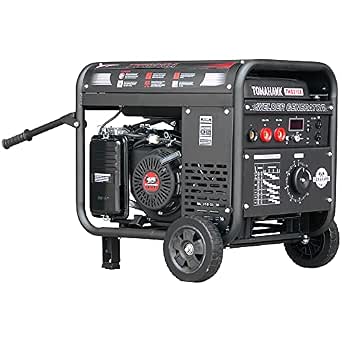 | Best for Higher-Amperage Welding on a Smaller Generator | Welding output: 210 A | Running wattage: 2,000 W | Maximum generator output: 3,000 W | VIEW ON AMAZON | See Our Full Breakdown |
| Hobart Champion Elite 225 Engine-Driven Generator and Stick Welder |  | Best for Maximum Auxiliary Power | Welding output: 225 A DC | Continuous auxiliary power: 9,500 W | Peak auxiliary power: 10,000 W | VIEW ON AMAZON | See Our Full Breakdown |
| portable welder generator | Engine | Welding output |
|---|---|---|
| Tomahawk TWG120A 120-Amp Stick | 4-stroke, 208 cc, 7 hp | 120 A |
| Miller Electric Bobcat 230 Gas | Kohler CH730 | — |
| Champion 145 Engine-Driven Wel | Briggs & Stratton, 418 cc, 4-stroke | — |
| Portable 2000-Watt Engine-Driv | — | 130 A |
| Klutch 11kW Engine-Driven Inve | 764 cc, 14 hp | — |
| Zinnore 4500W Generator and 16 | — | 160 A DC |
| MutsMover 3-in-1 Gas-Powered A | CH440, 15 HP | — |
| Tomahawk 15 HP Engine-Driven P | 420 cc, 15 HP maximum | 210 A |
| Hobart Champion Elite 225 Engi | — | 225 A DC |
More Details on Our Top Picks
Tomahawk TWG120A 120-Amp Stick Welder and 2,200-Watt Inverter Generator
The TWG120A is the most manageable all-in-one choice here for buyers who need a welder and modest tool power in one wheeled frame. Its 120-amp stick output and 2,200-watt inverter generator suit repair jobs and lighter site tasks, while compatibility with several electrode sizes gives it more flexibility than the basic 130-amp DC unit from zinnore. At 99 pounds, it is far easier to move than the 235-pound Champion 145, though the wheels help more with rolling than with lifting into a truck. The tradeoff is limited auxiliary output compared with the Klutch 11kW, and its gasoline engine still needs fuel and maintenance. I’d pick it when transport and a compact footprint matter more than high welding amperage or heavy generator loads.
Pros:- Combines a 120-amp stick welder and 2,200-watt inverter generator in one unit.
- Supports several listed stick electrode sizes for varied repair work.
- Never-flat wheels make it easier to roll around a work area.
- Includes a two-year manufacturer warranty.
Cons:- At 99 pounds, it is still awkward for one person to lift into a vehicle.
- The 2,200-watt generator output is modest beside the Champion 145 and Klutch 11kW.
- Gasoline operation requires refueling and engine upkeep.
Best for: Mobile property owners and repair crews who need a wheeled stick welder with enough inverter power for lighter 120V tools.
Not ideal for: Fabricators who need high-amperage welding or substantial 120V/240V auxiliary power; the Klutch 11kW offers much more capacity.
- Welding output:120 A
- Duty cycle:60%
- Generator output:2,200 W
- Engine:4-stroke, 208 cc, 7 hp
- Fuel and tank:Gasoline; 1.6 gallons
- Weight:99 lb
- Dimensions:28 × 22 × 23 in
- Outlets:2
- Warranty:2 years
Our verdict“Choose the TWG120A for a relatively compact, wheeled welder-generator package when moderate welding and tool power are enough.”
Miller Electric Bobcat 230 Gasoline Engine-Driven Welder Generator
The Bobcat 230 earns its place for buyers who value controlled welding performance and usable auxiliary power on active job sites. Its single-knob control makes amperage and voltage adjustments straightforward, and the product description highlights smooth arcs with both 7018 and 6010 electrodes. Another practical distinction is that auxiliary power can operate without arc interference, a useful advantage when workers need to run equipment while welding. Compared with the compact Tomahawk TWG120A, the Bobcat is aimed at more demanding construction, maintenance, and farm work rather than occasional repairs. The listing does not provide welding amperage, generator wattage, weight, or fuel capacity, which makes capacity and transport planning harder than with the spec-heavy Klutch 11kW. Its gasoline engine also means fuel and routine service are part of the setup.
Pros:- Single-knob control simplifies setting and viewing amperage and voltage.
- Designed for smooth arcs with 7018 and 6010 stick electrodes.
- Auxiliary power is specified to operate without arc interference.
- Smaller and lighter than previous Bobcat models, according to the product description.
Cons:- The supplied product data does not state welding amperage or generator output.
- Weight is not provided, complicating transport and loading decisions.
- Gasoline engine requires fuel and ongoing engine maintenance.
Best for: Construction and maintenance crews who need a job-site machine with straightforward controls, stick and flux-cored capability, and auxiliary power during welding.
Not ideal for: Buyers who need published output and weight figures before choosing, or solo users who need a clearly lightweight machine for frequent lifting.
- Model:Bobcat 230
- Model number:907824
- Manufacturer:Miller Electric
- Fuel:Gasoline
- Engine:Kohler CH730
- Engine power:23.5 hp
- Welding types:Stick and flux-cored
- Dimensions:21 × 38 × 27 in
Our verdict“The Bobcat 230 suits crews prioritizing job-site welding controls and concurrent auxiliary power, provided they can confirm its output and weight for their needs.”
Champion 145 Engine-Driven Welder, Recoil Start, Gas, 4750W Peak
The Champion 145 is a strong fit when auxiliary power and fuel capacity matter as much as welding. It supplies 4,000 watts continuous and 4,750 watts peak through five outlets, backed by a 6.25-gallon tank; that is a substantial step up from the Tomahawk TWG120A’s 2,200-watt generator output. The stated 40–145A range covers a wider welding span than the TWG120A’s 120A maximum, while the listed AC and DC options add flexibility for site power needs. The cost of that capacity is portability: at 235 pounds, it is the heaviest clearly specified machine in this group, and recoil starting demands more effort than electric start on the Klutch. The listed 50Hz frequency may also limit compatibility with equipment intended for 60Hz supply, so check tool requirements before relying on it.
Pros:- Provides 4,000 watts continuous auxiliary power and 4,750 watts peak.
- 6.25-gallon tank supports longer operation between refueling stops.
- Five outlets and AC/DC output options offer varied connection choices.
- 40–145A welding range covers more output than the Tomahawk TWG120A.
Cons:- At 235 pounds, it is difficult to load or reposition without suitable help or equipment.
- Recoil start takes more physical effort than the Klutch’s electric start.
- Listed 50Hz frequency may not suit equipment designed for 60Hz.
Best for: Users who need a substantial auxiliary power supply and long fuel intervals for remote work, with welding capacity up to 145A.
Not ideal for: People who frequently move a welder by hand or need a lighter transportable unit; the 235-pound weight favors planned placement over easy carrying.
- Welding amperage range:40–145 A
- Continuous auxiliary power:4,000 W
- Peak auxiliary power:4,750 W
- Engine:Briggs & Stratton, 418 cc, 4-stroke
- Fuel tank:6.25 gallons
- Outlets:5
- Weight:235 lb
- Frequency:50 Hz
Our verdict“Pick the Champion 145 when auxiliary power and a large fuel tank outweigh the burden of moving a 235-pound machine.”
Portable 2000-Watt Engine-Driven Stick Welder, 130 Amp
At 74.8 pounds, this zinnore unit is the easiest listed machine in this batch to move by hand, making it the clearest choice for buyers who put portability ahead of broad functionality. It pairs 130A stick welding with a 2,000-watt DC generator and claims up to six hours of operation, giving it a practical role for outdoor repairs where grid power is unavailable. Compared with the heavier Tomahawk TWG120A, it weighs less and offers a slightly higher stated welding output; the Tomahawk, by contrast, specifies an inverter generator and multiple electrode sizes. This model is limited to stick welding and its generator output is DC, so it is not a direct substitute for machines offering broader auxiliary power. The available data also leaves engine and fuel-tank details unspecified.
Pros:- Listed weight of 74.8 pounds makes it lighter than the Tomahawk TWG120A and Champion 145.
- 130A welding output exceeds the Tomahawk TWG120A’s stated 120A.
- Combines stick welding with 2,000 watts of DC generator output.
- Product description claims up to six hours of operation.
Cons:- Limited to stick welding, unlike the Bobcat 230’s stick and flux-cored capability.
- DC-only generator output restricts the types of auxiliary equipment it can power.
- Engine and fuel-tank specifications are not provided in the supplied data.
Best for: Farm owners and mobile repair workers who need a comparatively light engine-driven stick welder for outdoor ferrous-metal repairs.
Not ideal for: Buyers who need AC generator power, multiple welding processes, or detailed engine and fuel specifications before purchase.
- Model:zin150
- Welding output:130 A
- Generator output:2,000 W DC
- Runtime:Up to 6 hours
- Weight:74.8 lb
- Package dimensions:21 × 17 × 17 in
- Power source:DC
- Welding process:Stick
Our verdict“Choose this zinnore model if low listed weight and outdoor stick welding matter more than AC power or process flexibility.”
Klutch 11kW Engine-Driven Inverter Stick Welder/Generator
The Klutch is the most capable option here for buyers who need one machine to handle high-amperage stick welding and substantial site power. Its 260A DC welding output, 11kW maximum power, and 120V/240V outlets far exceed the Tomahawk TWG120A’s 120A and 2,200W ratings. The 60% duty cycle at 260A and stated support for material up to 5/8 inch point toward heavier fabrication tasks, while electric start and an LCD screen make operation more accessible than the Champion 145’s recoil start. Capacity brings bulk: a 764cc gasoline engine and eight-gallon tank are a considerable commitment for buyers who only need occasional repairs. Runtime figures also conflict in the supplied details, which give both six and seven hours, so I would not plan a shift around the longer claim without confirmation.
Pros:- 260A DC welding output and 60% duty cycle at maximum output suit demanding stick-welding work.
- 11kW maximum power with 120V and 240V outlets provides broad auxiliary capacity.
- Electric start and LCD screen simplify starting and monitoring settings.
- Supports listed material thicknesses up to 5/8 inch.
Cons:- Runtime information conflicts between six and seven hours in the supplied product details.
- The 764cc gasoline engine and eight-gallon tank make it a substantial machine for light-duty users.
- High output may be unnecessary for buyers whose work stays near the Tomahawk TWG120A’s 120A range.
Best for: Fabricators and site crews who need high-amperage DC stick welding plus 120V/240V power from one gasoline-driven machine.
Not ideal for: Occasional repair users or anyone prioritizing a light, easy-to-carry unit; the large engine and eight-gallon tank favor capacity over compactness.
- Welding amperage range:20–260 A
- Maximum welding output:260 A DC
- Maximum power output:11 kW
- Voltage:120/240 V
- Engine:764 cc, 14 hp
- Fuel tank:8 gallons
- Duty cycle:60% at 260 A
- Frequency:60 Hz
- Outlets:Two sets of 120V GFCI, one 240V 3-pin, and one 240V 4-pin
Our verdict“Choose the Klutch when high welding output and 120V/240V generator capacity justify a larger gasoline-powered machine.”
Zinnore 4500W Generator and 160A Stick Welder
The Zinnore pairs 160A DC stick welding with 4.2 kW of continuous generator output in a 22 × 16 × 22-inch package. That balance suits repair work where I need to power welding and general tools without stepping up to a larger engine-driven machine. Its 120V pure sine wave output is a useful distinction from units that list generator capacity without describing waveform, particularly when sensitive electronics are part of the load. It also accepts electrodes from 1/32 to 5/32 inch, giving it more rod flexibility than the 120A Tomahawk TWG120A. The tradeoff is a 60% duty cycle, which calls for pauses during sustained welding, and it cannot match the Champion Elite 225’s higher 225A welding output or 9.5 kW continuous auxiliary power. I would choose it for mixed, moderate-duty tasks rather than long, high-output welds.
Pros:- Combines a 160A DC stick welder and generator in one unit.
- 4.2 kW continuous output can support jobsite tools alongside welding needs.
- 120V pure sine wave output is specified for sensitive electronics.
- Accepts a broad 1/32–5/32-inch electrode range.
Cons:- The 60% duty cycle requires breaks during extended welding.
- Fuel-powered operation requires carrying and replenishing fuel.
- The listed 120V output and 160A welding capacity fall short of higher-output options such as the Hobart Champion Elite 225.
Best for: Mobile repair workers and property owners who want a relatively compact fuel-powered unit for moderate stick welding and 120V tool or appliance power.
Not ideal for: Welders running prolonged high-amperage jobs or needing 240V output; the listed 60% duty cycle and 120V specification make this a less suitable fit.
- Continuous generator output:4.2 kW
- Surge generator output:4.5 kW
- Welding output:160 A DC
- Duty cycle:60%
- Electrode size:1/32–5/32 in
- Voltage and frequency:120 V, 60 Hz
- Power source:Fuel-powered
- Dimensions:22 × 16 × 22 in
Our verdict“Choose the Zinnore for compact, mixed-use repair work where 160A welding and clean 120V power matter more than extended duty or maximum output.”
MutsMover 3-in-1 Gas-Powered Air Compressor, Generator, and Welder, 15 HP, 30-Gallon Tank
The MutsMover’s main distinction is its three-function setup: compressor, generator, and a welder power system. Its strongest documented capability is air delivery: a 19 CFM, 180 PSI two-stage cast-iron pump and ASME-certified 30-gallon tank make it more relevant to crews using pneumatic tools than the welding-focused Zinnore or Hobart Champion Elite 225. The generator is rated at 5,400W, with 6,000W maximum output and both 120V and 240V outlets, adding practical flexibility for remote work. But the provided specifications do not identify welding amperage, process, or duty cycle. That gap makes it hard to judge as a welder-generator purchase, especially beside the Champion Elite’s stated 225A stick output or the Zinnore’s specified 160A. I would shortlist it when compressed air drives the decision, but verify welder details with the seller before relying on it for welding.
Pros:- Combines compressor, generator, and welder power system in one gas-powered unit.
- 19 CFM airflow and 180 PSI support demanding pneumatic tools.
- ASME-certified 30-gallon tank provides substantial air storage.
- 5,400W rated generator output with 120V and 240V outlets.
Cons:- Welder amperage, process, and duty cycle are not specified in the provided data.
- A 30-gallon tank and integrated equipment make it a substantial setup for transport.
- Gasoline operation requires fuel and adds engine upkeep.
Best for: Mobile contractors and repair crews whose regular work depends on high-volume compressed air, with generator capability and welding as additional functions.
Not ideal for: Buyers choosing primarily on welding performance; the available product data does not state welding output, process, or duty cycle.
- Engine:CH440, 15 HP
- Fuel:Gasoline
- Tank capacity:30 gallons, ASME-certified
- Airflow capacity:19 CFM
- Maximum pressure:180 PSI
- Pump:Two-stage, belt-driven cast iron
- Generator output:5,400W rated; 6,000W maximum
- Generator voltage:120V / 240V
Our verdict“Pick the MutsMover when air-tool capacity is the priority, but confirm its welding specifications before treating it as a dependable welding solution.”
Tomahawk 15 HP Engine-Driven Portable 2000-Watt Generator with 210 Amp Stick and TIG Welder Kit
The Tomahawk is the welding-led choice here: its 210A welder offers more stated amperage than the Zinnore’s 160A, while its generator is rated at 2,000W running and 3,000W maximum. That split favors buyers who want welding capacity and modest auxiliary power, not a generator-first machine. The listed stable inverter sine wave and electronic amperage readout point toward controlled welding and steadier power for connected tools, though the product description’s mention of both stick and TIG should be checked against the included kit and process requirements. Its 202-pound weight is a real portability limit: compared with the much higher auxiliary output of the Hobart Champion Elite 225, this Tomahawk is not the pick for powering heavier loads, and it is still a substantial lift. Three outlets also restrict how many devices I can connect at once.
Pros:- 210A welding output exceeds the Zinnore’s stated 160A capacity.
- Inverter sine wave output is specified for stable power.
- Electronic amperage readout supports more precise setting adjustments.
- 15 HP gasoline engine and 7-gallon tank provide an engine-driven setup for remote work.
Cons:- At 202 pounds, it is difficult to move and set up without help or suitable handling equipment.
- Running generator output is 2,000W, well below the Hobart Champion Elite 225’s 9,500W continuous rating.
- Three power outlets limit simultaneous connections.
Best for: Welders who value a stated 210A output and electronic amperage control more than high generator capacity or easy one-person handling.
Not ideal for: Crews needing strong continuous auxiliary power, frequent relocation by one person, or many simultaneous electrical connections.
- Welding output:210 A
- Running wattage:2,000 W
- Maximum generator output:3,000 W
- Starting wattage:6,000 W
- Engine:420 cc, 15 HP maximum
- Fuel tank:7 gallons
- Voltage and frequency:120 V, 60 Hz
- Weight:202 lbs
- Power outlets:3
Our verdict“Choose this Tomahawk if 210A welding and adjustable control outweigh low running-watt capacity and the challenge of moving a 202-pound machine.”
Hobart Champion Elite 225 Engine-Driven Generator and Stick Welder
The Hobart Champion Elite 225 ranks highest for buyers who need a serious generator as well as a stick welder: it combines 225A DC output with 9,500W continuous and 10,000W peak auxiliary power. That is a much larger power reserve than the Zinnore’s 4.2 kW continuous rating or the Tomahawk’s 2,000W running output, so it better fits demanding jobsite loads alongside welding. Its stated 20% weight reduction from the previous model is a handling improvement, though it does not make an engine-driven steel machine effortless to move. The main compromise is limited flexibility: it is designed for stick welding, and the listed configuration has just one power outlet. Gasoline dependence also means planning for fuel. I would choose it for high-output field work, not for buyers who need multiple connections or a multi-process welder.
Pros:- 225A DC stick output provides the highest stated welding amperage among these four products.
- 9,500W continuous auxiliary power exceeds the Zinnore and Tomahawk generator ratings.
- 10,000W peak auxiliary output supports loads that need more starting power.
- Reported 20% weight reduction from the previous model eases handling compared with its predecessor.
Cons:- Stick-welding design does not provide the process range some buyers may need.
- One listed power outlet limits simultaneous connections.
- Gasoline engine operation requires fuel and regular engine maintenance.
Best for: Welding contractors and remote crews who need high-amperage stick welding plus substantial continuous AC power for jobsite equipment.
Not ideal for: Buyers who need TIG or other welding processes, several simultaneous outlet connections, or a fuel-free setup.
- Welding output:225 A DC
- Continuous auxiliary power:9,500 W
- Peak auxiliary power:10,000 W
- Fuel type:Gasoline
- Maximum engine power:23 HP
- Engine type:Internal combustion
- Power outlets:1
- Material:Steel
Our verdict“Choose the Hobart Champion Elite 225 when high auxiliary power and 225A stick welding take priority over outlet count and multi-process versatility.”

How We Picked
I compared these nine machines as portable welder generators, rather than treating welding output or generator wattage as the only measure of quality. The main criteria were stated welding amperage and process support, generator output for auxiliary tools, portability clues such as engine-driven design and added equipment, and practical usability details including starting method and configuration. I also considered how clearly each product’s stated specifications let a buyer judge fit for field repairs, occasional property work, or broader jobsite use.
The ranking favors products with a clearly defined role and useful balance between welding and power generation. That puts the Miller Bobcat 230 first as the most recognizable dedicated all-around platform in this group, with the Klutch 11kW and Tomahawk options rising for distinct output or compact-use priorities. Multi-function equipment ranks by usefulness to a specific buyer, not by feature count alone. Where the supplied product information omits details such as duty cycle or outlet configuration, I treat that uncertainty as a drawback and recommend checking the full manufacturer specifications before purchase.
Factors to Consider When Choosing Portable Welder Generator
Choosing a portable welder generator is less about finding the biggest number and more about avoiding a mismatch between welding demands, auxiliary loads, and how the machine will reach the job. I use these factors to narrow the field before comparing individual models.
Match Welding Amperage to Your Actual Electrode Work
Start with the electrodes and material thickness you expect to handle, then check the welder’s usable amperage range and duty cycle. A headline maximum does not tell you how long a machine can weld at that setting before it needs a cooling pause. Buyers who mostly make light repairs may value lower weight and simpler output more than high amperage. For repeated heavier passes, confirm the operating range at the amperage you need, not just the peak figure. A common mistake is buying extra amperage without checking whether the machine can sustain the intended workload. If the listing does not give a duty cycle, look for the manufacturer’s full specification sheet before committing.
Treat Generator Wattage as a Separate Requirement
Welding capacity and generator output answer different questions: one governs arc work, while the other determines which tools and appliances can run from the unit. List the equipment you plan to power and add its running demand, then account for startup surges from motors. Peak wattage should not be treated as continuous output, and outlet type and voltage matter as much as the advertised total. Buyers who need only modest auxiliary power may not benefit from carrying a larger generator section. On the other hand, a machine like the Klutch 11kW can be a better fit when several jobsite loads are part of the plan. Check whether welding and auxiliary power can be used at the same time if that matters to your workflow.
Define Portability by the Whole Setup
The word portable can cover very different machines, from compact inverter-based units to engine-driven equipment with substantial frames and accessories. Think through the route from vehicle to work area, including ramps, uneven ground, stairs, and whether one person must move the machine. Weight is only part of the picture: handles, wheels, lifting points, and overall footprint affect how readily it can be deployed. A built-in compressor or larger tank may save trips and separate equipment, but it also changes storage and transport needs. Avoid choosing by the product title alone; confirm dimensions, shipping weight, and whether transport hardware is included. If the unit will stay on a truck or trailer, output may matter more than hand-carry convenience.
Check Process Support and Included Welding Equipment
Many portable welder generators focus on stick welding, while some listings mention TIG capability or sell a process-specific kit. Confirm whether a process is built into the machine or depends on separately purchased controls, leads, torches, or other accessories. Also check what comes in the box: clamps, cables, and connectors can affect how quickly the unit is ready for work. Do not assume that a mention of TIG means every TIG method or material is supported. Buyers who need only stick welding should avoid paying for unused capability, while users who switch processes should confirm the full configuration first. Compatibility details matter more than a broad process label.
Plan for Fuel, Starting, Noise, and Routine Service
An engine-driven welder-generator adds refueling and maintenance to the ownership routine, so review fuel type, tank capacity, run time, oil requirements, and service access. These details help estimate whether the machine suits a short repair visit or a full day away from a power source. Recoil start can be straightforward but may be less convenient than an electric-start setup, particularly with frequent stops. Gas-powered units also create exhaust and noise, so indoor use is not appropriate and worksite placement needs thought. Buyers often focus on purchase-day capability and overlook the time and supplies needed for routine upkeep. Check the manual and manufacturer service schedule before choosing a machine for remote or frequent use.
Pay for Useful Capability, Not Just More Features
Extra output, more welding processes, and integrated equipment are worthwhile only when they replace a real need in your setup. The MutsMover’s compressor may appeal to a buyer who regularly uses compressed air, but it adds a larger, more involved package than a basic welder-generator. A compact unit can make more sense for occasional repairs even if its headline output is lower. Before stepping up to a more capable machine, compare the cost in weight, servicing, fuel use, and setup complexity as well as the added functions. For an entry-level buyer, clear operating instructions and readily available specifications may be more useful than maximum output. Set priorities in order: welding task, auxiliary loads, mobility, then extra features.
Frequently Asked Questions
Can I run power tools while welding with a portable welder generator?
It depends on the specific machine and how its welding and generator outputs are rated for simultaneous use. A generator’s advertised wattage alone does not confirm that it can supply that output while welding. Check the manual for combined-use limits, outlet ratings, and any reduction in auxiliary power during welding. Add up the running and startup demands of the tools you plan to operate. If simultaneous operation is central to your work, ask the manufacturer for a clear specification rather than relying on the product title.
Is a higher welding amp rating more useful than higher generator wattage?
Neither figure is more useful on its own; they serve separate tasks. Higher welding amperage can support a broader range of welding demands, subject to duty cycle and process limits, while higher generator wattage can run more or larger auxiliary loads. A repair-focused buyer may get more benefit from adequate welding output and easier transport than from a large generator rating. A contractor powering several tools may need to prioritize generator capacity. Compare both ratings against a written list of your welding jobs and electrical equipment.
What specifications should I verify when a portable welder generator listing is brief?
Ask for the duty cycle at the amperage you intend to use, the complete welding range, supported processes, and electrode guidance. For generator use, confirm continuous and peak output, outlet types, voltage, and whether welding can run at the same time as connected loads. Check fuel capacity, run time, starting method, dimensions, and operating weight. Also confirm which leads and accessories are included and whether any process requires an extra kit. Missing details should prompt a check of the manufacturer’s documentation before you select the machine.
Does a portable welder generator work for indoor repairs?
Gasoline engine-driven models produce exhaust and should not be operated indoors or in enclosed areas. The generator must be placed outdoors with exhaust directed away from doors, windows, and air intakes, following the manufacturer’s safety instructions. Welding also requires proper ventilation, fire prevention, and suitable protective equipment. A long cable run may be needed to keep the engine outside while reaching the work area, but use cables rated for the load and conditions. If indoor work is routine, a non-engine-driven welder paired with a suitable separate power source may be a better arrangement.
When is a multi-function welder-generator with an air compressor worth choosing?
It can make sense when compressed air is a regular part of the same field workflow and combining equipment reduces trips or separate machines. The tradeoff is a larger, more complex package that may be harder to transport and maintain than a welder-generator alone. Check compressor output, tank capacity, duty rating, and whether its performance matches the air tools you use. Verify that the added equipment does not compromise the welding or generator capacity you need. If compressed air is only an occasional requirement, a separate compressor may offer more flexibility.
Conclusion
For a single machine that balances dedicated welding and generator use, I recommend the Miller Electric Bobcat 230 as the best overall in this lineup. The best value for lighter-duty needs is the Tomahawk TWG120A, especially for buyers who prefer an inverter-based setup and do not need high welding amperage. For more auxiliary power, choose the Klutch 11kW as the best high-output option; for a premium, established engine-driven platform, compare the Bobcat 230 with the Hobart Champion Elite 225 based on the exact specifications and support available. Beginners should favor the machine with the clearest controls, documentation, and included accessories rather than chasing maximum output; among these options, the Tomahawk TWG120A is the simpler light-duty starting point, provided its capacity fits the job. Buyers who need air on site should look at the MutsMover 3-in-1, while anyone considering the Champion 145, Zinnore, or other briefly specified listings should verify duty cycle, outlets, and process details before choosing.