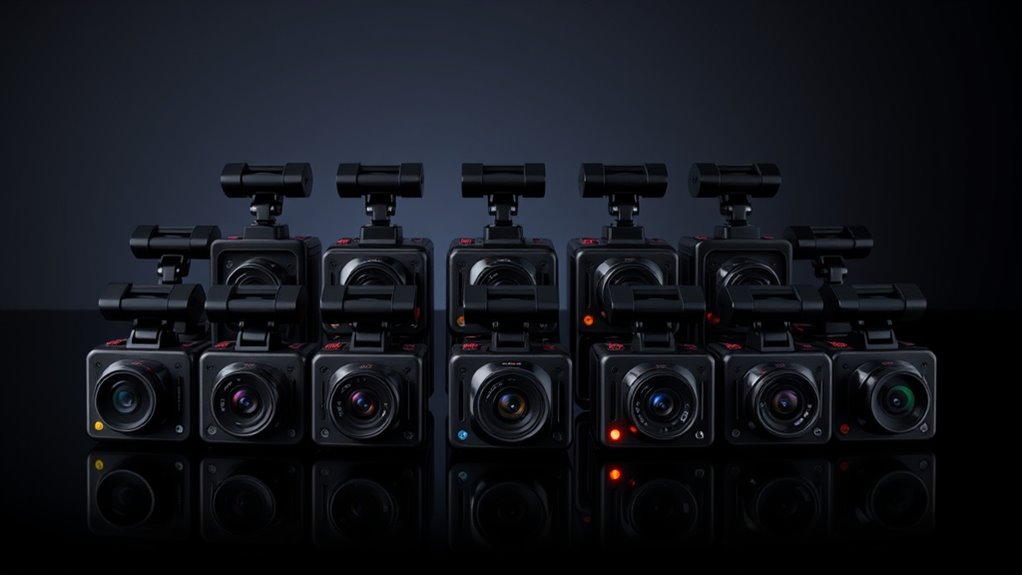
For a premium dash camera with night vision, I’d put the Vantrue N4 Pro S first for its 4K front recording, three-channel coverage, and STARVIS 2 HDR across its cameras. The THINKWARE ARC800 is a strong alternative for drivers focused on 4K front-and-rear recording, while the Vantrue N4S suits buyers who want to record the cabin as well as the road. The main tradeoff is coverage versus simplicity: adding interior, side, and rear cameras can capture more of an incident, but also adds installation, storage, and setup demands. Low-light performance also depends on sensor and HDR design, not just a 4K label. Read on for the full comparison and advice on choosing the right system for your car and driving.

Get business pricing on tools and workshop supplies
- Business-only prices and quantity discounts
- Tax-exempt purchasing
- Multiple users, one account, clear invoices
Complete the kit


Key Takeaways
- The Vantrue N4 Pro S leads this lineup for broad night coverage: it combines 4K front recording with three-channel STARVIS 2 HDR, making it a stronger fit for drivers who want road and cabin views than a two-camera kit.
- Dual-channel cameras suit most daily drivers: options such as the THINKWARE ARC800 and Pioneer VREC-Z820DC focus on front-and-rear coverage, avoiding the extra camera placement and wiring of a three- or four-channel setup.
- More channels do not automatically mean better nighttime evidence: the IIWEY N6 and N5 cover more angles, but buyers should weigh that coverage against resolution distribution, installation effort, and the importance of clear details in each view.
- STARVIS 2 and HDR are useful low-light signals, not guarantees: the Vantrue N4 Pro S, Vantrue N2X, REDTIGER F7NP, and REDTIGER F17 models advertise these capabilities, but mounting position, glare, and exposure behavior still affect usable footage.
- Included storage varies and matters for multi-camera recording: several models include 128GB cards, while the REDTIGER F17 lists 64GB; more camera feeds can use storage faster, so check recording settings and card capacity before relying on long parking or driving sessions.
| Terunsoul 4K+4K Front and Rear Dash Cam with 128GB Card |  | Best for Matched Front-and-Rear Detail | Video resolution: 4K front and 4K rear | Front field of view: 170° | Night vision apertures: F1.5 front, F1.8 rear | VIEW ON AMAZON | See Our Full Breakdown |
| Pioneer VREC-Z820DC 4K Dual Dash Cam with Front and Rear Cameras |  | Best for Driver Assistance Features | Front camera resolution: 4K UHD | Rear camera resolution: 1080p Full HD | Lens angles: 139° front, 120° rear | VIEW ON AMAZON | See Our Full Breakdown |
| Vantrue N4S 3-Channel Dash Cam, 2.7K Front and 1440P Interior and Rear |  | Best for Cabin and Rear Night Coverage | Channels: 3 | Video resolution: 2.7K front, 1440P interior, 1440P rear | Image sensors: Triple STARVIS 2 | VIEW ON AMAZON | See Our Full Breakdown |
| IIWEY N6 4-Channel 360° Dash Cam with 128GB Card |  | Best for Four-Sided Coverage | Channels: 4 | Video resolution: 1440p front; 1080p rear and side cameras | Field of view: 170° front and rear; 150° sides | VIEW ON AMAZON | See Our Full Breakdown |
| REDTIGER F7N Touch 4K Front and 1080p Rear Dash Cam |  | Best for Touchscreen Controls | Front video resolution: 4K UHD (2160p) | Rear video resolution: 1080p FHD | Field of view: 170° front, 140° rear | VIEW ON AMAZON | See Our Full Breakdown |
| THINKWARE ARC800 4K Dual-Channel Dash Cam |  | Best Overall for Night-Driving Detail | Front resolution: 4K UHD at 30 fps or 2K QHD at 60 fps | Rear resolution: Full HD 1080p | Image sensor: Sony STARVIS 2 IMX515 CMOS | VIEW ON AMAZON | See Our Full Breakdown |
| 4K Dual Front and Rear Dash Cam with 128GB Card |  | Best for Matching 4K Coverage | Front resolution: 3840 × 2160P | Rear resolution: 3840 × 2160P | Frame rate: 25 fps | VIEW ON AMAZON | See Our Full Breakdown |
| Alpine DVR-C320R 1080p Front and Rear Dash Camera with Night Vision and Drive Assist |  | Best for Alpine System Owners | Video resolution: Full HD 1080p | Frame rate: 30 fps | Field of view: 140° | VIEW ON AMAZON | See Our Full Breakdown |
| Vantrue N4 Pro S 4K 3-Channel Dash Cam with Triple STARVIS 2 HDR |  | Best for Nighttime Cabin Coverage | Recording resolution: 4K front, 2.5K cabin, and 1080p rear at 30 fps | Camera coverage: 155° front, 160° interior, and 165° rear | Image sensors: Triple STARVIS 2 | VIEW ON AMAZON | See Our Full Breakdown |
| ROVE R2-4K Dual Dash Cam with Front and Rear Cameras |  | Best for High-Capacity App-Based Recording | Front video: 2.5K QHD upscaled to 4K (2160p) | Rear video: Full HD 1080p | Front image sensor: Sony STARVIS 2 IMX675, 5 MP | VIEW ON AMAZON | See Our Full Breakdown |
| Vantrue N2X 2.7K Dual Dash Cam with STARVIS 2 |  | Best for Nighttime Rideshare Drivers | Video resolution: 1944p front and 1080p cabin at 30 fps; front also supports 1440p at 60 fps | Field of view: 158° front; 165° interior | Image sensor: STARVIS 2 | VIEW ON AMAZON | See Our Full Breakdown |
| REDTIGER F7NP 4K Front and Rear Dash Cam with STARVIS 2 Sensor |  | Best Dual-View Value | Video resolution: 4K front; 1080p rear | Image sensor: STARVIS 2 CMOS | Field of view: 170° front; 140° rear | VIEW ON AMAZON | See Our Full Breakdown |
| IIWEY N5 4-Channel 360° Dash Cam with 2K Front and 1080P Rear, Side, and Interior Recording |  | Best for All-Around Coverage | Channels: Four: front, rear, side, and interior | Video resolution: 2.5K front and 1080p rear, side, and interior; alternate 1080p all-channel mode | Field of view: 170° front and rear; 150° side cameras | VIEW ON AMAZON | See Our Full Breakdown |
| REDTIGER F17 4K 3-Channel Dash Cam with STARVIS 2, GPS, and 64GB Card |  | Best for Three-View Coverage on a Budget | Channels: Three: front, interior, and rear | Video resolution: 4K front; 1080p interior and rear | Image sensor: STARVIS 2 IMX675 CMOS | VIEW ON AMAZON | See Our Full Breakdown |
| REDTIGER F17 Elite 3-Channel 4K Dash Cam with 128GB Card |  | Best Premium Three-Channel Night Vision | Channels: Three: front, rear, and cabin | Video resolution: 4K front; 2.5K rear; 1080p cabin | Image sensors: 8MP IMX678 front and 4MP IMX675 rear | VIEW ON AMAZON | See Our Full Breakdown |
| premium dash cameras with night vision | Connectivity | Video resolution | Included storage | Field of view |
|---|---|---|---|---|
| Terunsoul 4K+4K Front and Rear | 5.8GHz and 2.4GHz Wi-Fi 6; Bluetooth | 4K front and 4K rear | 128GB microSD card | — |
| Pioneer VREC-Z820DC 4K Dual Da | Bluetooth and Wi-Fi | — | 128GB SD card | — |
| Vantrue N4S 3-Channel Dash Cam | — | 2.7K front, 1440P interior, 1440P rear | — | — |
| IIWEY N6 4-Channel 360° Dash C | Wi-Fi 6, 5.8GHz and 2.4GHz | 1440p front; 1080p rear and side cameras | 128GB microSD card | 170° front and rear; 150° sides |
| REDTIGER F7N Touch 4K Front an | — | — | 128GB microSD card | 170° front, 140° rear |
| THINKWARE ARC800 4K Dual-Chann | Wi-Fi, Bluetooth, and USB-C | — | — | 147.2° front; 124.5° rear |
| 4K Dual Front and Rear Dash Ca | 2.4 GHz and 5 GHz Wi-Fi; USB | — | 128 GB microSD card | 170° front; rear listed as 150° in description and 160° in specifications |
| Alpine DVR-C320R 1080p Front a | Wi-Fi | Full HD 1080p | 32 GB SD card | 140° |
| Vantrue N4 Pro S 4K 3-Channel | USB and 5 GHz Wi-Fi | — | — | — |
| ROVE R2-4K Dual Dash Cam with | Dual-band 2.4 GHz and 5.8 GHz Wi-Fi; USB | — | 128 GB microSD card; supports cards up to 1 TB | — |
| Vantrue N2X 2.7K Dual Dash Cam | 5G Wi-Fi | 1944p front and 1080p cabin at 30 fps; front also supports 1440p at 60 fps | — | 158° front; 165° interior |
| REDTIGER F7NP 4K Front and Rea | Built-in 5.8GHz Wi-Fi | 4K front; 1080p rear | 128GB memory card; supports up to 512GB | 170° front; 140° rear |
| IIWEY N5 4-Channel 360° Dash C | 2.4GHz and 5GHz Wi-Fi with app control | 2.5K front and 1080p rear, side, and interior; alternate 1080p all-channel mode | 128GB microSD card; supports up to 256GB | 170° front and rear; 150° side cameras |
| REDTIGER F17 4K 3-Channel Dash | — | 4K front; 1080p interior and rear | — | 150° front; 160° interior; 155° rear |
| REDTIGER F17 Elite 3-Channel 4 | — | 4K front; 2.5K rear; 1080p cabin | — | — |
More Details on Our Top Picks
Terunsoul 4K+4K Front and Rear Dash Cam with 128GB Card
The Terunsoul stands out for recording 4K from both ends, a useful distinction if rear incidents matter as much as what happens ahead. Its F1.5 front and F1.8 rear apertures are specified for low-light capture, while the 170° front view takes in a broad stretch of road. Compared with the Pioneer VREC-Z820DC, which pairs 4K front video with 1080p rear footage, this model gives the rear camera more stated resolution; Pioneer counters with ADAS alerts and a narrower front view.
A 128GB card, GPS, and Wi-Fi 6 make the Terunsoul ready for everyday recording and footage transfers. The tradeoff is its listed 25 fps frame rate, and parking monitoring needs a separately purchased hardwire kit. I’d choose it for matched detail, not for buyers who prioritize a higher stated frame rate or out-of-box parking wiring.
Pros:- Records 4K from both front and rear cameras
- F1.5 front and F1.8 rear apertures are specified for low-light recording
- Includes a 128GB microSD card, GPS, and Wi-Fi 6
- Supports parking monitoring and storage cards up to 512GB
Cons:- Listed frame rate is 25 fps
- Parking monitoring requires a separately sold hardwire kit
Best for: Drivers who want equally high stated resolution from front and rear cameras, plus an included memory card and GPS.
Not ideal for: Drivers who prioritize higher frame rates or need parking surveillance without buying a separate hardwire kit.
- Video resolution:4K front and 4K rear
- Front field of view:170°
- Night vision apertures:F1.5 front, F1.8 rear
- Frame rate:25 fps
- Connectivity:5.8GHz and 2.4GHz Wi-Fi 6; Bluetooth
- Display:3-inch IPS screen
- Included storage:128GB microSD card
- Maximum supported storage:512GB
- Parking monitoring:24-hour monitoring; hardwire kit sold separately
Our verdict“Choose the Terunsoul if matched 4K front-and-rear recording matters more to you than a higher frame rate or included parking-mode wiring.”
Pioneer VREC-Z820DC 4K Dual Dash Cam with Front and Rear Cameras
The Pioneer is a strong fit for drivers who want 4K front recording paired with tools that support more than evidence capture. Its ADAS alerts, GPS, and impact detection add driving and incident features that the Terunsoul 4K+4K emphasizes less; that Terunsoul, in turn, offers higher stated rear resolution. Pioneer’s rear camera records at 1080p, so buyers seeking matched detail front to back should look elsewhere.
Starvis night vision, a 128GB card, and app connectivity make this a well-equipped dual-camera option without requiring a separate card purchase. Its 139° front and 120° rear angles are narrower than the Terunsoul’s 170° front view, which may mean less of the scene falls within the frame. Parking mode is included as a feature, but the optional hardwire kit is sold separately.
Pros:- Records 4K UHD from the front and 1080p Full HD from the rear
- Includes Starvis night vision, GPS, and ADAS alerts
- Parking mode and impact detection support incident monitoring
- Comes with a 128GB SD card
Cons:- Rear camera resolution is lower than the Terunsoul’s 4K rear recording
- Optional hardwire kit for parking mode is sold separately
- Front and rear lens angles are narrower than the Terunsoul’s stated front view
Best for: Drivers who want 4K front footage, night vision, and ADAS alerts in a dual-camera setup with a memory card included.
Not ideal for: Buyers who need 4K rear footage, a wider stated front angle, or parking-mode wiring included.
- Front camera resolution:4K UHD
- Rear camera resolution:1080p Full HD
- Lens angles:139° front, 120° rear
- Night vision:Starvis
- Connectivity:Bluetooth and Wi-Fi
- Included storage:128GB SD card
- Features:GPS, ADAS, loop recording, parking mode, impact detection
- Dimensions:4.09 x 2.91 x 1.54 inches
- Weight:5 ounces
Our verdict“Pick the Pioneer if ADAS alerts and a feature-rich 4K-front system matter more than matching the front camera’s resolution at the rear.”
Vantrue N4S 3-Channel Dash Cam, 2.7K Front and 1440P Interior and Rear
For rideshare drivers, families, or anyone who needs footage inside the car, the N4S covers a different job from the two-camera Terunsoul and Pioneer: it records front, cabin, and rear views. Triple STARVIS 2 sensors and HDR support its low-light focus, while the rotating rear camera can be aimed toward traffic or the cabin. The front resolution is 2.7K, below the 4K front recording offered by both the Terunsoul and Pioneer, but the Vantrue captures a third angle neither of those models provides.
Its four parking modes, including pre-event recording and impact locking, suit drivers who want broader parked-car coverage. 5GHz Wi-Fi and support for up to 1TB help with transferring or retaining footage, though the microSD card is not included. Correct rear-camera wiring matters too, and the 18-month warranty is shorter than the Terunsoul’s listed three years.
Pros:- Records front, interior, and rear views with STARVIS 2 sensors
- HDR and a rotating rear camera support flexible low-light coverage
- Offers four parking modes with pre-event recording and impact locking
- Supports 5GHz Wi-Fi and microSD cards up to 1TB
Cons:- MicroSD card is sold separately
- Rear-camera wiring must be connected correctly to avoid malfunctions
- Front resolution is lower than the 4K front cameras in the Terunsoul and Pioneer
Best for: Rideshare drivers and owners who want night-capable video of the road, cabin, and rear area from one system.
Not ideal for: Drivers who want the highest stated front resolution, an included memory card, or a simple two-camera installation.
- Channels:3
- Video resolution:2.7K front, 1440P interior, 1440P rear
- Image sensors:Triple STARVIS 2
- Lens angles:158° front, 165° cabin, 160° rear
- Parking modes:4
- Wi-Fi:5GHz
- Maximum microSD capacity:1TB; card sold separately
- Temperature range:-4°F to 140°F
- Warranty:18 months
Our verdict“Choose the N4S if cabin coverage is a must-have and you accept lower front resolution and a more involved installation.”
IIWEY N6 4-Channel 360° Dash Cam with 128GB Card
The IIWEY N6’s main advantage is not maximum resolution but four-sided coverage: front, rear, and both sides are recorded, making it a distinctive pick for drivers concerned about incidents beside the vehicle. Its eight IR LEDs provide infrared night vision, a different low-light approach from the STARVIS 2 sensor system in the Vantrue N4S. The N4S records the cabin as a third view; the IIWEY instead uses its fourth channel for a side camera, better suited to monitoring around the vehicle than documenting passengers.
The front records at 1440p and 30 fps, with 1080p rear and side video, and a 128GB card is included. That gives up the Terunsoul’s 4K front-and-rear detail, while adding coverage angles the Terunsoul lacks. The camera must stay connected to vehicle power, and parking surveillance needs a separate hardwire kit; its maximum supported card size is 256GB.
Pros:- Four cameras cover the front, rear, and both sides
- Eight IR LEDs provide infrared night vision
- Includes a 128GB microSD card, built-in GPS, and Wi-Fi 6
- Records at 30 fps and locks impact-detected footage
Cons:- Front resolution is 1440p, below the Terunsoul’s 4K front recording
- Parking surveillance requires a separately sold hardwire kit
- Must remain connected to vehicle power while in use
Best for: Drivers who want front, rear, and side views for monitoring activity around a parked or moving vehicle.
Not ideal for: Buyers prioritizing 4K detail, cabin recording, cordless operation, or parking surveillance without a separate hardwire kit.
- Channels:4
- Video resolution:1440p front; 1080p rear and side cameras
- Field of view:170° front and rear; 150° sides
- Night vision:8 IR LEDs
- Frame rate:30 fps
- Connectivity:Wi-Fi 6, 5.8GHz and 2.4GHz
- Display:3.18-inch IPS
- Included storage:128GB microSD card
- Maximum supported storage:256GB
Our verdict“Choose the IIWEY N6 if side coverage matters more than 4K detail or cabin recording.”
REDTIGER F7N Touch 4K Front and 1080p Rear Dash Cam
The F7N Touch makes day-to-day control its point of difference: a 3.18-inch touchscreen and voice commands offer alternatives to managing settings through an app alone. It records 4K front and 1080p rear, like the Pioneer VREC-Z820DC, but adds a stated 170° front view and includes STARVIS 2, WDR, and HDR for its low-light brief. Pioneer counters with ADAS alerts, while the F7N’s appeal is its more direct on-device interface.
5.8GHz Wi-Fi, GPS, and a 128GB card round out a practical dual-camera package. Motion detection and time-lapse parking recording are available, but the hardwire kit is sold separately. There is also a stated conflict around maximum card capacity, so I would verify storage compatibility before buying an additional card. This is a better fit for drivers who value hands-on controls than for those seeking 4K rear video or uncomplicated storage specifications.
Pros:- Records 4K UHD front and 1080p Full HD rear
- STARVIS 2, WDR, and HDR support its low-light focus
- Touchscreen, voice control, GPS, and 5.8GHz Wi-Fi are included
- Includes a 128GB card and locks footage when the G-sensor detects an impact
Cons:- Parking monitoring requires a separately purchased hardwire kit
- Listed maximum supported card size conflicts with the included 128GB card
- Rear resolution is lower than the Terunsoul’s 4K rear recording
Best for: Drivers who prefer on-device touchscreen and voice controls alongside 4K front recording and low-light features.
Not ideal for: Buyers who need 4K rear recording, parking wiring included, or unambiguous guidance on supported memory-card capacity.
- Front video resolution:4K UHD (2160p)
- Rear video resolution:1080p FHD
- Field of view:170° front, 140° rear
- Low-light features:STARVIS 2, WDR, HDR, night vision
- Wi-Fi:5.8GHz; up to 20MB/s download speed
- Display:3.18-inch LCD touchscreen
- Included storage:128GB microSD card
- Recording features:Loop recording, G-sensor, audio recording, parking mode
- Warranty:18 months
Our verdict“Choose the F7N Touch if accessible touchscreen controls and 4K front night recording matter more than 4K rear footage or clear storage-capacity guidance.”
THINKWARE ARC800 4K Dual-Channel Dash Cam
The ARC800 makes the strongest all-around case here for drivers who prioritize usable footage after dark without giving up sharp front recording. Its Sony STARVIS 2 sensor and dual HDR are aimed at preserving detail in mixed lighting, while 4K front and 1080p rear capture cover both directions. Compared with the Alpine DVR-C320R, the THINKWARE offers much higher front resolution and a broader feature set, including GPS, app connectivity, and parking surveillance. Its front camera can also switch to 2K at 60 fps when smoother motion matters more than maximum resolution. The tradeoff is that the rear remains Full HD, and 4K front recording is capped at 30 fps. I’d choose it for balanced coverage, not matched high-resolution footage from both ends.
Pros:- STARVIS 2 imaging and dual HDR support low-light visibility
- 4K front recording with a 1080p rear camera
- Built-in GPS, driver alerts, and Wi-Fi app control
- Parking modes and microSD support up to 512 GB
Cons:- Rear footage is limited to 1080p
- Front 4K recording runs at 30 fps
- The included 32 GB card offers limited room for extended recording
Best for: Drivers who regularly travel at night and want a high-detail front view, rear coverage, GPS, and parking monitoring in one system.
Not ideal for: Drivers who need equally sharp 4K footage from both cameras or want 4K recording at a higher frame rate.
- Front resolution:4K UHD at 30 fps or 2K QHD at 60 fps
- Rear resolution:Full HD 1080p
- Image sensor:Sony STARVIS 2 IMX515 CMOS
- Field of view:147.2° front; 124.5° rear
- Display:2.3-inch IPS touchscreen
- Connectivity:Wi-Fi, Bluetooth, and USB-C
- Storage:Includes 32 GB microSD card; supports cards up to 512 GB
- Parking modes:Motion detection, impact detection, time lapse, and energy saving
Our verdict“Choose the ARC800 for a capable night-driving setup with strong front detail, useful safety features, and a clear resolution tradeoff at the rear.”
4K Dual Front and Rear Dash Cam with 128GB Card
This camera stands apart in the group by recording 4K from both front and rear, giving buyers a consistent resolution for incidents at either end of the vehicle. Its starlight sensor and WDR target low-light scenes, though the listing does not specify a STARVIS 2 sensor as the THINKWARE ARC800 does. The wide front and rear views can capture more of the surrounding road, and the included 128 GB card means more recording space out of the box than the ARC800’s 32 GB card. The stated 25 fps rate is a compromise: it records detailed footage, but offers less temporal smoothness than 30 fps models such as the Vantrue N4 Pro S. Parking monitoring also needs a separately purchased hard-wiring kit, and the storage-capacity limit is inconsistent across the listing.
Pros:- 4K recording from both front and rear cameras
- Starlight sensor and WDR support low-light capture
- Includes a 128 GB microSD card
- Built-in GPS, Wi-Fi, and smartphone app support
Cons:- Records at 25 fps, below the 30 fps offered by several alternatives
- Parking mode requires a separately sold hard-wiring kit
- Maximum supported storage is listed inconsistently
Best for: Drivers who want 4K recording from both ends of the vehicle and prefer a larger included memory card.
Not ideal for: Buyers who want a clearly stated storage limit, 30 fps recording, or parking monitoring without extra wiring equipment.
- Front resolution:3840 × 2160P
- Rear resolution:3840 × 2160P
- Frame rate:25 fps
- Field of view:170° front; rear listed as 150° in description and 160° in specifications
- Display:3-inch IPS
- Connectivity:2.4 GHz and 5 GHz Wi-Fi; USB
- Included storage:128 GB microSD card
- Parking mode:Time-lapse monitoring; hard-wiring kit required
Our verdict“Pick this model if matched 4K front-and-rear resolution matters more than a higher frame rate or a ready-to-use parking setup.”
Alpine DVR-C320R 1080p Front and Rear Dash Camera with Night Vision and Drive Assist
The Alpine DVR-C320R takes a simpler approach than the higher-resolution THINKWARE ARC800 and Vantrue N4 Pro S: it records 1080p front and rear at 30 fps, with night vision and wide dynamic range for changing light. That lower resolution means less room to inspect distant details than the 4K options, but the included rear camera, 32 GB card, and impact recording make the basic setup straightforward. Built-in GPS and driver alerts add useful context and warnings without pushing this into a feature-heavy three-channel system. Its clearest advantage is integration with select Alpine AVN and AV head units, a benefit that matters mainly to owners of compatible equipment. If you don’t have one of those head units, the small screen and modest resolution make it a less compelling premium night-vision choice than the ARC800.
Pros:- Front and rear cameras record Full HD at 30 fps
- Night vision and WDR support footage in varied lighting
- Includes a 32 GB SD card and mounting accessories
- GPS, impact recording, and driver alerts are built in
Cons:- 1080p resolution provides less detail than the 4K THINKWARE ARC800
- Head-unit integration works only with select Alpine models
- The 2.7-inch display is relatively small
Best for: Drivers with a compatible Alpine head unit who want a straightforward front-and-rear camera with night vision and driver alerts.
Not ideal for: Drivers seeking high-resolution evidence, a large display, or head-unit integration outside select Alpine systems.
- Video resolution:Full HD 1080p
- Frame rate:30 fps
- Field of view:140°
- Display:2.7 inches
- Camera configuration:Front and rear
- Connectivity:Wi-Fi
- GPS and alerts:Built-in GPS, forward collision alerts, and lane departure warnings
- Included storage:32 GB SD card
Our verdict“This is a sensible match for compatible Alpine head-unit owners who value an integrated 1080p system over higher-resolution night footage.”
Vantrue N4 Pro S 4K 3-Channel Dash Cam with Triple STARVIS 2 HDR
For drivers who need to record what happens inside the vehicle as well as outside, the N4 Pro S offers a more complete view than the dual-camera THINKWARE ARC800. Its three STARVIS 2 sensors capture front, cabin, and rear footage, while HDR and night vision are designed to help in dim conditions. The rotating 2.5K rear camera adds flexibility when the vehicle layout calls for a different angle, and built-in GPS, voice control, and 5 GHz Wi-Fi round out the system. The compromise is practical: unlike the ARC800, it has no included memory card, and buffered parking surveillance requires a separately sold hardwire kit. Its 4K front, 2.5K cabin, and 1080p rear arrangement also means resolution varies by view. I’d favor it for rideshare or family cabin monitoring, rather than buyers who only need a sharp front-and-rear pair.
Pros:- Three-channel recording covers the front, interior, and rear
- Triple STARVIS 2 sensors and HDR support low-light footage
- Built-in GPS, voice control, and 5 GHz Wi-Fi
- Buffered motion and impact parking detection is available with hardwiring
Cons:- MicroSD card is sold separately
- Parking mode requires a separately purchased hardwire kit
- Resolution differs across the three camera views
Best for: Rideshare drivers and families who want low-light recording of the road, cabin, and rear of the vehicle.
Not ideal for: Drivers who only need front-and-rear coverage, want an included memory card, or expect parking mode to work without extra wiring.
- Recording resolution:4K front, 2.5K cabin, and 1080p rear at 30 fps
- Camera coverage:155° front, 160° interior, and 165° rear
- Image sensors:Triple STARVIS 2
- Rear camera:2.5K sensor with 360° rotation
- Connectivity:USB and 5 GHz Wi-Fi
- GPS:Built-in
- Storage support:microSD cards up to 1 TB; card not included
- Parking mode:Buffered motion and impact detection; hardwire kit required
Our verdict“Choose the N4 Pro S when recording the cabin at night is as important as capturing the road ahead and behind.”
ROVE R2-4K Dual Dash Cam with Front and Rear Cameras
The ROVE R2-4K pairs a STARVIS 2 front sensor with a 1080p rear camera, making it a practical choice for drivers who want night-aware front recording and a ready-to-use storage card. The key distinction from the THINKWARE ARC800 is that ROVE’s front video is 2.5K upscaled to 4K, not native 4K; the headline resolution should not be mistaken for the ARC800’s native 4K capture. Its included 128 GB card, built-in GPS, and dual-band Wi-Fi make saving and retrieving clips more convenient, while support for up to 1 TB allows room to grow. Parking options include time lapse, motion, and collision detection, but all require a separate hardwire kit. I’d choose this over the Alpine DVR-C320R for higher front detail and app flexibility, while skipping it if native 4K is a priority.
Pros:- STARVIS 2 front sensor is suited to low-light recording
- Includes a 128 GB microSD card and supports up to 1 TB
- Built-in GPS records route, location, and speed data
- Dual-band Wi-Fi supports app-based video downloads
Cons:- Front 4K output is upscaled from a 2.5K sensor
- Rear camera is limited to 1080p
- Parking modes require a separately purchased hardwire kit
Best for: Drivers who want STARVIS 2 front imaging, GPS, app-based downloads, and a large included memory card for routine road recording.
Not ideal for: Buyers who require native 4K front capture or want parking surveillance without purchasing a hardwire kit.
- Front video:2.5K QHD upscaled to 4K (2160p)
- Rear video:Full HD 1080p
- Front image sensor:Sony STARVIS 2 IMX675, 5 MP
- Viewing angle:150° front; 140° rear
- Display:3-inch IPS
- Connectivity:Dual-band 2.4 GHz and 5.8 GHz Wi-Fi; USB
- Included storage:128 GB microSD card; supports cards up to 1 TB
- Parking modes:Time lapse, motion detection, and collision detection; hardwire kit required
Our verdict“The ROVE suits app-focused drivers who value included storage and STARVIS 2 imaging, provided they’re comfortable with upscaled rather than native 4K.”
Vantrue N2X 2.7K Dual Dash Cam with STARVIS 2
The Vantrue N2X is the focused choice for drivers who need both the road ahead and the cabin documented after dark. Its STARVIS 2 sensor, dual HDR, and four infrared LEDs address the different lighting challenges of a windshield view and a dim interior, while the cabin camera’s wide angle helps cover more of the passenger area. Compared with the REDTIGER F17, it gives up a dedicated rear camera but adds a removable magnetic mount that makes taking the unit down simpler. Front recording can reach 1440p at 60 fps, a useful alternative when smoother motion matters more than maximum resolution. The tradeoff is that parking surveillance needs a separately sold hardwire kit, and neither an SD card nor an emergency button is included. Its charger compatibility limits also call for checking your power setup before buying.
Pros:- Records road and cabin views, with infrared illumination for a dark interior
- Dual HDR and STARVIS 2 support recording across challenging light levels
- Built-in GPS logging and 5G Wi-Fi add route data and wireless access
- Removable magnetic mount supports tool-free installation and removal
Cons:- Parking modes require a separately purchased hardwire kit
- SD card and emergency button are not included
- Not compatible with Power Delivery fast chargers or cables
Best for: Rideshare and taxi drivers who want infrared cabin footage alongside a clear forward view for nighttime trips.
Not ideal for: Drivers who need a rear-facing road camera, included storage, or parking surveillance without buying a hardwire kit.
- Video resolution:1944p front and 1080p cabin at 30 fps; front also supports 1440p at 60 fps
- Field of view:158° front; 165° interior
- Image sensor:STARVIS 2
- Night recording:Dual HDR and four infrared LEDs
- Connectivity:5G Wi-Fi
- GPS:Built-in GPS logger
- Parking modes:Motion or collision detection, low frame rate, and low bitrate
- Power and temperature:Supercapacitor; operating range -4°F to 158°F
Our verdict“Choose the N2X if nighttime cabin coverage matters more than having a dedicated rear camera.”
REDTIGER F7NP 4K Front and Rear Dash Cam with STARVIS 2 Sensor
For buyers who want a high-resolution forward view without giving up rear coverage, the REDTIGER F7NP makes a practical case. It pairs 4K front recording with 1080p rear video, while STARVIS 2, WDR, and HDR are intended to help retain detail through changing light and at night. The included 128GB card also means less setup work than with the Vantrue N2X, which arrives without storage. Unlike that Vantrue, the F7NP points its second camera at the road behind rather than the cabin, so it suits commuters better than drivers needing passenger documentation. Its 3.16-inch screen and built-in GPS make on-device review and route logging accessible. The main compromise is uneven resolution between front and rear, and parking monitoring still calls for a separately sold hardwire kit.
Pros:- Records 4K front and 1080p rear video
- STARVIS 2, WDR, and HDR support recording in mixed and low light
- Includes a 128GB memory card
- Built-in Wi-Fi and GPS support app playback and route data
Cons:- Rear video is limited to 1080p while the front records in 4K
- Parking monitoring requires a separately purchased hardwire kit
Best for: Commuters and road-trip drivers who want detailed 4K forward footage, rear coverage, GPS, and storage in the box.
Not ideal for: Rideshare drivers who need cabin recording, or owners who expect equal-resolution front and rear footage or hardwire-free parking monitoring.
- Video resolution:4K front; 1080p rear
- Image sensor:STARVIS 2 CMOS
- Field of view:170° front; 140° rear
- Connectivity:Built-in 5.8GHz Wi-Fi
- GPS:Built-in
- Display:3.16-inch LCD
- Included storage:128GB memory card; supports up to 512GB
- Recording and power:Loop recording, G-sensor, parking monitor, and supercapacitor
Our verdict“Pick the F7NP for an accessible 4K-front and rear-road setup with a memory card included.”
IIWEY N5 4-Channel 360° Dash Cam with 2K Front and 1080P Rear, Side, and Interior Recording
The IIWEY N5 prioritizes coverage over maximum front-camera detail: four cameras record the front, rear, sides, and cabin, helping document incidents that a conventional dual-camera setup may miss. Its 2.5K front view is paired with 1080p feeds elsewhere, with an alternate mode recording 1080p across all four cameras. That broad view gives it a different purpose from the REDTIGER F7NP, whose 4K front camera favors detail ahead and whose rear camera does not cover the cabin or sides. A preinstalled 128GB card and 3-inch screen make initial setup and local checking straightforward. For night-focused buyers, the tradeoff is that the supplied details do not specify infrared lighting or a STARVIS sensor. It also lacks GPS, and parking modes need a hardwire kit.
Pros:- Four-camera coverage records front, rear, side, and interior views
- Includes a preinstalled 128GB microSD card
- App supports video preview, download, and sharing over dual-band Wi-Fi
- Supercapacitor operating range extends from -4°F to 167°F
Cons:- No GPS for route or location logging
- Parking modes require a separately sold hardwire kit
- Must use the included cigarette-lighter charger for power
Best for: Drivers who want video of the front, rear, cabin, and side windows, especially in busy urban traffic or while carrying passengers.
Not ideal for: Buyers who prioritize documented night-vision hardware, GPS route logging, or a simple power setup independent of the included cigarette-lighter charger.
- Channels:Four: front, rear, side, and interior
- Video resolution:2.5K front and 1080p rear, side, and interior; alternate 1080p all-channel mode
- Field of view:170° front and rear; 150° side cameras
- Screen:3-inch IPS
- Included storage:128GB microSD card; supports up to 256GB
- Connectivity:2.4GHz and 5GHz Wi-Fi with app control
- Parking modes:Time-lapse and impact detection; hardwire kit sold separately
- Power and temperature:Cigarette-lighter charger and supercapacitor; -4°F to 167°F
Our verdict“Choose the N5 when coverage around the whole vehicle matters more than GPS or stated infrared night-vision features.”
REDTIGER F17 4K 3-Channel Dash Cam with STARVIS 2, GPS, and 64GB Card
The REDTIGER F17 covers the forward road, cabin, and rear window, making it a useful middle ground between the two-camera F7NP and the four-camera IIWEY N5. Its 4K front channel is backed by 1080p interior and rear feeds, while STARVIS 2, HDR, and WDR target clearer recording in low and mixed light. GPS, dual-band Wi-Fi, a 3-inch screen, and a 64GB card round out a setup that needs fewer immediate additions than the Vantrue N2X. The key catch is how its highest-resolution mode works: recording 4K front and 1080p rear turns off the interior camera. That forces a choice between front detail and complete three-channel coverage. Parking monitoring also requires an optional hardwire kit.
Pros:- Three-channel setup records front, interior, and rear views
- STARVIS 2 with HDR and WDR supports low-light and mixed-light recording
- Built-in GPS and dual-band Wi-Fi provide route data and wireless access
- Includes a 64GB memory card
Cons:- The 4K-front and 1080p-rear mode disables the interior camera
- Parking monitoring requires an optional hardwire kit
Best for: Drivers who want forward 4K detail plus cabin and rear recording, and are willing to choose between maximum front resolution and all-channel capture.
Not ideal for: Buyers who require simultaneous cabin coverage in the highest-resolution mode, or who want parking monitoring without hardwiring.
- Channels:Three: front, interior, and rear
- Video resolution:4K front; 1080p interior and rear
- Image sensor:STARVIS 2 IMX675 CMOS
- Field of view:150° front; 160° interior; 155° rear
- Wi-Fi and GPS:2.4GHz and 5GHz Wi-Fi; built-in GPS
- Display and storage:3-inch LCD; 64GB SD card included
- Frame rate:Front: 24, 25, or 30 fps; interior and rear: 30 fps
- Parking and power:Time-lapse and collision detection with optional hardwire kit; supercapacitor
Our verdict“The F17 fits drivers who want three viewing angles and GPS but can accept losing cabin video in its highest-resolution mode.”
REDTIGER F17 Elite 3-Channel 4K Dash Cam with 128GB Card
The REDTIGER F17 Elite is the strongest fit here for drivers who want premium resolution across front and rear views while keeping a cabin camera active. It records 4K front, 2.5K rear, and 1080p cabin video, a more detailed rear feed than the F17’s 1080p camera. Its full-color night vision and HDR target low-light visibility, while the included 128GB card, GPS, and Wi-Fi 6 make the package more complete than the Vantrue N2X, which lacks included storage and a rear-road camera. App, touchscreen, and voice controls offer several ways to reach settings and footage. The tradeoff is that the provided specs do not identify a separate infrared cabin illuminator, and parking mode still needs a hardwire kit. Buyers who only need two views may find this three-channel setup more than they need.
Pros:- Records 4K front, 2.5K rear, and 1080p cabin video
- Full-color night vision and HDR support low-light recording
- Includes a 128GB microSD card and built-in GPS
- Offers Wi-Fi 6, app access, touchscreen controls, and voice control
Cons:- Parking mode requires a separately obtained hardwire kit
- Three-channel recording may be unnecessary for drivers who only need road coverage
- Provided specifications do not list infrared LEDs for cabin illumination
Best for: Drivers seeking detailed front and rear footage alongside cabin recording, with full-color night vision and several control options.
Not ideal for: Buyers who only need front-and-rear coverage, want parking mode without hardwiring, or specifically require stated infrared cabin illumination.
- Channels:Three: front, rear, and cabin
- Video resolution:4K front; 2.5K rear; 1080p cabin
- Image sensors:8MP IMX678 front and 4MP IMX675 rear
- Night recording:Full-color night vision and HDR
- Wi-Fi and GPS:5.8GHz Wi-Fi 6; built-in GPS
- Display and controls:3-inch screen; app, touchscreen, and voice controls
- Storage:128GB microSD card included; supports up to 512GB
- Frame rate and parking:30 fps; time-lapse and G-sensor event detection with hardwire kit required
Our verdict“Choose the F17 Elite if you want high-resolution three-channel recording and color night vision in one unit.”

How We Picked
I ranked these cameras by how well their stated features address the real goal behind night-vision dash camera shopping: recording useful evidence in dim streets, poorly lit parking areas, and changing headlight conditions. I weighed sensor and HDR claims alongside front, rear, cabin, and side coverage, resolution across channels, included storage, and features that can shape everyday usability. A high front-camera resolution alone did not outweigh a system with a better balance of low-light technology and useful coverage.
The order also reflects the tradeoffs a buyer will live with after installation. Two-channel systems can be simpler to place and operate, while multi-channel models may capture more of the vehicle’s surroundings but demand more wiring and storage. Products with limited or less clearly specified night-vision detail rank below options with more explicit low-light features, even when they advertise high resolution. I have not treated marketing labels as proof of equal nighttime results; the comparison is based on the capabilities supplied for each model.
Factors to Consider When Choosing Premium Dash Cameras With Night Vision
Choosing a night-capable dash camera means matching the recording system to the incidents you want it to document. The right choice depends on whether you need readable road footage, rear-end coverage, a record of activity inside the cabin, or views around a parked vehicle. These broader factors can help you avoid paying for channels you will not use—or overlooking setup needs that affect footage quality.
Decide Which Views Matter Before Choosing Resolution
Start with the event you most want to document, rather than the largest camera count. For routine commuting, front-and-rear coverage may capture the most relevant evidence with fewer cameras to position. Rideshare drivers or people who regularly carry passengers may benefit from an interior view, while side cameras can help document activity near the doors. Remember that a multi-channel system divides its recording resources among several views; check each channel’s resolution rather than assuming every camera records at the headline front-camera resolution. Choose added coverage only when you have a clear use for it.
Treat Night-Vision Labels as a Starting Point
Terms such as night vision, STARVIS 2, and HDR describe capabilities, but do not promise that every plate or road sign will be legible in every dark scene. Sensor performance, exposure handling, windshield tint, reflections, and the angle of the camera all affect the final footage. HDR can help manage scenes with bright headlights against darker surroundings, while a capable low-light sensor can capture more useful detail in dim conditions. Before purchase, look for footage samples recorded in conditions similar to your routes, including wet roads if those are common where you drive. Avoid choosing by resolution alone: sharp daytime 4K footage does not settle how well a camera handles glare at night.
Plan Installation Around the Number of Cameras
A front-only setup is generally less involved than routing cables to a rear window, cabin, or side cameras. Before buying a multi-channel system, check whether your vehicle’s interior trim, hatchback layout, or rear window shape will make cable routing awkward. A clean installation helps keep the driver’s view clear and reduces the chance of a cable being snagged or pulled loose. If you are not comfortable removing trim or connecting a parking-power kit, factor in professional installation. Choosing a simpler system can be a better decision than leaving extra cameras poorly positioned.
Match Storage to Recording Channels and Parking Use
More cameras can create more footage to store, and continuous or parking recording can fill a card sooner than occasional driving clips. An included card is convenient, but its capacity should be judged against the camera’s number of channels, recording settings, and overwrite behavior. Check the manufacturer’s supported card specifications and replace a card that shows errors rather than trusting it with important footage. If you need long parked-car coverage, confirm how the system powers and records while the engine is off, then estimate storage needs for that mode. Do not assume a bundled card offers the same recording time on every camera configuration.
Separate Parking Monitoring From Night Recording
Night recording while driving and surveillance while parked are different jobs. A camera can capture low-light footage on the road yet still need a hardwire kit, compatible power connection, and battery protection to monitor a parked vehicle. Check which parking modes are supported and whether they record continuously, respond to an impact, or use another trigger. Consider your parking location and the length of time the car is left unattended before choosing a mode. Poor installation or an unsuitable power setup can make parking features unreliable or drain the vehicle battery, so confirm the required accessories and safeguards.
Pay for Useful Coverage, Not a Feature Count
Moving up to a premium system makes sense when it adds a capability that addresses a real risk: stronger low-light processing, rear coverage, cabin recording, or useful parking features. A four-channel kit may be excessive for someone who only needs a clear front-and-rear record of a commute. By contrast, a rideshare driver may value the interior view even if it adds setup work and divides recording across more cameras. Check which accessories are included, since cards, power kits, and installation parts can affect the final setup. A simpler camera with well-chosen views can be a more dependable fit than a feature-heavy system that is difficult to install or maintain.
Frequently Asked Questions
Is 4K more important than a low-light sensor for nighttime footage?
Not by itself. Resolution describes image size, while a low-light sensor and HDR influence how well a camera handles dark areas and bright headlights. A 4K camera can record a detailed image that still loses important information to glare or darkness. Compare night footage samples when available, and check whether the rear or cabin cameras have different specifications from the front unit. If most of your concern is nighttime evidence, give low-light performance and exposure handling at least as much weight as the resolution label.
Should I choose a three- or four-channel camera instead of a front-and-rear model?
Choose extra channels when the additional views address a specific need, such as recording passengers or activity beside the vehicle. A front-and-rear system is often a more straightforward fit for everyday road incidents and needs fewer camera placements. More channels can add wiring work, storage use, and setup decisions, and they may distribute resolution across multiple views. Check the resolution and low-light features for each camera rather than relying on the front-camera headline. If you are unlikely to use cabin or side footage, a dual-channel system may be the more practical choice.
Can a dash camera record my car while it is parked overnight?
Some models support parking modes, but overnight recording depends on the exact mode, power connection, and vehicle setup. Many installations need a compatible hardwire kit or another power source, and a battery-protection feature may be needed to limit drain on the car battery. Motion-triggered and impact-triggered modes work differently from continuous recording, so check what the camera actually offers. Also consider whether its storage capacity can cover the period you want monitored. Confirm the required accessories and installation instructions before relying on parked-car recording.
Is an included memory card enough for a multi-camera dash cam?
It may be enough for ordinary driving clips, but capacity depends on how many channels are recording, the selected resolution, and whether parking mode is active. A four-channel system can generate footage faster than a single-camera setup, so the same card size will not provide the same recording duration. Check the camera’s supported card capacity and specifications, then estimate how long you need footage retained before older files are overwritten. Event locking can protect selected clips, but it does not replace regular checks of the card’s condition. If continuous parked recording matters, plan storage around that use rather than the included card alone.
Do I need a cabin-facing camera if I do not drive for rideshare?
Most private drivers can begin with front-and-rear coverage if their main concern is documenting traffic incidents. A cabin view may still be useful if you regularly carry passengers or want a record of activity inside the vehicle, but it adds another camera angle to place and footage stream to manage. It does not replace a rear-facing road camera, since the two views document different areas. If your priority is outside coverage, look for a model whose rear camera records through the back window. Choose an interior channel when its specific evidence value justifies the extra setup and storage use.
Conclusion
For the broadest night-focused coverage, my best overall pick is the Vantrue N4 Pro S, pairing 4K front recording with three-channel STARVIS 2 HDR; choose it if you want road and cabin views in one system. The THINKWARE ARC800 is my pick for drivers who want a 4K dual-channel setup without adding interior-camera coverage, while the Vantrue N4S is a practical alternative for buyers who want three-channel recording at a lower front-camera resolution. For broad surrounding coverage, compare the IIWEY N6 and N5, but be ready for more involved placement and setup. The included information does not establish a clear price-based winner, so I would choose the best value by matching coverage and bundled storage to actual needs rather than assuming a particular model is cheapest. For beginners, I’d start with a two-channel camera such as the Pioneer VREC-Z820DC or ROVE R2-4K and avoid extra camera feeds unless there is a clear reason to add them. The final choice is straightforward: prioritize low-light capability for night evidence, add channels only when their views matter, and confirm installation and storage requirements before buying.