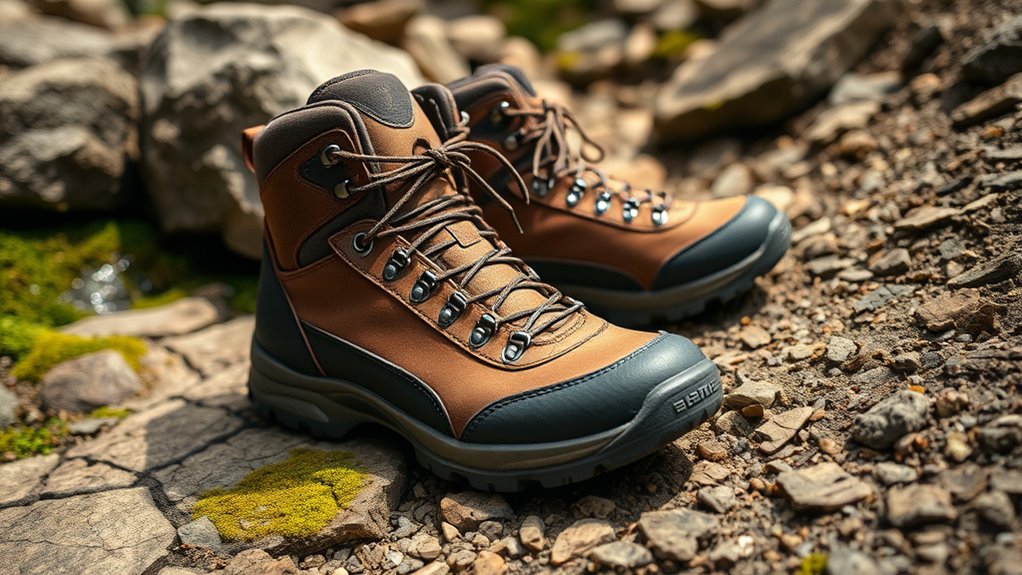
For premium hiking boots for rugged trails, I rank the KEEN Men’s Targhee 4 Mid Waterproof Hiking Boots as the best overall balance of support, protection, and everyday trail comfort. The Salomon Men’s Quest Element Gore-Tex Waterproof Hiking Boots stand out for hikers carrying heavier loads, while the Kenetrek Men’s Mountain Extreme Non-Insulated Hiking Boots suit demanding terrain where a stiff, protective build matters more than low weight. The main tradeoff is between stability and protection on rough ground and the lighter, more flexible feel that can reduce fatigue on long days. Waterproofing and added structure can also bring more weight, warmth, and fit constraints. Read on for the full comparison, ranking logic, and advice on choosing the right boot for your routes.

Get business pricing on tools and workshop supplies
- Business-only prices and quantity discounts
- Tax-exempt purchasing
- Multiple users, one account, clear invoices
Complete the kit



Key Takeaways
- The KEEN Targhee 4 Mid earns the best-overall role by balancing rugged-trail support with a less specialized feel than the heavier Kenetrek models.
- The Salomon Quest Element is the stronger match for loaded hikes and rough descents, while its more supportive construction may feel excessive on easy day walks.
- Kenetrek’s Mountain Extreme and Hardscrabble Hiker sit at the protection-first end of the lineup; their structure is aimed at demanding terrain, not fast, lightweight hiking.
- Columbia Crestwood, Newton Ridge Plus II, and Transverse give buyers lighter-duty and value-oriented alternatives, but they are not the same choice as a highly structured boot for prolonged rugged use.
- Waterproof membranes recur across the lineup, but waterproofing alone does not determine trail suitability: fit, outsole grip, support, and boot weight matter just as much.
| Columbia Men’s Crestwood Hiking Boots |  | Best for Dry, Lightweight Day Hikes | Upper materials: 100% leather and textile | Outer material: Leather | Midsole: Techlite cushioned | VIEW ON AMAZON | See Our Full Breakdown |
| Columbia Men’s Newton Ridge Plus II Waterproof Hiking Boot |  | Best Value for Wet-Weather Versatility | Upper: Waterproof full-grain leather and mesh | Shaft height: Ankle | Closure: Lace-up | VIEW ON AMAZON | See Our Full Breakdown |
| KEEN Men’s Targhee 4 Mid Waterproof Hiking Boots |  | Best for Protective, Roomy Fit | Waterproofing: KEEN.DRY waterproof breathable membrane | Construction: Direct-attach | Outsole: KEEN.ALL-TERRAIN rubber | VIEW ON AMAZON | See Our Full Breakdown |
| Salomon Men’s X-Adventure Recon Mid GORE-TEX Hiking Boots |  | Best for Lateral Stability | Membrane: GORE-TEX | Upper materials: Full-grain nubuck leather and abrasion-resistant mesh | Outer material: Canvas (listed in product specs) | VIEW ON AMAZON | See Our Full Breakdown |
| Timberland Men’s White Ledge Mid Waterproof Hiking Boots |  | Best for Simple, Leather-Upper Waterproofing | Upper: Waterproof premium Timberland leather | Construction: Seam-sealed | Tongue: Fully gusseted | VIEW ON AMAZON | See Our Full Breakdown |
| Kenetrek Men’s Hardscrabble Hiker Hiking Boots |  | Best for Heavy Loads and Abrasion Resistance | Upper: 2.8 mm full-grain leather | Waterproofing: Windtex waterproof, breathable membrane | Midsole: 7 mm nylon | VIEW ON AMAZON | See Our Full Breakdown |
| Merrell Men’s Moab 3 Mid Waterproof Hiking Boots |  | Best for Cushioned Trail Comfort | Upper: Pig suede leather and breathable mesh | Waterproofing: Waterproof membrane | Midsole: Super Rebound Compound | VIEW ON AMAZON | See Our Full Breakdown |
| Oboz Men’s Bridger Mid B-DRY Hiking Boots |  | Best for Structured Support on Varied Terrain | Upper: Waterproof nubuck and durable textile | Waterproofing: Oboz B-DRY waterproof/breathable membrane | Weight: 19.0 oz per half pair | VIEW ON AMAZON | See Our Full Breakdown |
| Kenetrek Men’s Bridger High Hiking Boots |  | Best Lightweight Leather Support | Upper height: 7 inches | Weight: 2.9 pounds per pair | Waterproofing: Windtex waterproof, breathable, flexible membrane | VIEW ON AMAZON | See Our Full Breakdown |
| KEEN Men’s Hightrail Mid Waterproof Hiking Boots |  | Best for Day Hikers Who Prefer a Sneaker-Like Feel | Upper: Leather | Waterproofing: KEEN.DRY waterproof, breathable membrane | Shaft height: Ankle | VIEW ON AMAZON | See Our Full Breakdown |
| Columbia Men’s Transverse Waterproof Hiking Boots | 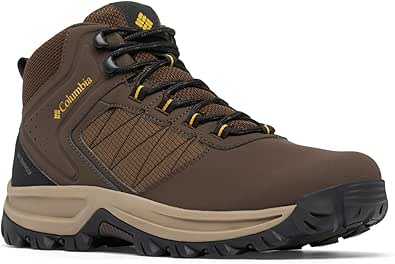 | Best for Lightweight Wet-Weather Day Hikes | Upper: Leather and mesh | Sole material: Rubber | Shaft height: Ankle | VIEW ON AMAZON | See Our Full Breakdown |
| Salomon Men’s Quest Element Gore-Tex Waterproof Hiking Boots |  | Best for Lightweight Backpacking Stability | Upper material: Nubuck leather | Sole material: Rubber | Shaft height: Ankle | VIEW ON AMAZON | See Our Full Breakdown |
| Kenetrek Men’s Corrie II Mid Hiker Boots |  | Best for Reinforced Mid-Cut Trail Protection | Fabric: 100% leather | Sole material: Rubber | Shaft height: 7 inches | VIEW ON AMAZON | See Our Full Breakdown |
| Danner Men’s Mountain 600 EVO 4.5-Inch Waterproof Hiking Boot |  | Best for Recraftable Trail Longevity | Upper material: Full-grain leather | Lining: Waterproof, breathable GORE-TEX; 45% post-consumer recycled materials | Outsole: Vibram Megagrip | VIEW ON AMAZON | See Our Full Breakdown |
| Kenetrek Men’s Mountain Extreme Non-Insulated Hiking Boots |  | Best for Heavy Loads on Demanding Mountain Terrain | Fabric: 100% leather | Sole material: Rubber | Shaft height: 10 inches | VIEW ON AMAZON | See Our Full Breakdown |
| premium hiking boots for rugged trail | Outsole | Shaft height | Sole material | Midsole |
|---|---|---|---|---|
| Columbia Men’s Crestwood Hikin | Omni-Grip traction rubber, non-marking | — | Rubber | Techlite cushioned |
| Columbia Men’s Newton Ridge Pl | Omni-Grip rubber with dual-zone winter tread | Ankle | Rubber | — |
| KEEN Men’s Targhee 4 Mid Water | KEEN.ALL-TERRAIN rubber | Ankle | — | — |
| Salomon Men’s X-Adventure Reco | All Terrain Contagrip | Ankle | Polyurethane | — |
| Timberland Men’s White Ledge M | Rubber with multidirectional lugs | Ankle | — | EVA |
| Kenetrek Men’s Hardscrabble Hi | K-Talon | 7 inches | — | 7 mm nylon |
| Merrell Men’s Moab 3 Mid Water | Vibram TC5+ | Ankle | Rubber | Super Rebound Compound |
| Oboz Men’s Bridger Mid B-DRY H | — | — | Rubber | Single-density EVA |
| Kenetrek Men’s Bridger High Hi | KT-Light | — | — | Full-length nylon |
| KEEN Men’s Hightrail Mid Water | Rubber with 4 mm multidirectional lugs | Ankle | Rubber | — |
| Columbia Men’s Transverse Wate | OMNI-GRIP multi-terrain traction | Ankle | Rubber | — |
| Salomon Men’s Quest Element Go | — | Ankle | Rubber | — |
| Kenetrek Men’s Corrie II Mid H | Grapon | 7 inches | Rubber | 5 mm nylon |
| Danner Men’s Mountain 600 EVO | Vibram Megagrip | 4.5 inches | — | — |
| Kenetrek Men’s Mountain Extrem | K-Talon | 10 inches | Rubber | 7 mm nylon |
More Details on Our Top Picks
Columbia Men’s Crestwood Hiking Boots
The Crestwood is the lightest-duty choice here: a suede-and-mesh upper and cushioned Techlite midsole suit dry day hikes where low bulk and everyday wear matter more than weather protection. Its Omni-Grip rubber outsole offers traction across varied terrain, but the supplied details describe this model as designed for dry conditions, unlike the waterproof Newton Ridge Plus II. That makes the Crestwood a better fit for fair-weather paths than wet, muddy, or snow-covered routes. Compared with the more protective KEEN Targhee 4 Mid, it gives up a waterproof membrane and added toe protection in exchange for a breathable, more casual build. I’d choose it for maintained trails and mixed daily use, not for rugged hikes where rain or rough ground is likely.
Pros:- Lightweight construction suits day hikes and regular wear.
- Suede leather and mesh upper offers a breathable combination.
- Omni-Grip rubber outsole is intended for traction on varied terrain.
- Cushioned Techlite midsole adds comfort underfoot.
Cons:- Designed for dry environments, limiting its appeal in wet conditions.
- Lacks the waterproof membrane and weather-sealing details of several other picks.
- Offers less described toe and underfoot protection than the KEEN Targhee 4 Mid.
Best for: Hikers who stick to dry, maintained trails and want a lightweight boot that also suits everyday wear.
Not ideal for: Hikers facing frequent rain, mud, snow, or rough rocky trails; its stated design is for dry environments, and it lacks the waterproof protection and added barriers found on the Newton Ridge Plus II and KEEN Targhee 4 Mid.
- Upper materials:100% leather and textile
- Outer material:Leather
- Midsole:Techlite cushioned
- Outsole:Omni-Grip traction rubber, non-marking
- Sole material:Rubber
- Fit:True to size
- Origin:Imported
Our verdict“Choose the Crestwood for lightweight, dry-weather hikes and daily use, but pick the Newton Ridge Plus II or KEEN Targhee 4 Mid for wetter, rougher trails.”
Columbia Men’s Newton Ridge Plus II Waterproof Hiking Boot
The Newton Ridge Plus II brings together the key pieces for varied, changeable trails: a waterproof leather-and-mesh upper, cushioned midsole, and an Omni-Grip outsole with dual-zone winter tread. That winter-specific tread gives it a clearer cold-weather role than the dry-use Crestwood, while the KEEN Targhee 4 Mid adds details such as a removable footbed and protective toe guard for hikers who want more trail-focused support. The Newton Ridge’s lightweight build and adjustable lacing make it a practical all-around pick, but the product information does not specify extras such as a protective toe guard or removable footbed. Sizing guidance is recommended, so buyers should check the chart rather than assume their usual fit. I’d favor it for mixed-weather day hikes, not for those seeking the most protective or feature-rich boot here.
Pros:- Waterproof full-grain leather and mesh upper helps keep feet dry.
- Lightweight cushioned midsole supports comfort on day hikes.
- Dual-zone winter tread is designed for traction across varied terrain, including ice and snow.
- Lace-up closure allows an adjustable fit.
Cons:- Sizing chart is recommended, so familiar sizing may not be enough to select a fit.
- Product details do not specify a removable footbed or protective toe guard.
- Offers fewer stated trail-protection features than the KEEN Targhee 4 Mid.
Best for: Day hikers who encounter rain, varied terrain, or occasional ice and snow and want a lightweight waterproof boot with an adjustable lace-up fit.
Not ideal for: Hikers who need a roomy toe fit, a removable footbed, or explicitly described toe protection; the KEEN Targhee 4 Mid lists those features.
- Upper:Waterproof full-grain leather and mesh
- Shaft height:Ankle
- Closure:Lace-up
- Outsole:Omni-Grip rubber with dual-zone winter tread
- Sole material:Rubber
- Shaft circumference:1 inch
- Origin:Imported
Our verdict“Pick the Newton Ridge Plus II for lightweight waterproof versatility and winter-oriented tread, while choosing the KEEN Targhee 4 Mid if toe protection and a removable footbed matter more.”
KEEN Men’s Targhee 4 Mid Waterproof Hiking Boots
The Targhee 4 Mid is the most trail-protection-focused option among these five. Its KEEN.DRY waterproof membrane is paired with an all-terrain rubber outsole, bruise plate, and rubber toe guard, addressing wet paths and knocks from rocky ground. A removable Luftcell footbed adds a useful fit and support adjustment that the Newton Ridge Plus II’s supplied details don’t specify. The roomy KEEN Original Fit can be a plus for hikers who want toe space, but it may feel too broad to those who prefer a narrower shape. Compared with the Salomon X-Adventure Recon Mid, KEEN clearly describes underfoot and toe protection; Salomon instead highlights lateral stability through its Advanced Chassis. I’d put the Targhee ahead for comfort and protection on rough, wet routes, provided its generous fit suits your foot.
Pros:- KEEN.DRY membrane combines waterproofing with breathability.
- All-terrain rubber outsole is designed for mud and rock.
- Removable Luftcell footbed offers arch support and a way to adjust the footbed setup.
- Bruise plate and rubber toe guard add protection on rough ground.
Cons:- Roomy toe fit may not suit hikers who prefer a narrow fit.
- Its protective feature set may be more than needed for dry, easy trails.
- Compared with the Newton Ridge Plus II, it is less clearly positioned around winter-specific tread.
Best for: Hikers with wider feet who want waterproofing, a roomy toe area, removable underfoot support, and added protection on rocky or muddy trails.
Not ideal for: Hikers who prefer a narrow, close-fitting toe box; the KEEN Original Fit is explicitly roomy.
- Waterproofing:KEEN.DRY waterproof breathable membrane
- Construction:Direct-attach
- Outsole:KEEN.ALL-TERRAIN rubber
- Footbed:Removable Luftcell
- Fit:KEEN Original Fit
- Shaft height:Ankle
- Laces:100% recycled PET
- Outer material:Leather
Our verdict“Choose the Targhee 4 Mid for wet, rocky hikes and a roomy protective fit, but skip it if you want a narrow toe box.”
Salomon Men’s X-Adventure Recon Mid GORE-TEX Hiking Boots
The X-Adventure Recon Mid stands apart for hikers who value side-to-side stability as well as waterproofing. Its GORE-TEX membrane and All Terrain Contagrip outsole are paired with an Advanced Chassis support system, making it a compelling match for uneven routes where a steady platform matters. The wider toe box and reinforced toe cap also give it a different feel from a close-fitting trail boot. Compared with the KEEN Targhee 4 Mid, Salomon emphasizes chassis support and toe-box width, while KEEN more clearly specifies a removable footbed, bruise plate, and rubber toe guard. One data wrinkle deserves attention: the specs list canvas as the outer material, while the description specifies nubuck leather and abrasion-resistant mesh. I’d choose Salomon for stability-minded hikers, but buyers seeking unambiguous material details may prefer another pick.
Pros:- GORE-TEX membrane provides waterproof, breathable protection.
- Advanced Chassis is designed to add lateral stability.
- Wider toe box supports natural toe splay.
- Contagrip outsole and reinforced toe cap suit varied, rough trails.
Cons:- Outer material is listed as canvas in the specs, while the description names nubuck leather and mesh.
- No removable footbed or bruise plate is specified, unlike the KEEN Targhee 4 Mid.
- Polyurethane sole material is listed, rather than rubber as on several competing picks.
Best for: Hikers tackling uneven trails who want waterproof coverage, a wider toe box, reinforced toe protection, and added lateral support.
Not ideal for: Buyers who want fully consistent material specifications or a clearly described removable footbed and underfoot protection.
- Membrane:GORE-TEX
- Upper materials:Full-grain nubuck leather and abrasion-resistant mesh
- Outer material:Canvas (listed in product specs)
- Outsole:All Terrain Contagrip
- Support system:Advanced Chassis
- Toe protection:Reinforced toe cap and mudguard
- Shaft height:Ankle
- Sole material:Polyurethane
Our verdict“Choose the X-Adventure Recon Mid if lateral stability and a wider toe box top your list, but favor the KEEN Targhee 4 Mid for more clearly specified underfoot and toe protection.”
Timberland Men’s White Ledge Mid Waterproof Hiking Boots
The White Ledge Mid keeps its design straightforward: waterproof premium leather, seam-sealed construction, and a fully gusseted tongue form a clear barrier against water entering through the upper. EVA in both the footbed and midsole supplies cushioning, while multidirectional lugs give the outsole a practical grip pattern. Compared with the Columbia Newton Ridge Plus II, this Timberland leans on leather and sealed construction rather than a leather-and-mesh upper and explicitly winter-oriented tread. The KEEN Targhee 4 Mid is the more detailed choice for rocky ground, with a stated bruise plate and rubber toe guard; the White Ledge specs do not name comparable protective features. Its ankle-height shaft and traditional lacing hardware suit general hiking, but buyers seeking technical support details or a specified waterproof membrane have less information here. I’d choose it for straightforward wet-weather hiking, not specialized rugged terrain.
Pros:- Waterproof premium leather upper is paired with seam-sealed construction.
- Fully gusseted tongue helps limit water entry.
- EVA footbed and midsole provide cushioning.
- Multidirectional rubber outsole lugs are designed for traction.
Cons:- No waterproof membrane is specified in the product details.
- Toe protection and underfoot protection features are not listed.
- Does not specify winter-oriented tread like the Newton Ridge Plus II.
Best for: Hikers who want an ankle-height leather boot with seam-sealed waterproof construction and cushioned EVA underfoot for general trail use.
Not ideal for: Hikers who need explicitly described toe and underfoot protection or winter-specific traction; the KEEN Targhee 4 Mid and Columbia Newton Ridge Plus II provide more detail in those areas.
- Upper:Waterproof premium Timberland leather
- Construction:Seam-sealed
- Tongue:Fully gusseted
- Lining:ReBOTL fabric
- Footbed:EVA
- Midsole:EVA
- Outsole:Rubber with multidirectional lugs
- Lacing:Rustproof speed lace hardware with top lace hooks
- Shaft height:Ankle
Our verdict“Choose the White Ledge Mid for a straightforward leather waterproof boot with EVA cushioning, but select the KEEN Targhee 4 Mid for more clearly specified protection on rugged ground.”
Kenetrek Men’s Hardscrabble Hiker Hiking Boots
The Hardscrabble Hiker is the heavy-duty choice here for hikers who put durable leather and load support ahead of a light feel. Its 2.8 mm full-grain leather upper is built to handle trail abrasion, while the 7 mm nylon midsole adds a supportive platform for uneven ground and heavier packs. Compared with the lighter Kenetrek Bridger High, this pair weighs more, but its thicker leather gives it a more substantial, protective character. The waterproof, breathable Windtex membrane suits wet conditions, though it may feel less comfortable in hot weather than a less enclosed boot. At about 3.5 pounds per pair, it is not the pick for fast hikes or weight-conscious packing; it makes more sense for rugged routes where durability and support outweigh agility.
Pros:- Thick full-grain leather is designed to resist abrasion on demanding trails.
- Waterproof, breathable Windtex membrane helps protect against wet conditions.
- Supportive 7 mm nylon midsole suits uneven ground and heavier pack loads.
- K-Talon outsole is designed for grip on rocky terrain.
Cons:- At approximately 3.5 pounds per pair, it is heavier than the Kenetrek Bridger High.
- The waterproof build may feel warm in hot-weather hiking.
- Its substantial construction is less suited to fast, lightweight outings.
Best for: Hikers and hunters carrying heavier packs on rocky, abrasive trails who prefer substantial leather construction and a supportive sole.
Not ideal for: Fast-moving hikers, warm-weather trekkers, or anyone prioritizing low footwear weight; its 3.5-pound pair weight and waterproof membrane may feel cumbersome or warm.
- Upper:2.8 mm full-grain leather
- Waterproofing:Windtex waterproof, breathable membrane
- Midsole:7 mm nylon
- Outsole:K-Talon
- Boot height:Ankle-high
- Shaft height:7 inches
- Weight:Approximately 3.5 pounds per pair
- Closure:Lace-up
Our verdict“Choose the Hardscrabble Hiker for rugged, wet trails and heavier loads if you are willing to carry more boot weight.”
Merrell Men’s Moab 3 Mid Waterproof Hiking Boots
The Moab 3 Mid Waterproof favors cushioned comfort and familiar trail handling over the heavier, more protective build of the Kenetrek Hardscrabble Hiker. Its pig suede and breathable mesh upper pairs with a waterproof membrane, while the Super Rebound Compound midsole and Merrell Air Cushion are intended to soften repeated impacts. That combination makes it a practical choice for hikers who want comfort on varied outdoor outings without stepping up to a more rigid-feeling boot. The Vibram TC5+ outsole adds traction, but the product details do not specify a stiff shank or heavy-duty chassis, so I would not rank it ahead of the more support-focused Oboz Bridger Mid B-DRY for demanding loads. The mesh-and-suede construction also offers less of a heavy leather feel than Kenetrek’s option.
Pros:- Waterproof membrane is designed to keep water out while allowing moisture to escape.
- Super Rebound Compound midsole and Air Cushion heel add impact cushioning.
- Vibram TC5+ outsole provides traction for outdoor use.
- Upper combines pig suede leather with breathable mesh.
Cons:- The listed upper combines suede and mesh rather than the thick full-grain leather used on the Kenetrek Hardscrabble Hiker.
- Available product details do not specify a supportive shank or chassis for heavy-load hiking.
- A waterproof membrane and cushioned build may be more boot than needed for hot, dry, lightweight outings.
Best for: Day hikers seeking waterproofing, cushioned landings, and trail traction for mixed outdoor routes rather than maximum boot stiffness.
Not ideal for: Hikers carrying heavy packs over especially rough terrain who want documented shank support or a substantial leather upper.
- Upper:Pig suede leather and breathable mesh
- Waterproofing:Waterproof membrane
- Midsole:Super Rebound Compound
- Outsole:Vibram TC5+
- Heel cushioning:Merrell Air Cushion
- Shaft height:Ankle
- Sole material:Rubber
Our verdict“Pick the Moab 3 Mid if cushioned comfort and waterproof trail versatility matter more to you than a stiff, heavy-load platform.”
Oboz Men’s Bridger Mid B-DRY Hiking Boots
The Oboz Bridger Mid B-DRY stands out for its deliberately structured underfoot support, making it a stronger fit for uneven routes than a comfort-first option such as the Merrell Moab 3 Mid Waterproof. A TPU chassis and nylon shank help stabilize the foot, while the triple-density insole adds a molded shell, deep heel cup, and cushioning under the heel and forefoot. That combination is useful when trails vary between loose, rocky, and firm surfaces. The Trail Tread HD rubber uses multidirectional tread, and the nubuck-and-textile upper includes a molded toe cap and heel counter for added protection. The tradeoff is less certainty about fit: the supplied details provide no fit guidance, and its stated weight is per half pair, not a full pair, so direct weight comparison with the Kenetrek Bridger High is difficult.
Pros:- TPU chassis and nylon shank add structure on uneven trails.
- Triple-density insole includes a deep heel cup and cushioned heel and forefoot pods.
- Multidirectional Trail Tread HD rubber is designed for varied surfaces.
- Molded toe cap and heel counter reinforce the nubuck-and-textile upper.
Cons:- Listed weight is 19 ounces per half pair, which makes full-pair comparisons less direct.
- The provided product details do not include fit guidance.
- Its structured support may feel like more boot than needed for smooth, easy trails.
Best for: Hikers who want a supportive chassis, shaped insole, and protective upper for long outings over mixed, uneven terrain.
Not ideal for: Buyers who need clear fit guidance or an exact full-pair weight before choosing, or those seeking a particularly light, minimalist boot.
- Upper:Waterproof nubuck and durable textile
- Waterproofing:Oboz B-DRY waterproof/breathable membrane
- Weight:19.0 oz per half pair
- Midsole:Single-density EVA
- Support:TPU chassis and nylon shank
- Insole:Triple-density EVA with molded shell and deep heel cup
- Traction:Trail Tread HD rubber with multidirectional tread
- Sole material:Rubber
Our verdict“Choose the Bridger Mid B-DRY if structured support and a protective, shaped footbed matter more than simple fit and weight comparisons.”
Kenetrek Men’s Bridger High Hiking Boots
The Kenetrek Bridger High offers a compelling middle ground for rugged trails: a 7-inch leather upper and ankle-support features, without the heft of the Kenetrek Hardscrabble Hiker. At 2.9 pounds per pair, it is lighter than that model, while the full-length nylon midsole and K-Straps are designed to help stabilize the foot on rough ground. The lace-to-toe closure gives room to adjust the fit across the forefoot, and medium and wide widths provide more choice than the single width information supplied for the KEEN Hightrail Mid. Its Windtex membrane and protective rubber rand suit wet, abrasive routes. The main limitation is sizing flexibility: only medium and wide widths are listed, so hikers outside those options may need another model. It also remains a substantial leather boot rather than a minimalist trail shoe.
Pros:- Weighs 2.9 pounds per pair, less than the Kenetrek Hardscrabble Hiker.
- K-Straps, padded collar, and 7-inch upper are designed to support the ankle.
- Full-length nylon midsole provides a supportive platform.
- Windtex membrane and protective rubber rand suit wet, abrasive terrain.
Cons:- Listed widths are limited to medium and wide.
- At 2.9 pounds per pair, it is still substantial compared with lightweight hiking footwear.
- Its 7-inch leather upper may feel excessive for smooth, low-demand trails.
Best for: Rugged-trail hikers who want a supportive, waterproof leather boot with less weight than a heavy-duty Kenetrek build and who fit medium or wide widths.
Not ideal for: Hikers who need narrow or other unlisted widths, or those seeking a low-profile, minimal boot for fast day hikes.
- Upper height:7 inches
- Weight:2.9 pounds per pair
- Waterproofing:Windtex waterproof, breathable, flexible membrane
- Midsole:Full-length nylon
- Outsole:KT-Light
- Closure:Lace-to-toe
- Widths:Medium or wide
- Shaft circumference:9 inches
Our verdict“Choose the Bridger High if you want Kenetrek-style ankle support and leather protection at less weight than the Hardscrabble Hiker.”
KEEN Men’s Hightrail Mid Waterproof Hiking Boots
The KEEN Hightrail Mid takes a more flexible, day-hike-oriented approach than the structured Oboz Bridger Mid B-DRY. Its KEEN LuftCell cushioning and removable responsive footbed are aimed at a comfortable step, while a stability shank and 4 mm multidirectional lugs add support and grip on uneven paths. The leather upper and KEEN.DRY membrane provide protection for wet trail conditions, and the sneaker-like design is likely to suit hikers who find traditional rugged boots too stiff or bulky. That lighter-feeling character is also its limit: the product details do not list the reinforced chassis or heavy-load support features found on the Oboz, nor do they specify weight. Leather care requires gentle cleaning and air drying, so this is not a no-maintenance choice. I would favor it for day routes over sustained, heavy-pack terrain.
Pros:- KEEN.DRY membrane is designed to keep feet dry while allowing breathability.
- LuftCell cushioning and a removable responsive footbed support comfortable day hikes.
- Stability shank and 4 mm multidirectional lugs provide underfoot support and grip.
- Leather is sourced from Leather Working Group certified tanneries.
Cons:- Product details do not specify weight, making comparison with the lighter Kenetrek Bridger High less direct.
- The listed support details are less extensive than the Oboz Bridger Mid B-DRY’s chassis and nylon shank setup.
- Leather needs gentle cleaning and air drying.
Best for: Day hikers who want waterproof leather protection, cushioned underfoot comfort, and a less boot-like feel on uneven trails.
Not ideal for: Backpackers carrying heavy loads on extended rugged routes who want detailed weight information and a more explicitly structured support system.
- Upper:Leather
- Waterproofing:KEEN.DRY waterproof, breathable membrane
- Shaft height:Ankle
- Outsole:Rubber with 4 mm multidirectional lugs
- Footbed:Removable responsive footbed
- Support:Stability shank
- Cushioning:KEEN LuftCell technology
- Sole material:Rubber
Our verdict“Choose the Hightrail Mid for cushioned day hikes and a sneaker-like feel, but favor the Oboz Bridger for more explicitly structured support under heavier loads.”
Columbia Men’s Transverse Waterproof Hiking Boots
The Transverse is a practical choice for hikers who want waterproof protection without a heavy build on moderate trails. Its seam-sealed leather-and-mesh upper is described for moderate rain and snow, while TECHLITE cushioning helps soften repeated foot strikes on dirt, gravel, and rock. The OMNI-GRIP outsole is intended for both wet and dry ground, giving it broader trail use than a boot chosen only for dry paths. Compared with the more substantial Kenetrek Mountain Extreme, this Columbia favors lighter cushioning and ankle-height coverage over rigid support for heavy loads. That makes it more appealing for day hikes than demanding, load-carrying mountain routes. Its main limitation is the stated weather range: hikers facing prolonged severe conditions may want a boot with a more rugged, expedition-focused design.
Pros:- Seam-sealed waterproof-breathable leather-and-mesh construction
- TECHLITE cushioning absorbs impact without a heavy feel
- OMNI-GRIP outsole is designed for wet and dry terrain
- Cushioned collar and durable construction
Cons:- Weather protection is described for moderate rain and snow, not prolonged severe conditions
- Ankle-height shaft offers less coverage than taller rugged-terrain boots
- No specific load-support features are listed
Best for: Day hikers who want a lighter waterproof boot for moderate trails and occasional rain or snow.
Not ideal for: Backpackers carrying heavy loads or hikers who regularly face prolonged severe weather and need more substantial support.
- Upper:Leather and mesh
- Sole material:Rubber
- Shaft height:Ankle
- Waterproofing:Waterproof, seam-sealed construction
- Cushioning:TECHLITE lightweight impact absorption
- Outsole:OMNI-GRIP multi-terrain traction
Our verdict“Choose the Transverse for lighter day hikes in changeable but moderate weather, not heavy-load mountain travel.”
Salomon Men’s Quest Element Gore-Tex Waterproof Hiking Boots
The Quest Element pairs a GORE-TEX membrane with a durable Nubuck leather upper, making it a strong match for backpackers who need weather protection without giving up agility. Its ADV-C chassis is designed to support stability and absorb shock on rough ground, a useful distinction from the more day-hike-focused Columbia Transverse, which emphasizes lightweight cushioning and moderate-weather use. The Quest Element’s ankle-height profile also makes it less enclosing than the Kenetrek Mountain Extreme, whose taller shaft and rigid midsole are better suited to heavier loads and demanding mountain travel. Here, the tradeoff is a less specialized build for extreme terrain. The supplied details do not establish fit, comfort, or durability over time, so buyers who need those assurances should compare fit information before choosing.
Pros:- GORE-TEX membrane is waterproof, windproof, and breathable
- Durable Nubuck leather upper
- ADV-C chassis is designed for stability and shock absorption
- Lightweight construction supports agility on backpacking trips
Cons:- Ankle-height shaft provides less coverage than taller mountain boots
- The supplied product details provide no fit or comfort guidance
- No specific outsole compound or traction design is listed
Best for: Backpackers seeking a waterproof leather boot with chassis support for rough trails and multi-day hiking.
Not ideal for: Hikers who need a tall, highly rigid boot for heavy loads or who require well-documented fit and long-term wear details before buying.
- Upper material:Nubuck leather
- Sole material:Rubber
- Shaft height:Ankle
- Shaft circumference:14 inches
- Waterproofing:GORE-TEX membrane
- Closure:Lace-up
- Midsole technology:ADV-C chassis
Our verdict“Pick the Quest Element for agile, weather-protected backpacking support, but look to the Mountain Extreme for taller, stiffer load-focused coverage.”
Kenetrek Men’s Corrie II Mid Hiker Boots
The Corrie II stands apart through its combination of a 7-inch shaft, reinforced toe and heel guards, and a 5 mm nylon midsole. Those details point to a more protective mid-cut boot for hikers and hunters moving through rough terrain, rather than a lightweight option focused mainly on moderate-weather day hikes like the Columbia Transverse. Its Windtex membrane adds waterproof-breathable coverage, while the Grapon outsole is specified for traction. Compared with the taller Kenetrek Mountain Extreme, the Corrie II uses a shorter shaft and a thinner listed midsole, so it is the less imposing choice for users who want reinforcement without a 10-inch boot. The product information does not specify fit or real-world durability, and buyers should not assume the same load support as the taller model.
Pros:- Windtex waterproof-breathable membrane
- 7-inch shaft offers more coverage than ankle-height boots
- Reinforced toe and heel guards help protect high-impact areas
- 5 mm nylon midsole and Grapon outsole are geared toward support and traction
Cons:- Less shaft coverage than the 10-inch Kenetrek Mountain Extreme
- The supplied details do not specify fit or long-term durability
- No insulation is listed for prolonged cold-weather use
Best for: Hikers and hunters who want a reinforced mid-cut boot with waterproof protection for mixed trail and backcountry use.
Not ideal for: Backpackers who need the taller coverage and explicitly load-focused rigid support of a full-height mountain boot.
- Fabric:100% leather
- Sole material:Rubber
- Shaft height:7 inches
- Midsole:5 mm nylon
- Waterproof membrane:Windtex
- Outsole:Grapon
Our verdict“Choose the Corrie II for reinforced mid-height protection, while heavy-load hikers needing maximum coverage should favor a taller boot.”
Danner Men’s Mountain 600 EVO 4.5-Inch Waterproof Hiking Boot
The Mountain 600 EVO is the standout for hikers who value a recraftable build alongside reliable traction and cushioning. Full-grain leather and a GORE-TEX lining provide a durable, waterproof-breathable upper, while the Vibram Megagrip outsole is designed to hold on wet and dry surfaces. A removable, three-density OrthoLite ECO footbed gives buyers a way to adjust or replace the cushioning more easily than with a fixed footbed. Compared with the Salomon Quest Element, this Danner gives more detail on its outsole compound and recraftable construction, though the Salomon specifies a chassis for stability and shock absorption on rough terrain. The tradeoff is leather upkeep, and its 4.5-inch shaft offers less coverage than the Kenetrek Mountain Extreme for demanding, heavy-load routes.
Pros:- GORE-TEX waterproof-breathable lining includes 45% post-consumer recycled materials
- Vibram Megagrip outsole is designed for wet and dry traction
- Removable three-density OrthoLite ECO footbed
- Recraftable construction supports longer-term maintenance
Cons:- Full-grain leather may need care to maintain
- 4.5-inch shaft provides less coverage than taller Kenetrek boots
- No specific fit or durability history is provided
Best for: Trail hikers who want a waterproof leather boot with grippy traction, replaceable cushioning, and a recraftable construction.
Not ideal for: Hikers who prefer low-maintenance uppers or need a tall shaft and rigid support for heavy mountain loads.
- Upper material:Full-grain leather
- Lining:Waterproof, breathable GORE-TEX; 45% post-consumer recycled materials
- Outsole:Vibram Megagrip
- Footbed:Removable OrthoLite ECO, three layers of varying density
- Shaft height:4.5 inches
- Shaft circumference:11.02 inches
- Laces:Round and flat options included
- Construction:Recraftable
Our verdict“Choose the Mountain 600 EVO if recraftability and wet-surface grip matter more to you than tall-shaft coverage or minimal leather care.”
Kenetrek Men’s Mountain Extreme Non-Insulated Hiking Boots
The Mountain Extreme is the most purpose-built choice here for heavy loads and rugged mountain routes. Its 10-inch shaft, 2.8 mm full-grain leather, and 7 mm nylon midsole favor coverage and rigid support over the easy flex of the ankle-height Columbia Transverse or Danner Mountain 600 EVO. A Windtex waterproof-breathable membrane and K-Talon outsole add weather protection and grip for uneven ground. That structure is a benefit when the route and pack demand support, but it also makes this boot a poor fit for casual walks or hikers who prefer a softer, more flexible feel. Unlike an insulated cold-weather boot, this model is explicitly non-insulated, so it is less suited to prolonged use in very cold conditions. Choose it for demanding terrain, not everyday versatility.
Pros:- 2.8 mm full-grain leather upper is built for demanding use
- 10-inch shaft provides substantial coverage
- 7 mm nylon midsole is designed to support heavy loads
- Windtex membrane and K-Talon outsole target weather protection and rough-terrain grip
Cons:- Rigid support may feel stiff for casual wear
- Non-insulated construction may be less suitable for prolonged use in very cold conditions
- Taller, more structured design is less agile than the Salomon Quest Element
Best for: Experienced hikers and hunters carrying heavy loads on rugged mountain terrain who want a tall, supportive leather boot.
Not ideal for: Casual trail walkers, hikers seeking a flexible ankle boot, or users spending prolonged periods in very cold conditions.
- Fabric:100% leather
- Sole material:Rubber
- Shaft height:10 inches
- Leather thickness:2.8 mm full-grain leather
- Insulation:Non-insulated
- Midsole:7 mm nylon
- Waterproof membrane:Windtex
- Outsole:K-Talon
Our verdict“Pick the Mountain Extreme for heavy-load mountain travel and substantial shaft coverage, not flexible everyday hiking or prolonged severe cold.”

How We Picked
I ranked these boots around the demands of rugged trails: uneven footing, loose surfaces, long descents, and the extra strain of carrying a pack. The main criteria were support and stability, protective construction, traction potential, waterproofing, expected comfort over long days, and versatility across trail conditions. I also weighed the likely cost of each design choice to the wearer: more structure can add weight and stiffness, while a lighter build may offer less support under heavy loads.
The order favors boots with a credible balance of trail protection and practical use, rather than treating the most rugged build as automatically best. Models such as the KEEN Targhee 4 Mid and Salomon Quest Element rank ahead of lighter-duty options because their roles align more closely with rough, demanding routes. The highly structured Kenetrek boots remain compelling for specialized needs but sit lower for general buyers because their protection can be more boot than many hikers need. Since fit varies by foot and product details can change, I treat these rankings as a shortlist to guide try-on decisions, not a substitute for checking current specifications and fit.
| premium hiking boots for rugged trail | Sole material |
|---|---|
| Columbia Men’s Crestwood Hikin | Rubber |
| Columbia Men’s Newton Ridge Pl | Rubber |
| KEEN Men’s Targhee 4 Mid Water | — |
| Salomon Men’s X-Adventure Reco | Polyurethane |
| Timberland Men’s White Ledge M | — |
| Kenetrek Men’s Hardscrabble Hi | — |
| Merrell Men’s Moab 3 Mid Water | Rubber |
| Oboz Men’s Bridger Mid B-DRY H | Rubber |
| Kenetrek Men’s Bridger High Hi | — |
| KEEN Men’s Hightrail Mid Water | Rubber |
| Columbia Men’s Transverse Wate | Rubber |
| Salomon Men’s Quest Element Go | Rubber |
| Kenetrek Men’s Corrie II Mid H | Rubber |
| Danner Men’s Mountain 600 EVO | — |
| Kenetrek Men’s Mountain Extrem | Rubber |
Factors to Consider When Choosing Premium Hiking Boots For Rugged Trails
Choosing a rugged-trail boot is less about finding the most features and more about matching support, protection, and weight to your actual hikes. I would start with the terrain and pack you expect to carry, then check fit and climate before paying for a more specialized build.
Match Support to Pack Weight and Terrain
A boot that feels reassuring under a loaded pack can feel unnecessarily rigid on short, smooth walks. For rocky traverses, steep descents, or frequent off-trail sections, look for a secure heel and enough underfoot structure to limit foot fatigue and twisting. With a lighter daypack, a flexible mid-cut boot may feel more natural and easier to walk in. A common mistake is choosing maximum stiffness because the route sounds rugged, without accounting for how much time will be spent on easier approaches. Let your heaviest typical load and roughest regular terrain set the support level, rather than an occasional ambitious trip.
Treat Fit as a Performance Feature
On rugged ground, a boot that lets your foot slide can cause more trouble than a modest difference in outsole design. Check for heel hold, room for your toes to spread, and enough space in front of the toes for downhill travel without impact. Try boots with the socks you plan to hike in, and assess fit later in the day when feet may be larger. Do not assume that a larger size will fix a narrow forefoot or that breaking in will correct painful pressure points. Comfort on a short indoor try-on is not proof of downhill security; walk on a slope or ramp if the retailer permits it.
Choose Waterproofing for Your Climate
A waterproof membrane can help in wet grass, rain, and shallow puddles, but it can also slow drying if water gets over the cuff. In hot or humid conditions, a less weather-sealed boot may feel cooler and release moisture more readily. Waterproofing does not replace gaiters or sensible route choices when water is deep enough to enter from above. Think about the weather you encounter most often rather than buying a membrane solely because the boot is marketed for hiking. Frequent wet-weather hikers benefit most, while dry-climate hikers may prefer ventilation and quicker drying.
Read Traction Claims Through the Trail Surface
No outsole pattern grips every surface equally well. Deep, widely spaced lugs can shed mud and bite into soft ground, while the rubber compound and contact area affect confidence on rock. Smooth wet stone, loose scree, and packed dirt each reward different tread behavior, so a boot described as rugged may still have a weakness on your usual routes. A common buying error is focusing on lug depth alone and ignoring how the sole behaves on hard, wet surfaces. Match tread style to the surface you hike most, and keep in mind that worn lugs reduce grip regardless of the original design.
Decide How Much Weight You Will Carry
Extra leather, reinforcements, and a supportive midsole can improve protection but add weight to every step. That cost grows over long distances and may matter more to a fast-moving day hiker than to someone prioritizing stability with a heavy pack. Lighter boots can feel less tiring, yet they may provide less protection from sharp rocks and less support on uneven ground. Avoid buying a heavy boot just because it appears more durable; match its build to the work you expect it to do. Pay for structure when your terrain or load calls for it, not as a general substitute for good fit and careful foot placement.
Budget for Care and Break-In
Premium construction still needs maintenance, and the right care depends on the upper material and manufacturer guidance. Dirt can wear materials and interfere with waterproof treatments, while storing boots damp can shorten their useful life. Before a major trip, wear new boots on shorter outings and check for hot spots after descents, not only on flat ground. Do not count on a long break-in period to make an ill-fitting boot comfortable; persistent pinching or heel movement usually calls for a different fit. Plan for gradual break-in and routine cleaning so the boot is ready before the route becomes demanding.
Frequently Asked Questions
Should I choose the KEEN Targhee 4 Mid or the Salomon Quest Element for a multi-day hike?
I would base that choice on pack weight and how much structure you want. The KEEN Targhee 4 Mid is the more balanced pick for hikers who want rugged-trail capability without committing to a highly specialized boot. The Salomon Quest Element makes more sense when a heavier pack, steep descents, and uneven ground call for added support. Fit can outweigh that distinction, so compare heel hold and toe room in both models with your hiking socks. If either boot creates pressure during a downhill walk, it is the wrong choice for a multi-day route regardless of its support features.
Are the most rugged Kenetrek boots a good choice for ordinary day hikes?
They can work for day hikes, but a demanding construction is not automatically an advantage on every route. Kenetrek’s Mountain Extreme and Hardscrabble Hiker are better suited to hikers who value substantial protection and support on rough terrain. On maintained trails or quick outings, their added structure may feel heavy and restrictive compared with more flexible options. Consider how often your usual routes truly call for that level of support before choosing a specialized boot. If your hikes vary widely, a more versatile model may see more use.
Is a waterproof hiking boot still a good idea for hot-weather trails?
It depends on whether wet conditions or heat is the bigger issue on your routes. A waterproof membrane helps with rain and wet vegetation, but it can hold warmth and may dry slowly if water enters over the cuff. For consistently hot, dry trails, ventilation and moisture management may matter more than keeping out occasional splashes. If your climate brings sudden storms or wet crossings, waterproofing may still be a worthwhile tradeoff. Decide based on typical conditions across a full hiking season, not only the forecast for one trip.
How can I tell whether a boot has enough toe room for steep descents?
Try the boot with your hiking socks and walk down a ramp or sloped surface if possible. Your toes should not strike the front, and your heel should stay secure without needing the laces painfully tight. Check both feet, since they may differ slightly in length or width, and leave enough space for normal foot swelling on a long day. A boot that feels fine on level ground may still let your foot slide forward downhill. If changing the lacing does not stop toe impact or heel movement, test another size or shape rather than hoping the boot will stretch into a better fit.
When is it worth choosing a heavier, more supportive boot over a lighter mid-cut?
Extra support is most useful when you regularly hike over broken terrain, carry a substantial pack, or need protection around sharp rocks and rough approaches. A lighter mid-cut can be more comfortable for day hikes, well-maintained trails, and routes where speed matters more than maximum structure. The tradeoff is not only weight: stiffer boots may feel less natural and can require more time to adapt to. Think about the hardest terrain you encounter often, rather than the most extreme route you might hike once. If that demanding terrain is routine, the added structure may earn its place; otherwise, a lighter option may be the more practical buy.
Conclusion
For most hikers seeking premium boots for rugged trails, I would start with the KEEN Men’s Targhee 4 Mid as the best overall balance. The Columbia Men’s Newton Ridge Plus II is the best value-oriented choice for buyers who want a simpler, less specialized hiking boot, while the Salomon Men’s Quest Element is my best premium pick for hikers who need more support under a heavier pack. Beginners should look first at the Merrell Men’s Moab 3 Mid Waterproof or the KEEN Targhee 4 Mid, then choose by fit and preferred feel rather than assuming the stiffest boot is safest. For highly demanding terrain and protection-first use, consider the Kenetrek Men’s Mountain Extreme Non-Insulated; for lighter-duty routes, the Columbia Crestwood or Transverse may be a better match. The best choice is the one that holds your heel securely, leaves downhill toe room, and supplies no more weight or stiffness than your hikes require.