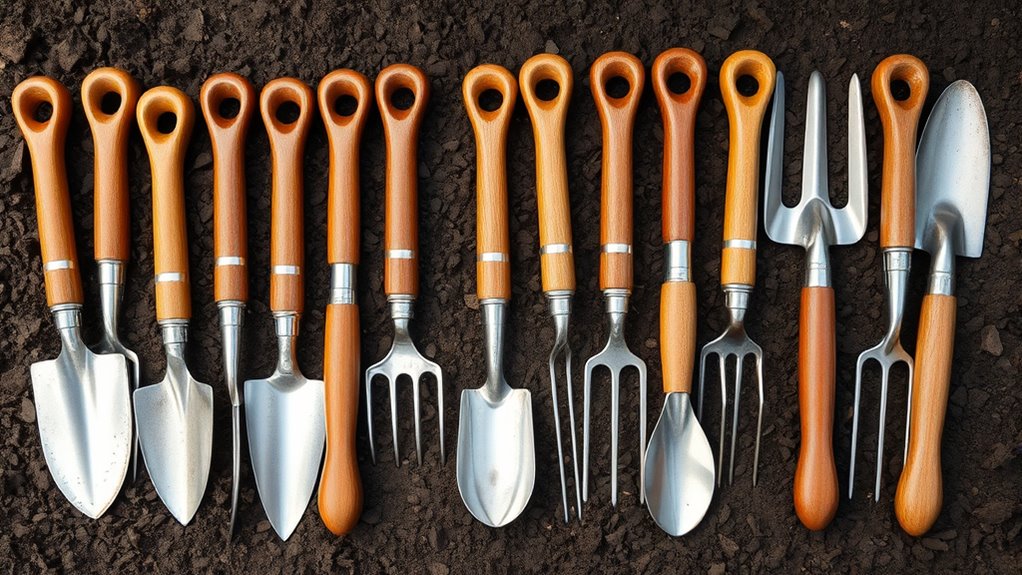
A soil cultivator hand tool can loosen the surface, break up clumps, and prepare garden beds, but the best choice depends on how much area you work and how much bending you want to do. My best overall pick is the Fiskars Ergo Garden Cultivator for focused bed work, while the CKLT 66-Inch Rotary Garden Cultivator stands out for longer reach and the WORKPRO 2-in-1 Hoe and Cultivator for switching between tasks. Compact tools offer close control, while long-handled and rotary designs cover more ground with less kneeling. Tine shape, handle length, soil condition, and storage needs all affect the choice. Read on for my full comparison and guidance on matching a tool to your garden.

Get business pricing on tools and workshop supplies
- Business-only prices and quantity discounts
- Tax-exempt purchasing
- Multiple users, one account, clear invoices
Complete the kit


Key Takeaways
- Fiskars Ergo Garden Cultivator leads this lineup for focused hand cultivation, while long-handled rotary models suit broader beds and reduce bending.
- The CKLT 66-Inch Rotary Cultivator emphasizes reach, but its longer format is less suited to close work among crowded plants than compact hand tools.
- WORKPRO’s 2-in-1 hoe-and-cultivator design offers task flexibility in a short handle, trading the reach of stand-up cultivators for more precise work.
- The lineup splits into distinct approaches: push-and-pull rotary tools for surface cultivation, twist claws for breaking soil, and short hand tools for detail work.
- Several BARAYSTUS options share adjustable rotary formats, so handle material, overall length range, and the need for a compact storage setting matter more than the shared brand name.
| Fiskars Ergo Garden Cultivator |  | Best Overall Hand Cultivator | Brand: Fiskars | Model: 384240-1007 | Head material: Cast aluminum | VIEW ON AMAZON | See Our Full Breakdown |
| Edward Tools Hoe and Cultivator Hand Tiller |  | Best for Versatile Hand Work | Brand: Edward Tools | Model: 123ABC | Head material: Carbon steel | VIEW ON AMAZON | See Our Full Breakdown |
| BARAYSTUS Hand Tiller, 4-Prong Twist Garden Claw Cultivator |  | Best for Deeper Manual Leverage | Brand: BARAYSTUS | Model: JDUS1091-S | Tines: 4 curved steel prongs | VIEW ON AMAZON | See Our Full Breakdown |
| MECHEER Hand Garden Cultivator with 3 Claws |  | Best Compact Cultivator | Brand: MECHEER | Model: GCT-1 | Claw count: 3 | VIEW ON AMAZON | See Our Full Breakdown |
| Jardineer Manual Hand Tiller and Garden Cultivator |  | Best for Added Downward Force | Type: Manual twist tiller | Material: Powder-coated steel | Features: Anti-slip foot plate, curved handle, sharp tines | VIEW ON AMAZON | See Our Full Breakdown |
| CKLT 66-Inch Rotary Garden Cultivator with Tempered Steel Tines |  | Best for Tougher Garden Beds | Brand: CKLT | Model: 65in-RC | Tool length: 66 inches | VIEW ON AMAZON | See Our Full Breakdown |
| Meyrines Manual Twist Garden Tiller with Ergonomic Handle |  | Best for Raised Beds | Brand: Meyrines | Model number: 1944 | Material: Alloy steel | VIEW ON AMAZON | See Our Full Breakdown |
| BARAYSTUS Adjustable Rotary Cultivator, 57-Inch |  | Best for Lightweight Versatility | Brand: BARAYSTUS | Model number: JDUS1146-G | Total length: 57 inches | VIEW ON AMAZON | See Our Full Breakdown |
| BlumeTrec Rotary Garden Cultivator with 74-Inch Handle |  | Best for Tall Gardeners | Brand: BlumeTrec | Model: RCT-001 | Handle length: 74 inches | VIEW ON AMAZON | See Our Full Breakdown |
| Walensee Twist Tiller with Large Steel Claw |  | Best for Twist-Style Cultivation | Brand: Walensee | Model: GT-CT002 | Tool type: Manual hand tiller | VIEW ON AMAZON | See Our Full Breakdown |
| Garden Weasel Rotary Hand Cultivator |  | Best for Tight Spaces | Brand: Garden Weasel | Model: 91206 | Tool type: 2-in-1 rotary cultivator | VIEW ON AMAZON | See Our Full Breakdown |
| WORKPRO 2-in-1 Garden Hoe and Cultivator with 14-Inch Beechwood Handle |  | Best for Hoe-and-Cultivator Versatility | Brand: WORKPRO | Model: W153019 | Tool type: 2-in-1 garden hoe and cultivator | VIEW ON AMAZON | See Our Full Breakdown |
| Garden Weasel Double-Sided Hand Cultivator and Tiller |  | Best for Containers and Close-Up Bed Work | Brand: Garden Weasel | Model: 91367 | Tool type: Hand cultivator and tiller | VIEW ON AMAZON | See Our Full Breakdown |
| BARAYSTUS Adjustable Rotary Cultivator with 57-Inch Stainless Steel Handle |  | Best for Upright Cultivation | Brand: BARAYSTUS | Model: JDUS1146 | Total length: 57 inches | VIEW ON AMAZON | See Our Full Breakdown |
| BARAYSTUS Adjustable Rotary Garden Cultivator, 29.7–57 in |  | Best for Adjustable Reach | Brand: BARAYSTUS | Model: JDUS1162 | Handle lengths: 29.7, 43.7, and 57 inches | VIEW ON AMAZON | See Our Full Breakdown |
| soil cultivator hand tool | Brand | Model | Weight |
|---|---|---|---|
| Fiskars Ergo Garden Cultivator | Fiskars | 384240-1007 | — |
| Edward Tools Hoe and Cultivato | Edward Tools | 123ABC | 13.6 ounces |
| BARAYSTUS Hand Tiller | BARAYSTUS | JDUS1091-S | 2.9 pounds |
| MECHEER Hand Garden Cultivator | MECHEER | GCT-1 | 0.21 kg |
| Jardineer Manual Hand Tiller a | — | — | — |
| CKLT 66-Inch Rotary Garden Cul | CKLT | 65in-RC | 3.9 pounds |
| Meyrines Manual Twist Garden T | Meyrines | — | 3 pounds |
| BARAYSTUS Adjustable Rotary Cu | BARAYSTUS | — | 2.6 pounds |
| BlumeTrec Rotary Garden Cultiv | BlumeTrec | RCT-001 | — |
| Walensee Twist Tiller with Lar | Walensee | GT-CT002 | — |
| Garden Weasel Rotary Hand Cult | Garden Weasel | 91206 | — |
| WORKPRO 2-in-1 Garden Hoe and | WORKPRO | W153019 | 1 lb |
| Garden Weasel Double-Sided Han | Garden Weasel | 91367 | — |
| BARAYSTUS Adjustable Rotary Cu | BARAYSTUS | JDUS1146 | 2.6 pounds |
| BARAYSTUS Adjustable Rotary Ga | BARAYSTUS | JDUS1162 | 2.2 lbs |
More Details on Our Top Picks
Fiskars Ergo Garden Cultivator
The Fiskars Ergo Garden Cultivator is my strongest pick for routine work in established beds: its sharp cast-aluminum tines loosen soil, aerate around plants, and help lift weeds without the bulk of a long-handled tool. The non-slip ergonomic grip makes controlled, close-in work more comfortable, while rust-resistant construction and a lifetime warranty suit gardeners who want a hand tool to keep in rotation. Compared with the MECHEER Hand Garden Cultivator, Fiskars is a straightforward, familiar tine design rather than a three-claw model with a stated claw thickness. Neither is meant to replace a long-handled tiller for a large plot, and this one can take real effort in very tough soil. I’d choose it for balanced bed maintenance, not breaking compacted ground.
Pros:- Sharp cast-aluminum tines handle routine loosening, aeration, and weed removal.
- Rust-resistant construction suits repeated outdoor use.
- Ergonomic, non-slip handle supports control during close-in work.
- Lifetime warranty and hang hole add long-term ownership and storage benefits.
Cons:- Requires considerable hand effort in very tough soil.
- Compact reach makes it less efficient than a long-handled cultivator across large beds.
Best for: Gardeners maintaining established flower or vegetable beds who want one compact tool for aerating, loosening, and weeding.
Not ideal for: People breaking up hard, compacted soil or cultivating large areas; a hand tool demands repeated effort, and a long-handled tiller is better suited to broader work.
- Brand:Fiskars
- Model:384240-1007
- Head material:Cast aluminum
- Handle:Ergonomic, non-slip grip
- Storage:Handle hang hole
- Warranty:Lifetime
- Unit count:1
Our verdict“Choose the Fiskars for versatile, close-in bed care; skip it if your main job is breaking hard ground or covering a large plot.”
Edward Tools Hoe and Cultivator Hand Tiller
The Edward Tools Hoe and Cultivator Hand Tiller suits gardeners who want a hand tool for more than scratching the soil surface: its carbon-steel head is described for tilling, weeding, and digging, and the oak handle gives it a different feel from the aluminum-headed Fiskars and MECHEER options. A rubber grip adds a more secure contact point during repeated pulling and pushing. Compared with the Fiskars Ergo Garden Cultivator, this model emphasizes a heavier-duty steel head and broader stated task range, while Fiskars supplies rust-resistant cast aluminum and a lifetime warranty. The tradeoff is that the available details do not specify tine configuration, dimensions, or a warranty, so it is harder to judge its fit for precise work or long-term support. I’d shortlist it for mixed chores, not buyers seeking a clearly specified claw layout.
Pros:- Carbon-steel head is specified for tilling, weeding, and digging.
- Solid oak handle offers a wood-handle alternative to the aluminum-headed Fiskars and MECHEER.
- Ergonomic rubber grip supports hand control.
- Manual operation needs no power source or charging.
Cons:- Tine count and head dimensions are not provided, limiting comparison for specific bed work.
- No warranty details are listed, unlike the lifetime warranty specified for the Fiskars.
- No product weight is given, so buyers cannot judge handling heft from the available specifications.
Best for: Gardeners who want one manual tool for loosening soil, digging, and weeding and prefer a solid wood handle with a rubber grip.
Not ideal for: Buyers who need stated tine dimensions, a defined cultivator-head layout, or a listed warranty before choosing a tool.
- Brand:Edward Tools
- Model:123ABC
- Head material:Carbon steel
- Handle material:Solid oak
- Handle grip:Ergonomic rubber
- Weight:13.6 ounces
- Power source:Manual
- Unit count:1
Our verdict“Pick the Edward Tools model for varied hand-tool chores and a steel-and-oak build, but choose Fiskars if warranty and head details matter more.”
BARAYSTUS Hand Tiller, 4-Prong Twist Garden Claw Cultivator
With its 37.4-inch assembled length and four curved steel tines, the BARAYSTUS hand tiller fills a different role from compact tools such as the Fiskars Ergo Garden Cultivator. Its T-handle gives the user more leverage for twisting the claw into garden-bed or planter soil, while the long shaft can reduce the need to work close to the ground. The tradeoff is that leverage does not remove the physical work: this is still a manual, 2.9-pound tool, and the screw-connected parts require assembly. Those parts can also be taken apart for more compact storage or transport. Compared with the Jardineer Manual Hand Tiller, BARAYSTUS has no stated foot plate to help press the tines down. I’d choose it for a long-reach twist action, not for hands-off penetration of hard soil.
Pros:- Four curved steel tines are designed to penetrate and turn soil.
- 16-inch T-handle provides leverage for the twisting action.
- Long assembled length reduces the need to work directly at ground level.
- Screw-connected parts can be disassembled for storage and transport.
Cons:- Manual twisting still takes effort, especially in resistant soil.
- Assembly is required before use.
- At 2.9 pounds and 37.4 inches long, it is less nimble for close-in plant work than Fiskars or MECHEER.
Best for: Gardeners who want a standing-height, hand-powered claw for loosening soil in beds and planters and have room to store or assemble a shafted tool.
Not ideal for: People who need a compact tool for close work around delicate plants, or who want a foot plate to help drive tines into resistant soil.
- Brand:BARAYSTUS
- Model:JDUS1091-S
- Tines:4 curved steel prongs
- Handle:16-inch T-handle
- Dimensions:5.3 x 5.3 x 37.4 inches
- Weight:2.9 pounds
- Material:Alloy steel
- Operation:Manual, hand-powered
Our verdict“Choose BARAYSTUS for a long-reach twisting claw, but select Jardineer if a foot plate for added downward force better fits your soil.”
MECHEER Hand Garden Cultivator with 3 Claws
The MECHEER Hand Garden Cultivator is the compact choice for short sessions in small beds, containers, or tight spaces around plants. Its three curved aluminum-alloy claws are specified as 0.28 inches thick, and the non-slip TPR handle provides a comfortable grip for loosening, aerating, digging, and weeding at close range. Compared with the longer BARAYSTUS 4-Prong Twist Garden Claw, MECHEER is easier to keep close to the work and does not require assembly, but it gives up the longer handle’s leverage and reach. Its small size is also a limitation: it is less suited to covering a broad bed, and the supplied specifications do not give a warranty. I’d favor it for localized garden maintenance, while Fiskars is the more balanced pick for buyers wanting a conventional hand cultivator.
Pros:- Three curved claws handle loosening, aerating, digging, and weeding.
- 0.28-inch-thick aluminum-alloy claws are specified for a sturdy compact build.
- Non-slip TPR handle supports grip and control.
- Compact body and hanging hole make storage simple.
Cons:- Small size is inefficient for large beds or extended soil preparation.
- Short handle offers less leverage than the BARAYSTUS twist tiller or Jardineer.
- Warranty information is not provided in the listed specifications.
Best for: Container gardeners and people tending small raised or flower beds who need a compact claw for close-in soil work.
Not ideal for: Gardeners cultivating large areas or trying to loosen deeply compacted soil; its short form offers less reach and leverage than BARAYSTUS or Jardineer.
- Brand:MECHEER
- Model:GCT-1
- Claw count:3
- Material:Aluminum alloy
- Claw thickness:0.28 inches
- Handle:Ergonomic non-slip TPR rubber
- Dimensions:5 x 6 x 4 inches
- Weight:0.21 kg
- Storage:Handle hanging hole
Our verdict“Choose MECHEER for compact, close-in cultivation; choose a long-handled tiller when reach and leverage matter more.”
Jardineer Manual Hand Tiller and Garden Cultivator
The Jardineer Manual Hand Tiller is the most leverage-focused option in this group: its foot plate lets you apply body weight to the tines, while the curved handle is designed to reduce twisting effort and back strain. That makes it a different proposition from the BARAYSTUS 4-Prong Twist Garden Claw, which relies on a T-handle twist rather than a foot plate, and from the hand-sized Fiskars and MECHEER cultivators. Powder-coated steel tines are intended for loosening, aerating, weeding, and mixing amendments across beds or lawns. Assembly uses the included wrenches and spare screws, and the maker recommends watering hard, dry, or rocky soil first. I’d pick Jardineer for broader, force-assisted work, but not if you need a compact tool or want to avoid assembly.
Pros:- Foot plate helps apply downward force to the tines.
- Curved handle is designed to reduce twisting effort and back strain.
- Steel tines suit loosening, aeration, weeding, and mixing amendments.
- Includes wrenches and spare screws for assembly.
Cons:- Hard, dry, or rocky soil may need watering before use.
- Assembly is required.
- Larger tiller format is less precise around plants than the compact Fiskars or MECHEER tools.
Best for: Gardeners preparing raised beds or flower beds who want a manual tiller with a foot plate for added downward force and a curved handle.
Not ideal for: People seeking a small hand cultivator for precision work around plants, or gardeners working hard, dry, or rocky soil without time to water it first.
- Type:Manual twist tiller
- Material:Powder-coated steel
- Features:Anti-slip foot plate, curved handle, sharp tines
- Uses:Soil loosening, tilling, aeration, weeding, and mixing amendments
- Assembly:Includes wrenches and spare screws
- Power source:Manual
Our verdict“Choose Jardineer if you want a foot plate and longer-handle leverage for bed preparation, but pick a compact cultivator for delicate close-in work.”
CKLT 66-Inch Rotary Garden Cultivator with Tempered Steel Tines
The CKLT is the strongest fit here for gardeners who want a long-handled rotary cultivator with tines specified for resistance to bending. Its tempered spring steel tines are better suited to compacted soil than the lighter aluminum tines on the BARAYSTUS Adjustable Rotary Cultivator, though neither tool is a substitute for clearing rocks or working very hard ground. At 66 inches, the detachable handle supports upright work, and its sections can be separated for storage. The tradeoff is a 3.9-pound build, heavier than BARAYSTUS’s 2.6-pound model, and the tines need cleaning and thorough drying to limit rust. Choose this for beds that need more robust tine material, not for rock-strewn soil or a zero-maintenance tool.
Pros:- Tempered spring steel tines are designed to resist bending.
- 66-inch detachable handle supports upright work and compact storage.
- Can loosen soil and mix compost or fertilizer.
- Rubber grip and powder-coated head add comfort and surface protection.
Cons:- Larger rocks should be removed, and soil may need light watering before use.
- At 3.9 pounds, it is heavier than the BARAYSTUS rotary cultivator.
- Tines require cleaning and thorough drying after use to help prevent rust.
Best for: Gardeners who want an upright rotary cultivator with steel tines for loosening moderately compacted beds and mixing in compost.
Not ideal for: People working in rocky, very hard soil or seeking the lightest tool; rocks should be removed and the tines need drying after use.
- Brand:CKLT
- Model:65in-RC
- Tool length:66 inches
- Handle:Four-section detachable stainless steel
- Tine material:Tempered spring steel
- Weight:3.9 pounds
- Power source:Manual
Our verdict“Choose the CKLT if tine strength and upright reach matter more than minimum weight or rock-tolerant performance.”
Meyrines Manual Twist Garden Tiller with Ergonomic Handle
The Meyrines twist tiller suits gardeners who prefer a targeted step-and-twist action over rolling a rotary head along a row. Its foot plate and 5.7-inch claws give the user leverage to loosen soil in raised planters and smaller beds, while its three-pound weight keeps it portable. Compared with the 66-inch CKLT, this 37-inch tool is shorter and asks the gardener to work closer to the bed, but its straightforward claw layout is easier to position in contained spaces. Its limit is soil condition: the maker specifies loose or moderately compacted soil and advises avoiding rocks and hard surfaces. The twisting motion still takes physical effort, so this is a practical choice for spot cultivation rather than covering a large plot quickly.
Pros:- Foot plate helps apply leverage during the step-and-twist motion.
- 5.7-inch claws can loosen and aerate bed soil.
- Three-pound weight makes it easier to carry between planters.
- Rust-resistant coating is suited to outdoor garden use.
Cons:- Not suited to rocky or very hard soil.
- Manual twisting requires physical effort.
- At 37 inches, it has less reach for upright work than the CKLT.
Best for: Raised-bed and planter gardeners who want a portable twist tiller for loosening loose or moderately compacted soil.
Not ideal for: Gardeners covering large ground areas, or anyone working rocky, very hard soil or who wants to avoid repeated twisting effort.
- Brand:Meyrines
- Model number:1944
- Material:Alloy steel
- Handle length:37 inches
- Claw depth:5.7 inches
- Weight:3 pounds
- Power source:Manual
Our verdict“Pick the Meyrines for contained beds and planters where a compact, foot-assisted twist tool is more useful than long rotary reach.”
BARAYSTUS Adjustable Rotary Cultivator, 57-Inch
For buyers who want one lightweight rotary tool to handle several routine garden tasks, the BARAYSTUS 57-inch cultivator stands out for its three interchangeable blade wheels. That setup offers more configuration options than the fixed rotary head on the CKLT, while its 2.6-pound weight makes it easier to carry and maneuver. The adjustable stainless steel poles can be taken apart for storage, and the tool is described for aerating, cultivating, reseeding lawns, mixing soil, and removing weeds. The tradeoff is its aluminum tines: the product information does not establish how they hold up under heavy use, so I would favor the CKLT’s tempered steel tines for tougher beds. Like other manual rotary cultivators, this one also calls for physical effort and is better matched to routine soil work than demanding ground.
Pros:- Three interchangeable blade wheels provide different rotary configurations.
- At 2.6 pounds, it is lighter than the CKLT.
- Adjustable poles can be disassembled for storage and transport.
- Described for several tasks, including aerating, reseeding, and weeding.
Cons:- Aluminum tines have no stated durability details for heavy use.
- Manual cultivation still requires physical effort.
- Its 57-inch length is shorter than the CKLT’s 66-inch handle.
Best for: Gardeners who want a light, adjustable rotary tool for routine bed cultivation, lawn reseeding, and weeding, with interchangeable wheel options.
Not ideal for: Buyers who expect frequent heavy-duty cultivation or prioritize clearly specified tine strength; its aluminum tines have no stated heavy-use durability details.
- Brand:BARAYSTUS
- Model number:JDUS1146-G
- Total length:57 inches
- Tine material:Aluminum
- Pole material:Stainless steel
- Weight:2.6 pounds
- Interchangeable blade wheels:3
- Operation:Manual
Our verdict“Choose this BARAYSTUS when low weight and interchangeable wheels matter more than a steel-tine specification for tougher soil.”
BlumeTrec Rotary Garden Cultivator with 74-Inch Handle
The BlumeTrec offers the longest stated handle in this group at 74 inches, making it a compelling choice for gardeners who want to cultivate while standing more upright. Its three removable rotary tine wheels can be adjusted for narrower rows or more delicate areas, a flexibility the CKLT’s product details do not specify. The rolling action is designed to reduce effort compared with repeatedly planting and twisting a claw-style tiller such as the Meyrines. But the reported maximum soil penetration is 2.4 inches, so this is a surface cultivator, not a deep tiller. It is also not recommended for extremely hard or rocky soil, and its metal tines need cleaning after use. I’d choose it for accessible bed maintenance and row work, not breaking new ground.
Pros:- 74-inch adjustable handle supports upright cultivation.
- Three removable tine wheels allow adjustment for narrow or delicate areas.
- Rolling action is designed to reduce effort during surface cultivation.
- Metal head and tines are described as durable and rust-resistant.
Cons:- Maximum stated soil penetration is 2.4 inches.
- Not recommended for extremely hard or rocky soil.
- Tines need cleaning after use.
Best for: Tall gardeners who want a long-handled rotary cultivator for surface work in garden beds, narrow rows, or delicate areas.
Not ideal for: People who need deep tilling or must work extremely hard or rocky soil; stated penetration is limited to 2.4 inches.
- Brand:BlumeTrec
- Model:RCT-001
- Handle length:74 inches
- Tine configuration:3 removable rotary wheels
- Maximum soil penetration:2.4 inches
- Head material:Metal
- Unit count:1
Our verdict“Choose the BlumeTrec for long reach and adjustable surface cultivation, but not for deep soil work or rough ground.”
Walensee Twist Tiller with Large Steel Claw
The Walensee Twist Tiller is the pick here for gardeners who want a claw-style tool that can loosen, turn, aerate, and weed without pushing a rotary head across the bed. Its four curved steel tines are intended to bite into loose soil as the user twists the tool, while the rubber-grip handle is designed to make that motion more comfortable. Compared with the 37-inch Meyrines, the Walensee has a 35-inch total height and a shorter 16.5-inch handle specification, so it is a more compact option rather than an upright-reach tool. Three-part assembly helps with storage and transport, though setting up a multi-part tool is less direct than a single-piece hand cultivator. Its core limitation is clear: it is designed for loose soil and cannot loosen cement or comparable hard surfaces.
Pros:- Four curved steel tines support loosening, turning, aerating, and weeding.
- Rubber grips are designed to make twisting more comfortable.
- Three-part assembly makes storage and transport easier.
- Can be used in large areas and narrow spaces.
Cons:- Designed for loose soil and cannot loosen cement.
- The twist action requires physical effort.
- Three-part assembly adds setup compared with a simpler single-piece tool.
Best for: Gardeners who want a compact, twist-operated steel-claw tiller for loosening and weeding already workable soil.
Not ideal for: Anyone trying to break very hard, rocky, or cement-like ground, or seeking a long-handled rotary tool for upright cultivation.
- Brand:Walensee
- Model:GT-CT002
- Tool type:Manual hand tiller
- Tines:Four curved steel tines
- Handle length:16.5 inches
- Total height:35 inches
- Construction:Powder-coated steel with ABS grips
- Assembly:Three-part assembly
Our verdict“Choose the Walensee for twist-style cultivation in workable soil when a compact steel claw suits your beds better than a rotary head.”
Garden Weasel Rotary Hand Cultivator
I’d choose this 2-in-1 rotary cultivator when a garden bed needs both soil preparation and aeration, but maneuverability matters as much as reach. Its rotating steel tines work soil for planting, reseeding, and weed control; removing the blade wheels gives more access in narrow spots. That makes it more adaptable around confined beds than the long-handled BARAYSTUS Adjustable Rotary Cultivator with 57-Inch Stainless Steel Handle, though the BARAYSTUS is better for standing work across a larger area. The tradeoff is that this tool needs workable, relatively stone-free soil: wet ground is unsuitable, and roots or stones can damage the tines. I also value its lifetime guarantee against defects, but that does not change its limits in rough ground.
Pros:- Combines rotary cultivation and aeration in one tool
- Removable blade wheels help it fit into tight spaces
- Steel construction is suited to routine soil preparation
- Lifetime guarantee covers defects in materials and workmanship
Cons:- Not suitable for cultivating wet soil
- Tines may be damaged by stones or roots
Best for: Gardeners tending compact beds who want one rotary tool for soil preparation and aeration, with the option to remove blade wheels for narrow spaces.
Not ideal for: People working wet, rocky, or root-filled ground, or anyone seeking a long handle for cultivating while standing.
- Brand:Garden Weasel
- Model:91206
- Tool type:2-in-1 rotary cultivator
- Material:Steel
- Blade wheels:Removable
- Country of assembly:USA
- Warranty:Lifetime guarantee against defects in materials and workmanship
Our verdict“Choose this Garden Weasel for adaptable rotary work in compact, stone-free beds, but pick a long-handled cultivator for larger areas.”
WORKPRO 2-in-1 Garden Hoe and Cultivator with 14-Inch Beechwood Handle
The WORKPRO earns its place by pairing a sharpened hoe blade with a three-tine cultivator, giving gardeners two soil-working actions without switching tools. Use the hoe side to break up soil, then turn to the tines to loosen it or tackle weeds. Compared with the three-pronged Garden Weasel Double-Sided Hand Cultivator and Tiller, this is the clearer choice when a chopping blade is part of the job; the Garden Weasel is better suited to raking, aerating, and working containers. The 14-inch beechwood handle keeps the tool lightweight and easy to store, but it also means close-to-the-ground work rather than standing cultivation. Its coated metal head adds protection, although assembly requires inserting the metal parts from the green handle end.
Pros:- Combines a sharpened hoe blade and three-tine cultivator
- Protective coating on the metal head
- Lightweight, one-pound design with a beechwood handle
- Handle hole makes hanging storage straightforward
Cons:- Short handle requires working close to the ground
- Assembly requires inserting the metal parts from the green handle end
Best for: Gardeners working in small beds who want a compact hand tool for both chopping through soil and loosening it with tines.
Not ideal for: People who prefer upright cultivation or need a long reach; the 14-inch handle requires close-in work.
- Brand:WORKPRO
- Model:W153019
- Tool type:2-in-1 garden hoe and cultivator
- Handle length:14 inches
- Handle material:Beechwood
- Head material:Metal with protective coating
- Hoe blade thickness:0.17 inches
- Tines:3
- Weight:1 lb
Our verdict“Pick the WORKPRO if a hoe blade and cultivator in one compact tool suit your beds better than a longer-reach cultivator.”
Garden Weasel Double-Sided Hand Cultivator and Tiller
For containers and small garden beds, I’d favor this three-pronged hand cultivator over a wheel-based tool. Its tines rake, aerate, and loosen soil to a stated depth of 1.5 inches, making it useful for shallow planting preparation, reseeding, and mixing compost. The longer-handled BARAYSTUS Adjustable Rotary Garden Cultivator covers more ground with less crouching, but it is a less focused fit for close work in containers. This Garden Weasel’s compact 12.5-inch length gives precise control; the tradeoff is that it offers no extended handle for broad beds or upright use. Soil conditions matter, too: wet earth can clump, while rocks and roots should be cleared to protect the tines. A lifetime defect guarantee adds reassurance, not immunity from damage in unsuitable ground.
Pros:- Three-pronged head handles raking, aerating, and loosening
- Suitable for beds and containers
- Useful for preparing planting soil, reseeding, and mixing compost
- Lifetime guarantee covers defects in materials and workmanship
Cons:- Wet soil can dry in clumps after cultivation
- Rocks and roots may damage the tines
- Short 12.5-inch length is less suited to covering large areas
Best for: Container gardeners and people tending small beds who need a compact tool for shallow loosening, aeration, and compost mixing.
Not ideal for: Gardeners cultivating broad areas or hard, rocky, root-filled, or wet soil who need more reach or tougher ground-working capacity.
- Brand:Garden Weasel
- Model:91367
- Tool type:Hand cultivator and tiller
- Tines:Three-pronged
- Cultivating depth:1.5 inches
- Dimensions:3.1 × 2.75 × 12.5 inches
- Materials:Polypropylene and thermoplastic elastomers
- Warranty:Lifetime guarantee against defects in materials and workmanship
Our verdict“Choose this Garden Weasel for controlled, shallow work in containers and small beds rather than wide-area cultivation.”
BARAYSTUS Adjustable Rotary Cultivator with 57-Inch Stainless Steel Handle
The BARAYSTUS is the better fit when I want a 57-inch handle to cultivate without staying bent over. Its three interchangeable blade wheels support aerating, soil mixing, reseeding, and weed removal, while the anti-slip grip helps keep the long manual tool controlled. Against the Garden Weasel Rotary Hand Cultivator, this model trades close-quarters flexibility for reach: it is more suited to working across larger beds, while the Garden Weasel’s removable wheels help it access tight spaces. At 2.6 pounds, it remains relatively light and can be disassembled for storage. The main limit is ground resistance; the maker advises against extremely hard or rocky soil, and the screws may need regular checking. It is a practical reach-focused option, not a substitute for a heavy-duty tool in difficult ground.
Pros:- 57-inch handle supports upright work
- Three interchangeable blade wheels suit different cultivation tasks
- Lightweight design disassembles for storage
- Anti-slip grip supports control during manual use
Cons:- Not recommended for extremely hard or rocky soil
- Screws may require periodic tightening
Best for: Gardeners with established beds who want upright reach for routine aerating, cultivating, and weed removal in workable soil.
Not ideal for: People breaking extremely hard or rocky ground, or anyone unwilling to check and tighten the tool’s screws periodically.
- Brand:BARAYSTUS
- Model:JDUS1146
- Total length:57 inches
- Weight:2.6 pounds
- Materials:Aluminum tines and stainless steel handle
- Blade wheels:3 interchangeable
- Power source:Manual
- Dimensions:8 × 5.3 × 57 inches
Our verdict“Choose this BARAYSTUS for upright cultivation in workable garden soil, not for rocky ground or heavy-duty breaking.”
BARAYSTUS Adjustable Rotary Garden Cultivator, 29.7–57 in
This BARAYSTUS stands apart from its 57-inch-handled sibling by offering three handle lengths: 29.7, 43.7, and 57 inches. That range makes it more adaptable when one tool must serve raised beds, lower planting areas, and broader garden rows. Its four star-shaped wheels are designed to loosen and crush soil while aerating and weeding. Compared with the BARAYSTUS Adjustable Rotary Cultivator with 57-Inch Stainless Steel Handle, this version is lighter at 2.2 pounds and changes length for different jobs, while the other model has three interchangeable blade wheels and a soft anti-slip grip. The compromise is manual effort: pushing rotary wheels still takes work, and assembly is required. I’d choose it for variable-height tasks in workable soil, not for effortless or motorized cultivation.
Pros:- Three handle settings span 29.7 to 57 inches
- Four star-shaped wheels are designed to loosen and crush soil
- Lightweight at 2.2 pounds
- Designed for cultivation, weeding, and aeration
Cons:- Manual operation requires physical effort
- Assembly is required
Best for: Gardeners who move between raised beds and ground-level rows and want to adjust handle length for different working positions.
Not ideal for: Buyers who need powered soil preparation, want to avoid assembly, or expect manual rotary cultivation to require little effort.
- Brand:BARAYSTUS
- Model:JDUS1162
- Handle lengths:29.7, 43.7, and 57 inches
- Materials:Aluminum and stainless steel
- Weight:2.2 lbs
- Wheels:4 star-shaped wheels
- Power source:Manual
- Dimensions:57 × 6.5 × 8 inches
- Included:1 garden hand tiller and instructions
Our verdict“Pick this model over the fixed-length BARAYSTUS when adjustable reach and a lighter build matter most for routine manual cultivation.”

How We Picked
I compared these 15 tools as soil cultivators, focusing on how their designs fit different garden jobs rather than treating every claw or tine as interchangeable. The main criteria were tine configuration and likely soil engagement, handle length and working posture, ease of controlling the tool around plants, versatility across cultivating and light weeding, and practical build details such as handle material and adjustability.
The ranking favors usable control and a clear job fit over the longest reach or the most features. Compact tools rank well when close bed work is the priority; rotary and twist models earn their place when they offer a meaningful reach or coverage advantage. I also weighed tradeoffs: a long handle can reduce bending but make tight spaces awkward, while a multipurpose head can save storage space but may be less specialized than a dedicated cultivator. Similar models are distinguished by their stated format and features, not by assumed performance differences that the product details do not establish.
Factors to Consider When Choosing Soil Cultivator Hand Tool
Before choosing a soil cultivator hand tool, match its working style to your beds, soil, and preferred posture. These broader checks can help you avoid buying a tool that looks capable but feels awkward for the work you do most.
Match the Tool to Your Soil and Task
Surface cultivation and breaking compacted ground are different jobs, even when both use claw-like tines. Rotary designs are generally aimed at loosening and working soil across a path, while twist claws focus force into a smaller area. If your main task is mixing the top layer around established plants, choose for control and maneuverability rather than assuming a larger claw will be better. For ground that is hard, rocky, or full of roots, a hand cultivator may be the wrong tool for deep breaking; forcing it can strain the tool and your wrist. Decide whether you need to prepare a bed, aerate the surface, or weed between plants before comparing tine count alone.
Choose a Handle Length You Can Control
A long handle can reduce bending and cover more ground from a standing position, but it also changes how much leverage you apply and how precisely you can steer the head. In narrow beds or around seedlings, a compact hand tool may be easier to place without disturbing nearby roots. Measure your typical working area and think about whether you cultivate open rows or small, crowded plots. Adjustable handles can bridge these uses, though the adjustment mechanism adds a part to set and store. Avoid choosing solely by maximum reach; a length that keeps your back comfortable while letting you guide the tines is more useful than one that feels unwieldy.
Read Tine Shape as a Work-Style Clue
Tine number and shape influence how a tool enters soil, how much area it contacts, and how easily it can move around obstacles. More prongs do not automatically mean faster work: closely spaced tines can catch debris or resist movement in dense soil. A narrower head may be easier to thread between plants, while a wider working head can suit open sections of a bed. Think about whether your soil is loose enough for a rotary pass or whether it needs concentrated twisting force. When product details do not specify tine spacing or head width, avoid assuming the tool will suit a particular soil type without checking those dimensions.
Decide Whether You Need More Than Cultivation
A hoe-and-cultivator combination can reduce the number of tools you store and make sense for small gardens with varied, light-duty tasks. The tradeoff is that a combined head may not match the control of a dedicated tool for either job. If you already own a hoe, a purpose-built cultivator may add more value than another multipurpose implement. Consider how often you switch tasks during one gardening session, and whether changing or flipping the head is practical for you. For a single recurring job, prioritize the tool head and working posture that suit that task rather than collecting functions you rarely use.
Check Storage, Maintenance, and Tool Handling
Long-handled cultivators need wall or shed space, while compact tools are easier to store near raised beds but may require kneeling or repeated bending. Adjustable and multi-part designs can pack more neatly, though joints and attachment points deserve attention during routine checks. After use, remove packed soil and plant matter so the tines are easier to inspect and store. Consider handle material and grip shape alongside the head: a tool that is awkward to hold can limit how long you comfortably work, whatever its reach. If several models meet your garden needs, choose the one you can store, clean, and pick up without turning maintenance into another chore.
Pay for a Clear Advantage, Not Just More Length
A higher-spec or longer-format cultivator makes sense when its design solves a recurring problem, such as working broad beds while standing or adjusting reach for different tasks. Extra length alone does not guarantee better soil work, and a long tool can be harder to control in confined spaces. For occasional cultivation in containers or small raised beds, a simpler compact tool may be the more practical choice. For larger plots, compare the working posture and head style before deciding that a rotary format is worth adding. Set your priorities first—reach, precision, versatility, or easy storage—then pay for the feature that addresses the one you will use most.
Frequently Asked Questions
Should I choose a rotary cultivator or a twist-claw hand tiller?
Choose a rotary style if you mainly want to loosen and work the soil surface across open rows or bed sections. A twist-claw model is better aligned with concentrating effort in one spot, such as loosening a patch or working around a planting location. Neither format should be treated as a substitute for a digging tool when soil is heavily compacted or full of large roots. Bed width and nearby plants also matter: a broad rotary head can be less nimble in tight spaces. Pick the motion that matches your most frequent task rather than the tool name alone.
Is a long-handled cultivator a good choice for raised beds?
It can be, particularly for wide raised beds where standing reach reduces repeated bending. In narrow or densely planted beds, a long shaft may make it harder to place the tines precisely and avoid stems. Check the head width and how much room you have to pull or rotate the tool before choosing by handle length. A shorter cultivator can offer better control for close weeding and small patches. If your beds vary, an adjustable model may help, provided its shortest setting is still manageable for detailed work.
Can a hand cultivator break up hard or compacted soil?
A hand cultivator can loosen surface soil, but the amount of force it can manage depends on the tool design and the ground. Dry, compacted, or root-bound soil may resist the tines and call for watering first or using a digging fork or spade to open the ground. Repeatedly forcing a lightweight cultivator into hard soil can make the job uncomfortable and put stress on its head or handle. Work in small sections and stop if the tool catches rather than twisting aggressively. For regular heavy ground work, select a tool built for that job rather than expecting a general-purpose cultivator to do it all.
Is a 2-in-1 hoe and cultivator better than buying separate tools?
A combination tool can be a good fit when storage is limited and you alternate between light hoeing and cultivation. It may also suit a small garden where neither task demands a specialized head for long periods. Separate tools can provide more focused control and can be easier to choose for distinct soil conditions or plant spacing. Think about how frequently you switch functions and whether the combined design is comfortable to use for each one. If one job dominates your gardening, prioritize a dedicated tool for that job.
How can I tell whether a compact cultivator or a long-handled model will suit me better?
Start with your working posture and the layout of the garden, not a general rule about tool size. Compact cultivators suit containers, small beds, and close work around plants, but they usually involve more bending or kneeling. Long-handled models can make open beds more comfortable to cover while standing, though they require more storage room and can be awkward in tight planting spaces. If you have recurring back or knee discomfort, reach may matter more; if your beds are crowded, precision may matter more. When possible, compare the working length with your height and the width of your usual planting rows.
Conclusion
For most readers seeking a focused hand cultivator, I recommend the Fiskars Ergo Garden Cultivator as best overall. The WORKPRO 2-in-1 Hoe and Cultivator is my best-value style of choice for gardeners who want two light-duty functions in one compact tool, while the CKLT 66-Inch Rotary Cultivator is the best fit for buyers who prioritize standing reach across larger beds. For beginners, a straightforward compact tool such as the MECHEER 3-Claw Cultivator keeps the format simple; for a premium-leaning long-handle option, compare the adjustable BARAYSTUS models by handle material and storage needs. Choose a twist claw such as the BARAYSTUS 4-Prong or Walensee Large Steel Claw when you want concentrated loosening, and favor a shorter tool for tight planting spaces. The right pick is the one whose head, reach, and working motion match the soil and beds you tend most often.