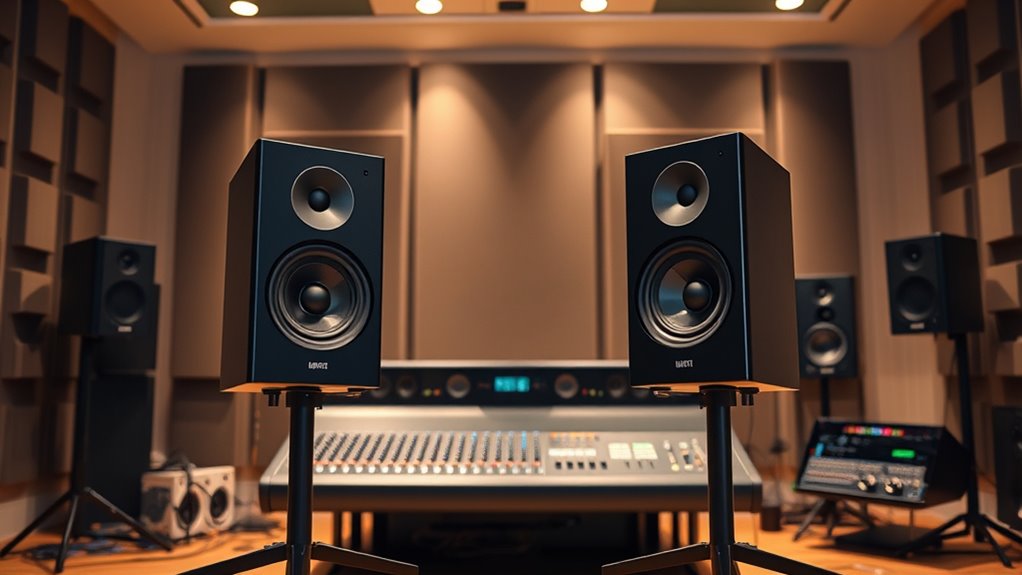

If you’re looking to elevate your sound quality in 2025, I recommend exploring a range of studio monitor speakers that balance affordability, accuracy, and modern features. From beginner-friendly models like Yamaha HS3 and Sanyun SW208 to professional-grade options like Yamaha HS5 and Edifier R1280DBs, there’s something for every setup. Paying attention to connectivity, build quality, and accessories can make a big difference. Stick around, and I’ll share the top choices to help you find the perfect fit.
Key Takeaways
- High-fidelity monitors with flat frequency response ensure accurate sound reproduction for professional mixing and mastering.
- Modern models feature versatile connectivity options like Bluetooth, USB, optical, and TRS for flexible setups.
- Premium build quality with wooden cabinets and vibration-absorbing designs enhance sound clarity and durability.
- Power output ranging from 20W to 70W provides ample volume and headroom for various studio sizes.
- Compact, stylish designs with user-friendly controls make these monitors suitable for both professional and home studios.
Yamaha HS3 Powered Studio Monitor in Black, Pair (HS3 B)
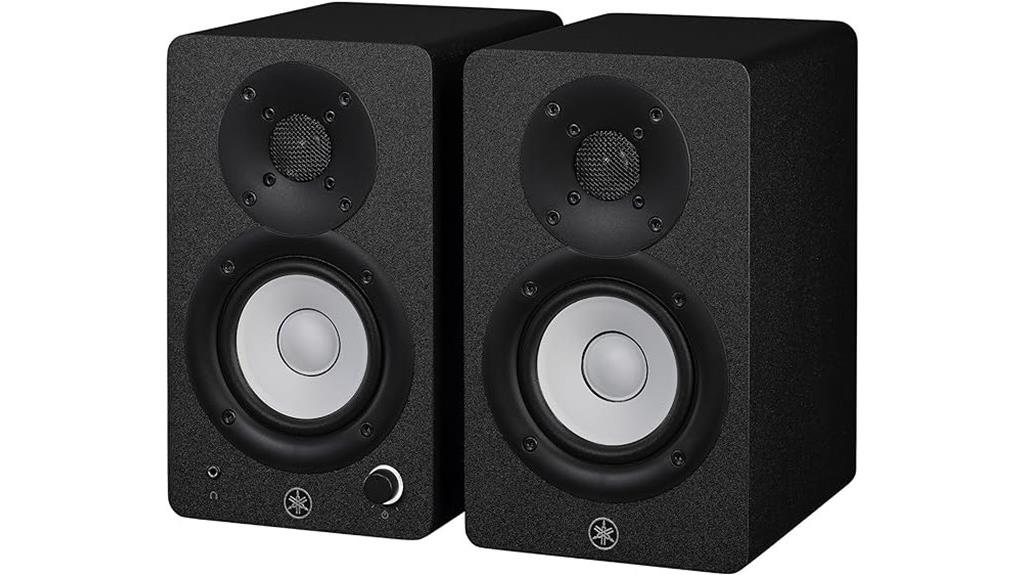
If you’re looking for an affordable yet reliable studio monitor, the Yamaha HS3 Powered Studio Monitor in Black, paired as a set, is an excellent choice for beginner producers and home studio enthusiasts. These 2-way bass-reflex speakers feature a 3.5-inch cone woofer and a 0.75-inch dome tweeter, delivering clear, accurate sound from 70 Hz to 22 kHz. With 26 W of power per speaker, they provide ample headroom. The monitors include room control and high trim response adjustments, plus multiple inputs like XLR/TRS, RCA, and stereo mini. They come with necessary cables and anti-slip pads, making setup straightforward and reliable for professional-quality monitoring.
Best For: beginner producers and home studio enthusiasts seeking affordable, accurate studio monitors for professional-quality sound reproduction.
Pros:
- Compact 2-way design with clear, accurate sound across a broad frequency range
- Multiple input options including XLR/TRS, RCA, and stereo mini for versatile connectivity
- Comes with essential accessories like cables and anti-slip pads for easy setup
Cons:
- Limited bass response with a 3.5-inch woofer may require subwoofer for deep bass needs
- Power output of 26 W per speaker might not be sufficient for very loud listening environments
- Lacks advanced features found in higher-end monitors, such as room calibration or multiple driver configurations
YAMAHA Hs5 Powered Studio Monitor, Pair
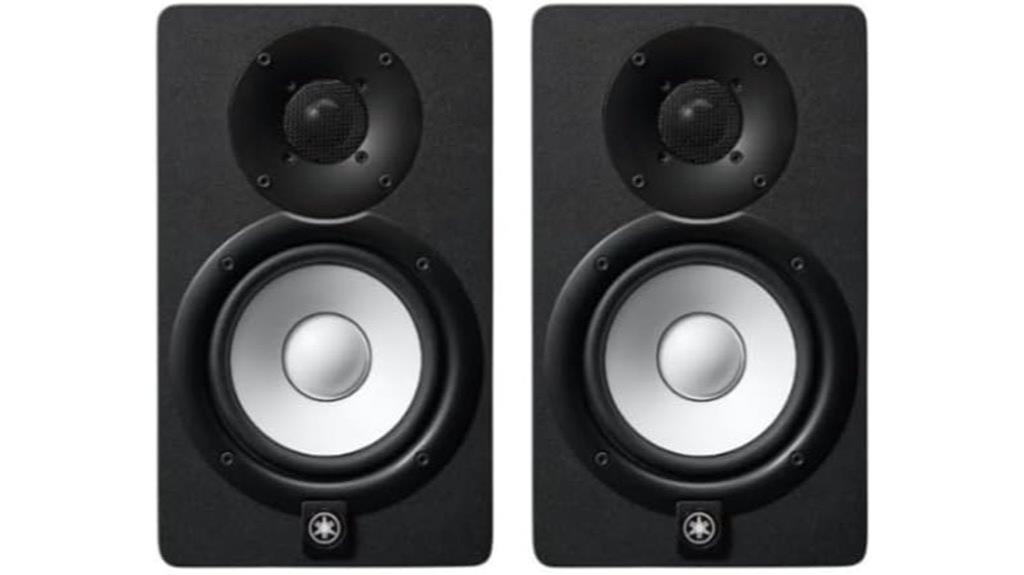
The Yamaha HS5 Powered Studio Monitors are an excellent choice for audio professionals and serious hobbyists who prioritize accurate sound reproduction. These 2-way, bass-reflex, bi-amped monitors feature a 5-inch cone woofer and a 1-inch dome tweeter, delivering a flat frequency response from 54 Hz to 30 kHz. With a total power output of 70 watts, they provide clear, detailed sound without coloration. Equipped with XLR and TRS inputs, they are versatile for various setups. Built from wood for indoor use, they’re designed to produce a true-to-source audio image, making them ideal for mixing and critical listening.
Best For: audio professionals and serious hobbyists seeking accurate, flat-response studio monitors for mixing and critical listening.
Pros:
- Accurate, flat frequency response from 54 Hz to 30 kHz ensures true-to-source sound reproduction.
- Bi-amped design with 70W total power provides clear, detailed audio without coloration.
- Versatile input options (XLR and TRS) accommodate various audio setups and equipment.
Cons:
- Hefty weight of 32.5 pounds per monitor may require sturdy placement and handling.
- Limited to indoor use due to wood construction and design.
- Higher price point compared to consumer speakers, reflecting professional-grade quality.
Sanyun SW208 3″ Bluetooth 5.0 Bookshelf Speakers

For those seeking compact, versatile speakers that deliver high-quality sound for desktop setups or casual listening, the Sanyun SW208 Bluetooth 5.0 Bookshelf Speakers stand out. These small, active speakers feature a sleek design with premium wood finish and measure just 4.68 x 7.48 x 5.35 inches, making them perfect for space-conscious environments. Equipped with 60W carbon fiber drivers, they produce warm mid frequencies, deep bass, and clear highs. With Bluetooth 5.0 supporting a 7-meter range, USB, and auxiliary inputs, they’re highly adaptable. Adjustable volume, bass, and treble controls let you customize your sound, making these speakers both practical and impressive.
Best For: those looking for compact, high-quality Bluetooth bookshelf speakers ideal for desktop use, casual listening, or space-constrained environments.
Pros:
- Elegant wood finish with a compact, space-saving design
- Powerful 60W carbon fiber drivers deliver warm mid, deep bass, and clear highs
- Multiple connectivity options including Bluetooth 5.0, USB, and auxiliary input with customizable sound controls
Cons:
- Slightly limited to small to medium-sized rooms due to size and power
- May require manual adjustments for optimal sound tuning
- No built-in rechargeable battery; dependent on wired power sources
OHAYO 60W Computer Speakers for Music and Gaming
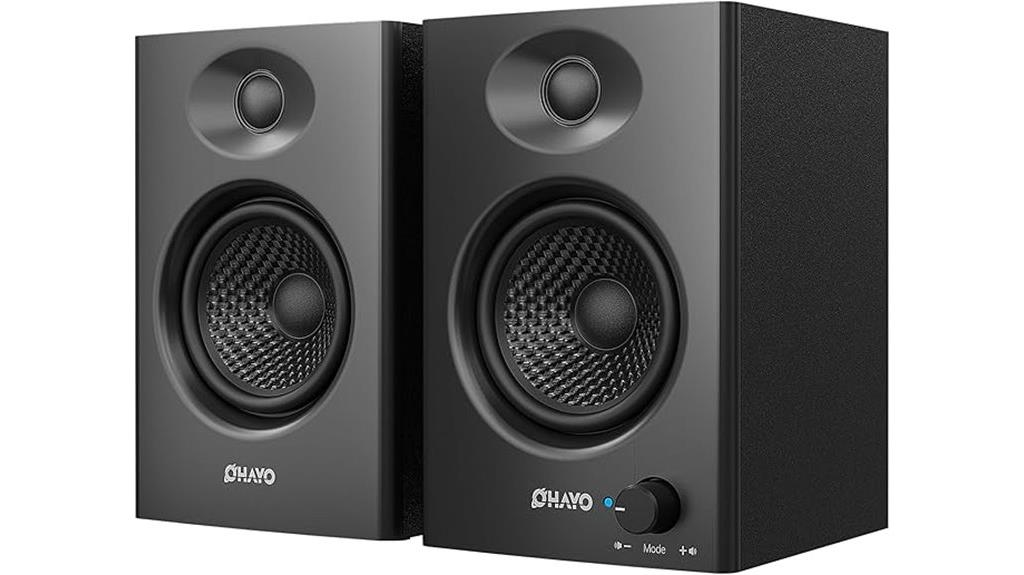
With a sleek, space-saving design and versatile connectivity options, the OHAYO 60W Computer Speakers are perfect for anyone looking to upgrade their audio experience for gaming, music, or everyday use. These compact black stereo speakers feature a MDF wooden enclosure that reduces resonance, delivering studio-quality sound. They provide 30W per channel with crystal-clear highs and rich mid-bass, thanks to a full-range driver and rear bass port. With Bluetooth 5.3, RCA, AUX, and USB inputs, they connect seamlessly to various devices like smartphones, gaming consoles, and media players. Easy front-mounted volume control makes adjusting sound simple, making these speakers a versatile addition to any setup.
Best For: gamers, music enthusiasts, and professionals seeking high-quality, versatile computer speakers for enhanced audio experiences in small to medium-sized setups.
Pros:
- Compact, space-saving design suitable for various environments
- Multiple connectivity options including Bluetooth 5.3, RCA, AUX, and USB for versatile device compatibility
- Delivers powerful 30W per channel sound with clear highs and rich mid-bass
Cons:
- Limited to 2.0 stereo configuration, lacking additional surround sound features
- May require external power source and cables for setup
- Slightly heavier for portable use, weighing 5.37 pounds
Edifier MR4 Powered Studio Monitor Speakers (Pair)
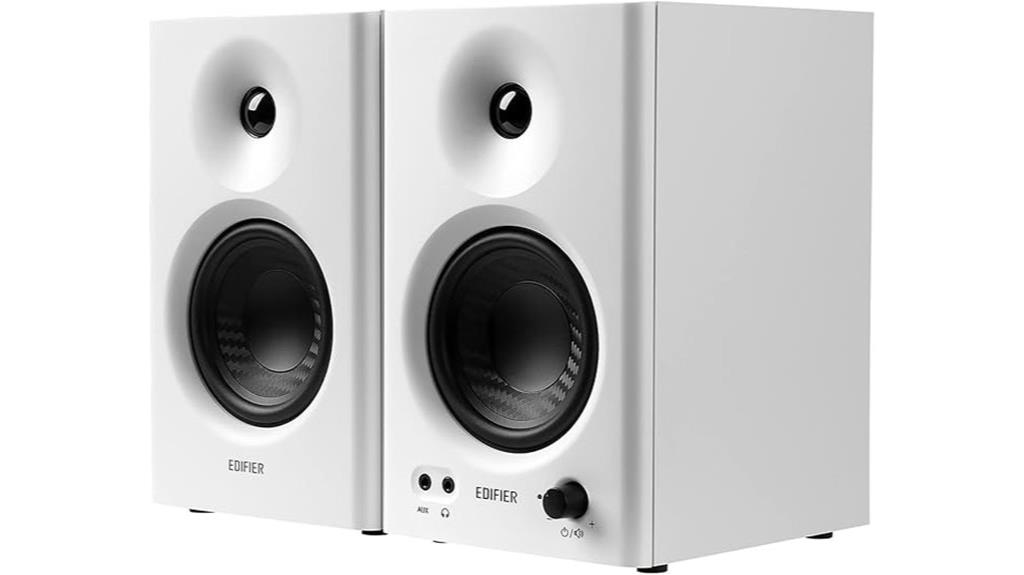
If you’re looking for studio monitor speakers that deliver professional-grade sound in a compact, versatile design, the Edifier MR4 Powered Studio Monitor Speakers are an excellent choice. These 4-inch active near-field monitors feature a sleek white finish and are based on highly reviewed bookshelf speakers, professionally tuned for a near-flat response. Their MDF wooden structure minimizes resonance, ensuring true sound clarity. With flexible inputs like RCA, TRS, and AUX, plus front-mounted volume and sound mode controls, they’re perfect for connecting to various devices. Whether for studio work or casual listening, the MR4s offer impressive sound quality in a stylish, portable package.
Best For: musicians, audio professionals, and casual listeners seeking high-quality, versatile near-field monitor speakers for studio production or everyday listening.
Pros:
- Professionally tuned for a near-flat response, ensuring accurate sound reproduction
- Multiple flexible inputs (RCA, TRS, AUX) for easy connectivity to various devices
- Compact, stylish design with MDF wooden structure minimizing resonance
Cons:
- No wireless connectivity options, limiting wireless convenience
- Wired only, which may restrict placement flexibility compared to wireless speakers
- Slightly heavier weight (9.9 pounds) may require sturdy placement or additional support
Edifier R1280T Powered Bookshelf Speakers

The Edifier R1280T powered bookshelf speakers stand out as an excellent choice for those seeking versatile, high-quality sound in a compact, stylish package. These 2.0 active near-field monitors deliver 42 Watts RMS power, ideal for computers, TVs, gaming, and music. Their wooden enclosure and classic finish blend well with home decor. Equipped with a 4-inch woofer and 13mm tweeter, they produce clear, dynamic audio. With wired RCA and PC inputs, dual AUX ports, and Bluetooth, they support multiple devices easily. Adjustable bass, treble, and volume controls, plus a remote, make tuning simple. Overall, they’re a reliable, well-designed option for indoor audio needs.
Best For: audiophiles, gamers, and home entertainment enthusiasts seeking versatile, high-quality sound in a stylish, compact design.
Pros:
- Powerful 42 Watts RMS output delivers clear, dynamic audio suitable for various indoor applications
- Versatile connectivity options including RCA, dual AUX, and Bluetooth for easy device pairing
- Attractive wooden enclosure with adjustable bass, treble, and volume controls for personalized sound tuning
Cons:
- Not waterproof; designed solely for indoor use, limiting outdoor or outdoor environments
- Larger dimensions may require substantial space on shelves or desks
- May be overpowered for small or very quiet environments, potentially causing distortion at high volumes
Mackie CR3.5 Studio Monitors with Tone Knob and Location Switch
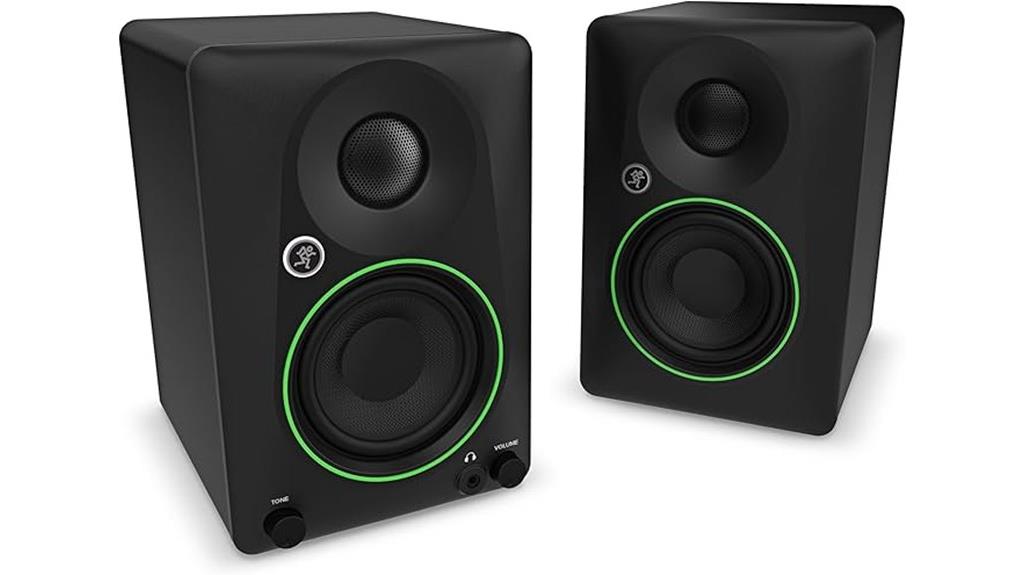
Mackie CR3.5 Studio Monitors stand out for users who need versatile, high-quality sound in a compact setup. They deliver clear, articulate audio with a silk dome tweeter and a 3.5″ woven woofer, making them ideal for music production, gaming, or casual listening. The built-in tone knob lets me boost bass or add sparkle, tailoring the sound to my activity. The location switch allows me to optimize performance whether I place them on a desk or shelf, ensuring the best sound quality. With multiple connectivity options, including TRS, RCA, and a headphone jack, these monitors are a flexible, powerful addition to any small studio or media space.
Best For: musicians, gamers, and casual listeners seeking versatile, high-quality compact studio monitors with customizable sound and flexible placement options.
Pros:
- Clear, articulate audio with rich bass and high-end sparkle thanks to the silk dome tweeter and woven woofer
- Customizable sound with a tone knob for boosting bass or adding high-end shine
- Flexible placement with a location switch for optimizing sound whether on a desk or shelf
Cons:
- Requires an additional subwoofer (CR8SBT) for enhanced bass performance, which is sold separately
- Limited to small room setups; may not be suitable for large or professional studio environments
- Connectivity options, while versatile, may require adapters for some devices
Edifier R980T 4″ Active Bookshelf Speakers (Pair)
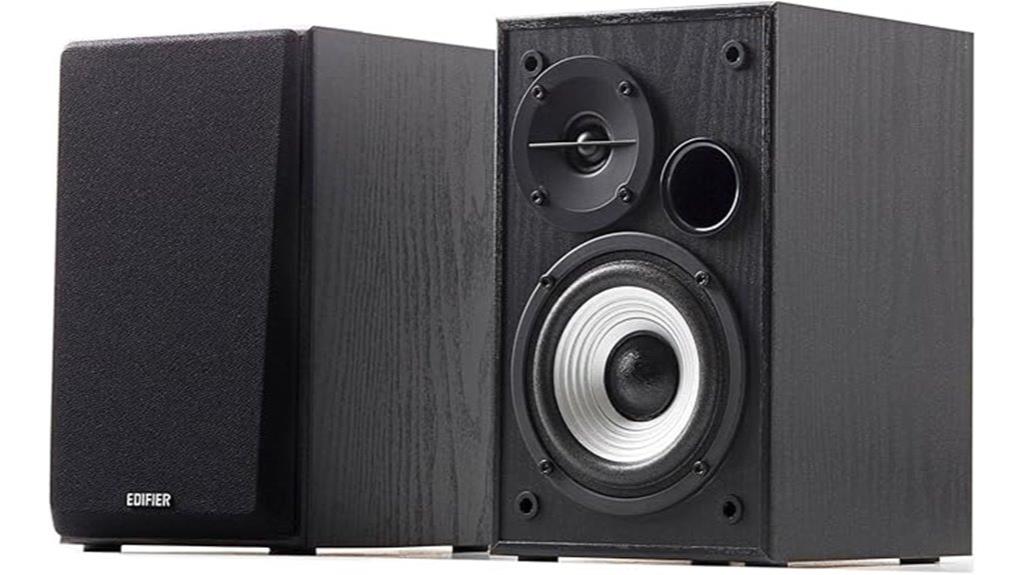
For those seeking affordable yet high-quality studio monitor speakers, the Edifier R980T 4″ Active Bookshelf Speakers stand out as an excellent option. They deliver 24W RMS power, filling small to medium rooms with rich, immersive sound suitable for music, movies, or casual mixing. The classic wooden enclosures minimize acoustic resonance, ensuring clearer audio. With dual AUX inputs and included cables, setup is simple and versatile—perfect for computer use or connecting multiple devices simultaneously. Their sleek, vintage-inspired design adds style without sacrificing performance. Overall, the Edifier R980T offers impressive value, blending solid sound quality with user-friendly features at an accessible price point.
Best For: audiophiles and budget-conscious users seeking quality studio monitor speakers for small to medium rooms, suitable for music, movies, and casual mixing.
Pros:
- Provides 24W RMS power for rich, immersive sound
- Easy plug-and-play setup with included cables and versatile connectivity options
- Classic wooden enclosures reduce acoustic resonance and enhance sound clarity
Cons:
- Limited to 4-inch speakers, which may not deliver deep bass for all preferences
- Designed primarily for small to medium spaces, less ideal for large rooms
- May lack advanced features found in higher-end studio monitors
PreSonus Eris 3.5 Studio Monitors (Pair)
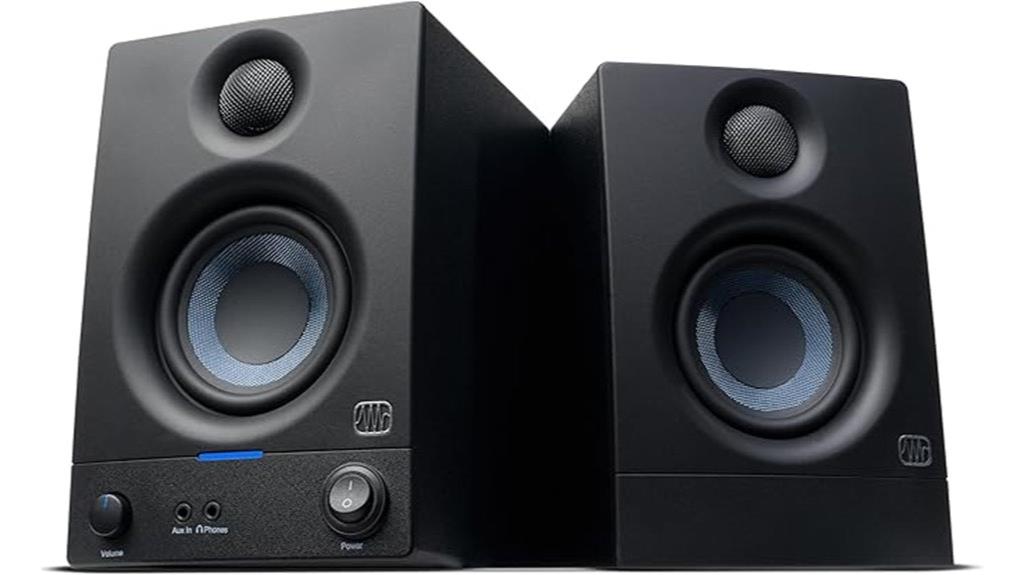
If you’re setting up a compact, high-quality workspace for music production, multimedia, or casual listening, PreSonus Eris 3.5 Studio Monitors stand out as an excellent choice. These small yet powerful speakers feature a 3.5-inch woven-composite woofer for tight bass and a 1-inch silk-dome tweeter for clear highs. With 50W total power and customizable high/low-frequency controls, they deliver accurate, studio-quality sound from nearly any angle. Their versatile connectivity options include balanced TRS, RCA, and headphone outputs, making them ideal for various setups. Weighing just over six pounds, they fit neatly on desks or shelves, offering professional-grade sound in a compact design.
Best For: musicians, producers, and multimedia enthusiasts seeking accurate, compact studio monitors for home or desktop use.
Pros:
- Compact size fits easily on desks or shelves without sacrificing sound quality
- Wide sweet spot and customizable EQ controls for tailored sound experience
- Versatile connectivity options including TRS, RCA, and headphone output
Cons:
- Limited low-frequency response without added subwoofer (optional Eris Sub 8BT recommended)
- May require acoustic treatment for optimal performance in untreated rooms
- Slightly higher price point compared to basic PC speakers
JBL 305PMkII 5-Inch Powered Studio Monitor Speaker
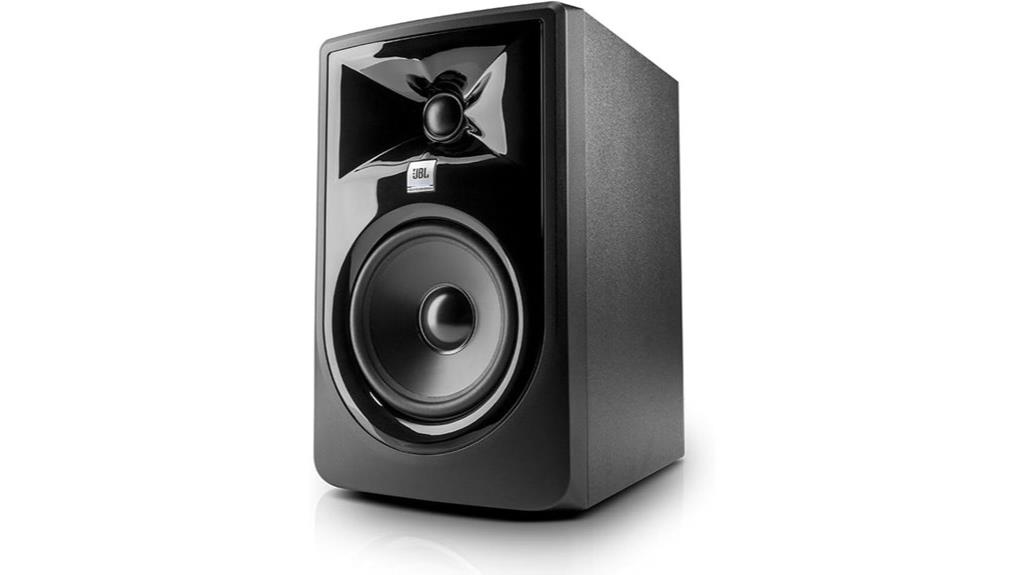
The JBL 305PMkII 5-Inch Powered Studio Monitor is an excellent choice for anyone seeking precise, detailed sound in a compact design. I appreciate its next-generation JBL transducers and Boundary EQ, which help maintain neutral low frequencies near walls. The sleek, modern look fits well in any studio setup. Its 5-inch driver and Waveguide deliver accurate imaging and deep bass, while dual Class-D amps provide 82 watts of power for dynamic range. Connectivity options include XLR and TRS inputs, with adjustable volume and high-frequency trim. Overall, it’s a reliable, versatile monitor that elevates both professional and personal listening experiences.
Best For: musicians, audio engineers, and home studio enthusiasts seeking accurate, detailed sound in a compact, modern design.
Pros:
- Next-generation JBL transducers and Waveguide for precise imaging and clear sound
- Boundary EQ feature helps maintain neutral low frequencies near walls or surfaces
- Robust 82-watt dual Class-D amplifiers deliver high output and dynamic range
Cons:
- Not water-resistant; suitable only for indoor use
- Requires space near walls for optimal sound with Boundary EQ feature
- No included MP3 or auxiliary input for portable device connectivity
Ortizan C7 Dual-Mode 2.0 Studio Monitors (Pair, Black)
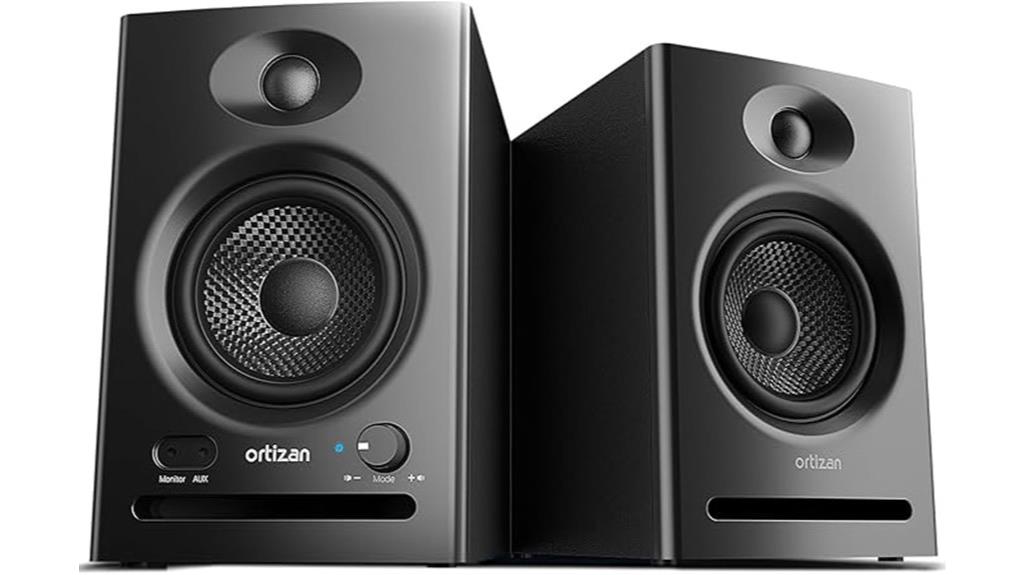
Ortizan C7 Dual-Mode 2.0 Studio Monitors stand out with their versatile connectivity options, making them ideal for users who need seamless integration with various devices and professional audio equipment. They offer RCA, 6.35mm TRS, and 3.5mm AUX inputs, along with Bluetooth 5.3 for quick wireless pairing. The front headphone output adds monitoring convenience. Designed for high-fidelity sound, they feature a 3.5-inch carbon fiber mid-bass driver and silk dome tweeter, supported by a 24-bit DAC for accurate digital audio. Extensively tested, these monitors deliver flat, balanced sound suitable for music production, mixing, gaming, or casual listening in a compact, stylish package.
Best For: musicians, audio professionals, and home audiophiles seeking versatile, high-fidelity studio monitors with seamless wired and wireless connectivity.
Pros:
- Multiple input options including RCA, 6.35mm TRS, 3.5mm AUX, and Bluetooth 5.3 for flexible connectivity.
- High-quality sound with a flat response curve, detailed mid-bass and crisp highs thanks to the carbon fiber driver and silk dome tweeter.
- Compact bookshelf design with professional tuning, suitable for a variety of audio applications from production to casual listening.
Cons:
- May require space near power outlets and proper positioning for optimal sound performance.
- Limited to 3.5-inch drivers, which might not satisfy those seeking deeper bass for certain music genres.
- As active monitors, they depend on power supply and may be less portable than passive alternatives.
Active Bookshelf Speakers 36W RMS with Bluetooth 5.4 and 5-Inch Woofer
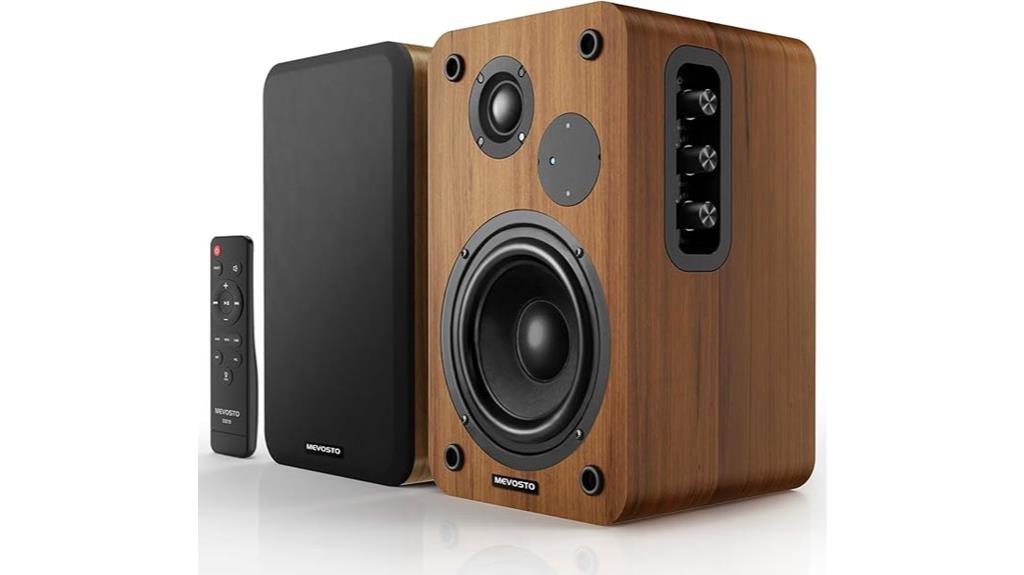
For anyone seeking versatile and powerful bookshelf speakers, the Active Bookshelf Speakers with 36W RMS and Bluetooth 5.4 stand out as an excellent choice. They feature dual 1-inch silk dome tweeters and a 5-inch bass driver, delivering crisp highs and deep, rich bass. The natural wood finish adds warmth and enhances sound resonance, while easy-to-use knobs and a remote control make adjustments simple. Upgraded to Bluetooth 5.4, these speakers offer fast pairing, extended range, and low latency, compatible with various devices. With multiple inputs, adjustable bass and treble, and USB digital audio, they’re perfect for gaming, movies, music, and multimedia setups.
Best For: audiophiles, gamers, and multimedia enthusiasts seeking versatile, high-quality bookshelf speakers with rich sound and flexible connectivity.
Pros:
- Crisp highs and deep bass with 36W RMS power and professional-grade sound tuning.
- Upgraded Bluetooth 5.4 ensures fast pairing, extended range, and low latency for seamless wireless use.
- Multiple input options including RCA, AUX, and USB, plus adjustable bass and treble for customized sound.
Cons:
- Wired connection between main and secondary speakers limits wireless flexibility and longer-distance setup.
- Compatibility with USB audio output must be confirmed before purchase; not all devices may support this feature.
- The DS19 model does not support Dolby Audio, which may affect certain multimedia experiences.
Desktop Speaker Stands with Vibration Absorption Pads

If you want clear, high-fidelity sound from your studio monitors, desktop speaker stands with vibration absorption pads are essential. These stands feature a 5-degree upward tilt that aligns speakers with your ears for ideal listening. Their space-saving C-shaped design adds height while allowing placement of items underneath, keeping your workspace tidy. Made from durable all-steel, they support up to 30 pounds with a stable, wobble-free setup. Rubber feet absorb impacts and prevent slipping, while rubber pads stabilize your speakers and improve sound clarity. With a sleek look and solid support, these stands enhance your audio experience and workspace organization in any studio setup.
Best For: Audio enthusiasts, studio professionals, and anyone seeking stable, high-quality desktop speaker support to enhance sound clarity and workspace organization.
Pros:
- Upward 5-degree tilt aligns speakers with ears for improved sound clarity
- Space-saving C-shaped design adds height while allowing item placement underneath
- Heavy-duty all-steel construction ensures stability, durability, and wobble-free performance
Cons:
- Limited to supporting speakers up to 30 pounds, may not fit very large equipment
- Slightly higher price point due to premium materials and design
- May require assembly or adjustment to achieve optimal positioning
Edifier R1280DBs Bluetooth Bookshelf Speakers
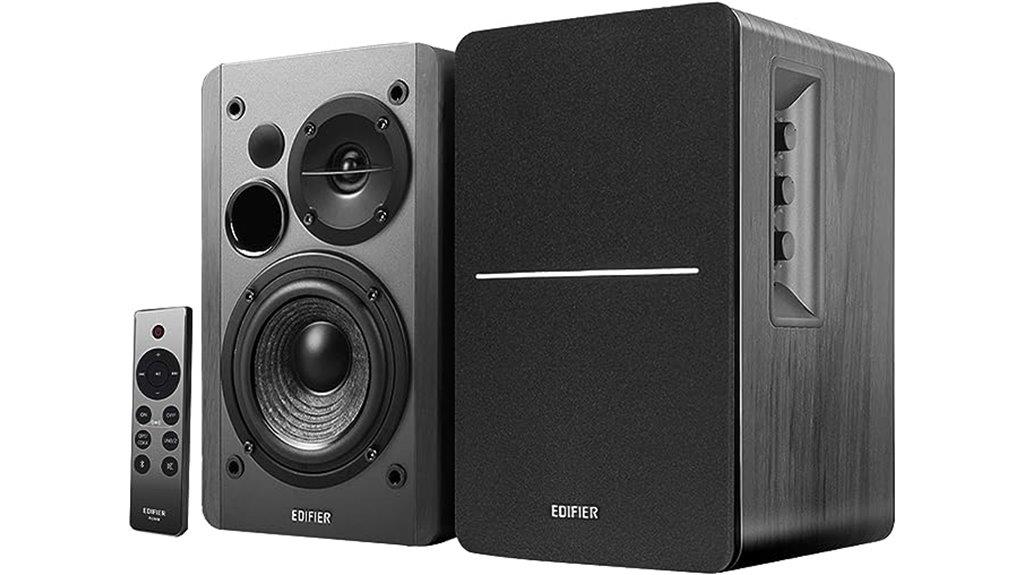
The Edifier R1280DBs Bluetooth Bookshelf Speakers stand out as an excellent choice for anyone seeking versatile, high-quality audio in a compact package. These active speakers deliver 42W RMS power, filling your space with clear, distortion-free sound thanks to a 4-inch subwoofer and silk dome tweeter. They feature Bluetooth 5.0 for wireless pairing, along with optical and coaxial inputs for lossless connections to TVs and computers. The remote offers easy control over volume, mute, and input modes, while side panels let you fine-tune bass and treble. Overall, they offer a balanced blend of convenience and sound quality, making them a top pick for versatile listening.
Best For: audiophiles and casual listeners seeking versatile, high-quality wireless and wired bookshelf speakers for home entertainment or desktop use.
Pros:
- Wireless Bluetooth 5.0 connectivity with a range of up to 10 meters for convenient streaming from multiple devices
- Multiple input options including optical and coaxial for lossless audio from TVs and computers
- Easy-to-use remote and side panel controls for quick adjustments of volume, bass, and treble
Cons:
- Not water-resistant, limiting outdoor or humid environment use
- Dimensions and weight may be bulky for small or limited spaces
- Limited warranty period may be a concern for long-term durability
Edifier R1280DB Powered Bluetooth Speakers
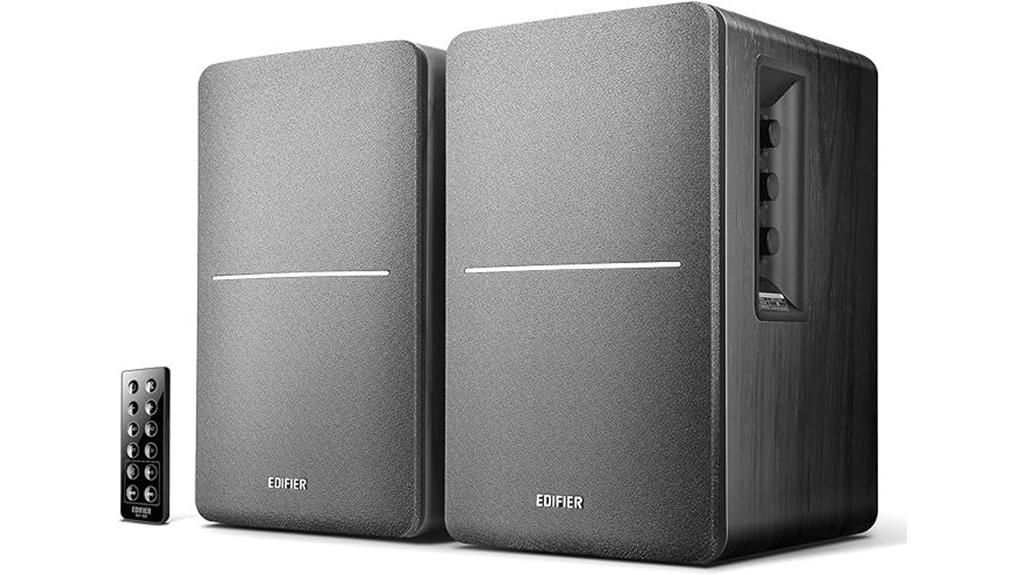
With its powerful 42W RMS output and 4-inch near-field drivers, the Edifier R1280DB Powered Bluetooth Speakers stand out as an excellent choice for home audio enthusiasts seeking studio-quality sound. Enclosed in a stylish wooden grain cabinet, they deliver naturally fine-tuned reproduction, including a bass driver and silk dome tweeter. Features like wireless Bluetooth, optical, coaxial, and RCA inputs ensure lossless, versatile connectivity to TVs, computers, and mobile devices. Side panel controls for bass and treble adjustments, plus a remote, make it easy to customize your listening experience. Compact and designed for indoor use, these speakers offer high-quality sound in a sleek, user-friendly package.
Best For: home audio enthusiasts seeking high-quality, versatile Bluetooth bookshelf speakers with customizable sound and easy connectivity options.
Pros:
- Delivers powerful 42W RMS output with studio-quality sound reproduction
- Multiple input options including Bluetooth, optical, coaxial, and RCA for versatile device connectivity
- Compact design with side panel EQ controls and remote for easy customization and operation
Cons:
- Not waterproof, suitable only for indoor use
- Requires a power cord and batteries for remote control, which may add to setup complexity
- Slightly larger footprint for bookshelf placement, needing adequate space on a stand or shelf
Factors to Consider When Choosing Studio Monitor Speakers

When selecting studio monitor speakers, I focus on sound accuracy and flatness to make sure my mixes are true to life. I also consider power output and input options to match my room size and setup, while size and placement influence how they fit into my workspace. Finally, I pay attention to the frequency response range to capture all the details in my audio.
Sound Accuracy and Flatness
Achieving sound accuracy in studio monitor speakers hinges on their ability to produce a flat frequency response, which means faithfully reproducing audio without adding coloration or distortion. A flat response curve typically spans from 50 Hz to 20 kHz, covering the full audible spectrum for high-fidelity sound. Precision drivers and well-designed crossover networks are essential, ensuring even distribution of frequencies across the system. Accurate monitors minimize sonic coloring, enabling producers and engineers to make precise mixing and mastering decisions based on authentic sound. Regular calibration and proper room treatment further enhance flatness by reducing room resonances and reflections that can distort true sound. Prioritizing flatness helps you trust your monitors to deliver an honest representation of your audio, making them indispensable for professional-quality results.
Power Output Needs
Choosing the right power output for your studio monitor speakers depends on your room size and listening habits. I recommend evaluating the maximum sound level you need without distortion—larger spaces or louder playback require higher wattage, such as 70W or more per speaker. Smaller studios or near-field setups work well with models around 20-30W. It’s essential to match the monitor’s power with your audio interface or amplifier to optimize performance and avoid under or overpowering. Consider headroom; selecting speakers with slightly more power than your typical use lets you handle dynamic peaks without clipping. Remember, power isn’t everything—balance wattage with other factors like frequency response and driver size for the best monitoring experience.
Input Connectivity Options
Selecting the right input connections for your studio monitor speakers is essential for ensuring peak sound quality and ease of setup. Different monitors offer various options like XLR, TRS, RCA, AUX, and USB, so it’s important to choose based on your equipment. Balanced inputs such as XLR and TRS minimize noise and are ideal for longer cable runs, delivering cleaner sound. Unbalanced inputs like RCA and AUX are more susceptible to interference but are common with consumer gear. Some monitors feature multiple input types, allowing quick switching between devices without unplugging. USB inputs are great for connecting directly to computers or digital audio workstations, reducing signal degradation and simplifying setup. Considering your existing setup will help you select monitors with the most compatible and versatile input options.
Size and Placement
The size and placement of studio monitor speakers directly influence how accurately you hear your mix and how well the sound fills the room. Smaller monitors, like 3.5-inch or 4-inch drivers, are perfect for desktop setups and near-field listening, offering focused sound without overwhelming the space. Larger monitors, such as 5-inch drivers, suit bigger rooms or professional studios, providing richer low-end response. Proper placement is essential; speakers should be at ear level and form an equilateral triangle with your listening position to guarantee accurate imaging. Using stands or wall mounts can help achieve ideal positioning and minimize vibrations that color the sound. Also, consider the room’s dimensions to make certain the monitors fit comfortably without obstructing acoustics or visual elements.
Frequency Response Range
Understanding the frequency response range of studio monitor speakers is essential because it determines how accurately they reproduce the full spectrum of sound. A wider range means the monitor can deliver more detailed audio, capturing everything from deep bass to shimmering highs. Speakers that extend below 70 Hz are particularly good at handling low-end frequencies without needing extra subwoofers. It’s also important that the response is flat, guaranteeing all frequencies are reproduced at the same level, which is vital for accurate mixing. Most monitors reach up to around 20 kHz or higher, covering the full range of human hearing and beyond, providing fidelity. Ultimately, choosing a monitor with an appropriate frequency response ensures your sound remains true to the original recording, helping you make precise adjustments.
Build Quality and Durability
Since durability directly impacts a monitor’s longevity and consistent performance, it’s crucial to take into account build quality when choosing studio monitor speakers. High-quality monitors are built from sturdy materials like MDF wood or reinforced plastics, ensuring they can withstand long-term use. The enclosure design plays a key role, as it should minimize resonance and vibrations that can color the sound, maintaining accuracy over time. Secure connections and resistant hardware components are essential, preventing wear from regular adjustments. Additionally, features like anti-slip pads and vibration absorption help keep the monitors stable and reduce external interference. Durable monitors are often backed by warranties, reflecting confidence in their construction and reliability. Prioritizing build quality ensures your speakers will perform consistently and last through years of demanding use.
Room Acoustics Compatibility
Choosing the right studio monitor speakers involves more than just sound quality; you also need to contemplate how your room’s acoustics will affect their performance. I look for monitors with adjustable room controls, like room response or high trim, to tailor sound to my space. It’s essential to *evaluate* the frequency response range relative to my room size and acoustics, ensuring accurate monitoring. I also prioritize acoustic treatments, such as bass traps and diffusers, to minimize reflections and improve clarity. Matching the speaker’s dispersion pattern with my room layout helps optimize stereo imaging and reduces sound absorption issues. *Finally*, I choose monitors with a flat, neutral frequency response so I can accurately hear room-induced colorations or anomalies during mixing.
Budget and Cost Efficiency
When selecting studio monitor speakers, setting a clear budget is essential to find options that balance affordability with quality. I recommend identifying your price range early to narrow down choices that meet your audio needs without overspending. Compare the cost-to-performance ratio of different models by examining specs like power output, frequency response, and build quality. Remember, higher-priced monitors often deliver better accuracy and features, but entry-level models can still be effective for those on a tight budget. Consider the long-term value by checking durability, warranty, and whether you’ll need extra accessories or upgrades. Look for cost-effective options that offer essential features without unnecessary extras, ensuring you get the best sound quality without stretching your finances.
Frequently Asked Questions
How Do Studio Monitors Differ From Regular Home Speakers?
Studio monitors differ from regular home speakers mainly in their accuracy and flat response. I find that monitors give me a true representation of my sound without coloration, so I can make precise adjustments. Home speakers often boost bass or treble for entertainment, but studio monitors stay neutral. This helps me mix and produce music more effectively, ensuring my sound translates well across different systems.
What Is the Ideal Size of Studio Monitors for Small Rooms?
For small rooms, I recommend studio monitors between 5 to 6.5 inches. They strike a good balance, offering clear sound without overwhelming the space or causing excessive bass. Larger monitors can sound boomy or muddy in tight environments, while smaller ones might not deliver enough low-end. I’ve found that this size range provides accurate audio, making mixing and listening enjoyable without sacrificing detail or clarity.
How Important Is Frequency Response in Studio Monitor Selection?
Frequency response is vital when choosing studio monitors because it determines how accurately they reproduce sound across all frequencies. I always look for monitors with a flat, wide response to guarantee my mixes translate well on any system. If the response is skewed or limited, I risk missing details or misjudging bass and treble. So, yes, a flat and broad frequency response really helps achieve professional, true-to-life sound quality.
Can Bluetooth Connectivity Affect Sound Quality in Studio Monitors?
Bluetooth connectivity can affect sound quality in studio monitors, especially since wireless signals sometimes introduce compression or latency. I know it’s tempting for convenience, but I prefer wired connections for critical listening. Wireless may cause slight delays or reduce clarity, which can impact your mix accuracy. If sound quality matters most, I recommend sticking with wired setups—trust me, your mixes will thank you!
What Features Should I Prioritize for Multi-Purpose Studio Speakers?
When choosing multi-purpose studio speakers, I prioritize versatility, so I look for adjustable EQ settings, multiple input options, and clear, balanced sound across frequencies. Portability and durability are also key, especially if I need to move or set up in different spaces. Connectivity options like Bluetooth can be handy, but I make sure they don’t compromise audio quality. Ultimately, I want speakers that adapt to various tasks without sacrificing sound fidelity.
Conclusion
Choosing the right studio monitor speakers is like finding the perfect pair of shoes—you want comfort, clarity, and confidence in every step. Whether you’re into professional music production or just want better sound for gaming and movies, these options can transform your experience. Remember, the best speakers are the ones that feel like they’re part of your creative journey, guiding you with a clear voice through every beat and note.