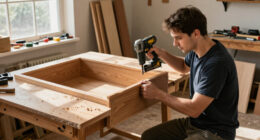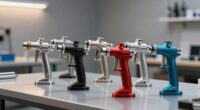
For most drywall projects, I’d start with the Marshalltown Sharpshooter 2.1 as the best overall texture sprayer in this roundup, while the Wagner Spraytech Power Tex stands out for buyers who want an electric setup and the Homax Texture Touch-Up Kit suits small repairs. The main choice is between a hopper gun that needs a separate air source, an electric sprayer, and a compact touch-up option. Larger hoppers can reduce refills on broad surfaces, but they add weight; nozzle choices can broaden texture options, but also add setup and cleanup. My picks reflect those practical tradeoffs rather than treating every sprayer as interchangeable. Read on for the full breakdown and guidance on matching a tool to your project.

Get business pricing on tools and workshop supplies
- Business-only prices and quantity discounts
- Tax-exempt purchasing
- Multiple users, one account, clear invoices
Complete the kit


Key Takeaways
- The lineup splits into three tool types: air-powered hopper guns, the electric Wagner Power Tex, and the small-area Homax touch-up kit; your project scale and available equipment should shape the shortlist.
- The Marshalltown Sharpshooter 2.1 is my overall pick because it offers a larger hopper than the 1.32-gallon HILTEX and InoKraft options, which can mean fewer pauses on larger jobs.
- Several hopper guns share a similar 1.5-gallon capacity and three-nozzle setup, including the Aflybltol, generic Drywall Texture Sprayer, and KCNKCN; compare handling, included accessories, and support rather than assuming the specs alone make them different.
- The Wagner Power Tex avoids the separate air-compressor requirement, making its electric format a distinct alternative, though buyers should weigh its corded setup and cleaning needs against a conventional hopper gun.
- The Homax kit and the Walboard Texture Pro 500 serve different repair needs: Homax is aimed at small touch-ups, while Walboard pairs a hopper gun with a putty knife for buyers who want a texture tool and a finishing accessory in one package.
| HILTEX 31229 Air Texture Gun with 1.32-Gallon Hopper and 3 Nozzles |  | Best for Extended Spraying Sessions | Model: 31229 | Hopper capacity: 1.32 gallons (5 liters) | Nozzle sizes: 4 mm, 6 mm, and 8 mm | VIEW ON AMAZON | See Our Full Breakdown |
| Aflybltol Drywall Texture Sprayer with 1.5-Gallon Hopper and 3 Nozzles |  | Best for Adjustable Spray Control | Model: BL069 | Tank volume: 1.5 gallons | Nozzle sizes: 4.0 mm, 6.0 mm, and 8.0 mm | VIEW ON AMAZON | See Our Full Breakdown |
| Marshalltown Sharpshooter 2.1 Texture Sprayer |  | Best for Texture Range | Model: SS21 | Material: Nylon | Hopper capacity: 2 gallons | VIEW ON AMAZON | See Our Full Breakdown |
| Drywall Texture Sprayer with 1.5-Gallon Hopper and 3 Nozzles |  | Best for Compressor-Matched Setups | Model: K11936 | Brand: Gekufa | Hopper capacity: 1.5 gallons | VIEW ON AMAZON | See Our Full Breakdown |
| Laco TG600 Drywall Texture Gun |  | Best for Small-Area Repairs | Model: TG600 | Materials: Aluminum, brass, and polycarbonate | Included spray tips: 3: orange peel, knockdown, and acoustic | VIEW ON AMAZON | See Our Full Breakdown |
| InoKraft TexCraft Drywall Texture Spray Gun, 1.32 Gallon Hopper |  | Best for Pattern Variety | Brand: InoKraft | Model: TexCraft | Hopper capacity: 1.32 gallons (5 L) | VIEW ON AMAZON | See Our Full Breakdown |
| Homax Texture Touch-Up Kit for Walls and Ceilings |  | Best for Small Repairs | Brand: Homax | Model number: 041072041218 | Operation: Hand-operated | VIEW ON AMAZON | See Our Full Breakdown |
| WINMAX Tools Air Texture Sprayer with 1.45-Gallon Hopper and 3 Nozzles |  | Best for Multi-Surface Use | Brand: WINMAX Tools Automotive | Model: PS001A09 | Hopper capacity: 1.45 gallons | VIEW ON AMAZON | See Our Full Breakdown |
| Walboard Texture Pro 500 Hopper Gun with Putty Knife and Texture Sprayer |  | Best for Broad Drywall Coverage | Brand: Walboard | Model: Texture Pro Kit TP500K1-AZ | Hopper capacity: 1.75 gallons | VIEW ON AMAZON | See Our Full Breakdown |
| KCNKCN Air Texture Gun with 1.5-Gallon Hopper and 3 Nozzles |  | Best for Nozzle-Based Pattern Control | Brand: KCNKCN | Model: TLW-BL | Hopper capacity: 1.5 gallons | VIEW ON AMAZON | See Our Full Breakdown |
| Wagner Spraytech Power Tex Electric Texture Sprayer |  | Best for Compressor-Free Application | Power: 120 volts, 3.7 amps, 60 Hertz | Hopper capacity: 1 gallon | Nozzles included: 3: small, medium, and large | VIEW ON AMAZON | See Our Full Breakdown |
| texture sprayer | Model | Hopper capacity | Nozzle sizes | Brand |
|---|---|---|---|---|
| HILTEX 31229 Air Texture Gun w | 31229 | 1.32 gallons (5 liters) | 4 mm, 6 mm, and 8 mm | — |
| Aflybltol Drywall Texture Spra | BL069 | — | 4.0 mm, 6.0 mm, and 8.0 mm | — |
| Marshalltown Sharpshooter 2.1 | SS21 | 2 gallons | — | — |
| Drywall Texture Sprayer with 1 | K11936 | 1.5 gallons | 4.5 mm, 6.0 mm, and 8.0 mm | Gekufa |
| Laco TG600 Drywall Texture Gun | TG600 | — | — | — |
| InoKraft TexCraft Drywall Text | TexCraft | 1.32 gallons (5 L) | 4.5 mm, 6 mm, 8 mm | InoKraft |
| Homax Texture Touch-Up Kit for | — | — | — | Homax |
| WINMAX Tools Air Texture Spray | PS001A09 | 1.45 gallons | 4 mm, 6 mm, 8 mm | WINMAX Tools Automotive |
| Walboard Texture Pro 500 Hoppe | Texture Pro Kit TP500K1-AZ | 1.75 gallons | — | Walboard |
| KCNKCN Air Texture Gun with 1. | TLW-BL | 1.5 gallons | 4 mm, 6 mm, 8 mm stainless steel | KCNKCN |
| Wagner Spraytech Power Tex Ele | — | 1 gallon | — | — |
More Details on Our Top Picks
HILTEX 31229 Air Texture Gun with 1.32-Gallon Hopper and 3 Nozzles
The HILTEX 31229 suits users who want a straightforward compressor-powered gun with a hopper sized to limit refill breaks. Its 1.32-gallon capacity is smaller than the Marshalltown Sharpshooter 2.1’s 2-gallon hopper, but the HILTEX includes 4, 6, and 8 mm nozzles for adjusting the spray to different materials and finishes. A trigger lock and comfortable handle give the operator a steadier grip during longer passes. The tradeoff is the air supply: its stated 7 cfm consumption calls for a compressor capable of keeping pace, and the gun cannot work without one. Compared with the Aflybltol, this model specifies brass air-regulating components, while the Aflybltol offers adjustable flow and air valves and a transparent hopper. Choose the HILTEX for basic nozzle flexibility, not compressor-free touch-ups.
Pros:- Three nozzle sizes accommodate different texture materials and spray patterns.
- 1.32-gallon hopper helps reduce refill interruptions.
- Trigger lock and comfortable handle support controlled spraying.
- Replaceable solid brass air-regulating components are specified.
Cons:- Requires an air compressor and uses 7 cfm.
- Hopper capacity is smaller than the Marshalltown Sharpshooter 2.1’s 2-gallon hopper.
- Only the spray gun is listed among included components.
Best for: DIY renovators and contractors with a compatible compressor who need one gun for several wall and ceiling textures.
Not ideal for: Buyers without a compressor, or anyone whose compressor cannot supply the stated 7 cfm air consumption.
- Model:31229
- Hopper capacity:1.32 gallons (5 liters)
- Nozzle sizes:4 mm, 6 mm, and 8 mm
- Air connection:1/4-inch NPT
- Air consumption:7 cfm
- Material:Replaceable solid brass air-regulating components
- Included components:Spray gun
Our verdict“Choose the HILTEX if you have a compressor that can meet its air demand and want a versatile gun with a useful hopper and three nozzle sizes.”
Aflybltol Drywall Texture Sprayer with 1.5-Gallon Hopper and 3 Nozzles
The Aflybltol stands out for buyers who want more control at the gun without stepping up to the Marshalltown Sharpshooter 2.1’s larger, manually operated setup. Its adjustable flow and air valves let the operator tune the spray, while three nozzles cover common texture materials and patterns. The transparent 1.5-gallon hopper makes it easier to see remaining material, and the aluminum-alloy body keeps the stated weight to 2.68 pounds. It is not a self-contained tool, though: an air compressor is required, and the product calls for cleaning after every use to reduce clogging. Compared with the HILTEX 31229, the Aflybltol has a slightly larger hopper and explicit flow and air adjustments, but the HILTEX lists replaceable brass air-regulating components. This is a practical pick when adjustment and hopper visibility matter more than avoiding cleanup.
Pros:- Adjustable flow and air valves support tuning the spray.
- Transparent 1.5-gallon hopper shows the remaining material.
- Three nozzle sizes suit several texture applications.
- Disassembles for cleaning.
Cons:- Requires an air compressor.
- Needs cleaning after each use to help prevent clogging.
- The plastic hopper may be less suited to rough handling than a metal container.
Best for: Home renovators with a compressor who want to adjust spray flow and monitor hopper contents while applying common drywall textures.
Not ideal for: Occasional touch-up users without a compressor, or people unwilling to disassemble and clean the sprayer after each session.
- Model:BL069
- Tank volume:1.5 gallons
- Nozzle sizes:4.0 mm, 6.0 mm, and 8.0 mm
- Maximum pressure:50 psi
- Weight:2.68 lbs
- Dimensions:7.87 in W × 9.06 in H
- Body and hopper materials:Aluminum alloy body; plastic hopper
- Power source:Air-powered
Our verdict“Pick the Aflybltol if you already have a compressor and value adjustable flow and a see-through hopper over a compressor-free tool.”
Marshalltown Sharpshooter 2.1 Texture Sprayer
For users who need more texture-size options than a standard three-nozzle gun provides, the Marshalltown Sharpshooter 2.1 is the lineup’s most adjustable pick. Its seven orifice sizes offer finer choices than the HILTEX 31229’s three nozzles, while an air control valve at the gun helps manage material flow. The 2-gallon hopper also holds more than the Aflybltol’s 1.5-gallon container, which can mean fewer pauses on larger areas. Knurled adjustment knobs do not require a wrench, and the swing trigger is designed for a comfortable grip. The key tradeoff is that this is a manual sprayer, so it may demand more physical effort than air-powered models. Its nylon construction also may not suit heavy industrial use as well as metal-bodied equipment. Choose it for adjustment range, not powered operation.
Pros:- Seven adjustable orifice sizes provide more texture choices than the three-nozzle models.
- Two-gallon hopper exceeds the capacity of the HILTEX and Aflybltol sprayers.
- Air control valve at the gun supports flow adjustment.
- Knurled knobs and swing trigger are designed for tool-free adjustment and comfortable handling.
Cons:- Manual operation may require more physical effort than air-powered alternatives.
- Nylon construction may be less suited to heavy industrial use than metal alternatives.
- Its larger hopper and 20.6-inch height may be more tool than needed for small patch jobs.
Best for: Drywall finishers who need multiple orifice options for varied textures and prefer a manual sprayer with tool-free adjustments.
Not ideal for: Users who want powered spraying to reduce physical effort, or crews seeking a metal-bodied tool for heavy industrial work.
- Model:SS21
- Material:Nylon
- Hopper capacity:2 gallons
- Orifice sizes:7
- Weight:4.8 lbs
- Dimensions:8.1 in W × 20.6 in H
- Hose length:1.5 meters
- Power source:Manual
- Warranty:Manufacturer Limited Lifetime Warranty
Our verdict“Choose the Sharpshooter 2.1 when a wide range of orifice sizes and a large hopper matter more than powered spraying.”
Drywall Texture Sprayer with 1.5-Gallon Hopper and 3 Nozzles
This Gekufa sprayer is a sensible choice for buyers who want a clearly stated compressor range alongside a mid-sized hopper. It lists compatibility with compressors rated at 4–8 CFM and 40–70 PSI, giving buyers a concrete starting point for checking their equipment before work begins. Three nozzles—4.5, 6, and 8 mm—cover common texture applications, and the 1.5-gallon hopper sits between the HILTEX’s 1.32 gallons and the Marshalltown’s 2 gallons. Detachable parts are intended to make cleanup easier, but the instructions still call for cleaning immediately after use. Its ABS body and metal components differ from the Aflybltol’s aluminum-alloy body, and spray consistency depends on setup and material viscosity. This pick makes most sense when compressor compatibility is the deciding factor, not when you want a compressor-free touch-up tool.
Pros:- Lists a compressor range of 4–8 CFM at 40–70 PSI to check against existing equipment.
- Three nozzle sizes cover common texture effects.
- 1.5-gallon hopper holds more than the HILTEX 31229’s 1.32-gallon hopper.
- Detachable parts are designed to ease cleaning.
Cons:- Requires a compatible air compressor.
- Needs immediate cleaning after use.
- Spray consistency depends on nozzle choice, air pressure, and material viscosity.
Best for: DIYers and small crews who already own a compressor in the stated 4–8 CFM, 40–70 PSI range and need a mid-capacity hopper gun.
Not ideal for: Buyers with compressors outside the listed range, or people seeking a no-compressor tool for small repairs.
- Model:K11936
- Brand:Gekufa
- Hopper capacity:1.5 gallons
- Nozzle sizes:4.5 mm, 6.0 mm, and 8.0 mm
- Compatible compressor:4–8 CFM at 40–70 PSI
- Materials:ABS body and metal components
- Included components:Nozzle
Our verdict“Choose this Gekufa model if your compressor matches its stated operating range and you want a 1.5-gallon hopper with three nozzle options.”
Laco TG600 Drywall Texture Gun
The Laco TG600 fills a different role from the hopper guns: it is built for matching texture in small areas without a compressor or air hose. Its 64-ounce jar is smaller than the HILTEX 31229’s 1.32-gallon hopper, but that compact capacity suits patching better than covering broad walls or ceilings. Three included tips address orange peel, knockdown, and acoustic finishes, and the locking plunger gives this handheld tool a distinct operating setup from the air-powered Aflybltol. Aluminum, brass, and polycarbonate parts disassemble for cleaning. The main limit is scale: the product is specifically designed for small-area work, so it is a poor substitute for a compressor-fed hopper gun on large projects. The listed weight of 0.01 ounces is unusual for a handheld tool, so buyers should not use that figure to judge handling.
Pros:- Works without a compressor or air hose.
- Three tips cover orange peel, knockdown, and acoustic finishes.
- 64-ounce jar offers capacity suited to localized repair work.
- Disassembles for cleaning.
Cons:- Designed for small-area work rather than broad wall or ceiling coverage.
- Jar capacity is smaller than the hopper on the HILTEX 31229.
- The listed weight of 0.01 ounces is not a useful guide to actual handling.
Best for: Homeowners and maintenance workers matching texture on isolated drywall patches who want to avoid buying or setting up an air compressor.
Not ideal for: Contractors spraying large wall or ceiling areas, where the small-area design and 64-ounce jar are less suited to continuous coverage.
- Model:TG600
- Materials:Aluminum, brass, and polycarbonate
- Included spray tips:3: orange peel, knockdown, and acoustic
- Jar capacity:64 oz
- Compressor required:No
- Operating mechanism:Locking plunger
- Item weight:0.01 ounces (as listed)
Our verdict“Pick the Laco TG600 for localized texture repairs when avoiding a compressor matters more than covering large areas quickly.”
InoKraft TexCraft Drywall Texture Spray Gun, 1.32 Gallon Hopper
The InoKraft TexCraft is a strong fit for repairers who want several texture options without moving up to a larger hopper gun. Its 4.5 mm, 6 mm, and 8 mm nozzles support a range of finishes, and the included knockdown knife and sponge give buyers more ways to shape the result. Compared with the Homax Texture Touch-Up Kit, it has a much larger hopper for longer passes, but it also needs an air compressor and is less convenient for a tiny patch. The 1.32-gallon capacity is smaller than the Walboard Texture Pro 500’s 1.75 gallons, a tradeoff that may suit users prioritizing a manageable load over fewer refills. At over 2 kg before material, overhead work may tire the arm. The self-locking trigger and cleaning tools help, though they do not remove the need for thorough cleanup.
Pros:- Three nozzle sizes allow adjustment across different texture patterns.
- 1.32-gallon hopper supports longer passes than a small repair kit.
- Self-locking trigger and ergonomic grip can reduce hand strain.
- Includes a knockdown knife, sponge, elbow hose, and cleaning brushes.
Cons:- At 2.02 kg, the gun may feel tiring during extended overhead spraying.
- Requires an external air source.
- Hopper capacity is smaller than the Walboard Texture Pro 500’s 1.75 gallons.
Best for: DIYers and repair crews who need multiple texture patterns and expect to spray more than a small touch-up area.
Not ideal for: Ceiling-only users sensitive to tool weight, or anyone without access to an air compressor.
- Brand:InoKraft
- Model:TexCraft
- Hopper capacity:1.32 gallons (5 L)
- Nozzle sizes:4.5 mm, 6 mm, 8 mm
- Power source:Air powered
- Weight:2.02 kg
- Material:HDPE and metal
- Included accessories:Knockdown knife, sponge, elbow hose, cleaning brushes, measuring cap, viscosity cup, shoulder strap
Our verdict“Choose the TexCraft if pattern flexibility and a substantial hopper matter more than low weight or compressor-free operation.”
Homax Texture Touch-Up Kit for Walls and Ceilings
For a few damaged spots rather than a whole room, the Homax Texture Touch-Up Kit avoids the setup and hopper size of air-powered guns. Its hand-operated sprayer comes with dry mixes for wall and popcorn textures, plus a knockdown tool and stir stick, so it is ready for modest repair work without a compressor. The adjustable pattern options cover orange peel, splatter, knockdown, and popcorn. Compared with the InoKraft TexCraft, Homax is lighter and simpler to deploy, but its coverage is far more limited: up to 15 square feet on walls and only 2 square feet on ceilings. That makes it a poor choice for broad resurfacing or repeated large patches. I’d choose it for matching and blending localized damage, not for production spraying or jobs where consistent coverage across a wide area matters.
Pros:- Hand-operated design does not require an air compressor.
- Adjustable sprayer supports four texture patterns.
- Includes texture mixes, a knockdown tool, and a stir stick.
- At 1.2 pounds, it is easier to handle for brief touch-ups than hopper guns.
Cons:- Coverage is limited to up to 15 sq. ft. on walls and 2 sq. ft. on ceilings.
- Supplied mixes and small coverage make it unsuitable for larger projects.
- Less suited to sustained spraying than the air-powered InoKraft TexCraft.
Best for: Homeowners repairing a few small textured wall blemishes or a limited ceiling patch who want to avoid compressor setup.
Not ideal for: Contractors and anyone texturing large wall or ceiling areas, given the stated coverage limits.
- Brand:Homax
- Model number:041072041218
- Operation:Hand-operated
- Texture patterns:Orange peel, splatter, knockdown, popcorn
- Wall coverage:Up to 15 sq. ft.
- Ceiling coverage:Up to 2 sq. ft.
- Weight:1.2 pounds
- Included components:Touch-up sprayer, 9.2 oz wall and ceiling dry mix, two 4.2 oz popcorn mixes, knockdown tool, stir stick
Our verdict“Pick Homax for small texture repairs when easy setup matters more than coverage or continuous spraying.”
WINMAX Tools Air Texture Sprayer with 1.45-Gallon Hopper and 3 Nozzles
The WINMAX Tools Air Texture Sprayer is the most explicitly versatile choice here for buyers who may texture furniture and craft surfaces as well as drywall. Its 1.45-gallon hopper holds more than the InoKraft TexCraft’s 1.32 gallons, while three nozzle sizes let users match the opening to the coating: the 8 mm nozzle is intended for thicker material, and the 4 mm and 6 mm options suit medium-viscosity mixes. The Walboard Texture Pro 500 offers a wider orifice and trigger-controlled airflow, which is more appealing for broad drywall coverage and smaller compressors; WINMAX instead gives clearer nozzle guidance for varied coatings. The tradeoff is that it still needs a compressor operating at the specified 5–8 bar range, and its smaller nozzles are not described for thick mixtures. Buyers should match material preparation to the nozzle rather than expect one setup to handle every coating.
Pros:- 1.45-gallon hopper holds more material than the InoKraft TexCraft.
- Three nozzle sizes accommodate different coating needs.
- Product is described for drywall, ceilings, furniture, and crafts.
- Includes two air-inlet sizes and a one-year warranty.
Cons:- Requires an external compressor operating at 5–8 bar.
- The 4 mm and 6 mm nozzles are intended for medium-viscosity materials.
- The supplied data does not specify weight or cleaning accessories.
Best for: DIYers or makers who want one compressor-powered sprayer for drywall texture and compatible furniture or craft coatings.
Not ideal for: Users without a compressor capable of the stated 5–8 bar range, or those primarily spraying thick material through the smaller nozzles.
- Brand:WINMAX Tools Automotive
- Model:PS001A09
- Hopper capacity:1.45 gallons
- Nozzle sizes:4 mm, 6 mm, 8 mm
- Recommended compressor pressure:5–8 bar
- Air inlets:8 mm and 12 mm
- Material:Metal
- Warranty:1 year
Our verdict“Choose WINMAX if you want a larger hopper and nozzle options for varied surfaces, and already have a suitable compressor.”
Walboard Texture Pro 500 Hopper Gun with Putty Knife and Texture Sprayer
The Walboard Texture Pro 500 is the coverage-focused pick for larger drywall jobs. Its patented WideTex orifice is stated to provide up to 30% more coverage, which can mean fewer passes than a conventional multi-nozzle gun such as the KCNKCN. A 1.75-gallon reversible hopper also holds more than the InoKraft TexCraft’s 1.32 gallons and is designed to reduce mess. Trigger-controlled airflow is a practical advantage for users with smaller compressors, though it still requires an air source. This kit is less compelling for tight ceiling spaces: its larger hopper and 27.6-inch listed height make maneuvering more cumbersome than using the compact Homax touch-up sprayer. Its single WideTex orifice also offers a different kind of flexibility than interchangeable nozzle sets. I’d favor it for repeated drywall coverage, not small isolated patches or cramped overhead work.
Pros:- WideTex orifice is stated to deliver up to 30% more coverage.
- 1.75-gallon reversible hopper holds more than the InoKraft TexCraft.
- Trigger-controlled airflow is designed to work with smaller air compressors.
- Includes a putty knife and a limited lifetime warranty.
Cons:- Still requires an external air compressor.
- Large hopper can be awkward in tight overhead spaces.
- Single WideTex orifice provides a different, less nozzle-varied setup than the KCNKCN.
Best for: Drywall crews and experienced DIYers covering broad wall areas who value fewer passes and a larger hopper.
Not ideal for: People repairing small patches, working in tight ceiling spaces, or lacking an air compressor.
- Brand:Walboard
- Model:Texture Pro Kit TP500K1-AZ
- Hopper capacity:1.75 gallons
- Orifice:Patented WideTex
- Power source:Air powered
- Hose length:48 inches
- Dimensions:8.27 in. W x 27.6 in. H
- Warranty:Limited lifetime
Our verdict“Choose the Texture Pro 500 for broad drywall runs where coverage and hopper capacity outweigh maneuverability.”
KCNKCN Air Texture Gun with 1.5-Gallon Hopper and 3 Nozzles
The KCNKCN Air Texture Gun offers a straightforward nozzle-led setup for users who want to move between fine, medium, and heavy spray patterns. Its 4 mm, 6 mm, and 8 mm stainless steel nozzles pair with adjustable flow, while the 1.5-gallon hopper is larger than the InoKraft TexCraft’s 1.32 gallons and close to WINMAX’s 1.45 gallons. Compared with the Walboard Texture Pro 500, KCNKCN gives buyers three distinct nozzle sizes rather than a WideTex orifice designed for broad coverage. That flexibility comes with material-prep demands: mixtures may need dilution to reduce clogging, and the product calls for care when tightening the air inlet connector. At 2.3 pounds, it is lighter than the InoKraft’s listed 2.02 kg, though a full hopper will add substantial working weight. Cleanup after each use remains part of the routine.
Pros:- Three stainless steel nozzles support fine, medium, and heavy patterns.
- 1.5-gallon hopper supports longer spraying sessions than a small touch-up kit.
- Adjustable flow helps control application.
- Designed to disassemble for cleaning.
Cons:- Mixtures may need dilution to help prevent nozzle clogs.
- Air inlet connector requires careful hand-tightening to avoid damage.
- Requires an external air source.
Best for: DIYers who want several spray-pattern options, a large hopper, and are comfortable preparing and cleaning texture mix.
Not ideal for: Users seeking low-maintenance spraying, or anyone unwilling to dilute mixes and take care with the air inlet connection.
- Brand:KCNKCN
- Model:TLW-BL
- Hopper capacity:1.5 gallons
- Nozzle sizes:4 mm, 6 mm, 8 mm stainless steel
- Power source:Air powered
- Maximum pressure:70 psi
- Weight:2.3 pounds
- Material:Aluminum
Our verdict“Pick KCNKCN if nozzle choice and hopper capacity matter more than minimal mix preparation and maintenance.”
Wagner Spraytech Power Tex Electric Texture Sprayer
The Power Tex stands apart from hopper guns such as the HILTEX 31229 by using a built-in air turbine, so you don’t need to supply a separate compressor and hose. That makes it a practical choice for homeowners handling ceiling or wall repairs who want a self-contained electric sprayer. Its three interchangeable nozzles cover popcorn, knockdown, and orange peel finishes, while the adjustable one-gallon hopper supports different working angles. Compared with larger-hopper options in this roundup, its capacity means more frequent refills on expansive jobs. It is also limited to water-based texture materials, including joint compound, and needs a standard 15-amp wall socket. Tool-free setup and cleaning help reduce the fuss between jobs, but this isn’t the pick for users seeking a compressor-driven gun or broad material compatibility.
Pros:- Built-in air turbine removes the need for a separate compressor and hose.
- Three nozzles support popcorn, knockdown, and orange peel finishes.
- Adjustable one-gallon hopper is designed for spraying walls and ceilings.
- Tool-free setup and cleaning simplify preparation and cleanup.
Cons:- One-gallon capacity requires more refills than the larger-hopper HILTEX 31229.
- Compatible only with water-based texture materials.
- Requires access to a standard 15-amp wall socket.
Best for: Homeowners applying water-based texture to ceilings or walls who want an electric, compressor-free setup and several finish options.
Not ideal for: Contractors covering large areas who want a larger hopper, or users who need to spray materials other than water-based textures.
- Power:120 volts, 3.7 amps, 60 Hertz
- Hopper capacity:1 gallon
- Nozzles included:3: small, medium, and large
- Texture patterns:Popcorn, knockdown, and orange peel
- Compatible materials:Water-based texture materials, including joint compound
- Air supply:Built-in air turbine
- Setup and cleaning:Tool-free
- Warranty:1-year limited
Our verdict“Choose the Power Tex for varied water-based wall or ceiling finishes without a separate compressor, but pick a larger-hopper option for fewer refills on broad projects.”

How We Picked
I ranked these texture sprayers by how well their format, capacity, and included equipment match real drywall tasks. I considered whether a tool is air-powered or electric, whether it needs a separate compressor, how hopper size may affect refill frequency, and whether nozzle options support different textures. I also weighed handling and cleanup, since a sprayer that is difficult to load or wash can slow a job even when its headline specifications look appealing.
The order reflects distinct buyer needs, not a claim that one design fits every project. The Marshalltown leads as a larger-hopper option; the Wagner earns attention for its electric format; and Homax ranks for small repairs rather than broad coverage. Among the similar three-nozzle hopper guns, I give more weight to practical differences in capacity and included accessories than to repeated feature lists. Where product details do not establish a clear performance advantage, I avoid treating a specification as proof of superior results.
Factors to Consider When Choosing Texture Sprayer
Before choosing a texture sprayer, I’d match the tool to the wall area, the texture material, and the equipment already in your workspace. These decisions can matter more than a small difference in listed capacity.
Match the sprayer format to the project size
For a small patch, a full hopper gun can be more setup than the repair deserves, while an aerosol or touch-up kit may lack the capacity for a whole room. A hopper gun is generally a better fit when you have repeated passes or broad wall and ceiling coverage to complete. Electric models offer another route when you prefer not to arrange a separate air source. Think about the total area, not just the first section you plan to spray. A tool that seems convenient for one wall may become tiring or slow across several rooms.
Check air-source needs before buying
Many hopper guns rely on an air compressor, so check the tool’s requirements and compare them with your compressor’s output before committing. A compressor that cannot keep pace may interrupt spraying and make it harder to maintain a consistent application. If you do not already own a suitable air source, include its size, hose, and setup in your decision. An electric sprayer can reduce that dependency, but it still needs a suitable power outlet and cord management. Avoid choosing by hopper capacity alone if the rest of the system is not ready for the job.
Choose nozzle flexibility only when you need it
Multiple nozzles can support different application patterns, but having more options is useful only if they suit your intended texture and material. Before work begins, check the manufacturer’s directions for compatible compounds and nozzle setup rather than assuming every drywall mix will spray. A common mistake is switching nozzles without first testing the pattern on scrap board. Testing helps reveal whether the material needs adjustment and lets you tune distance and movement before working on a finished surface. If you expect to use one texture repeatedly, simple setup may matter more than a wider set of attachments.
Balance hopper capacity against weight and control
A larger hopper can reduce how often you stop to refill, which is helpful on continuous coverage. It also means carrying more material, and that added load can be tiring when spraying ceilings or holding the gun away from your body. Smaller capacity can be easier to manage for repairs and short sessions, even if it calls for more refills. Consider the physical position you will work in as well as the room size. For overhead work, control and fatigue can matter more than maximizing capacity.
Plan for cleanup and material compatibility
Texture compound can dry in openings and around moving parts, so cleaning time is part of the tool’s real workload. Check how the gun or sprayer comes apart and follow its care instructions after each session. Letting material sit while you finish another task can make cleanup harder and may affect later spray performance. Also confirm that the texture material you plan to use is suitable for the chosen tool. A less expensive setup can cost time if it is awkward to clean or poorly matched to your compound.
Decide which accessories are genuinely useful
Included nozzles, knives, and other accessories can save a separate purchase, but only if they support the job you plan to do. A putty knife may be useful for preparation and finishing, while extra nozzles matter more when you expect to create varied patterns. Check what is actually included and whether any separate air or power equipment is needed. Do not treat a longer accessory list as proof of better spray control or durability. Prioritize the parts that reduce setup friction for your own workflow.
Frequently Asked Questions
Do I need an air compressor to use a texture sprayer?
Most hopper guns in this roundup are air-powered and need a compatible compressor, while the Wagner Spraytech Power Tex is an electric option. Check the exact operating requirements for the model you choose and compare them with your compressor’s capacity. If you do not own a suitable compressor, factor in the extra equipment and setup before selecting a hopper gun. For occasional small repairs, a touch-up kit may be a simpler alternative. The best format depends on the size and frequency of your projects.
Is a larger hopper always better for drywall texture work?
No. A larger hopper can reduce refill interruptions on wide surfaces, but a full hopper also adds weight and can be harder to control overhead. For a ceiling or a small repair, a lighter load may matter more than fewer refills. Think about how long you will hold the tool and how much continuous coverage the job requires. Capacity is a convenience feature, not a guarantee of better texture or easier handling.
Can I use one texture sprayer for both patches and whole rooms?
A hopper gun can handle both types of work, but it may feel oversized for a small patch and need careful pattern matching to blend with the surrounding finish. A dedicated touch-up kit is easier to reserve for localized repairs, while larger sprayers make more sense when coverage is extensive. For repairs that must disappear into an existing wall, practice on scrap material and match the texture before spraying the finished surface. You may prefer two formats if you routinely handle both tiny fixes and room-scale jobs. Choose based on how often each kind of work comes up.
How should I choose between a hopper gun and an electric texture sprayer?
Start with the equipment and work environment you already have. A hopper gun is a natural fit if you have a compatible air compressor and want a familiar setup for broader drywall coverage. An electric sprayer can be appealing if avoiding a separate compressor matters more, though you still need to manage power and cleaning. Compare the tool’s material requirements and instructions before assuming either format can spray your preferred compound. For a one-off project, the option that needs the least additional equipment may be the more practical choice.
What should I do before spraying texture on a finished wall?
Prepare the surface and protect nearby areas from overspray before loading the sprayer. Read the tool and compound instructions, then test the material and nozzle combination on scrap board or an inconspicuous area. Adjust your movement and application until the pattern is close to the surrounding texture. Keep a consistent working distance and avoid trying to correct a poor match with one heavy pass. Clean the sprayer promptly after use so residue does not block openings or complicate the next session.
Conclusion
For most buyers seeking a versatile air-powered hopper gun, I recommend the Marshalltown Sharpshooter 2.1 as the best overall, particularly for larger jobs where its 2.1-gallon hopper can reduce refills. For best value, compare the three-nozzle, 1.5-gallon options—Aflybltol, the generic Drywall Texture Sprayer, and KCNKCN—against their included equipment and support, since their listed core features are similar. The Wagner Spraytech Power Tex is my best premium-format pick for buyers who want an electric alternative to a compressor-driven gun. For beginners handling small repairs, the Homax Texture Touch-Up Kit keeps the task focused; buyers seeking a hopper gun with an added finishing accessory can look at the Walboard Texture Pro 500. If you already own a compatible compressor and want a straightforward three-nozzle setup, HILTEX or InoKraft may suit a smaller or occasional job better than stepping up to the Marshalltown. Match the tool to your work area and equipment first, then weigh capacity and accessories.