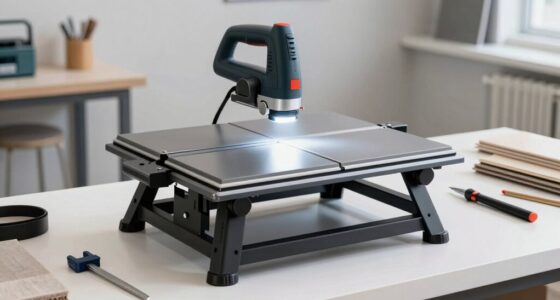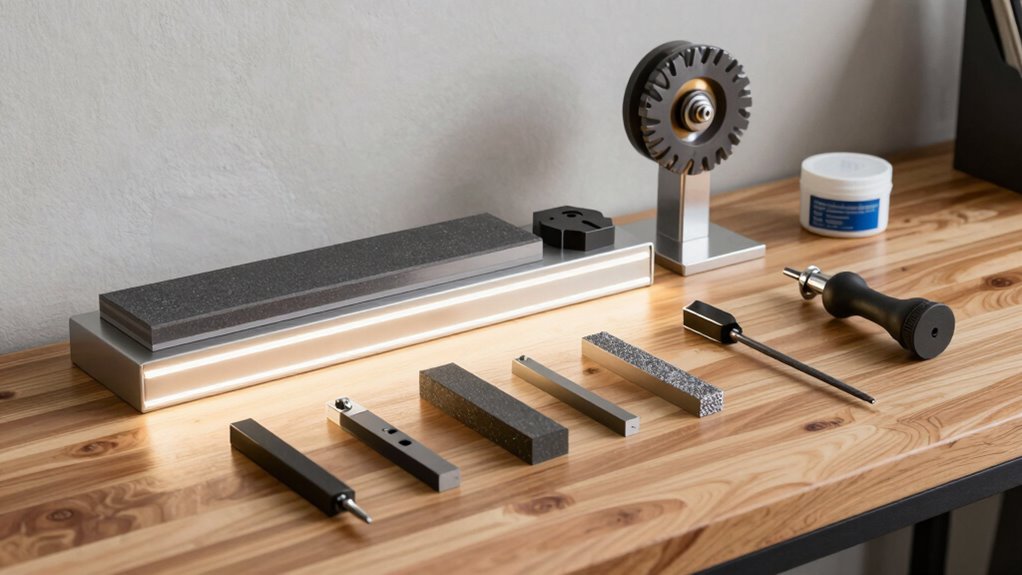
A tool sharpening station can handle anything from routine knife touchups to restoring drill bits and chisels, but no single setup suits every job. I’d put the BUCKTOOL 10-Inch Variable-Speed Wet Sharpening System first for buyers who want a dedicated, adjustable wet system, while the Hoteche 3-in-1 stands out for a compact mix of common tool types and the Work Sharp Precision Adjust for controlled knife sharpening. The main tradeoff is between broad versatility and precise, material-specific control: multi-tool stations save space, while dedicated systems can better suit repeat sharpening tasks. Read on for how the eight options differ and which makes sense for your workshop.

Get business pricing on tools and workshop supplies
- Business-only prices and quantity discounts
- Tax-exempt purchasing
- Multiple users, one account, clear invoices
Complete the kit


Key Takeaways
- The BUCKTOOL wet system leads for dedicated sharpening: its variable speed and 10-inch wheel format offer a more adjustable wet-sharpening approach than the compact multi-tool stations.
- The Hoteche and 3-in-1 drill-bit station favor breadth: both are aimed at buyers who want one electric unit for several tool types, with less specialization than dedicated wet systems.
- The Tormek TS-740 is a station and storage choice: its custom drawers make organization part of the package, while buyers seeking a sharpening machine alone may not need that setup.
- The Work Sharp Precision Adjust is the knife-control pick: it favors guided, deliberate knife sharpening over the broad tool coverage offered by the electric stations.
- The VEVOR jig kit depends on a bench grinder: it suits users who already have a compatible 6- or 8-inch grinder and want repeatable bevel support, rather than shoppers seeking a standalone sharpener.


More Details on Our Top Picks
Hoteche 3-in-1 Electric Multi-Functional Sharpener – 65W Universal Sharpening Station for Knives, Drills, Chisels, and Scissors
One powered station for several tool types gives the Hoteche a broader workshop role than the Work Sharp Precision Adjust, which is focused on knives. Its 65W motor reaches 4,800 RPM, and the listed capacities cover 3–13 mm drill bits and blades 6–51 mm wide. That range suits a DIY bench where convenience across common sharpening jobs matters more than a dedicated setup for each tool. The tradeoff is control: the product data notes that consistent precision can take practice, while the Work Sharp’s guided angle adjustments make repeatable knife edges easier to target. I would choose the Hoteche for variety and powered operation, but skip it if your main goal is fine, highly repeatable knife sharpening. Also, replacement wheels beyond the included accessories may need to be purchased separately.
Pros:- Handles drill bits from 3 mm to 13 mm
- Accepts blades from 6 mm to 51 mm wide
- 65W motor reaches a maximum 4,800 RPM
- Combines several sharpening functions in one station
Cons:- Consistent precision may take practice
- Additional sharpening wheels may require a separate purchase
Best for: DIYers who want one powered benchtop station for drill bits and a range of cutting tools
Not ideal for: Knife sharpeners who prioritize guided angle control and repeatable fine edges
- Power:65 W
- Maximum speed:4,800 RPM
- Drill bit capacity:3–13 mm diameter
- Blade width capacity:6–51 mm (1/4–2 in)
- Maximum wheel diameter:51 mm
- Arbor size:3/8 in (10 mm)
Our verdict“Choose the Hoteche if you want powered sharpening across several tool types; pick the Work Sharp Precision Adjust for more guided knife work.”
Tormek TS-740 Sharpening Station with Custom Drawers
Purpose-built storage and adjustable working height make the Tormek TS-740 a workstation choice for owners building their sharpening setup around Tormek equipment. Its custom drawers fit accessory kits and trays including HTK-00, TNT-00, and T8-00, keeping jigs close at hand as you move between jobs. By comparison, the VEVOR Multi-Grind kit adds sharpening guidance to a compatible bench grinder, while the TS-740 provides the freestanding bench and organized storage around a sharpening workflow. That distinction matters: this is furniture for the sharpening area, not a sharpener or grinder. At 92 pounds, it is substantial to place and reposition, and its 95-pound maximum capacity leaves little room for heavy extras. It makes sense for a dedicated Tormek setup, but is excessive if you need only a sharpening jig.
Pros:- Custom drawers fit Tormek accessory kits and specified storage trays
- Adjustable working height supports a more tailored bench position
- Powder-coated finish is designed to resist scratches
- Freestanding station organizes sharpening tools in one place
Cons:- Weighs 92 pounds, making it difficult to reposition
- Maximum weight capacity is 95 pounds
- Provides a workstation rather than a sharpening motor or abrasive system
Best for: Tormek owners who want a dedicated freestanding bench with fitted storage for sharpening jigs and accessories
Not ideal for: Occasional sharpeners or buyers looking for an actual grinder or sharpening machine
- Model:TS-740
- Material:90% steel, 5% rubber mat and rubber feet
- Weight:92 lb
- Dimensions:16 × 24 × 31.5 in
- Maximum weight capacity:95 lb
- Installation:Freestanding
- Special feature:Adjustable working height
- Finish:Powder-coated
Our verdict“Buy the TS-740 to organize a dedicated Tormek sharpening area, and look to the VEVOR kit if you need sharpening guidance for a bench grinder.”
Sbestily Multifunctional Electric Knife and Tool Sharpener Belt Sander
A small, variable-speed belt setup gives this Sbestily a different role from the Hoteche’s multi-tool station. Its 15-degree belt angle and seven speed settings suit hobby knife sharpening and small knife-making projects, while optional grinding and polishing wheels broaden its use. The alloy body and removable rubber feet are intended to keep it stable on a workbench. Compared with the Work Sharp Precision Adjust, the Sbestily offers a powered belt and room for abrasive or polishing attachments; the Work Sharp instead provides a clamp and guided angle settings for repeatable knife edges. This miniature format is a real limit: it is aimed at small hobby work, not heavy sharpening jobs. The power adapter connection may also need firm seating, so buyers wanting a simple, dedicated guided knife system may prefer the Work Sharp.
Pros:- Seven speed settings span 4,000–9,000 rpm
- Fixed 15-degree belt angle is suited to knife sharpening
- Optional grinding and polishing wheels support hobby projects
- Four removable rubber feet help secure it to a tabletop
Cons:- Mini size limits it to small-scale hobby work
- Power adapter cable may need firm seating
- Grinding and polishing wheels are optional fittings
Best for: Knife-making hobbyists who want a compact variable-speed belt sander for small blades and bench projects
Not ideal for: Users sharpening large tools or seeking a guided system for repeatable knife angles
- Motor:775 all-copper motor
- Speed range:4,000–9,000 rpm
- Speed settings:7
- Belt angle:15 degrees
- Body material:Alloy
- Mounting:Tabletop with four removable rubber feet
- Brand:Sbestily
Our verdict“Choose the Sbestily for compact belt-sander versatility on small hobby projects; choose the Work Sharp for guided, repeatable knife angles.”
VEVOR Multi-Grind Sharpening System – Vari-Grind Pro Jig Kit for 6″ & 8″ Bench Grinders
Repeatable support for shaped woodworking edges is the VEVOR kit’s defining advantage. Its platform, V-pocket support arm, and fingernail gouge jig are intended for chisels, gouges, parting tools, carving tools, plane irons, and lathe tools. The multi-position leg and adjustable support help set angles consistently, a more specialized approach than the Hoteche’s powered multi-tool format. Unlike the Tormek TS-740, which supplies a dedicated workbench and storage, this kit supplies jigs and supports for a bench grinder you already own. That makes grinder compatibility central to the decision: a 6- or 8-inch grinder is required and is not included. It suits woodworkers who value repeatable shaping across several tool profiles, but is a poor starting point for someone without a grinder or a need for those tool types.
Pros:- Compatible with 6-inch and 8-inch bench grinders
- Includes platform, long support arm, fingernail gouge jig, and base clamps
- Supports a range of woodworking and turning tool profiles
- Adjustable support features help repeat sharpening angles
Cons:- Bench grinder is not included
- Its jig-based setup is specialized for shaped tools rather than general knife sharpening
Best for: Woodturners and carving-tool users who already own a compatible 6-inch or 8-inch bench grinder
Not ideal for: Beginners without a bench grinder or buyers seeking an all-in-one powered sharpening station
- Model:PJ-1153
- Grinder compatibility:6-inch and 8-inch bench grinders
- Bench grinder:Not included
- Included components:Platform worktable, long support arm, fingernail gouge jig, two base clamps
- Brand:VEVOR
- Manufacturer part number:MCTJJJ PJ-1153
Our verdict“Choose the VEVOR kit to sharpen woodworking and turning tools on a grinder you already own; the Hoteche is more self-contained for mixed DIY sharpening.”
Work Sharp Precision Adjust Knife Sharpener Kit
Fine angle control for repeatable knife edges sets the Work Sharp apart from the broader Hoteche station. Its chassis adjusts from 15 to 30 degrees in 1-degree increments, and the clamp holds a knife while the included diamond and ceramic abrasives handle sharpening and finishing. That makes it a focused choice for kitchen and pocket knives, including serrated blades, rather than a workstation for drills or woodworking tools. Compared with the Sbestily belt sander, the Work Sharp trades powered belt versatility and optional polishing attachments for a guided setup and defined angle adjustments. The tradeoff is its narrow scope: it cannot replace a multi-tool station for a workshop with drill bits and chisels to sharpen. I would choose it when consistency across knife touch-ups is the priority.
Pros:- Angle adjusts from 15 to 30 degrees in 1-degree increments
- Includes 320- and 600-grit diamond abrasives plus a fine ceramic stone
- Knife clamp helps hold the blade during sharpening
- Three-year warranty
Cons:- Focused on knives rather than general workshop tools
- Guided clamp setup is less suited to large or irregularly shaped tools
Best for: Knife owners who want guided, repeatable sharpening angles for kitchen, pocket, and serrated blades
Not ideal for: Workshop buyers who need one station for drill bits, chisels, or other non-knife tools
- Model:WSBCHPAJ
- Sharpening angle:15–30 degrees
- Angle adjustment:1-degree increments
- Diamond abrasives:320 grit and 600 grit
- Ceramic abrasive:Fine ceramic stone
- Included components:Tri-Brasive stone, angle-adjustable chassis, benchtop base, knife clamp, sharpening slide rod, user guide
- Warranty:3 years
- Design and engineering:Oregon, USA
Our verdict“Choose the Work Sharp for controlled knife sharpening, while the Hoteche covers more tool types in one powered station.”
3-in-1 Electric Drill Bit Sharpener, Universal Sharpening Station for Drill Bits, Knives, Chisels, and Scissors
The three interchangeable sharpening modules make this the most space-conscious way in this group to handle drill bits alongside knives, scissors, chisels, and plane blades. Its 15°–50° angle adjustment gives more flexibility than a single-purpose drill sharpener, while the 3.26-pound body is easy to move between a bench and storage. Compared with the BUCKTOOL 10-Inch Variable-Speed Wet Sharpening System, this unit takes far less room and covers drill bits directly; BUCKTOOL offers a larger wet wheel and leather stropping wheel for more controlled sharpening and finishing. The tradeoff is a single included wheel and a plastic housing, which may be less suited to frequent, heavy workshop use. I’d choose it for occasional household sharpening where one compact station beats a larger dedicated setup.
Pros:- Three modules cover drill bits, knives and scissors, plus chisels and plane blades
- Adjustable 15°–50° sharpening angle supports different tool edges
- Compact 6.38 × 5.63 × 6.1-inch footprint and 3.26-pound weight
- Heat dissipation holes and anti-slip feet support stable operation
Cons:- Only one grinding wheel is included
- High-strength plastic construction may be less durable than a metal-bodied machine
- Its 65W motor and compact format are better suited to home use than sustained shop workloads
Best for: Home users with limited bench space who want one small machine for drill bits and common cutting tools
Not ideal for: Woodworkers sharpening tools often who want a heavier-duty wet wheel, stropping wheel, or more durable metal construction
- Voltage:110 V
- Power:65 W
- No-load speed:6,700 rpm
- Drill bit capacity:7/64–3/8 in (3–13 mm)
- Chisel and plane blade width:1/4–2 in (6–51 mm)
- Sharpening angle:15°–50°
- Dimensions:6.38 × 5.63 × 6.1 in
- Weight:3.26 lb
Our verdict“Choose this compact station if you want broad tool coverage in a small home workshop and can accept a lightweight plastic build.”
BUCKTOOL 10-Inch Variable-Speed Wet Sharpening System
The BUCKTOOL stands out for buyers who want slow, water-cooled sharpening and room to refine an edge with a leather strop. Its 10-inch aluminum oxide wheel, adjustable jig, and 90–160 RPM variable speed make it a more deliberate bench setup than the small 3-in-1 station, which runs at high speed and adds drill-bit sharpening instead. Reversible rotation and horizontal or vertical jig positions give this system flexibility when setting up different tools. The cost in convenience is physical: at 15.6 kg and over 18 inches long, it needs a dedicated place near an outlet. The included water tray also means more setup and cleanup than a dry sharpener. I’d rank it ahead of compact options for users prioritizing controlled sharpening and stropping, but below them for portability.
Pros:- Variable 90–160 RPM speed and reversible rotation provide setup flexibility
- Water tray helps keep tools cool during sharpening
- Includes a 10-inch aluminum oxide wheel and 8-inch leather stropping wheel
- Adjustable jig supports horizontal and vertical positions
Cons:- At 15.6 kg, it is cumbersome to move or store between uses
- Corded operation requires a nearby 120 V outlet
- Wet sharpening requires water-tray setup and cleanup
Best for: Woodworkers and tool owners who sharpen chisels, knives, or axes at a fixed bench and want a wet wheel with a stropping stage
Not ideal for: Small-shop users who need a lightweight, easy-to-store station or who specifically want drill-bit sharpening built in
- Motor:1/5 HP, 1.2 A
- Power:150 W
- Voltage:120 V
- Speed:90–160 RPM
- Sharpening wheel:10-inch aluminum oxide
- Stropping wheel:8-inch leather
- Jig positions:Horizontal and vertical
- Dimensions and weight:18.11 × 10.63 × 15.75 in; 15.6 kg
Our verdict“Pick the BUCKTOOL for a dedicated bench where water-cooled sharpening and leather stropping matter more than compact size.”
WEN 8-Inch Water-Cooled Wet/Dry Sharpening System (BG4108)
The WEN BG4108 is a straightforward entry into water-cooled sharpening: its 8-inch, 220-grit stone runs at 120 RPM, and a leather wheel provides a separate finishing step. An adjustable reservoir, angle guide, and chisel and planer blade jig give beginners a clearer starting setup than the VEVOR Multi-Grind Sharpening System, which is built around bench grinders and a specialized jig kit. Compared with the larger-wheel BUCKTOOL, the WEN lists a simpler fixed-speed motor and an 8-inch stone, so buyers give up variable speed and a 10-inch sharpening wheel. Its 220-grit stone may also call for additional accessories when a finer finish or other blade styles are priorities. I’d favor it for learning controlled wet sharpening without stepping into a more elaborate system.
Pros:- Water-cooled 8-inch stone and leather stropping wheel support sharpening and finishing
- Includes an angle guide and chisel and planer blade jig
- Adjustable water reservoir helps accommodate sharpening setup
- Rubber feet help limit movement on the bench
Cons:- The included stone is 220 grit, which may not suit every finishing preference
- Fixed 120 RPM speed offers less control than the BUCKTOOL’s variable-speed motor
- Additional accessory kits may be needed for other blade styles
Best for: Beginners and home woodworkers who want a water-cooled stone, a leather stropping wheel, and basic chisel or planer guidance
Not ideal for: Experienced sharpeners seeking variable speed, a finer included stone, or dedicated accessories for many blade styles
- Model:BG4108
- Sharpening stone:8 × 1.5 in, 220 grit
- Leather stropping wheel:8.75 × 1.125 in
- Motor:1 A
- Wheel speed:120 RPM
- Included accessories:Angle guide, honing compound, adjustable water reservoir, chisel and planer blade jig
- Warranty:2 years
Our verdict“Choose the WEN if you want a guided, water-cooled starting station for common workshop tools and do not need variable speed.”

How We Picked
I compared these eight products by how well their sharpening method matches the tools a buyer actually needs to maintain. I weighed tool coverage, guidance and control, wheel or abrasive format, speed adjustment, setup demands, and whether the product works as a standalone station or depends on another machine. Build and maintenance matter here because a sharpening setup should be practical to position, keep clean, and use consistently.
The ranking favors useful capability paired with a clear audience. The BUCKTOOL leads for buyers seeking an adjustable wet system; the Hoteche earns a high place for covering several common tool types in one compact electric unit. More specialized options rank well for their intended jobs, but lower for a general-purpose station because they focus on knives, depend on a grinder, or add storage rather than broader sharpening capability.
Factors to Consider When Choosing Tool Sharpening Station
Before choosing a station, I’d start with the tools you sharpen most often and the space and skill you can give the process. These factors help distinguish a versatile convenience tool from a setup that supports careful, repeatable sharpening.
Match the Station to Your Tool Mix
Write down the tools you expect to sharpen in a typical month, then separate routine touchups from edge repairs. A station that accepts knives, scissors, chisels, and drill bits sounds versatile, but each tool may require a different guide, setup, or learning curve. If you mainly maintain kitchen knives, a focused guided sharpener may be easier to use well than a broad electric station. Woodworkers and gardeners may put more weight on bevel support and wheel choice. Avoid buying for a hypothetical tool collection if you will mostly sharpen one or two types. The best fit is the machine whose common jobs are straightforward to set up.
Choose Between Wet, Dry, Belt, and Guided Methods
Sharpening methods affect heat, cleanup, speed, and how much control the operator supplies. Wet systems use water during grinding, which can suit buyers focused on controlled edge work, but they involve water management and cleanup. Dry wheels and belts can be convenient for quick stock removal, yet users need to manage pressure and heat, especially on smaller edges. Guided systems slow the process down while helping maintain a chosen angle. Don’t assume that a faster motor creates a better edge; abrasive choice and steady technique matter just as much. Pick the method you are willing to set up and maintain for the jobs you actually do.
Check Guidance and Angle Repeatability
Guides and jigs can reduce guesswork, but they only help when they fit the tool and are easy to adjust. Before buying, check whether the system supports the blade or bit shapes you own and whether its stops can be set consistently. A bench-grinder jig may offer a repeatable bevel for chisels or turning tools, but it relies on having a compatible grinder and enough bench space. Freehand sharpening allows more flexibility but asks more of the operator. A common mistake is focusing on the advertised tool count while overlooking how each tool is held. For beginners, a stable work rest or clear angle guide can matter more than extra attachments.
Plan for Space, Setup, and Cleanup
A sharpening station needs more than its footprint on a product page: allow room for the workpiece, guides, water or debris, and safe hand movement. Wet systems need a plan for filling, draining, and drying, while belt or dry-wheel systems can scatter dust or metal particles. Stations with storage can keep accessories close, though drawers add bulk and do not improve the sharpening action itself. If the machine will be stored between sessions, consider how long setup takes and where attachments will live. Buyers with a fixed workshop can accept a larger dedicated system more easily than those sharing a bench. Think through cleanup before committing to a method you plan to use often.
Decide Whether You Need a Standalone Machine
Some sharpening products are complete stations, while others are accessories that rely on equipment you already own. A jig kit can be a sensible choice when a compatible bench grinder is already part of the workshop, but it becomes a more complicated purchase if you need to add that machine. Standalone electric units simplify the equipment list, though their guides and attachments may limit certain shapes. Compare the complete setup you will need, including clamps, rests, and consumables. Avoid counting an accessory as a full station when budgeting space or planning a first sharpening setup. Existing tools can change which option offers the most practical value.
Frequently Asked Questions
Can one sharpening station handle knives, chisels, scissors, and drill bits well?
Some multi-tool stations are designed to accept all of these, but tool compatibility does not mean every task receives the same level of control. Check which guides are included, how each tool is held, and whether the sharpening angle can be set for the edge you need. A broad station may be convenient for occasional household and workshop maintenance. If one tool type is central to your work, a dedicated system can be easier to tune for it. Choose based on your most frequent sharpening jobs rather than the longest list of supported tools.
Should I choose a wet sharpening system or a dry electric sharpener?
Choose based on your tolerance for setup and cleanup as well as the edges you maintain. Wet systems involve water handling and drying, which adds steps but can suit a slower, controlled sharpening routine. Dry electric sharpeners are often simpler to position for quick jobs, though you still need to control pressure and avoid overheating an edge. Abrasive type, guides, and technique all affect the result. If possible, decide which workflow you will repeat consistently rather than choosing only by motor speed.
Is a grinder jig a good first sharpening setup?
A jig can help maintain repeatable angles, but it is only a complete choice if you already own a compatible bench grinder or plan to get one. Check the grinder size it supports and whether the jig fits the tools you want to sharpen. You will also need room to position the work safely and make adjustments. For someone starting without sharpening equipment, a standalone guided system may be simpler to put into service. A jig makes most sense when it complements a workshop that already has the required machine.
What should beginners prioritize when choosing a tool sharpening station?
Look for stable tool support, understandable setup steps, and guides that match the tools you own. A machine with many attachments can still be frustrating if changing between them is fiddly or the instructions leave angle setting unclear. Start with the tool type you need to maintain most often, then check how the station handles that exact shape. Also account for cleanup and storage, since those affect whether you will use it regularly. Simple, repeatable setup is usually more helpful early on than maximum versatility.
When does a premium sharpening station make sense?
A more capable or elaborate station makes sense when sharpening is a regular workshop task and its controls or format match the work you do. Variable speed, larger wheels, wet operation, or integrated storage can be useful when they solve a specific workflow problem. They add little value if you only touch up a few household knives now and then. Compare the full setup, including available guides and maintenance needs, rather than relying on the machine’s feature list alone. Buyers should pay for the capability they expect to use repeatedly.
Conclusion
For a general workshop focused on wet sharpening, I’d choose the BUCKTOOL 10-Inch Variable-Speed Wet Sharpening System as the best overall fit. The Hoteche 3-in-1 is my value-minded pick for buyers who want several common tool types covered by one compact electric unit, while the Tormek TS-740 suits those who want a station with integrated accessory storage. Beginners focused mainly on knives may find the guided Work Sharp Precision Adjust easier to approach than a wheel-based system. For drill bits and mixed household tools, compare the two 3-in-1 stations; for grinder owners seeking bevel support, look at the VEVOR jig kit. Choose the option whose method and setup suit your regular sharpening jobs, not just the broadest feature list.