
This checklist is for DIYers and woodworkers who want to upgrade the hand tools they reach for when fitting, shaping, and laying out parts. It covers a focused set of woodworking tools, with a separate advice-only slot for choosing chisels. Match the tool to the work you actually do, whether that means fine cuts, smoothing, scraping, or accurate marking.

Get business pricing on tools and workshop supplies
- Business-only prices and quantity discounts
- Tax-exempt purchasing
- Multiple users, one account, clear invoices
The sections follow the listed picks: saw, plane, scraper, marking gauge, and combination square, followed by chisel-buying advice. Each product name identifies a candidate, while the checklist explains what to inspect before choosing one. Check the details in the listing, including dimensions, included components, and any stated use limits.
Use the look-for points to compare options, then check that each tool suits your materials, workholding, and storage. Where fit depends on the task, consider the size of your work and how much control you need. Buy for your workflow first; a tool that fits your regular projects is more useful than one chosen for a name alone.
Japanese pull saw
A pull saw is a useful choice when your work calls for controlled cuts, and this pick is named for rip cuts, dovetails, and fine joinery. Those tasks place different demands on a saw, so confirm that the product’s stated configuration matches the cuts you plan to make. Cut type matters: a saw suited to one kind of cut may not be the best match for another.
A common mistake is choosing by the broad “Japanese pull saw” label without checking the blade dimensions or intended use. Review the listing for blade length, tooth pattern, handle dimensions, and whether the saw is described for rip cuts, crosscuts, or both. Consider the size of your stock and the reach you need in joints or tight spaces. Check the stated details instead of assuming the product name answers every fit question.
Before buying, make sure the handle feels manageable for your grip and that the saw can be stored safely with your other tools. If you expect to cut dovetails and do longer stock work with the same saw, weigh those needs against the listed blade design. Choose around your cuts, then verify the specifications for the exact model.
What to look for:
- Stated suitability for rip cuts and fine joinery
- Blade length and overall dimensions
- Tooth pattern and stated cut direction
- Handle size and grip shape
- Blade protection or storage details, if listed
Temple Tool Co. Japanese Pull Saw for Rip Cuts, Dovetails, and Fine Joinery

This Japanese pull saw has 18 TPI rip teeth for dovetails, tenons, and other fine joinery in soft or hardwood. Its lightweight, narrow-kerf Japanese steel blade cuts on the pull stroke, while the wingnut wood handle and brass components add comfort and durability.
Pros:
- Designed for precise dovetails, tenons, and fine joinery
- Pull-stroke design supports a narrow kerf and smooth cuts
- Japanese steel blade is described as sharp and long-lasting
- Ergonomic wood handle with brass components
Cons:
- Rip teeth are specialized for cutting with the grain
- No blade length is specified
Best for: Woodworkers making rip cuts and dovetails
Not ideal for: Shoppers whose needed cut type is not specified
Bottom line: Choose this saw when its listed blade design and dimensions match the cuts you make most often.
Block plane
A block plane can support small-scale fitting and surface refinement, making it a useful addition when your projects call for controlled adjustments. This pick is titled “Precision Low Angle Wood Block Plane,” so compare its stated dimensions and setup with the work you have in mind. Control and fit are central: the plane should suit the size of the pieces you handle and the adjustments you expect to make.
One common mistake is assuming that “low angle” or “precision” alone guarantees the right setup for every task. Check the listing for body dimensions, blade width, adjustment features, and any stated angle or use guidance. Consider whether you need to work on edges, end grain, or small surfaces, and verify that the product description addresses those needs. Read the specifications rather than relying on the title to establish capability.
Also consider how the plane will sit in your hand and whether the blade can be adjusted and maintained using the tools you already have. If the listing does not explain adjustment or blade details, treat that as information to resolve before choosing. Match the plane to your workpiece scale, storage space, and sharpening routine.
What to look for:
- Body length, width, and weight if provided
- Blade width and replacement information
- Blade adjustment method
- Stated suitability for the surfaces you plan to work
- Comfort and grip details shown in the listing
Precision Low Angle Wood Block Plane
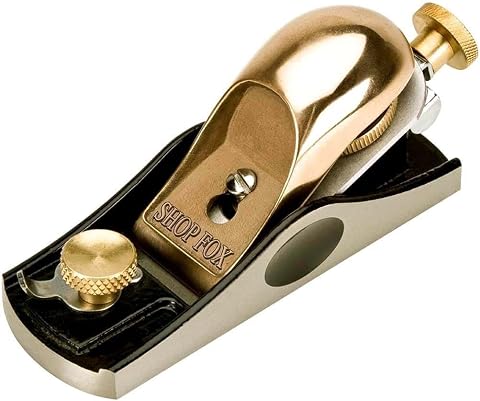
This woodworking tool is designed for precise low-angle planing, ideal for fine finishing and detailed work on wood surfaces. It features adjustable components for accuracy and ease of use.
Pros:
- Provides precise control for detailed woodworking tasks
- Adjustable components for accuracy
- Suitable for fine finishing
Cons:
- Limited information on materials and size
- No user reviews available
- May require additional tools for optimal use
Best for: Woodworkers refining small parts and edges
Not ideal for: Buyers needing a plane with unlisted specifications
Bottom line: Select the plane after confirming its dimensions, blade details, and adjustment method suit your projects.
Cabinet scraper
A cabinet scraper set brings a hand-tool option for smoothing and refining wood surfaces. This pick combines a burnisher with six shaped card scrapers, so check that the included shapes correspond to the contours and flat areas you work on. Set contents matter: confirm the number and profiles of the cards, and whether the burnisher is included as described.
A frequent buying mistake is focusing on the piece count without checking scraper size, thickness, or edge profile. Review the product details and images for the dimensions of each card, the shapes supplied, and the burnisher’s form. Think about whether your projects involve broad panels, curved surfaces, or small details; the useful selection depends on the work. Compare the profiles with your actual surfaces rather than assuming a multi-shaped set covers every contour.
Consider how you will store the cards so their edges stay protected, and whether the set includes guidance that fits your experience. Check that the burnisher is suitable for the scraper material and that you understand what is supplied versus shown in images. Verify the full kit before buying, especially if you already own a burnisher or have preferred scraper dimensions.
What to look for:
- Confirmation that the burnisher is included
- Dimensions and thickness of each scraper card
- The six shapes or profiles supplied
- Burnisher material and form
- Storage or edge-protection details, if stated
Cabinet Scraper Burnisher and 6-Piece Multi-Shaped Card Scraper Set

This woodworking set includes a hardwood-handled burnisher and seven card scrapers in rectangular, curved, gooseneck, and beveled shapes. The hardened high-carbon steel burnisher is designed to form consistent burrs on scraper edges for controlled scraping and smooth wood surfaces.
Pros:
- Hardened high-carbon steel burnisher is designed to resist wear.
- Works with flat, curved, and beveled card scrapers.
- Hardwood handle provides grip and leverage for controlled pressure.
- Set includes scrapers in several shapes and thicknesses.
Cons:
- Requires manual burnishing and sharpening.
- The listed dimensions do not specify measurements for every scraper shape.
Best for: Woodworkers smoothing varied surface shapes
Not ideal for: Buyers who need specific scraper profiles not shown
Bottom line: Check the card dimensions and profiles against your projects before choosing this set.
Marking gauge
A marking gauge helps establish a line from a reference edge, so its adjustment and handling affect layout work. This pick is described as a solid brass wheel gauge for precision marking and cutting. Confirm the construction and mechanism in the listing, then consider whether its range and scale suit the stock sizes you commonly mark. Repeatable setup is more useful than a feature label if the gauge cannot be adjusted easily for your work.
A common mistake is overlooking the gauge’s maximum reach or how securely it locks. Check the listed range, beam length, wheel or cutter details, and adjustment method. If you use different stock thicknesses, verify that the gauge can accommodate them. Also distinguish between the product’s stated marking and cutting uses; confirm that the cutter configuration is appropriate for your intended material and layout. Check range and locking before relying on it for repeat work.
Think about the reference edges and surfaces you work against, as well as how the gauge will feel during long layout sessions. Review the listing for dimensions and any included accessories. If you already own a marking knife or gauge, compare the functions and adjustment range to avoid duplicating a tool that does not expand your setup. Choose for your stock and the lines you need to lay out.
What to look for:
- Gauge range and beam length
- Wheel or cutter design and stated use
- Locking and adjustment method
- Construction details, including the stated brass body
- Included accessories and overall dimensions
Taytools Solid Brass Wheel Woodworking Precision Marking and Cutting Gauge with

This is a high-quality marking and cutting gauge designed for precise woodworking joints. Made of solid brass with a hardened steel cutter, it features micro-adjustment and comes with two additional cutters for versatile use.
Pros:
- Durable solid brass construction
- Precise micro-adjustment with lockable head
- Includes two extra cutters for extended use
- Hardened steel cutter slices easily across wood grain
Cons:
- May be more expensive than plastic alternatives
- Requires some familiarity for optimal adjustment
Best for: Woodworkers marking consistent lines from an edge
Not ideal for: Users whose stock exceeds the listed gauge range
Bottom line: Confirm the range, cutter details, and locking method match your layout tasks.
Combination square
A combination square can bring measuring and layout functions together in a compact tool. This pick is titled as a six-inch woodworking square with a scriber and marking ruler, so confirm exactly which components are included and how the ruler is graduated. Scale and fit matter when the tool needs to register against the edges and faces of your work.
A common mistake is treating a stated size as proof that the square will meet every measuring need. Check the blade length, graduations, head design, and whether the tool can be adjusted or locked as you expect. Consider the scale of your projects: a six-inch blade may suit smaller parts, while larger work may call for a longer reference. Verify the listing’s description of squareness and any stated accuracy information. Inspect the details before depending on it for repeated layout.
Also check whether the scriber is included, where it stores, and whether the markings are readable for your use. If you need a square for several kinds of measurement, verify those functions are supported by the exact model rather than inferred from the category name. Match blade length to your workpieces, then confirm the graduations and head meet your needs.
What to look for:
- Six-inch blade length and overall dimensions
- Graduation units and readability
- Head design and locking or adjustment features
- Confirmation that a scriber is included
- Any stated accuracy or squareness information
Precision Woodworking Square – 6 Inch Scriber Marking Ruler

The 6‑inch Precision Woodworking Square combines measurement, calibration and marking in one tool, featuring stainless steel blade and aluminum alloy handle for durability. Laser‑engraved lines every 1/16 inch and built‑in scribing notches make precise layout easy, while the wide base allows hands‑free use for machine setup.
Pros:
- Multifunctional design integrates measuring, calibrating and scribing.
- Premium stainless steel blade with wear‑resistant aluminum alloy handle.
- Clear laser‑engraved markings every 1/16 inch for easy reading in low light.
- Self‑standing wide base enables hands‑free measurement and machine setup.
Cons:
- Limited to a 6‑inch length, which may be insufficient for larger workpieces.
- Only imperial (inches) graduations are provided; no metric markings.
Best for: Woodworkers measuring and marking smaller parts
Not ideal for: Users who regularly reference longer workpieces
Bottom line: Choose it if the six-inch blade and listed markings fit the scale of your projects.
Chisel set
With no specific product listed for this slot, choose a chisel set by the work it needs to do and the sizes you will reach for. A few useful sizes that fit your joints and paring tasks can be more practical than a broad set whose pieces rarely leave the box. Start with your projects: identify the joints, recesses, and cleanup work you actually do, then compare those needs with the sizes offered.
A common mistake is buying a set without checking blade width, overall length, handle shape, or sharpening requirements. Look for clear dimensions and details about the blade and handle materials. Consider whether the chisels will be used for controlled hand pressure, mallet work, or both, and check whether the product description addresses that use. Check each size rather than judging the set by its total count.
Fit matters in the hand as well as at the cutting edge. Consider handle comfort, balance, blade protection, and how the set will be stored. If you are building a kit, choose sizes that complement tools you already own and make sure you can maintain the edges. Buy a useful range with clear specifications, and expand it as your projects reveal a real need.
What to look for:
- Blade widths that match your joints and cleanup tasks
- Overall length and handle dimensions
- Blade and handle material details
- Suitability for hand pressure or mallet use, as stated
- Edge protection and sharpening guidance
When building a hand-tool kit, prioritize the tool that addresses a current project need, then add the next one that will improve your regular workflow. Compare listed dimensions, included parts, and stated uses before deciding. Buy in practical order: start with the cuts or layout tasks you do most, then add surface-refining tools and chisels that fill a clear gap.
A considered upgrade can make familiar shop tasks feel more controlled and organized. Use this checklist to compare details, choose tools that fit your stock and grip, and leave room to learn what your projects call for next. Build your kit steadily, one well-matched tool at a time.