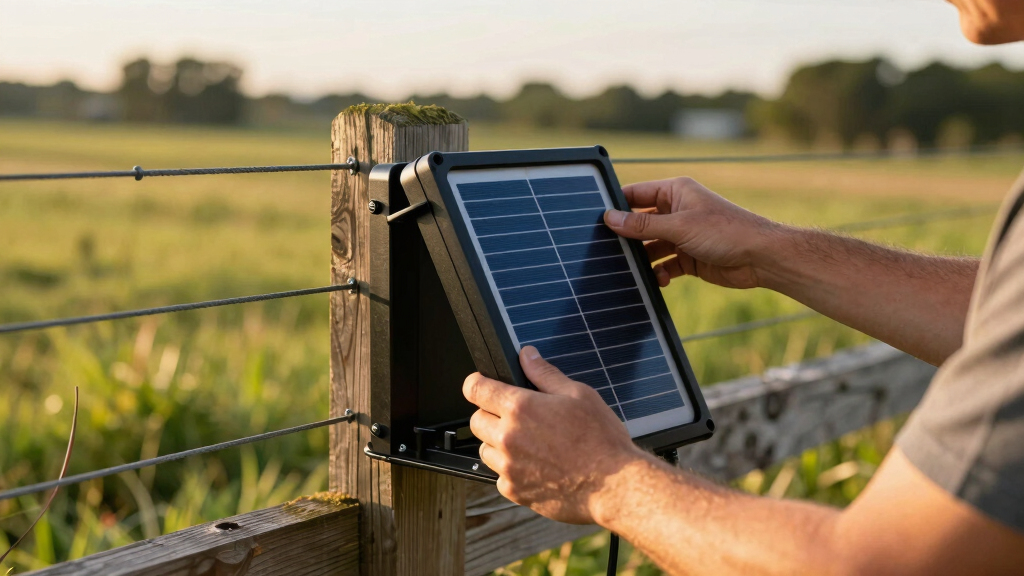

Finding the best electric fence charger solar can be challenging with so many options available. The Gallagher S30 Solar Electric Fence Charger stands out for its reliable performance and ease of use, making it a top overall choice. The Solar Electric Fence Charger – 0.18J, 10 Miles offers great value for smaller farms, while the S1000 1 Joule Solar Fence Charger is ideal for larger properties needing extended range. Buyers face tradeoffs between power, range, and price, which can make choosing the right charger confusing. Continue reading for a detailed breakdown of each option to find the best fit for your needs.

Get business pricing on tools and workshop supplies
- Business-only prices and quantity discounts
- Tax-exempt purchasing
- Multiple users, one account, clear invoices
Complete the kit


Key Takeaways
- Higher joule ratings generally provide more power but come at a higher cost and heavier units.
- Range varies significantly; select based on your property size and type of livestock or garden area.
- Solar panel quality impacts performance and reliability, especially in shaded or cloudy conditions.
- Features like short circuit alarms and battery backup add safety and convenience for ongoing use.
- Budget options can be effective for small or temporary setups, but larger farms benefit from more powerful, feature-rich chargers.
| Gallagher S30 Solar Electric Fence Charger | 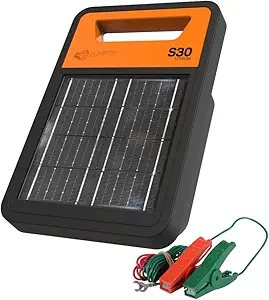 | Best Overall for Reliable Livestock Containment | Range: 4 miles typical, 20 miles ideal | Power Source: Solar with lithium battery | Dimensions: 8″ × 6″ × 11″ | VIEW LATEST PRICE | See Our Full Breakdown |
| Solar Electric Fence Charger – 0.18J, 10 Miles, 9300V, Rechargeable Solar Panel |  | Best Value for Reliable, Long-Range Protection | Energy Output: 0.18 Joules | Coverage Area: 10 miles | Maximum Voltage: 9300V | VIEW LATEST PRICE | See Our Full Breakdown |
| 24-Hour Solar Electric Fence Charger, 0.18J, 10-Mile for Livestock |  | Best for Continuous 24/7 Livestock Containment | Maximum Voltage: 10200 volts | Coverage: 10 miles | Charging Method: Solar and AC | VIEW LATEST PRICE | See Our Full Breakdown |
| Solar Electric Fence Charger LD02, 1.2J with Short Circuit Alarm |  | Best for Large Livestock with Safety Features | Energy: 1.2J | Pulse Voltage: 7–11kV | Application: Large livestock | VIEW LATEST PRICE | See Our Full Breakdown |
| Zareba Solar Electric Fence Charger, 5 Mile Range Low Impedance Energizer |  | Best for Remote, Low-Range Livestock Containment | Range: 5 miles | Power Source: Solar | Impedance: Low impedance | VIEW LATEST PRICE | See Our Full Breakdown |
| 30 Miles Solar Electric Fence Charger, 0.3-1.5J for Livestock Farm |  | Best Overall for Large Livestock Operations | Output Voltage: 6KV/8KV/10KV/12KV | Energy Output: 0.3/0.8/1.1/1.5 joules | Fencing Distance: up to 30 miles | VIEW LATEST PRICE | See Our Full Breakdown |
| 20 Miles Solar Electric Fence Charger with Short Circuit Alarm, 0.32J | 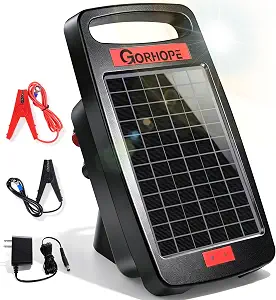 | Best for Reliable Security with Alarm Features | Output Voltage: 10,020 volts | Output Energy: 0.32 joules | Battery Life: Up to 14 days | VIEW LATEST PRICE | See Our Full Breakdown |
| S1000 1 Joule Solar Fence Charger, 40 Miles Solar Electric Fence for Livestock |  | Best for Power and Distance in Large Farms | Output: 1 Joule | Range: 40 Miles | Battery Life: Up to 8 days without sunshine | VIEW LATEST PRICE | See Our Full Breakdown |
| Gallagher S20 Solar Electric Fence Charger |  | Best for Small Livestock and Pet Enclosures | Maximum Voltage: 24.5 volts | Joule: 0.2 Joule | Fence Range: up to 2 miles | VIEW LATEST PRICE | See Our Full Breakdown |
| ANDMON S600 Solar Electric Fence Charger – 35 Mile Range, 0.65 Joules, Suitable for Livestock and Garden Protection | 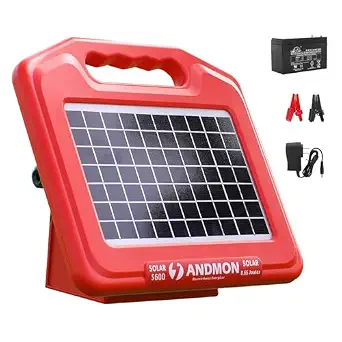 | Best for Versatile Outdoor Use and Backup Power | VIEW LATEST PRICE | See Our Full Breakdown |
More Details on Our Top Picks
Gallagher S30 Solar Electric Fence Charger
The Gallagher S30 Solar Electric Fence Charger stands out for its dependable performance over a 4-mile range, making it a versatile choice for small to medium farms. Compared to the Zareba 5 Mile Solar Charger, it offers a longer-lasting lithium battery and a weather-resistant design, though it’s slightly bulkier and requires direct sunlight for optimal operation. Its portability and inclusion of installation support make it ideal for remote or varied terrains. However, its limited capacity to connect only 2–3 fence sections might restrict larger setups. Tradeoffs include its dependency on sunlight and a moderate range, which may not suit very large properties. Best for farmers needing reliable, portable power for livestock and predator control in varied weather conditions.
Pros:- Reliable power for livestock and predator control
- Weather-resistant, portable design
- Long-lasting solar and lithium battery system
- Includes installation leads and support
Cons:- Limited to 2–3 fence sections connected simultaneously
- Requires consistent sunlight for peak performance
Best for: Small to medium-sized livestock farms requiring dependable, weather-resistant fencing with portable setup.
Not ideal for: Large farms needing extensive fencing over many miles, as its maximum range and connection capacity are limited.
- Range:4 miles typical, 20 miles ideal
- Power Source:Solar with lithium battery
- Dimensions:8″ × 6″ × 11″
- Warranty:3 years
Our verdict“This charger is best suited for small to medium farms seeking a dependable, portable fencing solution with reliable weather resistance.”
Solar Electric Fence Charger – 0.18J, 10 Miles, 9300V, Rechargeable Solar Panel
This solar fence charger delivers a consistent 9300V pulse over a 10-mile area, making it a strong contender for larger properties. Unlike the Gallagher S30, it offers a higher voltage and a waterproof design, suitable for more exposed environments. Its 5W solar panel and backup battery provide a reliable charge, but it relies heavily on sunny weather—limiting its performance during overcast days. Its portability and ease of installation make it a flexible choice for farms, gardens, or pet enclosures. However, its coverage area might be insufficient for very large farms, and maintenance could increase with extreme weather exposure. Tradeoffs include dependence on sunlight and moderate coverage, but it provides excellent value for medium to large properties.
Pros:- Reliable continuous operation with solar recharge
- Weatherproof, suitable for harsh environments
- Good coverage area for medium-sized farms
- Easy to install and portable
Cons:- Requires sunny days for optimal charging
- Limited coverage for very large properties
Best for: Farmers needing a cost-effective, weatherproof solution with a substantial coverage area for livestock containment.
Not ideal for: Large-scale farms requiring over 10 miles of fencing or properties with frequent heavy cloud cover, as performance may decline.
- Energy Output:0.18 Joules
- Coverage Area:10 miles
- Maximum Voltage:9300V
- Power:5W
- Recharge Time:6 sunny days
- Backup Time:up to 25 days
Our verdict“This charger offers excellent value for medium-sized farms needing dependable, weatherproof fencing with substantial coverage.”
24-Hour Solar Electric Fence Charger, 0.18J, 10-Mile for Livestock
The 24-Hour Solar Electric Fence Charger provides consistent 24/7 operation, combining solar and AC charging for uninterrupted fencing over 10 miles. Compared to the Gallagher S30, it offers dual charging options, which enhances reliability in remote areas. Its weather-resistant ABS construction and portability make it suitable for farms that need constant fencing without interruptions. However, performance hinges on proper grounding and sunlight, and initial battery charging is necessary before use. Its dual charging method is a plus, but in cloudy or shaded areas, backup power might be insufficient. Tradeoffs include dependence on sunlight and the need for correct installation to avoid short circuits, but it excels in consistent, long-term outdoor use.
Pros:- Reliable 24/7 operation with dual charging
- Weather-resistant and portable
- Effective for long-distance containment
- Easy to install in various outdoor settings
Cons:- Dependent on sunlight and proper grounding
- Initial battery charge required before first use
Best for: Farmers requiring continuous, reliable livestock fencing with flexibility for solar and electric charging.
Not ideal for: Locations frequently shaded or with irregular sunlight, where dual solar and AC charging may not suffice for uninterrupted operation.
- Maximum Voltage:10200 volts
- Coverage:10 miles
- Charging Method:Solar and AC
- Waterproof:Yes
- Dimensions:6.6″L x 4.3″W x 8.2″H
- Weight:1.44 kg
Our verdict“This model is ideal for farms needing consistent fencing with flexible power options in outdoor conditions.”
Solar Electric Fence Charger LD02, 1.2J with Short Circuit Alarm
The LD02 Solar Electric Fence Charger delivers a robust 1.2J pulse, making it highly effective for large animals like cattle, horses, and goats. Its stable pulse output ensures animals receive consistent shocks, similar to the S1000 1 Joule Solar Fence Charger, but with more power directed at larger animals. The integrated short circuit alarm adds an extra layer of safety, alerting users to wiring issues. The main tradeoff is its dependence on sunlight; shaded areas or inconsistent sun exposure can diminish its effectiveness. Its high energy output is excellent for demanding fencing needs, but in less sunny environments, its performance may drop. Tradeoffs include reliance on optimal sunlight and the need for proper installation to prevent electrical faults.
Pros:- Powerful 1.2J pulse for large animals
- Stable pulse for reliable fencing
- Includes short circuit alarm for safety
- Designed for demanding fencing needs
Cons:- Requires ample sunlight for best performance
- Less effective in shaded areas
Best for: Large livestock owners needing high-powered, safe fencing with safety alerts in sunny outdoor areas.
Not ideal for: Shaded farms or properties with limited direct sunlight, where lower power models might suffice.
- Energy:1.2J
- Pulse Voltage:7–11kV
- Application:Large livestock
Our verdict“This charger suits large farm setups needing high energy output combined with safety features in sunny outdoor environments.”
Zareba Solar Electric Fence Charger, 5 Mile Range Low Impedance Energizer
The Zareba Solar Electric Fence Charger energizes up to 5 miles of fencing, making it an excellent choice for remote or smaller properties without grid power. Its low impedance technology enhances efficiency, especially during cloudy weather, outpacing higher impedance models like the Gallagher S30 in low-light conditions. Its versatile mounting options and lightning protection add to its durability, but the limited range makes it less suitable for larger farms. Additionally, its performance can be affected by prolonged overcast weather, which might require supplementary power sources. Tradeoffs include limited coverage and dependence on sunlight, but it excels in situations where a compact, reliable fencing solution is needed in remote locations.
Pros:- Solar-powered, ideal for remote locations
- Versatile mounting with 360-degree rotation
- Extended operation during cloudy weather
- Low impedance for efficiency
Cons:- Performance depends on sunlight conditions
- Limited to 5 miles range in ideal conditions
Best for: Small farms or remote properties needing a reliable, low-range fencing setup with good weather tolerance.
Not ideal for: Large farms requiring extensive fencing beyond 5 miles, as its maximum range is limited.
- Range:5 miles
- Power Source:Solar
- Impedance:Low impedance
- Output Joules:0.15
- Operation Time:Up to 2 weeks without sunlight
Our verdict“This energizer provides dependable fencing for small or remote sites with limited but reliable coverage and good low-light performance.”
30 Miles Solar Electric Fence Charger, 0.3-1.5J for Livestock Farm
This solar fence charger stands out for its adjustable voltage and energy levels, making it highly versatile for farms needing reliable containment over long distances. Compared with the Gallagher S20, it offers a higher maximum energy output, which is better suited for larger or more challenging fencing setups. However, the complexity of installation might be a hurdle for smaller or less experienced users. Its ability to cover up to 30 miles while providing customizable energy settings makes it a top choice for serious livestock farms seeking both power and flexibility.
Pros:- Adjustable voltage and energy levels for tailored performance
- Effective for livestock containment and security
- Eco-friendly solar-powered operation
Cons:- Requires sunlight for peak performance
- Installation can be complex for beginners
Best for: Large livestock farms requiring extensive fencing and adjustable power settings
Not ideal for: Small hobby farms or backyard enclosures where simpler, plug-in options suffice
- Output Voltage:6KV/8KV/10KV/12KV
- Energy Output:0.3/0.8/1.1/1.5 joules
- Fencing Distance:up to 30 miles
Our verdict“This charger is best for large-scale farms needing customizable, high-power fencing over extensive distances.”
20 Miles Solar Electric Fence Charger with Short Circuit Alarm, 0.32J
This model offers a reliable power source with a built-in short-circuit alarm, making it ideal for ensuring continuous livestock protection. Unlike the S1000 which energizes more miles, this unit prioritizes safety features with its alarm system, helping users quickly identify issues. It’s well-suited for users who need a straightforward, weatherproof solution and value early problem detection, though its fencing range is limited to 20 miles. Its durability and alarm system make it a smart choice for farms in variable weather conditions.
Pros:- Built-in short-circuit alarm for quick issue detection
- Long-lasting battery for up to 14 days of operation
- Waterproof and dustproof tempered glass surface
Cons:- Limited to 20 miles of fencing coverage
- No included power plug, relies solely on solar energy
Best for: Livestock farmers prioritizing safety and easy troubleshooting in moderate fencing distances
Not ideal for: Large farms needing over 20 miles of fencing or those seeking maximum power without alarm features
- Output Voltage:10,020 volts
- Output Energy:0.32 joules
- Battery Life:Up to 14 days
Our verdict“Ideal for livestock setups that need a dependable, alarm-equipped charger within a moderate fencing range.”
S1000 1 Joule Solar Fence Charger, 40 Miles Solar Electric Fence for Livestock
This charger delivers a robust 1 joule of energy, capable of energizing up to 40 miles of fencing, making it ideal for large farms needing extensive coverage. When compared to the Gallagher S20, it offers a significantly higher fencing range and power output, though it is less portable and requires a more involved installation process. Its durability and weather resistance make it dependable in harsh conditions, but its size and the need for mounting on a steel rod could be a drawback for small or portable setups.
Pros:- Powerful output suitable for large fencing needs
- Portable and durable for outdoor use
- Reliable in harsh weather conditions
Cons:- Requires mounting on a steel rod for installation
- More complex setup compared to smaller chargers
Best for: Large farms and operations needing extensive fencing with reliable power
Not ideal for: Small-scale or portable setups where ease of mobility is a priority
- Output:1 Joule
- Range:40 Miles
- Battery Life:Up to 8 days without sunshine
Our verdict“Best suited for large-scale farms that require high power and extensive fencing coverage.”
Gallagher S20 Solar Electric Fence Charger
The Gallagher S20 excels with its lithium battery technology and smart pulse modulation, making it ideal for small to medium fencing distances, such as poultry or pet enclosures. Compared to the S1000, it offers a lower maximum voltage but is more portable and easier to install, especially for those needing a lightweight, off-grid solution. Its limited fence range of 2 miles means it’s not suited for large farms but provides consistent performance for smaller setups. Its higher initial cost is offset by its efficiency and long-term reliability.
Pros:- Efficient lithium battery and solar panel for reliable operation
- Lightweight with an integrated carry handle
- Smart energy control adapts pulse based on conditions
Cons:- Limited to 2 miles of fencing
- Higher upfront cost compared to basic models
Best for: Pet owners and small farmers needing efficient, portable fencing over short distances
Not ideal for: Large farms requiring extensive fencing or high-energy output
- Maximum Voltage:24.5 volts
- Joule:0.2 Joule
- Fence Range:up to 2 miles
Our verdict“Designed for small-scale fencing needs where portability and efficiency matter most.”
ANDMON S600 Solar Electric Fence Charger – 35 Mile Range, 0.65 Joules, Suitable for Livestock and Garden Protection
The ANDMON S600 delivers a solid 0.53 joules, energizing up to 35 miles of fencing, with the added benefit of a backup DC power option. Compared with the 30 Miles Solar Charger, it offers more flexibility with an optional DC input, making it ideal for locations with inconsistent sunlight. Its weatherproof and UV-resistant design makes it reliable across seasons, but the manual battery connection before use can be inconvenient. Its balance of power and versatility makes it a good pick for varied outdoor environments.
Pros:- Powerful enough to energize 35 miles of fence
- Eco-friendly solar with backup DC charging
- Weather-resistant and durable
Cons:- Battery connection requires manual setup
- Power output varies with sunlight
Best for: Farmers and gardeners needing flexible, weather-resistant fencing with backup power options
Not ideal for: Farms requiring more than 35 miles of fencing or minimal setup effort
Our verdict“Perfect for outdoor spaces needing adaptable fencing with reliable backup power in diverse weather conditions.”

How We Picked
I evaluated these solar electric fence chargers based on performance, durability, ease of installation, and value for money. Each product was assessed for its ability to reliably deliver a strong shock over a specified range, even in varying sunlight conditions. Usability features, like alarms and battery backups, were also considered because they enhance safety and convenience. The ranking reflects a balance between power, range, build quality, and price, aiming to recommend options for different types of users—from small hobby farms to large agricultural operations.Factors to Consider When Choosing Best Electric Fence Charger Solar
Choosing the best electric fence charger solar involves balancing power, range, durability, and price. Understanding these factors helps prevent common mistakes like overbuying for small properties or underestimating power needs for larger areas. A well-chosen charger will keep your animals safe and your property protected without unnecessary expense or hassle. Here are key considerations to guide your decision:Power and Joule Rating
The joule rating indicates the energy delivered per pulse, directly affecting how well the shock will deter animals. Higher joules typically mean a stronger, more effective charge, especially for larger herds or challenging terrain. However, more power often results in a larger, heavier unit and higher cost. For small farms or gardens, a lower joule model can suffice, but larger properties with tougher animals may require at least 0.5J or more for reliable performance.
Range and Coverage Area
The effective range determines how many miles of fencing can be energized by a single charger. Accurately estimating your property’s size is critical; selecting a charger with too little range can lead to weak spots, while overestimating can mean unnecessary expense. Keep in mind that actual coverage depends on fence impedance, vegetation, and installation quality. For large farms, a charger with a higher range—like 30 miles—ensures comprehensive coverage without multiple units.
Solar Panel Quality and Battery Life
Reliable solar panels are essential for consistent performance, especially in less sunny climates. Look for models with durable, high-efficiency panels that can recharge quickly and withstand weather conditions. Battery life also matters—longer-lasting batteries reduce maintenance and ensure the charger continues to operate during cloudy days or at night. Cheaper panels or batteries may save money upfront but can lead to frequent recharging problems or downtime.
Additional Safety and Convenience Features
Features like short circuit alarms, battery indicators, and automatic shutoff enhance safety and ease of use. Alarms alert you to wiring issues or fence faults immediately, preventing livestock escapes or property damage. Automated features reduce the need for manual checks, saving time and reducing frustration. However, these extras often come at a higher price, so consider whether they match your level of experience and the complexity of your setup.
Price and Overall Value
While budget models can be tempting, they may lack durability, power, or features needed for larger or more demanding setups. Conversely, premium chargers offer greater range, power, and safety features but come with a higher price tag. Aim for a balanced choice that meets your specific needs—spending more on a robust, reliable unit can save money and headaches in the long run, particularly for serious farmers or large properties.
Frequently Asked Questions
How do I know which joule rating I need for my property?
The joule rating depends on your property’s size, fence impedance, and the type of animals you need to deter. For small gardens or hobby farms, a charger with 0.1 to 0.2J may be sufficient. Larger farms or tougher animals might require at least 0.5J or more to ensure the shock penetrates vegetation and fence resistance. It’s better to choose a slightly higher rating than you think you need, as it provides a buffer for unexpected obstacles or growth that can increase impedance over time.
Can solar chargers work in shaded areas?
Yes, but their performance can be affected. High-quality solar panels with good efficiency can still operate in partial shade, but their recharging rate will slow down, potentially reducing the charger’s effectiveness during cloudy days or shaded fencing sections. If your property has significant shading, look for models with larger or more efficient panels, or consider additional backup power options to maintain fence voltage over time.
How often should I check my solar fence charger?
Regular inspections—at least once a month—are recommended to ensure it’s functioning correctly. Check the voltage output with a fence tester, verify the solar panel is clean and unobstructed, and inspect wiring for damage or corrosion. If your charger has a battery indicator or alarm, pay close attention to these signals. Routine maintenance helps prevent failures that could compromise animal safety or allow escapes.
Is it worth paying more for a charger with safety features?
Investing in safety features like short circuit alarms and automatic shutoff can be worthwhile, especially if you have livestock that might damage the fence or if you’re less experienced with electric fencing. These features help prevent damage, improve security, and reduce downtime. While they add to the initial cost, the convenience and peace of mind they provide often justify the expense for most users.
What’s the best choice for someone new to electric fencing?
For beginners, a model with straightforward installation, clear instructions, and safety features is ideal. The Gallagher S20 Solar Electric Fence Charger, for example, offers simplicity and reliability without overwhelming features. Starting with a smaller, less powerful unit that covers your immediate needs allows you to learn and expand later if necessary. Prioritize ease of use and safety to build confidence in maintaining your fencing system.
Conclusion
For those with small gardens or hobby farms, a budget-friendly, lower-powered charger like the Zareba Solar Electric Fence Charger provides reliable coverage without overspending. Larger operations or serious livestock farmers should consider high-range models like the Gallagher S30 or S1000, which deliver dependable power over extended distances. Beginners will benefit from straightforward, safety-focused options such as the Gallagher S20, while experienced users needing maximum range and features should look at premium models like the ANDMON S600. Matching your property size, animal type, and budget ensures you pick the right solar electric fence charger for your needs in 2026.