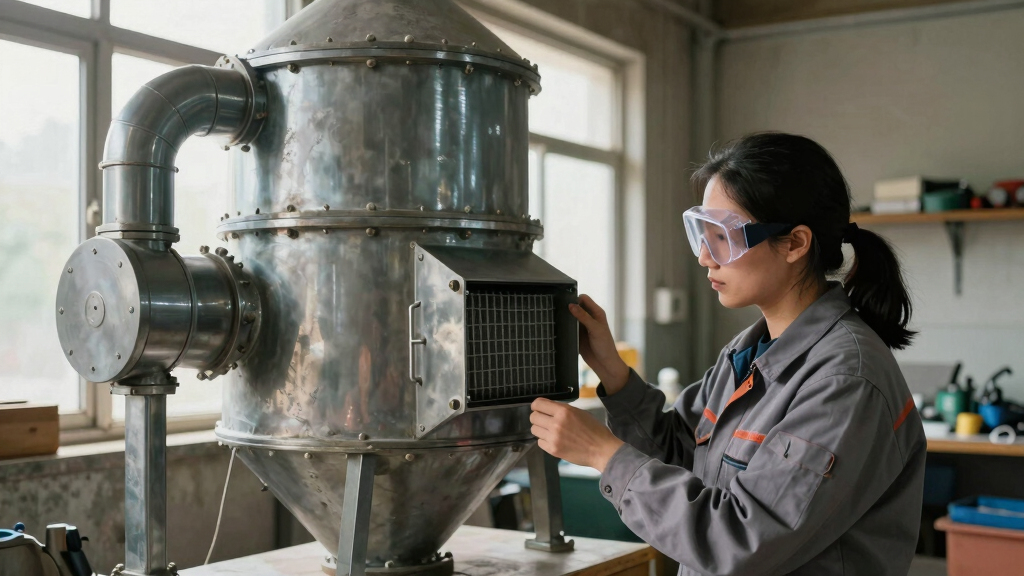

Searching for the best industrial dust collector can be overwhelming given the range of options and features available. The top pick, the JET Cyclone Dust Collector, 2-Micron Filter, 3 HP, offers a powerful combination of high capacity and filtration suited for demanding workshops. The Vevor Dust Collector stands out for its impressive airflow at a competitive price, making it a great choice for larger spaces. Meanwhile, the WEN DC1300 balances performance with portability, ideal for versatile setups. Buyers face tradeoffs between power, capacity, filtration precision, and budget, so continue reading for the full breakdown to find the best fit for your workspace.
Complete the kit


Get business pricing on tools and workshop supplies
- Business-only prices and quantity discounts
- Tax-exempt purchasing
- Multiple users, one account, clear invoices
Key Takeaways
- High-capacity collectors like the VEVOR deliver exceptional airflow suitable for large workshops, but often come at a higher price point.
- Filtration quality, especially at 2-micron or better, is critical to ensure cleaner air and compliance with safety standards.
- Power and motor size directly impact dust collection efficiency, with 2-3 HP models handling more demanding dust loads.
- Portability features, such as mobile bases, are important for flexibility but may limit capacity or increase cost.
- Pricing varies widely, with premium models offering better filtration and durability, while more affordable options suit smaller or less intensive workshops.
| WEN Woodworking Dust Collector with 7.4-Amp Motor and 15-Gallon Bag |  | Best for Small Woodworking Shops | Motor Power: 7.4 amps | Impeller Size: 9 inches | Air Flow: 600 CFM | VIEW LATEST PRICE | See Our Full Breakdown |
| Delta 1-HP Dust Collector |  | Best for Moderate Workshop Dust Needs | Motor Power: 1 HP | Voltage: 120V/240V | Impeller Diameter: 9-1/2 inches | VIEW LATEST PRICE | See Our Full Breakdown |
| WEN DC1300 1,300 CFM 14-Amp 5-Micron Woodworking Dust Collector with 50-Gallon Collection Bag and Mobile Base |  | Best for Large-Scale Woodworking Operations | Airflow: 1300 CFM | Motor Power: 14 Amps | Collection Capacity: 50 gallons | VIEW LATEST PRICE | See Our Full Breakdown |
| JET Cyclone Dust Collector, 2-Micron Filter, 2 HP, 230V 1Ph |  | Best for Precision Filtration and Fine Dust Capture | Power: 2 HP | Voltage: 230V | Filter Size: 2 microns | VIEW LATEST PRICE | See Our Full Breakdown |
| JET Cyclone Dust Collector, 2-Micron Filter, 3 HP, 230V 1Ph |  | Best for Heavy-Duty Industrial Dust Management | Motor Power: 3 HP | Voltage: 230V | Collection Capacity: 66 gallons | VIEW LATEST PRICE | See Our Full Breakdown |
| WEN Woodworking Dust Collector with 5.7-Amp Motor and 12-Gallon Bag |  | Best Compact and Portable Unit | Motor Power: 5.7 amps | Airflow: 660 CFM | Impeller Size: 6 inches | VIEW LATEST PRICE | See Our Full Breakdown |
| JET Cyclone Dust Collector, 2-Micron Filter, 1-1/2 HP, 115V |  | Best for Fine Dust and Indoor Shop Use | Power: 1.5 HP | Voltage: 115V | Amperage: 20A | VIEW LATEST PRICE | See Our Full Breakdown |
| Grizzly Industrial G1028Z2 1-1/2 HP Portable Dust Collector |  | Best for High Capacity in Medium to Large Workshops | Motor Power: 1-1/2 HP | Voltage: 120V/240V | Motor RPM: 3450 RPM | VIEW LATEST PRICE | See Our Full Breakdown |
| VEVOR Dust Collector, 1550 CFM, 2.5 Micron Vortex Cone, 3.0HP, 220V |  | Best for High Airflow and Fine Dust Filtration | Airflow: 1550 CFM | Filtration: 2.5 microns | Motor Power: 3.0 HP | VIEW LATEST PRICE | See Our Full Breakdown |
| industrial dust collector | Motor Power | Voltage |
|---|---|---|
| WEN Woodworking Dust Collector | 7.4 amps | — |
| Delta 1-HP Dust Collector | 1 HP | 120V/240V |
| WEN DC1300 1,300 CFM 14-Amp 5- | 14 Amps | — |
| JET Cyclone Dust Collector | — | 230V |
| JET Cyclone Dust Collector | 3 HP | 230V |
| WEN Woodworking Dust Collector | 5.7 amps | — |
| JET Cyclone Dust Collector | — | 115V |
| Grizzly Industrial G1028Z2 1-1 | 1-1/2 HP | 120V/240V |
| VEVOR Dust Collector | 3.0 HP | 220V |
More Details on Our Top Picks
WEN Woodworking Dust Collector with 7.4-Amp Motor and 15-Gallon Bag
This dust collector stands out for its powerful 7.4-amp motor and a high airflow of 600 CFM, making it well-suited for small to medium woodworking operations. Compared to the WEN 12-Gallon model, it offers a larger collection capacity and better mobility with swivel casters, but it requires wall mounting for optimal use, which might be a challenge for some users. Its compact size helps save workshop space, yet its limited dust collection scope means it’s best for woodworking dust, not general shop debris. The 15-gallon bag reduces frequent emptying, though its weight and need for wall mounting are potential drawbacks.
Pros:- High airflow of 600 CFM for effective dust collection
- Large 15-gallon collection bag reduces emptying frequency
- Mobility with swivel casters and optional wall mount
Cons:- Requires wall mounting for best performance
- Limited to woodworking dust, not suitable for other debris
Best for: Woodworkers with small to medium shops needing a compact, mobile dust collector for woodworking dust only.
Not ideal for: Larger commercial workshops or those needing to capture fine, non-wood dust, due to limited capacity and filtration scope.
- Motor Power:7.4 amps
- Impeller Size:9 inches
- Air Flow:600 CFM
- Dust Port:4 inches
- Collection Capacity:15 gallons
- Size:43.3 x 17.7 x 20.1 inches
- Weight:41.1 pounds
Our verdict“This model is ideal for small woodworking setups needing reliable, mobile dust collection without complex installation.”
Delta 1-HP Dust Collector
The Delta 1-HP Dust Collector offers a solid balance of power and compactness, with 750 CFM airflow and a 2-micron filtration system. It outperforms smaller portable units like the WEN 7.4-Amp model in airflow and filtration, making it suitable for workshops with multiple tools producing moderate dust. Its design includes large wheels and swivel casters, which facilitate movement, but its noise level can be high, and its filtration isn’t fine enough for very fine dust. This makes it a dependable choice for those who need a step up from entry-level models but don’t require heavy commercial-grade equipment.
Pros:- High airflow of 750 CFM for effective dust capture
- Includes multiple filtration and collection bags
- Mobility features for easy placement
Cons:- Limited to moderate dust levels, not heavy industrial use
- Noise might be excessive during operation
Best for: Workshop owners needing efficient dust collection for multiple handheld tools and moderate debris, without requiring extensive filtration.
Not ideal for: Heavy-duty industrial environments or workshops with very fine dust requiring 1-micron filtration, due to its 2-micron bags.
- Motor Power:1 HP
- Voltage:120V/240V
- Impeller Diameter:9-1/2 inches
- Flow Rate:750 CFM
- Filter Bag Area:10 sq ft
- Dimensions:32 x 17 x 56 inches
- Weight:50.9 pounds
Our verdict“Best suited for small to medium workshops that need reliable dust collection across multiple tools without overextending on filtration needs.”
WEN DC1300 1,300 CFM 14-Amp 5-Micron Woodworking Dust Collector with 50-Gallon Collection Bag and Mobile Base
This WEN model excels with its powerful 14-amp motor and substantial 50-gallon collection capacity, making it a strong choice for larger woodworking setups. It surpasses the Delta 1-HP model in airflow, offering up to 1,300 CFM, and its dual 4-inch inlets support multiple tools simultaneously. However, its weight and size mean it’s less suited for smaller shops with limited space or for those who need portability. Assembly and setup are required, and noise levels might be high, but for those with space and a need for high capacity, this unit delivers consistent performance.
Pros:- High airflow of 1,300 CFM for comprehensive dust collection
- Large 50-gallon bag reduces frequent emptying
- Dual inlets support multiple tools
Cons:- Heavy and bulky, challenging to move
Best for: Larger woodworking shops or commercial setups requiring high airflow and large debris capacity.
Not ideal for: Small workshops or users with space constraints, due to its bulk and weight.
- Airflow:1300 CFM
- Motor Power:14 Amps
- Collection Capacity:50 gallons
- Impeller Speed:3450 RPM
- Inlet Size:4 inches
- Impeller Material:Steel
- Impeller Size:10 inches
Our verdict“This pick makes the most sense for large shops needing high-capacity dust collection with minimal emptying interruptions.”
JET Cyclone Dust Collector, 2-Micron Filter, 2 HP, 230V 1Ph
The JET Cyclone Dust Collector stands out for its dual-stage separation system and 2-micron pleated filter, making it ideal for capturing very fine dust particles. Compared with the WEN DC1300, it offers enhanced filtration efficiency and a 30-gallon debris drum, plus a remote control for added convenience. Its 2 HP motor supplies robust airflow, but the requirement for a 230V power supply limits placement options, and the heavier debris drum can be cumbersome to empty, especially in a busy workshop. This makes it a strong choice for shops prioritizing high filtration quality and dust control precision.
Pros:- Two-stage cyclone separation increases airflow and efficiency
- Pleated filter captures fine dust particles at 2 microns
- Remote control and quick-clean filter system
Cons:- Requires 230V power supply
- Heavy debris drum can be difficult to empty
Best for: Workshops needing fine dust filtration and efficient separation, especially those handling fine woods or composites.
Not ideal for: Smaller setups or DIY enthusiasts who don’t have 230V power available or don’t require high filtration efficiency.
- Power:2 HP
- Voltage:230V
- Filter Size:2 microns
- Debris Capacity:30 gallons
Our verdict“Ideal for professional shops requiring superior filtration and finer dust capture, with some setup considerations.”
JET Cyclone Dust Collector, 2-Micron Filter, 3 HP, 230V 1Ph
The JET 3 HP Cyclone Dust Collector offers the highest power in this lineup, with a 3 HP motor and a 66-gallon collection drum, designed for demanding industrial environments. Its 99% filtration efficiency of 2-micron particles and 86% of 1-micron particles ensure almost complete dust removal, outperforming smaller units like the WEN DC1300. The remote RF control adds convenience, while the large capacity minimizes emptying frequency. However, its weight of 268 pounds and 230V power requirement make it less suited for smaller or less equipped workshops. This model is built for those who need maximum filtration and capacity, accepting the higher cost and installation effort.
Pros:- High filtration efficiency capturing 99% of 2-micron particles
- Large 66-gallon capacity reduces frequent emptying
- Remote RF control for easy operation
Cons:- Very heavy, requiring assistance for setup
- Requires 230V power supply, limiting placement options
Best for: Heavy-duty industrial workshops or large commercial spaces with high dust volumes and strict filtration requirements.
Not ideal for: Small shops or DIY users with limited space or electrical capacity, due to its size and power demands.
- Motor Power:3 HP
- Voltage:230V
- Collection Capacity:66 gallons
- Flow Rate:1240 CFM
- Filter Efficiency:99% of 2-micron particles
- Remote Control:RF remote up to 50 feet
Our verdict“This unit is perfect for industrial-scale dust management where capacity and filtration are critical, despite higher setup complexity.”
WEN Woodworking Dust Collector with 5.7-Amp Motor and 12-Gallon Bag
This WEN model stands out for its compact size and portability, making it ideal for small workshops or DIY setups where space is limited. Its 5.7-amp motor provides a solid airflow of 660 CFM, which is sufficient for woodworking tasks but falls behind larger units like the VEVOR Dust Collector in raw capacity. The large 12-gallon bag and lockable swivel casters enhance convenience, yet its small footprint can limit dust collection capacity over prolonged use. Compared to bigger models, it requires more frequent emptying and may struggle with continuous heavy-duty dust loads. This makes it a good choice for hobbyists or small shop owners who prioritize mobility and ease of setup, but less suitable for high-volume production environments.
Pros:- Compact and lightweight for easy transport
- Includes a large 12-gallon collection bag for convenience
- Lockable swivel casters for mobility and stability
- Optional wall mount offers flexible placement
Cons:- Limited capacity for continuous or large-volume use
- Requires assembly and setup
- No noise level indication—potential for noise issues
Best for: Small woodworking shops or hobbyists needing a portable, space-saving dust collector
Not ideal for: Large commercial workshops that demand high capacity and sustained airflow
- Motor Power:5.7 amps
- Airflow:660 CFM
- Impeller Size:6 inches
- Dust Port:4 inches
- Collection Capacity:12 gallons
- Dimensions:34.25 x 13 x 14.2 inches
- Weight:17 pounds
- Features:Lockable swivel casters, optional wall mount, 2-year warranty
Our verdict“This pick makes the most sense for small workshops or DIY users prioritizing portability over high capacity.”
JET Cyclone Dust Collector, 2-Micron Filter, 1-1/2 HP, 115V
The JET Cyclone Dust Collector excels at capturing fine particles down to 1 micron, making it ideal for workshops where air quality is a priority. Its two-stage separation system with a 20-gallon steel drum delivers consistent performance, especially when compared to the WEN DC1300, which offers similar airflow but lacks the cyclone separation efficiency. The remote control operation and swivel casters improve ease of use, but at 75 dB, it can be quite noisy—something to consider if the workspace is shared or noise-sensitive. While it is designed for indoor use, its power consumption and noise level may be drawbacks for some users. Overall, this model suits those needing high-performance filtration and fine dust control, but not those seeking a quieter or more energy-efficient unit.
Pros:- Effective two-stage cyclone separation for fine dust
- Captures particles as small as 1 micron for cleaner air
- Remote control operation for convenience
- Swivel casters for mobility
Cons:- Relatively loud at 75 dB
- Higher power consumption might increase operating costs
- Limited to indoor use due to noise
Best for: Indoor woodworking shops requiring fine dust filtration and remote operation
Not ideal for: Large, high-volume workshops or environments where noise must be minimized
- Power:1.5 HP
- Voltage:115V
- Amperage:20A
- Capacity:20 gallons
- Filter Type:Canister
- Maximum Suction:1259 feet
- Noise Level:75 dB
- Control Method:Remote Control
Our verdict“Best suited for indoor workshops prioritizing air quality and fine dust filtration, despite noise concerns.”
Grizzly Industrial G1028Z2 1-1/2 HP Portable Dust Collector
The Grizzly G1028Z2 combines a powerful 1-1/2 HP motor with a significant airflow of 1300 CFM, making it ideal for medium to large workshops handling substantial dust loads. Its static pressure of 9 inches supports effective dust extraction even with longer duct runs, setting it apart from smaller units like the WEN 5.7-amp model. The dual 4-inch openings and 6-inch inlet provide versatile connection options, but the size and weight mean it’s less portable and requires dedicated space. While it offers high capacity and strong performance, users should be prepared for the increased noise and the need for adequate space, making it a better fit for more established workshops rather than mobile setups or small spaces.
Pros:- High airflow capacity of 1300 CFM for heavy-duty use
- Strong static pressure of 9 inches supports ducting flexibility
- Dual 4-inch openings for versatile ducting options
- Reliable, powerful motor for continuous operation
Cons:- Requires significant space and dedicated setup
- Less portable due to size and weight
- Potentially noisy during operation
Best for: Workshops needing high airflow capacity with stable, continuous operation
Not ideal for: Limited spaces, mobile setups, or users seeking lightweight, easily transportable units
- Motor Power:1-1/2 HP
- Voltage:120V/240V
- Motor RPM:3450 RPM
- Air Suction Capacity:1300 CFM
- Static Pressure:9 inches
- Inlet Size:6 inches
- Additional Openings:Two 4-inch openings
Our verdict“Ideal for larger workshops that demand high airflow and consistent dust collection, not for small or mobile setups.”
VEVOR Dust Collector, 1550 CFM, 2.5 Micron Vortex Cone, 3.0HP, 220V
The VEVOR Dust Collector offers a substantial 1550 CFM airflow combined with a 2.5-micron filtration system, making it well-suited for serious woodworking environments where both high capacity and fine dust removal are essential. Its large collection bags—two 35-gallon and two 42-gallon—support extended use without frequent emptying, outperforming smaller units like the WEN 12-gallon model. The 3.0 HP motor provides robust power, but the noise level can reach up to 90 dB, which might be disruptive. Its 220V requirement restricts portability for some users, but for those with suitable power supplies, it delivers high efficiency and minimal downtime. This model is best for heavy-duty workshops needing continuous, high-volume dust extraction.
Pros:- Exceptional airflow capacity at 1550 CFM
- Effective 2.5-micron filtration for cleaner air
- Large collection bags reduce downtime
- Powerful 3.0 HP motor for continuous operation
Cons:- Very noisy at up to 90 dB
- Requires 220V power supply, limiting portability
- Heavier and less portable due to size
Best for: Large woodworking shops or professional environments needing high airflow and fine dust control
Not ideal for: Small shops or portable setups where 220V power isn’t available or noise sensitivity is a concern
- Airflow:1550 CFM
- Filtration:2.5 microns
- Motor Power:3.0 HP
- Voltage:220V
- Dust Collection Capacity:Two 35-gallon & Two 42-gallon bags
- Speed:3400 RPM
Our verdict“Best suited for large-scale or professional workshops demanding high airflow and fine dust filtration, with an acceptance of noise and power requirements.”

How We Picked
Our selection process focused on evaluating performance, build quality, filtration efficiency, capacity, and ease of use. We considered the airflow (CFM), motor power, and collection bag size to gauge the dust collector’s ability to handle demanding workloads. Durability and safety features, like cyclone separation and micron filtration, also played key roles. We prioritized options that balance performance with value, ensuring that each product serves a specific workshop size and user level. Products are ranked based on overall reliability, user feedback, and how well they meet the needs of professional and serious hobbyist workshops.
Factors to Consider When Choosing Best Industrial Dust Collector
Choosing the best industrial dust collector involves several key considerations. While high airflow and powerful motors are vital, other factors such as filtration quality, size, portability, and budget can influence your decision. Understanding these elements helps avoid common pitfalls like underestimating your space requirements or overpaying for features you don’t need. Here are the main factors to weigh when selecting a dust collection system:Airflow Capacity (CFM)
CFM, or cubic feet per minute, measures a dust collector’s ability to move air and capture dust. Higher CFM ratings mean more effective dust collection, especially in larger workshops or when running multiple tools simultaneously. Underestimating this capacity can lead to poor dust removal and health issues, while overspending on excessive airflow can be unnecessary for smaller setups. Select a model that matches your workspace size and tool load for optimal performance.
Filtration Efficiency and Micron Rating
Filtration determines how fine the dust particles the system can trap. A 2-micron or better filter is essential for protecting air quality and meeting safety standards. Cheaper filters may clog faster or release fine dust back into the environment, reducing efficacy. Investing in high-quality filters can increase initial costs but provides long-term benefits through better air cleanliness and less maintenance.
Motor Power and Performance
The motor’s horsepower (HP) influences the collector’s ability to handle heavy, persistent dust loads. Models with 2 to 3 HP are suitable for demanding workshops with multiple machines running at once. Lower horsepower units may struggle under continuous use, leading to decreased suction and increased frustration. Consider your workload and choose a motor size that offers reliable, sustained performance.
Size, Portability, and Installation
Size and mobility matter if your workspace is limited or if you need flexibility. Smaller units with caster wheels are easier to move but may sacrifice capacity or airflow. Larger cyclone systems are more permanent fixtures but are often more durable and effective. Think about your workshop layout and whether you prefer a fixed or portable setup to match your workflow.
Budget and Long-Term Value
While cheaper models can save money upfront, they might lack durability or filtration precision, leading to higher maintenance costs or compromised air quality over time. Premium units tend to last longer and provide better filtration but come with higher initial investment. Balance your budget with your long-term needs, prioritizing durability and safety features when possible.
Frequently Asked Questions
How much airflow do I need for my workshop?
The ideal airflow depends on the size of your workspace and the number of tools in use. For small to medium workshops, a collector with at least 800-1200 CFM generally suffices, while larger or commercial setups benefit from 1500 CFM or more. It’s important to match the CFM to your specific needs; too little airflow results in dust buildup, while excessive airflow can be unnecessary and more expensive than needed.
Is a cyclone dust collector worth the extra cost?
Cyclone dust collectors excel at separating dust from air before it reaches the filter, greatly reducing filter clogging and maintenance. They offer better longevity and cleaner air, especially in heavy-duty workshops. The higher initial cost is offset by lower ongoing maintenance and improved air quality, making them a smart investment for serious woodworking shops or commercial environments.
What features should I prioritize for safety?
Look for units with high-quality filters rated at 2 microns or finer, cyclone separation to reduce filter clogging, and secure, durable construction. Proper grounding and explosion-proof features can also be beneficial if working with combustible dust. These safety features help protect your health, extend equipment lifespan, and ensure compliance with safety standards.
Can I use a smaller dust collector for multiple tools?
Using a smaller collector for multiple tools is possible if they are used sequentially and the airflow capacity is adequate. However, simultaneous operation or larger tools require higher CFM ratings to prevent dust escape and maintain air quality. For multiple active tools, investing in a larger, more powerful collector ensures effective dust collection without sacrificing safety or cleanliness.
How often should I replace or clean filters?
Filter maintenance depends on usage and dust load, but a good rule is to inspect filters regularly and replace them when airflow drops significantly or they appear damaged. Many filters can be cleaned and reused if properly maintained, extending their lifespan. Proper maintenance keeps your dust collector operating efficiently, preserves air quality, and prolongs the life of the equipment.
Conclusion
For large, professional workshops or demanding woodworking environments, the JET Cyclone Dust Collector, 3 HP offers unmatched power and filtration, making it the best overall choice. Budget-conscious hobbyists or smaller setups will find the WEN DC1300 provides excellent value with solid performance. If you prioritize ease of use and portability, the Grizzly G1028Z2 stands out as a practical option. For those seeking premium durability and the best filtration, investing in a cyclone system like the Vevor Dust Collector delivers long-term benefits. Tailor your choice based on your workshop size, workload, and safety priorities to get the best fit.