
This checklist is for DIY woodworkers finishing a project who want a clear path from surface preparation to protective topcoat. It brings together the key finishing stages and a pick for each one, so you can plan the work before opening a can or reaching for a sander.

Get business pricing on tools and workshop supplies
- Business-only prices and quantity discounts
- Tax-exempt purchasing
- Multiple users, one account, clear invoices
The sections follow a practical sequence: smooth the surface, repair flaws, prepare the wood, apply stain, then add a finish with a brush. Each slot explains why the step matters, what to check before buying, and where the named pick may fit.
Use the checklist to match products to your wood, project, and application method. Read labels for surface compatibility and directions, and test the full finishing sequence on a scrap or hidden area first. Let each layer dry as directed before moving on.
Random Orbital Sander
A sander helps prepare a broad wood surface before repairs and finishing. The DEWALT 20V MAX XR 5-inch Random Orbital Sander (DCW211B) is the pick for this slot. Before choosing it, check whether its 5-inch sanding format and power setup suit your project and the tools you already use. The product name identifies it as a 20V model; confirm battery and charger compatibility from the product details before relying on what you have. A common mistake is sanding too aggressively or skipping grits, which can leave visible marks under stain. Follow the wood and abrasive maker’s guidance, keep the sander moving, and remove dust between steps. Pay particular attention to edges and corners, where a powered sander can remove material quickly. For shaped details or tight spaces, plan a hand-sanding approach. The goal is an even surface, not simply a smooth feel by touch. Check the surface under good light before moving to filler or conditioner, since finish can make scratches and uneven sanding more noticeable.What to look for:
- Confirm 5-inch abrasive disc availability and fit.
- Check battery and charger compatibility for the 20V model.
- Choose abrasives appropriate to the wood and finish instructions.
- Consider whether the project has tight corners or detailed profiles.
- Look for dust collection details if your workspace needs them.
DEWALT 20V MAX XR 5-inch Random Orbital Sander (DCW211B)

The DEWALT 20V MAX XR 5-inch random orbital sander offers professional-level control, fast material removal, and low vibration for comfortable use. It features variable speed settings, dust collection, and compatibility with DEWALT dust extractors, making it ideal for woodworking and detailed sanding tasks.
Pros:
- High performance with fast material removal
- Low vibration for comfortable extended use
- Effective dust collection system
- Variable speed control for versatile applications
Cons:
- Battery and charger sold separately
- Dust collection system requires compatible dust extractor
- Price not included in the data
Best for: DIYers preparing broad wood surfaces
Not ideal for: Projects dominated by tight details or hand-tool work
Bottom line: Choose this sander when its disc size and battery setup fit your workspace and project.
Wood Filler
Filler can address holes and damaged areas before stain or finish, but the repair needs to suit the wood and the final appearance. The listed pick is Minwax 6-Pack 12 oz High-Performance Two-Part Wood Filler (Model 21600). Its name identifies it as a two-part wood filler; check the package directions for mixing, application, sanding, and the surfaces it supports before buying. A frequent mistake is expecting a filled spot to disappear under stain. Filler can take color differently from surrounding wood, so test the intended stain and finish on a sample with a comparable repair. Also avoid mixing more material than you can apply within the product’s working time, and prepare the area as directed. Confirm that the pack size and quantity make sense for the repairs planned, and store components according to the label. Match the repair to the finish plan: a patch that is acceptable beneath an opaque coating may stand out on a stained surface. Sand only when the instructions allow and take care not to dish the surrounding wood.What to look for:
- Read mixing ratios and working-time directions.
- Confirm the filler is suitable for the wood and repair location.
- Test stain appearance on a sample repair before committing.
- Check sanding and curing instructions on the package.
- Estimate the number and size of repairs before choosing pack quantity.
Minwax 6-Pack 12 oz High-Performance Two-Part Wood Filler (Model 21600)
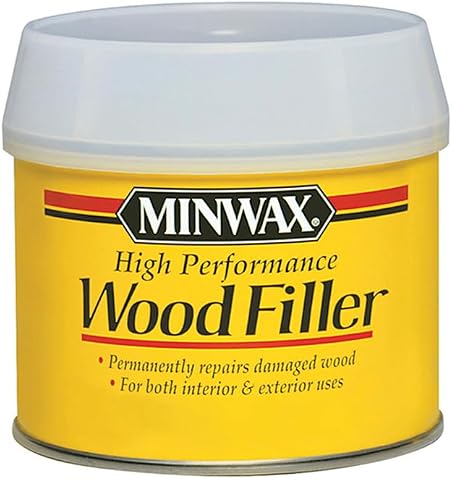
Minwax high-performance wood filler acts as both a filler and an adhesive, bonding strongly to wood and many rigid surfaces such as ceramic, concrete, metal, and fiberglass. After curing it can be drilled, sanded, carved, painted, or stained, making it ideal for repairing split, damaged, or rotted wood.
Pros:
- Strong bond to wood and a wide range of rigid surfaces
- Versatile; can be drilled, sanded, carved, painted, and stained after curing
- Water‑resistant and suitable for both filler and adhesive applications
- Convenient 6‑pack of 12 oz tubes
Cons:
- Requires mixing two parts, which can be less convenient than single‑component fillers
- Off‑white color may need tinting to match certain woods
- Bulk packaging (9 lb total) can be heavy for small projects
Best for: Projects with holes or damaged areas to fill
Not ideal for: Repairs that must blend invisibly under stain without testing
Bottom line: Use this pick when its directions and test results suit the repair and finish.
Pre-Stain Wood Conditioner
A pre-stain product belongs in the checklist only when its directions match the wood and the finish system you plan to use. The supplied pick is Howard Products Feed-N-Wax Wood Polish & Conditioner – Orange, 6 x 16. Its name describes a wood polish and conditioner, so verify its intended use carefully before treating it as a pre-stain conditioner. Check the label for whether it is appropriate before stain and whether it can be used on the project surface. One buying mistake is assuming that any product called a conditioner prepares bare wood for stain. Products intended for polishing or conditioning finished wood may not be designed for that role, and residue can affect later coats. Read both product labels for compatibility, application, and drying guidance; if the purpose is unclear, choose a product explicitly directed for pre-stain use. Test the complete sequence on scrap wood first. Consider the listed six-container format against your actual needs, and avoid applying more than the directions specify. Confirm the sequence before application so the surface is clean and suitable for stain.What to look for:
- Verify the label explicitly supports pre-stain use on bare wood.
- Check compatibility with the planned stain and topcoat.
- Read application, drying, and cleanup directions.
- Test the entire sequence on scrap from the project when possible.
- Confirm the six-container quantity suits your intended use.
Howard Products Feed-N-Wax Wood Polish & Conditioner – Orange, 6 x 16 fl oz

Howard Products Feed‑N‑Wax orange‑scented wood polish is a cream formula that cleans, conditions, and protects wood surfaces in one step. Enriched with natural oils and waxes, it restores shine, nourishes the grain, and leaves furniture and floors smelling fresh.
Pros:
- Fresh orange fragrance leaves wood smelling clean.
- Natural oil and wax blend nourishes and protects wood.
- Cream texture spreads easily without dripping.
- Multi‑pack offers good value for frequent use.
Cons:
- Large six‑bottle pack may be more than needed for small households.
Best for: Shoppers who confirm the label matches their finishing step
Not ideal for: Anyone needing a confirmed bare-wood pre-stain product without checking
Bottom line: Treat this as a pre-stain pick only if its label confirms that role and compatibility.
Wood Stain
Stain adds color, so this choice has a strong effect on the finished project’s appearance. The named pick is Advanced Wood Sealant and Stain, 5 Gallons, Dark Walnut. Check the product label for the wood types and surfaces it supports, along with application and drying directions. The product name includes both sealant and stain; confirm whether it is intended to serve as a standalone finish or whether a separate topcoat is compatible and appropriate. A common mistake is judging color from the name alone. Wood species, preparation, and application can affect the result, so test the full system on an offcut or hidden area before treating the main piece. Five gallons may be more than a small project needs, so compare the container quantity with the area and coverage information on the label. Follow directions for stirring, application, cleanup, and recoating, and work in conditions permitted by the manufacturer. Plan the whole finish system before applying stain, especially if polyurethane or another clear coat will follow. Keep a written note of the test sequence so you can reproduce the appearance across multiple parts.What to look for:
- Confirm the stain and sealant suit the project surface.
- Check label coverage against the area you plan to coat.
- Test Dark Walnut on the actual wood or a close offcut.
- Verify compatibility with the intended topcoat.
- Review application, drying, and recoat directions.
Advanced Wood Sealant and Stain, 5 Gallons, Dark Walnut

A flexible wood sealant and stain for interior and exterior projects, formulated to resist cracking and peeling as wood expands and contracts. It offers a transparent finish that shows the wood grain and covers approximately 750–1,000 square feet per gallon in one coat on rough wood.
Pros:
- Flexible coating is designed to resist cracking and peeling.
- Suitable for a range of interior and exterior wood projects.
- Transparent finish preserves the appearance of the wood grain.
- High stated coverage may suit large projects.
Cons:
- Coverage depends on surface texture and application.
- The description recommends testing on a small area first.
Best for: Larger projects where the label and finish system fit
Not ideal for: Small projects for which five gallons is more than needed
Bottom line: Choose this stain only after confirming coverage, compatibility, and the tested color.
Polyurethane Finish
A final protective layer can help complete a finishing schedule, but the finish must suit the project’s exposure and the layers beneath it. The pick is Varathane 250241H Water-Based Ultimate Spar Urethane, Quart, Satin. Its name identifies it as water-based spar urethane with a satin appearance. Read the label to confirm its supported surfaces, application method, and whether it is appropriate over the selected stain or sealant. A common mistake is assuming a clear finish will work over every stain or that the word “spar” alone answers whether it suits a particular project. Check the product’s use directions and test the complete stack on scrap wood. Water-based products may behave differently from other finish types; follow the manufacturer’s instructions for surface preparation, coats, drying, and cleanup. Plan for dust-free drying space and use the specified applicator. The quart quantity should be compared with label coverage and the number of coats required. Compatibility and test results matter as much as the satin look when deciding whether this finish belongs in the project plan.What to look for:
- Confirm compatibility with the stain or sealant beneath it.
- Check whether the stated use matches project exposure and surface.
- Review coat count, drying time, and surface preparation directions.
- Compare quart coverage with the project area and required coats.
- Test sheen and appearance on a sample before finishing the piece.
Varathane 250241H Water-Based Ultimate Spar Urethane, Quart, Satin

This water-based spar urethane provides durable, weather-resistant protection for outdoor wood surfaces such as furniture, doors, and fences. It dries quickly, supports UV protection, and offers a clear satin finish that resists yellowing and natural elements.
Pros:
- Provides excellent UV and weather resistance
- Dries quickly and supports multiple coats in a day
- Non-yellowing formula maintains wood’s natural look
Cons:
- May require multiple coats for full protection
- Water-based formula may have less durability than oil-based options
Best for: Projects whose finish system matches the product directions
Not ideal for: Projects where label compatibility or exposure suitability is unconfirmed
Bottom line: Use this topcoat when the tested finish stack and label directions support it.
Foam Paint Brushes
An applicator affects how a coating goes on and how easy it is to reach edges and smaller areas. The pick is Baderke 300 Count 1 Inch Foam Sponge Brushes for Painting. The name specifies 1-inch foam brushes and a 300-count pack. Before choosing these for wood finishing, confirm that the finish manufacturer permits foam applicators and that the brush size suits the project’s surfaces and details. A common mistake is buying a large multipack without checking the coating instructions or the work involved. Foam brushes can be useful for small areas, but the appropriate tool depends on the product and desired result. Test an applicator on scrap to check for marks, bubbles, or uneven coverage, and follow the coating directions for loading and stroke technique. Plan how to handle the brushes between coats and after use according to the finish label. For broad surfaces, consider whether a one-inch brush is practical or whether another approved applicator would make the work more consistent. Match brush size to the task and check that the foam material works with the chosen coating.What to look for:
- Check that foam applicators are approved for the selected finish.
- Confirm 1-inch width suits the edges and areas being coated.
- Test for marks and bubbles on a sample surface.
- Plan application and cleanup from the finish label.
- Choose pack quantity based on project size and brush handling.
Baderke 300 Count 1 Inch Foam Sponge Brushes for Painting

This set includes 300 black foam sponge brushes with wooden handles, ideal for painting, decorating, and DIY crafts. The brushes are lightweight, easy to handle, and suitable for both children and adults to create art projects and home decor.
Pros:
- Large quantity suitable for multiple projects and sharing
- Reliable materials with comfortable grip
- Versatile for various art and decorating applications
- Lightweight and easy to handle
Cons:
- Limited information on durability over long-term use
- No specific details on cleaning or reuse
- Design may be basic for professional artists
Best for: Small coating tasks where foam brushes are approved
Not ideal for: Large surfaces needing a broader approved applicator
Bottom line: Buy this pack when the coating directions allow foam and the one-inch size fits the work.
Build the shopping list in the order the work happens: first confirm the sander and abrasives, then select repair filler, verify surface preparation, choose the stain, and check topcoat compatibility before adding applicators. Prioritize products that fit the whole finish system, and compare quantities with the project area and package directions so you can avoid buying more than the work calls for.
Take time to make a sample with the same wood, repairs, stain, and clear finish you plan to use. That small check helps catch color or compatibility surprises before they reach the finished piece. Work through the steps patiently, follow each label, and let careful preparation guide the result—your checklist is ready to support the project from sanding through the final coat.
Halloween Picks
halloween
As an affiliate, we earn on qualifying purchases.