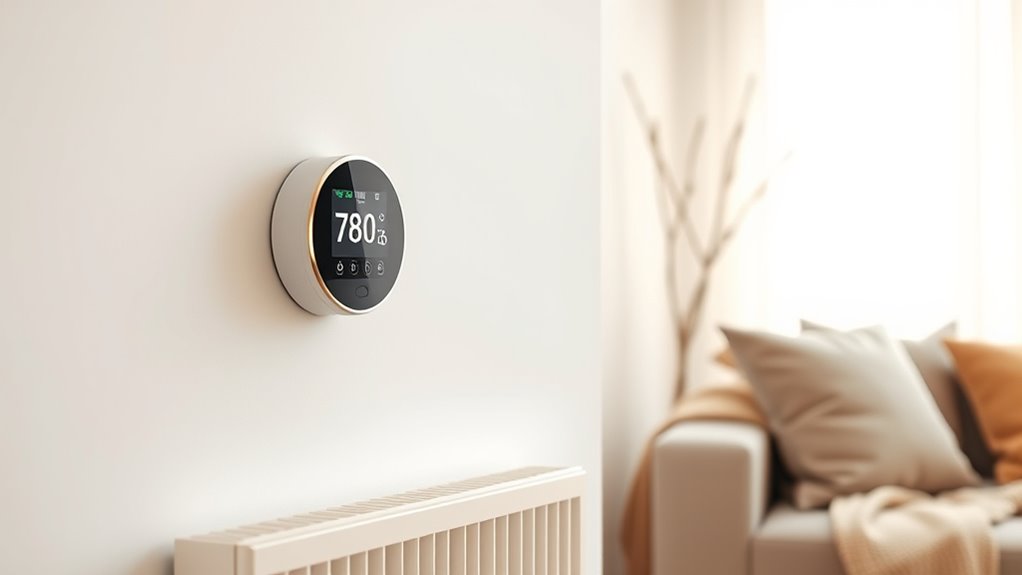

For smart control of a baseboard heater, the right thermostat depends on its voltage, wiring, and the features you want at home. I rank the Mysa Smart Thermostat V2 as the best overall for buyers who want connected controls, while the Meross Matter models stand out for Matter-compatible homes and the Honeywell 5-2 Day is a simpler programmable choice. The main tradeoffs are smart home compatibility, installation requirements, and whether you need app control or only a weekly schedule. These models are designed for electric line-voltage heating, so checking your existing thermostat and heater setup is a necessary first step. Read on for the full breakdown and guidance on choosing a thermostat that fits your system.

Get business pricing on tools and workshop supplies
- Business-only prices and quantity discounts
- Tax-exempt purchasing
- Multiple users, one account, clear invoices
Complete the kit



Key Takeaways
- Mysa V2 takes the top spot for balancing connected control and broad appeal; the matte black listing appears to be a finish variant, not a different thermostat.
- Meross Matter is the clearest fit for buyers who want Matter support, though the roundup includes two listings for the same named model.
- Honeywell Home 5-2 Day favors predictable weekday and weekend schedules over app-based smart home control.
- KING Hoot K901-W and K902-B offer Wi-Fi control in white and black versions, but buyers should verify pole, wire, and voltage compatibility before choosing.
- The generic Wi-Fi thermostat listings provide fewer distinguishing details in their names, so confirming manufacturer specifications and wiring fit matters more than choosing by listing title.
| Mysa Smart Thermostat Lite for Electric Baseboard Heaters |  | Best Overall | Compatible heaters: Electric baseboard, fan-forced, wall, and convector heaters | Voltage: 120V, 208V, and 240V | Wiring: Requires 4 wires, including neutral or a second live wire | VIEW ON AMAZON | See Our Full Breakdown |
| Mysa Smart Thermostat V2 for Electric Baseboard Heaters |  | Best for Energy Insights | Compatible systems: 120–240V high-voltage electric heating | Supported heaters: Baseboard, convector, fan-forced convector, and radiant ceiling | Maximum load: 1,900W at 120V or 3,800W at 240V | VIEW ON AMAZON | See Our Full Breakdown |
| Honeywell Home 5-2 Day Programmable Thermostat for Electric Baseboard Heaters |  | Best for Simple, Silent Scheduling | Voltage: 240V | Maximum load: 3,500W at 240V; 14.6A resistive | Minimum load: 2A resistive | VIEW ON AMAZON | See Our Full Breakdown |
| Meross Smart Thermostat for Electric Baseboard and In-Wall Heaters |  | Best for Smart Home Platform Choice | Voltage: 120V–240V | Maximum load: 16A | Maximum output: 1,920W at 120V; 3,840W at 240V | VIEW ON AMAZON | See Our Full Breakdown |
| meross Matter Smart Thermostat for Electric Baseboard Heaters |  | Best for Matter-Based Setups | Compatible heating systems: 120–240V electric baseboard, convection, and fan-forced heaters | Incompatible systems: 24V HVAC, heat pumps, and conventional air conditioning | Connectivity: Wi-Fi and Matter | VIEW ON AMAZON | See Our Full Breakdown |
| KING K901-W Hoot WiFi Line Voltage Smart Programmable Thermostat, White |  | Best for Flexible Scheduling | Voltage: 120/208/240V | Installation: Single-pole, 3-wire | Connectivity: Wi-Fi | VIEW ON AMAZON | See Our Full Breakdown |
| Wi-Fi Smart Thermostat for 120–240V Electric Baseboard Heaters |  | Best for Voice Control | System compatibility: 120–240V electric baseboard heaters | Wi-Fi requirement: 2.4 GHz network required for installation | Display: Fahrenheit LCD showing current and target temperature, time, and Wi-Fi status | VIEW ON AMAZON | See Our Full Breakdown |
| Meross Matter Smart Thermostat for Electric Baseboard Heaters |  | Best for Smart Home Integration | System compatibility: 120–240 VAC electric heating systems | Compatible heaters: Baseboard, convector, and fan-forced | Smart home compatibility: Alexa, Apple Home, Google Home, SmartThings, and Matter | VIEW ON AMAZON | See Our Full Breakdown |
| Mysa Smart Thermostat V2 for Electric Baseboard Heaters, Matte Black |  | Best for Room-Level Energy Tracking | Voltage: 120V or 240V | Maximum load: 1,900W at 120V; 3,800W at 240V | Compatible heating systems: Electric baseboard, fan-forced, self-contained hydronic baseboard, and in-ceiling radiant heaters | VIEW ON AMAZON | See Our Full Breakdown |
| Wi-Fi Smart Thermostat for Electric Baseboard Heaters (120–240V) |  | Best for Simple App-Based Control | Compatible systems: 120–240V electric baseboard heaters | Display: LCD; Fahrenheit or Celsius | Connectivity: Wi-Fi; 2.4 GHz required for installation | VIEW ON AMAZON | See Our Full Breakdown |
| KING K902-B Hoot WiFi Line Voltage Smart Programmable Thermostat, 120/208/240V, Double Pole, 4-Wire, Black |  | Best for Flexible Scheduling | Model: K902-B | Voltage: 120/208/240V | Installation: Double pole, 4-wire | VIEW ON AMAZON | See Our Full Breakdown |
| baseboard heater thermostat smart control | Connectivity | Voltage |
|---|---|---|
| Mysa Smart Thermostat Lite for | Wi-Fi and Bluetooth | 120V, 208V, and 240V |
| Mysa Smart Thermostat V2 for E | Wi-Fi and NFC | — |
| Honeywell Home 5-2 Day Program | — | 240V |
| Meross Smart Thermostat for El | — | 120V–240V |
| meross Matter Smart Thermostat | Wi-Fi and Matter | — |
| KING K901-W Hoot WiFi Line Vol | Wi-Fi | 120/208/240V |
| Wi-Fi Smart Thermostat for 120 | — | — |
| Meross Matter Smart Thermostat | Wi-Fi | — |
| Mysa Smart Thermostat V2 for E | Wi-Fi; no hub required | 120V or 240V |
| Wi-Fi Smart Thermostat for Ele | Wi-Fi; 2.4 GHz required for installation | — |
| KING K902-B Hoot WiFi Line Vol | — | 120/208/240V |
More Details on Our Top Picks
Mysa Smart Thermostat Lite for Electric Baseboard Heaters
The Mysa Smart Thermostat Lite is my best overall pick for buyers who want practical app control and broad smart home support without adding a hub or subscription. Its 7-day scheduling, remote temperature changes, and monthly runtime reports give it more day-to-day visibility than the schedule-only Honeywell Home 5-2 Day Programmable Thermostat. It also works with Apple HomeKit, Alexa, and Google Home, making voice control accessible across common setups. The main qualification is at the wall: Mysa needs four wires, including a neutral or second live wire, so it will not suit every existing installation. It is also limited to electric heating. For compatible wiring and heaters, this balances connected control with useful energy information.
Pros:- Offers remote control and 7-day scheduling through the app
- Works with Apple HomeKit, Alexa, and Google Home without a hub
- Provides monthly room runtime reports
- No monthly subscription fee
Cons:- Requires four wires, which may rule out existing installations
- Controls compatible electric heaters only
Best for: Homeowners with compatible 120–240V electric baseboards who want app scheduling, voice control, and runtime reports without a hub.
Not ideal for: Buyers with two-wire thermostat installations, low-voltage HVAC, or heating systems outside compatible electric heaters.
- Compatible heaters:Electric baseboard, fan-forced, wall, and convector heaters
- Voltage:120V, 208V, and 240V
- Wiring:Requires 4 wires, including neutral or a second live wire
- Connectivity:Wi-Fi and Bluetooth
- Voice assistants:Apple HomeKit, Amazon Alexa, and Google Home
- Maximum wattage:3,800 watts
- Warranty:5 years
Our verdict“Choose the Mysa Lite for connected scheduling and runtime reports if your electric heater wiring has the required four wires.”
Mysa Smart Thermostat V2 for Electric Baseboard Heaters
The Mysa Smart Thermostat V2 suits buyers who want a more information-rich display alongside connected control. Its 3.5-inch LED screen, adaptive brightness, and energy insights give it a stronger on-device and usage-tracking emphasis than the simpler-described Mysa Smart Thermostat Lite. App scheduling and integrations with Alexa, Google Assistant, and Apple HomeKit cover the usual remote-control needs. That added visibility comes with the same key installation hurdle as the Lite: the V2 needs at least four wires, including a neutral or second live wire. It also handles high-voltage electric heating only, so it is not a replacement for a low-voltage HVAC thermostat. Pick it over the Lite when display and energy information matter more than keeping the choice basic.
Pros:- Supports app scheduling and remote control
- Integrates with Alexa, Google Assistant, and Apple HomeKit
- Adaptive display brightness helps the screen suit different room lighting
- Includes energy insights
Cons:- Requires at least four wires, including a neutral or second live wire
- Does not work with low-voltage heating systems
Best for: Owners of compatible high-voltage electric heaters who want energy insights and a prominent screen with smart home control.
Not ideal for: People with two-wire installations, low-voltage systems, or no need for on-device energy information.
- Compatible systems:120–240V high-voltage electric heating
- Supported heaters:Baseboard, convector, fan-forced convector, and radiant ceiling
- Maximum load:1,900W at 120V or 3,800W at 240V
- Wiring:At least 4 wires, including neutral or a second live wire
- Connectivity:Wi-Fi and NFC
- Smart home compatibility:Alexa, Google Assistant, and Apple HomeKit
- Display:3.5-inch LED screen
Our verdict“Choose the Mysa V2 over the Lite if its larger display and energy insights are worth the same four-wire installation requirement.”
Honeywell Home 5-2 Day Programmable Thermostat for Electric Baseboard Heaters
The Honeywell Home 5-2 Day Programmable Thermostat is the straightforward choice for buyers who want a heating schedule without app or voice control. Its two-wire, non-polarized connection can be a better fit than the four-wire Mysa Smart Thermostat Lite where existing wiring is limited. Separate weekday and weekend programs, each with four daily periods, let households set a routine and make temporary temperature changes when plans shift. Silent TRIAC switching is another practical advantage for bedrooms or quiet living spaces. The tradeoff is clear: this is not a connected thermostat, so remote adjustments and smart home integrations are absent. It is also specified for 240V electric heating within its load range, not central HVAC or every resistive or inductive load.
Pros:- Two-wire, non-polarized connection
- Runs silently with TRIAC switching
- Offers separate weekday and weekend schedules with four periods per day
- Backlit display and temporary temperature override support everyday adjustments
Cons:- No app, remote, or voice control
- Limited to specified 240V electric heating loads
- Not compatible with central heating systems or inductive loads
Best for: Households with compatible 240V electric heaters that want quiet operation and recurring weekday and weekend schedules without smart features.
Not ideal for: Buyers who need app access, voice assistants, smart home integrations, or control of central HVAC.
- Voltage:240V
- Maximum load:3,500W at 240V; 14.6A resistive
- Minimum load:2A resistive
- Temperature accuracy:±0.27°F with baseboards and convectors
- Programming:5-2 day schedule with four periods per day
- Connection:2-wire, non-polarized
- Compatible systems:Electric baseboards, convectors, fan-forced heaters, and radiant ceilings
Our verdict“Choose Honeywell over the Mysa Lite if quiet scheduled control and a two-wire connection matter more than smart features.”
Meross Smart Thermostat for Electric Baseboard and In-Wall Heaters
The Meross Smart Thermostat stands out for buyers who want their baseboard control to fit a mixed smart home. It supports Apple Home, Alexa, Google Home, and SmartThings, a wider named platform list than the Mysa Smart Thermostat V2 description. Scheduling and energy monitoring handle routine control and usage tracking, while open-window detection can pause heating when a window is detected open. Power-off memory adds a measure of continuity after an interruption. The tradeoff is that its listed temperature accuracy is 1°F, and installation requires at least four wires in the electrical box. It is a strong fit for platform flexibility, but buyers with incompatible wiring or a desire for a two-wire thermostat should look at the Honeywell instead.
Pros:- Supports Apple Home, Alexa, Google Home, and SmartThings
- Includes programmable schedules and energy monitoring
- Open-window detection can pause heating
- Power-off memory retains settings after an interruption
Cons:- Requires at least four wires in the electrical box
- Temperature accuracy is specified as 1°F
- Controls compatible electric heaters only; heater is not included
Best for: Smart home households using Apple Home, Alexa, Google Home, or SmartThings that want scheduling and energy monitoring for electric heaters.
Not ideal for: Owners with fewer than four wires in the electrical box or anyone seeking a thermostat for low-voltage HVAC.
- Voltage:120V–240V
- Maximum load:16A
- Maximum output:1,920W at 120V; 3,840W at 240V
- Compatible systems:Electric baseboard, convector, fan-forced, and in-ceiling radiant heaters
- Smart home compatibility:Apple Home, Alexa, Google Home, and SmartThings
- Temperature accuracy:1°F
- Adjustable temperature range:41°F–95°F
- Installation:Requires 4 or more wires in the electrical box
Our verdict“Choose Meross over the Mysa V2 if SmartThings support and open-window detection are priorities and your wiring meets its requirements.”
meross Matter Smart Thermostat for Electric Baseboard Heaters
The meross Matter Smart Thermostat is aimed at buyers who want a common smart home connection across Alexa, Apple Home, Google Home, and SmartThings. Matter support is its defining distinction from the listed Meross Smart Thermostat for Electric Baseboard and In-Wall Heaters; both offer scheduling, energy monitoring, and open-window detection. That overlap makes the choice less about basic heating features and more about the buyer’s connected-home setup. This model also offers app and voice control with remote access, while remaining limited to compatible 120–240V electric heaters. It cannot control 24V HVAC, heat pumps, or conventional air conditioning. The supplied specifications do not state a wiring requirement or maximum load, so buyers should confirm those details against their heater and installation before choosing it.
Pros:- Matter support connects with Alexa, Apple Home, Google Home, and SmartThings
- Offers programmable schedules and remote app control
- Tracks electricity consumption and historical usage
- Can pause heating when an open window is detected
Cons:- Incompatible with 24V HVAC, heat pumps, and conventional air conditioning
- Limited to compatible high-voltage electric heating systems
- Provided product data does not specify a maximum load or wiring requirement
Best for: Households building around Matter-compatible smart home platforms who want app, voice, and remote control for electric baseboard heating.
Not ideal for: Buyers with 24V HVAC, heat pumps, or conventional air conditioning, or those who need a stated load rating before checking compatibility.
- Compatible heating systems:120–240V electric baseboard, convection, and fan-forced heaters
- Incompatible systems:24V HVAC, heat pumps, and conventional air conditioning
- Connectivity:Wi-Fi and Matter
- Smart home compatibility:Alexa, Apple Home, Google Home, and SmartThings
- Control:App, voice, and remote
- Mounting:Wall mount
- Features:Programmable scheduling, energy monitoring, and open-window detection
Our verdict“Choose this Meross model over the non-Matter Meross when Matter compatibility is central to your smart home and your heater is compatible.”
KING K901-W Hoot WiFi Line Voltage Smart Programmable Thermostat, White
The KING K901-W suits buyers who want app control plus several daily temperature changes on a line-voltage system. Its four or six scheduled periods per day offer more routine flexibility than a simple programmable thermostat, while the touchscreen keeps adjustments available at the wall. It also supports baseboard, fan-forced, and radiant heaters, so it can fit more than one electric-heating style. Compared with the Mysa Smart Thermostat V2, the K901-W has a stated single-pole, three-wire installation and a 41–90°F range, while Mysa adds energy tracking and voice-assistant support. The tradeoff is that this KING model is limited to line-voltage heating and its single-pole wiring specification may rule it out for some installations. Check the existing wiring and heater load before choosing it.
Pros:- Wi-Fi app control allows remote temperature adjustments
- Four or six daily schedule periods support varied routines
- Touchscreen display provides at-wall control
- Works with baseboard, fan-forced, and radiant electric heaters
Cons:- Limited to line-voltage electric heating systems
- Single-pole, three-wire installation requirement may not match existing wiring
Best for: Households with compatible single-pole line-voltage heaters that want multiple scheduled temperature changes each day
Not ideal for: Buyers with 24V central HVAC or wiring that does not match its single-pole, three-wire requirement
- Voltage:120/208/240V
- Installation:Single-pole, 3-wire
- Connectivity:Wi-Fi
- Display:LCD touchscreen
- Temperature range:41–90°F (5–32°C)
- Temperature accuracy:±1°F
- Scheduling:4 or 6 periods per day
- Maximum wattage:3840W
- Compatible heaters:Electric baseboard, fan-forced, and radiant
Our verdict“Choose the K901-W if your wiring is compatible and you want flexible daily scheduling across several types of electric heaters.”
Wi-Fi Smart Thermostat for 120–240V Electric Baseboard Heaters
This Wi-Fi thermostat is a practical fit for buyers who want to change baseboard settings by app or voice without depending on a touchscreen-focused interface. Alexa and Google Assistant support, along with Smart Life and Tuya compatibility, lets it join common smart-home routines. The Fahrenheit LCD shows current and target temperatures, time, and Wi-Fi status, making the wall unit useful for quick checks. Compared with the KING K901-W, this model adds voice control and a supplied wall plate with installation components, while the KING lists broader compatibility with fan-forced and radiant heaters. Its limits matter: setup requires 2.4 GHz Wi-Fi, and it excludes single-pole systems as well as 24V central heating. Buyers should confirm both wiring and network compatibility before purchase.
Pros:- App control and programmable schedules
- Alexa and Google Assistant voice support
- Includes wall plate, screws, and pigtail electrical wires
- Can maintain a minimum temperature to help protect plumbing from freezing
Cons:- Requires a 2.4 GHz Wi-Fi network for installation
- Does not work with single-pole systems or 24V central heating
Best for: Smart-home users with compatible 120–240V baseboard wiring who want Alexa or Google Assistant control and app schedules
Not ideal for: Owners of single-pole baseboard systems, 24V central HVAC, or networks without 2.4 GHz Wi-Fi
- System compatibility:120–240V electric baseboard heaters
- Wi-Fi requirement:2.4 GHz network required for installation
- Display:Fahrenheit LCD showing current and target temperature, time, and Wi-Fi status
- Smart home compatibility:Alexa, Google Assistant, Smart Life, and Tuya
- Installation:Includes wall plate, screws, and pigtail electrical wires
- Heating system exclusions:Not compatible with 24V central heating or single-pole systems
Our verdict“Pick this model if voice control and included installation components matter and your wiring and Wi-Fi meet its requirements.”
Meross Matter Smart Thermostat for Electric Baseboard Heaters
The Meross Matter thermostat earns its place for households that want electric heat included in a broader smart-home setup. It supports Apple Home, Alexa, Google Home, and SmartThings, giving it wider platform reach than the Wi-Fi thermostat listed here that focuses on Alexa, Google Assistant, Smart Life, and Tuya. Its energy monitoring and open-window detection also give buyers more feedback and automation options: usage history can help identify heating patterns, while pausing heat when a window is open can limit avoidable runtime. Scheduling covers everyday routines. Compared with the Mysa Smart Thermostat V2, Meross emphasizes platform breadth and open-window detection; Mysa lists humidity sensing and per-room usage reports. Meross remains strictly for compatible 120–240 VAC electric systems, so it cannot replace a 24V HVAC thermostat or control a heat pump.
Pros:- Supports Alexa, Apple Home, Google Home, SmartThings, and Matter
- Energy monitoring includes historical electricity usage
- Open-window detection can pause heating
- Scheduling helps match heating to household routines
Cons:- Designed only for 120–240 VAC electric heating systems
- Not compatible with 24V HVAC, heat pumps, or conventional air conditioning
Best for: Smart-home households with compatible electric baseboard, convector, or fan-forced heaters that want Matter support and energy-use data
Not ideal for: Buyers with 24V HVAC, heat pumps, or conventional air conditioning
- System compatibility:120–240 VAC electric heating systems
- Compatible heaters:Baseboard, convector, and fan-forced
- Smart home compatibility:Alexa, Apple Home, Google Home, SmartThings, and Matter
- Connectivity:Wi-Fi
- Features:Scheduling, energy monitoring, and open-window detection
- Incompatible systems:24V HVAC, heat pumps, and conventional air conditioning
Our verdict“Choose Meross if you want broad smart-home integration and energy monitoring for compatible electric heat.”
Mysa Smart Thermostat V2 for Electric Baseboard Heaters, Matte Black
The Mysa Smart Thermostat V2 is the strongest fit here for buyers who want to see how much each heated room uses and adjust schedules across the week. Its per-room energy reports, humidity sensor, and seven-day scheduling give it a more detailed monitoring focus than the KING K901-W, which offers multiple daily periods but does not list energy tracking. Mysa also works with Apple HomeKit, Alexa, and Google Home without a hub, and covers baseboard, fan-forced, self-contained hydronic, and in-ceiling radiant heaters. That breadth comes with a wiring hurdle: installation needs at least four wires, including a neutral or second live wire. Compared with the Meross Matter Smart Thermostat, Mysa adds humidity sensing and a stated five-year warranty, while Meross lists open-window detection and SmartThings support.
Pros:- Per-room energy reports help track heating use
- Seven-day schedules support different routines across the week
- Works with Apple HomeKit, Alexa, and Google Home without a hub
- Supports baseboard, fan-forced, self-contained hydronic, and in-ceiling radiant heaters
Cons:- Requires at least four wires, which may call for rewiring
- Not compatible with low-voltage systems or simple two-wire installations
Best for: Owners of compatible 120V or 240V heaters who want room-by-room usage reports, weekly schedules, and voice control
Not ideal for: Buyers with two-wire installations, no neutral or second live wire, or low-voltage heating systems
- Voltage:120V or 240V
- Maximum load:1,900W at 120V; 3,800W at 240V
- Compatible heating systems:Electric baseboard, fan-forced, self-contained hydronic baseboard, and in-ceiling radiant heaters
- Wiring requirement:At least 4 wires, including a neutral or second live wire
- Connectivity:Wi-Fi; no hub required
- Voice assistants:Apple HomeKit, Amazon Alexa, and Google Home
- Scheduling:7-day schedules
- Sensors and tracking:Humidity sensor and per-room usage reports
- Warranty:5 years
Our verdict“Choose Mysa when room-level energy reports and broad heater compatibility outweigh the need for a simple wiring retrofit.”
Wi-Fi Smart Thermostat for Electric Baseboard Heaters (120–240V)
This thermostat covers the basics for buyers who want to set schedules, check the wall display, or adjust compatible baseboard heat through an app. Its LCD can show Fahrenheit or Celsius, and the included wall plate and wiring components may help with a standard installation. Alexa and Google Assistant support add voice control, while a child-lock cap can help limit casual changes at the thermostat. Compared with the Wi-Fi Smart Thermostat for 120–240V Electric Baseboard Heaters, it has a similar 2.4 GHz setup requirement and the same stated exclusions for 24V and single-pole systems; the listed distinguishing detail is its child-lock cap and Fahrenheit-or-Celsius display. It does not list the broader heater compatibility of the KING K901-W, so buyers should treat it as a baseboard-focused choice and verify wiring before ordering.
Pros:- App-based remote control and programmable schedules
- Alexa and Google Assistant compatibility
- Includes wall plate, screws, and pigtail electrical wires
- Child-lock cap can limit unwanted changes at the thermostat
Cons:- Not compatible with 24V central heating or single-pole systems
- Requires 2.4 GHz Wi-Fi for installation
- Listed for baseboard heaters, with no stated support for radiant or fan-forced heaters
Best for: Households with compatible 120–240V baseboard heaters that want app scheduling, voice commands, and a lock against casual wall adjustments
Not ideal for: Owners of single-pole systems, 24V central heating, or homes without 2.4 GHz Wi-Fi for setup
- Compatible systems:120–240V electric baseboard heaters
- Display:LCD; Fahrenheit or Celsius
- Connectivity:Wi-Fi; 2.4 GHz required for installation
- App compatibility:Smart Life and Tuya
- Voice assistant compatibility:Amazon Alexa and Google Assistant
- Included components:Wall plate, screws, and pigtail electrical wires
- Controller types:Amazon Alexa, Google Assistant, hand control, and IFTTT
- Additional feature:Child-lock cap
Our verdict“Pick this thermostat for straightforward app and voice control if your baseboard wiring and 2.4 GHz network are compatible.”
KING K902-B Hoot WiFi Line Voltage Smart Programmable Thermostat, 120/208/240V, Double Pole, 4-Wire, Black
The KING K902-B suits buyers who want app control alongside a detailed daily heating plan. Its four or six scheduling periods per day give more room to match heat to changing routines than a simpler programmable option like the Honeywell Home 5-2 Day Programmable Thermostat. WiFi access, temperature locking, and over-the-air firmware updates add control after installation, while support for 120V, 208V, and 240V line-voltage systems covers several common electric-heater setups.
The tradeoff is a more specific installation fit: this is for double-pole, 4-wire electric systems, not a general-purpose thermostat. Its large touchscreen and stated ±1°F accuracy may appeal to buyers who want direct adjustments and tighter temperature control, but shoppers who prioritize a different smart-home ecosystem may prefer a Mysa or Meross model. Check the heater wiring and voltage before choosing it.
Pros:- Supports 120V, 208V, and 240V electric-heater systems.
- Offers four or six scheduling periods per day.
- Hoot app control, temperature locking, and over-the-air firmware updates.
- Large LCD touchscreen and stated ±1°F temperature accuracy.
Cons:- Limited to electric line-voltage heaters.
- Requires a double-pole, 4-wire installation.
- Its app and WiFi approach may be a less suitable fit for buyers seeking another smart-home ecosystem.
Best for: Electric baseboard owners who want app access and several daily schedule changes, and whose wiring matches a double-pole, 4-wire thermostat.
Not ideal for: Buyers with low-voltage central heating, incompatible wiring, or a preference for a thermostat built around a different smart-home ecosystem.
- Model:K902-B
- Voltage:120/208/240V
- Installation:Double pole, 4-wire
- Display:Large LCD touchscreen
- Temperature range:41–90°F (5–32°C)
- Temperature accuracy:±1°F
- Scheduling:4 or 6 periods per day
- Connectivity and firmware:Hoot smartphone app, WiFi, over-the-air firmware upgrades
- Compatible heaters:Baseboard, fan-forced, and radiant electric
Our verdict“Choose the K902-B if your electric heater wiring is compatible and you want app control with more daily schedule periods than the Honeywell Home 5-2 Day model offers.”

How We Picked
I ranked these thermostats by how well their stated features support the specific job of controlling electric baseboard and in-wall heaters. The main criteria were compatibility with line voltage, clarity around wiring and installation, useful scheduling or app controls, and smart home integration. I also weighed how easy it is to identify the right model from the product information and whether a thermostat appears suited to a particular need, such as Matter support or straightforward weekly programming.
The Mysa V2 leads because it offers a strong general-purpose smart-control proposition, while Meross Matter earns a distinct place for connected homes built around Matter. Honeywell ranks as a simpler schedule-first option, and the KING Hoot models follow for buyers comparing Wi-Fi control and specific physical configurations. Similar or repeated entries, including the two Meross Matter and two Mysa V2 listings, are treated as variants or duplicate listings rather than separate feature breakthroughs. Where listing names provide limited technical detail, I give greater weight to verifying compatibility before purchase.
| baseboard heater thermostat smart control | Connectivity |
|---|---|
| Mysa Smart Thermostat Lite for | Wi-Fi and Bluetooth |
| Mysa Smart Thermostat V2 for E | Wi-Fi and NFC |
| Honeywell Home 5-2 Day Program | — |
| Meross Smart Thermostat for El | — |
| meross Matter Smart Thermostat | Wi-Fi and Matter |
| KING K901-W Hoot WiFi Line Vol | Wi-Fi |
| Wi-Fi Smart Thermostat for 120 | — |
| Meross Matter Smart Thermostat | Wi-Fi |
| Mysa Smart Thermostat V2 for E | Wi-Fi; no hub required |
| Wi-Fi Smart Thermostat for Ele | Wi-Fi; 2.4 GHz required for installation |
| KING K902-B Hoot WiFi Line Vol | — |
Factors to Consider When Choosing Baseboard Heater Thermostat Smart Control
Smart features matter only after the thermostat matches the heater circuit. I would start with the existing installation, then decide which kind of control will make day-to-day heating easier.
Match the thermostat to voltage and wiring
Electric baseboard thermostats commonly control line voltage, which differs from the low-voltage wiring used by many central HVAC thermostats. Check the voltage printed on the heater or existing thermostat before shopping, and compare it with the new model’s supported range. Also note whether your current setup uses one pole or two and how many wires are present. A thermostat that fits the voltage but not the wiring configuration can still be the wrong choice. If the product listing leaves these details unclear, consult the manufacturer’s specifications or an electrician before ordering. This check can prevent a smart feature set from distracting you from basic electrical compatibility.
Decide whether you need app control or a schedule
Remote temperature changes are useful when your routine varies or you want to adjust heat away from home. A weekly schedule can be enough when your household follows consistent weekday and weekend patterns. App control may add convenience, but it also brings setup, account, and network considerations. Think about who will manage the thermostat and whether everyone needs access. For a room used at regular times, programming may provide the control you need with less reliance on a connected home. Choose based on the way the room is occupied, not on the number of features in the product description.
Check smart home compatibility before committing
Terms such as Wi-Fi and Matter describe different parts of a connected setup, and they do not guarantee that every desired function works with every platform. Check the thermostat’s current compatibility details against the specific home app or voice assistant you use. Matter support can be appealing if you want devices from different brands to work within a shared smart home system, but setup still depends on compatible controllers and networks. If you do not use smart home platforms, compatibility may matter less than a dependable local schedule. Avoid assuming that a thermostat can join a particular ecosystem just because it has an app. Confirm the supported platforms and functions before buying.
Plan for installation and electrical safety
Replacing a line-voltage thermostat involves electrical wiring, so installation difficulty should be part of the purchase decision. Read the installation guide before buying and compare its wiring diagrams with the existing setup. Turn off power at the breaker before any work, and verify that the circuit is de-energized with an appropriate tester. If the wiring is unfamiliar, damaged, or different from the diagram, stop and contact a qualified electrician. A thermostat with convenient software controls is not a good fit if its installation exceeds your comfort or skill. Account for installation support as part of the overall choice.
Choose features for the room and household
A bedroom, home office, and rarely used guest room can call for different control habits. A frequently occupied room may benefit from easy adjustments, while a room with a stable routine may work well with a fixed program. Consider whether the thermostat will be easy for household members to read and operate, including anyone who prefers wall controls to a phone. Finish and appearance can also matter when the thermostat is visible, but they should follow compatibility and usability. Avoid paying attention only to color or app features if the device lacks the schedule or controls you actually need. Prioritize the room’s use and the people who will adjust it.
Frequently Asked Questions
Can I use a smart baseboard thermostat with my existing heater?
Possibly, but the heater type, circuit voltage, and thermostat wiring all need to match the new model. Check the heater label and the existing thermostat documentation, then compare those details with the manufacturer’s compatibility information. Do not assume that a thermostat designed for central heating can control an electric baseboard circuit. If you cannot identify the wiring or voltage confidently, ask an electrician to inspect it. Compatibility comes before app or voice control features.
Is a Matter thermostat a better choice than a Wi-Fi model?
It depends on your home setup. Matter can make it easier to connect supported devices across compatible smart home platforms, while a Wi-Fi thermostat may meet your needs through its own app. Check which platforms and functions each model supports, since Matter branding does not mean every feature is available in every app. If you already use a particular smart home system, confirm compatibility with that system before choosing. If you only want remote temperature changes, compare the app experience and scheduling features as well.
Should I choose a programmable thermostat if I do not need remote access?
A programmable model can be a sensible fit when your weekly routine is consistent and you want heating to follow a set schedule. You give up the convenience of adjusting settings through an app while away, but you may not need that capability in a regularly used room. Consider whether someone in your household will want to change settings manually and how easy the controls are to use. The Honeywell 5-2 Day listing is the schedule-focused option in this roundup. Compare its supported programming pattern with your actual week before deciding.
How can I tell whether I need a single-pole or double-pole thermostat?
Look at the existing thermostat’s model information and wiring diagram, and check the heater circuit details. Pole configuration affects how the thermostat switches the circuit, so matching voltage alone is not enough. Product names sometimes state the pole type, as the KING K902-B listing does, but not every listing makes it clear. Do not infer the answer from the thermostat’s appearance or wire count alone. If the existing setup is uncertain, have a qualified electrician identify the configuration.
Are duplicate-looking product listings different thermostat models?
Not necessarily. This roundup includes repeated Meross Matter and Mysa V2 names, with one Mysa listing specifying a matte black finish. A separate listing may reflect a color, seller, or package difference rather than a change in the thermostat’s functions. Compare manufacturer model numbers and official specifications instead of relying on title wording alone. That helps prevent treating duplicate listings as distinct feature choices.
Conclusion
I recommend the Mysa Smart Thermostat V2 as the best overall starting point for buyers seeking connected baseboard control. For a smart home built around Matter, choose the Meross Matter thermostat; for a simpler schedule-first setup, the Honeywell Home 5-2 Day is the beginner-friendly option. The KING Hoot models suit shoppers who prefer their Wi-Fi thermostat in a specific finish and can confirm the required wiring configuration. I would treat the generic Wi-Fi listings as options to investigate only after checking their full specifications. Before choosing any model, match voltage and wiring, then decide whether app access, Matter support, or a simple schedule best fits your household.