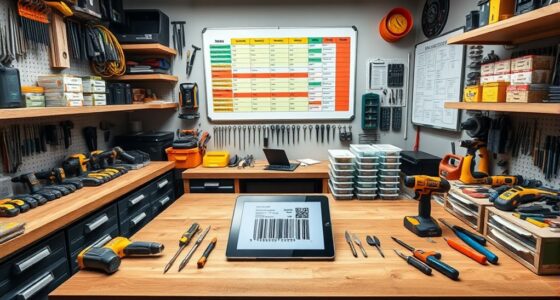
To build a custom workbench, start by selecting a sturdy, flat surface like plywood or hardwood, and organize your storage using shelves, drawers, or vertical racks beneath it. Secure a durable vise on the front or side for versatile clamping, ensuring it’s tightly fixed for stability. Reinforce the frame with high-strength fasteners and level the top for safety. Add personal touches to match your style, and you’ll create a functional, inspiring workspace—learn more about each step to craft your perfect workbench.
Key Takeaways
- Choose a durable, flat work surface like hardwood or plywood for stability.
- Design and build a sturdy frame with reinforced legs and cross supports.
- Install a high-quality vise in an accessible position for secure workholding.
- Organize storage beneath or around the workbench using shelves or racks.
- Personalize the workspace with decorative touches that enhance functionality and aesthetics.

Building a custom workbench allows you to create a sturdy, functional workspace tailored to your specific needs. When designing your workbench, consider how you’ll manage your wood storage. Efficient wood storage ensures your materials are organized and easily accessible, saving you time and reducing clutter. You might opt for shelves or drawers beneath the work surface, or install vertical racks on the sides for longer pieces. Think about the types of wood you often use and allocate space accordingly, keeping your workspace neat and your workflow smooth.
Organize your wood storage with shelves, drawers, or vertical racks for a tidy, efficient workspace.
Once you’ve planned your storage options, focus on the work surface itself. A durable, flat surface made of thick plywood or hardwood provides stability for cutting, sanding, or assembly tasks. Make sure your workbench is solidly built to withstand heavy use. Reinforce the frame with sturdy legs and cross supports, especially if you’re working with dense materials or applying significant force during projects.
Vise installation is another critical step in building your custom workbench. A vise is invaluable for holding workpieces securely, allowing you to work with precision and safety. Before attaching the vise, determine the ideal location—most often on the front edge or side of the bench where it’s easily accessible. Drill the necessary holes and secure the vise tightly to the work surface, ensuring it’s flush and stable. For added durability, consider using a high-quality, heavy-duty vise that can withstand frequent use without loosening or damaging the workbench.
As you assemble your workbench, pay attention to the overall stability. Use high-strength fasteners and ensure all joints are tightly secured. Level the surface to prevent wobbling, which can compromise your work quality and safety. Incorporate features like additional hooks or holders for tools, and plan your layout so that everything you need is within arm’s reach. Additionally, incorporating rustic decor elements can give your workspace a charming, personalized touch that aligns with a farmhouse aesthetic.
Building your own workbench isn’t just about the practical aspects; it’s about creating a space that inspires your projects. By thoughtfully organizing your wood storage, installing a reliable vise, and reinforcing the structure, you’re setting yourself up for success. Your custom workbench will serve as a versatile, durable foundation for all your woodworking endeavors, making every project more enjoyable and efficient.
Amazon Product B0G51NKT67
As an affiliate, we earn on qualifying purchases.
Frequently Asked Questions
What Are the Best Materials for a Durable Workbench Surface?
You want a durable workbench surface that balances workbench aesthetics and ergonomic design. Opt for hardwoods like maple or oak for strength and a smooth finish, making it easier to work and clean. Alternatively, heavy-duty plywood with a sealant offers resilience and cost-effectiveness. These materials guarantee your workspace remains sturdy and attractive, supporting your projects comfortably while maintaining a sleek, ergonomic setup.
How Can I Incorporate Storage Solutions Into My Workbench Design?
You can incorporate storage solutions into your workbench by adding modular storage units that suit your needs. Use drawer integration for easy access to tools and small parts, keeping your workspace organized. Consider installing adjustable shelves or pegboards for versatile storage options. These features help you maximize space, improve workflow, and keep everything you need within reach, making your workbench more efficient and tailored to your projects.
What Tools Are Essential for Building a Custom Workbench?
When building a custom workbench, you’ll need essential tools like a good set of clamps for secure hold and accurate assembly. Selecting the right clamps guarantees stability during construction. You’ll also want a variety of drill bit types to make precise holes in different materials. Having these tools on hand makes the process smoother, helping you create a sturdy, functional workbench tailored to your needs.
How Do I Ensure My Workbench Is Level and Stable?
Your workbench’s stability is the backbone of your projects, so don’t settle for anything less than perfect. To guarantee it’s level and stable, use a spirit level and check all sides, adjusting the legs with leveling techniques like shims or adjustable feet. Tighten all bolts securely, and test stability by applying gentle pressure. A perfectly leveled, stable workbench keeps your work precise and your frustration at bay—it’s a game-changer!
Can I Customize a Workbench for Specific Hobby or Project Needs?
Yes, you can definitely customize a workbench for your hobby or project needs. A custom hobby bench allows you to tailor the height, storage, and workspace to suit your specific tasks. You can add specialized features like tool racks or adjustable surfaces, transforming it into a personalized project station. This guarantees your workspace is efficient, comfortable, and perfectly suited to your creative or technical pursuits.
Amazon Product B0FZVN9YV8
As an affiliate, we earn on qualifying purchases.
Conclusion
Building your own workbench is like crafting a sturdy ship—you’ll create a reliable vessel for all your projects. With patience and attention to detail, you’ll turn raw materials into a functional masterpiece that stands the test of time. Remember, every cut and screw brings you closer to a workspace that’s perfectly tailored to you. So roll up your sleeves, stay focused, and enjoy the satisfying feeling of creating something truly your own.
Amazon Product B0FBXBCN6J
As an affiliate, we earn on qualifying purchases.
Amazon Product B00BR33M7W
As an affiliate, we earn on qualifying purchases.