Choosing a 72-inch tool chest without planning its size and placement can quickly flood your workspace with clutter, making it hard to move around and work efficiently. If you don’t measure your shop carefully, you risk picking a chest that’s too large, wasting valuable space and forcing you to rearrange perfectly good equipment. This mistake can turn your shop into a cramped, frustrating environment. Keep in mind, proper planning can save you hassle—more tips await to help you optimize your space.
Key Takeaways
- Choosing a 72-inch tool chest without proper workspace measurement can lead to overwhelming space consumption.
- Overestimating storage needs causes the chest to dominate shop floor space, reducing workflow efficiency.
- Ignoring ergonomic placement makes the large chest difficult to access, forcing awkward movements.
- Failing to plan for vertical and drawer organization wastes valuable space and hampers quick tool retrieval.
- Lack of precise planning results in a bulky setup that hinders shop layout and overall productivity.
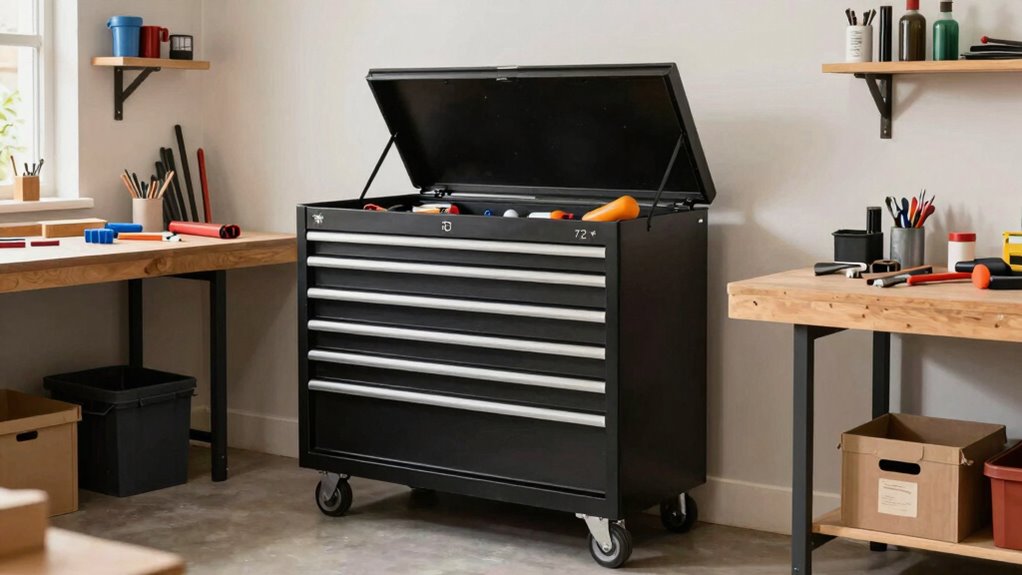
When planning to buy a 72-inch tool chest, many DIY enthusiasts overlook a critical step that can lead to costly mistakes: measuring their workspace. Without accurate measurements, you risk selecting a chest that’s too large, which can quickly eat up your shop space and hinder your workflow. This oversight often results in cramped conditions, forcing you to rearrange other equipment or even sacrificing valuable floor space. To avoid this, take precise measurements of your available area—consider the width, depth, and height—to guarantee your new tool chest fits comfortably without overwhelming your workspace. Additionally, thinking about storage optimization helps you make the most of the space you have, ensuring that your tools are organized and accessible. Beyond just size, thinking about storage optimization is essential. A 72-inch tool chest offers ample storage, but if it isn’t planned carefully, you might end up with unused gaps or overcrowded drawers. Consider what tools and supplies you need to store and how often you access them. Prioritize accessibility by designing your storage layout so frequently used items are within easy reach. This prevents clutter and makes your work process more efficient. Remember, maximizing vertical and drawer space helps you keep everything organized, reducing the time spent searching for tools and increasing productivity. Another key factor often overlooked is the ergonomic design of your workspace. When selecting a tool chest, think about how you’ll interact with it daily. Position the chest at a height that minimizes bending or stretching, promoting better posture and reducing fatigue during long work sessions. If your shop layout allows, place the chest so you can comfortably access all drawers without unnecessary movement. Incorporate ergonomic principles into your overall shop arrangement—like placing frequently used tools at eye level or within arm’s reach—to improve comfort and safety. Failing to consider these aspects can turn a seemingly perfect 72-inch tool chest into a space-consuming obstacle. Overestimating your available room and neglecting ergonomic design can lead to discomfort and inefficiency. Proper planning involves not just choosing a large chest but ensuring it complements your workspace’s dimensions and your workflow. By doing so, you optimize your storage and create a more ergonomic environment, making your shop more productive and enjoyable to work in.
72 inch tool chest with adjustable drawers
As an affiliate, we earn on qualifying purchases.
As an affiliate, we earn on qualifying purchases.
Frequently Asked Questions
How Can I Optimize Storage Within a 72-Inch Tool Chest?
To optimize storage in your 72-inch tool chest, start by organizing tools with storage accessories like dividers and labeled bins to maximize space. Prioritize tool safety by securely storing sharp or heavy items to prevent accidents. Regularly declutter and reassess your setup, eliminating duplicates or unused tools. This approach keeps your workspace efficient, guarantees safety, and makes it easy to find what you need without wasting shop space.
What Are the Most Durable Materials for a Tool Chest of This Size?
Did you know steel tool chests last up to 20 years with proper care? For durability, choose materials with excellent material longevity and corrosion resistance. Powder-coated steel offers strong protection against rust and scratches, making it ideal for heavy use. Stainless steel is even more resilient, resisting corrosion in humid environments. Both options guarantee your 72-inch tool chest stays durable, protecting your tools and maximizing your investment.
How Should I Organize Tools to Maximize Space Efficiency?
To maximize space efficiency, you should organize your tools with clear tool labeling so you can quickly find what you need. Use drawer dividers to separate different tool types, preventing clutter and making the most of each drawer’s space. Store frequently used tools in easily accessible spots, and group similar items together. This system keeps your shop tidy, saves time, and guarantees you don’t waste space on unnecessary items.
What Safety Features Should I Consider for Large Tool Chests?
When choosing a large tool chest, prioritize safety features like reliable locking mechanisms to prevent accidental openings and theft. Look for ergonomic handles that allow you to open and close the chest easily, reducing strain and injury risks. guarantee the chest has sturdy construction and smooth sliding drawers with secure latches. These features help keep your tools safe, your workspace organized, and your safety a top priority during use.
How Do I Choose Between a Mobile and Stationary 72-Inch Tool Chest?
You should choose a mobile or stationary 72-inch tool chest based on your shop’s workflow and space. If you need flexibility and easy access across different work zones, go mobile, considering its tool chest aesthetics and durability. For a permanent setup, a stationary chest offers stability and maximizes space. Check the brand reputation to guarantee quality, and pick the option that best fits your shop’s layout and your work style.
As an affiliate, we earn on qualifying purchases.
Conclusion
To avoid wasting shop space, plan your 72-inch tool chest carefully, like a skilled chess player strategizing moves. Think about your storage needs and how the chest will fit into your workspace before making a purchase. By doing so, you prevent clutter and maximize efficiency. Remember, a well-planned tool chest is like a neatly organized toolbox—everything in its place, ready when you need it, saving you time and frustration.
ergonomic tool chest height stand
As an affiliate, we earn on qualifying purchases.
As an affiliate, we earn on qualifying purchases.
vertical storage organization for tools
As an affiliate, we earn on qualifying purchases.
As an affiliate, we earn on qualifying purchases.