To prevent losing small hand tools during a project, always store them in designated, labeled compartments or pouches, and put them back right after use. Keep a portable organizer nearby for quick access and avoid clutter by maintaining an organized workspace. Develop habits like cleaning and returning tools promptly, and do regular checks for missing or damaged items. If you follow these tips, you’ll find managing your tools becomes much easier and more efficient.

Get business pricing on tools and workshop supplies
- Business-only prices and quantity discounts
- Tax-exempt purchasing
- Multiple users, one account, clear invoices
Key Takeaways
- Use dedicated, labeled storage containers or pouches for small hand tools to keep them organized and easily accessible.
- Implement a habit of returning tools to their designated spots immediately after use.
- Keep small tools in portable organizers or roll-up pouches for quick transport and reduced misplacement.
- Regularly audit and inventory tools to identify missing items and prevent ongoing loss.
- Organize your workspace to keep frequently used tools within reach and less-used ones in separate areas.
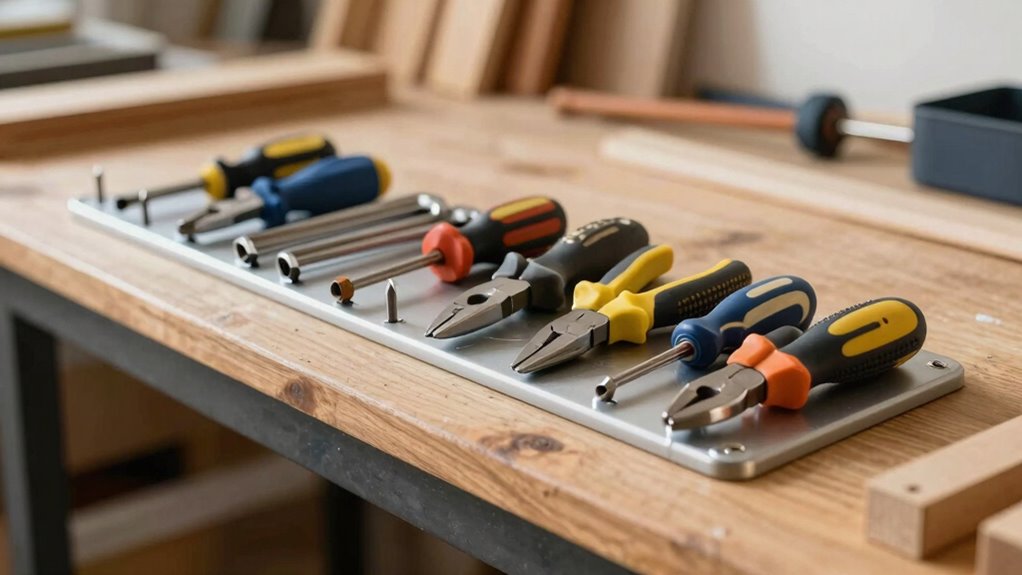
Losing small hand tools can be frustrating and costly, but with some simple organization strategies, you can keep track of your tools more effectively. The key lies in implementing effective tool storage and adopting organizational tips that suit your workflow. When your tools are scattered or misplaced, it slows down your progress and leads to unnecessary expenses replacing lost items. To prevent this, start by choosing the right container for your tool storage. Invest in a sturdy toolbox or a dedicated storage bin with compartments to keep different tools separated. Having designated spaces for each tool makes it easier to locate what you need quickly and reduces the chance of misplacing items.
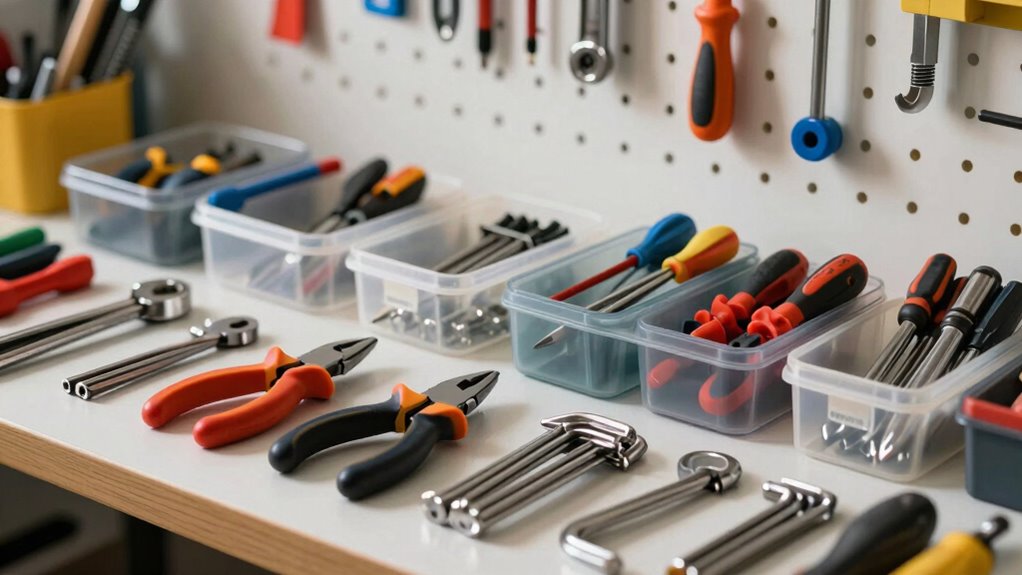
Organize tools with compartments and designated spaces to find what you need quickly and prevent misplacing items.
Next, develop a habit of returning tools to their designated storage after each use. This simple organizational tip might seem obvious, but it’s one of the most effective ways to keep track of your small hand tools. Make it a routine to clean and put tools away before moving on to another task. Not only does this prevent clutter, but it also ensures your tools are always in the right place when you need them. Consider labeling compartments or storage bins to further streamline the process, especially if you have a variety of similar tools.
Another useful organizational tip is to use portable tool pouches or roll-up organizers. These are especially handy for keeping small tools together and are portable enough to carry around your workspace or job site. When tools are kept in a dedicated pouch, it’s less likely that they’ll get lost in clutter or fall into hard-to-reach places. Additionally, regularly audit your tools to identify and replace missing or broken items. This helps you stay aware of what you have and what needs replacing, reducing the chances of losing essential tools mid-project. Incorporating tool organization into your routine can significantly improve your efficiency and reduce frustration. Furthermore, adopting a consistent approach to organization can help you develop a habit of organization, making your workspace more efficient over time.
Finally, set up a designated workspace where tools are consistently stored and used. When your work area is organized, it becomes easier to find what you need without wasting time searching. Keep frequently used tools within arm’s reach and store less-used items elsewhere. Creating a dedicated workspace helps prevent misplacement and keeps your tools accessible. An organized workspace also promotes better workflow management, ensuring that your projects stay on track. By establishing a dedicated and organized workspace, you minimize the risk of misplacing tools and streamline your entire project. Creating an environment with organized storage can help prevent accidental loss and make your workflow more efficient. Implementing these tool storage and organizational tips might require a little effort upfront, but it pays off by saving you time, money, and frustration in the long run.
Products Worth Considering

Bose SoundLink Flex Bluetooth Speaker (2nd Gen), Portable Waterproof Speaker, Black

Ring Battery Doorbell (2nd Gen), Indoor Cam Plus, and Chime (3rd Gen) Bundle

Sonos Era 100 Wireless Smart Speaker, Black
As an affiliate, we earn on qualifying purchases.
Frequently Asked Questions
What Are the Best Tools to Track Small Hand Tools?
The best tools for tracking small hand tools are RFID tags, barcode labels, and digital inventory management systems. These tools help you stay organized by enabling quick tool tracking and minimizing losses. Using RFID or barcode labels allows you to perform efficient inventory management, ensuring you always know where your tools are. Combining these tools with a digital system keeps your workspace organized and reduces the chances of losing essential hand tools mid-project.
How Can I Organize My Toolbox Effectively?
Think of your toolbox as a well-tended garden, where every tool has a designated plot. Use tool labeling to give each item its own identity, making it easy to find and return. Magnetic organizers act like invisible shepherds, keeping screws, nails, and small tools in place. By combining clear labels and magnetic trays, you create a structured haven that prevents chaos and keeps your tools ready for action at a moment’s notice.
Are There Specific Storage Solutions for Small Tools?
Yes, there are specific storage solutions for small tools. You can use magnetic tool holders to keep metal tools easily accessible and prevent them from getting lost. Drawer dividers are also effective for organizing small items within your toolbox or drawers, so you always know where everything is. Combining these solutions helps keep your tools secure, organized, and within reach, saving you time and frustration during your projects.
How Often Should I Check for Missing Tools?
You should check your tool inventory daily, especially during busy projects—because, ironically, the more you need them, the more likely they’re hiding! Regular loss prevention checks help you catch missing tools early, saving you time and frustration. Use these quick inspections to make certain your small hand tools stay in place, so you’re not scrambling to find that tiny screwdriver when you’re already behind schedule.
What Habits Prevent Losing Tools During Projects?
You can prevent losing tools during projects by practicing good tool retention habits. Always put tools back in the same spot after use and keep your workspace organized. Developing habit formation around checking your tools regularly helps, too. Use a dedicated toolbox or magnetic strip for easy access. Consistently following these habits guarantees your tools stay within reach, reducing the chances of losing them mid-project.
Conclusion
To truly stop losing small hand tools, consider the theory that organizing your workspace creates a mental and physical habit of accountability. When you develop a routine of always putting tools back in designated spots, you reinforce this habit. Over time, it becomes second nature, reducing lost tools and saving you time. So, instead of relying solely on luck, trust that a disciplined approach rooted in organization is your most reliable strategy for keeping tools close and your projects moving smoothly.