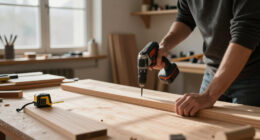
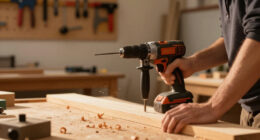
To build a go-to hand tool kit for quick household fixes, start with essential tools like a good hammer, screwdrivers, needle-nose, and slip-joint pliers. Focus on maintaining their condition by cleaning, lubricating, and storing them properly. Keep your tools organized in a designated storage system for easy access. Practice safety by inspecting tools regularly and using them correctly. If you keep these tips in mind, you’ll be ready for most household repairs in no time.
Key Takeaways
- Start with essential tools like a hammer, screwdrivers, and pliers tailored to common household repairs.
- Plan your toolkit based on typical projects and prioritize versatile, multi-use tools for efficiency.
- Regularly maintain and clean tools to ensure optimal performance and longevity.
- Organize tools systematically in a designated storage to enable quick access during emergencies.
- Follow safety guidelines and inspect tools frequently to prevent accidents and ensure safe usage.

Building a well-rounded hand tool kit is essential for tackling a variety of repair and DIY projects around your home or workshop. Having the right tools on hand means you can handle everyday fixes quickly and efficiently, without needing to call in a professional for minor issues. When assembling your kit, focus on the basics first, but also keep in mind how each tool might fit into larger projects you plan to undertake. Effective DIY project planning helps you identify the specific tools you’ll need, saving you time and money in the long run.
Start with a good hammer—preferably one with a comfortable grip and balanced weight. It’s your go-to for driving nails, removing fasteners, or knocking things into place. Pair this with screwdrivers of various sizes and types; a Phillips and flat-head are usually enough for most jobs. Investing in a versatile screwdriver set with interchangeable bits can save space and expand your options. Pliers are another must-have, especially needle-nose and slip-joint types, which help grip, bend, or cut wires and small components. Additionally, understanding basic tool maintenance can extend the life of your tools and ensure they work effectively when you need them most. Incorporating tool organization strategies can help keep your toolkit accessible and prevent misplacement of essential items. Regularly cleaning and lubricating your tools also preserves their performance and durability, ensuring they remain reliable over time. Plus, familiarizing yourself with safety precautions is crucial to avoid injuries during use.
basic hand tool kit for household repairs
As an affiliate, we earn on qualifying purchases.
As an affiliate, we earn on qualifying purchases.
Frequently Asked Questions
What Is the Ideal Budget for a Basic Hand Tool Kit?
Your ideal budget for a basic hand tool kit is around $50 to $100, depending on your needs. With proper tool maintenance, you can keep these tools in good condition for years. Budget planning helps you prioritize essential tools like a hammer, screwdrivers, and pliers without overspending. Investing wisely guarantees you’re prepared for quick household fixes, and you can always expand your kit over time as needed.
How Often Should I Upgrade or Replace My Tools?
You should upgrade or replace your tools every 3-5 years, especially if you notice signs of wear. Did you know that proper tool maintenance can double their lifespan? Regularly inspecting, cleaning, and sharpening your tools promotes tool longevity. If a tool becomes damaged or ineffective despite maintenance, it’s time to substitute it. Staying attentive ensures your toolkit remains reliable for quick household fixes and maintains its efficiency over time.
Are There Specific Brands Recommended for Durability?
For durability, you should choose brands known for reliability and tool longevity, like Craftsman, DeWalt, and Milwaukee. These brands focus on high-quality materials and solid construction, ensuring your tools last through frequent use. You can trust their products to withstand household fixes over time. Investing in reputable brands means fewer replacements and more dependable performance, making your toolkit more efficient and cost-effective for quick repairs.
Can I Assemble a Toolkit Myself or Should I Buy Pre-Made?
You can definitely assemble a toolkit yourself, especially since it allows you to choose tools suited to your needs, making tool maintenance easier. Plus, you’re more likely to invest in quality tools when you pick them yourself. Consider storage solutions that keep your tools organized and accessible. DIY kits are flexible, but pre-made options can save time if you’re unsure where to start. Either way, a well-organized toolkit makes quick household fixes a breeze.
How Do I Organize My Tools for Easy Access?
To organize your tools for easy access, start with dedicated tool storage like a toolbox or wall-mounted rack. Use clear containers or labeled compartments to keep small items sorted. Organization tips include grouping similar tools together, placing frequently used ones within arm’s reach, and maintaining a clean, clutter-free space. Regularly review and tidy your toolkit to guarantee everything stays accessible, making household fixes quick and efficient.
versatile screwdriver set with interchangeable bits
As an affiliate, we earn on qualifying purchases.
As an affiliate, we earn on qualifying purchases.
Conclusion
Building your own hand tool kit might seem intimidating at first, but remember, “A stitch in time saves nine.” Start small, choose versatile tools, and keep them organized. As you gain confidence, add more specialized items. With patience and care, you’ll be ready to tackle household fixes quickly and efficiently. A well-stocked toolkit isn’t just about fixing things—it’s about empowering yourself to handle everyday challenges with ease. Happy repairing!
needle-nose and slip-joint pliers
As an affiliate, we earn on qualifying purchases.
As an affiliate, we earn on qualifying purchases.
home repair hammer with comfortable grip
As an affiliate, we earn on qualifying purchases.
As an affiliate, we earn on qualifying purchases.

![There Will Come Soft Rains (1950) [Pdf]](https://toolboxguru.com/wp-content/uploads/2026/08/there-will-come-soft-rains-1950-pdf-featured-260x140.jpg)