To keep outdoor extension cords safe around water and heat, inspect them regularly for damage and replace any worn cords immediately. Use outdoor-rated cords, elevate connections off the ground, and waterproof covers to protect against moisture. Keep cords away from heat sources like grills and heaters, and avoid placing them in direct sunlight. Proper storage and maintenance extend their life and safety, and staying informed is key to preventing hazards—more tips are available if you continue exploring these precautions.

Get business pricing on tools and workshop supplies
- Business-only prices and quantity discounts
- Tax-exempt purchasing
- Multiple users, one account, clear invoices
Key Takeaways
- Use outdoor-rated extension cords with weatherproof insulation to resist water and environmental exposure.
- Elevate connections and use waterproof covers or boxes to prevent water contact.
- Avoid placing cords near heat sources or in direct sunlight to prevent insulation degradation.
- Disconnect cords immediately if they become hot or show signs of damage.
- Store cords in a cool, dry place and regularly inspect for wear or damage.
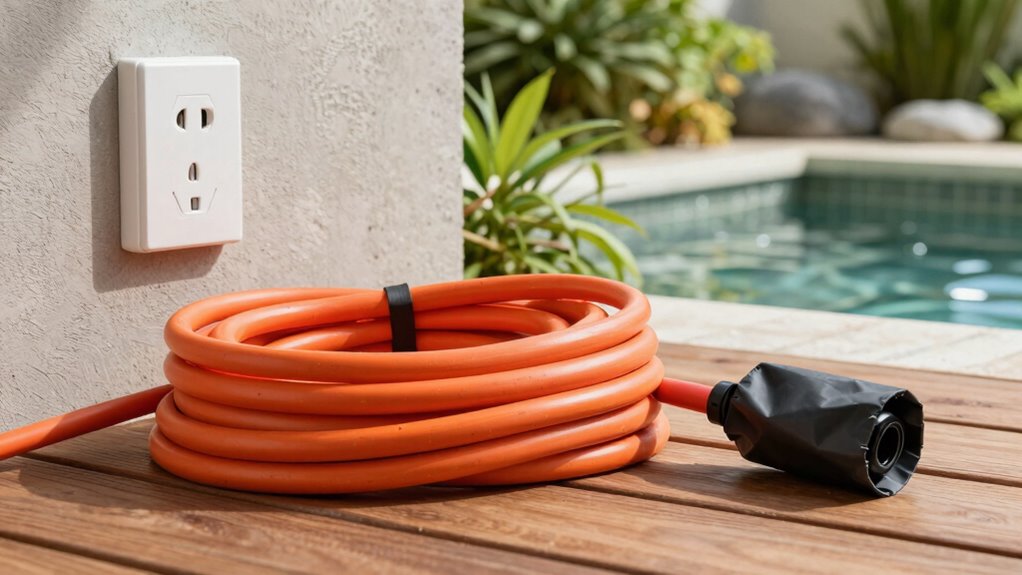
Outdoor extension cords are essential for many projects, but they can pose safety risks if not used properly. One of the biggest concerns involves water and heat, which can turn a simple extension cord into a dangerous hazard. To keep yourself safe, it’s important to understand how outdoor cords interact with their environment, especially when it comes to indoor safety and cord storage. Proper precautions can prevent electric shocks, fires, and damage to your equipment.
Start by inspecting your extension cords before each use. Look for any signs of wear, fraying, or damage to the insulation. Damaged cords are more susceptible to water infiltration and heat buildup, so replace them immediately. When working outdoors, avoid using cords that aren’t rated for outdoor use, as they’re designed to resist moisture and temperature fluctuations better than indoor cords. Keep in mind that outdoor cords are built with a different insulation material to withstand the elements, but they still need proper handling.
Inspect extension cords for damage and use only outdoor-rated cords for safety and durability.
To prevent water from reaching the electrical connections, always elevate connections off the ground. Use a weatherproof outlet cover or a waterproof box to protect plugs and connectors. If you’re working in wet conditions, consider using ground-fault circuit interrupters (GFCIs). These devices quickly cut power if they detect a leak, preventing shocks and reducing the risk of fires. Never attempt to patch or tape damaged cords, as this can trap moisture and compromise the safety of the entire setup. Additionally, understanding the interaction between water and electrical safety can help you take more informed precautions. Being aware of how moisture affects electrical components is crucial for maintaining electrical safety.
When it comes to heat, avoid placing extension cords near heat sources, such as grills, heaters, or direct sunlight for prolonged periods. Heat can degrade insulation over time and increase the risk of short circuits. If cords become hot during use, disconnect them immediately. To further ensure safety, consider proper cord management techniques that prevent accidental damage or overheating. After completing your project, practice good cord storage habits by unplugging and coiling cords properly. Store them in a cool, dry place, away from direct sunlight and extreme temperatures. Proper cord storage extends the lifespan of your extension cords and keeps them safe for future use. Additionally, regular maintenance can help identify potential issues early and prolong the life of your cords. It’s also wise to be familiar with electrical safety guidelines to ensure comprehensive protection during your outdoor projects.
Indoor safety shouldn’t be overlooked even when working outdoors. Keep cords away from areas where children or pets might tamper with them. Avoid running extension cords through puddles, snow, or muddy areas, and never overload a circuit. By paying attention to these details, you ensure your outdoor projects remain safe and efficient. Taking these precautions protects not only your equipment but also your well-being and that of others around you.
Products Worth Considering

Dyson Ball Animal 3 Corded Upright Vacuum

Bose SoundLink Flex Bluetooth Speaker (2nd Gen), Portable Waterproof Speaker, Black

Philips Hue Festavia Globe Outdoor String Lights, 32 Bulbs, 91 ft
As an affiliate, we earn on qualifying purchases.
Frequently Asked Questions
Can Outdoor Extension Cords Be Used Underwater Safely?
No, outdoor extension cords shouldn’t be used underwater safely. They lack waterproof connections and heat-resistant insulation needed for submersion. Using a standard extension cord underwater risks electrical shock and damage. Instead, opt for waterproof, submersible extension cords designed specifically for underwater use. These cords are built with waterproof connections and heat-resistant insulation, ensuring safety and durability when exposed to water. Never assume a regular outdoor extension cord is safe underwater.
How Long Can Outdoor Extension Cords Be Safely Run?
Ever wonder how long you can safely run an outdoor extension cord? Generally, it’s best to keep it under 100 feet to maintain proper electrical safety and extension cord durability. Longer runs can cause voltage drops and overheating, risking safety hazards. Always follow electrical safety tips like avoiding damage and keeping cords dry. Staying within recommended lengths guarantees your outdoor projects stay safe and efficient without compromising electrical integrity.
Are There Specific Outdoor Cords for High-Heat Environments?
Yes, there are outdoor cords designed for high-heat environments. You should look for extension cords with specialized cord material that offers excellent heat resistance, such as rubber or heavy-duty insulation. These cords can withstand higher temperatures without melting or degrading, making them safer around heat sources. Always check the product specifications to confirm the cord is rated for outdoor use and suitable for high-heat conditions to prevent accidents.
What Are Signs of an Outdoor Extension Cord Failure?
Signs of outdoor extension cord failure often clash with expectations of durability. You might notice frayed wires, cracks, or melted insulation—clear indicators it’s losing weather resistance and cord robustness. Overheating or sparks can also occur, signaling damage. If you detect a persistent smell of burnt plastic or inconsistent power flow, it’s time to replace the cord. Staying vigilant helps prevent accidents and ensures your outdoor tasks stay safe and efficient.
How Often Should Outdoor Extension Cords Be Inspected?
You should inspect your outdoor extension cords at least once every three to six months. Focus on their cord durability and weather resistance, especially after heavy rain, storms, or prolonged use. Look for signs of damage like fraying, cracks, or exposed wires. Regular inspections guarantee your cords remain safe, functional, and weather-resistant, reducing risks of electrical hazards. Promptly replace any damaged cords to maintain safety around water and heat.
Conclusion
Remember, staying vigilant with outdoor extension cords keeps you safe. For example, if you’re using a cord near a pool, make sure it’s rated for outdoor use and kept dry. Imagine a family whose unprotected extension cord caused a short circuit after a sudden rain—avoid that risk by unplugging and storing cords properly. By following safety tips, you can enjoy your outdoor spaces without worry, keeping both your loved ones and property protected from potential hazards.