Before the busy season starts, make sure to clean your garden tools with warm, soapy water and dry them thoroughly to prevent rust. Sharpen blades with a file or stone, then disinfect them using a bleach solution or rubbing alcohol. Apply a light coat of oil to keep blades rust-free and lubricate moving parts. Regular inspections and eco-friendly maintenance will keep your tools in top shape. Continue here to discover even more tips for prepping your gardening tools effectively.

Get business pricing on tools and workshop supplies
- Business-only prices and quantity discounts
- Tax-exempt purchasing
- Multiple users, one account, clear invoices
Key Takeaways
- Clean dirt and sap with warm, soapy water, then dry thoroughly to prevent rust.
- Sharpen blades using a sharpening stone or file for smooth cuts.
- Disinfect tools with bleach or rubbing alcohol to prevent disease spread.
- Apply a light coat of oil to blades to protect against rust and ensure smooth operation.
- Inspect tools regularly for damage and perform maintenance to extend lifespan.
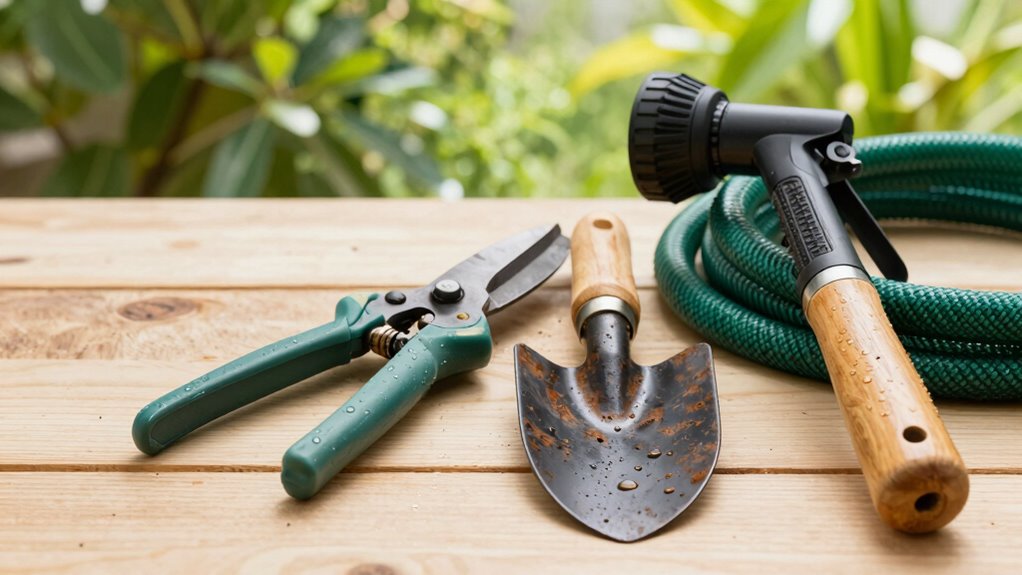
Preparing your garden tools properly is essential to guarantee they work efficiently and last for many seasons. When you take the time for proper garden tool maintenance, you assure that each tool performs at its best, reducing the risk of damage and making your gardening tasks easier and more effective. Starting with your pruning tools, you want to focus on pruning tool care because sharp, clean blades make clean cuts that promote healthy plant growth. First, wash off any dirt or sap with warm, soapy water and dry the blades thoroughly to prevent rust. Use a wire brush or steel wool to remove stubborn debris, and then sharpen the blades with a sharpening stone or file. Sharp blades not only make pruning smoother but also reduce plant injury, so don’t skip this step.
In addition to sharpening, disinfect your pruning tools to prevent the spread of disease. Dip the blades in a solution of one part bleach to nine parts water, or use rubbing alcohol, and wipe them dry afterward. This step is especially important if you’ve recently pruned diseased plants. Once disinfected, apply a light coat of oil to the blades to prevent rust and keep them in good condition. Regular pruning tool care extends their lifespan and ensures that your cuts remain clean and precise. Incorporating proper tool maintenance techniques can significantly prolong the lifespan of your gardening equipment. Additionally, understanding the importance of biodiversity encourages gardeners to select eco-friendly tools and practices that minimize environmental impact. Practicing environmentally conscious garden practices can further enhance the health of your garden ecosystem. Incorporating sustainable gardening methods, such as using eco-friendly tools and composting, supports this goal. Using ergonomically designed tools can also help reduce strain during gardening tasks, making maintenance more comfortable and efficient.
Products Worth Considering

Bose Smart Dolby Atmos Soundbar

Dyson V15 Detect Cordless Stick Vacuum

Roborock Q10 S5+ Robot Vacuum and Mop with 10,000 Pa Suction
As an affiliate, we earn on qualifying purchases.
Frequently Asked Questions
How Often Should I Sharpen My Garden Tools?
You should sharpen your garden tools regularly, ideally every few weeks during peak planting season, to guarantee ideal tool maintenance. Your sharpening schedule depends on how often you use each tool and the material you’re working with. Keep an eye on blade dullness or nicks, and sharpen as needed. Regular upkeep enhances efficiency, extends tool lifespan, and makes gardening tasks easier and safer.
What’s the Best Storage Method for Garden Tools?
Think of your garden tools as treasures that need a cozy home. To keep them in top shape, use tool organization and storage tips like hanging tools on a sturdy wall rack or storing them upright in a dedicated bin. Make sure everything is dry and clean before storing, and consider adding a layer of oil to prevent rust. This way, your tools stay sharp, accessible, and ready for any gardening adventure.
Can I Repair Broken Garden Tools Myself?
Yes, you can repair broken garden tools yourself with some DIY tool repair skills. Start by identifying broken parts, such as cracks in handles or dull blades. Use basic tools like a hammer, wrench, or file to fix or replace damaged components. For more complex issues, consider consulting online tutorials or seeking advice from garden centers. Taking time to repair your tools can extend their life and save you money.
Which Lubricants Are Safest for Garden Tools?
You should choose lubricants that prioritize safety and effectiveness for your garden tools. Look for lubricant types like silicone sprays, lithium grease, or vegetable-based oils, which are safe for plants and skin. Always check safety considerations—avoid those with harsh chemicals or strong fumes. By selecting the right lubricant types and paying attention to safety considerations, you protect your tools, your garden, and yourself, ensuring a smooth, productive season ahead.
How Do I Prevent Rust on My Garden Tools?
To prevent rust on your garden tools, you should regularly clean and dry them after use, especially if they get wet. Apply a thin layer of oil or lubricant to protect metal surfaces, which is essential for rust prevention. Store your tools in a dry, sheltered space to avoid moisture buildup. Good tool maintenance, like sharpening blades and checking for damage, also helps prolong their life and keeps rust at bay.
Conclusion
Getting your garden tools ready now guarantees you’ll enjoy a smooth, productive season. Regular maintenance like cleaning, sharpening, and oiling can extend their lifespan and improve performance. Some believe that well-prepared tools somehow boost your gardening success, making your efforts more fruitful. While that might be a bit of a gardening myth, the truth is, taking the time to prep now saves you frustration later—and helps you enjoy your garden to the fullest all season long.