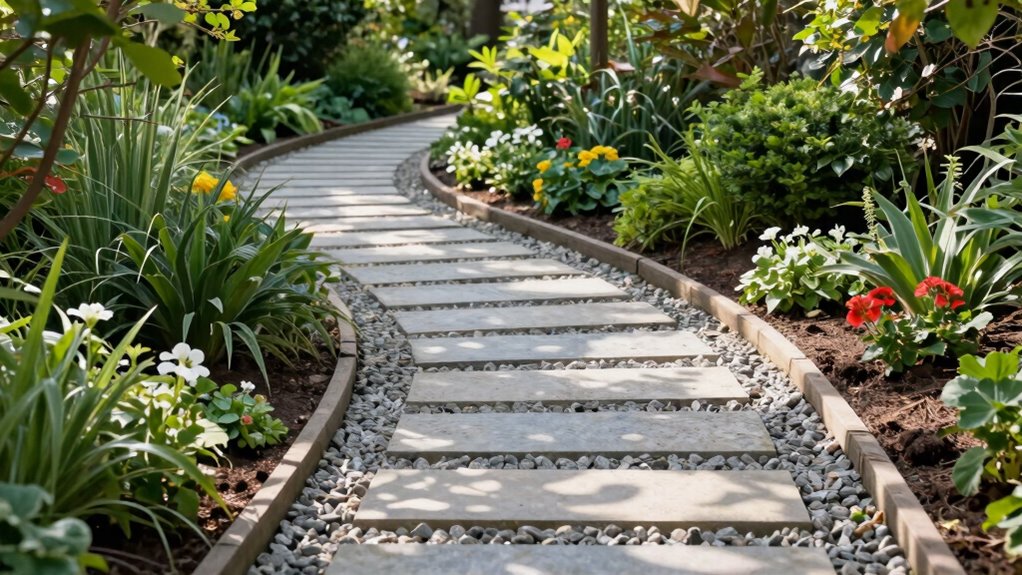

To plan a better garden path before mud takes over, start by choosing durable materials like flagstone, brick, or stepping stones that suit your style and climate. Make certain the path is wide enough and laid out with curves or straight lines for visual interest. Clear and level the ground, removing weeds and loose soil, then install proper edging for stability. Considering soil drainage and site conditions now helps prevent future erosion—keep going to discover more tips for lasting results.

Get business pricing on tools and workshop supplies
- Business-only prices and quantity discounts
- Tax-exempt purchasing
- Multiple users, one account, clear invoices
Key Takeaways
- Assess soil drainage and stability to choose appropriate materials and prevent water accumulation or shifting.
- Select durable, water-resistant path materials suited to your climate for longevity.
- Design a clear, logical route with proper width and shape to enhance usability and aesthetics.
- Prepare the ground thoroughly by removing weeds, leveling, and compacting to ensure a stable foundation.
- Incorporate edging to contain materials, maintain shape, and simplify future maintenance.
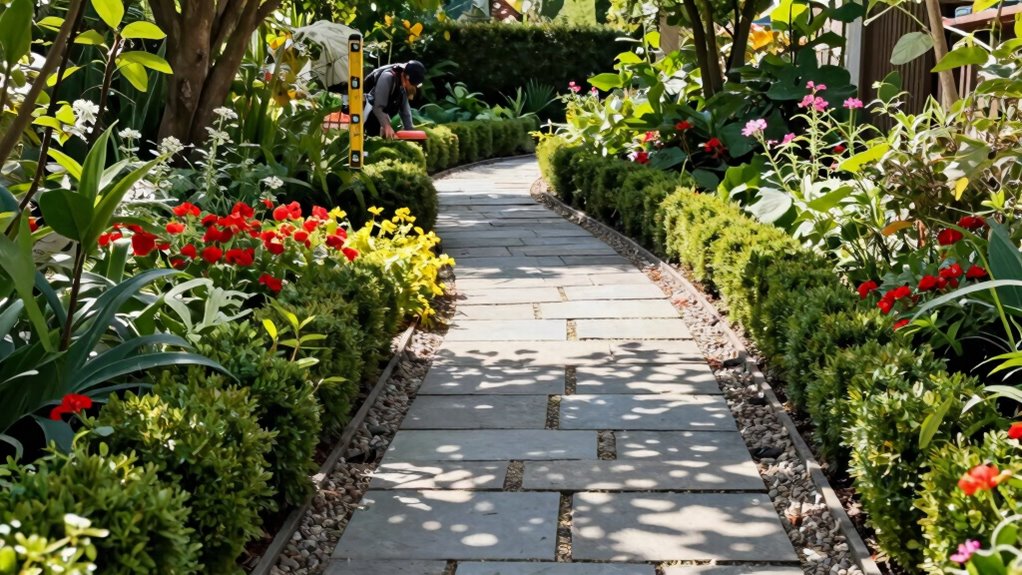
Have you ever wondered how to create a garden path that’s both functional and visually appealing? Planning your garden path before mud takes over is essential to keep your landscape tidy and enjoyable year-round. The first step is choosing the right garden path materials. You want something sturdy enough to withstand foot traffic and weather, but also visually appealing to complement your garden’s style. Options include flagstone, gravel, brick, or stepping stones. Each material offers a different aesthetic and level of maintenance, so consider your garden’s overall look and your ease of upkeep. For example, flagstone provides a natural, rustic appeal, while brick creates a classic, timeless look. Gravel is easy to install and affordable but can shift over time, requiring occasional replenishment. Stepping stones are simple to lay out and add a whimsical touch, guiding visitors through your garden with charm.
Choose durable, stylish materials like flagstone, brick, gravel, or stepping stones to create an inviting garden path.
Once you’ve selected your materials, think about the width and shape of your path. It should be wide enough to comfortably walk on—usually around 3 to 4 feet—and shaped in a way that flows naturally through your landscape. Curved paths tend to look more organic and inviting, while straight lines provide a more formal, structured appearance. As you lay out the route, consider the points of interest and focal points along the way, such as flower beds, sculptures, or a pond. Planning a clear, logical route ensures your garden feels cohesive and inviting. Additionally, incorporating biodiversity elements like native plants along the edges can enhance the ecological value of your garden. Being mindful of soil stability during installation helps prevent future shifting or erosion of your path. Properly assessing soil drainage is also crucial to avoid water pooling and potential damage to your walkway. In addition, understanding your local climate can influence your material choices to ensure longevity and durability.
Adding decorative edging not only enhances the visual appeal but also keeps your materials in place. You can use bricks, stones, or metal edging to create a defined border along your path. Decorative edging adds a polished look and prevents gravel or soil from spilling onto the walk, making maintenance easier. It also helps to retain the shape of your path, especially if you choose organic curves. When installing the edging, make sure it’s level and securely anchored to prevent shifting over time.
Finally, prepare the ground properly before laying your chosen materials. Remove grass, weeds, and loose soil, then level and compact the base to ensure stability. This step prevents your path from settling unevenly or developing future damage. Proper ground preparation is crucial for long-term stability and ease of maintenance. By carefully planning your garden path with suitable materials and decorative edging, you create a functional, attractive feature that keeps your garden organized and beautiful, even before mud has a chance to take over.
Products Worth Considering

Philips Hue Amarant Outdoor Smart Light Bar, Black

Sonos One Two-Room Smart Speaker Set with Alexa, Black

Philips Hue Play Floor Lamp, RGBWWIC LED, 53 Inch, Black
As an affiliate, we earn on qualifying purchases.
Frequently Asked Questions
What Materials Are Best for Creating Durable Garden Paths?
You should choose durable materials like crushed stone, gravel, or pavers for your garden path. These materials withstand foot traffic and weather, making them ideal. When considering plant selection along the path, opt for low-growing, hardy plants that won’t disrupt the walkway. Additionally, mulch options like wood chips or bark can help stabilize the edges and prevent weeds, ensuring your path remains functional and attractive over time.
How Wide Should a Garden Path Ideally Be?
Think of your garden path as a welcoming river, guiding visitors smoothly through your outdoor space. Aim for a width of about 3 to 4 feet, which balances garden aesthetics with practical path safety. This width comfortably accommodates two people walking side by side and makes maintenance easier. Keep it wide enough to enhance visual appeal and guarantee safety, so your garden remains inviting without feeling cramped or unsafe.
Can I Install a Garden Path Myself or Need Professional Help?
You can definitely handle a DIY installation for your garden path if you’re comfortable with basic tools and planning. Many DIY enthusiasts successfully create beautiful paths without professional landscaping help. However, if your project involves complex terrain or specific materials, hiring a professional guarantees quality and durability. Consider your skill level, the project scope, and available time before deciding—either way, a well-planned path enhances your garden’s look and functionality.
How Do I Prevent Weeds From Growing Through the Path?
To prevent weeds from growing through your garden path, start with effective weed control by removing existing weeds thoroughly. Then, apply a weed barrier fabric underneath your chosen path materials. Use mulching techniques around the edges or in gaps to suppress weed growth further. Regular maintenance, like pulling any emerging weeds early, helps keep your path clear and prevents weeds from taking over, ensuring your garden stays neat and tidy.
What Is the Best Way to Maintain My Garden Path Over Time?
Think of your garden path as a living artwork, needing seasonal maintenance to keep its charm. To maintain it, regularly sweep away debris, check for loose stones, and re-level uneven sections. Apply fresh gravel or mulch as needed to preserve its aesthetic appeal. Trim nearby plants to prevent overgrowth, and inspect for weed intrusion, ensuring your path remains inviting year-round. Consistent care keeps your garden path beautiful and functional.
Conclusion
So, next time you’re dreaming up that perfect garden path, remember: a little planning now can save you from turning your yard into a muddy mess later. Ironically, the best-laid plans often get trampled by muddy boots or forgotten in the chaos. But if you take a moment to map it out, you’ll enjoy a tidy, inviting walkway—without the surprise of sinking into the mud. Because, honestly, who wants their garden path to be a swamp?