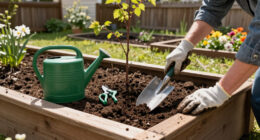
To keep mud out of your house during backyard projects, set up a dedicated staging area close to the work zone, using weather-resistant containers or pallets for organized storage. Create stable pathways from your house to the staging zone with gravel or stepping stones, and place a cleanup station with mats and boot covers nearby. Regularly maintain these areas and adapt your setup as needed. Keep going to discover even more helpful tips for a clean, efficient project.

Get business pricing on tools and workshop supplies
- Business-only prices and quantity discounts
- Tax-exempt purchasing
- Multiple users, one account, clear invoices
Key Takeaways
- Establish a dedicated, weather-protected staging area close to the work zone for organized material storage.
- Create a stable, well-maintained pathway with gravel or stones from the house to the staging area.
- Set up a cleanup station with mats and boot covers near the entrance to remove mud before entering the house.
- Cover storage zones with tarps to prevent materials from getting muddy and tracked inside.
- Regularly clean and reorganize pathways and cleanup stations to maintain a mud-free entry.

Ever wondered how to turn your backyard project into a seamless and stress-free process? The secret lies in effective staging, which helps keep mud and debris out of your house while making your project run smoothly. The first step is solid garden planning. Before you start, take the time to map out your entire project. Know what areas you’ll be working on, where materials will go, and how you’ll access them. This foresight prevents chaos on-site and reduces the risk of tracking dirt into your home. A well-thought-out plan guides you in organizing material storage, ensuring tools and supplies are readily available but contained. When you designate specific zones for storing materials, such as gravel, mulch, or pavers, you prevent unnecessary movement across muddy areas, keeping your yard clean and your house mud-free.
Meticulous planning and designated zones keep your yard clean and your home mud-free during projects.
Next, consider creating a staging area close to the work zone. This is your dedicated space for storing all project materials, tools, and debris. Use sturdy, weather-resistant containers or pallets to keep everything organized and off the ground. This not only makes it easier to grab what you need but also prevents spillages from spreading into your yard or house. When material storage is well-planned, you won’t have to traipse through muddy areas to fetch supplies, which minimizes dirt being tracked inside. Covering these storage zones with tarps or temporary sheds offers extra protection from rain and prevents materials from becoming muddy or damaged. Incorporating proper staging techniques can significantly improve the efficiency and cleanliness of your project. Regularly inspecting and adjusting your staging setup ensures it remains effective and prevents disorganization.
Additionally, implementing contingency plans for weather changes can help you maintain control over your project and minimize muddy messes if rain unexpectedly arrives. Being prepared for weather fluctuations is key to avoiding muddy conditions and keeping your project on schedule. Incorporating effective drainage solutions around your staging area can also further reduce mud buildup by directing water away from your work zones.
Another essential component is establishing a clear pathway from your house to the staging area. Use gravel, wooden planks, or stepping stones to create a clean, stable route. This pathway reduces the chances of tracking mud into your home, especially after rain. Keep this route free of obstructions so you and workers can move efficiently without spreading dirt. Additionally, setting up a designated cleanup station near the entrance of your house – complete with mats, brushes, and boot covers – encourages everyone to wipe off dirt before entering. This simple step drastically reduces the amount of mud brought inside.
Finally, stay flexible and adapt your staging plan as your project progresses. Regularly clean and reorganize your storage areas, and keep pathways clear. The more organized your staging setup, the less likely you are to introduce mud into your house. By investing time in thoughtful garden planning, strategic material storage, and establishing clean pathways, you turn what could be a muddy mess into a manageable, clean process. This approach keeps your home pristine and your project on track, transforming a potentially stressful endeavor into a smooth, efficient experience.
Frequently Asked Questions
How Long Does the Staging Trick Last Before Needing Replacement?
The staging trick typically lasts around six months before you need to do some DIY maintenance or replacement, depending on weather and foot traffic. To keep it effective, you’ll want to regularly clean and refresh the materials. Considering cost considerations, replacing it every half-year balances durability and budget, preventing mud from sneaking inside. Staying attentive to wear and tear ensures your mud barrier stays effective without unnecessary expenses.
Can This Method Be Used for Commercial Properties?
Yes, you can use this staging method for commercial properties, but it requires adjustments for larger scale and foot traffic. While it boosts commercial efficiency by reducing mud tracking, it might increase maintenance costs due to higher usage. You’ll need durable materials and regular upkeep to guarantee it remains effective. Proper implementation ensures that the benefit of cleaner entrances outweighs the additional costs, making it a practical solution for busy commercial spaces.
What Materials Are Recommended for the Staging Setup?
For your staging setup, use durable materials like heavy-duty rubber mats or textured concrete pavers, as they withstand frequent foot traffic and weather. These materials offer excellent durability and are easy to install, making your setup both practical and long-lasting. You’ll appreciate how quickly you can lay them down and how well they resist mud and dirt, keeping your house cleaner and your staging area functional.
Is the Trick Effective During Heavy Rain or Snow?
Yes, the trick remains effective during heavy rain or snow, thanks to its rain resistance and snow impact handling. You’ll find that a well-placed, durable mat or platform can prevent mud from tracking inside, even in adverse weather. Just guarantee the materials are sturdy and slightly elevated to resist water pooling, and you’ll keep your house cleaner, regardless of rain or snow conditions outside.
Does This Method Require Professional Installation?
No, you can absolutely do this DIY installation yourself, saving on professional costs. Think of it as a small investment in convenience—no need for experts or hefty fees. With clear instructions, you’ll find it straightforward to set up, and the cost considerations are minimal compared to hiring help. This simple trick keeps mud out of your house, giving you a clean, tidy space without extra expenses or headaches.
Conclusion
By implementing this backyard staging trick, you’ll keep mud at bay like a shield protecting your home. It’s a simple step that makes a big difference, transforming chaos into order with ease. Think of it as the finishing touch on a well-crafted puzzle—small but essential. With this strategy in place, your house stays cleaner, and your outdoor space stays inviting. Now, you’re ready to enjoy your backyard without the worry of mud sneaking inside.
Halloween Picks
halloween
As an affiliate, we earn on qualifying purchases.