
TL;DR
A Hunker report describes reusing scrap chain-link fencing to make a drag harrow that can distribute topsoil or sand and smooth minor lawn irregularities. The method depends on securely attached weight and a suitable towing vehicle; it is not presented as a fix for major grading problems.
A Hunker report describes how homeowners can reuse an old section of chain-link fence as a low-cost drag harrow to smooth minor lawn bumps or spread topsoil and sand. The approach is aimed at small grading jobs where a riding mower or ATV can tow the weighted fence, rather than at correcting major drainage or terrain problems.

Get business pricing on tools and workshop supplies
- Business-only prices and quantity discounts
- Tax-exempt purchasing
- Multiple users, one account, clear invoices
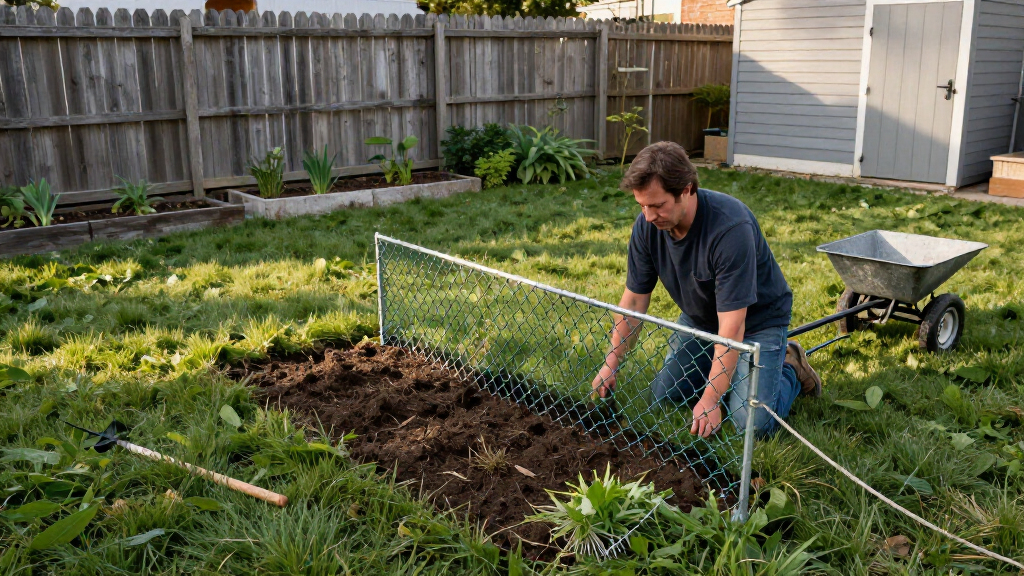
The basic device is a piece of chain-link fencing pulled across the ground, with weight fastened on top so it presses into the surface. A piece of wood or metal across the front can help keep the leading edge flat. A chain, rope or ratchet strap is attached at both sides, then connected at the center to a mower or ATV tow hitch. Hunker recommends using a chain-link gate when available because its end panels help keep the material flat and make towing easier.
The report describes several uses: dragging over soil after core aeration to break up the soil plugs, and pulling across newly added sand or topsoil to spread it evenly. It also says a chain-link drag can smooth gravel driveways. For these tasks, the fence is described as spreading material more than scraping the ground. Hunker cautions that any added weight must be secured so it does not shift or fly off over uneven ground.
Reclaimed fencing may make the project inexpensive, but Hunker also lists retail alternatives. It cites chain-link gates at Home Depot for about $55.98 to $76.98 and a 10-foot roll of chain-link material for about $60. Those are prices quoted in the report and may change. A commercial Yard Tuff ATV drag harrow was listed at $136.99, while a more aggressive chain harrow was cited at $283.99.
A Lower-Cost Option for Minor Leveling
Uneven ground can make mowing less comfortable and can leave a freshly spread layer of soil or sand uneven. Reusing scrap fencing offers a way to handle some small surface irregularities without buying a purpose-built harrow. The approach may also make use of fence material that would otherwise be discarded.
The method has limits. It is described as a way to distribute material and smooth modest inconsistencies, not as a substitute for professional grading when a yard has substantial slopes, drainage issues, or recurring low spots. Results will depend on the surface, the amount of material and the towing equipment. Readers should check their mower or ATV’s towing guidance and work at a controlled speed.
Products Worth Considering

Dyson Cyclone V10 Origin Cordless Vacuum

Shark AV2501S AI Ultra Robot Vacuum with Matrix Clean and Self-Empty Base

Philips Hue Amarant Outdoor Smart Light Bar, Black
As an affiliate, we earn on qualifying purchases.
How the Fence Becomes a Drag
Drag harrows are used to smooth fields and distribute material; more aggressive farm versions can require tractors. Hunker presents the DIY chain-link version as a lighter option for a riding mower or ATV. It says chain-link’s uneven wire pattern works across the ground and spreads material, while galvanized fencing resists rust and can be stored outdoors.
The source favors chain-link over welded-wire fencing for repeated ground contact, but does not provide comparative testing. Its suggested build is simple: use a scrap roughly five feet long, add a front bar if needed, fasten down a suitable weight and attach a tow line. A gate can provide a ready-made flat leading edge. The report notes that commercial versions are available for people without access to salvaged material.
““Minor inconsistencies in your lawn’s grade” can often be smoothed with scrap chain-link pulled behind an ATV or riding mower.”
— Hunker
Limits and Safety Questions
The report does not provide independent test results, a measured cost for a build made entirely from reclaimed parts, or a specific estimate of how much area the tool can level. It also does not set out weight limits for different mowers and ATVs. The cited retail prices are examples from the article, not guaranteed current prices.
It remains unclear how well the method performs on compacted soil, deep depressions or yards with drainage problems. The report focuses on minor grading and spreading material. Before towing a homemade implement, users should confirm that their vehicle is rated for the load, keep weights firmly secured and avoid people, pets and obstacles in the work area.
Check the Yard and Tow Rating
Homeowners considering the method can first identify whether the problem is a shallow surface bump or a larger grading concern. For a small area, the next steps described by Hunker are to source a sound piece of chain-link, add a flat front edge if needed, secure the weight and use an appropriate tow hitch. Add soil or sand in manageable amounts, then make repeated passes rather than expecting one pass to correct the surface.
Before starting, check the mower or ATV manual for towing limits and inspect the connections. If the yard’s unevenness is linked to persistent water pooling or a pronounced slope, the source does not establish that a fence drag will solve it; a more suitable grading plan may be needed.
Key Questions
Can an old chain-link fence smooth a bumpy lawn?
Hunker says scrap chain-link can help smooth minor inconsistencies when pulled across the ground behind a riding mower or ATV. The report does not claim it will fix deep holes or major grading problems.
What materials are needed to make the drag?
The basic setup uses chain-link fencing, a front piece of wood or metal if the fence needs support, a towing chain, rope or ratchet strap, and securely fastened weight such as landscaping timbers or tires.
Can it spread topsoil or sand?
Yes. The report describes dragging the weighted fence across added sand or topsoil to distribute the material. It characterizes chain-link as better at spreading material than scraping the ground.
Is a homemade chain-link harrow cheaper than a store-bought one?
It can be inexpensive if the fence and weight are salvaged. Hunker cites retail chain-link materials at roughly $60 to $77 and a commercial ATV harrow at $136.99, but those figures are article-era examples and may have changed.
What safety checks should be made before towing it?
Confirm the mower or ATV is rated to tow the implement, attach it to the proper hitch and secure all added weight. Keep people and pets away from the work area, and do not use a setup that becomes unstable or difficult to control.
Source: rss