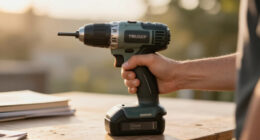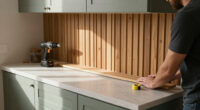
To prevent crooked trim instantly, start by unplugging your saw for safety, then raise the blade to its highest position. Use a square to check that the blade is perpendicular to the table and fence, adjusting until it forms a perfect 90-degree angle. Double-check the bevel and miter settings, then make a test cut on scrap material. Consistently verifying alignment and making adjustments guarantees straight cuts every time—discover more tips to perfect your setup.

Get business pricing on tools and workshop supplies
- Business-only prices and quantity discounts
- Tax-exempt purchasing
- Multiple users, one account, clear invoices
Key Takeaways
- Unplug the saw before making any adjustments for safety.
- Raise the blade to its highest position and use a square to verify 90-degree alignment.
- Adjust the blade until it forms a perfect right angle with the table.
- Double-check the bevel and miter settings with a square after adjustment.
- Make test cuts on scrap material and measure for accuracy before starting your project.

Are you confident your miter saw is properly set up for accurate cuts? If not, you risk crooked trim and wasted materials. The first step to ensuring precision is checking the blade alignment. A misaligned blade can cause uneven cuts, so it’s crucial to verify that the blade is perfectly perpendicular to the base and fence. To do this, unplug the saw for safety, then raise the blade to its highest position. Place a square against the blade and the table to see if they form a perfect 90-degree angle. If they don’t, adjust the blade until it’s properly aligned. Most saws have an adjustment screw or mechanism for fine-tuning, so follow your manufacturer’s instructions carefully. Proper blade alignment ensures your cuts are straight and accurate, preventing crooked trim that can ruin a project. Additionally, consulting your saw’s user manual can provide specific guidance for your model’s alignment process.
Ensure your miter saw blade is perfectly perpendicular to the table for precise, straight cuts.
While performing this setup check, always pay attention to safety precautions. Never work on a powered saw, and always unplug it before making any adjustments. Wear safety glasses to protect your eyes from debris, and keep your hands clear of the blade area. Use a push stick or clamp small pieces to avoid accidental slips. Confirm that the blade has come to a complete stop before making any adjustments. These precautions help prevent injuries and ensure you can focus on aligning the blade properly without distractions. Blade alignment is a critical component of achieving precise cuts and avoiding costly mistakes. Regular inspection of your saw’s safety mechanisms can help prevent accidents, especially as tools age or are subjected to impacts.
Once the blade is aligned, double-check the saw’s bevel and miter settings to ensure they’re locked in at the desired angles. Even a slight deviation can lead to crooked cuts, especially on longer trim pieces. After making adjustments, make a test cut on scrap material to verify accuracy. Measure the cut piece with a square or tape measure, and if it’s not square, revisit the alignment and settings. This step confirms that your setup is correct and saves time in the long run by avoiding errors during your actual project. Remember, consistent checks are key to maintaining precision over time.
Regularly performing this setup check keeps your miter saw functioning optimally. Over time, vibrations or impacts can throw off blade alignment, so it’s best to check before each major project. Additionally, paying close attention to calibration can help sustain the saw’s accuracy over its lifespan. By paying close attention to blade alignment and upholding safety precautions, you ensure every cut is precise and safe. This simple routine prevents crooked trim, reduces material waste, and helps you achieve professional-looking results every time.
As an affiliate, we earn on qualifying purchases.
Frequently Asked Questions
How Often Should I Recheck My Miter Saw Alignment?
You should recheck your miter saw alignment every few weeks or after heavy use to guarantee precision. Regular blade maintenance is essential, so keep the blade sharp and clean. Also, check dust collection to prevent debris buildup that can affect accuracy. By maintaining proper blade sharpness and clearing dust, you help keep your saw aligned and prevent crooked cuts, making your projects safer and more precise.
Can Improper Blade Installation Cause Crooked Cuts?
You might think a crooked cut is just bad luck, but improper blade installation actually causes it. When you neglect blade alignment, your cutting accuracy suffers, leading to uneven edges and wasted time. Ensuring your blade is correctly installed and aligned is essential for precision. Don’t ignore this simple step—proper blade setup guarantees straight, accurate cuts every time, preventing frustration and saving you from redoing projects.
What Safety Precautions Are Necessary During Setup?
When setting up your miter saw, prioritize safety by making sure the blade guard is properly in place to prevent accidental contact. Keep your workspace tidy by managing cords to avoid tripping hazards. Double-check that the saw is unplugged before making adjustments, and wear safety glasses. Secure the saw firmly, and confirm the blade is correctly installed. These precautions help prevent injuries and ensure precise, safe cuts every time.
Does Temperature Affect Miter Saw Accuracy?
Temperature can impact your miter saw’s accuracy because it affects blade stability and calibration. When it’s hot, metal components expand slightly, potentially throwing off your cuts. To guarantee precision, regularly check calibration techniques and adjust as needed, especially in extreme temperatures. Keep your workspace climate-controlled if possible, and always verify your saw’s settings before starting a project to prevent crooked trim and ensure clean, accurate cuts.
Are There Specific Brands Known for Precise Miter Saws?
Think of choosing a precise miter saw like selecting a trusted compass for an uncharted journey. Brands like Bosch, DeWalt, and Festool are renowned for their accuracy, thanks to strong brand reputation and rigorous calibration techniques. These manufacturers consistently deliver tools that help you cut perfect angles every time. By trusting their craftsmanship, you’re ensuring your projects come out flawless, avoiding crooked trim and frustration.
As an affiliate, we earn on qualifying purchases.
Conclusion
By taking a moment to double-check your miter saw setup, you’re not just ensuring perfect cuts—you’re safeguarding your craftsmanship’s integrity. While a crooked trim might seem minor, it’s the subtle misalignment that can undermine an entire project, much like a crooked picture frame diminishes a masterpiece. Remember, precision isn’t just about the cut; it’s about the pride you take in your work. In woodworking, as in life, attention to detail makes all the difference.
As an affiliate, we earn on qualifying purchases.
As an affiliate, we earn on qualifying purchases.
Fall Picks
fall essentials
As an affiliate, we earn on qualifying purchases.