TL;DR

Get business pricing on tools and workshop supplies
- Business-only prices and quantity discounts
- Tax-exempt purchasing
- Multiple users, one account, clear invoices
A Nature Yardlife YouTube tutorial shows a gardener making a small mason-bee house from an untreated cedar fence board and removable nesting tubes. The design offers cavities for solitary bees to nest in, but the report does not establish that the project has attracted bees or measured an effect on pollination.
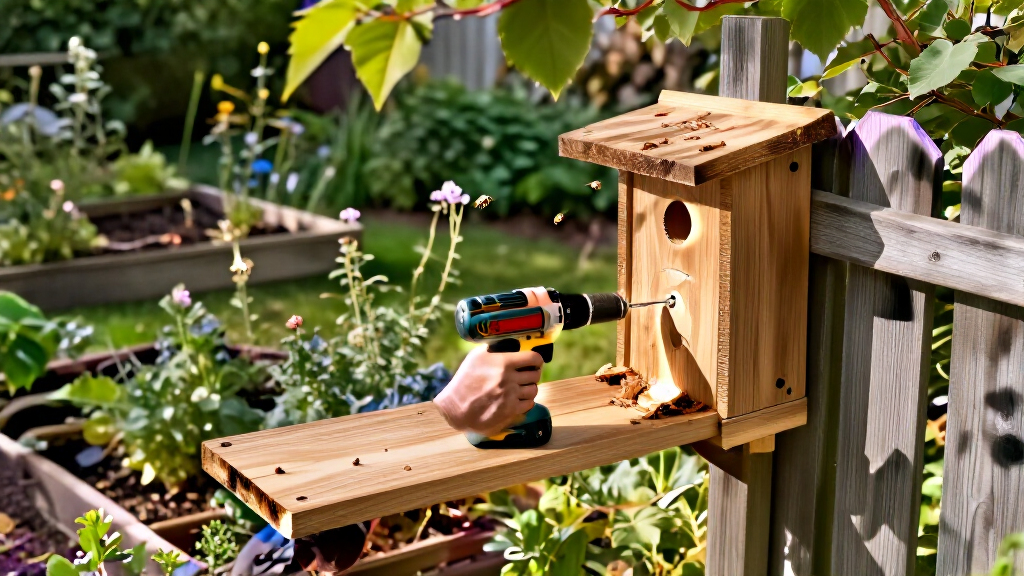
A gardener featured in a Nature Yardlife YouTube tutorial turns an extra untreated cedar fence board into a small, roofed nesting house for mason bees, offering a simple way to add nesting cavities alongside flowers in a backyard. The project uses removable tubes rather than a honeybee-style hive; the report describes the design, but does not confirm that bees have moved into it.
The build uses a cedar board, measuring and cutting tools, sandpaper, fasteners and mounting hardware. The gardener also fits the house with removable mason-bee nesting tubes, with paper liners as an option. The tubes should be selected before cutting: their length determines how deep the shelter needs to be. The board’s dimensions then shape the size of the finished house.
In the tutorial, the board is cut into matching side panels, a back, a bottom and a roof. One side of each panel is made slightly higher to give the roof a slope, while the roof extends beyond the sides and entrance for cover. After sanding, the pieces are fastened together. A divider can create a small lower compartment, which the gardener uses for cocoons; a mounting strip at the back allows the house to be fixed to a tree or post.
The tubes sit in the upper compartment. The DIYer recommends mounting the house securely under cover and facing it east, where it can receive morning sun. The source says the sunlight can help bees become active after a cool night. It also recommends using removable nesting materials so they can be cleaned or replaced seasonally, rather than reusing them without maintenance.
A Nesting Site Alongside Garden Flowers
The project addresses a part of backyard habitat that planting alone does not provide: a place to nest. The report explains that solitary mason bees use existing cavities to raise their young, instead of living together in a honeybee-style hive. Nesting tubes offer an artificial substitute for small spaces such as hollow stems.
That makes the design relevant to gardeners who want to support pollinators while reusing leftover material. But the tutorial is a how-to, not evidence of a measured conservation outcome. It does not report how many bees, if any, used the house, or quantify any change in garden pollination. Its practical message is narrower: provide both suitable nesting spaces and flowers for bees to visit, and maintain the nesting materials.
As an affiliate, we earn on qualifying purchases.
How the House Fits Mason Bee Nesting
The Hunker report describes mason bees as solitary bees that raise their young in existing cavities. That behavior informs the project’s basic design: a sheltered enclosure holds tubes that provide narrow nesting spaces. The house is not presented as a hive for a colony, and the build does not require elaborate equipment or a large structure.
The tutorial’s approach is to size the enclosure around the tubes, then add protection from above and a way to mount it firmly. It also pairs the shelter with bee-friendly flowers and landscaping. The source frames food and nesting sites as complementary needs, rather than suggesting that a bee house by itself will draw bees to a yard.
“The tubes offer a substitute for the hollow stems and other small spaces mason bees would naturally seek out.”
— Hunker report
As an affiliate, we earn on qualifying purchases.
Bee Occupancy and Results Unreported
The available report does not say whether bees occupied the house, how long it took for any to do so, or whether the build led to more pollination in the garden. It also provides no measurements of the finished structure or a count of tubes, so readers will need to adapt the cuts to their own board and chosen nesting materials.
The source recommends seasonal cleaning or replacement of removable tubes to limit the buildup of parasites and disease, but does not give a detailed cleaning protocol. The results of the project and the maintenance steps used after installation are not reported.
As an affiliate, we earn on qualifying purchases.
Build, Mount and Maintain the Shelter
The tutorial’s next steps for a gardener following the design are to choose nesting tubes, measure the board around them, cut and assemble the shelter, and mount it securely beneath cover. The suggested east-facing position is intended to provide morning sun. Adding bee-friendly flowers gives visiting pollinators a food source near the nesting site.
After installation, the practical follow-up is seasonal attention to the removable nesting materials: inspect them and clean or replace them rather than reusing them without proper care. The source does not set a specific inspection date or report a follow-up on this particular house, so whether it attracts bees remains unknown.
As an affiliate, we earn on qualifying purchases.
Key Questions
What is the bee house made from?
The tutorial uses an untreated cedar fence board, cut into side panels, a back, a bottom and an overhanging roof. It also uses fasteners and mounting hardware.
What kind of bees is the design for?
The house is designed for solitary mason bees, which use cavities to raise their young rather than sharing a honeybee-style hive.
Why choose the nesting tubes before cutting the board?
The tubes determine how deep the enclosure needs to be. The report advises choosing them first so the housing can be sized to shelter them.
Where does the tutorial recommend mounting the house?
The gardener recommends a firm mounting beneath cover, facing east to receive morning sunlight. The source does not report whether this placement resulted in bee occupancy.
Does the report confirm that bees moved into the house?
No. It describes the build and its intended use, but does not provide follow-up confirming occupancy or measuring effects on pollination.
Source: rss
Columbus Day / Indigenous Peoples' Day Picks
long weekend sales
As an affiliate, we earn on qualifying purchases.