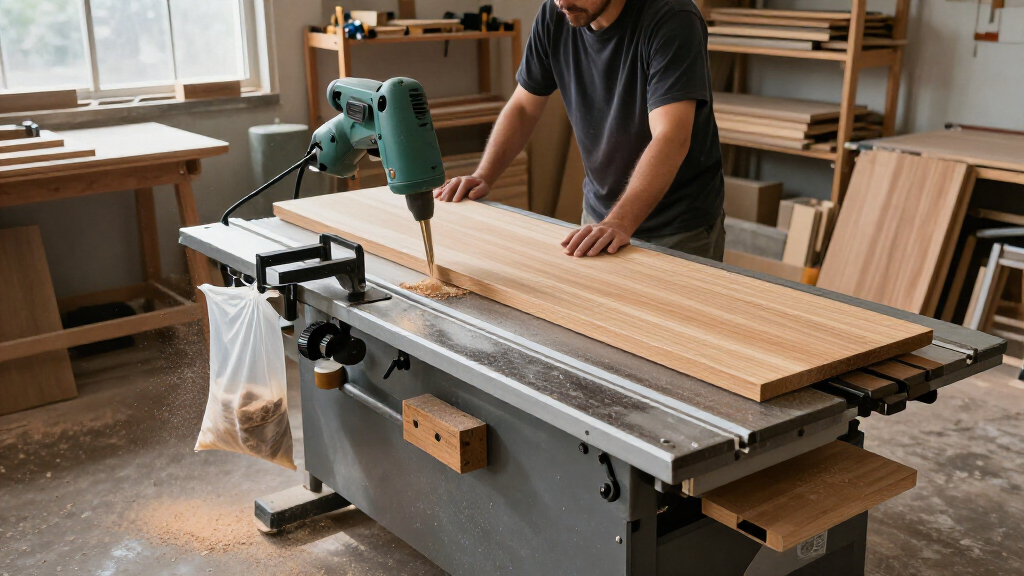
The best woodworking dust collectors in this roundup serve different jobs: the WEN DC1300 is my best overall pick for its higher stated airflow, while the POWERTEC 1 HP mobile-base collector offers a practical balance of filtration and mobility. For a small bench setup, the PSI DC725 is a compact alternative, and the DEWALT hanging system addresses airborne dust rather than tool-port chips. The main tradeoff is choosing between source collection, room-air filtration, and a system that can do both only with added planning. Capacity, hose compatibility, filter maintenance, and available floor or wall space also shape the decision. Read on for the full breakdown and help matching a collector to your shop.

Get business pricing on tools and workshop supplies
- Business-only prices and quantity discounts
- Tax-exempt purchasing
- Multiple users, one account, clear invoices
Complete the kit



Key Takeaways
- Tool-connected collection and air filtration solve different problems: the WEN DC1300 and mobile POWERTEC models target dust at machine ports, while the DEWALT and WEN 3410 circulate and filter room air.
- The WEN DC1300 stands apart on stated airflow: its 1,300 CFM rating is the largest listed here, making it the clearest candidate for users prioritizing a central collector for compatible tools.
- Several 560 CFM, 1 HP models are close alternatives, not interchangeable choices: VEVOR, POWERTEC portable, and POWERTEC wall-mount designs differ chiefly in placement and mobility.
- Compact machines trade coverage for convenience: PSI and Abestorm tabletop units suit localized work better than a multi-machine collection plan.
- Portability, mounting, and bag capacity matter alongside airflow: the WEN DC3401, WEN DC3474, and mobile POWERTEC options favor flexible shop layouts, while wall-mounted picks save floor space.


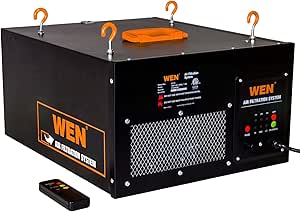


| woodworking dust collector | Airflow | Weight | Motor | Dimensions |
|---|---|---|---|---|
| PSI Woodworking DC725 Portable | Up to 725 CFM | 25.4 lb | 110V variable-speed | 23 × 8 × 10.5 inches |
| Abestorm DecDust 780S Tabletop | 580 or 780 CFM | 19.96 lb | — | 14.57 × 9.45 × 11.87 inches |
| WEN DC3401 12-Gallon Woodworki | Up to 660 CFM | 17 lb | 5.7-amp brushed motor | 34.25 × 13 × 14.2 inches |
| DEWALT DWXAF101 Hanging Air Fi | — | — | — | 10.2 × 15.9 × 20 inches |
| VEVOR Dust Collector | 763 CFM | 114.9 lb | 1.5 HP | 41.34 × 19.69 × 61.42 inches |
| WEN DC1300 1,300 CFM 14-Amp Wo | Up to 1,300 CFM | — | 14 amps | — |
| WEN 15-Gallon Rolling Dust Col | Up to 600 CFM | 41.1 pounds | 7.4-amp induction motor | 43.3 x 17.7 x 20.1 inches |
| WEN 3410 3-Speed Remote-Contro | 300, 350, or 400 CFM | 31 pounds | — | 17 x 20.5 x 10 inches |
| POWERTEC 1 HP Dust Collector w | — | 55 pounds | — | — |
| VEVOR 1 HP Wall-Mount Dust Col | 560 CFM | — | — | — |
| POWERTEC 1 HP Portable Dust Co | — | 43.6 pounds | 1 HP induction motor | — |
| POWERTEC DC5371 Wall-Mount Dus | — | — | 1 HP induction motor | — |
More Details on Our Top Picks
PSI Woodworking DC725 Portable Tabletop Dust Collector
The PSI DC725 is built for dust control close to small work, not for collecting chips from a full-size planer or several machines. Its three fans move up to 725 CFM, and the adjustable polycarbonate doors let me aim suction toward carving, sanding, grinding, or woodburning. That self-contained format makes it easier to place beside a bench than a hose-connected unit such as the WEN DC3401, which is better suited to a machine with a 4-inch port and a collection bag. The PSI adds variable speed and two grounded outlets, but its tabletop focus limits its usefulness for broad shop cleanup. I’d choose it for close-in craft work and skip it if the goal is central or whole-shop dust collection.
Pros:- Portable, self-contained design fits beside a tabletop work area
- Adjustable doors direct airflow toward the task
- Variable-speed operation lets users tune airflow
- Includes a 10 × 20-inch filter and two grounded outlets
Cons:- Not designed to collect dust from large machines or an entire workshop
- The listed weight and dimensions vary slightly across product details
Best for: Carvers, woodburners, and small-project woodworkers who need directed dust capture at a tabletop bench.
Not ideal for: Woodworkers seeking dust collection for large machines, long hose runs, or high-volume chip removal.
- Model:DC725
- Airflow:Up to 725 CFM
- Fans:Three computer-grade fans
- Motor:110V variable-speed
- Filter size:10 × 20 inches
- Weight:25.4 lb
- Dimensions:23 × 8 × 10.5 inches
- Outlets:Two grounded 115V outlets
- Warranty:2 years under normal use
Our verdict“Choose the DC725 for directed dust pickup during small bench projects, not as a substitute for a machine-connected collector.”
Abestorm DecDust 780S Tabletop Dust Collector with Timer
The Abestorm DecDust 780S suits a small shop where I want a portable air-filtration unit that can run for a set period and then shut off. Its two airflow settings, up to 780 CFM, and timer of up to 120 minutes make it easier to tailor a cleanup cycle than the PSI DC725, whose main advantage is directing suction at a specific work surface. A MERV-13 filter and metal housing add a more workshop-oriented feel, while the handle and cord wrap help when moving it between work areas. This is still a corded tabletop filtration unit, not a 4-inch hose collector like the WEN DC3401. Filter life is listed as up to six months, so replacement needs belong in the ownership plan.
Pros:- Two airflow settings provide 580 or 780 CFM
- Timer can run for up to 120 minutes
- MERV-13 filter is intended to capture airborne dust
- Metal housing, carry handle, and cord wrap support portable use
Cons:- Requires a corded 115V power connection
- Listed filter life is up to six months, so filter replacement is part of ongoing maintenance
Best for: Small-shop woodworkers and renovators who want portable air filtration with a timed run cycle after dusty work.
Not ideal for: Owners who need direct machine pickup through a dust hose or who prefer a cordless unit.
- Model:DecDust 780S
- Airflow:580 or 780 CFM
- Filter:MERV-13
- Filter life:Up to 6 months
- Timer:Up to 120 minutes
- Voltage:115V
- Power:100W, 0.9A
- Dimensions:14.57 × 9.45 × 11.87 inches
- Weight:19.96 lb
Our verdict“Pick the DecDust 780S for portable, timed air filtration, but choose a hose-connected collector for dust pickup at a machine.”
WEN DC3401 12-Gallon Woodworking Dust Collector
The WEN DC3401 is the practical step up from tabletop filtration when I need to collect debris at a machine through a hose. Its 4-inch dust port and 12-gallon bag suit a small workshop with compatible tools, while lockable casters make it easier to reposition than the heavier VEVOR 763 CFM cyclone. At up to 660 CFM, it offers useful airflow in a compact, 17-pound package, but the bag’s capacity is modest compared with larger shop systems. The optional wall mount gives it another setup path for a crowded floor plan. Unlike the PSI DC725 or Abestorm DecDust 780S, this model is designed around machine pickup rather than tabletop air filtration, so buyers need compatible hose connections and should not expect it to replace a larger collector for demanding machines.
Pros:- Up to 660 CFM airflow in a compact unit
- Four lockable swivel casters support repositioning
- Optional wall mounting can free up floor space
- Includes a 12-gallon, 5-micron zippered collection bag
Cons:- Requires a compatible 4-inch dust hose connection
- The 12-gallon bag needs more frequent emptying than larger-capacity systems
Best for: Small-shop owners with 4-inch-port tools who want a compact, mobile collector or a wall-mounted setup.
Not ideal for: Woodworkers needing a large-capacity collector for multiple machines or unwilling to work with a 4-inch hose connection.
- Motor:5.7-amp brushed motor
- Airflow:Up to 660 CFM
- Impeller:6-inch nylon
- Dust port:4 inches
- Collection bag:12 gallons, 5-micron zippered
- Dimensions:34.25 × 13 × 14.2 inches
- Weight:17 lb
- Mounting:Four lockable swivel casters; optional wall mount
- Warranty:2 years
Our verdict“Choose the DC3401 for compact, hose-connected collection in a small shop, but look to a larger system for higher-volume workloads.”
DEWALT DWXAF101 Hanging Air Filtration System for Woodworking
The DEWALT DWXAF101 is an overhead air-filtration choice for shops where floor space is at a premium and airborne fine dust is the concern. Its two-stage filter pairs a washable cotton pre-filter with an H11 HEPA filter, rated to capture over 95% of 0.3-micron particles. That gives it a different job from the WEN DC3401, which collects debris through a machine hose and bag rather than filtering room air. Four modes, a remote, and timers up to eight hours make it convenient to run while working or after a session. The tradeoff is installation: it needs a secure ceiling mount and does not capture chips at the tool. Its listed 64 dB noise level may also be noticeable in a small workspace.
Pros:- Two-stage filtration captures over 95% of 0.3-micron particles
- Washable cotton pre-filter helps with routine filter care
- Four operating modes and remote control allow convenient adjustments
- Timer offers 1-, 2-, 4-, and 8-hour settings
Cons:- Requires ceiling installation and secure overhead mounting
- Does not replace a hose-connected collector for chips or tool-level dust
- Listed noise level is 64 dB
Best for: Woodworkers with limited floor space who want overhead filtration for fine airborne dust during or after shop work.
Not ideal for: Buyers who need direct dust pickup at a machine or cannot install a ceiling-mounted unit.
- Model:DWXAF101
- Filtration:Two-stage washable cotton pre-filter and H11 HEPA filter
- Particle capture:Over 95% at 0.3 micron
- Operating modes:HI, MID, LO, AUTO
- Timer:1, 2, 4, and 8 hours
- Power:105W AC
- Noise level:64 dB
- Dimensions:10.2 × 15.9 × 20 inches
- Warranty:3 years
Our verdict“Choose the DWXAF101 to filter airborne fine dust from above, while pairing it with tool-level collection for debris at the source.”
VEVOR Dust Collector, 763 CFM 1 Micron Cyclone Dust Collector, 1.5HP Dust Collection System with 12.5-Gallon Bag & Base Stand, Smart Cyclone Separation for Woodworking
The VEVOR 763 CFM cyclone collector is the most substantial machine-connected option in this group, pairing a 1.5 HP motor with a 12.5-gallon drum and 1-micron filtration. Compared with the compact WEN DC3401, it offers more stated airflow and a larger collection setup, making it a better match for a workshop generating more chips and dust. The rolling base, clear window, and release lever are practical touches for checking and emptying the drum, but this is not a light-duty tabletop appliance: its listed weight is 114.9 pounds and its dimensions demand dedicated space. Noise can reach 90 dB, another drawback for a small or shared shop. I’d favor it for a fixed workshop setup, not frequent movement or quiet operation.
Pros:- Listed airflow of 763 CFM and a 1.5 HP motor
- 12.5-gallon drum supports longer runs between emptying
- 1-micron filtration is aimed at fine dust capture
- Rolling base and clear window help with positioning and fill checks
Cons:- At 114.9 lb, it is difficult to move compared with the WEN DC3401
- Noise can reach 90 dB, which may be intrusive in a small workshop
- Large footprint makes it less suitable for tight work areas
Best for: Workshop owners who need a higher-airflow collector with a larger drum and can dedicate floor space to a heavy unit.
Not ideal for: Small-shop users who need quiet operation, frequent portability, or a compact collector for occasional bench work.
- Model:DC20002
- Airflow:763 CFM
- Motor:1.5 HP
- Filtration:1 micron
- Collection capacity:12.5 gallons
- Weight:114.9 lb
- Dimensions:41.34 × 19.69 × 61.42 inches
- Voltage:120V
- Material:Q235A and non-woven fabric
Our verdict“Choose this VEVOR for higher-volume workshop collection when capacity and airflow matter more than quietness or easy portability.”
WEN DC1300 1,300 CFM 14-Amp Woodworking Dust Collector
For a shop that needs one collector to serve more than one machine, the WEN DC1300 stands apart from the smaller WEN DC3474: its 1,300 CFM airflow and two 4-inch inlets support connections to two tools. The 50-gallon bag also means fewer interruptions to empty it during a busy work session. Four swivel casters make it easier to reposition around the shop, though its size and indoor-use design make it a better fit for a dedicated workshop than a compact or outdoor setup. The tradeoff is simple but meaningful: it has one speed, so you cannot dial airflow down for lighter tasks. Choose it for broad machine coverage and capacity; skip it if you need a smaller, more adjustable collector.
Pros:- Up to 1,300 CFM for substantial airflow
- Two 4-inch inlets allow connections to two tools
- 50-gallon collection bag supports longer work sessions
- Four swivel casters make repositioning easier
Cons:- Single-speed operation offers no airflow adjustment
- Designed for indoor use
- Larger bag and dual-inlet layout may be more collector than a small shop needs
Best for: Woodworkers with a dedicated indoor shop who want to connect two machines and reduce collection-bag emptying.
Not ideal for: Owners of compact shops or users who need variable speed or outdoor operation.
- Airflow:Up to 1,300 CFM
- Motor:14 amps
- Filter:5 microns
- Inlets:Two 4-inch inlets
- Collection bag capacity:50 gallons
- Impeller:10-inch steel, up to 3,450 RPM
- Mobility:Mobile base with four swivel casters
- Warranty:Two years
Our verdict“Choose the DC1300 if your indoor shop needs high airflow for two tools and a large collection bag; choose a smaller collector if space or speed control matters more.”
WEN 15-Gallon Rolling Dust Collector with 7.4-Amp Motor (DC3474)
The WEN DC3474 suits a one-machine setup where a full-size collector like the WEN DC1300 would take up more room and offer more capacity than needed. Its 600 CFM airflow, 4-inch port, and 15-gallon bag make it a more modest option for a tool with a compatible dust outlet. Swivel casters and a carrying handle support moving it between work areas, while the optional wall mount can free up floor space. That mounting choice has a catch: the wheels must be removed, so the unit cannot be rolled around while mounted. The DC3474 also requires a 4-inch connection, which limits compatibility with tools that use smaller ports unless you add an adapter. It favors compact-shop flexibility over the DC1300’s airflow and dual-tool connections.
Pros:- Up to 600 CFM suits a smaller single-machine setup
- Swivel casters and carrying handle aid repositioning
- Optional wall mount can reclaim floor space
- 15-gallon 5-micron bag and two-year warranty
Cons:- Single 4-inch dust port limits direct tool connections
- Wall mounting requires removing the wheels
- Lower airflow and collection capacity than the WEN DC1300
Best for: Hobbyist woodworkers with one 4-inch-port machine, limited floor space, and a need to move or wall-mount their collector.
Not ideal for: Shops running multiple machines at once or buyers whose tools lack a compatible 4-inch connection.
- Airflow:Up to 600 CFM
- Motor:7.4-amp induction motor
- Impeller:9 inches
- Dust port:4 inches
- Collection bag:15 gallons, 5-micron zippered bag
- Dimensions:43.3 x 17.7 x 20.1 inches
- Weight:41.1 pounds
- Warranty:Two years
Our verdict“Pick the DC3474 for a compact, movable single-tool setup, but step up to the WEN DC1300 if you need higher airflow or two inlets.”
WEN 3410 3-Speed Remote-Controlled Air Filtration System, Black
The WEN 3410 fills a different role from the WEN DC3474 and other machine-connected collectors: it filters airborne dust across a room rather than drawing debris through a hose at a tool. Its three airflow settings reach up to 400 CFM, while the 5-micron pre-filter and 1-micron filter capture fine particles from the air. A programmable timer and remote control with a 26-foot range let a woodworker run it without walking over to the unit. Coverage is listed at up to 400 square feet, so it is a better match for a small or medium shop than a large workspace. At up to 60 dB, it may be noticeable, and its filters are not HEPA-grade. Use it as room filtration, not as a replacement for source collection.
Pros:- Three settings provide 300, 350, or 400 CFM
- 5-micron pre-filter and 1-micron filter capture airborne dust
- Remote control works from up to 26 feet away
- Programmable timer and carrying handle support convenient operation
Cons:- Does not collect chips directly from a woodworking tool
- Coverage is limited to up to 400 square feet
- Noise can reach 60 dB and filtration is not HEPA-grade
Best for: Woodworkers who already collect chips at the machine and want supplemental air filtration in a shop up to 400 square feet.
Not ideal for: Buyers seeking a hose-connected collector, HEPA-level filtration, or air cleaning for a larger workshop.
- Airflow:300, 350, or 400 CFM
- Motor power:1/6 HP
- Filters:5-micron pre-filter and 1-micron filter
- Coverage area:Up to 400 sq ft
- Remote range:26 feet
- Timer:Programmable
- Noise level:50–60 dB
- Dimensions:17 x 20.5 x 10 inches
- Weight:31 pounds
Our verdict“Choose the WEN 3410 as supplemental room filtration for a smaller shop, not as a substitute for a machine-connected collector like the WEN DC3474.”
POWERTEC 1 HP Dust Collector with 1-Micron Filtration and Mobile Base
The POWERTEC 1 HP Dust Collector is a portable, machine-connected option for buyers who want 1-micron filtration in a wheeled format. Its 800 CFM airflow puts it between the WEN DC3474 at 600 CFM and the WEN DC1300 at up to 1,300 CFM, making it a middle-ground choice for a shop focused on one 4-inch intake. The 1-micron filter bag is a finer stated rating than the DC1300’s 5-micron filter, while quick-release clamps make bag removal more convenient. Four wheels and a handle help with repositioning, though the 55-pound weight is still a factor when moving it over obstacles. Assembly is required, and the provided data does not specify collection-bag capacity, so buyers prioritizing fewer bag changes may prefer a model with a stated large capacity.
Pros:- 800 CFM airflow falls between the WEN DC3474 and DC1300
- 1-micron filter bag has a finer stated rating than the DC1300’s 5-micron filter
- Quick-release clamps simplify collection-bag removal
- Four-wheel base and handle support workshop mobility
Cons:- Assembly is required
- 55-pound weight can make movement over obstacles difficult
- Collection-bag capacity is not specified in the provided product data
Best for: Woodworkers seeking a movable 1 HP collector with a 1-micron filter bag for a single 4-inch intake.
Not ideal for: Buyers who need dual-tool inlets, a specified large collection capacity, or a collector that arrives assembled.
- Motor power:1 HP
- Voltage:120/240 V
- Motor speed:3,450 RPM
- Air suction capacity:800 CFM
- Filtration:1 micron
- Intake port:4 inches
- Weight:55 pounds
- Base dimensions:15-1/4 x 25-1/2 inches
- Wheels:Four
Our verdict“Choose this POWERTEC for a mobile 1-micron setup with more airflow than the WEN DC3474, but look elsewhere if capacity or dual-tool connections are priorities.”
VEVOR 1 HP Wall-Mount Dust Collector, 560 CFM
For a shop where floor space matters more than maximum airflow, the VEVOR 1 HP Wall-Mount Dust Collector offers a fixed-position alternative to rolling units such as the WEN DC3474. Its 560 CFM airflow and 21-gallon bag suit small to medium projects, while wall mounting keeps the collector off the floor. The bottom zipper is a practical detail for emptying the bag, and the motor is described as overload-resistant. This is not the pick for a demanding multi-machine setup: its airflow is below the DC3474’s 600 CFM and well below the WEN DC1300’s 1,300 CFM. The listed noise level of up to 90 dB is also a clear drawback for shops where sound is a concern. Choose it for space-saving installation, not high airflow or quiet operation.
Pros:- Wall mounting frees floor space
- 21-gallon collection bag offers substantial stated capacity
- Bottom zipper simplifies emptying
- 1 HP induction motor has an overload-resistant design
Cons:- 560 CFM is below the WEN DC3474’s 600 CFM and the WEN DC1300’s 1,300 CFM
- Noise level is listed at up to 90 dB
- Intended for small and medium woodworking projects rather than demanding multi-machine use
Best for: Woodworkers with a small or medium shop who want a fixed wall-mounted collector and a sizable bag without using floor space.
Not ideal for: Buyers needing high airflow for multiple machines, a mobile collector, or lower operating noise.
- Motor power:1 HP induction motor
- Airflow:560 CFM
- Filtration:2.5 microns
- Collection bag capacity:21 gallons (80 L)
- Noise level:Up to 90 dB
- Mounting:Wall mount
- Bag material:Non-woven
Our verdict“Choose the VEVOR if fixed wall mounting and a 21-gallon bag matter most, but favor a higher-airflow collector for heavier or multi-machine work.”
POWERTEC 1 HP Portable Dust Collector, 560 CFM, with 1-Micron Filter Bag (DC5372)
The POWERTEC DC5372 suits a small shop where one machine at a time needs source collection and the collector has to move between them. Its 560 CFM airflow and 4-inch inlet make it a better match for compatible machine ports than tabletop units such as the PSI Woodworking DC725, which serves smaller, localized tasks. Casters and a 43.6-pound weight make repositioning practical, while the reusable 1-micron bag’s window helps show when it needs attention and its zipper simplifies emptying.
The tradeoff is a single 4-inch connection: machines with different port sizes may need an adapter, and the inlet grate can catch debris. Unlike the wall-mounted POWERTEC DC5371, this model uses floor space, but it does not require a mounting location. Its dual-voltage motor adds wiring flexibility, not extra airflow.
Pros:- Casters make it easier to move between machines
- Reusable 1-micron bag includes a viewing window and bottom zipper
- Motor supports 120V or 240V operation
- 4-inch inlet connects directly to compatible machine ports
Cons:- Single 4-inch inlet limits direct compatibility with other port sizes
- Inlet grate can collect debris and needs clog checks
- Uses floor space, unlike the wall-mounted POWERTEC DC5371
Best for: Small-shop owners who need to roll a collector between compatible 4-inch machine ports and have floor space for a mobile unit
Not ideal for: Woodworkers needing several machine connections at once, using non-4-inch ports without adapters, or trying to keep the shop floor clear
- Motor:1 HP induction motor
- Voltage:120V/240V
- Current:12A at 120V; 6A at 240V
- Motor speed:3450 RPM
- Airflow capacity:560 CFM
- Inlet size:4 inches
- Filter:Reusable 1-micron cloth bag
- Weight:43.6 pounds
Our verdict“Choose the DC5372 if you want a mobile, machine-side collector for compatible 4-inch ports and can spare floor space.”
POWERTEC DC5371 Wall-Mount Dust Collector, 1 HP, 560 CFM, with 1-Micron Filter Bag
If floor space is limited, the POWERTEC DC5371 offers the same listed 560 CFM airflow, 1 HP motor, and reusable 1-micron bag as the portable DC5372, but its wall-mount option keeps the collector off the floor. It can also mount to a workbench or stand on the floor, giving small-shop owners more placement choices. The bag’s viewing window helps monitor dust buildup, and the bottom zipper makes emptying more direct.
Compared with the rolling DC5372, this model favors a stable location over easy movement between machines. Its 4-inch inlet remains a compatibility limit, and the grate may need periodic checks for trapped debris. The supplied list includes mounting hardware but does not specify a hose, so buyers should plan for the connection separately. At a listed 80 dB, it may also be a poor fit near a quiet work area.
Pros:- Wall-mount option preserves usable shop floor space
- Can also mount to a workbench or sit on the floor
- Reusable 1-micron bag has a viewing window and bottom zipper
- Dual-voltage motor and 4-inch inlet suit compatible machines
Cons:- Less convenient to relocate than the caster-equipped DC5372
- The 4-inch inlet grate can collect debris and needs checking
- Hose inclusion is not specified, so the connection may require a separate purchase
Best for: Small-shop woodworkers with a suitable mounting spot who want machine-side collection without giving up floor space
Not ideal for: Owners who frequently move their collector between machines or need a supplied hose and multiple inlet sizes
- Motor:1 HP induction motor
- Voltage:120V/240V
- Current:12A at 120V; 6A at 240V
- Motor speed:3450 RPM
- Airflow capacity:560 CFM
- Inlet size:4 inches
- Filter:Reusable 1-micron cloth bag
- Mounting:Wall, workbench, or floor
- Noise level:80 dB
Our verdict“Choose the DC5371 if floor space matters more than mobility and you can provide a suitable hose and mounting location.”
How We Picked
I compared these woodworking dust collectors by the job they are built to do, rather than treating every unit as a substitute for every other one. The main factors were stated airflow and filtration, whether a model connects to a tool or filters ambient air, portability or mounting options, collection capacity, and how clearly its format fits a small bench, shared shop, or larger machine setup. I also weighed practical ownership questions such as bag changes, filter upkeep, space requirements, and whether the product’s listed capabilities support the kind of collection a buyer expects.
The ranking favors useful shop coverage and versatility first, then distinguishes dedicated roles. The WEN DC1300 leads for its stated airflow, while the POWERTEC mobile-base collector ranks as a flexible middle ground. Compact tabletop units and air cleaners rank for their narrower but valuable jobs, not because they replace a tool-connected collector. Models with similar power or airflow are separated by their form factor and intended placement; buyers should verify hose size, tool-port fit, and filtration details for their own setup before choosing.
Factors to Consider When Choosing Woodworking Dust Collectors
Before choosing a unit, decide what dust problem you are trying to solve. A collector attached to a machine, an air cleaner circulating shop air, and a compact tabletop unit capture dust in different ways, so comparing them by one headline spec can lead to the wrong purchase.
Choose Source Collection or Ambient-Air Filtration
A machine-connected collector captures debris near a tool’s dust port, while an air-filtration unit handles airborne particles that escape into the room. These jobs are complementary, not interchangeable: an air cleaner cannot replace a well-fitted hose at a saw, and a collector may not remove fine dust already suspended in the shop. Start by identifying whether your biggest issue is chips at a machine, airborne dust across the room, or both. For many shops, source collection deserves priority because it limits dust at the point where it is made. Add ambient filtration when lingering airborne dust remains a concern, and leave time for air circulation after dusty work ends.
Match Airflow to the Tool and Duct Layout
A stated CFM figure is useful for comparing models, but it does not by itself tell you how a collector will perform at your machine. Hose diameter, hose length, bends, fittings, leaks, and the tool’s port all affect airflow at the pickup point. A narrow, long hose can restrict a high-capacity collector, while a large port may not suit a small tabletop unit. Check the tool-port dimensions first and keep duct runs as short and direct as your layout allows. Avoid building a system around the largest advertised number without checking the complete path from collector to tool.
Plan for the Dust You Make and the Filter You Need
Wood chips and fine airborne particles place different demands on collection and filtration. A bag’s stated micron rating can help compare filtration claims, but it does not describe every part of the system or guarantee that all dust is captured at the tool. Fine-dust work calls for attention to filter condition, seals, and how collected dust is emptied. Think about filter maintenance before buying: a filter that is difficult to clean or replace may be neglected, reducing performance over time. Match the collector and any separate air cleaner to the materials and tasks in your shop, and follow the maker’s guidance for filter care.
Treat Portability and Mounting as Part of the Setup
A rolling base lets one collector serve several machines, but moving it between tools can mean reconnecting hoses and leaving other stations without collection. A wall-mounted unit saves floor area yet fixes the collector’s location and may limit how far it can reach. Tabletop collectors need little shop space but are designed for a narrower work area. Map the collector’s location and hose route before buying, including space to access bags and filters. If your shop layout changes often, mobility may be worth more than a permanently tidy installation; in a fixed shop, a wall mount can free valuable floor space.
Balance Collection Capacity Against Emptying and Storage
A larger bag or bin can reduce interruptions, but only if the unit fits the available space and remains easy to empty. Small collection volumes may be suitable for occasional or localized work, yet fill quickly during extended machining. Check how the bag is supported, how it attaches, and whether there is room to remove it without shifting other equipment. Collection capacity affects daily upkeep, not just how often you stop working. Buyers often focus on motor size and overlook the clearance needed for bag changes, filter cleaning, and safe storage of the collector itself.
Spend for the Weak Link in Your Current Setup
Paying for more airflow makes sense when your tools and ducting can use it; it brings less benefit if restrictive hoses or poor connections are the real bottleneck. A larger central collector can suit a multi-tool plan, while a mobile 1 HP unit may be a better fit for a small shop that connects one machine at a time. If the main concern is airborne dust, additional source-collection capacity may not address it as directly as an air-filtration unit. Upgrade the weakest part of the system rather than buying the biggest machine by default. Include the cost and effort of compatible hoses, fittings, filters, and maintenance in your decision.
Frequently Asked Questions
Can an air-filtration unit replace a dust collector connected to my tools?
No. An air-filtration unit circulates shop air and is meant to capture airborne particles, while a tool-connected collector pulls chips and dust through a hose at the source. Using an air cleaner alone can leave debris accumulating around a saw, sander, or other machine. If you already have source collection but still notice suspended dust, an air-filtration unit can complement it. Choose based on the dust problem you need to address, not on whether both products use a filter.
Is the WEN DC1300’s 1,300 CFM rating enough reason to choose it?
It makes the DC1300 the strongest stated-airflow option in this lineup, but the rating should not be the only deciding factor. The collector’s connection to your tools matters: restrictive hoses, long runs, bends, or mismatched ports can reduce airflow where it is needed. Consider whether your shop has room and ducting for a larger system, and whether you plan to collect from one machine or several. If your setup is compact or you need a mobile unit, a lower-airflow model may fit your workflow better.
Should I choose a wall-mounted or rolling dust collector?
A wall-mounted collector can free floor space and work well when your tools stay in a fixed layout. A rolling unit is more flexible if you move between machines or frequently rearrange your shop, though you may need to reconnect the hose each time. Think about the distance from the collector to every tool and the route the hose will take. Also reserve access for emptying the collection bag and servicing the filter. The best format is the one that makes regular use and maintenance practical in your actual space.
Are tabletop dust collectors suitable for a full woodworking shop?
Tabletop units such as the PSI DC725 and Abestorm DecDust 780S are best viewed as localized options, not direct replacements for a larger tool-connected system serving multiple machines. Their compact format can make sense for a small bench area or work that produces limited dust. They may be a poor fit for sustained chip collection from larger machines or a shop with several active stations. Before choosing one, check how the unit collects dust from your specific task and whether its capacity and placement suit the work you do most often.
Do I need both source collection and a room air cleaner?
Not every shop needs both, but the two systems address different stages of dust control. Source collection limits dust escaping from a machine, while an air cleaner can help capture particles that remain in the room. If your current collector handles chips well but fine dust lingers, an air-filtration unit may address that gap. If debris is escaping directly at the tool, improve the hose connection and source capture first. Consider how often you work, the materials you use, and how much airborne dust remains after the machine stops.
Conclusion
For the broadest tool-connected capability in this group, I recommend the WEN DC1300 as best overall, especially for buyers who can make use of its stated 1,300 CFM and accommodate a larger collector. My best value-style choice is the POWERTEC 1 HP collector with mobile base and 1-micron filtration, which balances shop flexibility with a defined filtration feature. For a premium-minded buyer planning a more capable central setup, the DC1300 is the strongest fit here, though a larger system is only worthwhile when the ducting and tools can use it. Beginners with limited space can start with the WEN DC3401 or a compact tabletop unit for modest, localized work; buyers focused on airborne dust should look to the DEWALT hanging system or WEN 3410 instead. Choose a wall-mounted VEVOR or POWERTEC model if floor space is the priority, and a rolling unit if you need to move collection between stations.
Fall yard work Picks
leaf blowers
As an affiliate, we earn on qualifying purchases.